
5 Plica Syndrome Symptoms Causing Your Knee Discomfort
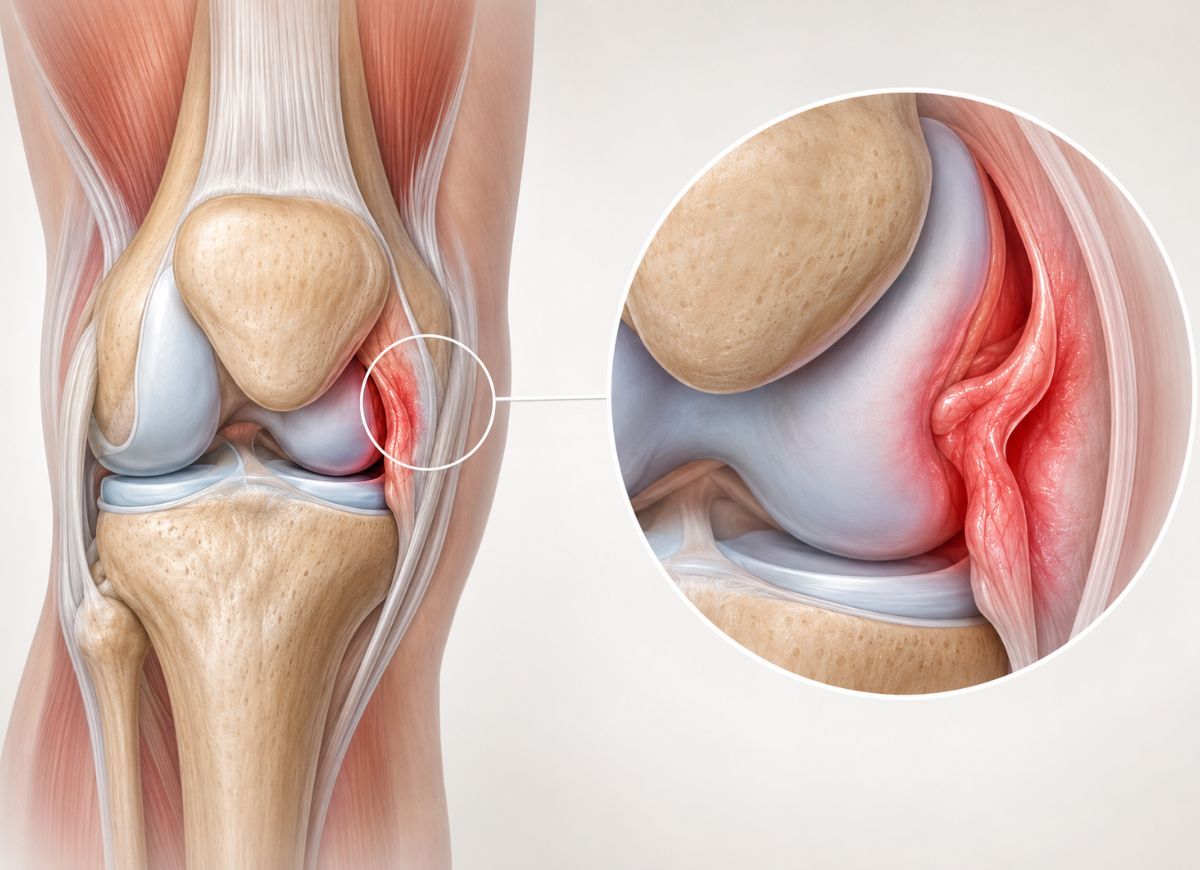
Knee pain can be frustrating, especially when a seemingly small problem makes everyday movements uncomfortable. Walking, climbing stairs, exercising, or simply getting up from a chair can become difficult. Plica syndrome is one possible cause of this discomfort. It develops when a fold of tissue inside the knee, called a plica, becomes irritated, inflamed, or thickened.
Having a plica is not unusual or abnormal. Research suggests that synovial plicae may be present in about 50% to 90% of people, and most people never experience problems from them. Symptoms usually develop when the tissue becomes irritated and repeatedly rubs against structures inside the knee. Some research also suggests that plica syndrome may account for a portion of knee problems seen in sports medicine.
Plica syndrome can be difficult to recognize because its symptoms can resemble other knee conditions. You may experience pain around the front or inner side of the knee, clicking or popping, swelling, stiffness, or a catching sensation. Symptoms can become more noticeable after running, cycling, climbing stairs, squatting, or sitting with your knee bent for a long time.
This article covers 5 plica syndrome symptoms that may contribute to knee discomfort. Learning how these symptoms develop can help you recognize patterns that may be associated with an irritated plica and understand when persistent knee pain may need medical evaluation.
5 Main Symptoms of Plica Syndrome
Anterior Knee Pain
Anterior knee pain caused by plica syndrome is often described as a dull, aching discomfort around the front or inner side of the kneecap. Rather than feeling like a sudden stabbing pain, it may feel like an ongoing soreness that becomes worse with certain movements.
The discomfort is often felt around the inner upper portion of the kneecap, and some people may have trouble identifying one exact spot where the pain starts.
The pain can develop when an irritated plica repeatedly rubs against nearby structures in the knee. Continued friction can cause inflammation of the synovial tissue and make the area increasingly sensitive.
Activities that repeatedly bend and straighten the knee can make the discomfort worse. Common triggers include climbing or going down stairs, squatting, lunging, running, and other activities that place repeated stress on the knee.
Pain may also become noticeable after sitting with the knee bent for an extended period. This can happen during a long car ride, while watching a movie, or when sitting at a desk. Standing up and straightening the knee after prolonged bending may increase the discomfort.
Some people also notice tenderness along the inner edge of the kneecap. A healthcare professional may be able to identify a thickened or sensitive plica during a physical examination, which can provide an important clue when evaluating the source of the pain.
Clicking or Snapping Sensation
Clicking, snapping, or popping during knee movement can occur when an irritated and thickened plica moves across part of the knee joint.
A healthy plica is generally thin and flexible, allowing it to move smoothly as the knee bends and straightens. When repeated irritation causes the tissue to become thicker and less flexible, it may catch against nearby bone and then suddenly move as the knee changes position.
This can create a noticeable clicking or snapping sensation. The movement may be painless in some people, while others may experience a brief jolt of discomfort when the tissue moves.
The clicking may happen repeatedly during a specific movement. For example, a person might notice it while cycling, squatting, climbing stairs, or moving from a bent knee position to a straight one.
Other knee conditions, including meniscus problems or loose pieces of tissue inside the joint, can also cause clicking. The location and movement associated with the clicking can help a healthcare professional determine whether an irritated plica could be involved.
Lock or Catch Knee
Plica syndrome can sometimes cause the knee to catch or briefly feel as though it is locking. This is sometimes described as pseudolocking because the knee is not necessarily experiencing the same type of complete mechanical blockage associated with a displaced meniscus tear or loose body.
A thickened plica may temporarily become trapped between structures in the knee during movement. When this happens, the knee can feel stuck for a moment before normal movement returns.
The catching sensation may occur as the knee moves from a bent position toward being straight. The irritated plica can become caught against part of the joint and then move out of the way as the position changes.
Some people may also describe a feeling that the knee is giving way. This does not necessarily mean that a ligament is unstable. Pain or an unexpected interruption in normal movement can temporarily affect muscle control and make the knee feel as though it might buckle.
Catching is often noticed during activities such as standing up from a chair, walking, pushing off with the leg, or straightening the knee after a squat.
If the knee becomes completely locked and cannot move normally, however, that may point to another problem and should be medically evaluated.
Knee Swelling
Plica syndrome can sometimes cause swelling because repeated irritation of the plica can trigger inflammation inside the knee.
The synovial membrane lines the inside of the knee and helps produce synovial fluid, which lubricates the joint. When the plica becomes irritated, the surrounding tissue can become inflamed and produce additional fluid.
The resulting swelling may be mild and spread across the knee, making the area appear puffy. In some cases, swelling may be more noticeable around the inner side of the kneecap where the irritated plica is located.
Swelling can change depending on activity. It may become more noticeable after running, cycling, squatting, or another activity that repeatedly stresses the knee. Resting the knee may allow the swelling to decrease.
Pain, swelling, and thickening of the plica can sometimes create a cycle in which continued movement causes further irritation. This is why modifying activities that trigger symptoms can be an important part of recovery.
Knee’s Range of Motion Limited
Plica syndrome can make it harder to move the knee through its full range of motion. This is often related to pain, stiffness, inflammation, or the physical presence of thickened plica tissue.
You may notice difficulty fully bending or straightening the knee. Some people describe the joint as tight or stiff rather than completely unable to move.
When the irritated plica is stretched or compressed during movement, it can cause discomfort. The body may respond by tightening the surrounding muscles to protect the knee. This protective response can make the joint feel even stiffer.
In more persistent cases, a significantly thickened plica may interfere with smooth movement inside the joint. This can contribute to a feeling that the knee does not move freely.
Limited knee movement can affect everyday activities. Difficulty bending the knee may make squatting, kneeling, or sitting on the heels uncomfortable. Difficulty fully straightening it can also affect walking and may lead to changes in the way you move.
What is Plica Syndrome in the Knee?
Plica syndrome is a knee condition that develops when a fold in the synovial membrane, known as a plica, becomes irritated and inflamed. Over time, repeated irritation can cause the tissue to become thicker and less flexible.
Plicae are normal structures found in many knees and usually do not cause problems. Plica syndrome develops when the tissue begins to rub against or become irritated by nearby structures during movement.
What is a Synovial Plica?
A synovial plica is a fold of tissue within the synovial membrane that lines the inside of the knee joint.
These folds are thought to be remnants of the separate compartments that form in the knee during fetal development. As the knee develops, these compartments usually combine into one joint space. In some people, portions of the tissue remain as synovial plicae.
Having a plica does not automatically mean that a person has a knee problem. In most people, the tissue remains thin and flexible and moves normally with the joint.
There are several types of plicae in the knee, including:
- Medial Patellar Plica: This is the plica most commonly associated with symptoms. It runs along the inner side of the knee near the kneecap.
- Suprapatellar Plica: This plica is located above the kneecap and separates part of the upper knee space from the main joint cavity.
- Infrapatellar Plica: Found below the kneecap, this plica runs through the front portion of the knee and is less often associated with symptoms.
- Lateral Patellar Plica: This is located along the outer side of the kneecap and is considered the least common symptomatic plica.
The presence of a plica itself is generally not the problem. Symptoms are more likely when the tissue becomes irritated, thickened, or less flexible.
How Does a Plica Become Irritated and Symptomatic?
A plica can become irritated after repeated stress or an injury to the knee. Repetitive bending and straightening can cause the tissue to rub against nearby structures, leading to inflammation.
With continued irritation, the plica may become thicker and less elastic. Scar tissue can develop within the tissue, making it more likely to catch or rub during knee movement.
Overuse activities such as running and cycling can contribute to this process because they involve repeated knee movement. A direct blow or other injury to the knee can also trigger inflammation.
Once the plica becomes thickened and irritated, it may no longer glide smoothly. This can lead to symptoms such as pain, clicking, snapping, or catching.
If the irritation continues, the repeated friction may contribute to further inflammation and tissue changes. This can make the symptoms more persistent and interfere with normal knee movement.
Common Causes of Plica Syndrome
Plica syndrome can develop when repeated stress or an injury causes the plica to become irritated and inflamed. Two common contributors are repetitive knee movement and direct trauma.
Repetitive Motion from Exercise
Repetitive exercise is one possible cause of plica irritation. Activities that require the knee to bend and straighten repeatedly can place ongoing stress on the tissue.
Running is one example. Repeated foot strikes require the knee to move through many cycles of flexion and extension. A sudden increase in running distance, intensity, or training frequency may increase stress on the knee.
Cycling can also contribute because the knee repeatedly moves through the same motion during each pedal stroke. Poor bike setup, including an improperly positioned saddle, may affect knee mechanics and increase irritation.
Other activities that involve repeated knee bending include stair climbing, rowing, squats, lunges, and leg presses.
The exercise itself is not necessarily the problem. Excessive training, sudden increases in activity, poor movement mechanics, or insufficient recovery may increase the amount of stress placed on the knee.
Direct Injury to the Knee
A direct injury can also irritate the plica and trigger symptoms. This may happen after falling onto the knee, receiving a blow to the front of the knee, or experiencing a sudden twisting injury.
Trauma can cause inflammation and swelling within the joint. As the knee heals, scar tissue may develop and cause the plica to become thicker or less flexible.
This can make the tissue more likely to catch or rub against nearby structures during movement.
Plica symptoms can also develop after another knee injury or surgery. An injury that causes prolonged swelling and inflammation may irritate the plica as a secondary problem.
In these situations, the plica may not have been the original source of the knee problem but can become irritated as a result of the inflammation surrounding it.
Treatment Options for Plica Syndrome
Treatment for plica syndrome generally begins with conservative approaches. The main goals are to reduce inflammation, control pain, improve knee movement, and address factors that may be contributing to irritation.
Surgery may be considered when symptoms continue despite appropriate non-surgical treatment and the plica remains a significant source of mechanical irritation.
Non-Surgical Treatments for Plica Syndrome
Non-surgical treatment usually focuses on reducing activities that aggravate the knee and improving strength, flexibility, and movement patterns.
During an irritated or painful phase, temporarily reducing activities such as running, cycling, deep squatting, or other movements that trigger symptoms can give the tissue time to settle.
Ice may be used for short periods to help manage pain and swelling. Compression and elevation may also be useful when swelling is present.
Physical therapy is an important part of longer-term treatment. A physical therapist can create a program designed to improve flexibility, strength, and control around the knee and hip.
Stretching may focus on muscles such as the quadriceps, hamstrings, and iliotibial band. Improving flexibility in these areas may help reduce unwanted stress around the kneecap.
Strengthening exercises can target the quadriceps, particularly the muscles that help stabilize the kneecap. Hip and core strengthening may also improve lower-limb alignment and movement control.
The exact exercises should be adjusted according to symptoms. Exercises that consistently increase pain or cause catching should be modified rather than pushed through.
Arthroscopic Surgery Considered for Plica Syndrome
Arthroscopic surgery may be considered when significant symptoms continue despite a period of appropriate conservative treatment.
Surgery is generally reserved for people who continue to experience problems such as persistent pain, painful catching, or mechanical symptoms that interfere with daily activities or exercise.
Before surgery is considered, the diagnosis should be carefully evaluated because other knee conditions can produce similar symptoms. Imaging and, in some cases, diagnostic arthroscopy may help determine whether the plica is responsible.
The surgical procedure is called a plicectomy or arthroscopic plica resection. It is performed through small incisions around the knee.
A small camera is inserted into the joint so the surgeon can examine the plica and other structures. Specialized instruments can then be used to remove the inflamed or thickened plica.
The surgeon may also examine the rest of the knee for cartilage damage or another condition that could be contributing to symptoms.
Recovery varies from person to person. Many people begin gentle movement and rehabilitation soon after surgery, followed by gradual strengthening and a return to normal activities as the knee heals.
Plica Syndrome Diagnosis
Diagnosing plica syndrome usually begins with a detailed medical history and physical examination. Imaging can be useful, but it does not always clearly show whether a plica is causing symptoms.
During an examination, a healthcare professional may feel around the kneecap and inner side of the knee while the joint is slightly bent. A tender or thickened area corresponding to the plica may provide a useful clue.
The clinician may also perform movement tests designed to reproduce the person’s pain, clicking, or snapping.
One test is the medial plica stutter test. During this examination, the person straightens the knee while the clinician observes the movement of the kneecap. A noticeable change or jump in the kneecap during a particular portion of the movement may suggest irritation involving the plica.
Another examination is Hughston’s plica test. The clinician moves the knee through different positions while applying pressure and movement to the kneecap. A pop or pain that reproduces the person’s usual symptoms may support the diagnosis.
Because other knee conditions can produce similar symptoms, doctors may use additional tests or imaging to rule out problems involving the meniscus, cartilage, ligaments, or other structures.
Plica Syndrome vs. Patellofemoral Pain Syndrome
Plica syndrome and Patellofemoral Pain Syndrome (PFPS) can both cause pain around the front of the knee, but they involve different underlying problems.
Plica syndrome is associated with irritation of a synovial fold, while PFPS is generally related to pain involving the area around the kneecap and its movement within the knee joint.
The location and nature of the pain can provide clues. Plica-related discomfort is often more localized to the inner side of the kneecap. A person may be able to point to a specific tender area.
PFPS usually causes a more diffuse ache around, behind, or underneath the kneecap. It can be harder to identify one specific painful spot.
Mechanical symptoms can also help distinguish the conditions. Plica syndrome may cause noticeable clicking, snapping, or catching as the knee bends and straightens.
Both conditions can become worse with running, squatting, stairs, or prolonged sitting with the knee bent. A physical examination is therefore important for determining which condition may be responsible.
The Best Stretches and Exercises for Plica Syndrome Relief
Physical therapy exercises for plica syndrome generally aim to improve flexibility, strengthen supporting muscles, and reduce stress on the knee during movement.
Gentle stretching can help address tight muscles around the knee. Hamstring and quadriceps stretches are commonly included, but they should be performed without forcing the knee into a painful position.
A standing quadriceps stretch may be useful, provided it does not trigger painful snapping or irritation.
Strengthening exercises can help improve knee support. Straight leg raises are one example because they strengthen the quadriceps without requiring repeated deep knee bending.
Short-arc quadriceps exercises can also target the quadriceps while limiting the amount of knee movement.
Hip muscles are important as well. Weak hip abductors and extensors can affect lower-limb alignment and may increase stress around the knee. Exercises such as clamshells, side-lying leg raises, and glute bridges can help build hip strength.
Low-impact activities may allow a person to maintain fitness while reducing repetitive stress. Swimming and elliptical training may be better tolerated than running for some people.
When using a stationary bicycle, adjusting the seat higher can reduce the amount of deep knee bending. However, exercise choices should be based on individual symptoms and physical therapy guidance when needed.
Recovery from Plica Syndrome Surgery
When conservative treatment does not provide enough relief, arthroscopic plica resection may be recommended in selected cases. Recovery is usually gradual and focuses on controlling swelling, restoring movement, and rebuilding strength.
During the first one to two weeks, the main goals are managing pain and swelling and restoring comfortable movement. Ice, compression, elevation, and appropriate rest may be used during this stage.
Some patients may use crutches for several days or longer depending on their symptoms and their surgeon’s recommendations. Gentle exercises such as heel slides and ankle pumps may be introduced early to maintain movement.
Physical therapy can then focus on restoring the knee’s full range of motion and rebuilding strength in the quadriceps and hamstrings.
Low-impact activities, such as stationary cycling with an appropriate seat position or aquatic exercise, may be introduced as recovery progresses.
Later in recovery, strengthening becomes more demanding. Exercises such as controlled squats, lunges, balance activities, and other functional movements may be added gradually.
A return to sports depends on healing, strength, movement control, and the physical demands of the activity. Some people may return within a few months, but the timeline varies from one person to another.
FAQs
1. Can plica syndrome go away?
Plica syndrome can improve without surgery, particularly when the irritation is mild and the activities causing the problem are reduced.
Rest, activity modification, ice, appropriate medication, and physical therapy may help reduce pain and inflammation. Exercises can also improve strength and movement control around the knee and hip.
If symptoms continue for an extended period despite conservative treatment, a healthcare professional may discuss other treatment options.
2. What does an inflamed plica feel like?
An inflamed plica may cause pain, pressure, or irritation around the front or inner side of the knee.
Some people notice clicking, popping, snapping, or catching when they bend or straighten the leg. Stiffness may also occur after sitting with the knee bent for a long time.
Activities such as running, cycling, squatting, or climbing stairs may make the symptoms more noticeable. Mild swelling can also occur.
3. Can I squat with plica syndrome?
Squatting may aggravate plica syndrome, particularly when the squat is deep or repeated frequently. Bending the knee can increase pressure and friction around the irritated tissue.
Some people may tolerate shallow, controlled squats as they recover, while others may need to avoid squatting temporarily.
If squats cause sharp pain, catching, swelling, or symptoms that remain afterward, the exercise should be modified or stopped and discussed with a healthcare professional.
4. Who is at risk for plica syndrome?
People who repeatedly bend and straighten their knees may have a greater chance of developing plica irritation. This can include runners, cyclists, athletes, dancers, and people whose jobs require frequent squatting, kneeling, or stair climbing.
A direct knee injury, a sudden increase in training, muscle weakness, movement problems, and previous knee inflammation may also contribute.
Although plica tissue is common, it generally causes symptoms only when it becomes irritated or mechanically problematic.
5. How to tape a knee for plica syndrome?
Knee taping may be used by some people to support knee movement and reduce discomfort. However, the appropriate technique depends on the individual’s symptoms and knee mechanics.
Learning the technique from a physical therapist or sports medicine professional is preferable to applying tape without guidance.
Tape should not cause numbness, tingling, increased pain, or changes in skin color. If these symptoms occur, the tape should be removed.
6. Will an MRI show plica syndrome?
An MRI may show an enlarged or irritated plica, but an MRI alone does not always confirm that the plica is the cause of knee pain.
Many people have plicae without experiencing symptoms. For this reason, doctors generally consider MRI findings alongside the person’s symptoms, physical examination, and movement patterns.
MRI can also help identify or rule out other causes of knee pain, including meniscus injuries, cartilage problems, ligament injuries, or other joint conditions.
Conclusion
Plica syndrome can be difficult to recognize because plicae are common and usually do not cause problems. Symptoms may develop when a plica becomes irritated, inflamed, or thickened and begins rubbing against structures inside the knee.
Pain around the front or inner side of the knee, clicking or snapping, catching, swelling, and limited movement can all occur with plica syndrome. These symptoms may become more noticeable during running, cycling, squatting, stair climbing, or after sitting with the knee bent for a long time.
Many cases can improve with conservative treatment. Reducing activities that trigger symptoms, managing inflammation, improving flexibility, and strengthening the muscles around the knee and hip may help the tissue settle and improve knee function.
However, persistent knee pain should not automatically be assumed to be plica syndrome. Other conditions can cause similar symptoms, including meniscus problems, cartilage injuries, and patellofemoral pain. If knee discomfort continues, becomes more severe, or interferes with daily activities, a healthcare professional can help determine the cause and recommend an appropriate treatment plan.