
7 Costochondritis Symptoms You Should Not Ignore
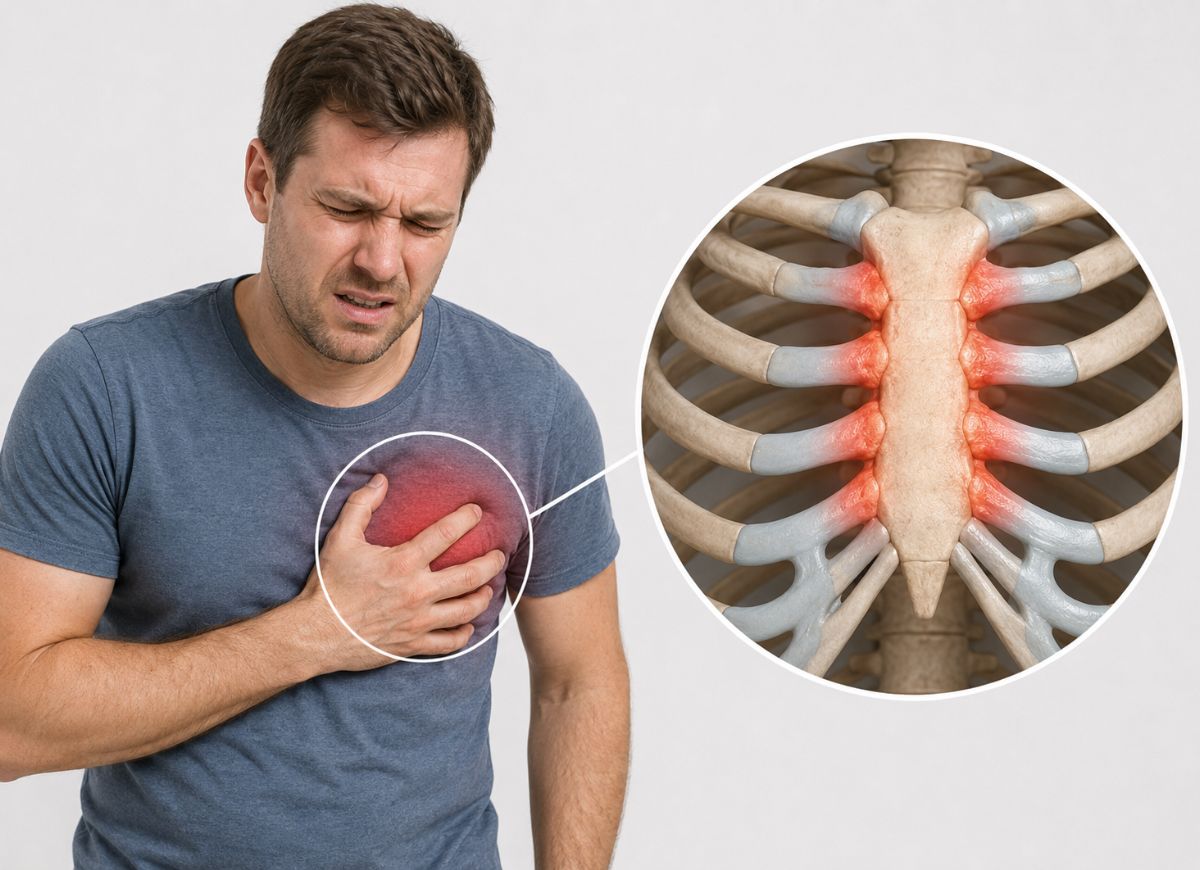
Chest pain can be one of the most concerning symptoms a person experiences. In some cases, it may indicate a serious problem involving the heart or lungs, while in others, it may be caused by costochondritis, a common condition affecting the cartilage that connects the ribs to the breastbone. Although costochondritis is generally not life-threatening, it can produce considerable pain, anxiety, and interruptions to everyday activities when it is not properly recognized or managed.
Costochondritis is more common than many people realize. Research indicates that a meaningful number of adults experience chest wall pain associated with this condition at some point in their lives. Because its symptoms can resemble those of more serious illnesses, it is sometimes overlooked or mistaken for another condition. It commonly occurs in adults between 20 and 50 years of age, with women being somewhat more frequently affected than men. Heavy lifting, repetitive upper-body activity, and poor posture for extended periods may contribute to irritation and inflammation in the chest wall.
The symptoms of costochondritis may begin subtly and can be difficult to distinguish from heart or lung problems. The discomfort may feel sharp, aching, or similar to pressure and often becomes worse when moving, taking a deep breath, or pressing on the affected area. Some people also experience tenderness across the front of the chest or intermittent tightness. Recognizing these patterns can help people understand the condition while also emphasizing the importance of ruling out more serious causes of chest pain.
This article covers 7 costochondritis symptoms you should not ignore. Understanding these signs can help you recognize possible costochondritis, manage discomfort appropriately, and know when professional medical evaluation is necessary. Early awareness can make it easier to address symptoms, reduce recurring discomfort, and maintain normal daily activities.
7 Key Symptoms of Costochondritis
Sharp, Stabbing Chest Pain
One of the most recognizable features of costochondritis is chest pain that feels sharp, stabbing, or piercing. The discomfort is usually located toward the front of the chest, close to the breastbone, or sternum. Because the sensation and location can resemble those associated with a heart attack or other cardiovascular problems, this type of pain can understandably cause considerable concern.
The severity can vary considerably. Some people experience a relatively mild sharp sensation, while others may feel an intense stab that briefly makes breathing uncomfortable. The pain may occur on the left side of the sternum, which can make it particularly easy to confuse with cardiac pain. Some individuals describe it as though a sharp pressure is being applied directly to the chest wall.
Costochondritis pain may also come and go rather than remaining constant. Short, intense episodes can occur after particular movements or activities. Unlike the widespread pressure associated with some heart conditions, costochondritis pain is generally concentrated around the affected rib joints.
Pain Aggravated By Movement
Costochondritis pain commonly becomes more noticeable during movement or deep breathing. These activities expand the rib cage and place mechanical stress on the inflamed costochondral joints. Since the cartilage connecting the ribs to the sternum allows the chest to expand and contract during breathing, irritation in this area can make ordinary movements painful.
Taking a deep breath can stretch the irritated cartilage and intensify the discomfort. Coughing, sneezing, and laughing may have a similar effect because they cause sudden movements and contractions in the chest muscles.
Activities such as twisting the torso, reaching above the head, pushing, pulling, or lifting heavy objects may also increase the pain. When discomfort can consistently be reproduced or intensified by particular movements or deep inhalation, it may point toward a musculoskeletal source such as costochondritis. However, chest pain should still be medically evaluated when its cause is uncertain.
Localized Tenderness to Palpation
Tenderness in a specific area of the rib joints is a characteristic feature of costochondritis. During a physical examination, a healthcare professional may gently press along the points where the ribs connect with the sternum, particularly around the costochondral junctions.
In people with costochondritis, pressure over an inflamed joint can reproduce the same sharp pain they have been experiencing. The discomfort is often concentrated in a relatively small area directly over the affected cartilage.
If pressure over the specific rib joint produces the familiar pain, while pressing elsewhere on the sternum or rib does not, this may provide useful information about the source of the discomfort. Conversely, the absence of localized tenderness may make costochondritis less likely.
A Dull, Persistent Ache
Costochondritis does not always produce sharp or stabbing pain. Some people experience a persistent dull, aching, or gnawing sensation instead. This discomfort may remain in the background even when sharper episodes are not occurring.
The sensation may feel like ongoing pressure or a deep ache within the chest wall. Unlike the highly localized tenderness produced by pressing directly on an affected joint, this type of discomfort can sometimes extend across a somewhat broader area.
It is possible for someone to experience both forms of pain at the same time. Sharp discomfort may occur when the chest wall is moved or stretched, while a dull ache remains because of the underlying inflammation. This combination can make the condition especially uncomfortable and confusing.
Radiating Pain
Although costochondritis usually begins in the front of the chest, the discomfort may sometimes spread toward nearby areas such as the back, shoulder, or upper abdomen. This can happen because the nerves associated with the costochondral joints share pathways with nerves serving other regions of the body.
When irritated cartilage produces strong pain signals, the discomfort may sometimes be perceived in another location. For instance, irritation around the ribs may affect intercostal nerves that travel around the torso, resulting in discomfort that extends toward the middle or upper back.
Pain may also occasionally be felt around the shoulder or upper abdominal area on the affected side. Because this pattern can resemble symptoms of other conditions, including gallbladder problems, pancreatitis, or back disorders, proper evaluation is important. A key feature of costochondritis is that the original discomfort comes from the chest wall and may be reproduced by pressing on the affected costochondral joints.
Involvement of Multiple Ribs
Costochondritis can affect more than one rib joint at the same time. Rather than being limited to a single costochondral junction, inflammation may involve several neighboring joints, commonly around the second through fifth ribs.
The discomfort is often experienced on one side of the sternum, frequently the left side, although both sides of the chest can occasionally be affected.
During an examination, a healthcare provider may identify several tender points along the edge of the sternum. Finding tenderness across multiple rib levels, particularly when combined with pain during deep breathing and reproducible tenderness, can support the diagnosis of costochondritis.
The Absence of Visible Swelling
Unlike some other inflammatory conditions involving the chest wall, costochondritis generally does not produce visible swelling. Although the cartilage itself is inflamed, the inflammation occurs beneath the surface and typically does not create an obvious lump or swollen area.
Pain and tenderness are therefore usually more prominent than any visible physical changes. This characteristic can help distinguish costochondritis from Tietze syndrome, another condition involving inflammation of the costochondral cartilage.
Tietze syndrome is typically associated with noticeable, firm swelling around the affected joint and may also involve redness or warmth. Therefore, when chest pain and localized tenderness occur without visible swelling, costochondritis may be more consistent with the symptoms. A healthcare professional should make the final diagnosis.
What Is Costochondritis Chest Wall Pain?
Costochondritis is an inflammatory condition involving the cartilage that connects the ribs to the sternum, or breastbone. The inflammation occurs around the costochondral junctions, which provide flexibility and allow the rib cage to expand and contract during breathing.
The condition is generally considered benign and self-limiting, meaning it usually improves with time and does not pose a direct threat to the heart or lungs. Nevertheless, the pain can be significant and may persist for varying lengths of time depending on the individual.
The precise reason inflammation develops is not always known. When the cartilage becomes irritated, however, the affected joints may become highly sensitive, producing localized or sharp pain that may worsen with movement or deep breathing. Because chest pain can have many causes, costochondritis should only be diagnosed after more serious conditions have been appropriately considered and ruled out.
Who Is Most Commonly Affected by Costochondritis?
Costochondritis can affect people of any age, sex, or background, although it is often reported in adults and may be more common among women. It can also occur in adolescents and young adults, particularly in connection with physical activity, repetitive movements, or minor chest injuries.
In younger people, sports and repetitive upper-body movements may place additional stress on the developing musculoskeletal system. In adults, repeated physical strain, overuse, or changes affecting cartilage may contribute to symptoms.
Research has identified a higher occurrence among women, although the exact reasons for this difference remain unclear. Costochondritis may also occur alongside conditions such as fibromyalgia or inflammatory arthritis. Even so, many people develop it without an obvious underlying cause or identifiable risk factor.
Is Costochondritis Considered a Serious Medical Condition?
Costochondritis itself is generally not considered life-threatening. However, the chest pain it produces can resemble symptoms associated with serious emergencies, which means unexplained chest pain should not automatically be assumed to be costochondritis.
Conditions such as a heart attack, pulmonary embolism, or aortic dissection can also cause chest pain and require urgent medical attention. Anyone experiencing new, severe, or unexplained chest discomfort should therefore seek appropriate medical evaluation.
After a healthcare professional has assessed the symptoms and, when necessary, performed tests such as an ECG, chest X-ray, or blood work to exclude more serious causes, costochondritis may be diagnosed. Treatment can then focus on controlling pain, reducing irritation, and allowing the affected area to recover.
What Causes Costochondritis?
Costochondritis may develop because of physical strain, injury, certain illnesses, or sometimes without an identifiable cause. In many cases, the exact reason for the inflammation remains unknown.
Potential triggers generally fall into two broad categories: mechanical stress affecting the chest wall and medical conditions that contribute to inflammation. Identifying possible triggers can be useful for managing symptoms and reducing the chance of future flare-ups.
Physical Strain or Injury
Physical strain or an injury to the chest wall is among the commonly recognized contributors to costochondritis. The irritation may follow a single traumatic event or develop gradually from repeated stress and overuse.
A direct impact to the chest, such as an injury during a vehicle accident or contact sport, can place substantial force on the costochondral joints. However, symptoms can also develop without a major injury.
Heavy lifting, moving furniture, performing unfamiliar strenuous exercises, or using improper form can place additional stress on the chest wall. Repetitive activities may have a similar effect. Vigorous coughing during a respiratory illness, painting overhead, rowing, or other repetitive upper-body activities can repeatedly stretch and compress the cartilage, potentially contributing to irritation and inflammation.
Certain Illnesses
Several illnesses and systemic conditions have been associated with costochondritis. Respiratory infections such as bronchitis, pneumonia, or a severe cold may contribute because prolonged, forceful coughing places repeated stress on the rib cage.
The condition can also occur alongside disorders associated with widespread pain or inflammation. People with fibromyalgia may experience costochondritis symptoms, while inflammatory forms of arthritis, including rheumatoid arthritis and ankylosing spondylitis, may affect the joints around the ribs.
Osteoarthritis may also involve these joints in some cases. Rarely, an infection that spreads through the bloodstream can reach a costochondral joint and cause septic arthritis. This is a more serious condition requiring prompt medical treatment.
Costochondritis Diagnosis
Diagnosing costochondritis generally involves ruling out other possible causes of chest pain. A healthcare provider may begin by reviewing the person’s medical history, recent activities, injuries, and illnesses. Information about heavy exercise, chest trauma, or prolonged coughing can help identify potential triggers.
A physical examination is an important part of the process. The clinician may apply gentle pressure around the points where the ribs connect with the breastbone. If this pressure reproduces the person’s characteristic localized pain, it can provide evidence supporting costochondritis.
Because symptoms may overlap with more dangerous heart or lung conditions, additional testing may be necessary. These tests do not typically identify costochondritis itself; instead, they help exclude other causes of chest pain.
Electrocardiogram (EKG or ECG): An ECG records the heart’s electrical activity and can help evaluate possible cardiac problems. A chest X-ray can provide images of the heart, lungs, and bones and may help identify conditions such as pneumonia, lung abnormalities, or rib fractures. In costochondritis, the X-ray is generally normal.
Blood tests may also be used when appropriate. For example, testing for troponin can help identify heart muscle injury, while other blood markers may provide information about inflammation or systemic illness.
Treatment Options for Costochondritis
Treatment is mainly focused on reducing pain and inflammation while giving the irritated cartilage time to recover. Most cases are managed conservatively through a combination of self-care, activity changes, and, when appropriate, over-the-counter medications.
One of the first steps is often to reduce or temporarily avoid activities that make symptoms worse. Heavy lifting, strenuous exercise, contact sports, and repetitive twisting or upper-body movements may need to be limited during recovery.
Heat may help relax tense chest muscles, while applying an ice pack to the painful area for around 15–20 minutes at a time may help reduce discomfort and inflammation.
Over-the-counter pain-relieving or anti-inflammatory medications may also be recommended when appropriate. If symptoms continue despite these measures, a healthcare professional may suggest physical therapy. Gentle stretching and targeted exercises can help improve flexibility, relax tight chest muscles, and reduce stress on the affected joints.
For persistent or severe cases that do not improve with conservative treatment, a doctor may consider stronger prescription medications or other interventions. In selected situations, a corticosteroid injection may be used to deliver anti-inflammatory medication directly to a particularly painful joint.
The Differences Between Costochondritis and Other Conditions
Costochondritis vs. a Heart Attack
Although both costochondritis and a heart attack can cause chest pain, they are very different conditions. A heart attack is a medical emergency caused by an interruption of blood flow to heart muscle, whereas costochondritis involves inflammation of the cartilage connecting the ribs to the sternum.
Costochondritis pain is often sharp, stabbing, or aching and may be concentrated in a specific area of the chest wall. Heart attack pain is more commonly described as pressure, squeezing, heaviness, or fullness, often occurring in the center of the chest, although symptoms can vary.
Another distinguishing feature is that costochondritis pain may become worse when the chest is pressed or when a person moves, twists, coughs, or takes a deep breath. Heart attack pain generally does not change simply because the chest is pressed or the person’s position changes, although physical exertion may worsen it.
Heart attack symptoms may also spread to areas such as one or both arms, the jaw, neck, back, or stomach. Other possible warning signs include shortness of breath, cold sweating, nausea, vomiting, dizziness, or unusual fatigue.
Despite these differences, symptoms are not always predictable. Any sudden, severe, or unexplained chest pain should receive prompt medical attention rather than being assumed to be costochondritis.
Costochondritis vs. Tietze Syndrome
Costochondritis and Tietze syndrome both involve inflammation around the costochondral joints and can cause similar chest wall pain. The most notable difference is the presence of swelling.
Costochondritis usually causes tenderness without visible or palpable swelling. Tietze syndrome, on the other hand, is associated with localized, firm swelling around the affected joint. The swollen area may also feel warm or appear red.
Costochondritis may involve several rib joints, commonly the second through fifth ribs, whereas Tietze syndrome more often affects a single joint, particularly around the second or third rib.
Age can also provide a general distinction. Although costochondritis can occur at any age, it is frequently seen in adults, while Tietze syndrome is more commonly reported in children and younger adults. A healthcare provider can differentiate between the two conditions through a physical examination and assessment of the symptoms.
FAQs
1. Is costochondritis serious?
Costochondritis is generally not life-threatening, but it can cause considerable discomfort and anxiety because its symptoms may resemble those of a heart attack or other serious conditions. It involves inflammation of the cartilage connecting the ribs to the breastbone and may cause localized pain, tenderness, or pressure.
Although costochondritis does not directly damage the heart or lungs, persistent symptoms can interfere with sleep, exercise, and everyday activities. Since chest pain can have many possible causes, medical evaluation is important for determining whether costochondritis is actually responsible.
2. How to calm down costochondritis?
Managing costochondritis usually involves rest, activity modification, and measures aimed at reducing discomfort. Ice or heat may provide relief depending on what feels more effective for the individual. Gentle stretching and low-impact movement can also help prevent stiffness without placing excessive stress on the chest wall.
Over-the-counter anti-inflammatory medications may help control discomfort when they are safe and appropriate to use. Maintaining good posture, avoiding heavy lifting and repetitive chest movements, and using relaxation techniques may also help reduce flare-ups.
3. How long until costochondritis goes away?
Recovery time varies from person to person. Mild cases may improve within several weeks, while more persistent symptoms can continue for several months.
Symptoms may gradually improve with rest and appropriate pain-management measures but can return after physical strain, injury, or illness. People with recurring or prolonged symptoms may benefit from physical therapy, posture adjustments, and exercises designed to reduce stress on the chest wall.
4. Can I ignore costochondritis?
It is not advisable to simply ignore chest pain, even when costochondritis is suspected. Although the condition itself is generally harmless, ongoing pain can affect sleep, activity levels, emotional well-being, and quality of life.
More importantly, chest pain can sometimes be caused by a heart or lung condition. Serious causes should therefore be ruled out before assuming that the symptoms are due to costochondritis.
5. Is costochondritis a heart problem?
No. Costochondritis affects the cartilage and joints of the chest wall rather than the heart. However, the resulting pain can sometimes feel similar to cardiac discomfort.
Costochondritis pain is often localized and may be tender when touched or affected by movement and posture. Even so, sudden or severe chest pain should be assessed by a healthcare professional to make sure a cardiovascular problem is not responsible.
6. Why do I get costochondritis so often?
Repeated episodes may be associated with recurring physical strain, poor posture, heavy lifting, repetitive upper-body movements, or previous chest injuries. Certain inflammatory or arthritic conditions may also make recurring symptoms more likely.
Muscle tension and stress can contribute to discomfort as well. Keeping track of activities that trigger symptoms, improving posture, avoiding known aggravating movements, and using appropriate strengthening exercises may help reduce future episodes.
7. Which deficiency causes costochondritis?
There is no single nutritional deficiency established as a direct cause of costochondritis. However, inadequate levels of nutrients such as vitamin D, calcium, or magnesium can affect overall bone and musculoskeletal health.
Maintaining a balanced diet that provides essential vitamins and minerals, along with adequate hydration, can support normal musculoskeletal function. Persistent or recurrent costochondritis should still be evaluated by a healthcare professional rather than attributed solely to a nutritional deficiency.
8. What is the typical age for costochondritis?
Costochondritis can occur at almost any age, but it is commonly seen in adolescents and adults. Younger people may develop symptoms after sports, repetitive upper-body activities, or physical strain, while adults may experience it after overuse, heavy lifting, or injury.
Because the condition can occur across different age groups, the presence of chest pain should be assessed according to the individual’s symptoms and overall health rather than age alone.
9. Can you fully recover from costochondritis?
Yes. Most people recover from costochondritis without permanent complications. Treatment generally involves allowing the affected area to rest, controlling pain and inflammation, improving posture, and avoiding activities that repeatedly trigger symptoms.
Some people may experience occasional flare-ups, particularly when exposed to previous triggers. Persistent cases may require physical therapy or longer-term lifestyle adjustments.
10. Does costochondritis hurt to the touch?
Yes. Tenderness or pain when pressing over the affected cartilage is one of the characteristic features of costochondritis. The discomfort may become more noticeable when pressure is applied to the rib joints near the sternum.
Pain can also increase with movement, deep breathing, coughing, or certain postures. Reproducible tenderness can provide useful information during a medical examination, although it does not by itself rule out every other possible cause of chest pain.
11. What not to do with costochondritis?
People with costochondritis should generally avoid activities that increase their symptoms, including heavy lifting, strenuous workouts, repetitive chest movements, and prolonged poor posture.
It is also important not to ignore persistent or severe chest pain. Over-the-counter medications should be taken responsibly and according to appropriate directions. Gentle movement, posture awareness, and avoiding known triggers may support recovery and reduce the chance of repeated irritation.
Conclusion
Costochondritis is a relatively common but frequently misunderstood source of chest pain. Although it is generally not dangerous, the discomfort can be significant, may recur, and can closely resemble symptoms associated with heart or lung problems.
Recognizing characteristic symptoms such as localized tenderness, sharp pain, discomfort with movement, and the absence of visible swelling can help identify patterns associated with costochondritis. Rest, activity modification, posture improvements, and appropriate anti-inflammatory measures may help support recovery.
With proper awareness and medical guidance when needed, most people can recover fully and return to their usual activities. Understanding the condition can also help individuals recognize when chest discomfort may require professional evaluation rather than assuming that every episode is harmless.