
Lewy Body Dementia Symptoms That May Look Like Alzheimer’s or Parkinson’s

Lewy body dementia (LBD) is a type of dementia that many people may not recognize until it affects someone close to them. It can be especially difficult to identify because its symptoms often overlap with those of Alzheimer’s disease and Parkinson’s disease.
A person may develop memory and thinking problems that resemble Alzheimer’s while also experiencing stiffness, slowed movement, or balance problems associated with Parkinson’s. These changes can develop gradually and may vary from one day to the next, making them easy to mistake for normal aging or another neurological condition.
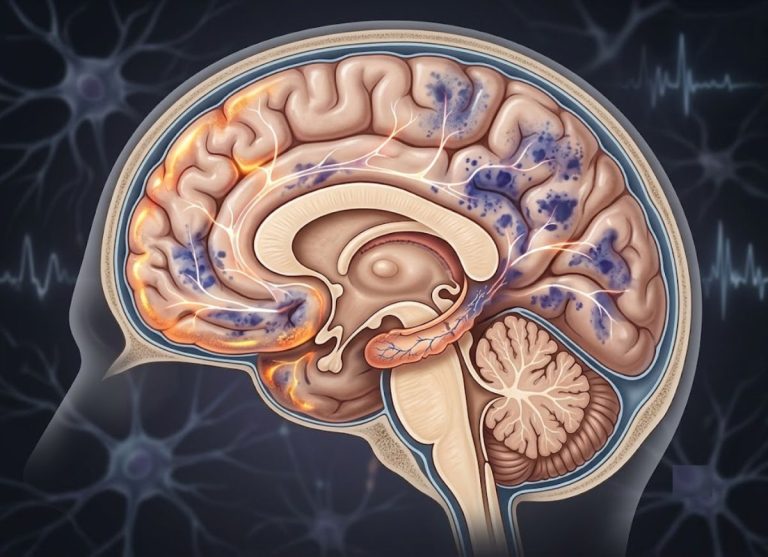
Lewy body dementia occurs when abnormal deposits of a protein called alpha-synuclein, known as Lewy bodies, build up in areas of the brain involved in thinking, movement, sleep, mood, and behavior. As the disease progresses, a person may experience confusion, visual hallucinations, changes in attention, movement difficulties, balance problems, vivid dreams, and shifts in alertness.
One of the most distinctive features of LBD is that symptoms can fluctuate. Someone may seem relatively clear and alert at one point and then become confused or unusually sleepy later. This unpredictable pattern can be confusing for both the individual and their caregivers.
Because the early symptoms can resemble Alzheimer’s or Parkinson’s, LBD may sometimes be difficult to diagnose. Recognizing its characteristic patterns is important because treatment, medication sensitivity, and care needs can differ. Understanding the symptoms may also help families seek an appropriate medical evaluation sooner.
The Core Characteristics of Lewy Body Disease
Lewy body disease is a progressive neurological disorder that affects thinking, movement, sleep, and other brain functions. It is associated with the buildup of abnormal alpha-synuclein protein deposits in the brain.
Because these deposits can affect several areas involved in both cognitive and physical function, symptoms may appear as a combination of dementia-related and Parkinson-like changes. This overlap can make the condition difficult to recognize during its early stages.
There are two closely related clinical patterns. Dementia with Lewy bodies (DLB) occurs when cognitive symptoms develop before or around the same time as movement symptoms. Parkinson’s disease dementia occurs when a person has established Parkinson’s disease for a longer period before developing significant dementia.
Although both conditions involve Lewy body pathology, the timing of symptoms helps doctors distinguish between them.
Distinguishing the “Triad” of LBD Symptoms
Memory problems can occur with LBD, but several other symptoms are particularly characteristic of the condition.
One is cognitive fluctuation, which means a person’s attention and alertness can change significantly. Someone may be able to have a normal conversation for part of the day and later appear confused, extremely sleepy, or disconnected from their surroundings.
Another important feature is visual hallucinations. People with LBD may see detailed images of people, animals, or objects that are not actually present. These hallucinations can be surprisingly vivid and may occur relatively early in the disease.
The third major feature is Parkinsonism, which refers to movement symptoms such as slowed movement, muscle stiffness, shuffling while walking, reduced facial expression, and balance difficulties.
When these features occur together, they can provide important clues that a person may have Lewy body dementia rather than another form of dementia.
The Impact of the Robin Williams Lewy Body Struggle
Public awareness of Lewy body dementia increased after the death of actor Robin Williams. An autopsy found that he had widespread Lewy body pathology in his brain.
During his final years, Williams experienced a complicated combination of physical, cognitive, emotional, and psychological symptoms. He had been diagnosed with Parkinson’s disease before his death, but the later autopsy provided a clearer explanation for the range and severity of his symptoms.
His experience also drew attention to symptoms that are not always immediately associated with dementia, including anxiety, paranoia, sleep disturbances, and changes in thinking.
REM sleep behavior disorder is another important feature associated with Lewy body disease. People with this condition may physically act out their dreams by talking, shouting, kicking, or moving while asleep. In some cases, this sleep disorder can appear years before other symptoms of LBD.
Lewy Body Dementia Symptoms Mistaken for Alzheimer’s: How Do Cognitive Symptoms Overlap?
Lewy body dementia and Alzheimer’s disease can look similar during the early stages. Both can cause problems with memory, concentration, thinking, and everyday activities.
However, the pattern of cognitive impairment may differ. Alzheimer’s disease is commonly associated with progressive problems storing and recalling new information, while LBD often causes greater difficulties with attention, executive function, and visual-spatial abilities early in the disease.
As the conditions progress, their symptoms can overlap even more, which is why doctors consider the complete pattern rather than relying on one symptom alone.
Shared Cognitive Struggles and the “Retrieval” Gap
People with either condition may forget conversations, misplace belongings, repeat questions, or have trouble remembering recent events.
In Alzheimer’s disease, early memory problems often involve difficulty learning and retaining new information. With LBD, memory can sometimes appear relatively preserved at first, while attention and organization are more noticeably affected.
For example, someone with LBD may know that they have previously learned how to complete a task but struggle to organize the steps or stay focused long enough to complete it.
Both conditions can also cause executive dysfunction, which affects activities such as managing money, preparing meals, organizing appointments, or following a complicated set of instructions.
A notable difference is that cognitive performance in LBD may fluctuate considerably. A person might complete a complicated task successfully one day and struggle with the same task another day.
The Distinct Character of LBD Hallucinations
Visual hallucinations are one of the features that can help distinguish LBD from Alzheimer’s disease.
People with LBD may experience detailed, well-formed visual hallucinations, sometimes involving people, children, animals, or other recognizable figures. In the earlier stages, some individuals may even recognize that what they are seeing is not real.
Hallucinations can occur in other forms of dementia, including Alzheimer’s disease, but they are generally less characteristic in the early stages.
People with Alzheimer’s may also experience visual misperceptions, such as mistaking an object or shadow for something else. However, recurring, detailed visual hallucinations are particularly associated with Lewy body dementia.
Attention Deficits and the Robin Williams Diagnosis
Problems with attention can occur in both Alzheimer’s disease and LBD, but they may be especially noticeable and unpredictable in LBD.
A person may appear distracted, become unusually sleepy, stare into space, or have difficulty maintaining a conversation. Their level of alertness may change considerably throughout the day.
Robin Williams’s experience helped draw public attention to the complex combination of cognitive, emotional, and physical symptoms that can occur with Lewy body disease. His case also illustrates why focusing on one symptom alone may not provide the full picture.
Recognizing fluctuations in attention, particularly when they occur alongside visual hallucinations and Parkinson-like movement problems, can give doctors useful clues when evaluating possible LBD.
Lewy Body Dementia Symptoms Mistaken for Parkinson’s: What Are The Shared Motor Symptoms?
Lewy body dementia and Parkinson’s disease share many movement-related symptoms. Both are associated with abnormal alpha-synuclein deposits and can affect brain pathways involved in movement.
These symptoms are often grouped under the term Parkinsonism. Because the physical signs can be very similar, doctors consider the timing of cognitive and movement symptoms when determining which condition is most likely.
Shared Motor Symptoms of “Parkinsonism.”
Movement symptoms that may occur with both conditions include:
- Muscle rigidity: The arms, legs, neck, or trunk may feel stiff and difficult to move normally.
- Bradykinesia: Movements become slower, and initiating certain actions may take more effort.
- Reduced facial expression: A person may blink less often or develop a less expressive, mask-like appearance.
- Resting tremor: Some people experience shaking when a limb is relaxed. Tremors are common in Parkinson’s disease but may be less prominent or absent in LBD.
- Gait and balance problems: Walking may become slower or shuffling, with shorter steps, reduced arm movement, or episodes of freezing.
- Falls: Balance difficulties can increase the risk of falling, particularly as the condition progresses.
Not everyone with LBD experiences all of these symptoms, and their severity can vary from person to person.
The “One-Year Rule” for Diagnosis
Because the movement symptoms of LBD and Parkinson’s disease can look so similar, doctors pay close attention to when cognitive symptoms begin.
The clinical one-year rule is commonly used to distinguish dementia with Lewy bodies from Parkinson’s disease dementia.
When significant cognitive symptoms develop before or within about one year of Parkinson-like movement symptoms, doctors may consider dementia with Lewy bodies.
When a person has established Parkinson’s disease for more than a year before developing dementia, the condition may instead be classified as Parkinson’s disease dementia.
This distinction is based on the timing of symptoms rather than a completely different underlying protein abnormality. Both conditions are part of the broader group of disorders associated with Lewy body pathology.
Why the Distinction Matters: The Robin Williams Example
Robin Williams was initially diagnosed with Parkinson’s disease before an autopsy later revealed widespread Lewy body disease.
His experience demonstrates why the timing and combination of symptoms matter. Movement problems may be noticeable before the full range of cognitive or behavioral symptoms becomes clear.
The distinction is also important for treatment and medication management. People with Lewy body dementia can be particularly sensitive to some antipsychotic medications, which may cause serious adverse reactions. For this reason, healthcare professionals need to consider LBD when a person develops hallucinations, confusion, and Parkinson-like symptoms.
Core Lewy Body Dementia Symptoms: What Key Features Uniquely Distinguish Lewy Body Dementia?
Doctors look for several characteristic features when evaluating possible Lewy body dementia. Memory loss alone does not identify the condition because many neurological disorders can cause memory problems.
Three particularly important features are fluctuating cognition, recurrent visual hallucinations, and REM sleep behavior disorder. Parkinsonism is another major clinical feature.
Together, these symptoms can provide a useful clinical pattern.
The “Ebb and Flow” of Cognitive Fluctuations
One of the most distinctive symptoms of LBD is the dramatic variation in alertness and attention.
A person may seem completely engaged and coherent during one part of the day but later become unusually sleepy, confused, or difficult to engage. These changes can sometimes happen over the course of hours.
During periods of reduced attention, a person may struggle to follow conversations, complete familiar activities, or respond appropriately.
This fluctuation can make it difficult for caregivers and healthcare professionals to determine the person’s usual level of ability. It can also make cognitive testing more complicated because performance may vary depending on the person’s level of alertness at the time.
REM Sleep Behavior Disorder: An Early Warning Sign
REM sleep behavior disorder, or RBD, is an important sleep-related feature associated with Lewy body disease.
During normal REM sleep, most muscles are temporarily relaxed so that people do not physically act out their dreams. With RBD, that normal muscle paralysis is reduced or absent, allowing a person to move while dreaming.
Someone with RBD may shout, talk, punch, kick, or make other movements during sleep. These behaviors can be startling and may sometimes cause injuries.
RBD can appear years before other symptoms of Lewy body disease or Parkinson’s disease. Although having RBD does not mean a person will definitely develop one of these conditions, it is an important clinical clue that may warrant further evaluation.
Understanding the Robin Williams Experience
The case of Robin Williams helped highlight how complicated Lewy body disease can be. His symptoms involved more than movement changes and included a range of cognitive and psychological difficulties.
The later discovery of extensive Lewy body pathology provided an explanation for why his symptoms did not fit neatly into a single familiar diagnosis.
His story also illustrates why symptoms such as anxiety, confusion, sleep disturbances, and hallucinations should be considered alongside movement problems rather than viewed in isolation.
Why These Features Define Lewy Body Syndrome
Recognizing the characteristic pattern of LBD can help distinguish it from other forms of dementia.
Fluctuating attention, detailed visual hallucinations, REM sleep behavior disorder, and Parkinsonism are particularly useful clues. Not every person will experience all of these symptoms, but their combination can strongly influence a doctor’s evaluation.
Early recognition is also important because some medications commonly used for behavioral symptoms can be poorly tolerated by people with Lewy body dementia.
Tests and Criteria Used to Diagnose LBD
Diagnosing Lewy body dementia usually involves several pieces of information rather than a single test.
Doctors begin by evaluating changes in thinking and daily functioning and then look for characteristic clinical features. Brain imaging and other tests may be used to rule out other conditions or provide additional evidence supporting the diagnosis.
There is no single routine blood test or brain scan that can definitively diagnose LBD in every living patient.
The Core Criteria for a “Probable” LBD Diagnosis
A diagnosis begins with evidence of cognitive decline that interferes with a person’s everyday activities.
Doctors then look for four core clinical features:
- Fluctuating cognition: Noticeable changes in attention and alertness.
- Recurrent visual hallucinations: Detailed visual experiences that are not actually present.
- REM sleep behavior disorder: Acting out dreams during sleep.
- Parkinsonism: Slowness, rigidity, tremor, or other characteristic movement changes.
When cognitive decline is accompanied by multiple core features, clinicians may classify the condition as probable dementia with Lewy bodies. A single core feature may support a possible diagnosis, particularly when other evidence is present.
Doctors also consider supportive symptoms and biomarkers when making the overall assessment.
Neuropsychological and Biomarker Testing
Specialized testing can provide additional information and help distinguish LBD from other causes of dementia.
Neuropsychological testing: These assessments examine memory, attention, executive function, language, and visual-spatial abilities. People with LBD may have particular difficulty with attention, organization, and visual-spatial tasks.
DaTscan: This type of imaging examines dopamine transporter activity in the brain. Reduced dopamine transporter activity can support a diagnosis involving Parkinsonism, although it does not by itself prove that a person has LBD.
Polysomnography: A sleep study can help confirm REM sleep behavior disorder by recording brain activity and muscle movement during sleep.
Brain imaging and laboratory tests may also be used to look for other possible explanations for cognitive or movement changes.
Lessons From the Robin Williams Medical Diagnosis
Robin Williams’s case illustrates how difficult Lewy body disease can be to recognize when symptoms overlap with Parkinson’s disease and other neurological disorders.
His initial Parkinson’s diagnosis was made while he was alive, but the full extent of Lewy body pathology became clear only after his death through an autopsy.
Modern clinicians use the complete pattern of symptoms, medical history, neurological examination, and appropriate testing to improve diagnostic accuracy. Sleep disturbances, cognitive fluctuations, hallucinations, and movement changes can all provide important pieces of information.
Key Challenges for Caregivers of Individuals with LBD
Caring for someone with Lewy body dementia can be especially challenging because symptoms may affect thinking, movement, sleep, mood, and behavior at the same time.
The unpredictable nature of the disease can also make everyday routines difficult. Caregivers may need to adjust their approach depending on the person’s symptoms from one hour to the next.
The Emotional Toll of “The Long Goodbye” and Cognitive Swings
One of the hardest aspects of LBD can be the unpredictable changes in attention and awareness.
A person may be able to have a meaningful conversation in the morning and then become confused or withdrawn later in the day. These fluctuations can be emotionally difficult for families who are trying to understand what their loved one can and cannot do.
Hallucinations can create another challenge. If a person sees people or animals that are not actually present, arguing about what they see may increase distress.
Caregivers can often respond by staying calm, acknowledging the person’s feelings, and gently redirecting attention when appropriate. A healthcare professional can also provide guidance when hallucinations become frequent, frightening, or disruptive.
Physical Safety and the Danger of Nighttime “Acting Out”
Falls are a major safety concern when cognitive changes occur alongside stiffness, slowed movement, and balance problems.
Caregivers may need to make the home safer by improving lighting, reducing tripping hazards, keeping frequently used items within easy reach, and discussing mobility aids with a healthcare professional when needed.
Nighttime can bring additional challenges for people with REM sleep behavior disorder. Acting out dreams may involve shouting, kicking, punching, or sudden movements that can injure the person or their bed partner.
Creating a safer sleeping environment and discussing recurring nighttime behaviors with a healthcare professional can help reduce these risks.
Advocacy and the Robin Williams and Lewy Body Legacy
Families often play an important role in communicating how symptoms change over time.
Keeping a record of fluctuations in attention, hallucinations, sleep behaviors, falls, movement changes, and medication reactions can give healthcare professionals valuable information that may not be obvious during a short appointment.
The experience of Robin Williams also increased public awareness of Lewy body disease and demonstrated how complicated its symptoms can be.
Because people with LBD may react poorly to certain medications, caregivers should make sure every healthcare professional involved in their care knows about the diagnosis or suspected diagnosis.
Support from family members, dementia specialists, physical therapists, sleep specialists, and caregiver support groups can also help families manage the practical and emotional challenges of the disease.
Conclusion
Lewy body dementia can be difficult to recognize because its symptoms often overlap with Alzheimer’s disease and Parkinson’s disease. Memory problems, slowed movement, stiffness, balance difficulties, hallucinations, sleep disturbances, and changes in attention may occur together, creating a complicated picture.
One of the most important clues is the way symptoms fluctuate. A person may have periods of clear thinking followed by confusion or unusual sleepiness. Detailed visual hallucinations, REM sleep behavior disorder, and Parkinson-like movement symptoms can provide additional clues.
Although there is currently no cure for Lewy body dementia, recognizing the condition can help families understand what is happening and work with healthcare professionals on treatment and supportive care. Managing symptoms, improving safety, and planning for changing needs can make a meaningful difference in quality of life.
If changes in thinking, movement, sleep, or behavior begin occurring together, especially when they interfere with everyday life, speaking with a healthcare professional is an important next step. Identifying the pattern can help guide further evaluation and provide families with a clearer understanding of what may be happening.
FAQ
What is Lewy body dementia?
Lewy body dementia is a progressive neurological disorder associated with abnormal deposits of alpha-synuclein, known as Lewy bodies, in the brain. It can affect thinking, movement, sleep, mood, behavior, and attention.
Because many of its symptoms overlap with Alzheimer’s disease and Parkinson’s disease, identifying the condition may sometimes be challenging.
How are Lewy body dementia symptoms different from Alzheimer’s disease?
Both conditions can cause memory and thinking problems, but LBD is more strongly associated with fluctuating attention, detailed visual hallucinations, Parkinson-like movement symptoms, and REM sleep behavior disorder.
Memory loss can occur in LBD, but early problems with attention, executive function, and visual-spatial abilities may be more noticeable than memory problems in some people.
Can Lewy body dementia symptoms look like Parkinson’s disease?
Yes. LBD and Parkinson’s disease can both cause slowed movement, stiffness, tremors, balance problems, and changes in walking.
The timing of cognitive and movement symptoms is an important part of distinguishing dementia with Lewy bodies from Parkinson’s disease dementia. Doctors generally consider which symptoms appeared first and how closely they developed.
What are early warning Lewy body dementia symptoms?
Early symptoms may include fluctuating attention, visual hallucinations, changes in sleep, slowed movement, stiffness, balance problems, or episodes of confusion.
REM sleep behavior disorder, in which someone physically acts out vivid dreams, can sometimes occur years before other symptoms. Anxiety, depression, and other mood changes may also occur.
Because these symptoms can have many possible causes, they should be evaluated in the context of the person’s overall health and medical history.
When should someone see a doctor about possible Lewy body dementia symptoms?
A medical evaluation may be appropriate when changes in memory, thinking, movement, sleep, or behavior begin interfering with everyday activities or become noticeably different from a person’s usual behavior.
Recurring hallucinations, unexplained fluctuations in alertness, frequent falls, significant stiffness, or acting out dreams during sleep are also worth discussing with a healthcare professional.
Early evaluation can help rule out other causes, clarify the diagnosis, and support appropriate care planning.