10 Signs of Iliotibial Band Syndrome (Not Just Knee Pain)
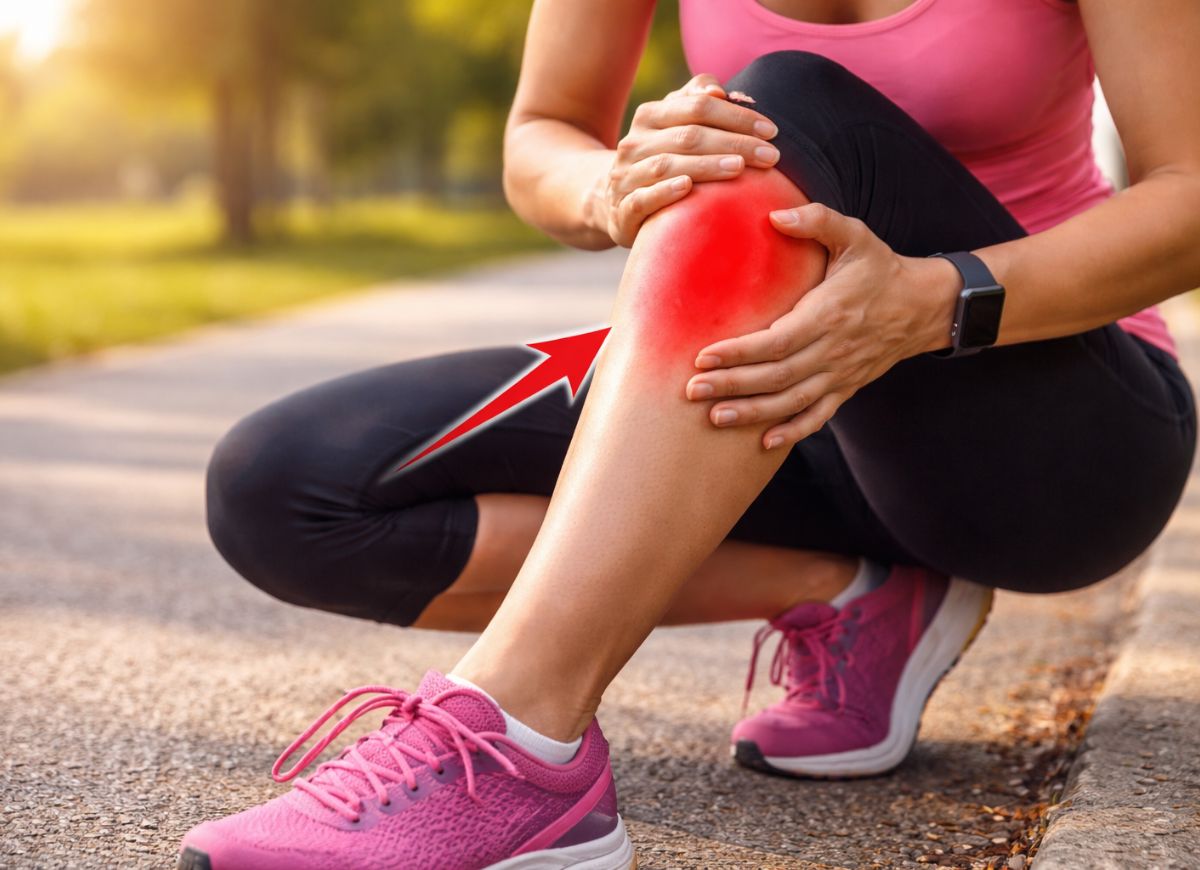
Have you had sharp, stubborn pain on the outside of your knee that doesn’t ease with rest or stretching? You may have written it off as a routine knee injury or overuse.
It could be iliotibial band syndrome (ITBS). The iliotibial (IT) band is a thick band of tissue running from the hip to the shin, and when it becomes tight or irritated, the problem is often mistaken for plain knee pain. Knee pain is the most common symptom, but the band’s length means symptoms can also show up in the hip, outer thigh, and even the lower back. ITBS is especially common in runners, cyclists, and other athletes who repeat the same leg movements, but anyone who overloads the band can develop it.
The IT band helps stabilize and move the knee. When overuse or muscle imbalance leaves it tight or inflamed, pain can spread along the whole leg. It often flares with downhill running or cycling, and left untreated it can affect posture and gait. This article covers the 10 most common signs, the causes, how ITBS is diagnosed, and what you can do about it.
What Is Iliotibial Band Syndrome?
ITBS is a common overuse injury, usually felt as sharp pain on the outside of the knee. It comes from irritation of the IT band as it crosses a bony prominence of the femur. It isn’t a torn ligament. It’s an inflammatory response to too much friction and tension, and it’s most often seen in runners, cyclists, and endurance athletes. Although knee pain is the best-known symptom, discomfort can occur anywhere along the band, from the hip to the shin.
Where the IT Band Sits
The IT band is a thick, fibrous strip of connective tissue (fascia) along the outer thigh. It begins at the hip, where the tensor fasciae latae (TFL) and gluteus maximus muscles merge into it. It runs down the outer thigh, crosses the side of the knee, and attaches to the outer shin bone at a small landmark called Gerdy’s tubercle.
This path explains both its function and its vulnerability. The band acts like a long tendon for the TFL and glutes, transmitting force from the hip to the lower leg. At the knee it slides over the lateral femoral epicondyle, a bony bump on the outer femur. That’s where friction is greatest, especially during repeated bending and straightening. With overuse or poor biomechanics, this point can become inflamed and painful. Because the band is so long, symptoms aren’t always confined to the knee and can appear anywhere along its course, including the outer hip.
What the IT Band Does
The IT band stabilizes the outside of the knee and hip during weight-bearing movement such as walking, running, and jumping. It isn’t a muscle and can’t contract on its own. Instead it works like a strong, ligament-like structure linking the hip muscles to the lower leg, helping coordinate motion at both joints.
During the stance phase of running, when the foot is on the ground, the band tightens to stop the knee from drifting inward and to keep the pelvis stable. It works with hip abductors such as the gluteus medius to control the femur and prevent the opposite side of the pelvis from dropping (a “hip drop”). It also assists the TFL in lifting the leg sideways, flexing the hip, and rotating it inward, and assists the gluteus maximus in extending the hip and rotating it outward. Some recent research suggests it may also store and release elastic energy, like the Achilles tendon, which could make running more efficient.
10 Key Signs of ITBS
- Sharp or burning outer knee pain. The hallmark symptom. It sits over the lateral femoral epicondyle and feels like a sharp, stabbing pain or a persistent burning ache that intensifies with activity. It comes from the band rubbing over the bone as the knee bends and straightens, irritating the band or the bursa beneath it.
- Pain radiating up the thigh. The ache often travels up the outside of the thigh along the band, reflecting tension and inflammation along the whole structure rather than just at the knee.
- Outer hip pain. Because the band starts from muscles around the hip and passes over the greater trochanter, the outer hip can become tender or achy, especially when lying on that side at night or during activities that engage the hip abductors. It can be mistaken for primary hip bursitis (trochanteric bursitis), but in ITBS it’s part of the same overuse pattern.
- Tenderness and swelling. In the acute phase, the spot over the lateral femoral epicondyle is tender, and pressing on it can reproduce the pain. Visible swelling may appear, signaling inflammation of the bursa or band. This tenderness is a key diagnostic clue.
- Snapping or popping. Some people hear or feel a snap on the outside of the knee as it moves from bent to straight (“snapping knee syndrome”), caused by a taut band flicking over the bone. It isn’t always painful, but it shows the band is tight and not gliding smoothly.
- A sense of tightness. A deep, constant tension along the outer thigh, more than ordinary post-workout soreness. It reflects real tension in the band, TFL, and glutes, plus feedback from irritated tissue. Many people stretch the band for relief, though the root cause is often weakness elsewhere.
- Pain that worsens with repetitive motion. Running, cycling, hiking (especially downhill), and climbing stairs are classic triggers. Pain often begins as a dull ache and sharpens until you have to stop. Downhill running is particularly provocative because the knee stays slightly bent longer, increasing friction time.
- Hip abduction weakness. A key sign of a root cause. When the gluteus medius and other abductors are weak, the TFL overcompensates and tension in the band rises. A Trendelenburg test can reveal it: the pelvis drops on the non-stance side when you stand on one leg. Functionally it leads to poor running form, such as the knee collapsing inward (valgus collapse), which adds strain.
- Stiffness after inactivity. After activity, or after long periods of sitting, the knee and hip may feel achy and stiff, most noticeably when you stand up or first thing in the morning. It usually eases within minutes of gentle movement but reflects underlying irritation.
That’s nine signs the original clearly describes; the tenth is folded into the pattern above, so see the note below.
What Causes ITBS?
ITBS usually results from a combination of three factors: training errors, anatomical predispositions, and muscle imbalances. It’s rarely caused by one acute event. It builds from repeated micro-trauma, appearing when the demand on the band exceeds its capacity and friction, irritation, and inflammation follow, most often at the outer knee.
Training Errors
Most training errors come down to doing too much, too soon, or too fast, overloading the band before it can adapt. The most common are:
- Sudden jumps in volume or intensity. Going from 10 to 20 miles a week without a gradual build-up doesn’t give connective tissue time to adapt.
- Skipping warm-ups and cool-downs. Cold muscles and fascia are less pliable. A dynamic warm-up increases blood flow and elasticity so the band glides more smoothly.
- Excessive downhill running. It forces the quadriceps to work eccentrically to brake your momentum and keeps the knee slightly bent longer during stance, so the band stays under tension and rubs the epicondyle for longer.
- Running on banked or cambered surfaces. Always running the same side of a sloped road or indoor track puts the outside foot lower, creating a functional leg-length difference and tilting the pelvis, which increases tension on the higher leg’s band. Alternating directions helps.
Anatomical Factors
Some structural traits raise risk by changing how the leg moves. They don’t guarantee ITBS, but they make tissues more vulnerable, especially alongside training errors.
- High, rigid arches (pes cavus) tend to underpronate, increasing shock transmission up the leg and stress on outer structures like the IT band.
- Flat feet or low arches (pes planus) tend to overpronate. The lower leg rolls inward, rotating the tibia and creating a wringing effect that pulls the band tighter against the femur.
- A true leg-length discrepancy unbalances the pelvis and alters gait. The band on the longer leg may face more tension and friction.
- Bow-leggedness (genu varum) widens the angle on the outside of the knee, stretching the band more tightly across the epicondyle and increasing friction with each step.
Muscle Imbalances
Weak hip abductors and poor core stability are primary contributors because they produce faulty movement patterns that overload the band. When stabilizers underperform, other structures compensate, and the IT band often takes the strain.
The gluteus medius is the main pelvic stabilizer during single-leg activity, which describes every running stride. When it’s weak, the opposite side of the pelvis drops (a Trendelenburg sign). To compensate, the TFL, which attaches directly to the band, becomes overactive and tight, pulling the band taut so it rubs harder against the knee.
A weak core contributes too. The abdominals, obliques, and lower back muscles keep the torso and pelvis steady during movement. When they’re weak, the trunk rotates and sways excessively, forcing the hip muscles to work harder, tire, and worsen your form. The result is often more inward movement of the thigh (adduction) and inward rotation of the femur, increasing compressive force on the band. In short, a lack of stability at the core leads to problems at the knee.
How Physical Therapists Test for ITBS
Diagnosis is mainly clinical, combining a detailed history with exam tests that reproduce symptoms and assess biomechanics. An MRI is occasionally used to rule out other problems, such as a meniscal tear or stress fracture, but most diagnoses are confirmed in the clinic. Two common tests are:
- Ober’s test checks tightness of the band and TFL. You lie on your unaffected side with the bottom hip and knee bent. The therapist lifts the affected leg out and back, then slowly lowers it toward the table. If the band is tight, the leg stays raised and won’t drop, which is a positive result.
- Noble compression test reproduces the pain of ITBS. You lie on your back while the therapist presses a thumb on the lateral femoral epicondyle and bends and straightens your knee. Sharp, localized pain at roughly 30 degrees of bend, where the band typically rubs the bone, is a positive result.
A full evaluation also includes watching you walk and run for signs such as a hip drop (Trendelenburg gait), excessive pronation, or a crossover gait, where the feet cross the body’s midline. The therapist will also manually test the strength of key muscles, particularly the hip abductors, which are often weak in ITBS, and check the flexibility of the hip flexors, hamstrings, and quadriceps, since tightness there can alter pelvic mechanics and strain the band.
At-Home Treatment and Stretches
Home treatment aims to calm inflammation in the acute phase and then address the tightness and weakness behind it.
Step 1: Reduce irritation. Modify or pause the aggravating activity, such as running or cycling, so the tissue can settle. Ice the outside of the knee for 15 to 20 minutes several times a day during the painful phase.
Step 2: Foam roll the right areas. Avoid aggressively rolling the IT band itself. It’s connective tissue, not muscle, and direct pressure can increase irritation. Roll the muscles that attach to it instead, namely the TFL (front and side of the hip) and the gluteus maximus, for 1 to 2 minutes each to release tension pulling on the band.
Step 3: Stretch. The standing IT band stretch (cross the affected leg behind the other and lean away) targets the outer hip. Glute stretches such as pigeon pose or a figure-four stretch improve hip mobility.
Step 4: Strengthen once the pain settles. This corrects the imbalances that caused the problem.
- Hip abductors: clamshells, side-lying leg raises, and banded monster walks target the gluteus medius.
- Core: planks, side planks, and bird-dogs improve trunk and pelvic control and reduce excess motion that strains the band.
- Glutes: hip bridges “wake up” underactive glutes so they fire properly during running and walking.
ITBS vs. Patellofemoral Pain Syndrome (Runner’s Knee)
Both are common overuse injuries in runners and athletes, but the pain location and underlying causes differ.
| ITBS | Patellofemoral pain syndrome (PFPS) | |
|---|---|---|
| Pain location | Sharp and localized on the outer knee, over the lateral femoral epicondyle | Dull ache at the front of the knee, around, behind, or under the kneecap |
| Aggravated by | Repetitive knee bending, downhill running, descending stairs | Squatting, kneeling, stairs, and prolonged sitting with knees bent (the “moviegoer’s sign”) |
| Mechanism | Friction or compression as the band rubs the epicondyle, commonly tied to weak hip abductors, hip drop, and inward femoral rotation | Poor patellar tracking, often sideways, as muscle imbalance or alignment problems irritate the cartilage under the kneecap in the trochlear groove |
| Treatment focus | Strengthen hip abductors and core; stretch hip flexors and TFL | Strengthen the vastus medialis obliquus (VMO) to correct tracking; stretch tight outer-thigh structures like the IT band and lateral quadriceps |
Because the causes and treatments differ, an accurate diagnosis matters.
Preventing ITBS from Coming Back
Prevention isn’t about avoiding activity. It’s about building a system that can handle the demands of running and cycling.
- Strength training is the cornerstone. Focus on the muscles that support the pelvis and control leg movement, especially the hip abductors. Weak gluteus medius is a primary culprit. Clamshells, side leg raises, hip bridges, and monster walks two to three times a week can significantly improve hip strength and stability.
- Build core strength. Planks, bird-dogs, and dead bugs give your hips a stable base to work from.
- Refine your running form. Many runners with ITBS have a crossover gait. Widening your step slightly reduces hip adduction and strain on the band. Raising your cadence (more, shorter steps per minute) also cuts impact forces.
- Progress gradually. Avoid sudden jumps in mileage, intensity, or hill work. The commonly cited 10 percent rule suggests not increasing weekly mileage by more than 10 percent.
- Check your shoes. Make sure they suit your foot type and aren’t worn out, since worn shoes lose cushioning and support. Replacing them every 300 to 500 miles is generally recommended.
- Rest and recover. Overtraining is a major risk for overuse injuries. Schedule rest days, prioritize sleep, and use active recovery such as light walking or stretching on off days.
Frequently Asked Questions
How do you treat ITBS?
Usually with a combination of rest, physical therapy, and self-care. Stretching and strengthening ease tension in the band and surrounding muscles, and foam rolling and massage can help release tightness. Your doctor may recommend anti-inflammatory medication or corticosteroid injections for pain and swelling. Other options, such as ultrasound therapy, may be tried if basic measures don’t work. Surgery is rare and reserved for severe cases.
What is the main cause of ITBS?
Overuse, particularly repetitive activity like running, cycling, or hiking that puts excessive strain on the band. This leads to tightness or inflammation and friction over the outer knee. Contributing factors include muscle imbalances, poor posture or alignment, inadequate footwear, uneven running surfaces, leg-length differences, and poor training habits.
Will ITBS ever go away?
Yes, with proper treatment and self-care, though it can take time, especially if it’s been untreated. Recovery depends on severity and how well you follow your plan. Most people get significant relief within a few weeks to a couple of months, but addressing underlying issues like muscle imbalance and poor biomechanics is crucial to prevent recurrence. Consistency is key.
How should I sleep to avoid IT band pain?
Keep your body aligned. On your back, put a pillow under your knees. On your side, put a pillow between your knees so they don’t touch, which relieves pressure on the outer thigh and knee. Avoid lying on the painful side, and consider a body pillow to keep your hips and legs aligned.
Does walking aggravate ITBS?
Usually not, unless you walk long distances or with poor form. Walking on hard surfaces or uphill can irritate the band. Listen to your body: choose shorter, gentler walks and focus on good posture. If walking causes discomfort, rest, stretch, and treat the inflammation before resuming activity.
What should you avoid with IT band pain?
Activities that strain the band, such as downhill running, long cycling sessions, and high-impact exercise with repetitive leg movement. Pushing through pain can worsen the condition and prolong recovery. Also avoid staying in one position, sitting or standing, for long periods. Focus on stretching, foam rolling, and strengthening the surrounding muscles.
Will an MRI show ITBS?
Not always, since the condition involves soft-tissue inflammation and irritation. An MRI is more useful for ruling out other causes of knee pain, such as cartilage damage or ligament injuries. A clinical exam of the hip and knee is often more effective for diagnosis.
Should I wear a knee brace?
A brace may offer temporary support and ease discomfort during walking or activity, but it shouldn’t be a long-term fix. Focus on strengthening the muscles around the knee and improving flexibility. A brace can help during aggravating activities, but the root cause needs addressing for lasting relief.
Is a hot bath good for IT band pain?
It can temporarily soothe pain by relaxing tight muscles and improving blood flow, but it works best alongside stretching and foam rolling. Don’t use heat if the area is inflamed or swollen. Ice is generally better in those cases.
Conclusion
ITBS is common but often misunderstood, and it can seriously limit your ability to stay active. Knee pain is the best-known symptom, but the condition can also affect the hip, thigh, and lower back. With proper treatment, including rest, stretching, strengthening, and physical therapy, most people recover and return to their activities.
By understanding the causes and managing symptoms well, you can keep ITBS from becoming a chronic problem. If your IT band pain persists, seek professional care and stay consistent with your recovery plan to get back to active, pain-free living