
7 Signs of High Cortisol Levels and How They Affect Your Health
Cortisol plays a crucial role in how your body responds to stress, regulates metabolism, and keeps everything in balance. Often called the “stress hormone,” it’s produced by the adrenal glands and helps control blood pressure, blood sugar, and the sleep-wake cycle. It’s essential for survival, but consistently high levels can harm both physical and mental health.
Many people have elevated cortisol without realizing it, especially in today’s fast-paced, high-stress world. Over time, the imbalance can lead to weight gain, fatigue, anxiety, and sleep problems. Below, we explore the most common warning signs, what causes cortisol to rise, and how it can affect your body if left unmanaged.
What Is Cortisol?
Cortisol is more than a “stress hormone.” It’s a primary regulator of survival and energy. Produced by the adrenal glands through the hypothalamic-pituitary-adrenal (HPA) axis, it helps the body meet the demands of each day. It maintains blood pressure, regulates how the body metabolizes proteins, fats, and carbohydrates, and dampens the immune system’s inflammatory responses to prevent tissue damage.
The Cortisol Rhythm and Morning Spike
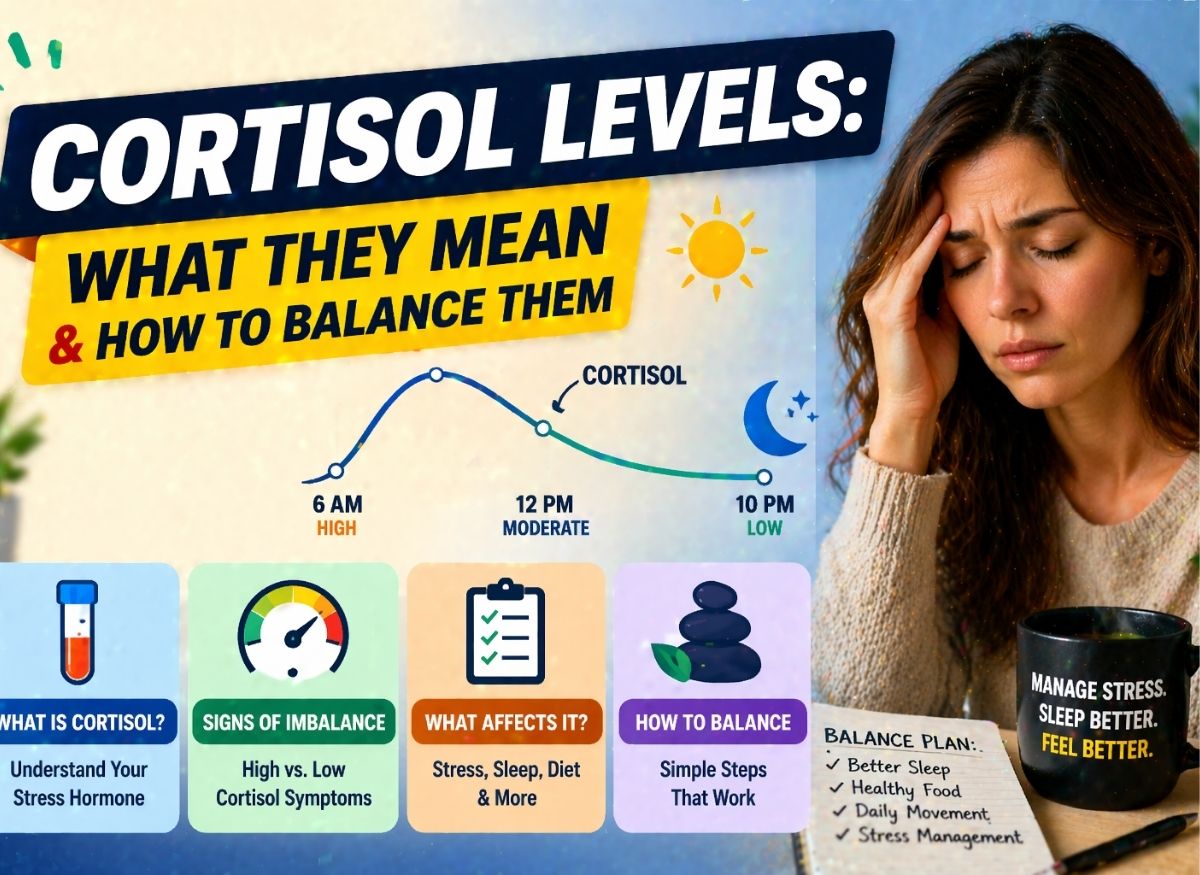
Cortisol follows a predictable 24-hour cycle that mirrors the body’s internal clock. Levels are highest in the morning, peaking about 30 to 45 minutes after waking, a phenomenon called the Cortisol Awakening Response (CAR). This surge clears sleep inertia and prepares you for the day.
Levels then slope downward through the day, letting the body shift from an active, catabolic state to a resting, anabolic one. By night, cortisol should reach its lowest point so melatonin can take over and start deep sleep. When this rhythm is disrupted, you often feel “tired but wired” at night.
Reading Test Results
Because of the sharp morning peak, a normal morning reading is much higher than one taken in the late afternoon. At most clinical labs, serum cortisol measured at 8:00 AM generally falls between 6 and 23 mcg/dL. In women, doctors also have to consider hormonal shifts and oral contraceptives, which can artificially raise total cortisol without indicating a true disorder like Cushing’s syndrome.
Cortisol’s Effects Throughout the Body
Nearly every cell has cortisol receptors, so its effects are widespread. In the short term, it mobilizes glucose, turning stored energy into fuel for the brain and muscles. When levels stay chronically out of sync, though, the picture changes. Persistently high cortisol signals a state of perpetual emergency, which can cause muscle wasting, bone density loss, and central weight gain.
Low cortisol, by contrast, often points to adrenal insufficiency or significant burnout, where the body can no longer produce enough to keep blood pressure stable or handle minor illness. Whether the problem is too little or too much, the physical symptoms, from profound fatigue to skin changes, are the body’s warning that its regulatory system is overwhelmed.
7 Red Flags of High Cortisol
High cortisol acts like a systemic “solvent,” slowly dissolving the body’s structural and mental reserves to fuel a perceived emergency. When levels stay in the red zone, the body enters chronic catabolism, breaking down its own bone, muscle, and skin to keep glucose flowing. These red flags reflect that physical wear and tear.
1. Disrupted sleep rhythm: “wired but tired.” The most prominent red flag is the loss of the normal cortisol rhythm. Morning levels should be high for energy and evening levels low for sleep, but under chronic stress the evening decline never comes. You feel physically exhausted yet mentally hyper-alert. High nighttime cortisol suppresses melatonin, so you may struggle to fall asleep or wake at 3:00 AM with a racing heart and intrusive thoughts. Cortisol’s role has shifted from a daytime spark to a nighttime disruptor, blocking the deep, restorative sleep your body needs.
2. Abdominal weight gain. One of the most visible signs is a change in body composition. Chronic high cortisol drives visceral fat accumulation around the midsection. Cortisol prompts the liver to make extra glucose for “fight or flight,” and when that energy isn’t burned, insulin spikes to store it. Abdominal fat cells are dense with cortisol receptors, so the body preferentially stores fat there, often creating a firm, protruding belly while the arms and legs get thinner from muscle loss.
3. Intense cravings. Cortisol is directly linked to food: it triggers strong cravings for “high-reward” foods rich in sugar and fat, as the brain tries to replenish energy it believes it’s losing during a crisis.
4. Frequent illness. Cortisol is naturally anti-inflammatory, which is why synthetic versions like prednisone treat swelling. But when natural production is constantly high, it muffles the immune system. You may catch every cold going around or notice small scratches taking weeks to heal. High cortisol inhibits the production of white blood cells (lymphocytes), leaving your body’s “border patrol” understaffed.
5. Muscle weakness and protein wasting. A noticeable loss of strength, especially in the upper arms and thighs, is a key sign. Because the body in high-alert mode demands constant glucose, cortisol starts “cannibalizing” muscle tissue when dietary sugar isn’t available, breaking protein down into sugar via the liver. Climbing stairs, standing up from a chair, or lifting things that used to be manageable becomes hard. It’s not just tiredness but an actual loss of muscle fiber density, often paired with abdominal fat gain to create a “thin-limbed” appearance.
6. Brain fog and memory loss. Chronic exposure to high cortisol is neurotoxic, particularly to the hippocampus, the brain’s center for memory and learning, and prolonged elevation can shrink it. The result is brain fog: struggling to find common words, forgetting appointments, or feeling like your brain is “full.” Cortisol also keeps the amygdala (the fear center) overactive while dampening the prefrontal cortex (the logic center), making it hard to focus on complex tasks and feeding a cycle of mental sluggishness and anxiety.
7. Skin changes and easy bruising. Cortisol works against collagen, both slowing its production and speeding its breakdown. That produces skin changes a dermatologist may notice first:
- Easy bruising: skin becomes thin and “parchment-like,” and small blood vessels rupture at the slightest touch
- Purple striae: wide (often over 1 cm), deep reddish-purple stretch marks on the abdomen or thighs, visible because thinned skin reveals the vessels beneath
- Slow wound healing: even a paper cut can take weeks, since high cortisol suppresses the inflammatory signals needed to start tissue repair
Why High Cortisol Damages Your Health
High cortisol harms health because it shifts the body from “build and repair” to “breakdown and mobilize” and never switches back. Vital for short-term survival, chronic elevation wears down the structural and chemical integrity of your organs, moving from temporary symptoms to a cascade of problems across your metabolic, cardiovascular, and neurological systems.
Metabolic damage and type 2 diabetes. Cortisol makes the liver keep blood sugar high to fuel a perceived “fight,” so the pancreas pumps out large amounts of insulin. Eventually cells become numb to insulin’s signal, a state called insulin resistance. This also drives visceral fat buildup. Because abdominal fat cells are highly sensitive to cortisol, energy gets stored there preferentially, and that fat produces inflammatory chemicals that further disrupt the cortisol rhythm, eventually exhausting the pancreas and leading to type 2 diabetes.
Cardiovascular strain. Over the long term, high cortisol accelerates aging of the heart. It makes blood vessels more sensitive to “tightening” signals, causing chronic high blood pressure, and it prompts the kidneys to hold onto salt, increasing blood volume and pressure on artery walls. Sustained pressure creates micro-tears in the arteries, which the body patches with cholesterol, while high cortisol also raises LDL and lowers HDL. The result is atherosclerosis, hardening of the arteries, which significantly raises heart attack and stroke risk.
Immune dysregulation. Cortisol starts out anti-inflammatory, but chronic exposure makes immune cells “resistant” to it, creating chronic low-grade inflammation that never resolves. The body ends up too weak to fight off external viruses yet too aggressive toward its own tissues, which is why chronically high cortisol is linked to autoimmune conditions like rheumatoid arthritis or lupus. Suppression of natural killer cells may also impair the body’s ability to detect and destroy mutated cells, potentially raising cancer risk over decades.
Structural decay of brain and bones. The most permanent effects involve the dissolving of structural tissue:
- Brain: Chronic high cortisol is neurotoxic to the hippocampus. Prolonged exposure can shrink the memory center, turning temporary brain fog into lasting cognitive decline or higher Alzheimer’s risk.
- Bones: Cortisol blocks the “builder” cells (osteoblasts) and speeds up the “demolisher” cells (osteoclasts), leading to osteoporosis, in which bones become brittle and fracture-prone from even minor movements.
Saliva vs. Blood vs. Urine Cortisol Tests
Each medium tells a different story about endocrine health. To interpret results, you have to distinguish “total” from “free” cortisol: total includes hormone parked on transport proteins, while free cortisol is the biologically active portion that can enter cells and act.
Blood (serum) tests are the traditional method and measure total cortisol, giving a broad view of the adrenal glands’ capacity to produce the hormone. Samples are usually taken around 8:00 AM to catch the peak. They have two limitations: they can’t easily separate bound from free cortisol, which can mislead in people with high protein levels (as with oral contraceptives), and the stress of a needle stick can cause a temporary spike that skews results.
Saliva tests are preferred for assessing the cortisol rhythm and HPA axis function. Saliva contains only free, active cortisol, so it reflects the hormone’s real-time effect. Being non-invasive, it allows multiple samples across the day (waking, noon, evening, bedtime). Mapping these points shows whether morning cortisol is high enough and, more importantly, whether it drops properly at night. A “flat” curve, staying moderately high all day or failing to rise in the morning, is a hallmark of chronic stress.
24-hour urine tests are used when a doctor suspects a serious condition like Cushing’s syndrome. Rather than a snapshot, it works like an odometer, measuring total active cortisol processed over a full day and smoothing out the rhythm’s peaks and valleys. Significantly elevated results indicate persistent overproduction beyond ordinary daily stress, making it the most reliable way to confirm high cortisol in suspected adrenal or pituitary tumors.
High vs. Low Cortisol
The difference is like an engine redlining versus one that has run out of fuel. Both reflect the HPA axis failing to keep balance, but their symptoms are opposites.
High cortisol (hypercortisolism) means perpetual emergency, with tissues systematically broken down for energy. Weight concentrates in the face (“moon face”) and abdomen while the limbs thin from muscle wasting. Blood pressure and blood sugar rise, increasing cardiovascular disease and diabetes risk, and the mental state is one of hypervigilance, anxiety, and irritability.
Low cortisol (adrenal insufficiency) means the adrenal glands can’t meet the body’s needs, most famously in Addison’s disease. Instead of “wired but tired,” it brings profound, bone-deep exhaustion that rest doesn’t fix. The signs mirror the high-cortisol state: unexplained weight loss, low blood pressure with dizziness on standing, and a unique hallmark, skin hyperpigmentation (darkening on knuckles, scars, and gums) caused by ACTH.
| Feature | High cortisol | Low cortisol |
|---|---|---|
| Weight pattern | Central obesity (abdomen/face) | Unexplained weight loss |
| Blood pressure | High | Low, with dizziness |
| Blood sugar | High | Low |
| Skin | Thin, bruising, purple striae | Darkening (hyperpigmentation) |
| Energy | “Wired but tired,” anxiety | Profound fatigue, apathy |
| Cravings | Sugar and high-fat comfort foods | Intense salt cravings |
The rhythm is disrupted in both cases, but the fallout differs. High cortisol is a slow-moving fire causing wear and tear over years, while low cortisol is more like a structural collapse: without enough hormone to regulate sodium and potassium, the heart and kidneys can’t function. That’s why low cortisol is often treated with immediate hormone replacement, whereas high cortisol management focuses on stress reduction or addressing the underlying source, such as a tumor.
Chronic High Cortisol and Cushing’s Syndrome
The link is a matter of degree and origin. Most people have elevated cortisol from the pressures of modern life, but Cushing’s syndrome is the extreme, pathological end of the spectrum: cortisol production becomes autonomous, meaning the body has lost its ability to turn it off, producing a permanent physiological crisis well beyond ordinary stress.
In a stressed person, the cortisol rhythm may be jagged or poorly timed but the adrenal glands still respond to the brain’s signals. In Cushing’s, that regulation is hijacked. There are two routes:
- Exogenous Cushing’s, the most common form, results from long-term high-dose corticosteroid medication (like prednisone) for asthma, lupus, or rheumatoid arthritis, essentially an overdose of synthetic cortisol
- Endogenous Cushing’s occurs when the body itself overproduces the hormone, often from a pituitary tumor (specifically called Cushing’s disease) or an adrenal tumor, which ignore feedback loops and pump out cortisol relentlessly
Signature signs. Cushing’s produces specific physical markers that are hard to miss because levels are so much higher than in ordinary stress. A “moon face” develops as fat deposits on the sides of the face, making it round and full. A “buffalo hump” is a distinct mound of fat between the shoulder blades. Wide, deep-purple stretch marks appear on the abdomen because excess cortisol has dissolved so much collagen that the skin literally tears. When these appear together, they point to a systemic breakdown needing immediate medical attention.
Loss of the daily rhythm. A hallmark of Cushing’s is the total collapse of the rhythm. Stressed people may have very high morning cortisol that still tries to drop by evening, but in Cushing’s this ebb and flow vanishes. Doctors often use a late-night saliva test: cortisol should be at its lowest at midnight, yet in Cushing’s, midnight levels stay as high as morning ones, a flat but elevated line showing production is no longer governed by the body’s clock.
Diagnostic tests. Because the condition is so severe, standard blood draws often aren’t enough:
- Dexamethasone suppression test: a synthetic steroid is taken at night and morning cortisol is measured. A healthy system detects the steroid and shuts down its own production; a Cushing’s system keeps producing regardless.
- 24-hour urine test: measures cumulative cortisol to confirm overproduction is constant rather than a temporary spike.
Frequently Asked Questions
What are normal cortisol levels?
They vary through the day, highest in the morning and lowest at night, a rhythm that helps regulate energy, alertness, and sleep. Blood, saliva, or urine tests can measure levels to see whether they’re in a healthy range. Consistently high or low levels may point to an underlying health issue needing medical attention.
What causes high cortisol?
Most commonly chronic stress, which keeps the body in a constant “fight or flight” state. Other causes include lack of sleep, excessive caffeine, intense physical strain, underlying adrenal conditions, and certain medications. Identifying and managing these triggers is key to restoring balance.
What are the symptoms?
Weight gain (especially around the abdomen), fatigue, anxiety, irritability, and trouble sleeping are common, and some people also develop high blood pressure, weakened immunity, or skin changes. Symptoms often develop gradually, so they’re easy to overlook at first.
How can I lower cortisol naturally?
By managing stress and improving daily habits: regular exercise, meditation, deep breathing, and time outdoors help reduce stress, and quality sleep and a balanced diet matter too. Small, consistent changes can make a big difference over time.
Can high cortisol cause weight gain?
Yes, particularly around the abdomen. Cortisol can increase appetite and cravings for high-calorie foods, and it affects how the body stores fat and uses energy. Managing stress and keeping healthy habits can reduce this effect.
When should I see a doctor?
If you have persistent symptoms like extreme fatigue, unexplained weight gain, mood changes, or sleep disturbances. These may reflect a cortisol imbalance or another condition, and a provider can run tests and recommend treatment or lifestyle changes. Early evaluation can help prevent long-term complications.
The Bottom Line
Maintaining healthy cortisol levels is essential to overall well-being, since prolonged elevation can affect everything from energy to immune function. Recognizing early signs like chronic fatigue, mood changes, and sleep problems lets you act before more serious issues develop. Managing stress, improving sleep habits, and making healthier lifestyle choices can support balanced cortisol and protect your long-term health. If symptoms persist or significantly affect your daily life, seek medical guidance for proper evaluation. Staying aware of how your body responds to stress is the first step toward restoring balance and improving your quality of life.