
7 Early Warning Signs of Pleurisy Everyone Should Know
Most of us never think about breathing it just happens. But when a sharp pain shows up every time you inhale, cough, or even laugh, it’s often your body flagging a problem with the pleura, the delicate lining that wraps around your lungs. That’s pleurisy.
Pleurisy isn’t a disease on its own it’s a reaction. Infections, autoimmune conditions, blood clots, and even chest injuries can all irritate the pleura and set off this inflammation. Once irritated, the two smooth surfaces of the pleura start rubbing against each other instead of gliding, and that friction is what produces the stabbing pain people describe.
Anyone can develop pleurisy, but it shows up most often in people already dealing with a respiratory infection or a chronic lung issue. Roughly 5–10% of people with pneumonia or certain viral infections go on to develop pleuritic pain, while autoimmune- or clot-related cases are rarer but tend to be more serious. Even a mild case can disrupt sleep and daily life, since every breath can bring a jolt of discomfort.
Because it often starts quietly a vague ache easily mistaken for a pulled muscle or a cold knowing the early signs matters. This guide walks through seven warning signs, what typically causes them, and when it’s time to get checked out.
What is Pleurisy (Pleuritis)?
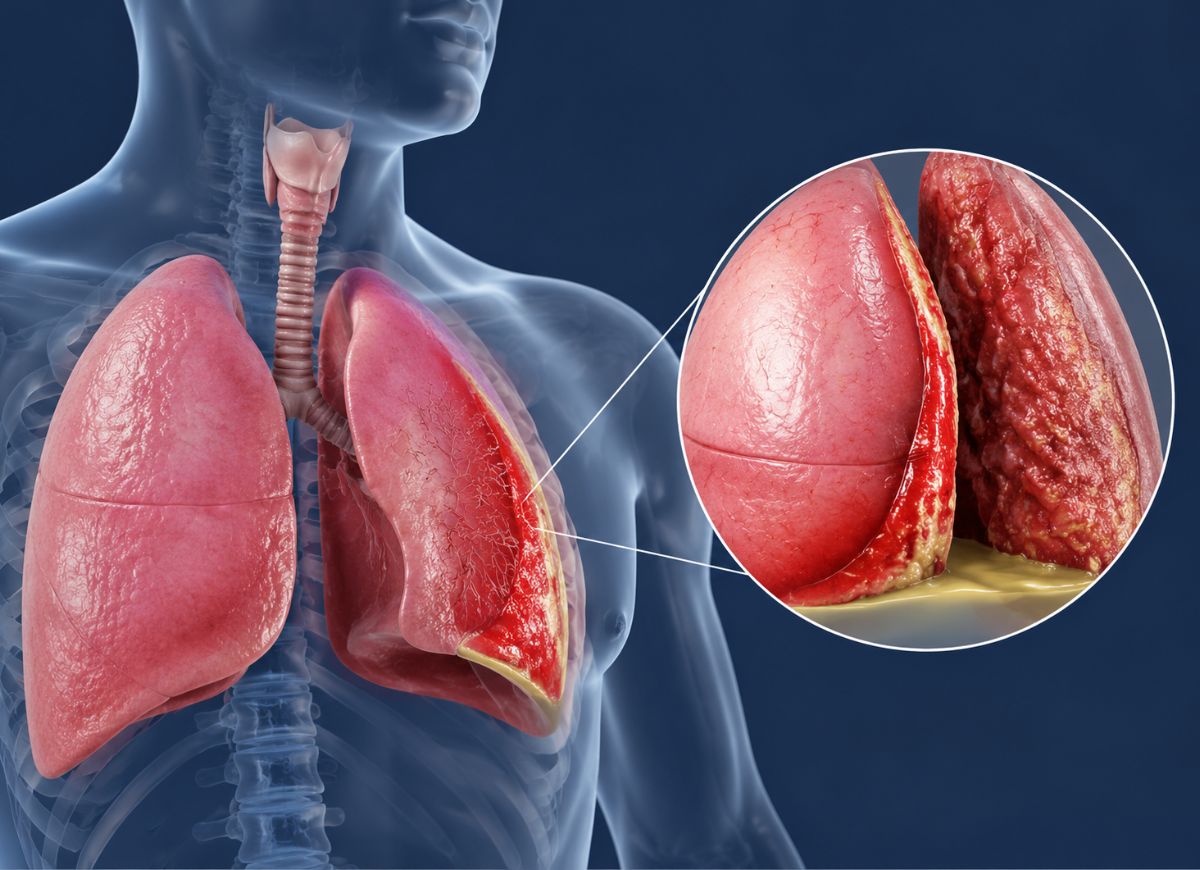
Pleurisy medically called pleuritis is inflammation of the pleura, the two thin membranes that separate your lungs from the inside of your chest wall.
To understand why it hurts so much, it helps to know how the pleura is built. One layer, the visceral pleura, hugs the surface of the lungs directly. The other, the parietal pleura, lines the inside of the rib cage, diaphragm, and chest cavity. Between them sits a paper-thin space holding a few milliliters of lubricating fluid just enough to let the two layers slide past each other silently with every breath.
When that fluid and those surfaces are working properly, you never notice your lungs moving at all. But inflammation roughens the once-smooth pleural surfaces, and the natural lubrication can no longer do its job. Instead of sliding, the layers catch and scrape against one another similar to two sheets of sandpaper rubbing together producing the sharp, localized pain known as pleuritic chest pain.
Because the pain tracks directly with movement, it flares with deep breaths, coughing, sneezing, or twisting the upper body. That’s why people with pleurisy often breathe shallowly on purpose or press a hand against the sore side of their chest. In more advanced cases, fluid can build up in the pleural space itself a complication called pleural effusion which adds shortness of breath on top of the pain.
7 Key Symptoms and Warning Signs of Pleurisy
Sharp, Stabbing Chest Pain
The clearest sign of pleurisy is a sharp, knife-like pain in one specific spot of the chest that gets noticeably worse with breathing. Doctors call this pleuritic pain, and it comes straight from the inflamed pleural layers grinding against each other.
Unlike heart-related chest pain, which tends to feel like dull pressure spread across the chest, pleuritic pain is usually so precise that a person can point to the exact spot with one finger. It can range from a mild nagging ache to pain intense enough to make any torso movement feel unbearable.
Anything that expands or contracts the lungs more forcefully deep breaths, coughing, sneezing, laughing, even talking makes it worse. Many people describe suddenly “catching” on an inhale and having to stop mid-breath. To avoid triggering the pain, people naturally shift into shallow, guarded breathing, a pattern doctors call splinting. It’s also common to physically hold or press on the painful side of the chest to limit its movement. Interestingly, lying on the affected side can sometimes ease things slightly by restricting motion there, while lying on the opposite side can stretch the inflamed area and make the pain worse. Occasionally, because of how nerves route through the body, the pain shows up somewhere other than the actual site of inflammation known as referred pain.
Shortness of Breath
Breathlessness, or dyspnea, is another hallmark of pleurisy and it’s largely a side effect of pain avoidance rather than a lung problem on its own. Since deep breathing drags the inflamed pleural surfaces across each other, the body automatically switches to quick, shallow breaths to reduce that friction.
The trouble is, shallow breathing isn’t efficient. It doesn’t move enough air to fully oxygenate the blood or clear out carbon dioxide, which leaves people feeling winded even though nothing is technically wrong with their lung tissue. In a sense, the brain wants a deeper breath, but the body is holding back to dodge the pain and that tug-of-war is what creates the uncomfortable sensation of not getting enough air.
Shortness of breath can also have a more mechanical cause. When inflammation leads to a pleural effusion fluid pooling in the pleural space a large enough buildup can physically press on the lung and stop it from expanding. That kind of compression causes real breathing difficulty, sometimes even at rest, and it tends to get worse with any exertion.
Dry Cough
A persistent, hacking cough that doesn’t bring up any mucus is common with pleurisy. Unlike the productive cough seen with bronchitis or pneumonia, this one is triggered by irritation of the pleura itself rather than anything sitting in the airways.
Nerve endings in the pleural lining react to the inflammation and set off a cough reflex, even though there’s nothing physical to clear out. Unfortunately, this creates a frustrating loop: coughing is a forceful, sudden movement of the chest and diaphragm, and that motion drags the already-inflamed pleural surfaces across each other, triggering a fresh wave of sharp pain.
So people end up caught between an urge to cough and the pain that follows often resulting in suppressed, shallow coughs as they try to hold it back. A dry cough that consistently lines up with worsening chest pain is a strong clue pointing doctors toward the pleura as the source of the problem.
Fever and Chills
Fever and chills aren’t caused by the pleural inflammation directly they’re signs of whatever infection is triggering it in the first place. Most pleurisy cases trace back to a viral or bacterial infection.
When the immune system detects an invader like the flu virus or Streptococcus pneumoniae (a common cause of pneumonia), it releases chemical signals that tell the brain’s temperature-regulating center to raise body heat, making the environment less friendly to the pathogen. Chills are simply the muscle activity rapid contracting and relaxing that generates that extra heat.
So when chest pain shows up alongside fever and chills, it’s a strong hint that an infection is behind it. In pneumonia, for instance, the infection can spread from the lung tissue to the neighboring pleura, causing secondary pleurisy with the fever and chills coming from the pneumonia itself, and the sharp pain from the resulting pleural inflammation. These systemic symptoms help doctors narrow down the cause and decide on treatment, such as antibiotics for a bacterial infection.
Unexplained Weight Loss
Weight loss that shows up with no change in diet or activity is a less common but important warning sign. It rarely happens with mild, short-lived viral pleurisy its presence usually points to something more chronic or systemic going on.
Two conditions that can cause both pleurisy and unexplained weight loss are tuberculosis and cancer. With TB, the body’s prolonged fight against the infection, combined with appetite loss and night sweats, can gradually wear down body mass historically referred to as “consumption.”
Cancer, particularly lung cancer or tumors that have spread to the pleura, works differently but leads to a similar outcome. Cancer cells demand a lot of the body’s energy and release substances that suppress appetite and disrupt metabolism, leading to the muscle wasting and fatigue known as cancer cachexia. If pleuritic pain shows up together with steady, unexplained weight loss, it’s a signal to get a thorough medical workup right away.
Pain in the Shoulders and Back
Shoulder or upper back pain can actually be a symptom of pleurisy through a mechanism called referred pain where the brain misreads the source of a pain signal.
This happens because nerve pathways from different body regions sometimes converge on the same route to the spinal cord. In pleurisy specifically, the center of the diaphragm’s pleural lining is served by the phrenic nerve, which originates from nerve roots in the neck (C3–C5) the same roots that supply sensation to the shoulder and upper back.
So when that central portion of the diaphragm’s pleura is inflamed, the resulting pain signals travel up the phrenic nerve and get misinterpreted by the brain as shoulder or upper trapezius pain. This can easily be mistaken for a muscle strain rather than a chest issue. The giveaway is that this shoulder pain behaves just like pleuritic pain worsening with deep breaths, coughing, or sneezing.
Rapid, Shallow Breathing
Fast, shallow breathing tachypnea is the body’s automatic workaround for pleuritic pain rather than a symptom in its own right. Since deep breaths stretch and rub the inflamed pleural layers together, the brain adjusts breathing to minimize how much the chest wall and diaphragm move.
Essentially, the body trades breath depth for breath frequency many small breaths instead of fewer deep ones which reduces the movement (and pain) at the pleural surfaces. It works in the short term, but it’s not an efficient way to breathe.
Shallow breathing limits how well the lower lungs exchange gas, which can leave someone feeling like they can’t get a full breath and, over time, may contribute to complications like partial lung collapse (atelectasis). During an exam, a doctor who notices fast breathing with very little visible chest movement will often suspect pleuritic pain and active splinting behind it.
What are the Common Causes of Pleurisy?
Pleurisy has a wide range of possible triggers, generally falling into three buckets: infections (viral or bacterial), autoimmune disorders, and other conditions like blood clots, cancer, or chest injuries. Since pleurisy is a symptom rather than a standalone illness, tracking down the actual cause is the most important part of treatment.
The inflammation itself is the body reacting to some kind of injury or irritant whether that’s a pathogen invading directly, the immune system misfiring against its own tissue, or irritation spreading from a nearby problem. A lung infection can spread outward to the pleura; a blood clot in the lung can kill off a patch of tissue and release inflammatory chemicals nearby; an autoimmune disease like lupus can have the immune system attack the pleura directly. The sections below break these causes down in more detail.
Viral and Bacterial Infections
Infections are by far the most common trigger for pleurisy. Viral infections often produce what’s sometimes called “dry pleurisy” pain without much fluid buildup. Influenza is a frequent cause, along with Coxsackie B virus (linked to the classic “devil’s grip” pleurodynia), adenovirus, cytomegalovirus, Epstein-Barr virus (mono), and RSV. These viruses can either infect pleural cells directly or trigger an immune response nearby that spreads inflammation to the pleura.
Bacterial infections tend to cause more complicated cases. Pneumonia, often from Streptococcus pneumoniae, can spread from the lungs into the pleural space and cause fluid buildup known as a parapneumonic effusion. If bacteria get into that fluid, it becomes an empyema essentially an abscess in the chest that usually needs to be drained. Tuberculosis is another notable bacterial cause, capable of producing chronic inflammation and significant fluid accumulation in the pleura.
Autoimmune Disorders
Several autoimmune conditions are closely tied to pleurisy, since the systemic inflammation they cause can directly affect the pleural membranes. Sometimes pleurisy is actually the symptom that first leads to an autoimmune diagnosis.
Systemic Lupus Erythematosus (SLE) and Rheumatoid Arthritis (RA) are the two most well-known culprits. In lupus, inflammation of serous membranes (serositis) is common, affecting both the heart lining and the pleura more than half of lupus patients experience pleurisy at some point, and it’s actually one of the diagnostic markers for the disease. RA, while primarily a joint disease, can also affect the lungs and pleura, sometimes producing distinctive changes in pleural fluid. Sjögren’s syndrome and scleroderma are less common but related causes. Treatment in these cases usually centers on managing the underlying autoimmune condition with immune-modulating medication.
Other Medical Conditions
Beyond infection and autoimmune disease, several other conditions can irritate the pleura directly. One of the most serious is pulmonary embolism a blood clot, often originating in the legs, that lodges in a lung artery. This can kill off a section of lung tissue, and if that area is near the lung’s edge, the resulting inflammation can intensely irritate the pleura and sometimes cause a bloody effusion.
Cancer is another major cause. Lung tumors near the outer edge of the lung can invade the pleura directly, and cancers elsewhere in the body like breast cancer or lymphoma can spread there as well. Chest trauma, such as a fractured rib, can physically irritate or puncture the pleura. Certain medications have also been linked to drug-induced pleuritis, and inflammation from nearby organs like the pancreas can sometimes spread to affect the pleura too. Even complications after heart surgery can occasionally involve pleural inflammation.
Pleurisy Diagnosed
Diagnosis typically starts with a physical exam, where a doctor listens for a pleural friction rub a scratchy, grating sound made as the inflamed layers rub together during breathing. Since this sound isn’t always present, further testing is usually needed.
Imaging plays a central role. A chest X-ray is usually the first step and can reveal pneumonia, tumors, or fluid buildup. A CT scan offers more detail and can catch blood clots, abscesses, or subtler issues an X-ray might miss. Ultrasound is especially good at pinpointing fluid in the pleural space and guiding procedures like thoracentesis.
To identify the underlying cause, doctors may also run blood tests (checking for infection markers or autoimmune antibodies) and an ECG to rule out heart-related causes of chest pain. If fluid is present, a thoracentesis using a needle to draw out a sample can help determine whether infection, cancer, or another process is behind it.
The Difference Between Pleurisy and Pericarditis
Pleurisy and pericarditis can both cause sharp chest pain, but they come from inflammation in two different structures. Pleurisy affects the pleura around the lungs, while pericarditis affects the pericardium, the sac surrounding the heart.
The distinction shows up clearly in how the pain behaves. Pleuritic pain is sharp, localized, and tied closely to breathing it worsens with deep breaths, coughing, sneezing, or laughing. Pericarditis pain tends to sit in the center or left side of the chest, can radiate to the neck, shoulders, or back, and while it can also worsen with breathing, it’s distinctly relieved by sitting up and leaning forward and made worse by lying flat or swallowing.
A stethoscope can help tell them apart too: pleurisy may produce a friction rub that sounds like creaking leather timed with breathing, while pericarditis produces a similar rub timed instead with the heartbeat.
Can Pleurisy Lead to a Pleural Effusion?
Yes pleurisy can directly cause a pleural effusion, sometimes called “water on the lungs.” Normally, the space between the two pleural layers holds just a small amount of lubricating fluid. When inflammation disrupts that balance either by increasing fluid production or impairing drainage fluid starts to accumulate, forming an effusion.
Interestingly, once an effusion develops, symptoms often shift. The fluid can act as a cushion between the inflamed layers, reducing the friction that caused the sharp pain in the first place so the stabbing pain may actually fade. But as fluid volume increases, it compresses the lung and prevents full expansion, which brings on growing shortness of breath, a feeling of heaviness or tightness in the chest, and sometimes a dry cough from the added pressure.
Treatment Options for Pleurisy
Treating pleurisy really means treating whatever’s causing it the goal is to resolve the underlying condition so the pleura can heal and the pain can subside.
If the cause is bacterial, like pneumonia, antibiotics are the main treatment. Viral cases are usually managed with supportive care rest, hydration, and pain control while the immune system clears the infection on its own. Anti-inflammatory medication is often used alongside this to keep the patient comfortable while the root cause is addressed.
For autoimmune-driven pleurisy, treatment focuses on calming the overactive immune response with appropriate medication. And if a large pleural effusion is causing significant breathing trouble, a doctor may need to drain the fluid through thoracentesis or a chest tube for immediate relief.
FAQs
What causes pleurisy in the lungs?
Pleurisy happens when the pleura becomes inflamed, most often due to a viral infection like the flu or a cold. Bacterial infections such as pneumonia or tuberculosis are also common triggers, along with autoimmune diseases like lupus or rheumatoid arthritis. Less often, blood clots, lung cancer, chest injuries, or certain medications are to blame and sometimes the cause simply can’t be pinned down. Identifying the cause matters because treatment ranges from simple rest for mild viral cases to antibiotics, blood thinners, or more advanced care for serious underlying conditions.
Will pleurisy go away on its own?
Mild, viral-related pleurisy often improves on its own within a few days to a couple of weeks with rest, anti-inflammatory medication, and gentle breathing exercises. However, cases caused by bacterial infection, blood clots, autoimmune disease, or significant fluid buildup usually need medical treatment. Ignoring persistent symptoms risks letting the inflammation worsen or fluid accumulate further, so it’s worth getting checked even if the pain seems minor.
Should you go to the ER for pleurisy?
Seek emergency care if pleurisy comes with sudden, severe chest pain, trouble breathing, coughing up blood, high fever, dizziness, or any signs pointing to a heart problem these can indicate serious issues like a pulmonary embolism or heart attack. For milder symptoms without those red flags, see a doctor promptly rather than waiting, especially if you have existing lung or heart conditions.
How do I check if I have pleurisy?
There’s no home test for pleurisy diagnosis requires a medical exam. A doctor will listen for a pleural friction rub and may order a chest X-ray, ultrasound, or CT scan to look for fluid or inflammation, along with blood tests to check for infection or autoimmune markers. If you’re experiencing sharp chest pain that worsens with breathing, coughing, or sneezing, it’s best to get evaluated rather than guessing.
How long is pleurisy contagious?
Pleurisy itself isn’t contagious since it’s a symptom, not a disease. But if it stems from an infection like the flu or bacterial pneumonia that underlying infection can spread through respiratory droplets or close contact. Basic hygiene, like frequent handwashing, helps limit that risk.
Can pleurisy just be on one side?
Yes it commonly affects only one side, depending on which area of the pleura is inflamed. Pain may be sharp and localized to that side, particularly with deep breaths or movement, and can sometimes be mistaken for a pulled muscle rather than a lung issue.
Are you hospitalized with pleurisy?
Most cases are mild and can be managed at home with rest and pain relief. Hospitalization becomes more likely if pleurisy is linked to a serious infection, a pulmonary embolism, significant fluid buildup, or another complication requiring closer monitoring, IV medication, or fluid drainage.
Does pleurisy only hurt when you breathe?
Pain usually intensifies with deep breaths, coughing, sneezing, or movement, but some people also feel a dull ache even at rest, depending on how severe the inflammation is or whether fluid has built up. Pain radiating to the shoulder or back is also possible, which can make it harder to distinguish from other chest issues.
What is pleurisy called now?
It’s still commonly known as pleuritis in medical settings. Doctors often specify the cause too viral pleuritis, bacterial pleuritis, autoimmune pleuritis since that distinction guides treatment.
What is the recovery timeline for pleurisy?
Recovery varies with the cause. Mild viral cases often clear up within days to two weeks, while bacterial or autoimmune-related pleurisy can take several weeks or longer. Pain typically eases before the underlying inflammation or fluid fully resolves, so ongoing or worsening symptoms should still be checked out.
Conclusion
Pleurisy can range from a minor nuisance to a sign of something far more serious, depending on what’s driving it. Sharp pain that worsens with breathing, coughing, or movement deserves attention especially since infections, blood clots, or autoimmune conditions can all be hiding behind it. Mild cases often clear up with rest, but persistent or intense symptoms call for prompt medical evaluation.
Knowing the early warning signs gives you a head start the chance to catch problems early, avoid complications, and get back to breathing without a second thought. Paying attention to changes in your chest, breathing, and overall health is a simple habit that can make a real difference in protecting your lungs long-term.