
8 Symptoms of Ramsay Hunt Syndrome Explained Clearly
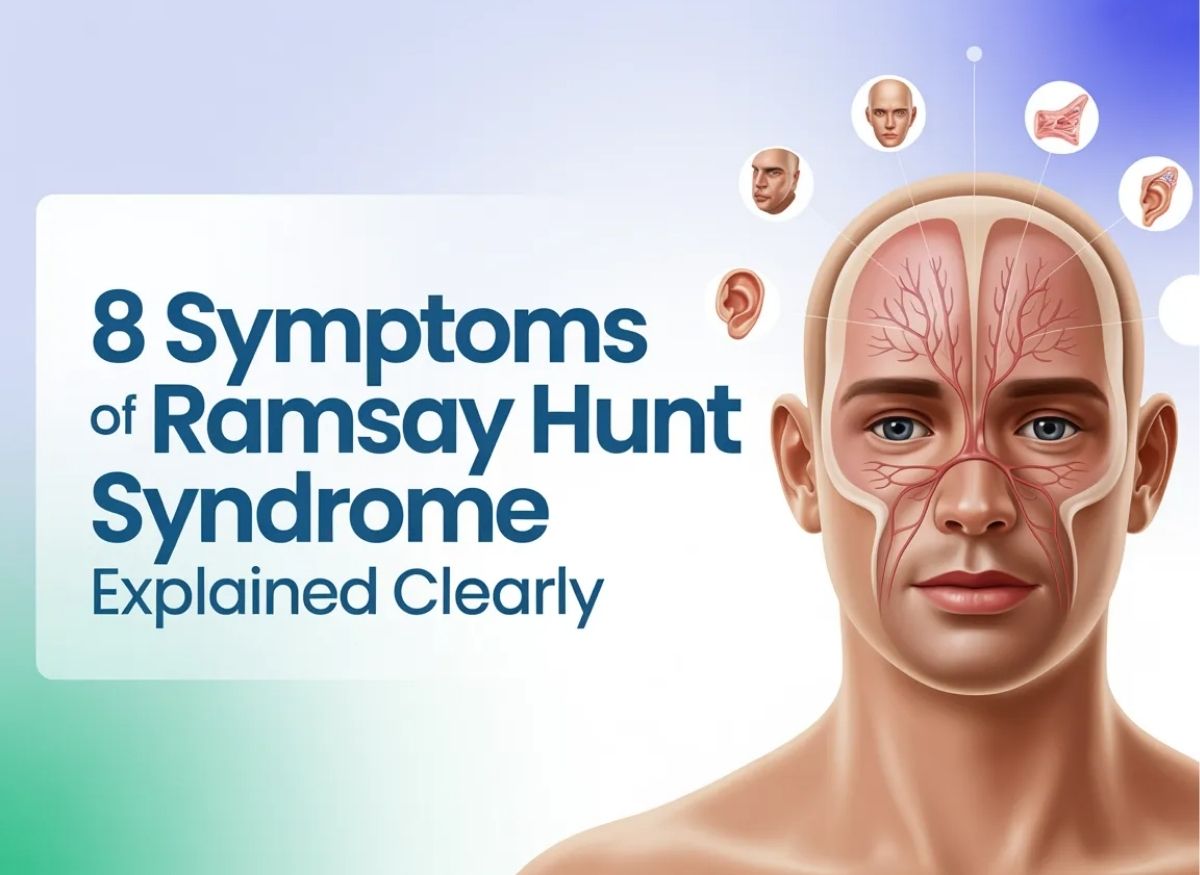
Ramsay Hunt syndrome is a rare but serious condition that affects the nerves of the face and ear. It can interfere with facial movement, hearing, and daily life. It happens when the varicella-zoster virus, the same virus behind chickenpox and shingles, wakes up and attacks the facial nerve near the inner ear. The result is usually a painful ear rash, a drooping face, and other unsettling symptoms that need quick medical care.
It is less common than Bell’s palsy, but it tends to be more severe and can cause lasting problems if treatment is delayed. Facial weakness, ear pain, hearing loss, and dizziness can appear suddenly and get worse without care. Starting antiviral medication and corticosteroids early greatly improves the chance of a full recovery.
In this guide, we walk through the eight most common symptoms, what causes them, and how they can affect everyday life. Knowing what to look for helps you get diagnosed sooner and recover better.
Understanding Ramsay Hunt Syndrome: A Deep Clinical Exploration
Ramsay Hunt syndrome, also called herpes zoster oticus, is a complex and often debilitating condition. It develops when the varicella-zoster virus (VZV) reactivates in the geniculate ganglion, a cluster of nerve cells that belongs to the facial nerve (Cranial Nerve VII). This cluster sits in a narrow bony canal close to the inner ear.
Most people know shingles as a rash on the torso or limbs. Ramsay Hunt is a more aggressive and more localized form. The virus is active around the cranial nerves, which triggers strong inflammation and can disturb both movement and sensation on one side of the face.
How the Virus Causes the Problem
After a first infection, usually childhood chickenpox, the virus never fully leaves the body. It goes dormant inside sensory nerve cells. Years later it can wake up, often because of aging, long-term stress, or a weakened immune system.
When this happens in the facial nerve, the nerve swells inside its rigid bony canal and gets squeezed. This pressure is the main cause of Ramsay Hunt symptoms, because the compressed nerve can no longer send signals properly to the facial muscles and sensory organs.
Anatomical Impact: What Part of the Body Is Affected?
The facial nerve does many jobs and runs close to other important structures, so Ramsay Hunt affects several senses at once, all on the same side of the head.
Facial Paralysis and Motor Dysfunction
The most visible sign is weakness or paralysis on one side of the face. The facial nerve controls expression, so an inflamed nerve makes it hard to smile, raise the eyebrow, or close the eye on the affected side. The droop is sudden and obvious, which is why many people search for it under different spellings such as “ramsey syndrome” or “ramsey hunt.”
Auditory and Vestibular Involvement
The facial nerve runs right beside the vestibulocochlear nerve (Cranial Nerve VIII), which handles hearing and balance. Inflammation often spreads to it, causing:
- Tinnitus: constant ringing or buzzing in the ear.
- Sensorineural hearing loss: a sudden drop in hearing on the affected side.
- Vertigo: a spinning sensation or loss of balance, showing the balance system is involved.
Sensory and Glandular Disruptions
The facial nerve also carries taste and controls fluid production. Many people lose taste on the front two-thirds of the tongue (through the chorda tympani branch). Because the nerve also supplies the tear and salivary glands, dry eye and dry mouth are common. The typical painful blistering rash follows the nerve’s sensory path and can appear on the outer ear, inside the ear canal, and sometimes on the soft palate.
Clarifying Transmission: Is Ramsay Hunt Syndrome Contagious?
Many people wonder whether they can “catch” it from someone. The syndrome itself is not contagious. You cannot pass on the facial paralysis or the condition, because it comes from a virus already living in the patient’s own nerves.
The Risk of Varicella-Zoster Transmission
The blisters, however, contain live varicella-zoster virus. Someone who has never had chickenpox and is not vaccinated could catch the virus by touching the blister fluid. That person would develop chickenpox, not Ramsay Hunt syndrome. The virus has to go through a first infection and a dormant period before it can ever cause Ramsay Hunt later in life.
To limit spread, keep the rash covered and wash your hands well until every blister has crusted over. People who are already immune are generally safe, but you should avoid newborns, pregnant women, and anyone with a weak immune system, since a first-time infection can be dangerous for them.
Identifying Clinical Variants and Misnomers
Because the condition is rare, it is often searched for under names like Hunt Ramsay syndrome, hunts ramsey syndrome, or Raymond Hunt syndrome. Whatever the name, the cause is the same.
Zoster Sine Herpete
One tricky variant is “zoster sine herpete,” where the person has the facial paralysis and ear pain but never develops a visible rash. This makes quick diagnosis and early antiviral treatment even more important to prevent permanent nerve damage.
8 Key Symptoms of Ramsay Hunt Syndrome
Ramsay Hunt syndrome comes on quickly and usually affects just one side of the head. It is a more aggressive result of varicella-zoster reactivation than the common shingles rash.
When the virus wakes up in the geniculate ganglion, the facial nerve becomes badly inflamed. Since the nerve is confined to a narrow bony canal, the swelling squeezes it and disrupts the signals traveling to the face. Spotting symptoms early is the best way to avoid permanent nerve damage.
1. The Ramsay Hunt Syndrome Rash
The rash is the most telling sign. It looks like a shingles rash: a red base covered with small fluid-filled blisters. What makes it distinctive is where it appears. The blisters are usually very painful, and the pain often begins several days before they show up.
It most often appears on the outer ear and deep inside the ear canal, and sometimes on the eardrum. In more extensive cases, blisters can also appear on the soft palate or the front of the tongue. Over 7 to 10 days, the blisters burst, ooze, and crust over. In the rare rash-free variant, all the other symptoms are present but no rash appears, which often delays diagnosis.
2. Severe Ear Pain (Otalgia)
Ear pain is often the first warning sign. It is usually deep, sharp, and burning, and it can feel far worse than the rash looks. The pain may spread to the jaw or the back of the head.
3. Unilateral Facial Paralysis
This is the main movement symptom. Swelling of the nerve causes partial or complete loss of muscle control on one side of the face. The face droops, smiling becomes difficult, and the eye may not close (lagophthalmos). That last problem is especially risky because an exposed cornea can dry out and scar permanently.
4. Sensorineural Hearing Loss
Because the facial and auditory nerves sit so close together, sudden hearing loss is common. Some people also get tinnitus or hyperacusis, where ordinary sounds seem painfully loud. These symptoms need urgent attention to reduce the risk of permanent deafness in that ear.
5. Vertigo and Balance Problems
When the balance branch of the eighth cranial nerve is affected, severe vertigo can follow. This means a spinning sensation with nausea, vomiting, and sometimes an inability to stand or walk.
6. Changes in Taste (Dysgeusia)
A branch of the facial nerve (the chorda tympani) carries taste from the front two-thirds of the tongue. When it is affected, food may taste metallic or bland. This loss of taste is a useful clue pointing to Ramsay Hunt.
7. Dry Eye and Dry Mouth
The facial nerve controls tear and saliva glands, so damage reduces moisture. Dry eye is especially serious, since a lack of tears combined with poor blinking can quickly lead to corneal ulcers.
8. Slurred Speech (Dysarthria)
Weak lip and cheek muscles make it hard to pronounce words clearly. The slurring comes from muscle weakness, not from a problem with thinking, though many people find it one of the most distressing symptoms socially.
How does Ramsay Hunt Syndrome differ from Bell’s Palsy?
Telling these two apart matters, because both cause one-sided facial drooping but their causes and outcomes differ. Both involve the facial nerve (Cranial Nerve VII); the trigger is what separates them.
Bell’s palsy is usually called idiopathic, meaning no clear cause, though it is often linked to the herpes simplex virus (the cold sore virus). Ramsay Hunt, on the other hand, is clearly tied to reactivation of the varicella-zoster virus. This virus tends to be more aggressive, so Ramsay Hunt usually causes more nerve damage and a wider range of symptoms.
The Hallmark Differentiator: The Shingles Rash
The quickest way doctors tell them apart is the rash. Ramsay Hunt brings a painful red rash with fluid-filled blisters on the outer ear, in the ear canal, or on the soft palate. Bell’s palsy does not. Facial paralysis with severe ear pain and visible blisters is almost certainly Ramsay Hunt.
The exception is zoster sine herpete, where paralysis and pain occur without a rash. This is often misdiagnosed as Bell’s palsy.
Comparing Symptom Profiles and Nerve Involvement
Bell’s palsy mainly affects the muscles of facial expression. Ramsay Hunt involves several sensory and motor branches at once, because inflammation spreads to the neighboring vestibulocochlear nerve. Extra symptoms include:
- Severe otalgia: deep, intense ear pain that often appears before the paralysis.
- Hearing problems: sudden sensorineural hearing loss and tinnitus.
- Balance problems: vertigo and severe dizziness, which are rarely seen in Bell’s palsy.
- Taste and dryness changes: a greater loss of taste and more noticeable dry eyes and mouth than in Bell’s palsy.
Differences in Recovery and Prognosis
The outlook for Ramsay Hunt is more guarded. Roughly 70% to 85% of people with Bell’s palsy recover fully, often without treatment. Recovery rates for Ramsay Hunt are lower, because the virus causes stronger inflammation and more nerve injury inside the narrow bony canal, which raises the risk of permanent effects.
That is why early treatment is so important. The “golden window” is the first 72 hours after symptoms begin. If high-dose antivirals and corticosteroids are not started in that time, the chance of the nerve regaining full function drops significantly. Anyone searching for these symptoms under any name should get emergency medical care so the cause is identified and treated before the damage becomes permanent.
Diagnostic Nuances
People sometimes search for “Raymond Hunt syndrome” or “Hunter Ramsay” when they actually mean Ramsay Hunt. The key point is that Bell’s palsy is usually a diagnosis of exclusion, made when nothing else explains the weakness. Ramsay Hunt is a specific viral diagnosis, confirmed by the rash or by viral DNA found in blister fluid.
The Potential Long-term Complication
Nerve damage from the virus can cause lasting problems, especially when inflammation is severe or treatment is late. Some people recover fully, while others live with permanent changes that affect appearance, comfort, and daily function. One of the most common is lasting facial weakness or paralysis.
This can cause an uneven face, difficulty smiling or frowning, and trouble eating, drinking, or speaking clearly. If the eyelid cannot close fully, chronic dry eye, corneal scratches, and vision problems can result.
The sensory and hearing nerves can also be permanently affected:
- Postherpetic neuralgia (PHN): a chronic pain condition in which damaged nerves send exaggerated pain signals to the brain. It causes constant burning or aching around the original rash area long after the blisters heal.
- Hearing loss and tinnitus: damage to the vestibulocochlear nerve can cause permanent hearing loss in the affected ear, and many people develop lasting ringing, buzzing, or hissing.
- Synkinesis: faulty nerve regrowth that causes unintended movements. For example, smiling may make the eye on the affected side close or twitch, so expressions feel uncontrolled.
Clinical Insights into Atypical Ramsay Hunt Syndrome and Recovery Outcomes
The classic picture is facial palsy plus a blistering ear rash, but the virus can also cause the full neurological effects without any skin rash. This variant is called zoster sine herpete, or “shingles without a rash.”
The cause is the same: the virus reactivates in the geniculate ganglion. But it does not reach the skin surface. It stays within the nerve fibers, causing inflammation and compression that lead to facial drooping and severe ear pain with no visible blisters.
The Diagnostic Challenge of Zoster Sine Herpete
Without a rash, this variant mimics Bell’s palsy and is easy to miss. Misdiagnosis is risky because Ramsay Hunt is usually more severe.
- Clinical suspicion: doctors look for red flags that are unusual in Bell’s palsy, such as intense ear pain, sudden hearing loss, or severe vertigo.
- Viral detection: when there is no rash, a PCR test can find varicella-zoster DNA in saliva, tears, or ear canal samples.
- The treatment window: since the golden window is 72 hours, a missing rash that delays diagnosis can lower the chances of a good recovery.
Is a Full Recovery from Ramsay Hunt Syndrome Achievable?
Full recovery is possible, but it is harder than with other types of facial paralysis. The outcome depends on how much damage the virus did to the facial nerve before treatment began. Despite the softer-sounding misnomers like “ramsey syndrome” or “Hunter Ramsay,” the real condition needs prompt, aggressive treatment to prevent permanent disability.
The Critical 72-Hour Window
Speed of treatment matters most. People who start high-dose antivirals (valacyclovir or acyclovir) and corticosteroids (prednisone) within three days of onset have a recovery rate of about 70%. After that window, the risk of permanent facial weakness or hearing loss rises sharply.
The Long-Term Recovery Roadmap
Recovery is rarely smooth or quick. Nerve healing can take from six months to over a year.
- Gradual improvement and physical therapy: facial movement often does not return for several weeks. As inflammation settles, the nerve starts sending signals again. Facial physical therapy can help retrain the muscles and reduce synkinesis.
- Possible lasting effects: even with treatment, some people have postherpetic neuralgia (chronic burning pain), synkinesis (involuntary movements such as eye twitching when smiling), or permanent hearing loss and tinnitus.
Prognostic Factors
Age and the initial severity of paralysis strongly affect the outcome. Younger people usually recover better because their nerves adapt more easily. People who start with only partial weakness have a better outlook than those with complete facial paralysis.
Whatever name it is searched under, the urgency is the same. If you have facial weakness, even without a rash, plus intense ear pain or dizziness, treat it as suspected Ramsay Hunt syndrome until a doctor rules it out.
Conclusion
Knowing the symptoms of Ramsay Hunt syndrome helps protect nerve function and prevent long-term complications. Facial paralysis, severe ear pain, hearing loss, and vertigo should never be ignored. Catching it early allows prompt treatment, which greatly improves recovery and lowers the risk of permanent damage.
The condition can be frightening, but modern treatment offers real hope. Timely diagnosis and proper care can restore facial movement, ease discomfort, and improve quality of life. The sooner treatment starts, the better the outcome.
By knowing these eight key symptoms, you can act quickly and confidently. If you or someone you love has unusual facial weakness, ear pain, or hearing changes, see a healthcare professional right away. Awareness is the first step toward early treatment and a good recovery.
Frequently Asked Questions (FAQ) About Ramsay Hunt Syndrome
What is Ramsay Hunt syndrome?
Ramsay Hunt syndrome is a nerve disorder caused by reactivation of the varicella-zoster virus, the virus behind chickenpox and shingles. It affects the facial nerve near the inner ear and typically causes facial paralysis, ear pain, and a distinctive rash. Early diagnosis and treatment greatly improve recovery.
What are the main symptoms of Ramsay Hunt syndrome?
Common symptoms include weakness or paralysis on one side of the face, a painful rash around the ear, and hearing loss. Vertigo, tinnitus, loss of taste, and trouble closing one eye may also occur. Symptoms often start suddenly and can worsen without treatment, so see a doctor promptly to avoid complications.
What causes Ramsay Hunt syndrome?
It is caused by the dormant varicella-zoster virus waking up in people who have had chickenpox. The reactivated virus affects the facial nerve near the ear, leading to inflammation, nerve damage, and the typical symptoms. Aging, stress, and a weakened immune system can raise the risk.
Is Ramsay Hunt syndrome contagious?
The syndrome itself is not contagious. However, the virus can spread to people who have never had chickenpox or the vaccine, and they may develop chickenpox instead. Spread happens through direct contact with fluid from the rash. Avoid vulnerable people until the rash has healed.
How is Ramsay Hunt syndrome treated?
Treatment usually combines antivirals such as acyclovir or valacyclovir with corticosteroids to reduce inflammation and nerve damage. Pain relief and supportive care, including eye protection and physical therapy, may also be used. Starting within 72 hours of symptom onset greatly improves recovery, and most people improve significantly with proper care.
How is Ramsay Hunt syndrome different from Bell’s palsy?
Both cause facial paralysis, but Ramsay Hunt comes with a painful ear rash and is caused by the varicella-zoster virus. Bell’s palsy usually has no rash and is often linked to the herpes simplex virus. Ramsay Hunt is generally more severe with a lower full-recovery rate, so accurate diagnosis is important for the right treatment.
Can Ramsay Hunt syndrome cause permanent damage?
Yes. Delayed treatment can lead to permanent facial weakness, hearing loss, or postherpetic neuralgia. Early diagnosis and prompt antiviral therapy greatly reduce that risk. Most people recover partially or fully with timely care, and rehabilitation can improve results further.
Who is most at risk of developing Ramsay Hunt syndrome?
It most often affects adults over 50, but it can happen at any age. People with weakened immune systems or a history of chickenpox are at higher risk. Stress, illness, and aging can trigger the virus to reactivate. The shingles vaccine can help lower the chance of developing it.