
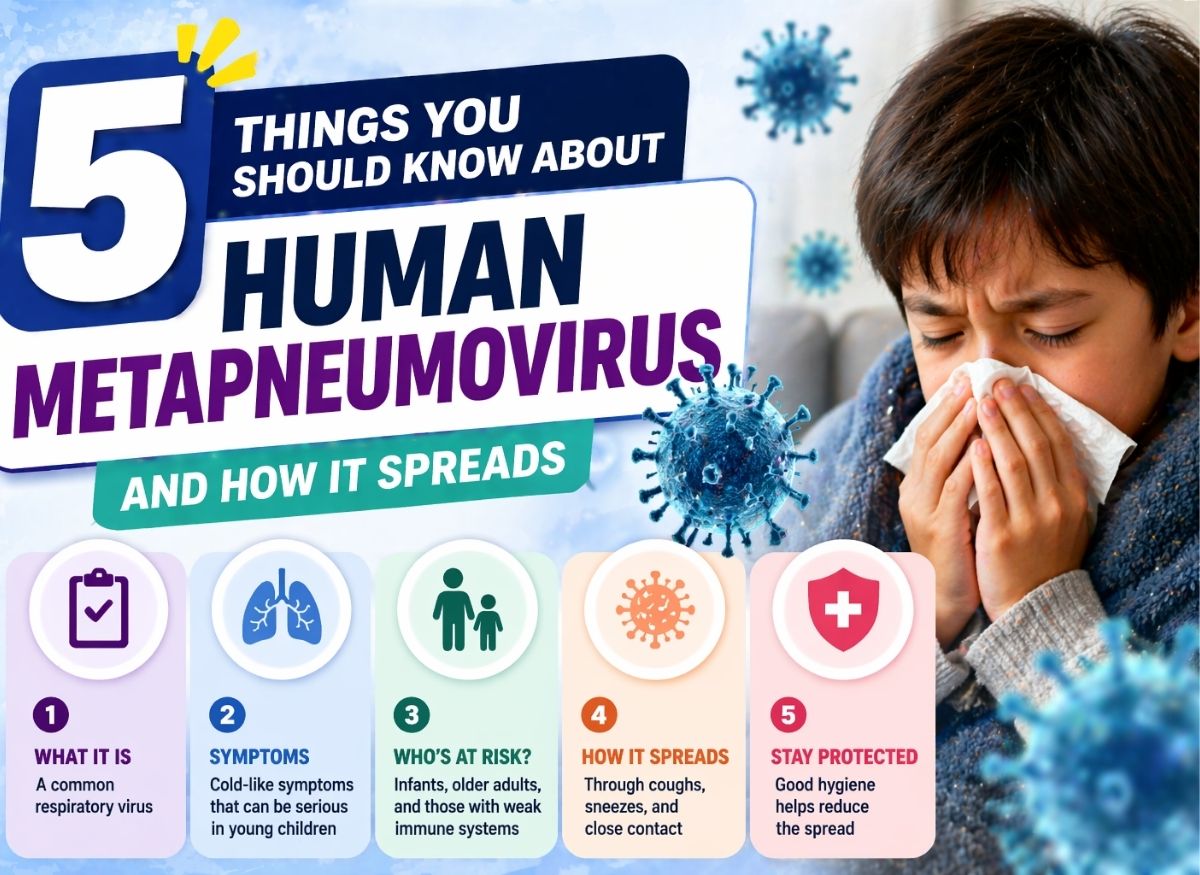
5 Things You Should Know About Human Metapneumovirus and How It Spreads
Human metapneumovirus (HMPV) is a respiratory virus that can cause symptoms similar to a cold, flu, or, in more serious cases, pneumonia. The virus was first identified in 2001 and belongs to the same broader virus family as respiratory syncytial virus (RSV).
HMPV can affect people of any age, but young children, older adults, and people with weakened immune systems are more likely to develop serious illness. Healthy adults usually experience a milder infection, although significant respiratory symptoms can still occur.
Because HMPV spreads through respiratory secretions and close contact, it can circulate easily in households, schools, daycares, workplaces, and other crowded settings.
Understanding the symptoms, how HMPV spreads, who is most vulnerable, and how to reduce transmission can help protect both you and the people around you.
What Is Human Metapneumovirus?
Human metapneumovirus, commonly called HMPV, is a respiratory virus that infects the upper and lower respiratory tract.
It was discovered in 2001, although researchers later found evidence that the virus had been circulating among humans for many years before it was officially identified.
HMPV belongs to the Pneumoviridae family and is closely related to RSV. It can cause illnesses ranging from a mild upper respiratory infection to more serious conditions such as bronchiolitis, bronchitis, and pneumonia.
Most people encounter HMPV during childhood and can become infected more than once throughout their lives. Previous infection does not provide complete lifelong protection, so reinfection can occur.
What Do HMPV Symptoms Feel Like?
HMPV symptoms can look very similar to other respiratory infections, making it difficult to identify based on symptoms alone.
Common symptoms include:
- Runny or stuffy nose
- Cough
- Sore throat
- Fever
- Fatigue
- Headache
- Wheezing
- Shortness of breath
For many healthy people, symptoms remain relatively mild and improve with rest and supportive care.
In more serious cases, the infection can move deeper into the respiratory tract and cause bronchiolitis or pneumonia. Infants, older adults, and people with certain underlying health conditions are particularly vulnerable to complications.
HMPV in Adults and High-Risk Groups
Although HMPV is often discussed in connection with children, adults can also become infected.
Healthy adults commonly develop cold-like symptoms, but older adults and people with asthma, COPD, heart disease, or weakened immune systems may have a harder time fighting the infection.
A severe HMPV infection can lead to pneumonia and may require oxygen or hospital care.
Because the symptoms of HMPV pneumonia can resemble influenza, RSV, COVID-19, and bacterial respiratory infections, doctors may use laboratory testing when identifying the exact cause is important.
HMPV vs. RSV
HMPV and RSV are closely related respiratory viruses, and they can cause many of the same symptoms.
Both can lead to:
- Coughing
- Congestion
- Fever
- Wheezing
- Bronchiolitis
- Pneumonia
They also tend to affect infants, older adults, and people with weakened immune systems more severely.
Symptoms alone generally cannot tell you whether an infection is caused by HMPV, RSV, influenza, or another respiratory virus. Laboratory testing may be used when a specific diagnosis is necessary.
It is also possible to have HMPV and another respiratory infection at the same time, which can make illness more complicated.
1. How Does Human Metapneumovirus Spread?
HMPV spreads primarily through respiratory secretions and close contact with an infected person.
When someone who has the virus coughs or sneezes, respiratory droplets containing the virus can enter the surrounding environment. The virus can then reach another person’s eyes, nose, or mouth.
Transmission can also occur through close physical contact or by touching contaminated objects and then touching your face.
Respiratory Droplets
Coughing and sneezing are common ways respiratory viruses move from one person to another.
Talking and other activities that release respiratory secretions can also contribute to transmission, particularly when people are close together.
This is one reason HMPV can spread easily in places such as:
- Schools
- Daycare centers
- Nursing homes
- Offices
- Public transportation
- Crowded households
Covering coughs and sneezes and avoiding close contact with others while sick can help reduce transmission.
Direct Contact
HMPV can also spread through close physical contact.
For example, an infected person may touch their nose or mouth and then touch another person or a shared object. If the second person subsequently touches their eyes, nose, or mouth, the virus may enter their respiratory system.
This type of transmission can be particularly relevant in households where parents and caregivers are frequently caring for sick children.
Contaminated Surfaces
Respiratory viruses can also be transferred through contaminated surfaces.
Objects such as toys, doorknobs, phones, countertops, and other frequently touched items may become contaminated with respiratory secretions.
Touching one of these objects and then touching your face can potentially contribute to infection.
Regular cleaning of frequently touched surfaces can help reduce this risk, especially when someone in the household is sick.
How Long Is HMPV Contagious?
The incubation period—the time between exposure and the appearance of symptoms—is generally several days.
People are often most contagious while they have active respiratory symptoms such as coughing and sneezing. However, the exact length of time someone can spread HMPV can vary.
Healthy adults may stop shedding the virus sooner, while infants and people with weakened immune systems can potentially remain infectious for longer periods.
Because the contagious period varies, it is sensible to take precautions while respiratory symptoms are present and to follow healthcare guidance when illness is severe or prolonged.
2. How Can You Prevent HMPV?
There is currently no widely available vaccine specifically designed to prevent HMPV. Prevention therefore relies largely on everyday measures that reduce exposure to respiratory secretions.
Wash Your Hands
Frequent handwashing is one of the simplest ways to reduce the spread of respiratory infections.
Wash your hands with soap and water, particularly:
- After coughing or sneezing
- After blowing your nose
- Before eating or preparing food
- After caring for someone who is sick
- After touching potentially contaminated surfaces
When soap and water are unavailable, an alcohol-based hand sanitizer can be useful.
Practice Good Respiratory Hygiene
Cover your mouth and nose when coughing or sneezing.
A tissue is preferable when available. Throw the tissue away afterward and wash your hands.
If you do not have a tissue, cough or sneeze into the inside of your elbow rather than your hands. This reduces the chance of transferring respiratory secretions to objects and other people.
Clean Frequently Touched Surfaces
Regularly clean objects and surfaces that are touched often, especially when someone in your household has a respiratory infection.
Pay attention to items such as:
- Door handles
- Light switches
- Phones
- Remote controls
- Toys
- Countertops
- Bathroom fixtures
Follow the instructions on the disinfectant label to ensure it is used correctly.
Avoid Touching Your Face
Your eyes, nose, and mouth are common entry points for respiratory viruses.
Touching these areas with contaminated hands can increase the chance of infection. Making a conscious effort to keep your hands away from your face can therefore be another useful precaution.
Stay Home When You’re Sick
If you have a respiratory infection, limiting close contact with others can help prevent transmission.
Avoid sharing cups, utensils, towels, or other personal items with people who are not sick. When possible, give yourself time to recover before returning to crowded environments.
People who are particularly vulnerable to severe respiratory infections may need to take additional precautions when HMPV or other respiratory viruses are circulating in their community.
3. Who Is Most at Risk for Severe HMPV?
HMPV can infect anyone, but certain groups are more likely to develop complications.
Young Children and Infants
Infants and young children have developing immune systems and relatively small airways.
Even moderate inflammation and mucus can make breathing more difficult for a young child. Severe HMPV infection can sometimes lead to bronchiolitis or pneumonia.
Parents and caregivers should pay close attention to signs of breathing difficulty, dehydration, or worsening symptoms.
Older Adults
Adults over 65 may have a greater risk of complications from respiratory infections.
Changes in immune function that occur with age, combined with underlying health conditions, can make it harder for the body to recover from HMPV.
Older adults with chronic lung or heart conditions may be especially vulnerable.
People With Weakened Immune Systems
People whose immune systems are weakened by certain illnesses or treatments may have a higher risk of severe or prolonged HMPV infection.
This can include some:
- Cancer patients receiving chemotherapy
- Organ transplant recipients
- People taking immune-suppressing medications
- People with certain immune disorders
Because their immune systems may not respond to the virus as effectively, complications can develop more easily.
People With Chronic Health Conditions
HMPV may be more difficult to manage in people who already have respiratory or cardiovascular conditions.
Those with conditions such as:
- Asthma
- COPD
- Heart disease
- Other chronic lung conditions
should pay attention to worsening respiratory symptoms and contact a healthcare professional when appropriate.
4. How Is HMPV Diagnosed and Treated?
HMPV can be difficult to distinguish from other respiratory infections based on symptoms alone.
A doctor may diagnose a respiratory infection based on symptoms and examination, but testing can be used when identifying the specific virus is important.
HMPV PCR Testing
A PCR test can detect genetic material from HMPV in a respiratory sample.
The sample is commonly collected using a nasal or throat swab. PCR testing may be included as part of a larger respiratory virus panel that checks for several viruses at the same time.
Testing may be particularly useful for people who are seriously ill, hospitalized, or at higher risk for complications.
Treatment for HMPV
There is currently no specific antiviral treatment routinely used for uncomplicated HMPV infection.
Treatment generally focuses on managing symptoms and supporting recovery.
Depending on the severity of the illness, supportive care may include:
- Plenty of fluids
- Adequate rest
- Fever and pain relief when appropriate
- Keeping nasal passages clear
- Monitoring breathing
- Supplemental oxygen for people who develop low oxygen levels
Severe infections may require hospitalization.
Antibiotics do not treat HMPV because it is a virus. They may only be prescribed when a healthcare professional determines that a bacterial infection is also present.
If symptoms become significantly worse, particularly breathing difficulties, professional medical evaluation is important.
5. When Is HMPV Most Common?
HMPV follows seasonal patterns, although the timing can vary by location and year.
In many temperate regions, activity tends to increase during late winter and spring. HMPV can circulate alongside other respiratory viruses, including influenza and RSV.
Late Winter and Spring Activity
HMPV activity often rises toward the end of the traditional winter respiratory-virus season.
This means people may still encounter HMPV in February, March, April, and sometimes later in the spring.
The exact timing can differ from one year to another and between regions.
Seasonal Overlap
HMPV may circulate at the same time as RSV, influenza, and other respiratory viruses.
Because several respiratory infections can produce similar symptoms, it may not be possible to determine which virus is responsible without testing.
In some cases, a person can have more than one respiratory infection at the same time.
Why Seasonality Matters
Knowing that HMPV can remain active into spring is a reminder that respiratory infections are not limited to the coldest months of the year.
Basic precautions such as handwashing, covering coughs, staying home when sick, and cleaning frequently touched surfaces remain useful throughout periods of increased respiratory-virus activity.
Can HMPV Cause Long-Term Complications?
Most people recover from HMPV without long-term problems.
However, severe infection can occasionally lead to complications, particularly in infants, older adults, and people with underlying health problems or weakened immune systems.
Wheezing and Respiratory Problems in Children
Severe respiratory infections during early childhood have been associated with an increased risk of recurrent wheezing.
Children who have experienced serious bronchiolitis may need continued monitoring if they develop repeated episodes of wheezing or breathing difficulties.
However, having HMPV does not mean that a child will automatically develop asthma or permanent lung problems.
Effects on Lung Function
Severe pneumonia can temporarily reduce exercise tolerance and make breathing more difficult during recovery.
People with existing lung conditions such as COPD may experience worsening respiratory symptoms after a significant infection and may require additional medical care.
Recovery time can vary considerably depending on age, overall health, and the severity of the infection.
Secondary Infections
A serious viral respiratory infection can sometimes make the lungs more vulnerable to additional infections.
If symptoms improve and then suddenly become worse again, or if a new fever, chest pain, or breathing difficulty develops, contact a healthcare professional.
When Should You Seek Medical Care?
Most HMPV infections can be managed at home, but certain symptoms require medical attention.
Seek prompt medical care if you or someone in your care develops:
- Difficulty breathing
- Rapid or labored breathing
- Bluish or gray lips or skin
- Persistent chest pain
- Severe weakness or confusion
- Signs of dehydration
- Symptoms that rapidly worsen
- A high or persistent fever, especially in a vulnerable person
Infants, older adults, and people with weakened immune systems may need medical evaluation sooner if respiratory symptoms become significant.
Conclusion
Human metapneumovirus is a common respiratory virus that can cause anything from mild cold-like symptoms to more serious illnesses such as bronchiolitis and pneumonia.
While healthy people often recover with rest and supportive care, infants, older adults, people with chronic lung or heart conditions, and those with weakened immune systems have a greater risk of complications.
HMPV spreads through respiratory secretions, close contact, and potentially contaminated surfaces. Good hand hygiene, covering coughs and sneezes, cleaning frequently touched objects, avoiding close contact while sick, and staying home when ill can all help reduce transmission.
There is currently no specific vaccine routinely available for HMPV, so prevention remains especially important. If symptoms become severe or breathing problems develop, seek medical attention promptly.
Frequently Asked Questions About Human Metapneumovirus
What is human metapneumovirus (HMPV)?
Human metapneumovirus is a respiratory virus that can infect the upper and lower respiratory tract.
It was identified in 2001 and is closely related to RSV. HMPV can cause symptoms ranging from a mild cold to more serious respiratory illnesses such as bronchiolitis and pneumonia.
Although anyone can become infected, young children, older adults, and people with weakened immune systems are more likely to experience severe illness.
How does human metapneumovirus spread?
HMPV primarily spreads through respiratory secretions from an infected person.
Coughing and sneezing can release infectious particles into the surrounding environment. Close contact and touching contaminated objects followed by touching the eyes, nose, or mouth may also contribute to transmission.
Washing your hands regularly, covering coughs and sneezes, cleaning frequently touched surfaces, and avoiding close contact with people while sick can help reduce the spread.
What are the symptoms of HMPV?
Common symptoms include:
- Cough
- Runny or stuffy nose
- Sore throat
- Fever
- Fatigue
- Wheezing
- Shortness of breath
Many infections are mild. More severe cases can develop into bronchiolitis or pneumonia, particularly among young children, older adults, and people with weakened immune systems.
Is there a treatment for human metapneumovirus?
There is no specific antiviral treatment routinely used for uncomplicated HMPV infection.
Treatment generally focuses on relieving symptoms and supporting recovery. Rest, fluids, and appropriate fever or pain relief may help.
People with severe illness may need medical treatment, including supplemental oxygen or hospitalization.
Antibiotics do not treat HMPV itself because it is a viral infection.
Can HMPV be prevented?
There is currently no routinely available vaccine specifically for HMPV.
You can reduce your risk by:
- Washing your hands frequently
- Covering coughs and sneezes
- Avoiding close contact with people who are sick
- Avoiding touching your eyes, nose, and mouth with unwashed hands
- Cleaning frequently touched surfaces
- Staying home when you are ill
These measures can also help reduce the spread of other respiratory viruses.
Who is most at risk for severe HMPV infection?
Anyone can become infected, but severe illness is more likely among:
- Infants and young children
- Adults over 65
- People with weakened immune systems
- People with asthma or COPD
- People with other chronic lung conditions
- People with certain heart conditions
If someone in one of these groups develops worsening cough, wheezing, breathing difficulty, dehydration, or other concerning symptoms, medical advice should be sought promptly.