
11 Root Causes of Itchy Skin You Should Never Ignore
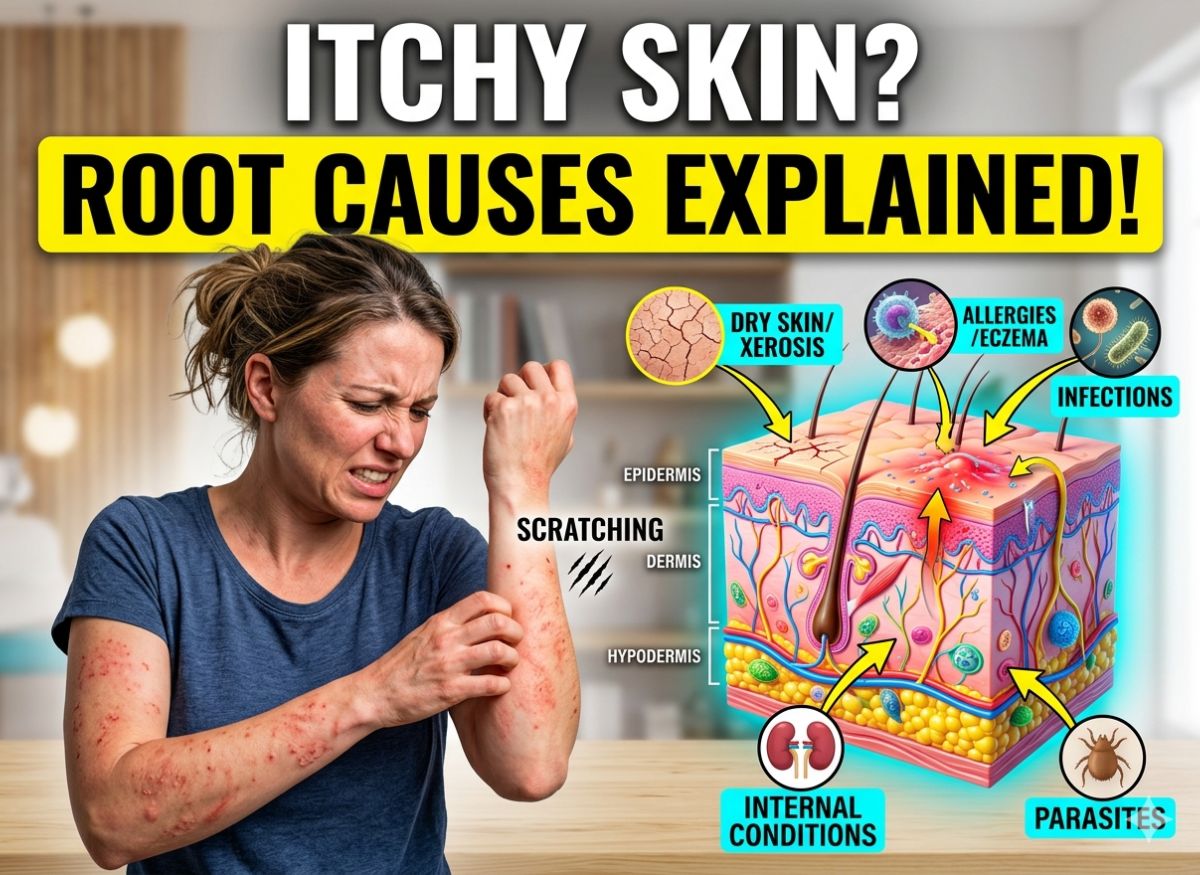
Itchy skin can range from a minor annoyance to an intense irritation that makes it difficult to sleep, concentrate, or enjoy your day. While scratching may feel like the easiest way to get relief, persistent itching can sometimes be your body’s way of signaling that something else is going on.
Itching is not always caused by simple dry skin. In some cases, it can be linked to a skin condition, an allergic reaction, or an underlying health problem. Conditions such as eczema and psoriasis can cause ongoing itching, while problems involving the liver, kidneys, thyroid, or blood may also produce persistent symptoms.
Occasional itching is common, but itching that continues for weeks, affects large areas of the body, or occurs without an obvious skin problem deserves more attention.
This article explores the root causes of itchy skin that should not be overlooked. We’ll look at common skin conditions, internal health problems, environmental triggers, neurological causes, and psychological factors. If you have been dealing with unexplained itching for weeks or months, understanding the possible causes can help you know when it may be time to seek medical advice.
Common Causes of Itchy Skin
What skin conditions can cause pruritus?
Many dermatological conditions can lead to pruritus, the medical term for itching. Some of the most common include eczema (atopic dermatitis), psoriasis, hives (urticaria), scabies, and fungal infections.
These conditions directly affect the skin, causing inflammation, irritation, dryness, or other changes that create the urge to scratch.
1. Eczema (Atopic Dermatitis)
Eczema, also called atopic dermatitis, is a chronic inflammatory skin condition and one of the common causes of persistent itching, particularly among children.
It can weaken the skin’s protective barrier, leaving the skin dry, sensitive, and more vulnerable to inflammation. The itching may become intense and create an “itch-scratch cycle.” Scratching damages the skin, which increases irritation and inflammation and can lead to even more itching.
Eczema may cause skin that looks red, dry, or irritated. Small fluid-filled blisters may sometimes appear and can eventually ooze or form a crust. Commonly affected areas include the bends of the elbows and knees, the hands, and the face.
2. Psoriasis
Psoriasis is an autoimmune condition that causes skin cells to develop and build up much faster than normal. This rapid buildup creates thick, red patches known as plaques, which are often covered with silvery-white scales.
These patches can be intensely itchy and may also become painful. In severe cases, the skin can crack and bleed.
The itching associated with psoriasis is closely linked to the inflammation taking place within the skin and can have a significant effect on everyday comfort and quality of life.
3. Hives (Urticaria)
Hives, medically known as urticaria, are raised, itchy welts that can appear suddenly. They are often associated with allergic reactions to foods, medications, insect bites, or other triggers.
The itching occurs when mast cells in the skin release histamine and other inflammatory substances. The welts can vary in size and may appear almost anywhere on the body.
One noticeable feature of hives is that the welts can change shape or disappear from one location and appear somewhere else within hours.
Acute hives usually clear within days, while chronic urticaria can continue for weeks or even months.
4. Scabies
Scabies is caused by a microscopic mite called Sarcoptes scabiei. The mite burrows into the upper layer of the skin and lays eggs, triggering an immune reaction.
The resulting itching can be extremely intense and is characteristically worse at night.
Scabies may produce tiny bumps, blisters, or thin, irregular burrow-like lines. Common locations include the spaces between the fingers, wrists, elbows, and areas around the beltline.
5. Fungal Infections
Fungal infections such as ringworm (tinea corporis), athlete’s foot (tinea pedis), and jock itch (tinea cruris) are caused by dermatophyte fungi that grow on the skin.
These infections can disrupt the skin’s surface and create a red, scaly, and often circular rash. The affected area is usually quite itchy.
The itching occurs partly because the body’s immune system responds to the fungal organisms, creating inflammation and irritation in the affected skin.
6. Chronic Kidney Disease (CKD)
People with advanced chronic kidney disease (CKD), particularly those with end-stage renal disease, may develop severe and persistent itching known as uremic pruritus.
The exact cause is complex. It is believed to involve changes associated with the buildup of substances in the blood that damaged kidneys can no longer effectively filter.
This type of itching may affect large areas of the body and can become especially troublesome at night. In severe cases, it can interfere with sleep and significantly affect quality of life.
7. Liver Disease
Certain chronic liver conditions, including cirrhosis, hepatitis, and cholestasis, can cause persistent itching.
Cholestasis involves impaired bile flow, and the resulting changes in bile-related substances in the bloodstream are thought to contribute to the itching.
The discomfort is often widespread but may be particularly noticeable on the palms of the hands and soles of the feet. The severity can range from mild irritation to extremely difficult-to-manage itching.
Unlike some skin conditions, liver-related itching may not respond well to ordinary anti-itch creams.
8. Thyroid Problems
Both an overactive thyroid (hyperthyroidism) and an underactive thyroid (hypothyroidism) can affect the skin and potentially contribute to itching.
Hyperthyroidism can increase blood flow and skin temperature, which may contribute to itchiness.
Hypothyroidism is often associated with very dry, coarse skin. When the skin loses moisture and its natural protective oils, it can become rough, flaky, cracked, and more prone to itching.
9. Certain Cancers
Persistent itching can occasionally be associated with certain cancers, particularly blood-related cancers such as Hodgkin’s lymphoma and non-Hodgkin’s lymphoma.
When associated with lymphoma, itching may be severe and widespread and can sometimes have a burning quality. The exact mechanism is not completely understood, but chemicals released during the body’s response to cancer may affect nerve fibers involved in the sensation of itching.
Other blood disorders, including polycythemia vera, can also cause significant itching, particularly after exposure to warm water.
10. Environmental Factors
Environmental exposures and allergic reactions can introduce substances that irritate the skin or trigger an immune response. This can lead to inflammation, histamine release, and itching.
- Contact Dermatitis: This occurs when the skin reacts to something it comes into contact with. It may result from direct irritation or an allergic reaction.
- Irritant Contact Dermatitis: This is the more common form and develops when a substance directly damages or irritates the skin’s outer layer. Common triggers include harsh soaps, detergents, solvents, and frequent exposure to water. The reaction usually remains around the area that came into contact with the irritant and may cause redness, dryness, and itching.
- Allergic Contact Dermatitis: This occurs when the immune system reacts to a particular allergen. Common triggers include poison ivy, nickel in jewelry or buckles, fragrances, cosmetic preservatives, and latex. Exposure can result in a very itchy red rash that may contain bumps or blisters.
- Insect Bites and Stings: Mosquitoes, fleas, bedbugs, and other insects can cause itching when they bite the skin and introduce saliva. The immune system recognizes proteins in the saliva as foreign and releases histamine and other inflammatory chemicals. This creates the familiar redness, swelling, and itching around the bite. Bee and wasp stings inject venom and can cause a similar but often more painful reaction.
- Dry Air (Xerosis or Winter Itch): Low humidity can remove moisture from the skin, particularly during colder months when indoor heating is being used. This can leave the skin rough, dry, and flaky. A weakened skin barrier makes the nerve endings more vulnerable to irritation, resulting in generalized itching that may occur without a visible rash. This is often called winter itch and commonly affects areas such as the shins, arms, and abdomen.
- Aquagenic Pruritus: This uncommon condition causes intense itching after contact with water, regardless of the water’s temperature. The skin usually does not show visible changes. The itching can begin within minutes of exposure and may continue for an hour or longer. The exact cause remains unknown, although abnormal activity of nerve fibers in the skin may play a role.
11. Neurological or Psychological Reasons
Not all itching begins in the skin itself. In some cases, the sensation may result from problems involving the nervous system or psychological factors.
These causes are less common, but they become particularly important to consider when no clear skin condition or internal medical cause can explain the itching.
1. Neuropathic Itch
Neuropathic pruritus occurs when nerves in the central or peripheral nervous system become damaged or malfunction.
Instead of responding to actual skin irritation, the affected nerves can send incorrect signals to the brain, creating a sensation of itching even when the skin appears normal.
Possible causes include:
- Pinched Nerves: A herniated disc or another spinal problem can compress a nerve and cause itching, pain, or numbness along the area supplied by that nerve. When this occurs in the arm, it may be referred to as brachioradial pruritus. When it affects the back, it may be known as notalgia paresthetica.
- Postherpetic Neuralgia: Following shingles, the varicella-zoster virus can leave lasting nerve damage. This may result in ongoing burning, pain, or intense itching in the area where the original rash occurred.
- Multiple Sclerosis (MS): MS affects the protective myelin surrounding nerves in the brain and spinal cord. This can lead to abnormal sensations, including neuropathic itching.
- Diabetes: Poorly controlled diabetes can damage peripheral nerves, particularly in the legs and feet. This neuropathy can produce sensations such as numbness, tingling, pain, and itching.
2. Psychogenic Pruritus
Psychogenic pruritus refers to itching that is primarily caused, intensified, or experienced in connection with psychological factors.
It is generally considered a diagnosis of exclusion, meaning other possible dermatological, systemic, and neurological causes need to be considered first.
Several psychological conditions may be associated with this type of itching:
- Anxiety and Stress: Significant stress or anxiety can trigger or worsen itching. The body’s stress response can influence nerve endings and inflammatory pathways. Scratching may also become a way of coping with emotional distress.
- Obsessive-Compulsive Disorder (OCD): In some situations, scratching may become a compulsive behavior. A person may feel a strong urge to scratch even when there is no obvious physical cause of itching, potentially causing skin damage.
- Depression: Itching can sometimes occur as a physical symptom associated with depression. Changes in neurotransmitters such as serotonin may play a role in how the brain processes both mood and itch sensations.
- Delusional Parasitosis: This rare psychiatric condition involves a fixed belief that parasites are present on or inside the body. The belief may lead to intense scratching or picking in an attempt to remove the perceived parasites.
How to Diagnose The Cause of your Itchy Skin
The appearance, location, duration, and severity of itching can all provide important clues about its cause.
For example, thick and scaly skin may point toward psoriasis, while small blisters can be associated with eczema. Widespread itching without a visible rash may suggest an internal medical condition.
Looking at these characteristics together can help healthcare professionals determine what may be behind the pruritus.
Presence and Type of Rash
- Itch with a Rash: When a visible rash is present, its appearance can be especially helpful. Thick red plaques covered with silvery scales are characteristic of psoriasis. Red, inflamed skin with small fluid-filled or weeping blisters can occur with acute eczema. Raised red welts that appear and disappear are typical of hives. Small linear burrows, particularly between the fingers, may suggest scabies. Circular, red, scaly patches are commonly associated with ringworm.
- Itch without a Rash: Widespread itching without obvious skin changes can be an important warning sign of an underlying systemic condition. It may occur with chronic kidney disease, liver disease, thyroid disorders, or certain lymphomas. Medication reactions, neurological conditions, and psychological factors can also cause itching without a primary rash.
Location of the Itch
- Localized Itch: When itching is restricted to one particular area, a local cause is often considered. For example, itching on the feet may be associated with athlete’s foot, while itching beneath an area exposed to new jewelry may suggest a nickel allergy. Itching that follows the distribution of a single nerve may point toward a neurological cause such as a pinched nerve or previous shingles.
- Generalized Itch: Itching that affects much of the body can be more suggestive of a systemic condition, significant dryness, or a widespread allergic reaction.
Duration and Timing
- Acute Itch: Sudden itching that lasts for a relatively short period may result from an insect bite, an allergic reaction such as hives, or contact with an irritant such as poison ivy.
- Chronic Itch: Itching that continues for more than six weeks is considered chronic. It may be associated with long-term skin disorders such as eczema and psoriasis or with underlying internal conditions.
- Nocturnal Itch: Itching that becomes noticeably worse at night is strongly associated with scabies, although nighttime itching can also occur with many other conditions.
Intensity of the Itch
The severity of itching can also offer useful information. Scabies and atopic dermatitis, for example, can produce extremely intense itching that interferes with sleep and everyday activities.
Itching caused by simple dry skin may be less severe and easier to control, although this can vary from person to person.
Medical Tests to Diagnose the Source of Itchy Skin
Doctors may use several types of tests to determine why someone is experiencing persistent itching. The appropriate tests depend on the person’s symptoms, medical history, physical examination, and suspected cause.
Possible evaluations include blood tests for internal conditions, skin scrapings for fungal infections or mites, allergy patch testing for contact dermatitis, and skin biopsies when the diagnosis remains unclear.
- Blood Tests: A complete blood count (CBC) and comprehensive metabolic panel can provide useful information about overall health. Additional blood tests may be used to:
- Check Kidney and Liver Function: Tests measuring creatinine, blood urea nitrogen (BUN), and liver enzymes such as ALT and AST can help identify possible kidney or liver problems.
- Assess Thyroid Function: Thyroid-stimulating hormone (TSH) and other thyroid hormone tests can help identify an overactive or underactive thyroid.
- Look for Markers of Inflammation or Cancer: Certain blood count abnormalities or other markers may provide clues about infection or conditions such as lymphoma. Iron levels may also be checked because iron deficiency anemia can sometimes be associated with itching.
- Skin Scraping (KOH Test): When a fungal infection or scabies is suspected, a small sample of skin may be gently scraped and examined. For fungal infections, potassium hydroxide (KOH) can be used to make fungal structures easier to identify under a microscope. When scabies is suspected, the sample can be examined for mites, eggs, or fecal material.
- Allergy Patch Testing: Patch testing is commonly used when allergic contact dermatitis is suspected. Small amounts of potential allergens, such as nickel, fragrances, or preservatives, are placed on patches applied to the back. After remaining in place for about 48 hours, the skin is examined for delayed allergic reactions.
- Skin Biopsy: When the cause remains uncertain, a small sample of skin may be removed under local anesthesia and examined in a pathology laboratory. A biopsy can help identify changes associated with conditions such as psoriasis, eczema, or cutaneous lymphoma and may be used when a more serious skin disorder needs to be ruled out.
When to Seek for Medical Help
A medical evaluation is important when itching is severe, continues for more than two weeks, affects most or all of the body, or occurs alongside other symptoms such as fever, fatigue, or unexplained weight loss.
Minor itching with an obvious cause, such as a single insect bite or temporary dry skin, may often improve with basic care. However, unexplained or persistent itching should not automatically be dismissed.
You should consider seeing a doctor or dermatologist if:
- The itch is severe and disruptive: If itching interferes with sleep, work, or everyday activities, medical treatment may be needed. Excessive scratching can also damage the skin and increase the risk of infection.
- It lasts for an extended period: Itching that does not improve with simple measures such as moisturizing and avoiding irritants and continues for more than two weeks should be evaluated professionally.
- The itch is generalized: Itching across the entire body without an obvious explanation may sometimes be associated with conditions involving the liver, kidneys, thyroid, or blood.
- It is accompanied by other symptoms: Seek medical attention when itching occurs along with concerning symptoms such as:
- Unexplained weight loss
- Fever or night sweats
- Severe fatigue or weakness
- Changes in bowel or bladder habits, such as pale stools or dark urine
- Yellowing of the skin or eyes (jaundice)
- You see signs of a skin infection: Scratched skin that becomes red, swollen, warm, painful, or begins producing pus may indicate a secondary bacterial infection that needs medical treatment.
By contrast, a medical visit may not be necessary for brief, mild itching with an obvious trigger that quickly resolves, such as a single mosquito bite, temporary winter dryness that improves with moisturizer, or irritation from a soap that disappears after stopping its use.
Itchy Skin Treatments
At-Home Remedies to Relieve from Itching
Simple home measures can often provide temporary relief by cooling irritated skin, adding moisture, and supporting the skin’s protective barrier.
Useful approaches include cold compresses, colloidal oatmeal baths, regular moisturizing, and wearing comfortable clothing that does not irritate the skin.
- Apply a Cold Compress: A cool, wet cloth or an ice pack wrapped in a towel can temporarily calm itching. Applying it to the affected area for around 15–20 minutes may reduce inflammation and numb the nerve endings responsible for transmitting itch signals. This can be repeated as needed.
- Take a Cool or Lukewarm Oatmeal Bath: Colloidal oatmeal is finely ground oatmeal designed for use in baths and is commonly used to soothe irritated skin. It contains compounds called avenanthramides that have anti-inflammatory and antioxidant properties. Soaking in a lukewarm oatmeal bath for about 15–20 minutes may help calm itching associated with eczema, poison ivy, or chickenpox. Avoid very hot water because it can remove natural skin oils and make dryness worse.
- Moisturize Damp Skin: Regular moisturizing is particularly important when dry skin is contributing to the itching. Apply moisturizer shortly after bathing while the skin is still slightly damp. Gently pat the skin with a towel rather than rubbing it completely dry, then apply a thick moisturizer to help retain moisture. Fragrance-free creams or ointments containing ingredients such as ceramides, hyaluronic acid, or petrolatum can help support the skin barrier.
- Wear Loose-Fitting, Natural-Fiber Clothing: Tight clothing and certain fabrics can increase heat, sweat, friction, and irritation. Wool and some synthetic fabrics may be particularly uncomfortable for sensitive skin. Loose, breathable clothing made from soft materials such as cotton or silk can help keep the skin cooler and reduce irritation.
Over-the-Counter Medications
Several over-the-counter treatments may help control mild to moderate itching, depending on the cause. Options include topical hydrocortisone, oral antihistamines, and cooling products containing ingredients such as calamine or menthol.
- Topical Corticosteroids: Hydrocortisone cream or ointment, available in 0.5% and 1% strengths, is commonly used for itching caused by inflammation. It can reduce redness, swelling, and itching associated with conditions such as mild eczema, contact dermatitis, and insect bites. Apply a thin layer as directed. Long-term use or application over large areas should be discussed with a healthcare professional.
- Oral Antihistamines: Antihistamines can be useful when itching is related to histamine release, including hives and certain allergic reactions.
- First-generation antihistamines such as diphenhydramine (Benadryl) can cause significant drowsiness and may be used by some people for nighttime itching.
- Second-generation antihistamines such as cetirizine (Zyrtec), loratadine (Claritin), and fexofenadine (Allegra) are generally less sedating and may be more suitable during the daytime.
- Topical Anesthetics and Cooling Agents: Some topical products provide temporary relief by reducing nerve signaling or creating a cooling sensation.
- Pramoxine: This topical anesthetic is found in various anti-itch creams and lotions. It works by reducing the nerve signals associated with itching.
- Calamine and Menthol: Calamine can provide a soothing effect, while menthol or camphor creates a cooling sensation that may temporarily distract the nervous system from the itch.
Prescription Treatments for Chronic Itchy Skin
Prescription treatment may be needed when itching is severe, persistent, does not improve with over-the-counter products, is linked to a significant medical condition, or seriously affects quality of life.
- Potent Topical and Oral Corticosteroids: If OTC hydrocortisone does not adequately control inflammation, a healthcare professional may prescribe a stronger topical corticosteroid. In certain severe or widespread inflammatory conditions, oral corticosteroids such as prednisone may sometimes be used for short periods.
- Topical Calcineurin Inhibitors: For sensitive areas such as the face or groin, prescription non-steroidal treatments such as tacrolimus (Protopic) and pimecrolimus (Elidel) may be used as alternatives to long-term corticosteroids. They work by reducing local immune activity and inflammation in the skin.
- Immunosuppressants and Biologics: Severe inflammatory or autoimmune conditions such as psoriasis and atopic dermatitis may require medications that modify or suppress immune activity. Options can include traditional medications such as methotrexate or cyclosporine and newer biologic treatments that target specific inflammatory pathways.
- Medications Targeting a Specific Underlying Cause: When itching is caused by an internal condition, treatment generally focuses on the underlying problem.
- For uremic pruritus related to kidney disease, treatments may include medications such as gabapentin or phototherapy.
- For cholestatic pruritus associated with liver disease, medications such as cholestyramine may be prescribed to bind bile acids in the intestine.
- For neuropathic itch, medications that affect nerve signaling, including gabapentin, pregabalin, or certain antidepressants, may be considered.
- Phototherapy (Light Therapy): Phototherapy uses controlled exposure to specific wavelengths of ultraviolet light. It can be useful for widespread or persistent itching associated with conditions such as atopic dermatitis, psoriasis, and uremic pruritus. The treatment can reduce inflammation and affect nerve activity involved in itch perception.
Specific Types and Long-term Considerations for Pruritus
Pruritus can be classified according to how it appears and what causes it. Managing chronic itching involves treating the underlying condition, protecting the skin from repeated scratching, and addressing the effects itching can have on sleep, emotional well-being, and daily life.
Understanding whether a rash is present, whether the itching occurs at particular times, and where it appears can help narrow down possible causes. The underlying issue may be something as straightforward as skin irritation or something more complex involving an internal medical condition.
Breaking the itch-scratch cycle is important because repeated scratching can cause skin thickening, known as lichenification, increase the risk of infection, and contribute to significant distress.
Pruritus with A Rash vs Without A Rash
The difference between itching with a visible rash (pruritus cum materia) and itching without an obvious rash (pruritus sine materia) can provide an important diagnostic clue.
Pruritus cum materia generally suggests a primary skin condition in which the itching is connected to a visible skin change. Eczema, psoriasis, hives, and contact dermatitis are examples.
Diagnosis may involve a physical examination, skin scraping, biopsy, or patch testing depending on the suspected condition. Treatment is then directed toward the specific skin problem and may involve moisturizers, topical steroids, or other therapies.
Pruritus sine materia can be more difficult to explain because the skin may look normal even though the itching is significant. Widespread itching without a primary rash may be associated with systemic, neurological, or psychological causes.
In these situations, healthcare professionals may investigate kidney function, liver function, thyroid levels, blood counts, and other possible causes.
It can occur with chronic kidney disease, cholestatic liver disease, iron deficiency anemia, thyroid disorders, and certain cancers such as lymphoma. Identifying whether a rash is present can therefore help guide both the diagnostic process and treatment approach.
Nocturnal Pruritus (Nighttime Itching)
Nocturnal pruritus refers to itching that mainly appears or becomes worse at night. Nighttime itching can be influenced by natural changes in the body’s temperature, skin moisture, inflammatory activity, and the sleep cycle.
At night, the body may lose more water through the skin, contributing to dryness. Natural changes in anti-inflammatory hormones and inflammatory mediators may also influence how strongly itching is perceived.
With fewer daytime distractions, people may also become more aware of physical sensations, making the itch feel more intense.
Managing the sleeping environment can help. Keeping the bedroom cool, using a humidifier when the air is dry, and choosing soft, breathable cotton sleepwear and bedding may reduce irritation.
A consistent evening skincare routine can also be useful. Applying a thick moisturizer immediately after a lukewarm bath can help lock moisture into the skin.
For some people, a healthcare provider may recommend a sedating antihistamine at night to reduce itching and support sleep. However, medication should be used according to professional guidance.
Psychogenic Pruritus
Psychogenic pruritus can be diagnosed and treated, but identifying it requires careful evaluation. It is considered a diagnosis of exclusion, meaning other dermatological, systemic, and neurological causes should first be considered.
A connection between itching and psychological stress, anxiety, depression, or obsessive-compulsive behavior may provide an important clue.
In rare cases, psychogenic itching may occur with delusional parasitosis, in which a person has a fixed belief that parasites are present despite the absence of evidence.
Treatment may involve addressing both psychological and physical aspects of the condition. Cognitive-Behavioral Therapy (CBT) can help people recognize triggers, change thought patterns, and develop healthier responses to the urge to scratch. Habit-reversal techniques may also be useful.
Medication may be considered when anxiety or depression contributes to symptoms. Certain Selective Serotonin Reuptake Inhibitors (SSRIs) may help address psychological symptoms and may also influence itch perception.
Gentle skin care remains important as well. Mild cleansers, moisturizers, and cooling products containing ingredients such as menthol or camphor may help provide additional comfort.
How to Prevent Itchy Skin
Preventing recurring itchy skin requires a consistent skincare routine, reducing exposure to known irritants, and maintaining a healthy environment.
One of the most important steps is keeping the skin’s protective barrier strong. Take short showers or baths using lukewarm rather than hot water, and choose a mild, fragrance-free cleanser.
After bathing, gently pat the skin rather than rubbing it completely dry. Apply a thick, fragrance-free moisturizer while the skin is still slightly damp to help retain moisture.
Clothing and personal-care products also matter. Choose loose-fitting clothing made from soft, breathable materials such as cotton. Avoid fabrics that irritate your skin, including wool or certain synthetic materials.
When selecting soaps, lotions, and laundry detergents, consider fragrance-free and hypoallergenic products without unnecessary dyes or harsh chemicals.
The environment can also influence skin comfort. A humidifier may help during dry winter weather, while keeping temperatures comfortable can reduce sweating and irritation.
Stress management may also be helpful because stress can aggravate several inflammatory skin conditions. Techniques such as meditation or yoga may support overall well-being.
Finally, staying adequately hydrated and following a balanced diet can support overall skin health.
FAQs
1. What is the most common reason for itchy skin?
Dry skin is one of the most common reasons for itching. When the skin loses moisture, it can become rough, flaky, and irritated, creating the urge to scratch.
Cold weather, low humidity, hot showers, and harsh soaps can all contribute to dry skin. In many cases, mild itching caused by dryness improves with regular moisturizing and proper skin care.
2. Is itchy skin a symptom of anything serious?
Persistent itching can sometimes be associated with more serious health conditions.
Long-lasting itching may occur with eczema, psoriasis, allergic reactions, liver disease, kidney disease, and certain cancers. It deserves additional attention when it continues for weeks, affects large areas of the body, occurs without an obvious rash, or is accompanied by other unusual symptoms.
A healthcare professional can help determine the underlying cause and recommend appropriate treatment.
3. How to stop itching immediately?
Several simple measures may provide quick, temporary relief:
- Cool compresses: Place a cool, damp cloth over the itchy area to help calm irritation and reduce the sensation of itching.
- Anti-itch creams: Over-the-counter products containing hydrocortisone or calamine may help with certain types of itching.
- Oatmeal baths: Colloidal oatmeal added to a lukewarm bath can soothe irritated skin.
- Avoid scratching: Scratching may provide brief relief but can further damage the skin and intensify the itch. Instead, try gently tapping or pressing the area.
4. What is my body lacking if my skin is itchy?
Itchy skin can sometimes be associated with nutritional deficiencies, including low levels of vitamin D, vitamin B12, or zinc. Inadequate intake of omega-3 fatty acids may also contribute to dry skin.
Dehydration can contribute to dryness as well.
However, itching has many possible causes, and a deficiency should not be assumed without evaluation. If you suspect a nutritional deficiency, a healthcare professional can determine whether blood testing or dietary changes are appropriate.
Conclusion
Itchy skin can be anything from a temporary irritation to a persistent problem that interferes with sleep and everyday life. While common causes such as dry skin and allergies are often manageable, ongoing itching can sometimes point to an underlying condition that needs medical attention.
Understanding the possible causes—from eczema and psoriasis to liver or kidney problems—can help you recognize when your symptoms deserve further evaluation.
If itching is severe, lasts for an extended period, affects large areas of the body, or occurs with other unusual symptoms, speak with a healthcare professional. Finding the underlying cause is an important step toward choosing the right treatment and getting lasting relief.
Persistent itching should not simply be ignored. Paying attention to what your skin is telling you can help you identify potential problems sooner and take appropriate steps to protect your health and comfort.