
Diverticulosis vs. Diverticulitis: What Is The Difference?
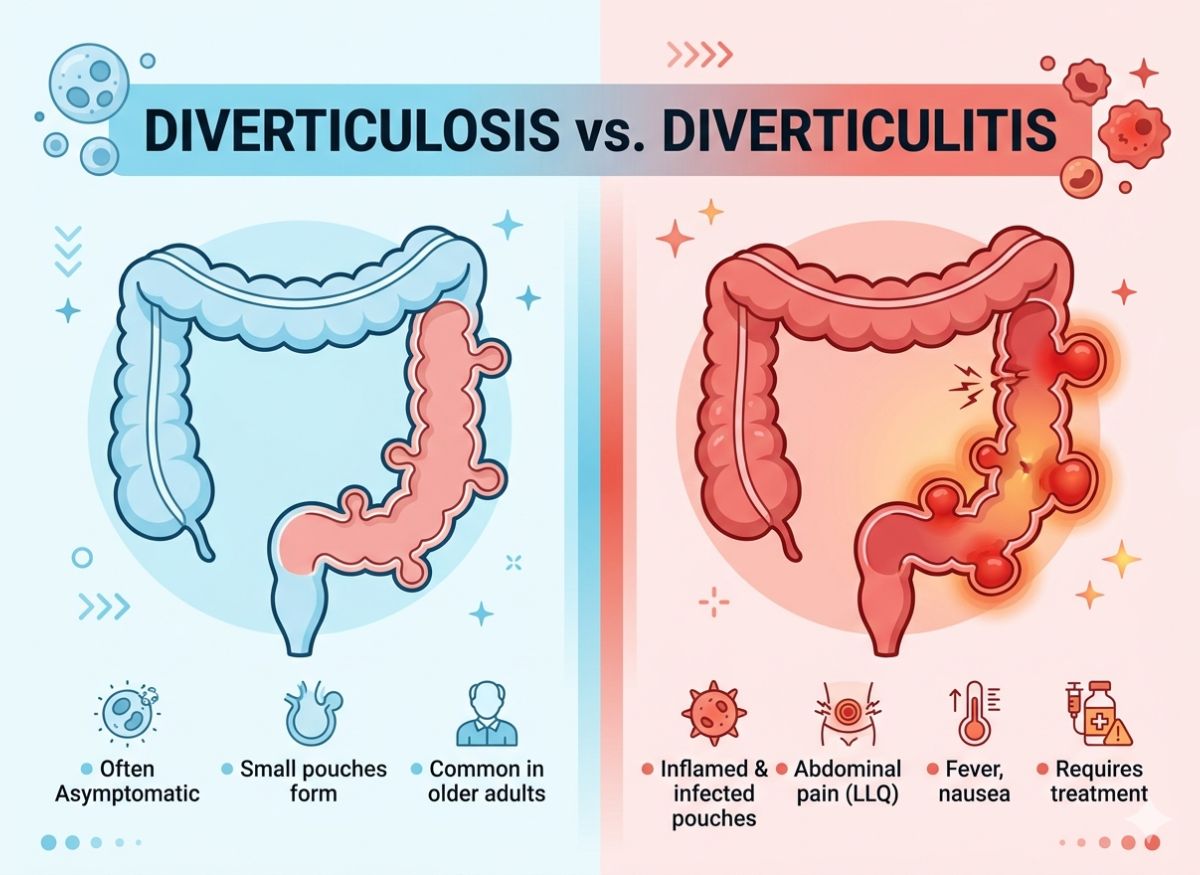
A quiet change inside the digestive system can go unnoticed for years, until one day it becomes sudden, sharp discomfort that demands attention. Many people use the terms diverticulosis and diverticulitis interchangeably, but they describe two very different stages of the same underlying condition. Knowing the difference can help you avoid pain, complications, and unnecessary worry.
Diverticulosis is the formation of small pouches, called diverticula, in the wall of the colon. It is extremely common, especially with age, and often causes no symptoms at all. Many people live with it for years without knowing, and it is usually found during routine screenings or tests for unrelated digestive problems. Diverticulitis happens when those pouches become inflamed or infected. That is where trouble begins. Something silent can quickly turn into abdominal pain, fever, bloating, and changes in bowel habits, and serious cases may need urgent medical care.
The confusion between the two terms leads to misunderstandings about risk, treatment, and prevention. Some people assume diverticulosis will inevitably cause symptoms, while others miss the early warning signs of diverticulitis until it worsens. This article explains the difference clearly and practically, showing how each condition develops, which symptoms to watch for, and how simple lifestyle changes can protect your digestive health for the long term.
Diverticulosis vs. Diverticulitis: What is The Difference?
The core difference is simple. Diverticulosis means pouches (diverticula) are present in the colon wall. Diverticulitis means those pouches are inflamed or infected. Diverticulosis is a chronic, structural condition, while diverticulitis is an acute inflammatory event that arises from it.
To see how they relate, it helps to look at each one separately. Diverticulosis always comes first, since nobody can develop diverticulitis without it. But having diverticulosis does not mean diverticulitis will follow. Only a small share of people with the condition, roughly 4–5%, ever have an inflammatory attack. What separates the two is whether active inflammation is present in the diverticula.
What Exactly Is Diverticulosis?
Diverticulosis is a common digestive condition in which small, bulging pouches called diverticula form in the wall of the digestive tract, most often in the lower part of the large intestine (colon). It develops when weak spots in the muscular outer layer of the colon give way under pressure, letting the inner lining push through and form pockets.
The main cause is high pressure inside the colon, often linked to a modern, low-fiber diet. Without enough fiber to bulk up stool, the colon must push harder to move smaller, harder stools. This raises pressure inside the colon and strains its wall over time. Several key points describe how diverticulosis forms and behaves:
- Anatomy of Formation: Diverticula usually form at naturally weak points in the colon wall, where blood vessels (vasa recta) pass through the circular muscle layer to supply the lining. These spots are structurally weaker and can herniate when internal pressure rises. The sigmoid colon is the most common site, accounting for about 95% of cases, because it is the narrowest part of the colon and has the highest internal pressure.
- Prevalence and Asymptomatic Nature: Diverticulosis is very common, especially in older people and in Western industrialized countries. It appears in fewer than 20% of people under 40 but in about 60% of those over 60. More than 80% of people with it have no symptoms and don’t know they have it. It is often found by chance during a colonoscopy or imaging done for other reasons.
- Symptomatic Uncomplicated Diverticular Disease (SUDD): A small group of people have chronic, on-and-off symptoms without active inflammation. Known as SUDD, it can cause lower abdominal pain, bloating, constipation, or diarrhea. The symptoms often resemble Irritable Bowel Syndrome (IBS) and are thought to involve visceral hypersensitivity, altered gut bacteria, or low-grade inflammation that doesn’t meet the definition of acute diverticulitis.
When Diverticulosis Becomes Diverticulitis
Diverticulosis turns into diverticulitis when one or more diverticula become blocked. This sets off bacterial overgrowth, infection, and inflammation, which cause acute symptoms and can lead to complications. It marks the shift from a passive structural finding to an active, painful disease. The inflammation usually stays around the affected pouch and the nearby colon wall, but untreated it can progress to more serious problems.
At the heart of the process is a blockage that turns the open pouch into a closed space, an ideal place for infection to grow. It unfolds in a fairly predictable sequence:
- Obstruction and Stasis: It usually starts when the opening, or “neck,” of a diverticulum gets blocked, often by a small hardened piece of stool called a fecalith. Undigested food particles or thickened mucus can also contribute. With drainage impeded, waste stagnates inside the pouch, creating a nutrient-rich, low-oxygen environment where colon bacteria thrive.
- Bacterial Overgrowth and Infection: With no way out, the trapped bacteria multiply rapidly. Together with rising pressure inside the sealed pouch, this wears away its thin wall and can create microscopic tears (micro-perforations). The immune system detects the bacteria and tissue damage and mounts a strong inflammatory response.
- Inflammatory Response and Symptoms: White blood cells rush to the site, producing the classic signs of inflammation: swelling, redness, and pus. The result is the hallmark symptom of diverticulitis, severe and persistent pain in the lower abdomen, usually on the left. The infection also causes fever, chills, and a raised white blood cell count. If surrounding tissue contains the micro-perforation, a local abscess may form. If not, bacteria and stool can leak into the abdominal cavity and cause peritonitis, a widespread and life-threatening infection.
How Does Diverticulosis Progress to Diverticulitis?
The progression follows a chain of events that begins with a blocked diverticulum. Pressure inside the pouch rises, bacteria multiply, tissue erodes, and the body responds with acute inflammation. A harmless structural abnormality becomes a painful medical condition. The key moment is the micro-perforation of the pouch wall, which lets colon bacteria escape and provokes an immune reaction in the surrounding tissue.
Next, we look at the specific triggers behind the inflammation and the risk factors that make progression more likely. Having diverticula is the prerequisite, but whether they become inflamed depends on a mix of mechanical factors, lifestyle choices, and the body’s own responses.
What Triggers The Inflammation in Diverticula?
The main trigger is a mechanical blockage of the pouch opening, typically when a small hardened piece of stool (fecalith) becomes lodged. Bacteria then overgrow and gradually erode the pouch wall. The blockage creates a closed loop inside the diverticulum that prevents its contents from clearing and sets the stage for infection.
Colon bacteria, harmless in their normal place, multiply quickly in this stagnant space. The resulting pressure and bacterial activity inflame and injure the thin lining of the pouch. Several linked steps lead to an attack:
- Fecal Stasis and Bacterial Proliferation: The first step is almost always a blockage. When a fecalith or undigested food lodges in the narrow neck of a diverticulum, it acts like a cork in a bottle. The trapped material decomposes and feeds the huge bacterial population of the colon. As the bacteria multiply, they release toxins and byproducts that irritate and damage the pouch lining.
- Increased Intrapouch Pressure and Ischemia: Trapped stool and bacterial gas sharply raise pressure inside the sealed pouch. This compresses the small blood vessels feeding its wall and reduces local blood flow (ischemia). Without enough oxygen and nutrients, the tissue weakens and becomes more vulnerable to bacterial toxins and to scraping from the fecalith.
- Erosion and Micro-perforation: Sustained pressure and poor blood supply eventually wear through the wall, creating a micro-perforation, a tiny tear. This is the pivotal event that turns a simple blockage into active diverticulitis. Once the wall is breached, bacteria and inflammatory substances leak into the surrounding fat and tissue. The immune system treats this as an invasion and responds forcefully, producing the pain, swelling, and fever of an attack.
Primary Risk Factors for This Progression
The main risk factors for moving from diverticulosis to diverticulitis are a low-fiber diet, a sedentary lifestyle, obesity, smoking, and certain medications such as nonsteroidal anti-inflammatory drugs (NSAIDs). They work by raising pressure inside the colon, promoting inflammation in the body, or weakening the colon’s protective lining.
Genetics and age, which you can’t change, influence whether diverticulosis develops at all. The factors you can change help decide whether it stays dormant or turns into an inflammatory attack. They fall into two groups: lifestyle and diet, and medications and other habits.
Lifestyle and Dietary Factors
These are the best-established risk factors for diverticulitis.
- Low-Fiber Diet: A diet lacking fiber, especially one heavy in processed foods and red meat, is the leading risk factor. Fiber bulks up stool, making it softer and easier to pass. Without it, stool turns hard and compact, so the colon works harder and pressure rises. That contributes to diverticula forming and also makes fecaliths and blockages more likely.
- Obesity: People with a high body mass index (BMI), particularly a larger waist, face a much higher risk. Obesity is linked to chronic low-grade inflammation and may change gut bacteria, both of which can make the colon more prone to an exaggerated inflammatory response.
- Lack of Physical Activity: A sedentary lifestyle is independently linked to higher risk. Regular activity supports healthy bowel function, shortens transit time, prevents constipation, and so lowers pressure in the colon.
Medication and Other Habits
Some common medications and habits weaken the colon wall’s defenses.
- NSAIDs and Other Medications: Long-term use of NSAIDs (such as ibuprofen and naproxen) is strongly linked to a higher risk of diverticulitis and its complications, especially perforation. They are believed to block the synthesis of prostaglandins, which protect the lining of the digestive tract, leaving it easier to injure. Steroids and opiates have also been implicated.
- Smoking: Tobacco is a known risk factor for many inflammatory conditions. In diverticular disease, smoking is associated with a greater likelihood of complicated diverticulitis, suggesting it may worsen inflammation or impair healing.
Symptoms of Diverticulosis vs. Diverticulitis
Diverticulosis typically causes no symptoms, while diverticulitis brings acute and distinct ones, most notably severe abdominal pain, fever, and nausea. This contrast is the clearest way to tell the two apart. Diverticulosis is a silent structural feature for most people, whereas a diverticulitis attack is painful and unmistakable.
Signs of Asymptomatic Diverticulosis
Most people with diverticulosis have no signs or symptoms. A small percentage have mild, occasional abdominal discomfort such as cramping, bloating, or constipation. These symptoms are vague and overlap with other digestive disorders like Irritable Bowel Syndrome (IBS), so diverticulosis is rarely suspected until an unrelated exam turns it up.
For most people it stays completely silent for life, a structural finding with no clinical significance. The picture looks like this:
- The Silent Majority: Over 80% of people with diverticulosis have no symptoms at all. They don’t feel pain, discomfort, or bowel changes because of the pouches. The presence of diverticula alone doesn’t disrupt colon function or cause pain. That’s why many people never learn they have it, and why it is often found by chance during a screening colonoscopy.
- Mild and Vague Symptoms: When symptoms occur without inflammation, they are usually mild and inconsistent. People may report occasional crampy pain, usually in the lower left abdomen, that eases after passing gas or a bowel movement. Others notice bloating, a feeling of fullness, or bowel changes, most often constipation, sometimes diarrhea or alternating between the two. These symptoms lack the severity, persistence, and whole-body signs (like fever) of acute diverticulitis.
- Symptomatic Uncomplicated Diverticular Disease (SUDD): Gastroenterologists increasingly use this term for people with known diverticulosis who have persistent abdominal symptoms without obvious inflammation. The cause isn’t fully understood but is thought to involve visceral hypersensitivity (an amplified pain response to normal gut activity), changes in the gut microbiome, and low-grade inflammation too mild to count as diverticulitis. This helps separate chronic, milder symptoms from an acute attack.
Symptoms of a Diverticulitis Attack
The classic picture is sudden, persistent, severe pain in the lower-left abdomen, along with fever, chills, nausea, vomiting, and a clear change in bowel habits. Unlike the vague discomfort sometimes seen with diverticulosis, these symptoms are acute and severe and point to an active infection and inflammation that need prompt medical attention.
The presentation is often so distinctive that doctors can diagnose it with good confidence from your history and a physical exam. The hallmark symptoms fall into two groups: pain with signs of infection, and related digestive symptoms.
Pain and Systemic Signs of Infection
These are the most reliable indicators of an attack:
- Abdominal Pain: The cardinal symptom. The pain is constant and severe, often sharp or stabbing, and builds over a few hours to a day. In over 70% of cases it is in the lower-left abdomen, where the sigmoid colon sits. The area is tender to touch, and movement, coughing, or pressing on it can make the pain worse. In some people, particularly those of Asian descent, the pain occurs in the lower right if diverticula on the right side of the colon are affected.
- Fever and Chills: A fever is a clear sign the body is fighting an infection. Body temperature is often raised and may come with chills or shaking. The height of the fever can reflect how severe the infection is.
Associated Gastrointestinal and Other Symptoms
Inflammation disrupts normal colon function and causes other symptoms:
- Nausea and Vomiting: Many people lose their appetite, feel nauseated, and may vomit because of intense pain and the effect of inflammation on the digestive tract.
- Changes in Bowel Habits: Constipation is common because inflammation slows the passage of stool. Less often, people get diarrhea. Blood in the stool is uncommon with diverticulitis but can occur.
- Urinary Symptoms: If the inflamed part of the colon lies near the bladder, it can irritate it and cause frequent or urgent urination, or pain when urinating (dysuria).
Diverticulitis Pain vs. Irritable Bowel Syndrome (IBS) pain
Both conditions can cause abdominal pain, but the type, location, and accompanying symptoms differ, reflecting very different causes. Diverticulitis pain comes from an acute inflammatory, often infectious process. IBS pain comes from a functional disorder of gut-brain interaction and does not involve inflammation. Diverticulitis pain starts suddenly, is severe and constant, and is highly localized, most often in the lower-left abdomen where the sigmoid colon and most diverticula are found. It comes with clear signs of infection and inflammation, including fever, chills, nausea, and tenderness on examination. Blood tests show raised inflammatory markers, confirming a body-wide response to infection.
IBS pain, in contrast, is chronic and comes and goes. It is often crampy and can range from mild to severe. Rather than staying in one spot, it tends to be more spread out and may seem to move around the abdomen. A key feature is its link to bowel movements: the pain often eases after passing stool or gas. IBS is neither inflammatory nor infectious, so it doesn’t cause fever, chills, or a raised white blood cell count.
Its main accompanying symptoms relate to bowel function, such as bloating, excess gas, and changes in habits like chronic diarrhea, constipation, or a mix of both. In short, diverticulitis is an acute illness with localized pain and signs of infection, while IBS is a chronic functional disorder with crampy, motility-related pain and no evidence of inflammation.
Diverticulitis Diagnosis
Diagnosis combines a physical exam, lab tests, and imaging to confirm inflammation and rule out other conditions. A healthcare provider starts by reviewing your symptoms and medical history, then examines your abdomen for tenderness, especially in the lower left where the sigmoid colon lies. Blood tests check for infection and inflammation: the white blood cell count (WBC), which is often raised during an attack, and markers such as C-reactive protein (CRP) and erythrocyte sedimentation rate (ESR). These show that inflammation is happening but are not specific to diverticulitis.
The definitive test is imaging, and a Computed Tomography (CT) scan of the abdomen and pelvis is the most common and accurate. It shows the colon and surrounding tissue clearly, confirms inflamed diverticula, measures wall thickness, and reveals complications such as an abscess or perforation. When radiation is a concern, such as in pregnancy or younger patients, an ultrasound or Magnetic Resonance Imaging (MRI) may be used. A colonoscopy is usually avoided during an acute episode because of the risk of perforating the inflamed bowel. It is an important follow-up, though, typically done 6 to 8 weeks after the inflammation clears, to assess the full extent of diverticulosis and, above all, to rule out other conditions such as colorectal cancer, which can look similar.
Diverticulitis Treatment Options
Treatment depends on how severe the attack is, from home care for mild cases to intensive hospital treatment for severe or complicated ones. In uncomplicated diverticulitis, with mild symptoms and no signs of significant complications, people can often manage at home with a doctor’s guidance. The focus is resting the colon so it can heal. A clear liquid diet, including broth, clear juices, and gelatin, is recommended for the first few days. As symptoms improve, you move to a low-fiber diet before slowly bringing high-fiber foods back.
Acetaminophen can manage pain, but NSAIDs like ibuprofen and naproxen are usually discouraged because they can raise the risk of complications. Oral antibiotics were once standard for every case, but recent guidelines suggest they may not be needed for very mild, uncomplicated cases in otherwise healthy people, since bowel rest alone can sometimes be enough. Severe or complicated diverticulitis requires hospitalization. This applies when someone has intense pain, a high fever, can’t keep fluids down, or shows complications on a CT scan.
In hospital, intravenous (IV) antibiotics deliver medication straight into the bloodstream for a faster, stronger effect. Patients also get IV fluids to prevent dehydration and strong pain medication. If an abscess has formed, a radiologist may perform percutaneous drainage, using a needle through the skin to drain the pus. If there is a large abscess, perforation, obstruction, or fistula, or if medical treatment fails, surgery may be needed to remove the diseased section of the colon.
Diverticulitis Complications
If diverticulitis isn’t treated effectively, or if attacks are frequent and severe, serious and potentially life-threatening complications can follow. They occur when inflammation and infection spread beyond the colon wall and damage surrounding tissues and organs. One of the most common is an abscess, a walled-off collection of pus near the inflamed pouch. Small abscesses may clear with antibiotics alone, but larger ones often need drainage through a catheter placed by an interventional radiologist to keep them from rupturing.
Another major complication is a fistula, an abnormal tunnel linking the colon to another organ. The most common is a colovesical fistula, connecting the colon and bladder, which can cause repeated urinary tract infections or air or stool passing during urination. Others connect to the vagina (colovaginal fistula) or the skin (colocutaneous fistula). Repeated inflammation can also cause scarring and strictures that narrow the colon and lead to a bowel obstruction. Stool can’t pass, causing severe constipation, a swollen abdomen, and vomiting, and surgery is often needed.
The most dangerous complication is perforation, where the inflamed pouch ruptures completely and spills intestinal contents into the abdomen. This causes peritonitis, a widespread, severe infection of the abdominal lining. It is a medical emergency needing immediate surgery to clean the abdomen and often remove the damaged part of the colon. Without prompt treatment, peritonitis can lead to sepsis and death.
FAQs
1. What is more serious, diverticulitis or diverticulosis?
Diverticulitis is more serious because it involves active inflammation or infection. Diverticulosis usually stays silent and harmless. Once inflammation sets in, symptoms such as sharp abdominal pain, fever, and digestive disruption can appear. In advanced cases, complications like abscesses or bowel blockage may occur and require treatment, sometimes in hospital.
2. What’s the best cure for diverticulosis?
There is no complete cure for diverticulosis, but the right habits keep it well controlled. A fiber-rich diet softens stool and lowers pressure in the colon. Drinking enough water supports smoother digestion, and regular physical activity keeps bowel movements consistent. Over time, these changes can greatly reduce the risk of flare-ups and improve digestive comfort.
3. How do you know if your diverticulosis has turned into diverticulitis?
Noticeable symptoms usually make it clear. Persistent or worsening pain in the lower abdomen, especially the left side, is a key sign. Fever, nausea, bloating, and sudden bowel changes often follow. Unlike diverticulosis, which typically has no symptoms, diverticulitis causes discomfort that tends to intensify rather than fade.
4. Can diverticulosis go away without antibiotics?
Diverticulosis doesn’t need antibiotics because it isn’t caused by infection. The pouches stay in the colon, but lifestyle changes can keep symptoms to a minimum. Antibiotics are only needed if diverticulitis develops and there is an infection.
5. How to stop diverticulosis from becoming diverticulitis?
Prevention is about reducing pressure and irritation in the colon. Regular fiber from fruits, vegetables, and whole grains supports healthy digestion. Staying hydrated, avoiding chronic constipation, limiting processed foods, and staying active all protect the colon wall. These simple habits make a real difference over time.
Conclusion
The difference between diverticulosis and diverticulitis is more than medical vocabulary. It describes two very different experiences in the same digestive system. One can sit quietly for years, while the other can suddenly disrupt daily life with pain and complications. Understanding the difference gives you a chance to prevent problems. When early signs are recognized and risk factors managed, the chance of inflammation drops. Diet, hydration, and movement are not minor details. They shape how your digestive system works over time.
Awareness also removes uncertainty. Knowing when symptoms signal a shift from a mild condition to a more serious one lets you respond faster and get more effective care. With the right knowledge and consistent habits, long-term digestive health becomes something you can actively protect rather than passively manage.