
Understanding Intestinal Obstruction: Symptoms, Causes, and Warning Signs
Digestive problems are often easy to overlook. Feeling full after a meal, occasional bloating, or experiencing constipation for a few days can seem like ordinary issues. In many cases, these symptoms are temporary and resolve without treatment, so they are not usually viewed as warning signs.
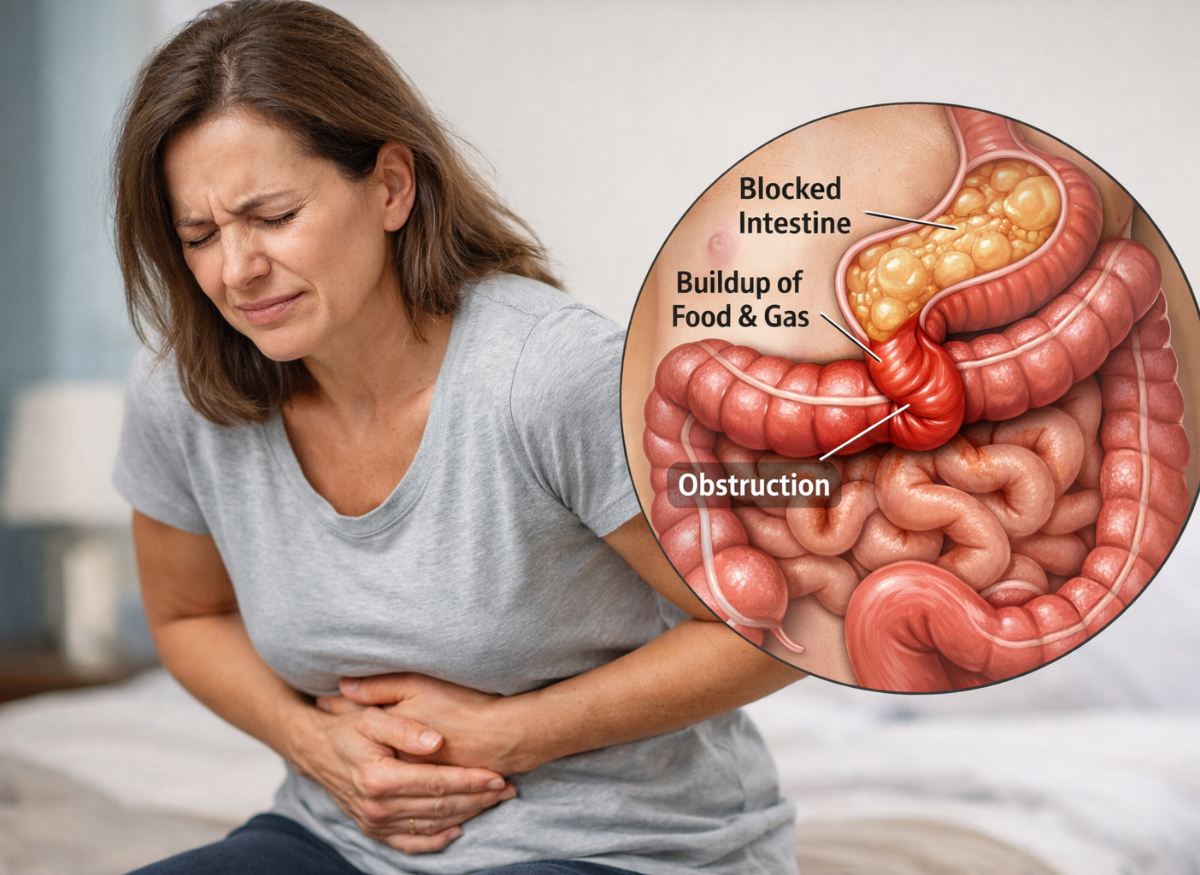
However, the digestive system depends on the continuous movement of food, fluids, and waste through the intestines. When this movement becomes blocked, either partially or completely, an intestinal obstruction can develop. This condition prevents the normal passage of intestinal contents and can interfere with digestion and elimination.
Unlike minor digestive discomfort, an intestinal obstruction may continue to worsen without treatment. As material, fluid, and gas build up behind the blockage, pressure inside the intestine can increase and symptoms can become more severe. Recognizing bowel obstruction symptoms early can help distinguish an intestinal blockage from less serious digestive problems.
This article explains the main aspects of intestinal obstruction, including common causes, how intestinal blockage symptoms develop, and which warning signs require urgent medical attention. Knowing these symptoms and risk factors can help people recognize when professional evaluation is necessary and reduce the chance of serious complications.
Symptoms of Intestinal Obstruction: What Are the Key Warning Signs?
The main warning signs of an intestinal obstruction include cramping abdominal pain, abdominal swelling or distension, nausea and vomiting, and difficulty or inability to pass stool or gas. These symptoms occur because the blockage interrupts the normal movement of material through the intestines, causing fluid, gas, and digestive contents to accumulate.
Symptoms can vary depending on whether the obstruction is partial or complete and whether it affects the small or large intestine. Even so, recognizing these warning signs is important because an untreated obstruction can progress to a serious, potentially life-threatening condition.
To understand how intestinal obstruction presents, it is helpful to look at the major symptoms individually and understand what they can indicate.
How Does Abdominal Pain from an Intestinal Obstruction Typically Feel?
Abdominal pain caused by an intestinal obstruction is often described as severe, cramping, and wave-like. It may occur around the belly button or in the upper abdomen. This type of pain is known as colicky pain and is one of the characteristic features of an intestinal blockage.
At first, the pain may not be constant. Instead, it can come in repeated episodes, with each episode lasting several minutes before temporarily improving. This happens because the intestines continue making natural contractions, known as peristalsis, as they attempt to move contents through the blocked area.
- Colicky, Wave-Like Nature: The pain may increase and decrease as the intestines contract. As pressure builds behind the blockage, the discomfort can become sharp and intense. When the contraction relaxes, the pain may briefly improve before another wave begins.
- Location of Pain: With a small bowel intestinal obstruction, discomfort is often felt around the belly button or upper abdomen. The exact location may be difficult to pinpoint because of the way intestinal pain signals are transmitted.
- Progression and Red Flags: A significant warning sign is when intermittent cramping changes into severe, constant pain. This may indicate a complication such as bowel strangulation, in which the blood supply to part of the intestine is reduced or cut off. This can cause tissue injury or ischemia and requires immediate medical attention.
Four Cardinal Signs of an Intestinal Obstruction
The four classic signs of an intestinal obstruction are cramping abdominal pain, abdominal distension, vomiting, and obstipation, which means being unable to pass stool or gas.
These symptoms may not all appear at the same time, especially during the early stages or with a partial blockage. Each symptom reflects the effects of the obstruction on the normal movement of intestinal contents.
- Crampy Abdominal Pain: Cramping pain is often one of the first noticeable symptoms. It occurs because the intestines increase their contractions in an effort to move material past the obstruction. These contractions produce the characteristic wave-like pain.
- Abdominal Distension: Abdominal distension means visible swelling or bloating of the abdomen. It develops when gas, fluid, and intestinal contents collect behind the blockage. With large bowel obstruction, the swelling may develop more gradually but can eventually become pronounced. The abdomen may feel tight, firm, or uncomfortable.
- Vomiting: Vomiting occurs when intestinal contents back up because they cannot move normally through the digestive tract. Early vomiting may contain partially digested food. As the obstruction progresses, the vomit may become bilious, giving it a greenish appearance. In severe or prolonged small bowel obstruction, vomiting can sometimes become feculent, meaning it has a foul smell and resembles stool. This can indicate advanced blockage and bacterial overgrowth.
- Obstipation (Failure to Pass Stool or Gas): Obstipation means a complete inability to pass both stool and gas. It is particularly concerning for a complete intestinal obstruction. With a partial obstruction, some gas or loose stool may still pass, which can make the condition harder to recognize. With a complete blockage, intestinal contents cannot move beyond the affected area.
Symptoms are Different for a Small Versus Large Bowel Intestinal Obstruction
Symptoms of a small versus large bowel intestinal obstruction can differ in how quickly they appear, how severe they become, and which symptoms are most noticeable.
These differences are related to the anatomy and function of the small and large intestines. Recognizing which part of the bowel may be affected can help doctors determine the likely cause, severity, and appropriate treatment.
A comparison of small and large bowel obstruction shows noticeable differences in pain, vomiting, abdominal swelling, and changes in bowel movements.
Small Bowel Intestinal Obstruction (SBO)
Pain: Pain from a small bowel intestinal obstruction often begins relatively quickly and can become severe. It is commonly colicky, meaning it comes in waves as the intestine contracts against the blockage. The discomfort is often felt around the belly button or upper abdomen and may cause significant distress.
- Vomiting: Vomiting is often an early symptom of small bowel intestinal obstruction because the blockage is located relatively close to the stomach. Vomiting may initially contain food and later become bilious or greenish-yellow. In prolonged or severe cases, it may become feculent.
- Abdominal Distension: Abdominal swelling may be less pronounced with a small bowel obstruction, particularly when the blockage is located higher in the digestive tract. When distension occurs, it may be more noticeable in the central abdomen.
- Constipation or Obstipation: Complete inability to pass stool or gas may develop later. In the early stages, the colon may still contain and pass some stool or gas, which can make the obstruction less obvious.
Large Bowel Intestinal Obstruction (LBO)
- Pain: Pain from a large bowel intestinal obstruction may develop more gradually. It can feel like a persistent, dull ache in the lower abdomen, although cramping can also occur. The discomfort may slowly become more severe as the blockage progresses.
- Vomiting: Vomiting often occurs later with large bowel intestinal obstruction and may not be present during the early stages. When it does occur, it may have a feculent character because of the high bacterial content within the colon.
- Abdominal Distension: Significant abdominal distension is a common feature of large bowel intestinal obstruction. The swelling generally develops over time and may become very noticeable. It can appear throughout the abdomen, often becoming prominent toward the sides.
- Constipation or Obstipation: Changes in bowel habits may occur early in large bowel intestinal obstruction. Constipation can worsen and eventually progress to obstipation. Complete inability to pass stool or gas is particularly concerning for a complete blockage.
Causes of Intestinal Obstruction: Why Does the Bowel Become Blocked?
An intestinal obstruction occurs when the normal passage of material through the bowel becomes interrupted. There are two broad types: mechanical obstruction and functional obstruction.
A mechanical obstruction occurs when something physically blocks or narrows the intestinal passage. A functional obstruction occurs when the bowel muscles stop moving contents normally even though there is no physical blockage.
Determining the underlying cause is important because it affects both diagnosis and treatment. Mechanical obstruction is more common and may require urgent surgical assessment, while functional obstruction, also called paralytic ileus, is generally treated by addressing the underlying problem.
Most Common Mechanical Causes of Intestinal Obstruction
Common mechanical causes of intestinal obstruction in adults include postoperative adhesions, hernias, tumors, and strictures associated with inflammatory bowel disease.
These conditions can narrow, compress, twist, or otherwise block the intestine, preventing normal movement of food, fluids, and gas.
Adhesions (Post-Surgical Scar Tissue)
Adhesions are one of the most common causes of small bowel intestinal obstruction, particularly in people who have previously undergone abdominal or pelvic surgery.
They are bands of fibrous scar tissue that can form after surgery. These bands may connect sections of the intestine to one another or to nearby tissues, causing the bowel to bend, kink, or become compressed.
One important feature of adhesions is that an obstruction may not develop immediately after surgery. Symptoms can appear months or even years later, making adhesions a potential cause long after the original procedure.
Hernias
Hernias can also cause intestinal obstruction. They develop when part of the intestine pushes through a weakened area of the abdominal wall. Common examples include inguinal hernias in the groin and incisional hernias that develop near previous surgical sites.
If a section of intestine becomes trapped inside a hernia, it may become blocked and lose its ability to function normally.
A particularly serious complication is strangulation, which occurs when the blood supply to the trapped bowel is cut off. This can quickly cause tissue damage and turn the obstruction into a medical emergency.
Tumors (Benign and Malignant)
Tumors can cause intestinal obstruction, particularly in the large bowel. A tumor may block the intestine by growing into the intestinal passage and narrowing it, or it may place pressure on the bowel from outside.
Colorectal cancer is an important cause of large bowel obstruction, particularly among older adults. Other abdominal or pelvic tumors, including ovarian tumors, may also compress the intestine.
Obstruction caused by a tumor may develop gradually. Symptoms can become increasingly noticeable as the intestinal passage becomes narrower.
Strictures from Inflammatory Conditions
Long-term inflammatory conditions such as Crohn’s disease can cause strictures, which are narrowed sections of the intestine.
Repeated inflammation and healing can cause scar tissue to develop. Over time, the intestinal wall may become thicker and less flexible, making it harder for intestinal contents to pass through.
As a stricture becomes more severe, it can cause recurring or intermittent symptoms of intestinal obstruction.
What Is a Functional Intestinal Obstruction (Paralytic Ileus)?
A functional intestinal obstruction, also called paralytic ileus, occurs when the normal contractions of the intestines temporarily stop or become severely reduced.
Unlike a mechanical obstruction, there is no physical object or structural barrier blocking the bowel. Instead, the intestinal muscles are not moving contents forward effectively.
Because food, fluid, and gas cannot move normally, they accumulate within the intestine. This can cause symptoms similar to those of a mechanical obstruction, including abdominal swelling, nausea, vomiting, and difficulty passing stool or gas.
Paralytic ileus can be temporary and reversible, but it may also occur as a result of an underlying medical problem and should be evaluated appropriately.
How Does Paralytic Ileus Cause Intestinal Obstruction Without a Physical Blockage?
Normal intestinal movement depends on coordinated activity involving the intestinal nerves, smooth muscles, hormones, and electrolyte levels.
When this system becomes disrupted, the bowel may lose its ability to contract normally. Instead of pushing food, fluid, and gas forward, the intestine becomes inactive and material begins to accumulate.
This creates an effect similar to a physical obstruction even though there is no actual blockage.
One possible examination finding is reduced or absent bowel sounds. This differs from early mechanical obstruction, where bowel sounds may initially become unusually active or high-pitched as the intestines attempt to overcome the blockage.
Most Common Causes of Functional Intestinal Obstruction
Paralytic ileus can develop for several reasons, many of which involve surgery, illness, medications, or disruptions in normal body function.
- Postoperative Ileus: Abdominal or pelvic surgery is a common cause of functional intestinal obstruction. Handling of the intestines during surgery, anesthesia, and certain pain medications can temporarily slow bowel activity. Normal movement often returns as the body recovers.
- Infection and Inflammation: Severe infections, particularly infections inside the abdomen, can interfere with intestinal movement. Conditions such as peritonitis and sepsis can trigger inflammatory responses that reduce peristalsis.
- Medications: Certain medications can slow intestinal movement and contribute to paralytic ileus. This is particularly relevant when several medications that affect bowel motility are used together.
- Electrolyte Imbalances: Electrolytes such as potassium and magnesium are important for normal muscle function. Low levels can interfere with intestinal contractions and contribute to functional intestinal obstruction.
- Trauma: Serious trauma, especially injuries involving the abdomen or spine, can interfere with nerve signals and intestinal activity and may contribute to paralytic ileus.
Medical Attention for Intestinal Obstruction: When Is It an Emergency?
An intestinal obstruction requires urgent medical assessment because it can sometimes lead to serious complications such as bowel strangulation or perforation.
Strangulation can occur when blood flow to part of the intestine becomes restricted or completely cut off. Perforation occurs when a weakened section of bowel develops a hole, allowing intestinal contents and bacteria to enter the abdominal cavity.
Although suspected intestinal obstruction should be evaluated promptly, certain symptoms are particularly concerning. Severe constant abdominal pain, fever, rapid heart rate, low blood pressure, and feculent vomiting can indicate that the condition has become complicated.
Without timely treatment, an advanced obstruction can lead to tissue death, severe infection, sepsis, organ failure, and other life-threatening problems.
Which Combination of Symptoms Requires Immediate Emergency Care?
Severe and persistent abdominal pain combined with repeated vomiting, significant abdominal swelling, and an inability to pass stool or gas is highly concerning for an intestinal obstruction.
These symptoms may suggest that the blockage is complete or that complications are developing.
A particularly important warning sign is a change in the character of the pain. If cramping pain that comes and goes becomes constant and severe, it may indicate that the intestine is losing its blood supply. Immediate medical assessment is necessary.
- Critical Symptom Combinations That Signal a Life-Threatening Intestinal Obstruction: Certain combinations of symptoms may point to complications and should be treated as urgent warning signs.
- Severe Constant Pain Combined with Fever: Severe abdominal pain accompanied by fever or chills may indicate complications such as bowel ischemia or perforation. If the intestinal wall becomes damaged, bacteria can enter the abdominal cavity and cause peritonitis. This requires urgent medical treatment.
- Rapid Heart Rate with Low Blood Pressure: A fast heart rate together with low blood pressure can indicate shock. This may occur because of severe fluid loss from vomiting or because of a serious infection following bowel perforation. Dizziness, weakness, or confusion may also occur and require emergency care.
- Feculent Vomiting with Severe Abdominal Distension: Vomiting material that resembles or smells like stool can occur with a prolonged or severe intestinal obstruction. When it occurs along with a very swollen or tense abdomen, it can indicate significant intestinal blockage and a high risk of complications.
Is It Safe to Wait and See if Symptoms of a Suspected Intestinal Obstruction Improve at Home?
No. Suspected intestinal obstruction should not be managed by simply waiting at home to see whether symptoms disappear.
An obstruction can worsen and lead to complications such as loss of blood supply to the bowel, tissue death, perforation, and severe infection. There is also no reliable way to determine at home whether an obstruction is partial, complete, or already causing damage.
Attempting to treat a suspected obstruction with laxatives or enemas without medical guidance can be dangerous, particularly if a complete blockage is present. Increasing pressure within the bowel may worsen the situation.
Why Waiting Is Dangerous in Intestinal Obstruction
Delaying medical evaluation can allow an intestinal obstruction to progress and cause serious complications. In some cases, deterioration can occur quickly.
Bowel Strangulation (Loss of Blood Supply)
Bowel strangulation is one of the most serious complications of intestinal obstruction.
It can occur when a section of intestine becomes twisted, trapped, or compressed, causing its blood supply to become restricted. Without adequate blood flow, the affected tissue can develop ischemia and eventually die.
This is a medical emergency and may require surgery to remove damaged bowel. Prompt treatment is important because prolonged loss of blood flow can increase the risk of severe complications.
Perforation (Bowel Rupture)
As intestinal contents and fluid accumulate behind a blockage, pressure inside the bowel can increase.
If the pressure becomes severe and the intestinal wall is weakened, the bowel can develop a tear or rupture. A perforation allows intestinal contents and bacteria to escape into the abdominal cavity.
This is a serious complication that requires immediate medical treatment and may require surgery.
Peritonitis and Sepsis
When intestinal contents enter the abdominal cavity through a perforation, they can cause peritonitis, a serious inflammation and infection of the abdominal lining.
If the infection spreads into the bloodstream, sepsis can develop. Sepsis can cause dangerously low blood pressure, organ dysfunction, and other life-threatening complications.
Once an obstruction progresses to this stage, treatment becomes more complex and urgent.
Deeper Insights into Diagnosis, Risk, and Related Conditions of Intestinal Obstruction
Diagnosing an intestinal obstruction requires a combination of symptom assessment, physical examination, medical history, and imaging.
Because an obstruction can become serious, recognizing the condition early is important. People with previous abdominal surgery, hernias, inflammatory bowel disease, or certain cancers may have a higher risk of developing an obstruction.
It is also important to distinguish intestinal obstruction from severe constipation. Although the two conditions can cause similar symptoms, an obstruction involves a physical or functional interruption of the normal movement of intestinal contents and may require urgent treatment.
How Do Doctors Diagnose an Intestinal Obstruction?
Diagnosis usually begins with a detailed discussion about symptoms and medical history.
Doctors may ask about abdominal pain, vomiting, bloating, bowel movements, and whether the person is able to pass gas. They may also ask about previous abdominal surgeries, hernias, inflammatory bowel disease, cancer, or other conditions that can increase the risk of obstruction.
A physical examination is then performed. The abdomen may be examined for swelling, tenderness, scars, or other abnormalities. A healthcare professional may also listen to bowel sounds.
In early mechanical obstruction, bowel sounds can sometimes become high-pitched or unusually active as the intestine attempts to move contents through the blockage. Later, bowel sounds may become reduced or absent if intestinal activity decreases.
Imaging is usually needed to confirm the diagnosis.
An abdominal X-ray can sometimes show enlarged bowel loops or air-fluid levels that suggest an obstruction. However, it may not identify the exact cause or provide enough information about complications.
A CT scan can provide more detailed images of the intestines. It can help identify the location and cause of an obstruction and determine whether it is partial or complete. CT imaging can also help identify complications such as reduced blood flow or perforation.
In certain situations, including some cases involving children or pregnancy, ultrasound may be considered to avoid radiation exposure. Although it provides different information from CT, it can still help assess bowel dilation and movement.
Who Is Most at Risk for Developing an Intestinal Obstruction?
Anyone can develop an intestinal obstruction, but some people have a higher risk because of certain medical conditions or previous procedures.
People who have had abdominal or pelvic surgery are at increased risk because adhesions can develop afterward. Procedures such as appendectomy, cesarean delivery, colorectal surgery, or hysterectomy can sometimes result in internal scar tissue. These adhesions may later cause the intestine to bend, twist, or become compressed.
People with chronic inflammatory conditions such as Crohn’s disease are also at higher risk. Repeated inflammation can cause the intestinal wall to thicken and develop strictures that narrow the passage.
Certain cancers can also cause obstruction. Colorectal cancer and other abdominal or pelvic tumors may block the bowel from inside or put pressure on it from outside.
Hernias are another important risk factor. If part of the intestine becomes trapped within a hernia, it may become blocked and, in severe cases, lose its blood supply.
Older adults may also have an increased risk because conditions associated with age, including colorectal cancer and diverticular disease, become more common.
Can an Intestinal Obstruction Be Prevented?
Not every intestinal obstruction can be prevented. For example, adhesions can develop after necessary abdominal surgery even when appropriate surgical techniques are used.
However, managing known risk factors and seeking medical attention early can help reduce the risk of severe complications.
People with hernias may benefit from discussing timely repair with a healthcare professional before the intestine becomes trapped or strangulated.
People with Crohn’s disease can reduce their risk by following an appropriate treatment plan designed to control inflammation and reduce the development of strictures.
Modern minimally invasive surgical techniques may reduce the formation of adhesions compared with some open procedures, although they cannot eliminate the risk completely.
For general digestive health, adequate hydration and a balanced diet containing appropriate amounts of fiber can help prevent constipation and fecal impaction, which can occasionally contribute to obstruction-like problems.
Early recognition is also important. Repeated abdominal cramping, bloating, or significant changes in bowel habits should be medically evaluated when they persist or worsen.
How Is Intestinal Obstruction Different from Severe Constipation?
Intestinal obstruction and severe constipation can have some overlapping symptoms, but they are different conditions.
Constipation generally means that stool moves more slowly than normal through the colon, resulting in hard or infrequent bowel movements. An intestinal obstruction involves a physical or functional interruption that prevents intestinal contents from moving normally.
Both conditions can cause bloating and abdominal discomfort. However, obstruction often causes stronger, wave-like cramping and may also cause nausea and vomiting, particularly when the small intestine is affected.
Another important difference is the ability to pass gas. Someone with severe constipation may still be able to pass some gas or stool. With a complete intestinal obstruction, the person may be unable to pass either, a condition known as obstipation.
Bowel sounds can also differ. Early mechanical obstruction may cause unusually active or high-pitched bowel sounds, while severe constipation may have normal or reduced bowel activity.
Constipation is often manageable with appropriate dietary changes, hydration, and medication when recommended. An intestinal obstruction, however, can become a medical emergency and should be evaluated promptly.
Conclusion
Intestinal obstruction is a condition that deserves prompt attention because it can progress from abdominal discomfort to a serious medical emergency.
Some early symptoms may resemble ordinary digestive problems, but the combination and progression of symptoms can provide important clues. Recognizing bowel obstruction symptoms early can help ensure timely medical evaluation and reduce the risk of complications.
Understanding the potential causes, warning signs, and differences between types of intestinal blockage can also make it easier to recognize when professional care is needed. Small bowel obstruction and complete bowel obstruction can result from different underlying problems, but both require appropriate medical assessment.
Persistent abdominal pain, increasing bloating, repeated vomiting, and an inability to pass stool or gas should not be ignored.
With timely diagnosis and appropriate treatment, many intestinal obstructions can be successfully managed. Paying attention to significant changes in digestive symptoms and seeking care early can play an important role in protecting overall digestive health.
FAQ (Frequently Asked Questions)
What are the first signs of bowel obstruction?
Early bowel obstruction symptoms can sometimes be difficult to distinguish from ordinary digestive problems. They may include abdominal discomfort or cramping, bloating, a feeling of fullness, and changes in bowel movements such as constipation.
As the blockage develops, symptoms may become more persistent or severe. Increasing abdominal pain, vomiting, and difficulty passing gas or stool are more concerning signs that require medical evaluation.
What does an intestinal blockage feel like?
An intestinal blockage often causes abdominal pain that begins as cramping or discomfort and may occur in waves. As the condition progresses, the pain can become more severe or constant.
Other common symptoms include abdominal pressure or swelling, nausea, vomiting, and difficulty passing gas. These symptoms should be evaluated promptly when an intestinal obstruction is suspected.
How do I know if I have a small bowel obstruction?
A small bowel obstruction can develop relatively quickly and commonly causes abdominal cramping, vomiting, and bloating.
Vomiting may occur early because the blockage is closer to the stomach. Some people may also experience difficulty passing gas or stool and increasing abdominal pain.
Because these symptoms can occur with other digestive conditions, imaging such as a CT scan may be needed to confirm whether a small bowel obstruction is present and identify its cause.
Can a bowel obstruction clear on its own?
Some partial obstructions may improve with appropriate medical treatment, depending on the underlying cause. For example, certain cases related to temporary inflammation or reduced bowel movement may resolve as the underlying problem is treated.
However, a complete intestinal obstruction generally does not resolve without medical intervention. Because an obstruction can cause tissue damage, perforation, or infection, suspected symptoms should be assessed by a healthcare professional rather than managed at home.
When should I go to the hospital for bowel obstruction symptoms?
Seek emergency medical care if you have severe or persistent abdominal pain, repeated vomiting, significant abdominal swelling, or an inability to pass stool or gas.
Other warning signs, including fever, rapid heart rate, weakness, dizziness, or signs of dehydration, can indicate that the condition is becoming more serious. Prompt evaluation can help identify an obstruction and reduce the risk of potentially life-threatening complications.