
Biblical Cysts (Ganglion Cysts): Causes, Symptoms, Diagnosis & Treatment
The term biblical cyst is not an official medical diagnosis. It is sometimes used informally to describe noticeable, fluid-filled lumps beneath the skin, most commonly ganglion cysts. These cysts often develop around joints or tendons, especially in the wrists, hands, and feet. Because they can appear suddenly and look unusual, some people search for terms such as biblical cyst to understand what the lump might be and whether it could be serious.
In most cases, the condition referred to as a biblical cyst is benign and manageable. However, it may cause pain, discomfort, or difficulty moving the nearby joint. Knowing the actual medical condition behind this informal term can make diagnosis and treatment easier. In this article, “Biblical Cysts (Ganglion Cysts): Causes, Symptoms, Diagnosis & Treatment,” we’ll discuss what these cysts are, why they develop, their common symptoms, how doctors diagnose them, and the treatment options that may be available.
The Definition of Biblical Cysts (Ganglion Cysts)
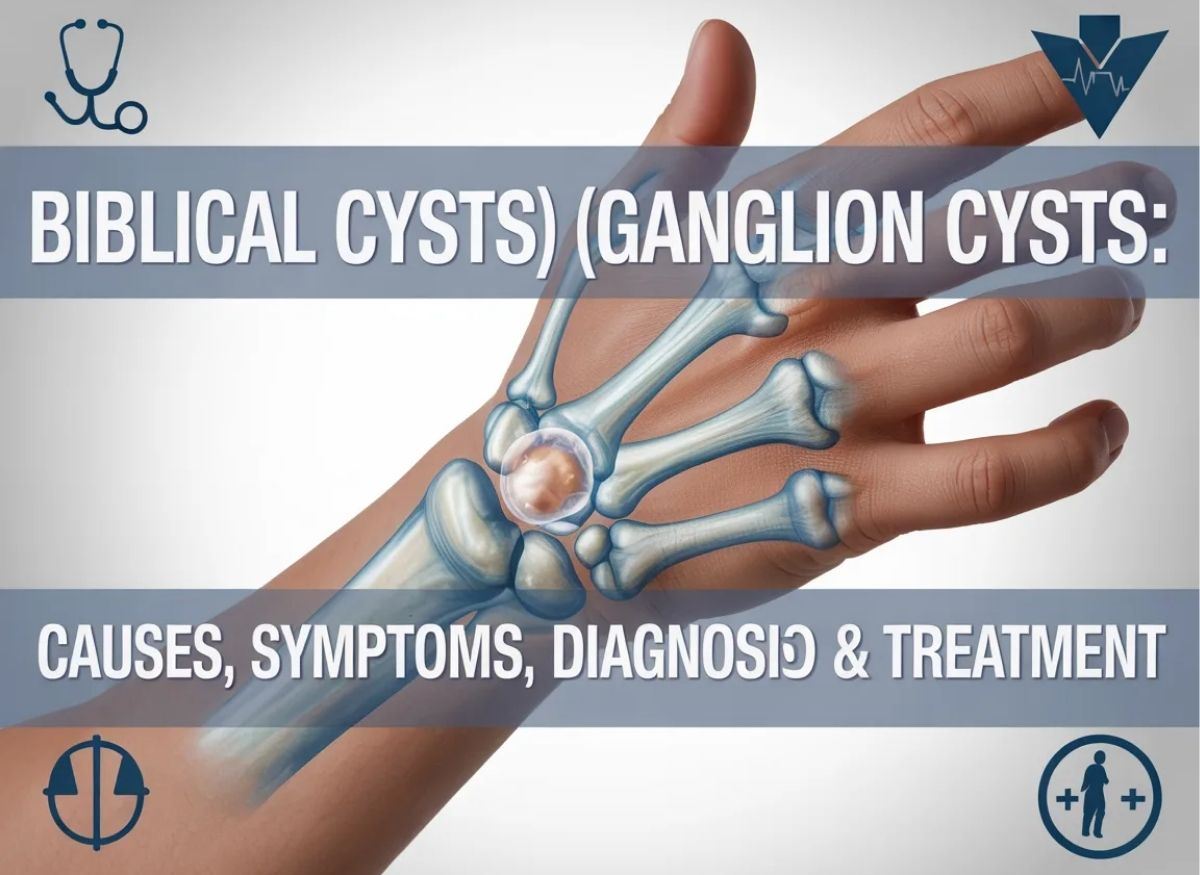
A ganglion cyst, sometimes informally called a biblical cyst, is a fluid-filled lump associated with the connective tissues around a joint or tendon. Unlike some common skin cysts that develop because of blocked glands, ganglion cysts are connected to the structures surrounding joints.
They form when synovial fluid, the slippery fluid that helps joints move smoothly, pushes through a weak area in a joint capsule or tendon sheath. The fluid collects in a small sac and gradually becomes thicker and more jelly-like. This creates a noticeable lump that may feel firm or rubbery and can change in size depending on activity around the affected joint.
The Anatomy of the Bible Bump
One of the most familiar forms is the bible bump on wrist, which usually develops on either the back of the wrist or the palm side. The name “biblical” comes from an old practice in which people sometimes used a heavy family Bible to strike the cyst and force it to rupture.
Although the fluid could eventually be absorbed by the body, intentionally hitting a cyst is no longer recommended because it can cause fractures and damage nearby tissues. A ganglion cyst is surrounded by a firm fibrous capsule and contains thick fluid rich in substances such as hyaluronic acid. This gives a bible cyst hand its characteristic firm texture.
Variations in Location: Hands, Fingers, and Feet
Although ganglion cysts commonly occur around the wrist, they can also appear in other areas depending on the joints and tendons involved. A ganglion cyst finger may look like a small, firm lump near the end joint of the finger or around the base of the finger.
Ganglion cysts can also develop on the feet and ankles. A ganglion cyst on foot or bible cyst on foot is often found on the upper part of the foot or near the ankle. Even when the cyst itself is not painful, pressure from shoes can make these cysts uncomfortable and irritating.
The Fluid Mechanics of the Bible Cyst Hand
Understanding how a ganglion cyst forms can help explain what do you do for a ganglion cyst. Many cysts have a small connection, or stalk, leading back toward the joint. Movement can increase pressure inside the joint and push additional fluid through this narrow opening into the cyst.
The fluid can become trapped inside, where it gradually thickens into a jelly-like substance. This helps explain why a bible cyst hand may become smaller when the joint is rested and then become more noticeable after repetitive movement or heavy activity. Because of this mechanical process, bible cyst treatment may involve reducing stress on the affected joint as well as addressing the lump itself.
Diagnostic Characteristics and Feel
When someone asks what can you do for a ganglion cyst, a doctor will usually begin by examining and feeling the lump. Transillumination may also be used. Since a ganglion cyst contains fluid, light may pass through it when a bright light is placed against the lump in a dark environment.
Whether it is a bible cyst in wrist or a small bible cyst finger, the lump is generally smooth and rounded. It may move slightly beneath the skin, but its connection to the joint or tendon usually keeps it in a relatively fixed area.
The Common Signs and Symptoms of Biblical Cysts (Ganglion Cysts)
The symptoms of biblical cysts (ganglion cysts) can vary considerably. Some people mainly notice the visible lump, while others experience pain, pressure, or difficulty using the affected joint. Since these cysts are connected to joints and contain fluid, their size and symptoms can change depending on physical activity.
For some people, a bible cyst hand is primarily a cosmetic concern. For others, it may interfere with normal movement and daily activities and eventually require bible cyst treatment.
The Visible “Bible Bump” and Size Fluctuation
The most noticeable sign is the lump itself. A bible cyst in wrist may be as small as a pea or grow to a much larger size. One useful characteristic is that its size may change with activity.
Movements such as typing, lifting, exercising, or repeatedly using the wrist can increase pressure and cause the bible cyst hand to become larger or firmer. After resting the joint for several days, the cyst may become smaller or even seem to disappear temporarily.
Pain and Mechanical Discomfort
Pain from a ganglion cyst finger or wrist is often described as a dull or localized ache rather than constant severe pain. It may become worse when the affected joint is moved through certain positions.
For example, a bible bump on wrist located on the back of the hand may cause pressure or pinching when the wrist is bent backward. A cyst on the palm side may make gripping objects uncomfortable.
Sometimes, a small biblical cyst that cannot easily be seen, known as an occult ganglion, can still cause significant discomfort because it sits deeper inside the joint.
Neurological Symptoms: Tingling and Numbness
Symptoms can become more concerning when a cyst develops close to a nerve. A bible cyst in wrist or ganglion cyst on foot may place pressure on a nearby nerve and lead to symptoms such as:
- Tingling and Paresthesia: A pins-and-needles feeling that may spread into the fingers or toes.
- Numbness: Reduced sensation in an area supplied by the affected nerve.
- Weakness: In uncommon cases, nerve pressure can reduce grip strength or affect stability in the foot.
For example, a bible cyst hand near the carpal tunnel may produce symptoms that resemble Carpal Tunnel Syndrome. A professional examination may be needed to determine whether the symptoms are caused by the cyst or another nerve problem.
Location-Specific Signs: Fingers and Feet
Ganglion cysts can produce different symptoms depending on where they form. A ganglion cyst finger near the nail is sometimes called a mucous cyst. Pressure from the cyst may affect the nail matrix and create a groove or change in the fingernail.
A bible cyst on foot or ganglion cyst on foot may appear as a firm lump on the top of the foot. Because shoes can repeatedly press against the area, the cyst may become painful and make walking or wearing certain footwear difficult.
Diagnostic Indicators of a True Ganglion
When determining what can you do for a ganglion cyst, doctors look at several characteristics during an examination. One common examination method is transillumination. Because the bible cyst hand contains fluid, light may pass through the lump when a flashlight is placed against it.
The lump may also feel attached to the underlying joint or tendon. The skin over the cyst can often move while the cyst itself remains connected to the deeper structure. These characteristics can help a doctor distinguish a ganglion cyst from other types of lumps.
The Causes of The Biblical Cysts (Ganglion Cysts)
The exact reason biblical cysts (ganglion cysts) develop is not always known. Their formation appears to involve the interaction between joint movement, pressure, and the tissues surrounding joints and tendons.
Whether the lump is a bible bump on wrist or a ganglion cyst on foot, it generally involves fluid collecting within a sac outside its normal location. Understanding this process can help explain how do you get rid of a ganglion cyst and why some cysts may return.
The Herniation Theory: The One-Way Valve
One common explanation for a bible cyst in wrist or hand is known as the Herniation Theory. According to this idea, a tiny weakness or tear may develop in the joint capsule or tendon sheath.
When the joint moves, pressure can force synovial fluid through this weak area. The opening may then act like a one-way valve, allowing fluid to enter the cyst but making it difficult for the fluid to return to the joint.
As more fluid becomes trapped, it can gradually become thicker and more jelly-like. A fibrous wall forms around the collection, producing the firm lump recognized as a biblical cyst.
Chronic Irritation and Mucin Production
Another theory suggests that a bible bump on wrist may develop because of repeated irritation or small amounts of mechanical trauma to connective tissues. In this explanation, certain cells produce excess mucin, which can collect and form a fluid-filled sac.
This may help explain why some cysts appear to be connected more closely to a tendon sheath rather than directly to the deeper joint space.
Key Risk Factors: Who Gets the “Bible Bump”?
Although a ganglion cyst finger, wrist, or foot can affect many different people, certain factors may increase the likelihood of developing one. These factors can also help explain what can you do for a ganglion cyst in terms of reducing irritation and managing joint stress.
Sex and Age: Women between the ages of 20 and 40 are more commonly affected by ganglion cysts. Women are reported to develop a bible cyst hand more often than men, although the exact reason for this difference is not completely understood.
Repetitive Stress and Overuse: Activities involving repeated wrist movement or heavy joint loading may increase the chance of developing a bible bump on wrist. Gymnasts, weightlifters, and musicians are examples of people who may place repeated stress on these areas.
Osteoarthritis: In older adults, a ganglion cyst finger, particularly a mucous cyst, may be associated with osteoarthritis. Bone spurs caused by joint degeneration can irritate the surrounding tissues and contribute to cyst formation near the fingernail.
Previous Trauma: An earlier sprain, fracture, or other injury may leave a weak area around a joint. In some cases, this weakened area can later contribute to the development of a bible cyst on foot or wrist.
Benign Nature vs. Diagnostic Caution
A bible cyst finger or hand is considered non-cancerous. It is not a malignant tumor and does not transform into cancer. Instead, it is generally a localized problem involving a joint or tendon.
However, not every lump on the hands or feet is a ganglion cyst. A professional examination can help rule out other conditions.
For example, a bible cyst hand may allow light to pass through during transillumination, while solid masses such as some tumors or lipomas generally do not. If you are wondering how do you remove a ganglion cyst, a doctor may first use a physical examination or imaging such as ultrasound to confirm that the lump is fluid-filled.
How Does a Doctor Officially Diagnose a Ganglion Cyst?
Diagnosing biblical cysts (ganglion cysts) usually involves determining whether the lump contains fluid and whether it is connected to a nearby joint or tendon. Although a bible bump on wrist may have a typical appearance, doctors may need to distinguish it from solid masses, vascular problems, or other conditions.
The evaluation generally begins with a physical examination and may include imaging when the diagnosis is uncertain.
The Physical Exam and Transillumination
A doctor may use transillumination to examine a suspected ganglion cyst hand. Because the cyst contains clear, thick fluid, light may pass through the lump when a strong light is placed against it.
The doctor may also check how the lump moves. The skin can often move over the cyst, while the lump itself remains connected to deeper tissues. These findings can help determine whether the bible cyst finger or wrist has the characteristics of a ganglion.
Ultrasound: Visualizing the Leak
When the diagnosis is uncertain or the doctor is considering how to get rid of a bible cyst, an ultrasound may be used. This painless imaging method can provide a real-time view of the lump.
- Distinguishing Fluid from Solid: Ultrasound can help show whether the mass contains fluid or solid tissue.
- Finding the Stalk: It may also identify the narrow connection between the bible cyst in wrist and the nearby joint. Understanding this connection can be useful when planning how do you remove a ganglion cyst.
MRI and X-Ray: Ruling Out Complexity
When a cyst is located deep inside the tissues, causes unusual pain, or develops in a complicated area such as the foot, additional imaging may be helpful.
- MRI (Magnetic Resonance Imaging): MRI provides detailed images of soft tissues. It can help show whether a ganglion cyst on foot is affecting a nearby nerve or whether a bible cyst finger is associated with changes such as bone spurs.
- X-Ray: An X-ray does not usually show the cyst itself, but it can reveal changes in the bones or signs of osteoarthritis. This can help determine whether joint degeneration is contributing to the bible cyst hand.
Needle Aspiration as a Diagnostic Tool
In some situations, diagnosis and initial bible cyst treatment may occur at the same time through needle aspiration. A doctor inserts a needle into the cyst and removes its fluid.
The thick, jelly-like material found in a ganglion cyst can support the diagnosis of a ganglion cyst finger or wrist. Removing the fluid may also temporarily reduce pressure and discomfort.
How Does a Biblical Cyst (Ganglion Cyst) Compare To A Cancerous Tumor?
Finding a new lump such as a bible bump on wrist or ganglion cyst on foot can naturally cause concern about cancer. However, ganglion cysts and cancerous tumors have very different characteristics.
A ganglion cyst is generally a fluid-filled structure associated with a joint or tendon, while a malignant tumor develops from abnormal cell growth. Examining how the lump behaves, feels, and changes over time can help doctors determine what type of growth is present.
Growth Patterns and the “Pumping” Effect
One characteristic of a bible cyst in wrist is that its size may change depending on activity. A bible bump on wrist may become more noticeable after repetitive movements such as lifting or typing and then become smaller after resting.
Cancerous tumors generally do not fluctuate in this same activity-related way. A lump that repeatedly changes size may be more consistent with a bible cyst hand, although any unexplained lump should still be evaluated by a healthcare professional.
Texture, Consistency, and Transillumination
The material inside a ganglion cyst finger or wrist affects how the lump feels. Thick, jelly-like fluid can give the cyst a firm or rubbery texture.
Doctors may also use transillumination to determine whether the lump contains fluid. A bible cyst hand may allow light to pass through, while a solid mass generally blocks the light.
Mobility and Attachment to Deeper Structures
Doctors may also examine how freely the lump moves. A biblical cyst in wrist is usually connected to a joint or tendon through a stalk, so the cyst may remain attached to a deeper structure even though the skin above it can move.
Some malignant tumors can feel firm and fixed to surrounding tissues. Because different conditions can have overlapping features, a medical examination is important rather than relying on how a lump feels alone.
Pain Characteristics and Associated Symptoms
Pain can occur with both ganglion cysts and other types of masses, but the cause may differ. With a ganglion cyst finger or foot, discomfort often comes from pressure on nearby tissues or from the cyst being compressed during joint movement.
A persistent or unusual lump accompanied by symptoms such as unexplained weight loss, ongoing fever, or significant changes in overall health should be evaluated by a healthcare professional. These symptoms are not typical of a simple biblical bump on wrist.
What Is The Risk of A Biblical Cyst (Ganglion Cyst) Returning After Treatment?
Recurrence is one of the main concerns for people receiving bible cyst treatment. Because ganglion cysts can be connected to a joint through a small stalk, removing or draining the visible lump does not always eliminate the structure that allows fluid to collect again.
The likelihood of a bible bump on wrist or ganglion cyst on foot returning can depend on the treatment method and whether the cyst’s connection to the joint is addressed.
Aspiration and the High Risk of Recurrence
If you are looking for how to get rid of a bible cyst without surgery, needle aspiration may be considered because it is less invasive. During aspiration, a doctor numbs the area and uses a needle and syringe to remove the thick fluid.
Although the lump may disappear quickly after the fluid is removed, the cyst wall and its connection to the joint remain. As a result, fluid can collect again and the bible bump on wrist may return.
Surgical Excision: The Gold Standard for Permanence
When patients ask how do you remove a ganglion cyst more permanently, surgical excision may be considered. The procedure involves removing the cyst and addressing the stalk or connection leading toward the joint.
By treating the cyst and its source, surgery may reduce the likelihood of recurrence compared with simply draining the fluid. However, no treatment can guarantee that a cyst will never return.
Factors That Influence a Cyst’s Return
Several factors may influence whether a ganglion cyst finger or wrist comes back after treatment.
- Incomplete Stalk Removal: If the small connection between the bible cyst in wrist and the joint remains, fluid may continue to enter the area and contribute to another cyst.
- Multiple Lobes: Some cysts contain several connected chambers. If part of the cyst remains after bible cyst treatment, another pocket may enlarge later.
- Post-Operative Activity: Returning to strenuous joint movement too quickly after a how do you remove a ganglion cyst procedure may place additional stress on healing tissues. A doctor may recommend temporary immobilization to support healing after a biblical bump on wrist is surgically removed.
Historical Context: The “Bible” Method and Recurrence
The term biblical cysts (ganglion cysts) is associated with an old practice of striking the lump with a heavy book, traditionally a family Bible, to rupture it. Although this could cause the lump to temporarily disappear as the fluid spread into nearby tissues, it did not remove the cyst wall or its connection to the joint.
Because of the risk of fractures, tissue damage, and recurrence, modern medical care does not recommend hitting a bible bump on wrist or attempting to rupture the cyst yourself.
Conclusion
Although “biblical cyst” is not a formal medical term, it is sometimes used to describe ganglion cysts. These fluid-filled lumps commonly develop near joints and tendons and are generally harmless, although they can sometimes cause pain, pressure, or restricted movement.
Understanding the symptoms and possible causes can help reduce unnecessary concern and make it easier to seek appropriate care. Many biblical cysts (ganglion cysts) do not need aggressive treatment and may shrink or disappear without intervention.
However, medical evaluation is advisable when a cyst becomes painful, increases in size, affects movement, or causes other concerning symptoms. With an accurate diagnosis and suitable treatment, ganglion cysts can usually be managed effectively.
Frequently Asked Questions (FAQ) About Biblical Cysts
What is a biblical cyst?
A biblical cyst is not an official medical term. It is sometimes used informally to describe a visible lump beneath the skin, often referring to a ganglion cyst. These are fluid-filled sacs that commonly develop near joints or tendons. They are usually benign and may change in size over time.
What causes biblical cysts (ganglion cysts)?
The exact cause of biblical cysts, or ganglion cysts, is not always known. They may be associated with repeated joint movement, irritation, minor injuries, or weaknesses in the joint capsule or tendon sheath. In some cases, they can develop without an obvious trigger.
Are biblical cysts dangerous?
Most biblical cysts are benign and are not considered dangerous. However, they may cause pain, pressure, numbness, or limited movement when they affect nearby nerves or other structures. Because other types of lumps can look similar, an unusual or unexplained lump should be assessed by a healthcare professional.
How are biblical cysts diagnosed?
Doctors generally begin with a physical examination. Depending on the location and appearance of the lump, tests such as ultrasound or MRI may be used to confirm that it is fluid-filled and to distinguish it from other types of growths.
How are biblical cysts treated?
Treatment depends on the size of the cyst, its symptoms, and how much it affects everyday activities. Some ganglion cysts can be monitored without treatment because they may disappear on their own. If treatment is necessary, options may include immobilization, aspiration to drain the fluid, or surgical removal.
Can biblical cysts go away on their own?
Yes, some biblical cysts can shrink or disappear without treatment. Their size may also change depending on activity and rest. However, some cysts remain or return after treatment. Monitoring the lump and seeking medical advice if it becomes painful, grows, or causes other symptoms can help ensure appropriate care.