
7 Signs of Cluster B Personality Disorders Explained Clearly
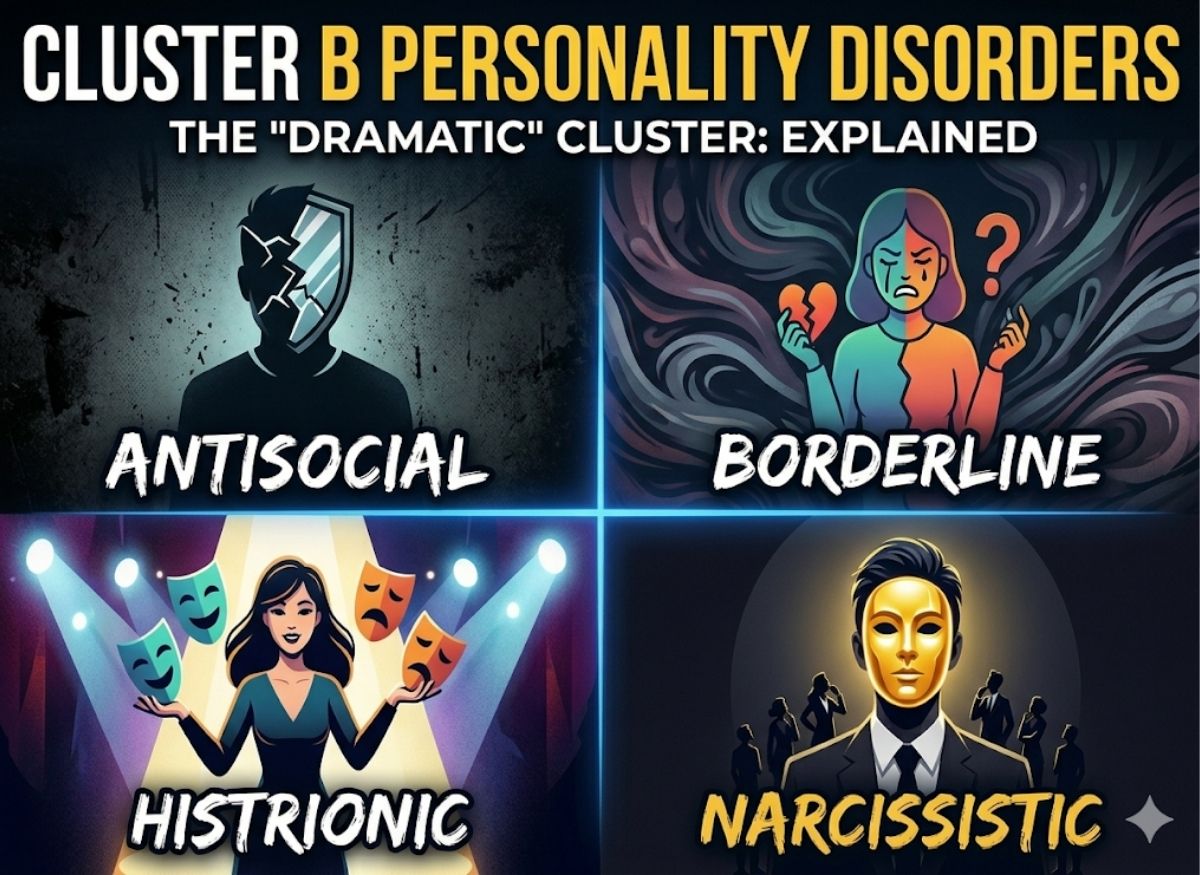
Cluster B personality disorders are a group of mental health conditions marked by dramatic, emotional, or unpredictable patterns of thinking and behavior. This group includes borderline personality disorder, narcissistic personality disorder, histrionic personality disorder, and antisocial personality disorder. While each condition has its own distinct features, they share common traits that can affect relationships, emotional regulation, and everyday functioning.
Understanding the signs of Cluster B personality disorders matters for early recognition and support. These patterns are sometimes misread as personality quirks rather than mental health conditions, which can delay proper care. In this article, we’ll walk through the key signs, how they might show up in everyday life, and why professional evaluation is essential for accurate diagnosis and treatment.
What Are Cluster B Personality Disorders?
Cluster B personality disorders represent a specific category of mental health conditions defined by patterns of thinking and behaving that are primarily dramatic, emotional, or erratic. Within the DSM-5 framework, this cluster is distinguished by significant struggles with impulse control and a persistent difficulty regulating internal emotional states.
This group includes four specific conditions: antisocial, borderline, histrionic, and narcissistic personality disorders. Unlike the more withdrawn Cluster A disorders (which include schizoid and schizotypal types) or the anxious Cluster C disorders, Cluster B is defined by outward volatility that often disrupts social and occupational stability.
Defining the “Dramatic and Erratic” Nature of Cluster B
The hallmark of Cluster B personality disorders is a combination of three core features: emotional dysregulation, high impulsivity, and chaotic interpersonal relationships. These aren’t simply temporary reactions to stress, they’re pervasive, inflexible traits.
Emotional dysregulation in Cluster B conditions involves experiencing feelings with almost overwhelming intensity, as if the body’s emotional thermostat is broken, leading to disproportionate reactions where a minor inconvenience can trigger explosive anger or deep despair. This often pairs with high impulsivity, where someone acts on immediate urges, like reckless spending or abruptly ending relationships, as a way to escape emotional pain without weighing long-term consequences.
Interpersonal Instability and the Pattern of Splitting
Relationships for people with a Cluster B personality type are often marked by extreme swings between idealization and devaluation. A key mechanism behind this is called “splitting,” a cognitive pattern where someone views others in black-and-white terms. In borderline personality disorder, for example, a partner might be seen as a soulmate one moment and a betrayer the next if they set a healthy boundary. This volatility creates a walking-on-eggshells dynamic for loved ones and often results in a trail of broken connections, deep loneliness, and a persistent fear of abandonment that characterizes many Cluster B symptoms.
Understanding Cluster B as a Legitimate Mental Health Condition
It’s important to recognize that Cluster B personality disorders are formal medical diagnoses, not simply difficult personality quirks. In many cases, these conditions feel justified or normal to the person experiencing them, even while their behaviors cause real impairment.
To meet the criteria for a Cluster B diagnosis, these patterns must deviate noticeably from cultural expectations and lead to significant distress or functional difficulty. These are enduring, long-term patterns that typically emerge in late adolescence and require specialized clinical support to manage the deeply rooted traits that get in the way of a stable, healthy life.
7 Key Signs of Cluster B Personality Disorders
The dramatic, erratic presentation of Cluster B personality disorders is defined by seven core signs that can disrupt both the individual’s life and the lives of people around them. Each specific disorder within this group highlights slightly different behaviors, such as an intense fear of abandonment in borderline personality disorder or grandiosity in narcissism, but these traits often overlap, creating a complex picture. Recognizing these signs isn’t about labeling someone as difficult, it’s about understanding the underlying patterns that drive this volatility.
Emotional Dysregulation and Relationship Instability
Emotional dysregulation is a fundamental difficulty modulating the intensity of one’s feelings. For someone with a Cluster B personality type, emotions don’t just fluctuate, they can take over behavior entirely. A minor setback might trigger overwhelming anger or inconsolable despair lasting hours, unlike the more gradual mood shifts seen in other conditions. This internal volatility directly fuels a pattern of unstable, intense relationships.
Through the mechanism of splitting, a person may initially be placed on a pedestal (idealization) and then suddenly viewed as a villain (devaluation) the moment they fail to meet an impossible standard. This cycle is a hallmark often seen in borderline personality disorder specifically.
Impulsivity and a Fragile Self-Image
A third major sign is impulsivity across two or more self-damaging areas, such as reckless spending, substance use, or unsafe sexual behavior. This isn’t simple spontaneity, it’s often a compulsive attempt to ease intense emotional pain or fill a persistent internal void. This void is frequently tied to a distorted, unstable sense of self. People with Cluster B conditions often describe feeling like chameleons, shifting their values, career goals, or even mannerisms to match whoever they’re around, because they lack a solid, internal sense of identity. This fragmentation can make them highly influenced by others and prone to sudden, dramatic life changes.
Empathy Deficits, Theatricality, and Grandiosity
The final three signs involve how someone presents themselves to the world. A persistent lack of empathy, specifically a deficit in emotionally sharing another person’s experience, means someone may intellectually understand another’s pain but struggle to genuinely feel it alongside them. This often pairs with attention-seeking, theatrical behavior, where a person feels invisible or unappreciated unless they’re the center of attention, sometimes leading them to create crises or dress provocatively to be noticed.
Finally, a pervasive sense of grandiosity and entitlement can create an unrealistic belief in one’s own superiority. This can show up as expecting special treatment and automatic compliance with demands, with reactions of intense anger when these unearned expectations go unmet.
The Specific Disorders Within Cluster B
Cluster B personality disorders are officially categorized by the DSM-5 into four distinct diagnoses: antisocial, borderline, histrionic, and narcissistic. While they’re grouped together due to shared traits, particularly emotional volatility and impaired impulse control, each disorder is driven by a different underlying psychological pattern. In borderline personality disorder, it’s a fear of abandonment; in narcissism, a need for admiration; in histrionic personality disorder, a craving for attention; and in antisocial personality disorder, a disregard for social rules. Understanding these conditions means looking past surface behavior to the internal motivations that define each one.
Antisocial Personality Disorder (ASPD)
Antisocial personality disorder is marked by a persistent pattern of disregarding and violating the rights of others. Sometimes informally linked to the term “sociopathy,” people with this condition often show a striking lack of remorse for their actions. Their traits tend to include chronic dishonesty, impulsivity, and aggression. Unlike other Cluster B conditions, ASPD is defined by a disregard for social norms or laws, often leading to legal trouble and exploitative relationships. Some individuals may use charm to manipulate others for personal gain, treating people more as tools than as individuals with their own rights.
Borderline Personality Disorder (BPD)
Borderline personality disorder is perhaps the most emotionally painful of the four, defined by pervasive instability in self-image, mood, and relationships. At its core is an intense fear of abandonment, which can lead to frantic efforts to keep others close. This often shows up as a push-pull dynamic, where a person swings between intense idealization and harsh devaluation of loved ones. BPD also commonly involves higher rates of self-harming behavior and chronic feelings of emptiness, stemming from a lack of a stable internal sense of self.
Histrionic Personality Disorder (HPD)
Histrionic personality disorder centers on an intense need to be the center of attention. People with this condition often feel uncomfortable or invisible when they’re not being noticed, which can lead to theatrical or provocative behavior. Common traits include using physical appearance to draw attention and expressing emotions that can come across as shallow or performed rather than deeply felt. A key feature of HPD is a tendency to view relationships as far more intimate than they actually are, sometimes treating casual acquaintances as close, lifelong confidants to feel a sense of importance.
Narcissistic Personality Disorder (NPD)
Narcissistic personality disorder is marked by grandiosity, a constant need for admiration, and a significant lack of empathy. While it may look arrogant and entitled from the outside, this often masks a fragile self-esteem that depends heavily on outside validation. People with NPD often believe they’re uniquely special and should only associate with other high-status individuals. Traits commonly include taking advantage of others to achieve personal goals, without guilt or much awareness of the emotional impact on the people involved.
How Are Cluster B Personality Disorders Formally Diagnosed?
Formally diagnosing a Cluster B personality disorder is a careful clinical process that goes well beyond noticing a few dramatic moments. Because symptoms like impulsivity or intense emotion can resemble other conditions, such as bipolar disorder or PTSD, a qualified mental health professional needs to conduct a comprehensive evaluation.
This process is grounded in the DSM-5, which requires that these traits be pervasive, inflexible, and traceable back to at least early adulthood. A clinician isn’t just looking for one dramatic moment, they’re looking for a stable, long-term pattern of interacting with the world that deviates noticeably from cultural expectations.
The Clinical Interview and Personal History
The foundation of diagnosing a Cluster B condition is a structured clinical interview. During this process, a psychiatrist or psychologist gathers a detailed personal history covering developmental milestones, family dynamics, and occupational stability. This helps determine whether the traits are genuinely personality-based rather than tied to a specific episode. For example, in a borderline personality disorder evaluation, a clinician looks for a persistent fear of abandonment that has shaped relationship choices over the years. With consent, information from family members is sometimes gathered as well, to get a fuller picture of how these patterns show up in both private and public settings.
Differential Diagnosis and Exclusion Criteria
A critical part of diagnosing Cluster B personality disorders is ruling out other explanations. The clinician needs to confirm that symptoms aren’t better explained by another mental health condition, a medical issue (like a traumatic brain injury), or the effects of substance use. For example, impulsivity in BPD needs to be distinguished from the manic episodes seen in bipolar disorder.
This requires real clinical expertise to separate a core personality pattern from temporary emotional distress. A diagnosis is only given when these patterns lead to clinically significant impairment in social or occupational functioning and aren’t better explained by another underlying condition.
Standardized Assessment and Cultural Context
To support a reliable diagnosis, clinicians often use standardized personality assessments and screening tools. These help map out specific traits by measuring things like grandiosity, empathy, and attention-seeking behavior. Clinicians must also interpret these results within a person’s cultural context, since what looks like excessive emotionality in one culture might be a typical social norm in another. A formal Cluster B diagnosis, then, brings together objective data, personal history, and cultural understanding, ensuring the resulting treatment plan actually targets the underlying personality pattern.
How Do the Four Cluster B Personality Disorders Differ from Each Other?
Telling the four Cluster B personality disorders apart means looking past the outward drama to identify the specific psychological pattern driving the behavior. A casual observer might notice a common thread of manipulation or intensity, but the internal experience behind each condition is distinct. For example, impulsivity in someone with overlapping antisocial and borderline traits might look similar on the surface, but the underlying motivation often differs, antisocial impulsivity is often driven by a desire for power or material gain, while borderline impulsivity is typically a desperate attempt to manage overwhelming emotional pain or avoid perceived abandonment.
Core Motivations and Relational Patterns
The main difference between these conditions comes down to the “why” behind interpersonal behavior. In borderline personality disorder, instability stems from a fragile sense of self and an intense fear of being alone, with each action functioning as a test of the relationship’s strength.
Narcissistic personality disorder, on the other hand, is fueled by a need for constant admiration to prop up a hidden, fragile sense of self-worth. While both can appear self-centered, someone with BPD is often acutely aware of others’ emotions (though they may misread them), while someone with NPD may genuinely struggle to recognize that other people have independent needs at all.
Emotional Expression: Depth vs. Theatricality
The nature of emotional expression also varies quite a bit across these conditions. In both histrionic and borderline presentations, emotions tend to be loud and visible, but they serve different purposes. Histrionic emotional expression is often described as broad and theatrical, mainly used to hold center stage.
If attention shifts elsewhere, that emotion can fade just as quickly as it appeared. In contrast, emotions in borderline personality disorder tend to be deeply felt, sometimes leading to self-injury or a chronic, hollow sense of emptiness. This differs from antisocial personality disorder, where emotions like fear or remorse are often notably absent or only superficially simulated to manipulate a situation.
Comparing the Core Patterns of Cluster B
To clarify these differences, clinicians sometimes describe each disorder around a central theme. ASPD centers on exploitation (disregard for others’ rights); BPD centers on instability (fear of loss); HPD centers on attention (theatricality); and NPD centers on grandiosity (a sense of superiority). Someone might show a mix of these traits, but usually one theme stands out as the primary driver of their worldview. This distinction matters for treatment, since the therapeutic approach for BPD (often focused on building distress tolerance) looks very different from an approach tailored to antisocial traits.
The Difference Between Having Cluster B Traits and a Full Disorder
There’s an important distinction between showing some Cluster B traits and having a diagnosable Cluster B personality disorder, and it comes down to the frequency, intensity, and impact of the behavior. Almost everyone displays a few dramatic or erratic characteristics at some point, someone might act entitled during a high-stakes negotiation, or feel temporarily impulsive after a difficult breakup. In these cases, though, the behavior is usually situational and doesn’t define the person’s entire life or prevent them from maintaining a stable identity and healthy relationships long-term.
The Pervasiveness of a Cluster B Condition
A personality disorder is only diagnosed when these traits come together into a rigid, lasting pattern that shapes a person’s inner experience and outward behavior. Unlike isolated traits, which might only appear under specific stress, a true Cluster B personality pattern stays consistent across a wide range of personal and social situations.
For someone with a full disorder, these patterns aren’t a phase or a reaction to one event, they’re the baseline lens through which they experience the world. This means the same emotional or interpersonal struggles show up at work, at home, and in their own self-reflection, leading to ongoing difficulty adapting to life’s changing demands.
Functional Impairment as the Diagnostic Threshold
The clearest marker separating a diagnosable condition from simple personality quirks is the level of functional impairment involved. To meet the criteria for a disorder, these symptoms need to cause clinically significant distress or a real failure in important areas of life. This might look like a consistent inability to hold a job, a pattern of broken, high-conflict relationships, or serious legal or financial trouble. While someone with a few narcissistic traits might just come across as arrogant, someone with full Narcissistic Personality Disorder often faces broader life difficulties because their need for superiority overrides their ability to function within social and professional expectations.
Identifying the Self-Defeating Pattern
In a formal Cluster B diagnosis, the personality structure itself works against the person’s own best interests. Someone with histrionic or borderline traits might find short-term relief through attention-seeking or impulsive behavior, but these patterns often lead to deeper loneliness and instability over time.
Clinicians look for this kind of cycle, where a person’s attempts to solve their problems, often through the very traits causing the issue, like manipulation or emotional outbursts, end up creating more chaos instead. This ongoing, self-defeating pattern is what distinguishes having certain traits from being diagnosed with a full clinical disorder.
Can Someone Have More Than One Cluster B Condition or Overlapping Traits?
Yes, it’s actually quite common for someone to have co-occurring Cluster B personality disorders or show a significant overlap of traits from more than one type. In clinical psychology, this is referred to as comorbidity.
Because all four Cluster B conditions share a similar foundation of emotional dysregulation and impulse control difficulties, the lines between them can blur. For example, someone might receive a primary diagnosis of borderline personality disorder while also showing strong narcissistic traits, such as a defensive sense of grandiosity used to mask deep feelings of inadequacy.
Understanding Trait Overlap and Mixed Presentations
The diagnostic complexity here comes from the fact that different conditions can use similar behaviors for different underlying reasons. Both histrionic and borderline presentations may involve intense attention-seeking, but the motivation differs, histrionic behavior is typically about feeling valued as the center of a group, while borderline behavior is often a desperate attempt to avoid perceived abandonment.
Similarly, overlap between antisocial and borderline traits is fairly common, since both conditions involve high impulsivity and a potential for aggression. When someone shows symptoms spanning multiple categories, clinicians may describe them as having a personality disorder not otherwise specified, with traits from Cluster B, reflecting a mixed presentation that doesn’t fit neatly into one category.
Comorbidity Beyond the Cluster B Spectrum
It’s also worth noting that Cluster B conditions rarely exist in isolation. People frequently experience co-occurring conditions from other categories too, such as the more withdrawn Cluster A disorders or the anxious patterns seen in Cluster C.
The internal distress caused by a Cluster B condition often leads to additional mental health challenges as well. It’s common to see borderline personality disorder paired with major depressive disorder, generalized anxiety, or substance use disorders, often as a way of coping with intense emotional states. This layering of conditions is part of why a one-size-fits-all treatment approach rarely works well for Cluster B presentations.
The Challenge of Overlapping Symptom Presentations
When someone shows symptoms that touch on HPD, NPD, and BPD simultaneously, the diagnostic focus often shifts from a single label to understanding the person’s overall functional pattern. A clinician might identify borderline traits as the primary driver of a person’s current struggles while also noting narcissistic features that complicate their ability to take accountability in therapy.
This nuanced understanding matters, because overlapping symptoms from multiple conditions often increase the severity of functional impairment and call for a more integrated, multi-pronged treatment approach that addresses each layer of the presentation.
Conclusion
Cluster B personality disorders can significantly affect emotional wellbeing, relationships, and overall quality of life. Recognizing the signs, like intense emotions, impulsive behavior, or difficulty maintaining stable relationships, can help individuals and their loved ones better understand what might be happening beneath the surface. Early awareness is an important first step toward getting the right support.
While these conditions can be challenging, effective treatment options like therapy and structured support can make a real difference. If you or someone you know shows signs of a Cluster B personality disorder, reaching out to a mental health professional can offer guidance and clarity. With the right care and understanding, people can learn to manage their symptoms and improve their day-to-day lives.
Frequently Asked Questions About Cluster B Personality Disorders
What are Cluster B personality disorders?
Cluster B personality disorders are a category of mental health conditions involving patterns of emotional, dramatic, or impulsive behavior. This group includes borderline, narcissistic, histrionic, and antisocial personality disorders. These conditions can affect how a person thinks, feels, and interacts with others. They’re typically diagnosed by a mental health professional based on specific clinical criteria.
What are the common signs of Cluster B personality disorders?
Common signs include intense emotional reactions, impulsive actions, unstable relationships, and difficulty managing anger or behavior. People may also seek out attention or struggle with self-image and identity. These patterns can look different depending on the specific disorder. Recognizing these signs can help guide further evaluation.
What causes Cluster B personality disorders?
The exact causes aren’t fully understood, but they’re thought to involve a mix of genetic, environmental, and psychological factors. Early life experiences, trauma, and family dynamics may all play a role. Brain chemistry and structure may also contribute to how emotions and behavior are regulated. Each person’s experience is unique.
Are Cluster B personality disorders treatable?
Yes, Cluster B personality disorders are treatable, though they often require long-term management. Therapy, particularly approaches like cognitive behavioral therapy (CBT) or dialectical behavior therapy (DBT), is commonly recommended. These approaches help people build healthier coping strategies and improve emotional regulation. With consistent support, many people see meaningful improvement over time.
How are Cluster B personality disorders diagnosed?
Diagnosis is made by a qualified mental health professional through clinical evaluation. This typically involves discussing symptoms, personal history, and behavioral patterns. Standard diagnostic criteria help determine whether a specific disorder is present. An accurate diagnosis is essential for building an effective treatment plan.
When should someone seek help for Cluster B personality disorders?
It’s worth seeking help when symptoms start interfering with daily life, relationships, or emotional wellbeing. Persistent patterns of instability, impulsivity, or distress are key signs to watch for. Early intervention can improve outcomes and help people build better coping skills. Professional support can offer guidance and clarity along the way.