7 Common Causes of Epistaxis Nose Bleeding and How to Stop Them
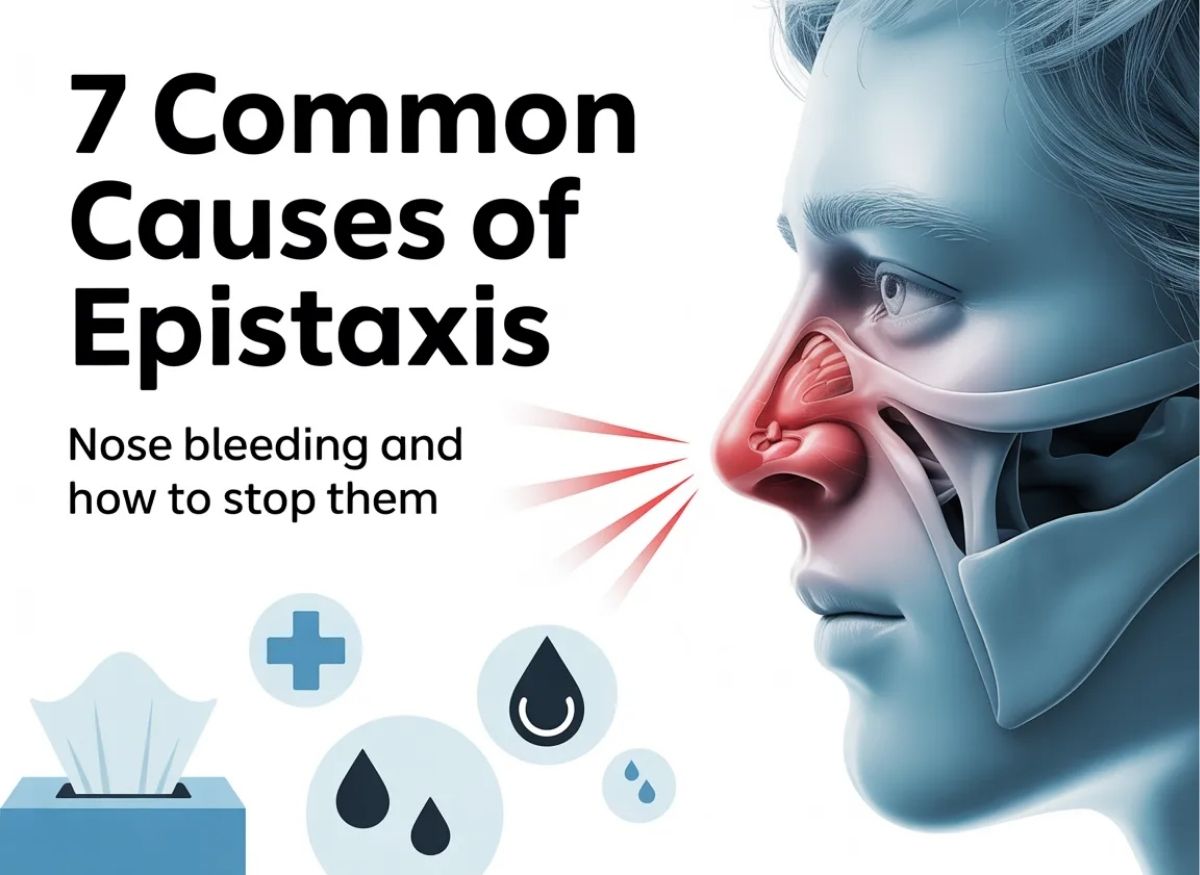
Epistaxis, the medical term for a nosebleed, is common and affects people of all ages. Most nosebleeds are harmless and easy to manage at home, but recurrent or severe ones can signal an underlying health problem. The bleeding comes from blood vessels inside the nostrils and can range from a minor drip to a heavy, hard-to-control flow.
Causes include environmental factors, medical conditions, and lifestyle habits. Knowing the triggers and how to respond can reduce how often nosebleeds happen and how severe they are. Whether the cause is dry air, allergies, or a condition like high blood pressure, early identification and action are key.
This article covers seven common causes of nosebleeds, how to stop one, when to get medical help, and the complications to watch for.
Understanding Epistaxis: Types and Origins
Epistaxis is bleeding from the tissue lining the inside of the nose. It happens when the small, fragile blood vessels there are damaged. Most often the break occurs in the septum, though it can happen deeper in the nasal passage. The nasal lining warms and humidifies every breath, so it is packed with capillaries close to the surface, which makes them easy to rupture from even minor triggers.
How a nosebleed is managed depends on where the vessel breaks. There are two main types.
Anterior epistaxis accounts for roughly 90% of cases. It starts at the front of the nose in Kiesselbach’s plexus (Little’s area), a crossroads of several arteries on the lower part of the septum just inside the nostril. Because it is so accessible, it is often triggered by dry air, minor trauma, or picking, and it is usually easy to control with pressure. It rarely signals a deeper systemic problem.
Posterior epistaxis is far more serious. The rupture occurs in larger arterial branches at the back of the nasal cavity, near where the nose meets the throat. Blood often pours down the back of the throat rather than out the nostrils, even when you’re sitting up or leaning forward. Because the vessels are larger and deeper, these bleeds are hard to stop at home and almost always need emergency treatment, such as nasal packing or cauterization, to prevent heavy blood loss or airway problems.
Telling the two apart is the first step in deciding what to do. An anterior bleed is usually a passing inconvenience, but recognizing the signs of a posterior bleed is vital so you can get immediate care.
7 Common Causes of Nosebleeds
Finding the trigger is the best way to choose the right treatment and prevent repeats. Most nosebleeds trace back to identifiable environmental or physical factors that irritate the nose’s delicate blood vessels.
1. Dry Air and Environmental Factors
Dry air is by far the most frequent culprit. The nasal lining needs moisture to stay flexible. When humidity drops, it becomes dry, brittle, and prone to tiny cracks, which is why nosebleeds are so common in winter. Cold outdoor air combined with indoor heating creates a desert-like environment, and the crusts that form over small vessels can snap, causing a sudden bleed on waking or after moving between temperature zones.
2. Trauma and Vigorous Blowing
Blowing your nose hard can create enough pressure to rupture weak or superficial capillaries, especially during allergy season or a viral infection when the tissue is already compromised. Blood after blowing during hay fever often means the lining has become thin and fragile from constant friction and inflammation. Even minor nose picking can scratch the septum, and the wound struggles to heal because the scab keeps getting disturbed.
3. Chronic and Frequent Nosebleeds
Recurring nosebleeds usually have a deeper cause than dry air. Chronic sinusitis and poorly controlled allergies are common. Over-relying on medicated nasal sprays can cause rebound inflammation and thin the tissue. In older adults, blood thinners such as aspirin or anticoagulants prevent a stable seal from forming over small leaks. Rarely, frequent unexplained nosebleeds point to a hereditary condition such as Osler-Weber-Rendu syndrome, which affects how blood vessels form.
4. Pregnancy and Hormonal Changes
Nosebleeds are common in pregnancy. Blood volume rises by up to 50% to support the baby, and hormonal shifts dilate blood vessels throughout the body. Together these put more pressure on the nose’s delicate membranes, so the expanded capillaries are more likely to burst under minor stress. Episodes are usually harmless but can be more frequent in the second and third trimesters.
5. Sudden and Severe Episodes
A sudden, heavy nosebleed can point to an acute spike in internal pressure or a local irritant. In adults it can sometimes follow a sudden rise in blood pressure. In children, a small foreign object lodged in the nostril is a frequent cause. Bleeds that start during sleep may come from unconscious scratching or from a fan or air conditioner blowing on the face and drying the nose. These episodes often involve more blood and may need more intensive treatment.
6. Blood Clots and Coagulation
Blood clots coming out of the nose can be frightening, but they are a sign the body’s repair system is working. The blood has begun to coagulate as it pooled in the nasal cavity. The bleeding was heavy enough for blood to sit and thicken before it came out, but the clots are part of healing. Avoid blowing them out early, since that can dislodge the plug at the break and restart the bleeding, sometimes more heavily.
7. Infections and Colds
Colds and other respiratory infections often cause nosebleeds. The lining becomes inflamed and engorged with blood as part of the immune response, so the vessels are fuller and more fragile. Swelling, mucus irritation, and frequent wiping and blowing make bleeding more likely. Treating the infection and using a saline gel to protect the irritated tissue are the usual remedies.
How to Stop a Nosebleed
A sudden nosebleed can cause panic, which raises your heart rate and can make bleeding worse. Knowing the steps for the first few minutes can make the difference between a minor inconvenience and an emergency room visit.
- Sit upright. Don’t lie down or tilt your head back. Keeping your head above the level of your heart lowers blood pressure in the nasal veins and slows bleeding. Lying flat raises pressure in the head and can turn a simple anterior bleed into a persistent one.
- Lean slightly forward. This directs blood out through the nostrils rather than down the throat, where it can cause coughing, choking, stomach irritation, and nausea. It also lets you see how much you’re bleeding and whether your efforts are working.
- Pinch firmly and continuously. Use your thumb and index finger to pinch the soft, fleshy part of the nose, just below the bony bridge, completely shut. Hold for a full 10 to 15 minutes without letting go to check. Releasing early can break the fragile seal and make the bleeding seem to restart indefinitely. This compression is the single most effective way to stop a nosebleed.
- Add a cold compress (optional). A cold pack wrapped in cloth on the bridge of the nose constricts nearby blood vessels and reduces blood flow to the injured area. It’s especially useful when tissue is already inflamed, and the numbing effect can ease the discomfort of the pressure.
When to Get Professional Help
Seek medical attention if bleeding hasn’t stopped after 20 to 30 minutes of continuous pressure. A persistent bleed may be posterior or reflect an underlying problem needing treatment such as nasal packing or topical vasoconstrictors like oxymetazoline. Professional evaluation is also required if the clots are unusually large (larger than a quarter) or if the nosebleed followed a serious head injury, to rule out deeper trauma.
What to Do If a Nosebleed Won’t Stop
If bleeding continues after 20 minutes of firm pressure, or if you have nosebleeds several times a week, move from home remedies to professional care.
Visit a doctor. If the “pinch and lean” method fails, go to urgent care or see an ENT (otolaryngologist). Providers can use treatments unavailable at home:
- Nasal packing: a sponge or balloon catheter that expands in the nose to press directly on the bleeding vessel.
- Cauterization: using a silver nitrate swab or electrical tool to seal the bleeding vessel, which can provide a lasting fix for that spot on the septum.
Call emergency services if a sudden nosebleed comes with alarming symptoms: heavy blood loss that makes you lightheaded, or difficulty breathing because blood is flowing rapidly down the back of your throat. These suggest a posterior bleed or that your body is struggling to compensate for fluid loss. Emergency teams can give intravenous fluids to maintain blood pressure while controlling the bleed with advanced packing or, if needed, arterial ligation in the operating room.
Be careful with decongestant sprays. People often overuse over-the-counter decongestant sprays for a quick fix. They can temporarily constrict vessels and slow a bleed, but they are very drying and irritating. Long-term or improper use causes rebound congestion and further thins the nasal lining, raising the risk of future nosebleeds. Keep the area moist with saline gel or spray instead, and seek professional help if pressure alone doesn’t close the wound.
Complications of Nosebleeds
Most nosebleeds resolve with basic care, but very heavy, frequent, or poorly managed ones can cause secondary problems.
- Infection. Frequent bleeding, especially from chronic dryness or repeated trauma, compromises the nose’s barrier against germs. Constantly cracked, ulcerated, or scabbing membranes give bacteria an entry point, and stagnant blood in a warm, moist space encourages bacterial growth. This can cause local infections or sinusitis, with facial pain, fever, and thick discharge.
- Blood loss and anemia. A single anterior bleed rarely causes dangerous blood loss, but prolonged bleeding or repeated episodes over a day can lead to iron-deficiency anemia, with fatigue, pallor, and weakness. In acute cases, such as a posterior bleed, blood loss can be fast enough to drop blood pressure and cause dizziness, fainting, and in extreme cases hypovolemic shock. That’s why the 20-minute threshold for seeking care is taken so seriously.
- Structural damage. Repeated trauma to the septum, from aggressive picking or repeated cauterization, can eventually cause a septal perforation, a hole in the wall between the nostrils. It can cause whistling while breathing, persistent crusting, and a hard-to-manage cycle of bleeding. A large perforation can even collapse the bridge of the nose (a “saddle nose” deformity), requiring reconstructive surgery.
- Chronic sinus problems. Ongoing blood and inflammation can block the small openings where the sinuses drain, causing chronic sinusitis. That brings facial pressure, trouble breathing through the nose, a reduced sense of smell, and a perpetually congested voice. In severe cases the blockage may contribute to middle ear infections and hearing problems, because of the nearby Eustachian tubes.
Conclusion
Nosebleeds are often minor and manageable, but knowing the causes and how to stop them helps prevent recurrence and reduce discomfort. Whether the trigger is dry air, allergies, or a medical condition, addressing the underlying issue can cut down on episodes.
If your nosebleeds are frequent or severe, or don’t stop with basic treatment, see a healthcare professional. Persistent nosebleeds can sometimes signal a more serious problem, such as a clotting disorder or high blood pressure. Following the tips in this article and staying proactive can help you avoid unnecessary complications.
Frequently Asked Questions
Is there a permanent cure for nosebleeds?
There’s no universal cure, but many people find lasting relief through targeted treatment. If frequent nosebleeds come from one prominent vessel, cauterization with heat or silver nitrate can seal it and end the cycle. For most people, the closest thing to a cure is environmental control: using a humidifier consistently to prevent dry-air nosebleeds.
When should I worry about a severe nosebleed?
Get emergency care if bleeding lasts longer than 20 minutes despite firm, continuous pressure. A nosebleed after a serious injury, such as a fall, car accident, or blow to the face, needs evaluation to rule out a skull fracture or internal trauma. Heavy bleeding that soaks through multiple towels, or dizziness, lightheadedness, or fainting, signals an emergency.
Why do I get nosebleeds during sleep?
Usually because of the sleeping environment or unconscious habits. The main culprit is low bedroom humidity, which cracks the nasal lining as you breathe deeply at night. Another common cause is unconsciously scratching the septum while asleep. Finding clots on your pillow in the morning likely means the bleed started in the night and the blood had time to pool and thicken before it stopped.
Can high blood pressure cause a sudden nosebleed?
Yes, there is a strong link. High blood pressure may not always cause the initial break, but it can make things worse. Elevated pressure stresses the delicate arterial walls in the nose, and if a vessel ruptures, the higher pressure makes it harder to form a stable clot, often leading to a heavier bleed that’s hard to stop at home.
What should I avoid after the bleeding stops?
The area stays fragile for several hours. For at least 24 hours, avoid blowing your nose, bending over, and lifting heavy objects, since these raise head pressure and can dislodge the clot. Also avoid hot liquids and spicy foods, whose steam and heat can dilate blood vessels and restart the bleeding.
Are nosebleeds common in children and infants?
Yes, and they are usually harmless. Children have a dense, shallow network of blood vessels in the front of the nose that colds, allergies, and small objects pushed into the nostril easily irritate. Most pediatric cases are anterior bleeds that respond quickly to a gentle pinch. If a child has frequent nosebleeds with no obvious cold or injury, see a pediatrician to rule out a clotting problem.