
12 Warning Signs of Factor V Leiden Thrombophilia You Should Know
Most people carrying Factor V Leiden thrombophilia have no idea it’s there until a blood clot shows up or a genetic test reveals it. This is an inherited condition that changes how your blood clots, making abnormal clot formation more likely. Carrying the gene doesn’t guarantee you’ll ever develop a clot, but knowing the warning signs can help you catch a problem before it becomes dangerous.
Factor V Leiden is the most common inherited blood-clotting disorder, particularly in people of European descent roughly 3% to 8% of that population carries the mutation, with much lower rates elsewhere. Many carriers go their entire lives symptom-free, but the odds of developing deep vein thrombosis (DVT) or a pulmonary embolism (PE) climb higher, especially when other risk factors pile on.
The condition arises from a genetic change that makes Factor V a protein central to clotting resistant to the body’s usual method of shutting clotting down. The result: blood clots more readily than it should. Surgery, long periods of inactivity, pregnancy, hormone therapy, smoking, and various health conditions can all push that risk higher still.
Below, we cover the 12 warning signs tied to Factor V Leiden, along with the risk factors, complications, and practical information you need to manage this inherited condition.
What is Factor V Leiden Thrombophilia?
Factor V Leiden thrombophilia is an inherited clotting disorder caused by a mutation in the coagulation factor V (F5) gene. That mutation raises the risk of abnormal blood clots, or thrombosis, and it’s the most common inherited cause of a hypercoagulable state meaning the blood is simply more prone to clotting than normal.
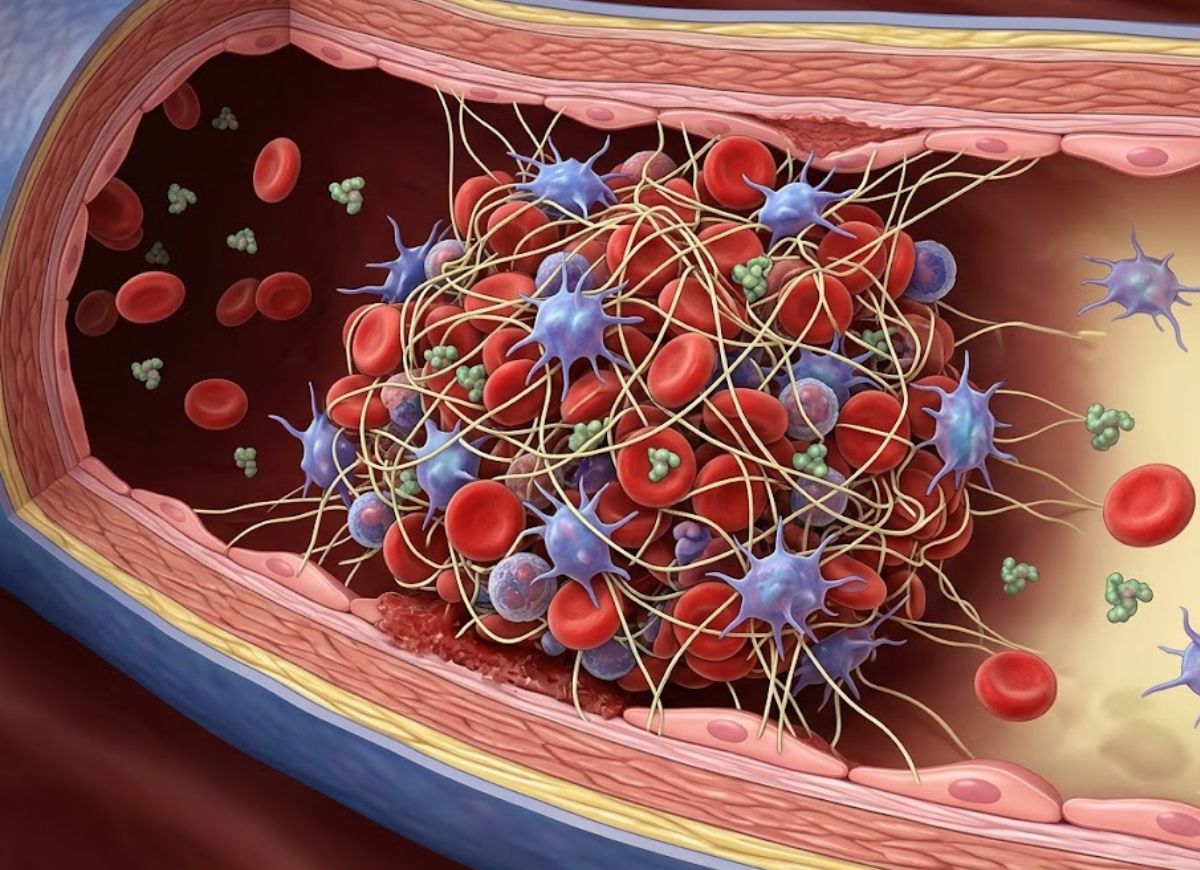
At the root of the problem: the mutated Factor V protein resists being switched off by Activated Protein C (APC), the body’s natural anticoagulant. Without that brake working properly, the clotting process keeps running longer than it should, raising the risk of clots forming deep in the veins most often in the legs.
Clotting itself is a balancing act between substances that promote clot formation and those that shut it down. When you’re injured, a rapid chain reaction the clotting cascade kicks in to seal the wound. Once healing is complete, anticoagulant proteins like APC step in to break down clotting factors, including Factor V, so the clot can dissolve.
In someone with Factor V Leiden, a single point mutation reshapes the Factor V protein just enough that APC can no longer bind to it and deactivate it properly. The “off switch” essentially malfunctions, allowing clots to form more aggressively and stick around longer raising lifetime risk for DVT and PE.
Primary Risk Factors For Developing Blood Clots With This Condition
Having Factor V Leiden alone doesn’t guarantee a clot. The real danger comes when the genetic predisposition combines with situations that independently encourage clotting. These triggers generally fall into three buckets: hormonal, situational, and lifestyle-related. Many carriers never experience a clot until one of these factors enters the picture.
Hormones are a major driver. Oral contraceptives and hormone replacement therapy especially formulations containing estrogen raise clot risk substantially. Pregnancy and the weeks following delivery also naturally boost clotting factors, making this a particularly vulnerable stretch.
Staying still for too long is another key trigger, since blood pools in the legs when it isn’t moving. Long flights or car trips, extended bed rest during illness, and recovery from major surgery hip and knee procedures especially all fall into this category. Direct trauma to a vein can also set the clotting process in motion.
Lifestyle and existing health conditions matter too. Carrying excess weight puts added pressure on veins in the legs and pelvis. Smoking damages blood vessel linings, making clots more likely to form. Age over 60, a personal or family history of clotting, and certain cancers or their treatments round out the list.
Factor V Leiden Mutation Causing an Increased Risk of Thrombosis
The Factor V Leiden mutation drives up clot risk by throwing off the body’s normal checks on the clotting cascade specifically, by making Factor V resistant to being switched off by Activated Protein C (APC).
Because that resistance lets clotting continue unchecked for longer than it should, the clots that form tend to be larger, more stable, and more dangerous. Here’s how the process normally unfolds and where it breaks down.
When a blood vessel is damaged, the body triggers a fast, layered response involving a cascade of clotting factors that activate one another in sequence. Factor V plays a key supporting role in this chain.
Once activated, Factor V (called Factor Va) pairs up with another activated factor, Factor Xa, on the surface of platelets to form the prothrombinase complex a critical enzyme cluster.
This complex converts prothrombin into thrombin, a powerful enzyme that then transforms fibrinogen into fibrin. Fibrin strands weave together into a mesh that traps blood cells and platelets, forming a stable clot that seals the injury.
In a healthy system, once the clot has done its job, APC steps in as a natural brake targeting and deactivating Factor Va to shut down the prothrombinase complex and stop further thrombin production.
But in someone with Factor V Leiden, the mutation alters the exact site where APC is meant to bind and cleave Factor Va. APC simply can’t do its job efficiently anymore.
The result: Factor Va stays active far longer than it should, the prothrombinase complex keeps generating thrombin, and the resulting clot grows larger and more persistent than necessary leaving the body in a hypercoagulable state with elevated risk of dangerous clotting.
12 Key Blood Clot Symptoms Associated With Factor V Leiden
Swelling in one leg or arm
One of the most recognizable signs. Blood can’t drain properly from the affected limb, causing edema that’s usually one-sided. It may start subtly but can grow noticeable enough that the limb visibly outsizes the other.
Pain or tenderness
Often described as a deep ache, throbbing sensation, or a “charley horse” cramp that won’t let up. The pain may follow the path of the vein and tends to worsen with standing, walking, or flexing the foot.
A feeling of warmth in the affected area
Blood pooling and the body’s inflammatory response to the clot can make the skin over the area noticeably warmer than the surrounding skin or the opposite limb.
Red or discolored skin
The skin over the clot may take on a reddish, bluish, or purplish tint a sign of congested blood flow and tissue inflammation.
Visible surface veins
When a deep vein is blocked, blood reroutes through veins closer to the skin’s surface, making them more prominent and visible than usual.
Leg fatigue
The affected limb may feel abnormally heavy, tired, or weak, caused by poor circulation and a buildup of metabolic waste in the muscle.
Hardening of the vein (palpable cord)
Sometimes the clotted vein feels firm or rope-like to the touch a direct physical sign of thrombosis within the vessel.
Sudden shortness of breath (dyspnea)
The most common PE symptom. It often appears without warning, whether you’re active or resting, and feels like you simply can’t get enough air no matter how hard you try.
Sharp chest pain (pleuritic pain)
Typically stabbing and sharp, worsening with a deep breath, coughing, sneezing, or bending. It’s sometimes mistaken for a heart attack, but its clear link to breathing sets it apart caused by inflammation of the lung’s lining near the clot.
Rapid heart rate (tachycardia)
The heart speeds up to compensate for reduced oxygen delivery. It may feel like racing, pounding, or fluttering a resting heart rate consistently above 100 bpm is a red flag.
Unexplained cough, sometimes with bloody mucus (hemoptysis)
A persistent dry cough can appear, and in more serious cases, it may bring up blood-streaked sputum, indicating lung tissue damage from the clot.
Dizziness, lightheadedness, or fainting (syncope)
These occur when a large clot severely restricts blood flow through the lungs, dropping blood pressure and starving the brain of oxygen. Fainting in this context signals a potentially massive, life-threatening embolism.
When to Seek Medical Help?
Any suspected clot symptom tied to Factor V Leiden warrants immediate medical evaluation both DVT and PE are serious and time-sensitive. Left untreated, a DVT can break loose and travel to the lungs, turning into a potentially fatal PE.
Unilateral leg swelling, calf pain, or redness should prompt an urgent call or visit to a healthcare provider. Signs pointing to a PE sudden shortness of breath or sharp chest pain call for an emergency response, meaning 911.
Speed matters because early treatment with blood thinners can stop a clot from growing, lower the chance it travels to the lungs, and prevent long-term complications like post-thrombotic syndrome.
Doctors typically combine a physical exam with a D-dimer blood test, which detects a substance released as a clot breaks down.
If the D-dimer comes back elevated or suspicion remains high, imaging an ultrasound for DVT or a CT scan for PE confirms the clot directly. Genetic testing for Factor V Leiden usually happens after a clotting event is confirmed, to pin down the underlying cause and guide ongoing treatment.
Symptoms Signal a Medical Emergency
Certain symptoms point specifically to a pulmonary embolism and PE can be fatal due to the sudden strain it puts on the heart and the drop in oxygen it causes.
These symptoms need immediate emergency care. Don’t wait, and don’t drive yourself call an ambulance so paramedics can provide oxygen and monitoring on the way.
The core red flags: sudden, severe shortness of breath that appears without explanation; chest pain that worsens with a deep breath, cough, or sneeze, caused by the clot irritating the lung lining; coughing up blood, signaling lung tissue injury from the blockage; and fainting, dizziness, or severe lightheadedness, which suggests a large clot is choking off blood flow to the brain.
A racing heart alongside any of these symptoms is another sign the heart is straining to push blood through blocked pulmonary arteries.
Diagnosis of a Blood Clot Caused by Factor V Leiden
Diagnosing a Factor V Leiden-related clot happens in two stages: first confirming the clot itself, then tracing it back to the genetic cause. Doctors deal with the immediate threat first the underlying-cause investigation comes once the patient is stable.
The process starts with a review of symptoms, medical history, and risk factors recent surgery, long travel, birth control use, and so on. For a suspected DVT, the doctor examines the limb for swelling, tenderness, warmth, and discoloration. For suspected PE, they check heart rate, breathing rate, blood pressure, and oxygen levels.
A D-dimer blood test screens for fragments released when a clot breaks down. A negative result often rules out a clot in low-risk patients, though a positive one isn’t conclusive on its own surgery, pregnancy, and infection can also raise D-dimer levels, so a positive test usually leads to imaging.
Duplex ultrasound is the gold standard for diagnosing DVT, using sound waves to visualize veins and blood flow. A clot shows up as an obstruction, or as a vein that fails to compress under pressure.
CT Pulmonary Angiography (CTPA) is the definitive test for PE a contrast dye is injected, then a specialized CT scan highlights the pulmonary arteries so any blockage is clearly visible.
Once a clot is confirmed, especially if it appeared without an obvious cause or in a younger person, doctors may order testing for inherited thrombophilias, including a genetic test for the F5 mutation. This confirms the root cause and shapes decisions like how long to continue anticoagulant therapy, and whether family members should be tested too.
How is Factor V Leiden Inherited and Tested for?
Factor V Leiden follows an autosomal dominant inheritance pattern inheriting just one copy of the mutated gene from either parent is enough to have the condition.
If one parent carries a single copy (heterozygous), each child has a 50% chance of inheriting it. If a parent carries two copies (homozygous), every child inherits at least one copy. The mutation sits in the F5 gene, which codes for the Factor V clotting protein.
The specific mutation, known as G1691A, makes Factor V resistant to being deactivated by APC keeping the clotting process switched on longer than it should be and raising clot risk. Confirming the mutation requires a blood test, most reliably a DNA-based test that checks the F5 gene directly for the G1691A change.
An older method, the APC resistance assay, checks how blood responds to Activated Protein C; if resistance shows up, a DNA test follows to confirm it. Testing is usually recommended for people who’ve had an unprovoked clot especially before age 50 or who have a strong family history of clotting.
The Difference Between Being Heterozygous vs. Homozygous For Factor V Leiden
Whether you’re heterozygous or homozygous for Factor V Leiden matters a great deal, since it directly shapes your clot risk. These terms describe how many copies of the mutated F5 gene you carry. Being heterozygous means one mutated copy from one parent and one normal copy from the other.
Being homozygous means both copies are mutated, one inherited from each parent. The risk profiles differ sharply between the two. Everyone starts with some baseline risk of DVT or PE.
Carrying the Factor V Leiden mutation raises that baseline and knowing whether you’re heterozygous or homozygous helps doctors gauge just how much, shaping long-term management decisions.
Preventative Lifestyle Changes to Reduce Clotting Risk
You can’t change the genetics, but you can meaningfully lower your clot risk through consistent lifestyle habits centered on good circulation and avoiding known clot triggers.
Maintaining a healthy weight matters a lot, since excess weight pressures the veins in the legs and pelvis and promotes inflammation that encourages clotting. Regular exercise walking, swimming, cycling improves blood flow, strengthens the calf muscles that help push blood back up from the legs, and supports overall cardiovascular health.
The goal is avoiding long stretches of inactivity, whether from a desk job, a long trip, or surgical recovery. On long flights or drives, get up and stretch every hour or two, and try simple in-seat movements like ankle circles.
A few other habits help too. Dehydration thickens the blood and makes clotting more likely, so staying well-hydrated is a simple but effective safeguard.
Smoking damages blood vessel linings and makes clot formation easier quitting is one of the most impactful moves someone with Factor V Leiden can make.
And estrogen-containing medications combination birth control pills, hormone replacement therapy meaningfully raise clot risk, so it’s worth discussing safer alternatives with a healthcare provider.
Factor V Leiden and Other Inherited Thrombophilias
Factor V Leiden is the most common inherited thrombophilia, but it’s not the only one. Comparing it with conditions like the Prothrombin G20210A mutation, Protein C deficiency, and Protein S deficiency puts inherited clotting risk into perspective each affects a different part of the clotting cascade and carries its own risk level.
The Prothrombin G20210A mutation is the second most common inherited thrombophilia, causing overproduction of prothrombin, a key clotting protein. Heterozygous carriers face roughly 2 to 3 times the baseline risk generally lower than heterozygous Factor V Leiden.
Protein C and Protein S deficiencies are much rarer but can be more severe, since these proteins normally act as brakes on clotting. When they’re missing, clotting proceeds with fewer safeguards.
In terms of prevalence: Factor V Leiden affects about 5% of the Caucasian population, the Prothrombin mutation about 2%, and Protein C/S deficiencies roughly 1 in 500 people.
Heterozygous Factor V Leiden carries a 5–10x increased VTE risk; heterozygous Prothrombin mutation carries 2–3x; heterozygous Protein C or S deficiency can carry risk as high as 10-fold similar to Factor V Leiden.
Homozygous Factor V Leiden significantly raises adult VTE risk (50–80x), while homozygous Protein C or S deficiency is far more severe and often shows up in newborns as purpura fulminans a life-threatening condition involving widespread clotting and tissue damage.
FAQs
1. When should you suspect thrombophilia?
Consider it if clots appear at a young age, recur repeatedly, occur without an obvious cause, or run strongly in the family. Doctors may also test after unusual clot locations, pregnancy-related clotting issues, or repeated miscarriages linked to clotting.
2. Which leg usually gets blood clots?
DVT can develop in either leg, though it’s slightly more common in the left. Symptoms include swelling, pain, tenderness, warmth, redness, or heaviness though some clots cause little to no noticeable symptoms.
3. What blood tests confirm thrombophilia?
A genetic test identifies the Factor V Leiden mutation specifically. Other tests screen for protein C or S deficiency, antithrombin deficiency, antiphospholipid antibodies, and related clotting abnormalities, depending on personal history and risk factors.
4. How do I know if my DVT is bad?
Worsening leg swelling, severe pain, significant redness or warmth, or signs the clot may have traveled — sudden chest pain, shortness of breath, coughing blood, dizziness, rapid heartbeat all call for urgent medical attention.
5. What should you avoid if you have Factor V Leiden?
Generally: smoking, prolonged inactivity, dehydration, and hormone-based medications unless specifically approved by a doctor. Staying active, keeping a healthy weight, and discussing your personal risk factors with a provider all help.
6. Should you be on blood thinners if you have Factor V Leiden?
Not automatically. It depends on whether you’ve had a prior clot, the specific mutation type, other health risks, and personal history. Some people just need preventive habits; others need anticoagulant medication under medical supervision.
Conclusion
Factor V Leiden thrombophilia raises the risk of abnormal blood clotting, but plenty of carriers never run into serious complications. Knowing the warning signs, understanding your personal risk factors, and seeking care promptly when symptoms appear are the key steps in managing it well.
The mutation itself can’t be undone, but regular monitoring, healthy habits, and personalized medical guidance go a long way toward reducing risk. Catching signs like unexplained leg swelling, pain, warmth, or sudden breathing trouble early can make a real difference.
If you have Factor V Leiden or are concerned about thrombophilia in general, talk to a healthcare professional about your individual risk profile it’s the best way to figure out the right approach to prevention, testing, and treatment.