
Itchy Skin (Pruritus): Causes, Symptoms, and Proven Treatments Backed by Science
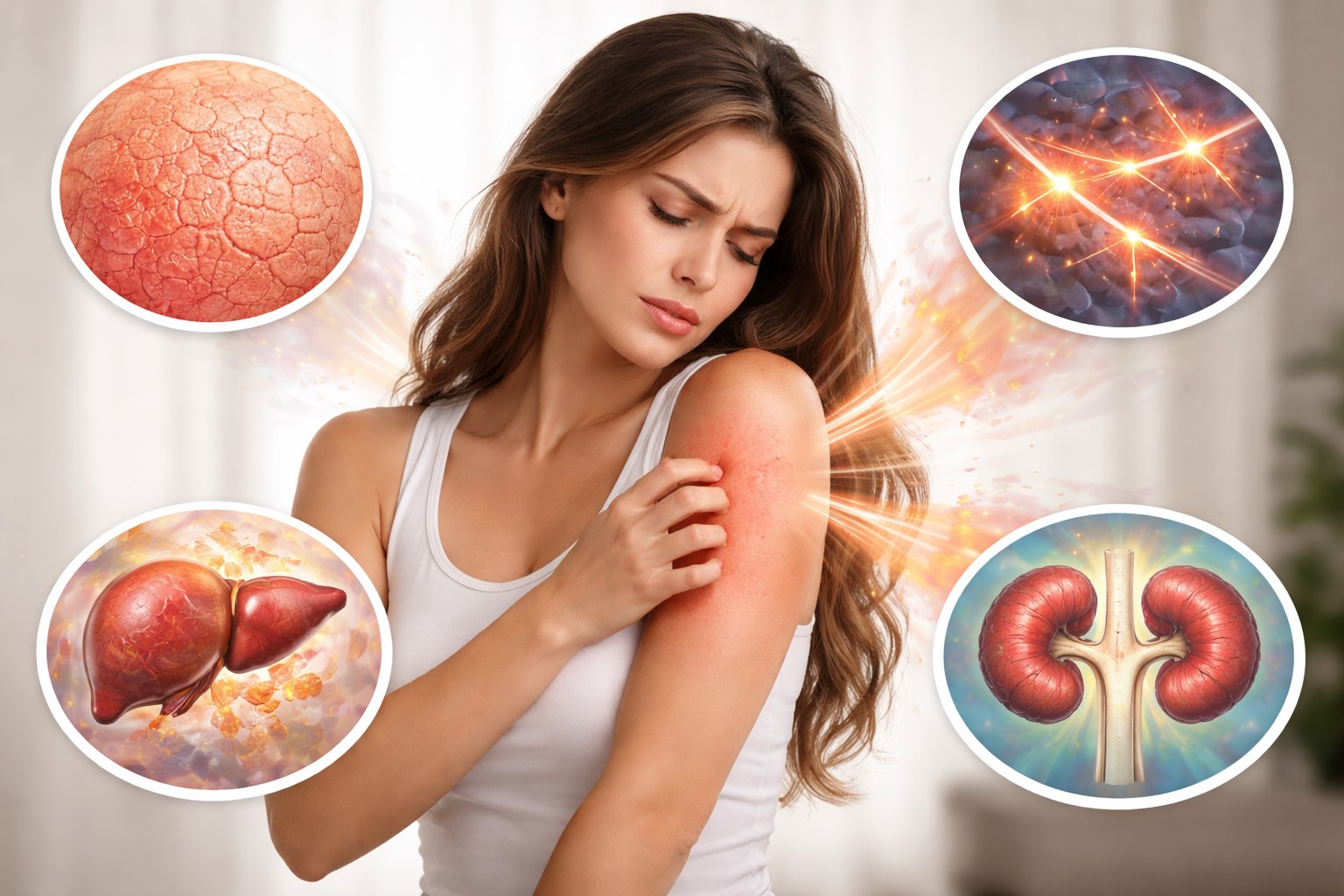
You notice it first at night. A persistent itching that won’t settle down, moving from your arms to your back, then to your legs. Sleep becomes broken, focus slips the next day, and you start wondering, why am I so itchy all the time?
Itchy skin (pruritus) is one of the most common symptoms seen in clinical practice, yet it’s often underestimated. While many cases trace back to dry skin or mild irritation, others may point to deeper systemic issues worth paying attention to.
Understanding why your skin itches matters. This guide walks through the causes, symptoms, diagnostic process, and evidence-based treatments for pruritus, helping you tell when itching is harmless and when it isn’t.
What Is Itchy Skin (Pruritus)?
Pruritus is an unpleasant sensation on the skin that creates the urge to scratch. It isn’t a disease in itself, it’s a symptom with many possible causes.
You may experience:
- Mild, temporary itching
- Persistent itching all over the body
- Localized irritation in one area
- Or unexplained itching all over the body without a visible rash
When itching lasts longer than six weeks, it’s classified as chronic pruritus. This form usually calls for medical evaluation, especially when there’s no obvious cause.
How Itching Works: The Science Behind the Sensation
Itching starts in specialized nerve endings in the skin called C-fibers. These fibers respond to chemical signals like histamine, cytokines, and neuropeptides released during inflammation or irritation.
Once triggered, these signals travel through the spinal cord to the brain, which interprets them as itching and prompts the urge to scratch.
Scratching can bring temporary relief, but it damages the skin barrier and releases even more inflammatory mediators, creating what clinicians call the itch–scratch cycle.
This cycle explains why itching often gets worse over time, especially in chronic conditions.
Common Causes of Itchy Skin (Pruritus)
1. Skin-Related Causes
The most common reason behind itchy skin is a direct issue with the skin itself.
Dry skin (xerosis) is a leading cause, particularly in older adults. According to the American Academy of Dermatology, dry skin accounts for a large share of chronic itching cases, especially in cold or low-humidity climates.
Other dermatologic causes include:
- Atopic dermatitis (eczema)
- Contact dermatitis from allergens or irritants
- Psoriasis
- Urticaria (hives)
- Fungal or bacterial infections
- Scabies and parasitic infestations
These conditions often come with visible skin changes like redness, scaling, or rashes.
2. Systemic Causes (Internal Conditions)
Sometimes, itching all over the body shows up without any rash. This can be a sign of an internal disease.
Common systemic causes include:
- Liver disease: Cholestasis leads to bile salt buildup, which triggers intense itching
- Chronic kidney disease: Uremic pruritus affects up to 40% of patients on dialysis (National Kidney Foundation)
- Thyroid disorders: Both hyperthyroidism and hypothyroidism can cause itching
- Diabetes mellitus: Linked to dry skin and neuropathic itching
- Iron deficiency anemia
- Cancers such as lymphoma: Itching may show up before diagnosis in some cases
If you’re dealing with itchy skin and no rash, these causes shouldn’t be overlooked.
3. Neurologic Causes
Damage or dysfunction in the nervous system can also cause itching.
Examples include:
- Post-herpetic neuralgia
- Nerve compression
- Multiple sclerosis
In these cases, the itching may feel unusual, like burning, tingling, or moving across different areas.
4. Psychological Causes
Stress and emotional factors play a surprisingly strong role in itching.
Research published in Acta Dermato-Venereologica shows that stress can amplify how itch is perceived through brain-skin interactions.
This explains why you might feel unexplained itching all over the body during periods of anxiety or emotional strain.
5. Medication-Induced Itching
Certain medications can trigger pruritus without any rash.
Common culprits include:
- Opioids
- Antibiotics
- Antifungal medications
- Chemotherapy drugs
If itching starts after beginning a new medication, this connection is worth considering.
Symptoms Associated With Itchy Skin
Itching rarely shows up alone.
In many cases, it develops alongside visible skin changes or deeper sensory disturbances that help point toward the underlying cause.
You may notice:
- Dry, rough, or flaky skin that feels tight or sensitive
- Redness or inflammation, especially after scratching
- Scratch marks, cuts, or broken skin that may sting or bleed
- Thickened, leathery areas (lichenification) from repeated rubbing
- Secondary infections, often marked by warmth, pus, or crusting
But the experience of itchy skin (pruritus) goes beyond what’s visible. The sensation itself can vary a lot.
Some people describe a tingling, crawling, burning, or stinging feeling rather than plain itching. Others report itching that moves around the body, which can be especially frustrating and may point to systemic or neurologic involvement.
With itching all over the body, symptoms may appear symmetrical or shift unpredictably from one area to another. This pattern is often seen in metabolic or internal conditions.
Impact on Daily Life and Mental Health
Chronic pruritus doesn’t just affect the skin. It gradually chips away at emotional and psychological wellbeing.
You may experience:
- Difficulty falling or staying asleep because of persistent itching
- Daytime fatigue and reduced concentration
- Irritability or heightened stress levels
- Social discomfort due to visible skin damage
A study published in Acta Dermato-Venereologica found that chronic pruritus significantly reduces quality of life, with effects comparable to chronic pain conditions. This shows itchy skin isn’t a minor issue, it’s a multidimensional health concern.
Itchy Skin Without Rash: What It Means
One of the most clinically significant presentations is itchy skin with no rash. Here, the skin can look completely normal, yet the sensation itself is persistent, intense, and hard to ignore.
This often raises an important question: why am I itchy all over without any visible changes? When there’s no rash, the cause is more likely internal rather than confined to the skin.
Common underlying conditions include:
- Liver dysfunction: In cholestatic disorders, bile acids build up in the bloodstream and stimulate nerve endings, causing widespread itching. The sensation is often deep and more noticeable on the palms and soles.
- Chronic kidney disease: Uremic pruritus is common in advanced kidney disease and may show up as generalized itching all over the body, especially at night.
- Blood disorders: Iron deficiency anemia, polycythemia vera, and certain cancers such as lymphoma may initially present as unexplained itching all over the body.
- Thyroid imbalance: Both overactive and underactive thyroid conditions can affect skin hydration and nerve sensitivity, contributing to pruritus.
Other possible causes include diabetes, medication reactions, and early systemic illness. In these cases, itchy skin (pruritus) becomes a symptom of a broader physiological imbalance.
A review published in The New England Journal of Medicine notes that generalized pruritus without a rash can be an early sign of systemic disease, particularly in older adults.
The pattern of itching can also offer clues. If the itching moves around the body, affecting different areas without a clear trigger, this may point to neurologic or systemic involvement rather than a localized skin condition.
Persistent itchy skin with no rash shouldn’t be dismissed. Further medical evaluation is often needed to find the underlying cause.
Why Is Itching Worse at Night?
Many people report that itching intensifies at night, even when it seems manageable during the day. This pattern is well documented and has a clear physiological basis.
Several factors contribute to this nighttime worsening:
- Circadian rhythm changes: Cortisol, a natural anti-inflammatory hormone, drops at night. Lower levels let inflammatory signals tied to itching become more prominent.
- Increased skin temperature: Blood flow to the skin rises in the evening, which can heighten nerve sensitivity and intensify the itch.
- Greater water loss from the skin: The skin barrier becomes less effective at holding moisture overnight, leading to dryness and irritation.
- Reduced external distractions: With fewer things happening around you, the brain becomes more aware of bodily sensations, making itching feel stronger.
Neurological processing plays a role too. Studies show that attention and emotional state influence how itch signals are perceived. In a quiet setting, like bedtime, the sensation becomes more noticeable and harder to ignore.
This explains why people often ask why they’re so itchy at night, and why chronic itching frequently disrupts sleep.
Over time, poor sleep can raise stress levels, which in turn may worsen the itching, creating a self-reinforcing cycle.
Risk Factors for Pruritus
Several factors raise the odds of developing itchy skin (pruritus). These can relate to age, environment, lifestyle, or underlying health conditions.
One of the most significant risk factors is aging. As skin ages, it thins and produces less natural oil, reducing its ability to hold moisture. This leads to dryness, a major contributor to itching.
Environmental and lifestyle factors include:
- Frequent hot showers or baths: Hot water strips natural oils from the skin, weakening its protective barrier.
- Use of harsh soaps or skincare products: Ingredients like fragrances and alcohol can irritate and dry out skin.
- Low humidity environments: Air conditioning, indoor heating, or dry climates speed up moisture loss from the skin.
Chronic medical conditions also play a significant role:
- Kidney disease
- Liver disorders
- Diabetes mellitus
- Thyroid dysfunction
On top of that, occupational exposure to chemicals, detergents, or irritants can raise the risk of persistent itching, particularly on exposed skin.
Psychological stress is another contributing factor. Emotional strain can affect immune responses and nerve signaling in the skin, leading to itching that’s more frequent and more intense.
When several risk factors overlap, the odds of experiencing unexplained itching all over the body go up.
When to See a Doctor
Not every case of itching needs medical evaluation. But certain signs point to the need for further assessment.
Medical attention is recommended if:
- Itching lasts more than two to six weeks
- Symptoms interfere with sleep or daily activities
- There’s itching all over the body without a rash
- The itching is severe, getting worse, or hard to control
- Additional symptoms appear, such as weight loss, fatigue, fever, or night sweats
These features may point to an underlying systemic condition rather than a simple skin issue.
Persistent uncertainty is another important factor. When you keep wondering why your skin is so itchy with no clear explanation, further investigation is warranted.
Early evaluation allows for timely diagnosis of conditions like anemia, thyroid disorders, or liver disease, many of which are treatable when caught early.
Ignoring prolonged or unexplained pruritus can delay diagnosis and lead to more complicated health issues down the line.
Diagnosis of Itchy Skin (Pruritus)
Clinical Evaluation
Diagnosis starts with a detailed history. You’ll likely be asked about:
- Duration and pattern of itching
- Associated symptoms
- Medications
- Environmental exposures
A physical exam follows, looking at both skin and systemic signs.
Laboratory Tests
If no clear skin cause turns up, further testing may include:
- Liver function tests
- Kidney function tests
- Thyroid hormone levels
- Blood glucose levels
- Iron studies
- Complete blood count
These tests help identify systemic causes of itching.
Additional Investigations
In select cases, doctors may recommend:
- Skin biopsy
- Imaging studies
- Allergy testing
These come into play when the initial evaluation doesn’t reveal a clear cause.
Treatment Options for Itchy Skin
1. General Measures
The foundation of treatment is simple but effective.
- Keep skin well moisturized
- Avoid hot showers
- Use gentle, fragrance-free products
- Wear breathable fabrics
These steps help restore the skin barrier and reduce irritation.
2. Topical Treatments
Topical therapies are usually the first line of treatment.
- Corticosteroids reduce inflammation
- Calcineurin inhibitors for sensitive areas
- Menthol or cooling creams provide relief
- Topical antihistamines (limited use)
3. Systemic Treatments
When itching is severe or widespread, oral medications may be needed.
- Antihistamines for allergic itching
- Gabapentin or pregabalin for neuropathic itch
- Antidepressants for chronic pruritus
- Immunosuppressants in severe inflammatory conditions
Treatment depends on the underlying cause.
4. Advanced Therapies
For resistant cases:
- Phototherapy (UV light treatment)
- Biologic agents targeting specific immune pathways
These are typically managed by specialists.
Home Remedies and Lifestyle Tips
Daily habits play a big role in reducing itchy skin (pruritus), especially when symptoms are mild or tied to dryness and environmental factors. Small, consistent changes can meaningfully improve skin comfort and reduce how often itching all over the body occurs.
Apply moisturizer immediately after bathing:
Moisturizing within a few minutes of showering helps lock in water and rebuild the skin barrier. Thick, fragrance-free creams or ointments work better than lotions, especially for persistent dryness.
Use oatmeal baths to soothe the skin:
Colloidal oatmeal has anti-inflammatory and skin-protective properties. Clinical studies show it helps reduce itching and improve skin hydration, particularly with conditions like eczema.
Apply cool compresses:
A clean, damp cloth placed on itchy areas can calm nerve endings and reduce the urge to scratch. This is especially helpful during flare-ups or nighttime discomfort.
Avoid scratching; instead, gently press or tap the area:
Scratching damages the skin and worsens inflammation. Pressing or lightly tapping gives temporary relief without breaking the skin barrier.
Manage stress through relaxation techniques:
Stress is a known trigger for unexplained itching all over the body. Techniques like deep breathing, meditation, or gentle physical activity can help regulate the nervous system and ease itch intensity.
Additional Practical Strategies
To further control itchy skin, consider these evidence-based approaches:
Use lukewarm water instead of hot water:
Hot showers strip natural oils from the skin, increasing dryness and irritation. Shorter, cooler showers help preserve skin moisture.
Choose gentle, fragrance-free skincare products:
Harsh ingredients can worsen irritation, especially on sensitive skin. Products labeled “hypoallergenic” or “for sensitive skin” are generally safer.
Wear soft, breathable fabrics:
Cotton and natural fibers reduce friction and allow airflow, minimizing irritation. Synthetic fabrics and wool can make itching worse.
Keep nails short and clean:
This reduces skin damage if you scratch unconsciously, particularly during sleep.
Use a humidifier in dry environments:
Raising indoor humidity helps maintain skin hydration, especially during colder months or in air-conditioned spaces.
Stay well hydrated:
Adequate water intake supports overall skin health and helps maintain elasticity and moisture balance.
These measures are especially useful for anyone wondering why their skin is so itchy when no clear medical cause has been found.
Prevention Strategies
Preventing pruritus starts with protecting the skin barrier and limiting exposure to triggers. Long-term skin health depends on consistent care rather than occasional fixes.
Maintain regular hydration:
Drinking enough fluids supports skin function and helps prevent dryness from within.
Use mild, non-irritating cleansers:
Gentle soaps preserve natural oils and reduce the risk of irritation. Over-cleansing should be avoided.
Limit excessive bathing:
Frequent washing, especially with hot water, weakens the skin barrier and raises susceptibility to itching.
Protect skin from extreme temperatures:
Cold, dry air and excessive heat can both trigger itching all over the body. Appropriate clothing and environmental control matter here.
Manage chronic conditions effectively:
Conditions like diabetes, kidney disease, and thyroid disorders can contribute to itchy skin (pruritus). Proper medical management lowers the risk of related itching.
Additional Preventive Measures
Identify and avoid personal triggers:
These may include certain fabrics, detergents, foods, or environmental allergens.
Use sunscreen regularly:
Sun damage weakens the skin barrier and increases sensitivity over time.
Incorporate a balanced diet:
Nutrients like omega-3 fatty acids and vitamins A, C, and E support skin integrity and reduce inflammation.
Monitor medication side effects:
If itching starts after beginning a new drug, medical advice should be sought to look at alternatives.
Staying consistent with these preventive habits helps reduce episodes of itchy skin with no rash and improves overall skin resilience.
Complications of Chronic Itching
When itchy skin (pruritus) persists untreated, it can lead to a range of physical and psychological complications. The impact often reaches beyond the skin itself.
Skin infections:
Repeated scratching breaks the skin barrier, letting bacteria in. This can lead to infections like impetigo or cellulitis.
Scarring and pigmentation changes:
Chronic scratching can cause permanent skin thickening (lichenification) or uneven pigmentation, particularly in darker skin types.
Sleep deprivation:
Nighttime itching disrupts sleep patterns, leading to fatigue, reduced concentration, and impaired daily functioning.
Anxiety and depression:
Long-term discomfort can meaningfully affect mental health. Studies show chronic pruritus is linked to higher rates of anxiety and depressive symptoms.
Special Considerations
Itchy Skin in Older Adults
Aging reduces skin moisture and barrier function, making older adults more prone to persistent itching.
Itching During Pregnancy
Hormonal changes can cause itching. However, severe itching may signal intrahepatic cholestasis of pregnancy, which requires prompt evaluation.
Itchy Skin in Children
Common causes include eczema and allergies. Early management improves sleep and development.
FAQs About Itchy Skin (Pruritus)
1. Why am I so itchy all over?
You may have dry skin, allergies, or a systemic condition such as liver or kidney disease. Persistent symptoms should be evaluated.
2. What causes itching that moves around the body?
This may be due to nerve-related conditions, allergies, or systemic diseases affecting the whole body.
3. Why is my skin so itchy without a rash?
Possible causes include liver disease, kidney disease, thyroid disorders, or medication side effects.
4. What is the reason for whole body itching, no rash?
Internal conditions such as anemia, diabetes, or malignancies may present this way.
5. How can I stop itching quickly?
Use moisturizers, apply cool compresses, and avoid triggers. That said, long-term relief requires identifying the underlying cause.
Key Insight
Itchy skin (pruritus) is more than a surface-level problem. It’s a signal your body uses to communicate imbalance, irritation, or disease.
While many cases are harmless and manageable, persistent or unexplained itching all over the body deserves careful attention. Early diagnosis leads to better outcomes and a better quality of life.
If you keep asking yourself, “Why am I itchy all over?”, it may be time to look deeper.