
9 Early MRSA Symptoms You Shouldn’t Ignore
It starts as something easy to brush off. A small red bump, a bit of tenderness, or an irritated patch of skin at the end of a long day. You might assume it’s a pimple, an ingrown hair, or a minor cut that will heal by itself. Sometimes, though, your body is signaling that something more serious is going on under the surface.
Infections caused by Methicillin-resistant Staphylococcus aureus (MRSA) don’t always begin with dramatic symptoms. They often look like everyday skin problems that most people ignore, and that is exactly what makes MRSA so dangerous. Left untreated, something that looks harmless can turn into a painful, spreading infection that needs urgent medical care.
You may notice warmth over a small patch of skin, or a spot that gets more swollen and sensitive to the touch. It may start to fill with fluid or pus, or the redness may spread faster than you’d expect. These early signs are easy to miss, especially if you’re used to dealing with minor skin irritations.
MRSA infections can progress quickly, especially when the bacteria get in through cuts, scrapes, or weakened skin. What starts as mild discomfort can turn into a deeper infection that affects surrounding tissue and, in severe cases, reaches the bloodstream.
Learning the early symptoms is not about creating fear. It is about knowing enough to act early and protect your health. When you know what to look for, you’re more likely to notice when something is wrong and get care before it gets worse.
This guide covers 9 early MRSA symptoms you should never ignore, along with practical advice to help you respond with confidence.
9 Early Signs of MRSA Infection
Skin Lesion
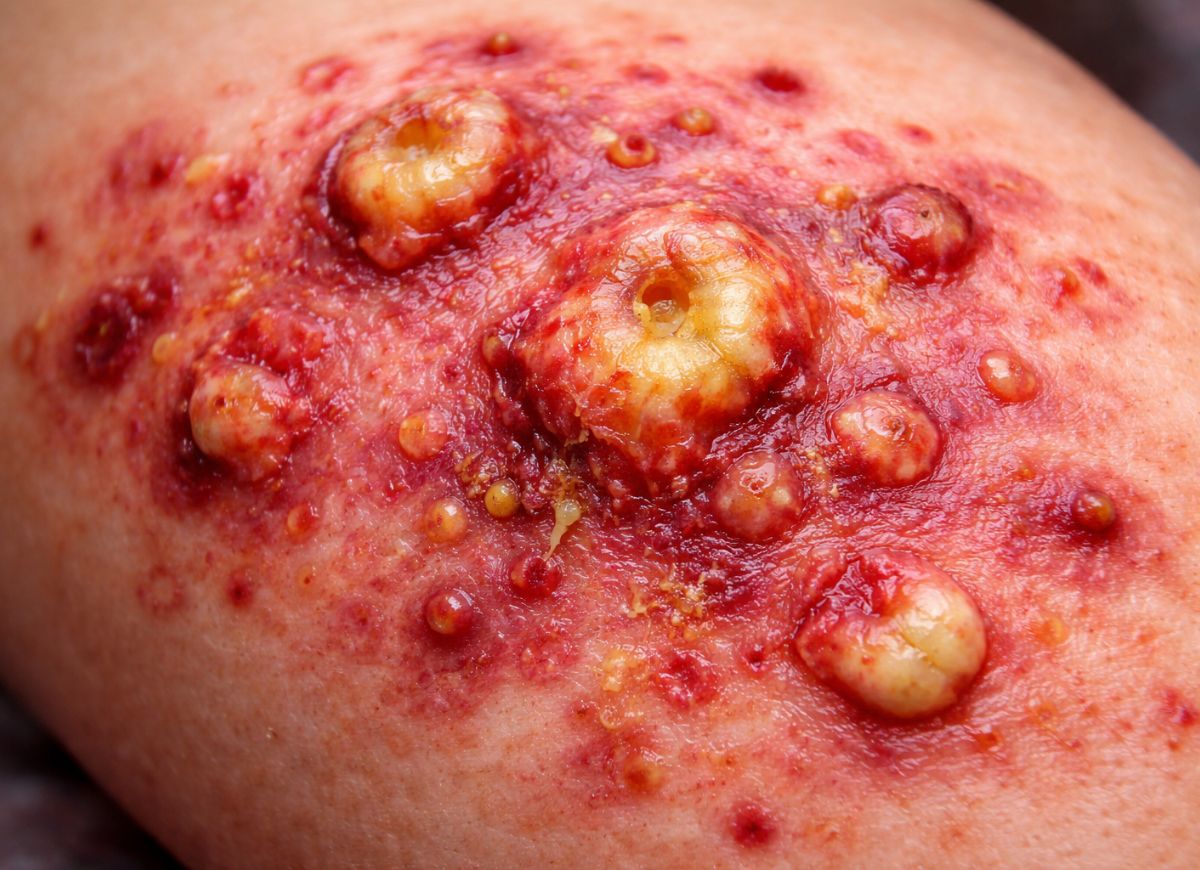
An early MRSA lesion is most often a red, swollen bump that can be mistaken for an insect bite, a pimple, or a boil. This deceptive start is one of the reasons people delay getting care.
The lesion is usually firm and raised, and it may have a central point or head that looks yellow or white because of the pus underneath. Unlike a simple pimple, a MRSA lesion is often much more painful and tender, and it can grow noticeably over hours or days.
Both patients and doctors often compare it to a spider bite. The lesion can have a small central opening or a dark, necrotic (dead tissue) center that looks like fang marks. Unless you actually saw a spider bite you, any lesion like this should be treated as a possible bacterial infection until proven otherwise. It can also be confused with an ingrown hair, particularly in the groin, armpits, or beard area.
What sets it apart is the intensity of the pain, the speed at which it progresses, and the presence of other whole-body symptoms. Ignoring such a lesion lets the bacteria multiply unchecked, which can lead to a more severe infection that is harder to treat.
Warm Affected Area to The Touch
Noticeable warmth in the skin around the lesion is a classic sign of a localized MRSA infection. It comes directly from the body’s inflammatory response to the bacteria.
When MRSA invades and damages tissue, the immune system kicks in. It sends extra blood to the area to deliver white blood cells and other infection fighters. This widening of the blood vessels is called vasodilation. The extra warm blood near the surface makes the area feel hot compared with the healthy skin around it.
The heat is often paired with tenderness and redness (erythema). Redness, swelling, pain, and heat together are the classic signs of inflammation and a strong indication that the body is actively fighting an infection.
Many minor skin irritations cause a little warmth, but the heat from a MRSA lesion is usually stronger and lasts longer. It is an important clue for healthcare providers and a sign that the infection is active and may be getting worse. Checking for warmth whenever you have a skin bump is a useful step in catching MRSA early.
Draining Pus Lesion or Other Fluid
Draining pus or other purulent fluid is a hallmark of a MRSA skin infection. It happens because the infection has formed an abscess, a contained pocket of pus in the tissue.
Pus is a thick, often yellowish or greenish fluid made of dead white blood cells, dead bacteria, tissue debris, and serum. Its presence shows an active fight between the immune system and the MRSA bacteria. The lesion may drain on its own when pressure builds and the skin over it breaks, or it may need to be opened and drained by a medical professional.
The immune system sends neutrophils, a type of white blood cell, to engulf and destroy the bacteria. As these cells die, they collect along with the dead bacteria and form the thick liquid we call pus. The “head” that forms on a boil or abscess is the pus gathering just beneath the skin, ready to drain.
Pus is a definitive sign of bacterial infection, and together with other MRSA symptoms it strongly suggests this particular germ. Do not squeeze or try to drain the lesion at home. That can push the bacteria deeper into the tissue or spread them to other areas of skin and make the infection much worse.
Spreading Rash
MRSA can cause a spreading rash called cellulitis. It happens when the bacteria move from the original site into the deeper layers of skin (the dermis and subcutaneous tissue), leaving the skin red, swollen, warm, and tender.
The rash does not have sharp, well-defined borders. The edges are usually diffuse and blend into the healthy skin. As the infection advances, the red area expands, sometimes quickly, in the course of a day.
You can track cellulitis by drawing a line around the edge of the redness with a marker and checking over the next few hours whether the redness crosses it. A spreading rash means the infection is no longer confined to a single boil or abscess and is becoming more widespread.
MRSA cellulitis can be especially aggressive. Sometimes red streaks extend from the rash toward the center of the body. This is lymphangitis, a sign that the infection is moving through the lymphatic system. It is a medical emergency that needs immediate attention, because it carries a high risk of the infection entering the bloodstream (bacteremia).
Fever and Chills
Fever and chills are significant whole-body symptoms. They suggest a MRSA infection may be spreading past the original skin lesion and into the bloodstream. A localized skin infection may not cause a fever, so its appearance is a major red flag.
Fever is the body’s natural response to infection that has spread, since a higher core temperature can help slow the growth of germs. Chills and shivering are how the body generates heat to raise its temperature, and they often come before or with the fever.
When MRSA enters the bloodstream (bacteremia), it can set off a powerful, body-wide inflammatory response and lead to sepsis, a life-threatening emergency. A fever (typically 100.4°F or 38°C or higher), chills, and general malaise (feeling unwell), fatigue, or body aches alongside a skin infection should never be ignored.
These symptoms suggest the infection is no longer a simple skin problem but a more serious, invasive disease. It is a clear signal to seek immediate medical attention, since intravenous antibiotics are often needed to control the infection and prevent severe complications such as septic shock or infection of internal organs.
MRSA Manifesting In a Pre-existing Wound
MRSA can take hold in an existing wound, such as a cut, scrape, or surgical incision. It causes the classic signs of infection, often more severe and faster than those caused by less aggressive bacteria.
An infected wound shows redness that spreads past the original edges, marked swelling, and worsening pain that seems out of proportion to the size of the injury. It may also drain thick, cloudy, or foul-smelling pus. Instead of healing and closing, the wound seems to get worse, with more inflamed edges and an unhealthy-looking base.
For example, a surgical site that was healing well may suddenly become intensely painful and red and start to ooze pus a few days after the procedure. The skin around the stitches may turn bright red and feel hot. With a simple cut or scrape, you might see the scab surrounded by a growing ring of red, tender skin instead of shrinking.
These signs mean a bacterial infection has hijacked the wound’s natural healing. Because MRSA resists many first-line antibiotics, including ones applied to the skin or commonly prescribed, it can take hold and thrive in a wound, delaying healing and risking deeper tissue invasion. Any wound that isn’t improving, or is getting worse, needs prompt medical evaluation and testing for MRSA.
Abscess Formation
Abscess formation is one of the most common and characteristic forms of MRSA skin infection. A skin abscess is a localized, painful collection of pus that builds up under the skin. It is essentially the body’s attempt to wall off the infection and stop it from spreading.
An abscess often starts as a tender red nodule and becomes larger and more painful as pus accumulates. As it matures it may become fluctuant, meaning it feels wave-like or boggy when pressed, which shows that liquid pus is inside.
MRSA is especially good at producing toxins that kill host cells, including immune cells and skin cells. This speeds up pus formation and tissue destruction. It leads to boils (furuncles) and deeper abscesses (carbuncles, which are clusters of boils). A MRSA abscess can grow quite large and cause considerable pain from the pressure on surrounding nerve endings.
The main and definitive treatment for a significant abscess is incision and drainage (I&D) by a healthcare professional. This relieves the pressure, removes most of the bacteria and infected material, and is essential for healing. For localized skin abscesses, draining is often more important than antibiotics, although antibiotics are usually prescribed too.
Intense Pain
Pain that is severe, or seems out of proportion to how small the skin lesion looks, can be a critical warning sign of a deeper, more serious MRSA infection. Any infection can be uncomfortable, but MRSA pain can be exceptionally intense, particularly if the infection has moved past the skin into deeper soft tissue like muscle (pyomyositis) or bone (osteomyelitis).
Necrotizing fasciitis, a rare flesh-eating disease, can also be caused by MRSA. It is marked by excruciating pain far worse than the surface of the skin would suggest.
If what looks like a small boil comes with debilitating pain that limits movement or disrupts sleep, treat it as a medical emergency. That level of pain suggests the infection is likely causing significant tissue destruction and inflammation beneath the surface. Pressure from a deep abscess on nerves and nearby structures can produce this kind of pain.
That makes pain level a crucial diagnostic factor. Healthcare providers take reports of severe pain very seriously and may order imaging such as an MRI or ultrasound to see how far the infection extends and whether deeper structures are involved. Ignoring severe pain can delay the diagnosis of a life-threatening condition.
Sores Resembling Impetigo
MRSA can cause skin infections with sores that closely resemble classic impetigo, especially in children. Impetigo is a common and highly contagious skin infection that usually shows up as red sores or blisters. The blisters can burst, ooze a clear or honey-colored fluid, and form a distinctive yellowish-brown crust.
Impetigo has traditionally been linked to other bacteria, such as Streptococcus pyogenes or non-resistant Staphylococcus aureus, but MRSA has become an increasingly common cause. When larger blisters are present, it is often called bullous impetigo.
MRSA produces toxins that make the top layer of skin (the epidermis) split away from the layers beneath, forming fluid-filled blisters (bullae). When they break, the classic crust forms. MRSA impetigo cannot be told apart from impetigo caused by other bacteria by appearance alone.
So if an impetigo-like rash is severe, widespread, not responding to standard antibiotic ointments, or keeps coming back, MRSA should be considered. A culture of the fluid or crust is needed to confirm the diagnosis and make sure the right antibiotic is prescribed. This is especially important in daycares and schools, where the infection spreads easily among children.
What Are Causes and Risk Factors for MRSA?
You can get MRSA mainly through direct skin-to-skin contact with an infected person or by touching objects and surfaces contaminated with the bacteria. The main causes are exposure and colonization, while the risk factors depend heavily on whether the infection is picked up in the community or in a healthcare setting.
How is MRSA transmitted?
MRSA spreads mostly in two ways: direct contact with an infected person’s wound or colonized skin, and indirect contact with contaminated objects or surfaces, known as fomites.
The bacteria can survive on surfaces for hours, days, or even weeks under the right conditions. That toughness makes contaminated environments a major source of spread. Skin with minor cuts, scrapes, or even microscopic breaks gives the bacteria an easy way in to start an infection.
Direct contact is the most common route. It can happen through something as simple as shaking hands with someone who has the bacteria on their skin, or through contact sports where skin-to-skin friction is constant, such as wrestling or football.
Indirect contact means touching an object an infected person has used, such as shared towels, razors, or athletic equipment. In healthcare settings, it could be contaminated medical equipment, bed linens, or the unwashed hands of a healthcare worker.
Many people are asymptomatic carriers, meaning MRSA lives harmlessly on their skin (often in the nose) without causing any signs of infection. They can spread the bacteria to others without knowing, and those people may be more susceptible to developing an active infection.
Main Risk Factors For Community-associated MRSA (CA-MRSA)
The main risk factors for community-associated MRSA (CA-MRSA) involve activities and living situations with crowding, skin-to-skin contact, and shared equipment or supplies. They are often summed up as the “5 Cs”: Crowding, frequent skin-to-skin Contact, Compromised skin (cuts or scrapes), Contaminated items and surfaces, and a lack of Cleanliness.
People in these situations have a much higher chance of coming across MRSA and becoming infected. High-risk groups include:
- Athletes, especially in contact sports like wrestling, football, and rugby, where skin abrasions are common and contact is constant. Shared locker rooms and equipment raise the risk further.
- Military personnel, since close quarters in barracks and intense training can allow rapid spread.
- Students in dormitories, where the crowded living environment is ideal for spreading bacteria.
- People in prisons, where overcrowding and limited hygiene supplies make it a high-risk setting.
- Young children, who have close physical contact and may not yet have fully developed immune systems or hygiene habits, which makes daycares a common site for outbreaks.
- People with weakened immunity, such as those with HIV/AIDS or undergoing chemotherapy, who are more susceptible to infections of all kinds, including MRSA.
Main Risk Factors for Hospital-associated MRSA (HA-MRSA)
The main risk factors for hospital-associated MRSA (HA-MRSA) come from exposure to healthcare environments, where the bacteria are more common and patients are often more vulnerable. These infections are typically linked to invasive procedures and devices that break through the body’s natural defenses. HA-MRSA strains are often resistant to an even wider range of antibiotics than community strains, which makes them particularly dangerous.
Simply being in a hospital raises your exposure, and the longer the stay, the higher the risk. Devices that enter the body, such as intravenous (IV) lines, urinary catheters, and feeding tubes, give bacteria a direct route past the skin.
Surgical incisions create a significant break in the skin’s defenses, leaving the site open to infection from the surrounding skin or the hospital environment. Nursing homes and similar facilities house people with chronic health problems and weakened immune systems, which creates an environment like a hospital where MRSA can thrive and spread.
Patients who are already ill, elderly, or immunocompromised are less able to fight off MRSA colonization before it becomes an active infection. Sharing a room with a MRSA patient, or being cared for by the same staff, can also raise the chance of cross-contamination.
MRSA Diagnosis
Doctors confirm MRSA by taking a culture from the site of infection and testing it in a lab to identify the specific bacteria and which antibiotics work against it. This is essential because MRSA can’t be diagnosed by appearance alone. Its lesions can look like many other conditions.
The most common method is a swab of pus or fluid from a draining wound or abscess. If there is no drainage, a doctor may draw fluid with a needle or take a small tissue sample (biopsy).
At the lab, the sample is placed on a special growth medium (an agar plate) so the bacteria can multiply. After a day or two, if Staphylococcus aureus grows, it goes through antibiotic susceptibility testing, in which the bacteria are exposed to various antibiotics, including methicillin and oxacillin.
If the bacteria keep growing despite those antibiotics, the infection is confirmed as MRSA. When a whole-body infection is suspected, a blood culture is drawn to check for bacteria in the bloodstream. A definitive diagnosis is crucial because it guides the doctor to an antibiotic that will actually work against that resistant strain, rather than drugs that would be useless.
When to Seek Medical Help?
Get immediate medical attention for a rapidly spreading red rash (cellulitis), a high fever with chills, severe or disproportionate pain, or any skin infection on the face, particularly near the eyes.
These are signs that the infection may be severe, spreading fast, and life-threatening if not treated promptly. Any boil or abscess that is growing quickly or becoming extremely painful should be seen by a medical professional without delay.
Go to an urgent care center or emergency room if you have a suspected skin infection along with whole-body signs such as fever, chills, dizziness, confusion, or a general feeling of being very ill. These suggest the infection may have entered the bloodstream and led to sepsis.
If the red area around a sore is expanding by the hour, or you see red streaks leading away from it, the infection is spreading through the skin or lymphatic system and needs aggressive treatment.
Pain that is out of proportion to how the wound looks is a major red flag for a deep-tissue infection like necrotizing fasciitis, which is a surgical emergency.
Any significant infection on the face, especially in the “danger triangle” (from the corners of the mouth to the bridge of the nose), is a concern because the veins there drain directly toward the brain, which carries a small but serious risk of the infection spreading there.
MRSA Infection Treatment
Treatment for MRSA mainly involves draining any abscesses and prescribing antibiotics that work against resistant staph bacteria. For a simple boil or abscess, the most important treatment is often incision and drainage (I&D).
A healthcare provider numbs the area, makes a small cut to let the pus drain completely, and packs the wound so it heals from the inside out. For minor, localized abscesses, drainage alone may be enough to clear the infection without antibiotics.
Antibiotics are needed in some cases, such as severe cellulitis, multiple infection sites, whole-body symptoms like fever, or patients with weakened immune systems. Doctors then choose drugs known to work against MRSA. Common oral antibiotics for CA-MRSA include trimethoprim-sulfamethoxazole (Bactrim), clindamycin, and doxycycline.
More severe or hospital-associated infections that require hospitalization are typically treated with powerful intravenous (IV) antibiotics such as vancomycin, linezolid, or daptomycin. It is absolutely critical to take the full course of prescribed antibiotics even if you start to feel better. That ensures the infection is completely cleared and helps prevent further resistance.
Broader Implications and Distinctions of a MRSA Infection
A MRSA infection has significant implications beyond its first symptoms, mainly because antibiotic resistance complicates treatment and raises the risk of severe, life-threatening conditions.
It also helps to understand the differences between types of MRSA and other staph infections, which is crucial for prevention, diagnosis, and management. These differences affect where the infection is acquired, who is most at risk, which antibiotics will work, and how likely the infection is to spread through the body and cause severe complications if not handled promptly and properly.
Community-Associated (CA-MRSA) and Hospital-Associated (HA-MRSA)
The main difference between community-associated MRSA (CA-MRSA) and hospital-associated MRSA (HA-MRSA) is where the infection is acquired and who it typically affects.
HA-MRSA occurs in healthcare settings like hospitals or nursing homes, often in people with weakened immune systems, recent surgical wounds, or medical devices such as catheters or IV lines. These strains have historically been resistant to a wider array of antibiotics.
CA-MRSA is acquired by healthy people outside healthcare facilities. It is often spread through close skin-to-skin contact or by sharing contaminated personal items, so it is common in gyms, dormitories, and athletic teams.
CA-MRSA typically causes skin and soft tissue infections such as boils or abscesses, while HA-MRSA is more likely to cause invasive, life-threatening conditions like bloodstream infections, surgical site infections, or pneumonia.
They also differ in genetic makeup and virulence, which affects how they cause disease and respond to treatment. Both resist methicillin-class antibiotics, but CA-MRSA strains are often susceptible to a broader range of non-beta-lactam antibiotics, whereas HA-MRSA strains can be multi-drug resistant and harder to treat.
CA-MRSA strains often carry a toxin called Panton-Valentine leukocidin (PVL), which is linked to more severe skin infections and to necrotizing pneumonia, a condition that destroys lung tissue.
MRSA and A Regular Staph Infection (MSSA)
The fundamental difference between MRSA and a regular staph infection, known as methicillin-susceptible Staphylococcus aureus (MSSA), is resistance to a specific class of antibiotics.
Both are strains of the same bacterium, Staphylococcus aureus, which can live harmlessly on the skin or in the nose of many healthy people. When these bacteria enter the body through a cut or wound, they can cause infections ranging from minor skin boils to severe whole-body disease.
The critical distinction comes from a genetic mutation. MRSA carries a gene called mecA, which produces a protein that stops beta-lactam antibiotics from disabling the bacterial cell wall. This class includes methicillin, penicillin, and amoxicillin. MSSA lacks this gene, so standard antibiotics treat it effectively.
This genetic difference has major consequences for treatment and public health, and it makes MRSA a more formidable pathogen.
An MSSA infection is relatively straightforward to treat with common, less expensive beta-lactam antibiotics. A MRSA infection needs alternative antibiotics, such as vancomycin, clindamycin, or doxycycline, which are often more powerful and more expensive and may have more significant side effects.
Because initial antibiotic choices may not work against MRSA, treatment can be delayed and the infection can become more severe. That delay raises the risk of spread to the bloodstream, lungs, or other organs, leading to worse outcomes than with MSSA.
When a serious staph infection is suspected, healthcare providers must run susceptibility testing on a bacterial culture to find out whether it is MSSA or MRSA. This step is crucial for prescribing the correct antibiotic and stopping the disease from progressing.
Implication of MRSA Infection
An untreated or improperly treated MRSA infection can progress from a localized skin problem to a systemic, life-threatening condition as the bacteria invade deeper tissue and the bloodstream. Once MRSA moves beyond the skin, it can cause devastating complications that affect vital organs and body systems.
One of the most severe outcomes is sepsis, an extreme, dysregulated immune response to infection that can lead to tissue damage, organ failure, and death. The body’s own defenses trigger widespread inflammation, which can cause a cascade of problems, including a dangerous drop in blood pressure (septic shock).
Another critical complication is a bloodstream infection, or bacteremia, in which the bacteria multiply in the blood and can travel through the body to seed infections in distant organs.
Systemic spread can lead to a range of severe secondary infections:
- Lungs: MRSA can cause severe pneumonia, particularly necrotizing pneumonia, which rapidly destroys lung tissue and is often associated with CA-MRSA strains.
- Bones: The bacteria can cause osteomyelitis, a painful, hard-to-treat bone infection that can result in bone death and may need long-term antibiotics or even surgical removal of infected bone.
- Heart: MRSA can attach to the heart valves and cause infective endocarditis. This damages heart tissue, can lead to heart failure, and may send emboli (infected clots) to the brain or other organs, causing a stroke or other blockages.
How to Prevent The Spread of MRSA
Preventing the spread of MRSA comes down to careful personal and environmental hygiene that breaks the chain of transmission.
- Wash your hands. This is the single most effective measure. Wash frequently and thoroughly with soap and water for at least 20 seconds, or use an alcohol-based hand sanitizer with at least 60% alcohol, especially after touching wounds, before preparing food, and after using the bathroom.
- Cover wounds. Keep any cuts, scrapes, or wounds clean and covered with a dry, sterile bandage. This creates a barrier that keeps bacteria out and stops bacteria from an existing infection from spreading to other people or surfaces. Watch wounds for signs of infection, such as increased redness, swelling, pus, or pain, and get medical attention if they appear.
- Don’t share personal items. This is another cornerstone of prevention, particularly in high-contact places like gyms, schools, and military barracks. Items that touch the skin should not be shared, including towels, washcloths, razors, athletic equipment, uniforms, and personal care products. If equipment must be shared, clean and disinfect it thoroughly between uses.
- Clean high-touch surfaces. Regularly disinfect doorknobs, light switches, countertops, and gym equipment with an EPA-registered disinfectant.
- Wash linens and clothing properly. Bed linens, towels, and clothing that may have touched an infected wound should be washed in hot water with detergent and dried on a high heat setting to kill the bacteria.
- Follow infection control in healthcare settings. Healthcare workers should wear gloves and gowns when caring for patients with MRSA, and patients should speak up to make sure caregivers practice proper hand hygiene before any examination or procedure.
FAQs
1. How contagious is MRSA skin infection?
A MRSA skin infection can spread quite easily through direct skin-to-skin contact, especially if the infected area is open, draining, or not properly covered. It can also spread indirectly through shared personal items such as towels, razors, clothing, or gym equipment.
The risk is higher in crowded places like schools, locker rooms, or healthcare settings. Good hygiene, regular handwashing, and keeping wounds clean and covered are the most effective ways to reduce spread.
2. Does MRSA ever fully go away?
Yes. With proper treatment, an active MRSA infection can be cleared. Doctors may prescribe specific antibiotics and recommend proper wound care so the infection heals completely.
However, some people may continue to carry the bacteria on their skin or in their nose without symptoms, which is called colonization. This means MRSA can sometimes come back, especially if the immune system weakens or the skin barrier is broken again. Good preventive hygiene is key to avoiding recurrence.
3. How long does it take for MRSA to show up after exposure?
Symptoms can appear fairly quickly, often within 1 to 10 days after exposure. The exact timing depends on how the bacteria entered the body and how strong your immune system is.
In many cases, early signs start as a small red bump that may look like a pimple or insect bite, then quickly become more painful, swollen, and filled with pus. Because it can progress fast, it is very important to pay attention to sudden skin changes.
4. Is it safe to be around people if you have MRSA?
It can be, if you take proper precautions. Covering the infected area with clean, dry bandages, avoiding close physical contact, and not sharing personal items can greatly reduce the chance of spreading the bacteria.
Regular handwashing is essential, especially after touching the affected area. In most cases, people with mild MRSA infections can carry on with daily activities, but extra care is needed to protect those around them, particularly people with weakened immune systems.
5. What country is MRSA most common in?
MRSA is a global health concern found in nearly every country. It is commonly reported where antibiotic use is high, particularly in hospitals and other healthcare settings.
The United States, parts of Europe, and Asia have all documented both hospital-associated and community-associated cases. No region is completely free of it, though, and community spread can happen anywhere people live, work, and interact closely.
6. What comes first, sepsis or MRSA?
MRSA is a bacterial infection, while sepsis is a severe, potentially life-threatening reaction that can occur if an infection spreads into the bloodstream. In some cases, an untreated or severe MRSA infection can lead to sepsis.
This doesn’t happen in every case, but it shows why early detection and treatment matter. Signs like high fever, rapid heart rate, confusion, or difficulty breathing need immediate medical attention, since sepsis is a medical emergency.
Conclusion
Recognizing the early signs of MRSA is one of the most important steps you can take to protect your health. What begins as a small skin problem can quickly become much more serious if ignored, but acting early makes a big difference.
By watching for changes in your skin, acting quickly when symptoms appear, and following good hygiene, you give yourself the best chance to stop the infection before it spreads.
This is not about panic. It is about being informed and prepared. When you understand how MRSA behaves and what it looks like in its early stages, you can be far more confident about when to get help. Trust what your body is showing you, and don’t overlook signs that keep getting worse or fail to heal.