
6+ Causes of Postmenopausal Bleeding You Should Know
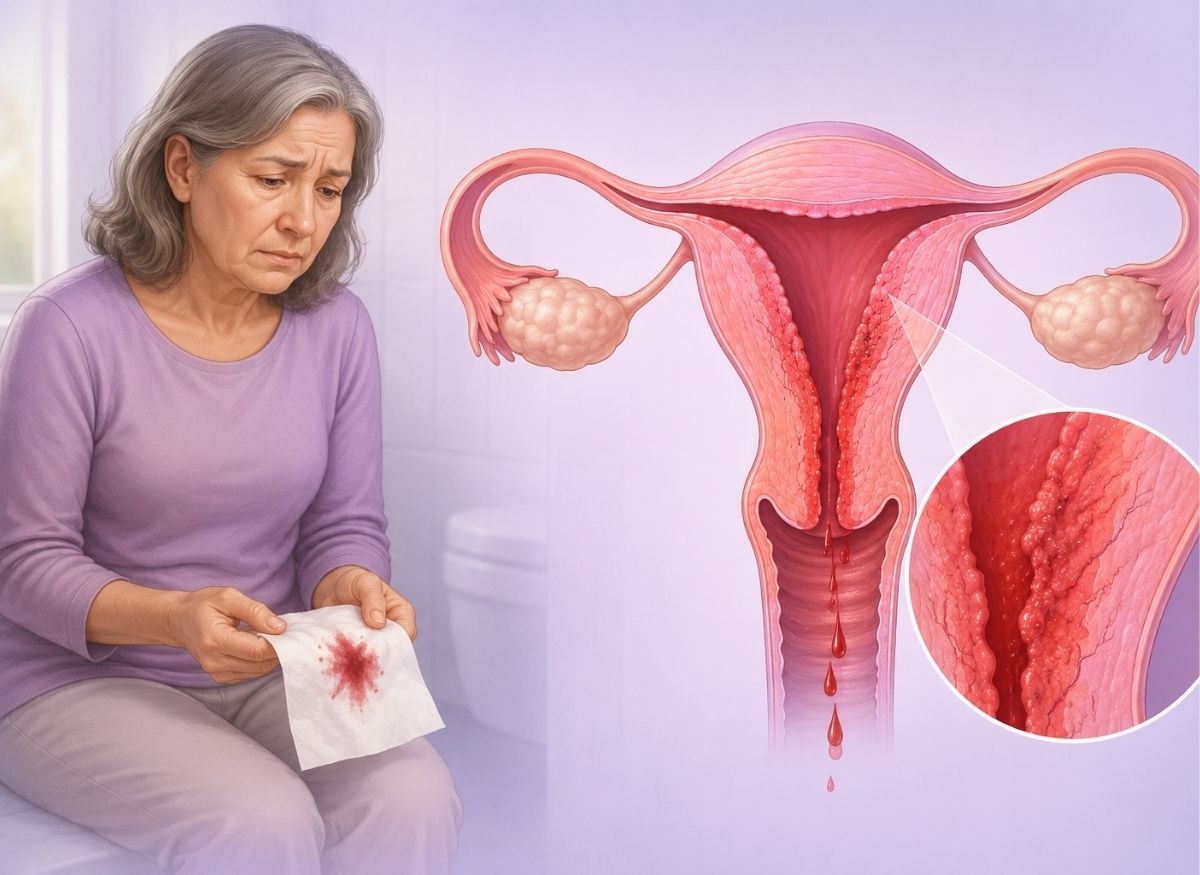
Postmenopausal bleeding is any vaginal bleeding that occurs after menopause, which is generally defined as going 12 consecutive months without a menstrual period. Although some causes are harmless, bleeding after menopause should always be evaluated because it can sometimes be a sign of an underlying health problem.
The bleeding may appear as a few spots of blood, pink or brown discharge, or a heavier flow. Some women may also notice pelvic discomfort, cramping, or unusual discharge. Because the appearance and amount of bleeding do not reliably indicate its cause, medical evaluation is important.
Several conditions can contribute to postmenopausal bleeding, including vaginal or endometrial tissue thinning, polyps, fibroids, hormonal therapy, medications, and endometrial hyperplasia. In some cases, it can also be an early sign of endometrial cancer. Identifying the cause allows your healthcare provider to recommend the appropriate treatment or monitoring.
What is Postmenopausal Bleeding?
Postmenopausal bleeding refers to any vaginal bleeding or spotting that occurs 12 months or more after a woman’s final menstrual period. Once menopause has been established, menstrual bleeding should no longer occur.
After menopause, estrogen levels decline and the lining of the uterus no longer follows the regular monthly cycle of thickening and shedding. The tissues of the vagina and uterus may also become thinner and more fragile.
Although many cases of postmenopausal bleeding have benign causes, the symptom can sometimes be an early warning sign of endometrial cancer. For this reason, unexpected bleeding after menopause should not be dismissed or assumed to be another period.
Tracking the Presentations of Postmenopausal Bleeding
Postmenopausal bleeding does not always appear as a heavy flow. It can take several forms, and even very small amounts of blood should be discussed with a healthcare provider.
Light Spotting and Discoloration: Some women notice only a few spots of blood on their underwear or toilet tissue. The blood may appear pink, red, or brown. Spotting may happen once or occur repeatedly, including after sexual intercourse.
Even a small amount of bleeding deserves attention because the amount of blood does not tell you whether the underlying cause is harmless or more serious.
Heavy or Sudden Bleeding: Other women may experience a sudden, heavier flow that resembles a menstrual period. It may also occur with cramping or pelvic discomfort.
Whether the bleeding is light spotting or a heavier flow, its appearance alone cannot identify the cause.
Evaluating the Underlying Reasons for the Bleeding
When investigating postmenopausal bleeding, a gynecologist considers several possible causes involving the uterus, cervix, vagina, hormones, medications, and surrounding tissues.
Endometrial or Vaginal Atrophy (Tissue Thinning)
Tissue thinning is one of the most common causes of bleeding after menopause. As estrogen levels decline, the lining of the uterus and vaginal tissues can become thinner, drier, and more fragile.
These delicate tissues may become irritated or develop tiny areas of injury that bleed, particularly after sexual intercourse or physical activity.
Endometrial Hyperplasia (Tissue Thickening)
Endometrial hyperplasia occurs when the lining of the uterus becomes unusually thick. It can develop when estrogen stimulates the uterine lining without enough progesterone to balance its effects.
The condition may cause irregular or heavy bleeding and is important to evaluate because some forms, particularly those involving abnormal cells, can increase the risk of endometrial cancer.
Endometrial Cancer (Uterine Cancer)
One of the most important reasons for evaluating postmenopausal bleeding is to rule out endometrial cancer.
Bleeding after menopause is often one of the earliest symptoms of this cancer. When it is identified at an early stage, treatment is generally more effective, which is why prompt evaluation is so important.
Uterine or Cervical Polyps
Polyps are noncancerous growths that can develop inside the uterus or on the cervix. They may contain delicate blood vessels that bleed easily.
Polyps can cause spotting or light bleeding, and a healthcare provider can often identify them through imaging or direct examination.
What to Expect During a Medical Evaluation
Because the cause of postmenopausal bleeding cannot be determined from the appearance of the blood alone, your healthcare provider may recommend several tests.
- Transvaginal Ultrasound: A small ultrasound probe is placed inside the vagina to create detailed images of the uterus and surrounding organs. The test can also measure the thickness of the uterine lining.
- Endometrial Biopsy: During this procedure, a small sample of tissue is taken from the uterine lining and sent to a laboratory. The sample can be examined for abnormal or cancerous cells.
- Hysteroscopy and D&C: If an ultrasound identifies a polyp or another abnormality, or if a biopsy does not provide enough information, a doctor may use a hysteroscope to examine the inside of the uterus. A D&C may also be performed to remove or sample abnormal tissue.
Proactive Safety and Action Steps
If you experience unexpected bleeding after menopause, a few practical steps can make your medical evaluation easier:
- Contact Your Gynecologist Promptly: Do not assume that bleeding is simply a temporary hormonal change or a late period. Even bleeding that occurs only once should be discussed with a healthcare provider.
- Keep a Detailed Symptom Log: Note when the bleeding began, how much blood you noticed, its color, how long it lasted, and whether you experienced cramping, pelvic pain, or unusual discharge.
- Compile Your Medication List: Tell your healthcare provider about all prescription medications, over-the-counter medicines, supplements, hormone therapy, and medications such as tamoxifen or blood thinners.
The Benign Causes of Postmenopausal Bleeding
Although postmenopausal bleeding can sometimes indicate cancer, many cases are caused by noncancerous conditions.
Common benign causes include tissue thinning, polyps, fibroids, and medication-related bleeding. The decline in estrogen after menopause can change the thickness and strength of tissues throughout the reproductive tract, making them more susceptible to irritation and bleeding.
Understanding these possible causes can help explain why your healthcare provider may recommend several different tests before determining the source.
The Primary Categories of Benign Bleeding
Benign causes of postmenopausal bleeding generally fall into several broad categories, including tissue thinning, structural growths, and medication-related changes.
Atrophic Changes: The Thinning of Tissue
Atrophic changes are among the most common causes of bleeding after menopause.
Endometrial Atrophy: After menopause, reduced estrogen stimulation causes the uterine lining to become thinner. The tissue may become fragile and more susceptible to irritation or bleeding.
Vaginal Atrophy: Vaginal tissues can also become thinner, less elastic, and drier when estrogen levels decline. Minor friction, including during sexual intercourse, can sometimes cause small areas of irritation and bleeding.
Benign Structural Growths
Noncancerous growths can also contribute to bleeding.
- Endometrial Polyps: These are localized growths that develop from the uterine lining. They can contain blood vessels that make them prone to intermittent bleeding.
- Submucosal Uterine Fibroids: Fibroids are noncancerous growths made of uterine muscle tissue. Those that grow beneath the uterine lining can sometimes cause bleeding, even after menopause.
Medication-Induced Bleeding
Certain medications and hormone treatments can contribute to bleeding after menopause.
Hormone Replacement Therapy (HRT): Depending on the type of HRT used, some women may experience bleeding or spotting. The timing and pattern of bleeding can vary based on the specific hormone regimen.
Blood Thinners (Anticoagulants): Medications that reduce blood clotting can make bleeding from an otherwise minor source more noticeable or prolonged. They may not be the underlying cause of the bleeding, so evaluation is still important.
Correlating Symptoms with Your Biological Tracking
It can be tempting to assume that bleeding is harmless based on its amount or appearance. However, the color, duration, and volume of blood cannot reliably distinguish a benign condition from an early-stage cancer.
Keeping a record of when bleeding occurs and what other symptoms accompany it can help your healthcare provider determine which tests are appropriate. Depending on your symptoms and medical history, evaluation may include a pelvic examination, transvaginal ultrasound, or endometrial biopsy.
Serious Causes of Postmenopausal Bleeding
Most cases of postmenopausal bleeding are not caused by cancer, but serious conditions must still be ruled out.
The two major concerns are endometrial hyperplasia with abnormal cells and endometrial cancer. Because postmenopausal bleeding can be an early symptom of these conditions, prompt medical evaluation is important.
The Serious Spectrum: Pre-Cancerous vs. Cancerous Conditions
Serious causes of postmenopausal bleeding often involve abnormal changes in the endometrium, or uterine lining.
Endometrial Hyperplasia (The Pre-Cancerous State)
Endometrial hyperplasia occurs when the uterine lining becomes abnormally thick. It can develop when estrogen stimulates the lining without enough progesterone to balance its effects.
A biopsy allows a pathologist to examine the cells and determine whether abnormal changes are present.
- Hyperplasia Without Atypia: The lining is unusually thick, but the cells do not show significant abnormal changes. The risk of progression to cancer is relatively low, although treatment and follow-up may still be recommended.
- Atypical Hyperplasia (Endometrial Intraepithelial Neoplasia): The cells show abnormal changes and the condition carries a much greater risk of developing into or occurring alongside endometrial cancer. Treatment depends on factors such as age, overall health, future fertility considerations, and the individual’s circumstances.
Endometrial Cancer (The Malignant State)
Endometrial cancer begins in the lining of the uterus and is one of the most important serious causes of postmenopausal bleeding.
Bleeding or spotting after menopause may be the first noticeable symptom. As abnormal cells grow, they can invade deeper layers of the uterus and, if untreated, potentially spread to other parts of the body.
This is why even a small episode of unexplained bleeding after menopause deserves medical attention.
Rare Uterine Malignancies
Other, less common cancers can also affect the reproductive organs.
- Uterine Sarcomas: These rare cancers develop from the muscle or connective tissues of the uterus rather than the endometrial lining. They may cause abnormal bleeding, pelvic pressure, or an enlarged uterus.
- Cervical, Ovarian, or Fallopian Tube Cancers: Cancers affecting nearby reproductive organs can sometimes contribute to unexplained vaginal bleeding or other pelvic symptoms.
Pathological Comparison: Hyperplasia vs. Cancer
| Characteristic | Endometrial Hyperplasia | Endometrial Cancer |
|---|---|---|
| Cellular Nature | Abnormal overgrowth of the uterine lining, with or without atypical cells | Malignant cells that have developed cancerous characteristics |
| Tissue Invasion | Typically limited to the uterine lining | Cancer cells can invade surrounding uterine tissue |
| Spread to Other Areas | Hyperplasia itself does not spread like cancer | Cancer can spread to lymph nodes and distant organs |
| Treatment | May involve progesterone therapy, monitoring, or surgery depending on the type | Often involves surgery and may also require radiation, chemotherapy, or other treatments depending on the stage |
Recognizing Your Personal Risk Factors
Certain factors can increase the risk of endometrial hyperplasia or cancer. These include:
- Obesity: Fat tissue can produce estrogen, which may increase stimulation of the uterine lining after menopause.
- Age and Reproductive History: Factors such as later menopause, earlier menstruation, and never having been pregnant can increase lifetime exposure to estrogen.
- Medical Interventions: Estrogen therapy without adequate progestogen protection in women who still have a uterus can increase the risk of endometrial changes. Tamoxifen can also affect the uterine lining.
What Tests Are Used to Find the Cause of Postmenopausal Bleeding?
When postmenopausal bleeding occurs, healthcare providers use a combination of examination, imaging, and sometimes tissue sampling to determine the cause.
Because the appearance of the bleeding cannot reliably distinguish a benign condition from cancer, testing is often necessary.
The Clinical Starting Point: The Comprehensive Pelvic Exam
A healthcare provider may begin with a pelvic examination. A speculum allows the doctor to examine the vagina and cervix for visible sources of bleeding, such as irritation, vaginal tissue changes, polyps, or cervical abnormalities.
A bimanual examination may also be performed to assess the uterus and surrounding pelvic structures for tenderness, enlargement, or other abnormalities.
The Primary Imaging Step: Transvaginal Ultrasound
A transvaginal ultrasound is commonly used when evaluating postmenopausal bleeding.
Measuring the Endometrial Stripe
During the examination, a slender ultrasound probe is gently inserted into the vagina. This provides detailed images of the uterus and allows the endometrial lining to be measured.
Interpreting the Millimeter Threshold
The thickness and appearance of the uterine lining can help determine whether additional testing is needed.
- Thin Endometrium: A thin, uniform endometrial lining is generally associated with a low risk of endometrial cancer. Depending on the clinical situation, further invasive testing may not be necessary if the bleeding does not continue or return.
- Thickened or Irregular Endometrium: A thicker or irregular lining may require additional evaluation, often including an endometrial biopsy.
The exact threshold used to determine whether additional testing is needed can depend on the clinical situation and the healthcare provider’s assessment.
Direct Tissue Sampling: Endometrial Biopsy
If imaging suggests that the uterine lining needs further evaluation, or if bleeding continues, a healthcare provider may recommend an endometrial biopsy.
                    [THE OFFICE ENDOMETRIAL BIOPSY PATH]
                                   │
         ┌─────────────────────────┴─────────────────────────┐
         ▼                                                   ▼
[SPECULUM INSERTION]       [PIPELLE PLACEMENT]         [CELLULAR SUCTION]
The doctor visualizes      A micro-thin, flexible tube A built-in internal plunger
the cervix, identical to   is gently guided through    creates a vacuum, collecting
a standard Pap smear.      the cervical opening.       tissue cells in seconds.
During the procedure, a thin, flexible instrument is passed through the cervix into the uterus. A small sample of the endometrial tissue is collected and sent to a laboratory for examination.
The procedure is usually performed in an office and can cause temporary cramping or discomfort. Your healthcare provider can explain what to expect and how to prepare.
Advanced Direct Visualization: Hysteroscopy with D&C
If an office biopsy does not provide enough information, bleeding continues, or imaging suggests a localized abnormality such as a polyp, a doctor may recommend hysteroscopy with dilation and curettage (D&C).
- Hysteroscopy (Direct Visualization): A thin camera is passed through the cervix into the uterus, allowing the doctor to directly inspect the uterine cavity and identify abnormalities that may not be detected through random tissue sampling.
- Dilation and Curettage (D&C Sampling): The cervix is gently opened and tissue is removed from the uterine lining for examination. If a polyp or another localized growth is identified, it may sometimes be removed during the same procedure.
The tissue is then examined by a pathologist to help determine the cause of the bleeding.
Reviewing Your Pathological Blueprint
The following overview shows how different tests may contribute to the evaluation:
| Diagnostic Test | Primary Goal | Clinical Environment | Possible Next Step |
|---|---|---|---|
| Pelvic Exam | Examine the vagina and cervix for visible sources of bleeding | Medical office | Further imaging or testing if needed |
| Transvaginal Ultrasound | Assess the uterus and measure the endometrial lining | Imaging center or clinic | Biopsy or additional evaluation when indicated |
| Endometrial Biopsy | Examine uterine lining cells for abnormal changes | Medical office | Hysteroscopy or further testing if results are inconclusive or symptoms persist |
| Hysteroscopy with D&C | Directly inspect and sample the uterine cavity | Outpatient or surgical setting | Treatment based on findings and pathology |
Immediate Actions While Navigating Testing
While waiting for an evaluation, a few simple steps can help you prepare:
- Ask About Pain Relief: If you are scheduled for an endometrial biopsy, ask your healthcare provider whether an over-the-counter pain reliever is appropriate before the procedure.
- Prepare a Detailed Bleeding Calendar: Record when the bleeding occurred, how long it lasted, how heavy it was, what color it was, and whether it followed sexual intercourse.
- List Every Medication and Supplement: Provide your healthcare provider with a complete list of prescription medicines, over-the-counter products, supplements, HRT, tamoxifen, and blood thinners.
Broader Implications and Related Concerns for Postmenopausal Health
Postmenopausal bleeding can sometimes provide an opportunity to review other aspects of a woman’s overall health.
Conditions associated with hormonal changes, metabolic health, and certain medications can influence the risk of problems involving the uterine lining. Discussing these factors with your healthcare provider can help create a more complete picture of your health.
Chronic Risk Factors: The Estrogen-Metabolic Link
Long-term exposure to estrogen without sufficient progesterone can contribute to excessive stimulation of the uterine lining. Several health and reproductive factors can influence this balance.
Obesity and the Metabolic Syndrome
After menopause, fat tissue continues to produce certain forms of estrogen. Higher amounts of body fat can therefore contribute to increased estrogen exposure.
Obesity is also associated with conditions such as type 2 diabetes and high blood pressure, which can further increase the risk of endometrial abnormalities.
Reproductive and Genetic Timelines
Lifetime exposure to estrogen can be influenced by factors such as an early first menstrual period, later menopause, and never having been pregnant.
Family history can also matter. Certain inherited conditions, including Lynch syndrome, are associated with a higher risk of endometrial cancer. People with relevant family histories should discuss their individual risk with a healthcare professional.
Perimenopause vs. Postmenopause: The Clinical Boundary
It is important to distinguish the menopausal transition from the period after menopause has been established.
Perimenopausal Bleeding (The Transition): During perimenopause, hormone levels can fluctuate considerably. Periods may become irregular, heavier, lighter, or less frequent. These changes can be a normal part of the transition, although unusually heavy or concerning bleeding still warrants medical evaluation.
Postmenopausal Bleeding (The Baseline of Zero): Menopause is considered established after 12 consecutive months without a menstrual period. After that point, any new vaginal bleeding should be evaluated rather than assumed to be a normal menstrual cycle.
Proactive Prevention and Risk Mitigation
Not every cause of postmenopausal bleeding can be prevented, but certain health habits and medical decisions can help reduce risk.
Prioritize Weight and Metabolic Health: Maintaining a healthy weight, staying physically active, and managing conditions such as diabetes can support overall health and may reduce some risk factors associated with endometrial cancer.
Insist on Balanced Hormone Replacement Therapy: Women who have a uterus and use systemic estrogen therapy generally need appropriate progestogen protection unless their healthcare provider recommends another medically appropriate approach. Your healthcare provider can determine the safest hormone regimen for your individual situation.
Maintain Preventive Gynecological Surveillance: Regular healthcare visits make it easier to discuss new symptoms, medications, hormone therapy, and personal risk factors. Anyone taking tamoxifen or hormone therapy should follow the monitoring recommendations provided by their healthcare professional.
Navigating Cross-System Care
Managing postmenopausal health involves looking at the whole picture rather than focusing on one symptom in isolation.
Whether the bleeding is caused by tissue thinning, a polyp, medication, or another condition, identifying the underlying source is the most important step. Keeping your healthcare provider informed about your symptoms, medications, metabolic health, and medical history can help ensure that the appropriate tests are performed.
Conclusion
Postmenopausal bleeding can be concerning, but understanding the possible causes can make the evaluation process easier to navigate. Common causes include tissue thinning, polyps, fibroids, medication-related bleeding, and changes in the uterine lining. However, more serious conditions such as endometrial cancer must also be ruled out.
Any new vaginal bleeding after menopause should be discussed with a healthcare provider, even if it is light or occurs only once. A pelvic examination, transvaginal ultrasound, biopsy, or other testing may be used to determine the underlying cause.
Early evaluation can help identify serious conditions when they are more treatable and can also provide reassurance when the cause is benign. Paying attention to symptoms and seeking timely medical care is an important part of protecting health after menopause.
FAQ
What is postmenopausal bleeding?
Postmenopausal bleeding is vaginal bleeding that occurs after a woman has gone at least 12 consecutive months without a menstrual period. It can range from light spotting to heavier bleeding. Although many causes are benign, any new bleeding after menopause should be evaluated.
What are the most common causes of postmenopausal bleeding?
Common causes include vaginal or endometrial tissue thinning, uterine or cervical polyps, fibroids, hormone therapy, and certain medications. Endometrial hyperplasia and endometrial cancer are less common but important causes that need to be ruled out.
When should I see a doctor for postmenopausal bleeding?
You should contact a healthcare provider whenever you experience vaginal bleeding after menopause. Prompt evaluation is particularly important if the bleeding is heavy, recurrent, or accompanied by pelvic pain, unusual discharge, dizziness, or other concerning symptoms.
How is postmenopausal bleeding diagnosed?
Evaluation may include a pelvic examination, transvaginal ultrasound, and endometrial biopsy. If additional investigation is needed, a healthcare provider may recommend hysteroscopy, D&C, or other tests based on your symptoms and medical history.
Can postmenopausal bleeding be prevented?
Not every cause can be prevented, particularly natural tissue changes associated with lower estrogen levels. However, maintaining overall health, managing conditions such as diabetes and obesity, using hormone therapy appropriately, and discussing risk factors with your healthcare provider can help reduce certain risks. Most importantly, unexpected bleeding should be evaluated rather than ignored.