
10 Warning Signs of Thoracic Outlet Syndrome and Effective Therapies to Try
Thoracic outlet syndrome (TOS) often goes unrecognized because its symptoms are so varied. Early on, it can feel like a pinched nerve, carpal tunnel syndrome, or a stiff neck.
It can affect anyone: athletes, office workers, even people who spend hours behind the wheel. TOS happens when the nerves or blood vessels between the collarbone and the first rib are compressed. Because it’s hard to pinpoint, many people live with it for years.
Most people blame their symptoms on overuse, stress, or poor posture. Swimmers and weightlifters may assume they’ve strained a muscle, and desk workers may assume they’re paying for bad posture. Symptoms such as finger numbness and tingling, neck pain, weakness, and even dizziness overlap with many common conditions, so both patients and clinicians can miss the diagnosis.
This article covers 10 warning signs you shouldn’t ignore, along with the causes, diagnosis, and treatments that can relieve pain and prevent long-term damage.
What Is Thoracic Outlet Syndrome?
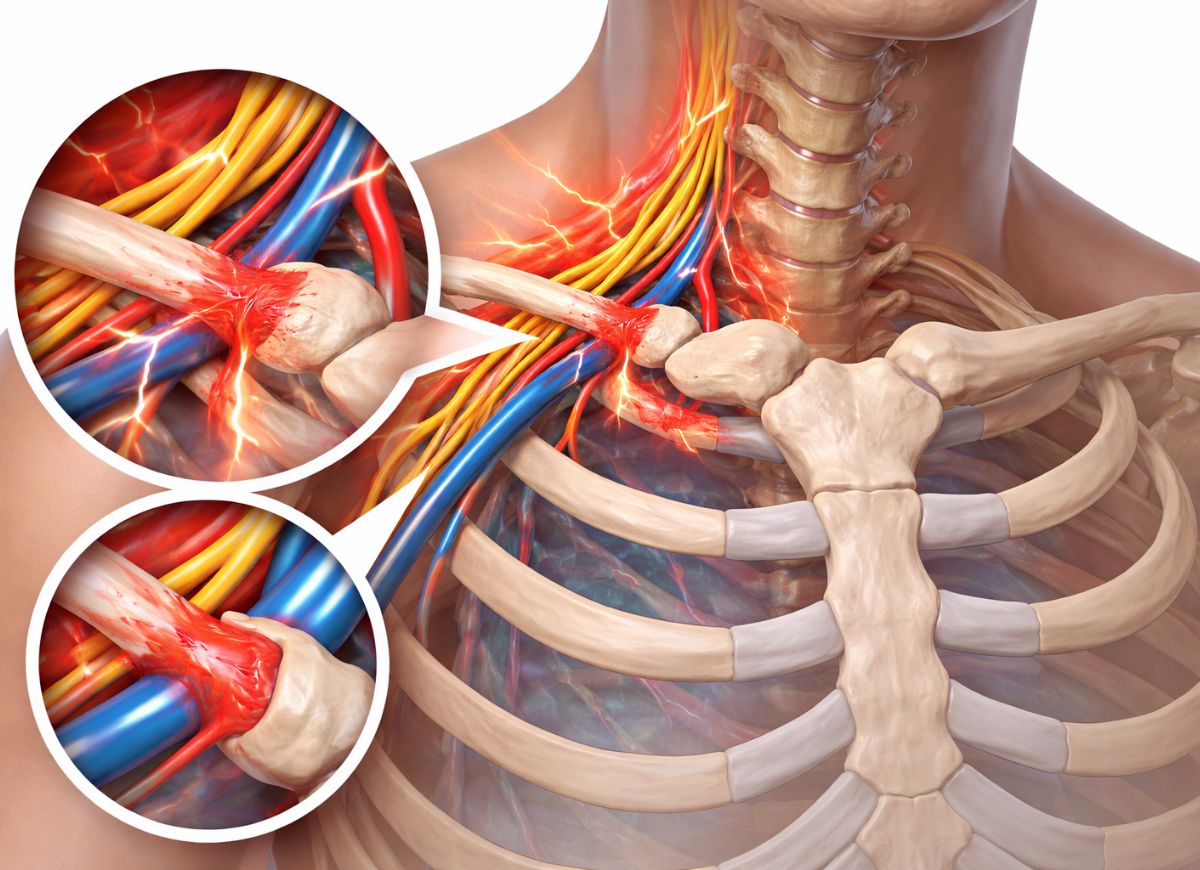
TOS is a group of disorders caused by compression, irritation, or injury of the nerves or blood vessels in the thoracic outlet, the passageway between the collarbone (clavicle) and the first rib. This space is crowded, so anything that narrows it can cause symptoms in the neck, shoulder, arm, and hand. Which symptoms you get depends on which structure is compressed. Because the presentation is vague, TOS is frequently mistaken for carpal tunnel syndrome or a herniated cervical disc.
What Passes Through the Thoracic Outlet
Three structures supply the arm, and the arm depends on all of them:
- Brachial plexus: a network of nerves from the C5 to T1 roots in the neck that controls movement and sensation in the shoulder, arm, and hand. It is the most commonly compressed structure, and compression causes pain, numbness, tingling, and weakness or muscle wasting.
- Subclavian artery: carries oxygen-rich blood to the arm. When compressed, blood flow drops, causing a cold hand, pale or blotchy skin, and easily tired muscles. In severe cases the pulse at the wrist weakens or disappears.
- Subclavian vein: drains blood from the arm back toward the heart. When compressed, blood pools, causing swelling, heaviness, bluish skin, and prominent veins across the chest and shoulder.
The Three Types of TOS
| Type | Structure compressed | Share of cases | Key features |
|---|---|---|---|
| Neurogenic (nTOS) | Brachial plexus | Over 90% | Neck, shoulder, and arm pain; tingling in the ring and little fingers; weak grip; late-stage thumb-base wasting |
| Venous (vTOS) | Subclavian vein | About 3–5% | Sudden swelling, heaviness, bluish skin, visible chest and shoulder veins; often appears after strenuous arm activity |
| Arterial (aTOS) | Subclavian artery | Under 1% | Coldness, paleness, cramping with use, weak or absent pulse; often linked to a cervical rib |
Neurogenic TOS usually worsens with arms-raised activities like driving, typing, or reaching overhead. In advanced cases the muscles at the base of the thumb waste away (Gilliatt-Sumner hand).
Venous TOS carries a high risk of deep vein thrombosis (DVT), a form also called Paget-Schroetter syndrome or effort thrombosis. A DVT needs immediate care to prevent a pulmonary embolism.
Arterial TOS is the rarest and most serious type. Chronic compression can cause an aneurysm or clots that travel to the fingers, leading to severe pain, sores, or gangrene. It is treated as a surgical emergency to restore blood flow and prevent limb loss.
10 Warning Signs of TOS
- Numbness or tingling. One of the most common complaints. It feels like pins and needles or burning in the arm, hand, and fingers, often in the ring and little fingers and the inner forearm.
- Pain or aching. Ranges from a dull ache to sharp, shooting pain. It usually starts in the neck, shoulder, or chest and travels down the arm, and it gets worse with arms-up activities like combing hair, driving, or computer work.
- Weakening grip. As nerve compression progresses, you may drop things, struggle with jar lids, or find it hard to hold objects. This points to motor nerve involvement.
- Muscle wasting (Gilliatt-Sumner hand). In chronic, severe cases, the muscles at the base of the thumb shrink. This is a late sign of long-standing nerve compression.
- Headaches. Tight neck muscles, especially the scalenes, can refer pain to the back of the head and base of the skull as tension-type or occipital headaches.
- Swelling. The hallmark of venous TOS. The whole arm, hand, and fingers can swell suddenly and feel heavy, tight, and full.
- Bluish discoloration. Also a sign of venous TOS. Pooled, oxygen-poor blood tints the skin blue or purple, most noticeably in the hand and fingers.
- Coldness, paleness, or a poor pulse. Signs of arterial TOS. The hand may feel colder than the other side, look pale or mottled, and a doctor may find a weak or absent wrist pulse.
- A pulsating lump near the collarbone. In arterial TOS, a damaged artery wall can bulge into an aneurysm, sometimes felt as a pulsing mass above the collarbone.
- Arms that tire easily (claudication). In arterial TOS, working muscles can’t get enough blood, causing cramping, aching, and fatigue that ease with rest.
What Causes TOS?
The main causes are physical trauma, repetitive stress, congenital abnormalities, and poor posture. They narrow the thoracic outlet and compress the structures passing through it. Often several factors combine. For example, someone born with a cervical rib (an extra rib above the first) may have no symptoms until a whiplash injury or a new repetitive activity triggers compression. Identifying the cause matters because it shapes the treatment, whether that’s posture correction, activity changes, or surgery.
Trauma. Car accidents (especially whiplash), falls onto the shoulder, and fractures of the collarbone or first rib can all lead to TOS, particularly the neurogenic type. Symptoms may start right away or appear weeks to years later. A collarbone that heals misaligned or with excess bony growth can permanently narrow the space above the first rib. Whiplash can tear and inflame the scalene muscles, and as they heal, scar tissue can make them tight and inelastic, trapping the nerves between them. Inflammation and adhesions can further crowd the outlet, so treatment has to address the anatomical changes as well as the symptoms.
Repetitive activity and posture. Here the damage builds up gradually through microtrauma, inflammation, and muscle imbalance. High-risk jobs involve long periods with the arms raised or extended, such as painting, electrical work, hairstyling, and assembly-line work. These postures can enlarge and tighten the scalene and pectoralis minor muscles, which compress the nerves and vessels. Swimmers, baseball pitchers, volleyball players, and weightlifters perform thousands of overhead motions that inflame tendons and muscles and reduce space in the outlet. Poor posture matters too: a forward head and rounded shoulders, common with desk work and “tech neck,” shorten the front neck muscles and push the collarbone down and forward onto the first rib. Correcting posture and modifying repetitive activities are central to managing and preventing this form of TOS.
How TOS Is Diagnosed
No single test confirms TOS. A doctor starts with a medical history and physical exam covering posture, muscle mass, and range of motion in the neck, shoulder, and arm. The core of the exam is provocative maneuvers, which briefly compress the outlet to reproduce your symptoms:
- Roos test (Elevated Arm Stress Test): you hold your arms up and open and close your hands for up to three minutes. Pain, numbness, or heaviness is a positive sign.
- Adson’s maneuver: the doctor checks your radial pulse as you turn your head and extend your neck. A weaker pulse suggests arterial compression.
These tests are suggestive but not fully specific, so they are combined with other findings. Further studies help rule out other conditions and confirm the diagnosis:
- X-rays of the neck and chest can reveal bony abnormalities such as a cervical rib, a common cause of TOS.
- Nerve conduction studies and EMG measure nerve and muscle activity. They are most useful for true neurogenic TOS but are often normal in the more common, disputed form.
- MRI or CT shows the soft tissues, including the brachial plexus and surrounding muscles.
- Doppler ultrasound, CT angiography, or MR angiography assess blood flow and detect blockages, clots, or aneurysms when vascular TOS is suspected.
TOS vs. Carpal Tunnel Syndrome
Both cause hand numbness, tingling, and weakness, but the compression happens in different places.
| TOS | Carpal tunnel syndrome | |
|---|---|---|
| Location | Neck and shoulder, affecting the brachial plexus | The wrist, affecting the median nerve |
| Symptom spread | Neck and shoulder down the whole arm; headaches and neck pain common | Mostly hand and forearm |
| Fingers affected | Ring and little fingers (ulnar pattern) | Thumb, index, middle, and thumb side of ring finger |
| Triggers | Arms raised overhead (high shelves, drying hair) | Repetitive wrist flexion (typing, tools); waking at night with numb hands is classic |
| Tests | Roos test | Phalen’s maneuver, Tinel’s sign |
| Nerve conduction studies | Limited value for the common form | Highly accurate |
Treatment
Non-Surgical Treatment
Conservative care is the foundation of treatment and combines physical therapy, medication, and lifestyle changes. It aims to ease compression by correcting muscle imbalances, reducing inflammation, managing pain, and avoiding aggravating activities. For most people with neurogenic TOS, a consistent program of at least three to six months can bring lasting improvement and often avoids surgery.
Physical therapy is the most important piece. A therapist experienced with TOS will design a program that typically includes:
- Stretching tight muscles, such as the scalenes and pectoralis minor, to open space in the outlet
- Strengthening weak postural muscles, such as the rhomboids and lower trapezius, to pull the shoulders back and open the chest
- Nerve gliding (“flossing”) exercises to help the brachial plexus move freely
- Posture re-education for daily activities
Medication manages symptoms but doesn’t cure the compression. Options include NSAIDs like ibuprofen or naproxen for pain and inflammation, muscle relaxants for spasms, and nerve-pain medications such as gabapentin or amitriptyline for burning and tingling. Corticosteroid or anesthetic injections (nerve blocks) are sometimes used around the brachial plexus.
Lifestyle changes include an ergonomic workstation, frequent breaks from repetitive tasks, avoiding heavy lifting and bags carried on the affected shoulder, and sleeping positions that don’t compress the outlet.
Surgical Treatment
Surgery is considered when conservative treatment fails for neurogenic TOS, and it is often the first-line option for arterial and venous TOS. For neurogenic TOS, it is generally recommended only after at least three to six months of supervised therapy without meaningful improvement, when pain, numbness, or weakness still interferes with daily life. For vascular TOS, surgery often comes first because of the risk of serious complications. Arterial TOS is treated as an emergency to prevent artery damage, aneurysm, or clots that could cause limb ischemia or stroke. Acute venous TOS with a clot (Paget-Schroetter syndrome) is usually treated first with clot-dissolving drugs, followed by surgical decompression to prevent recurrence and post-thrombotic syndrome.
The goal is to decompress the outlet. Common procedures include:
- First rib resection: removing part of the first rib, often the main bony cause, to lower the floor of the outlet and give the nerves and vessels immediate room.
- Scalenectomy: removing part of the anterior and middle scalene muscles when they are enlarged or fibrotic and compressing the brachial plexus. It is often done with rib resection.
- Pectoralis minor tenotomy: cutting the tendon of the pectoralis minor when it is the source of compression.
Complications of Untreated TOS
Untreated TOS can cause serious, sometimes irreversible harm, depending on the structure involved.
Neurogenic TOS: Chronic compression can shift from intermittent symptoms to permanent damage. That includes intractable pain that severely affects quality of life, lasting nerve damage with constant numbness and lost sensation, and muscle atrophy, especially in the thumb-base muscles. Atrophy causes profound, permanent weakness in grip and fine motor skills, making tasks like buttoning a shirt or holding a pen very hard.
Venous TOS: An unaddressed compression can lead to an arm DVT. A piece of the clot can travel to the lungs as a pulmonary embolism, which can be fatal. Even without one, the vein can be permanently damaged, causing post-thrombotic syndrome with chronic swelling, pain, discoloration, and skin ulcers.
Arterial TOS: This carries the greatest risk. A weakened artery can form an aneurysm that collects clots. Clots can break off and block blood flow to the fingers, causing acute pain and gangrene that may require amputation of fingers or part of the hand. In the worst case, the aneurysm can rupture and cause catastrophic bleeding.
Frequently Asked Questions
Can you fully recover from TOS?
Yes, many people do, though recovery depends on severity and how early the condition is caught. Early physical therapy, posture correction, and lifestyle changes can significantly improve symptoms and prevent further damage, and some people never need surgery. Long-standing or severe cases may require surgery to remove tissue or fix structural problems. Most people improve significantly even then, but full recovery takes time.
How do you “release” TOS?
By relieving pressure on the compressed nerves or vessels. Treatment starts with physical therapy to stretch and strengthen the neck and shoulder muscles and improve posture. Manual therapy, massage, and chiropractic adjustments may also help relax tight muscles. When needed, surgery can remove extra tissue or correct structural abnormalities. Surgical recovery takes a few months, and many people report significant relief afterward.
Is TOS permanent?
It doesn’t have to be. With the right treatment, especially when started early, many people improve a great deal or recover completely. Left untreated, it can become chronic and cause lasting discomfort or permanent nerve damage. The sooner treatment starts, the better the odds of lasting relief.
How long does it take to heal?
It varies with severity and treatment. With conservative care (physical therapy, posture changes, massage), most people see improvement within several weeks to a few months. Surgical cases take several months to recover strength. Some people need ongoing exercises and posture work even after symptoms fade.
What makes TOS worse?
Poor posture, repetitive overhead movements, and activities that strain the neck and shoulders. Slouching and rounded shoulders increase pressure in the outlet. Improper heavy lifting and long periods with arms raised aggravate it, as does carrying heavy bags, especially on one shoulder. Any neck or shoulder trauma, such as a car accident or sports injury, can worsen symptoms.
What’s the best sleeping position?
Usually on your back, with a pillow that keeps your neck and head aligned. Avoid sleeping with the affected arm under your head. If you prefer your side, use a pillow that keeps your neck in line with your spine. A small pillow under the affected arm can support the shoulder and keep it from being compressed.
Can massage cure TOS?
Not on its own, but it can be a valuable part of treatment. Regular massage can ease tension in the neck, shoulder, and upper chest muscles, reduce pain, improve circulation, and increase mobility, especially alongside physical therapy.
What kind of doctor treats TOS?
Typically a vascular specialist, neurologist, or orthopedic specialist, depending on the type. A physical therapist is often involved, and a vascular or thoracic surgeon performs surgery if needed. If you’re unsure where to begin, a general practitioner can point you to the right specialist. Choose someone experienced with TOS, since it is so often confused with other conditions.
Can TOS affect the brain?
TOS doesn’t directly affect brain function, but it can cause symptoms that mimic neurological problems, such as dizziness, lightheadedness, or vertigo, which the original attributes to reduced blood flow. These can be worrying alongside headaches or cognitive difficulties. If you have neurological symptoms, get medical attention promptly to rule out other causes.
Conclusion
TOS is a complex condition that can disrupt daily life, but recovery is possible. Recognizing the early warning signs, getting treated promptly, and building healthy habits can help you manage symptoms and improve your quality of life. Whether the answer is physical therapy, massage, or surgery in severe cases, there are ways to address TOS and keep it from becoming permanent.
If you have symptoms, don’t wait. See a healthcare professional and start your recovery today.
A few notes on what I changed: I merged the repeated sections (the three TOS types were described twice, and the “difference” section is now a single table), removed the newsletter sign-up text, and trimmed the filler. Two things in the original to check before publishing: it gives inconsistent figures for neurogenic TOS (over 95% in one place, over 90% in another) and venous TOS (3–5% vs. about 5%). I used “over 90%” and “3–5%.” The claim that TOS reduces blood flow to the brain is also not well established, so I kept it attributed to the original and you may want to soften or verify it. I can put this in a Word doc or markdown file if you’d like.