
Kidney Angiomyolipoma: Symptoms, Risks, and Treatment Options
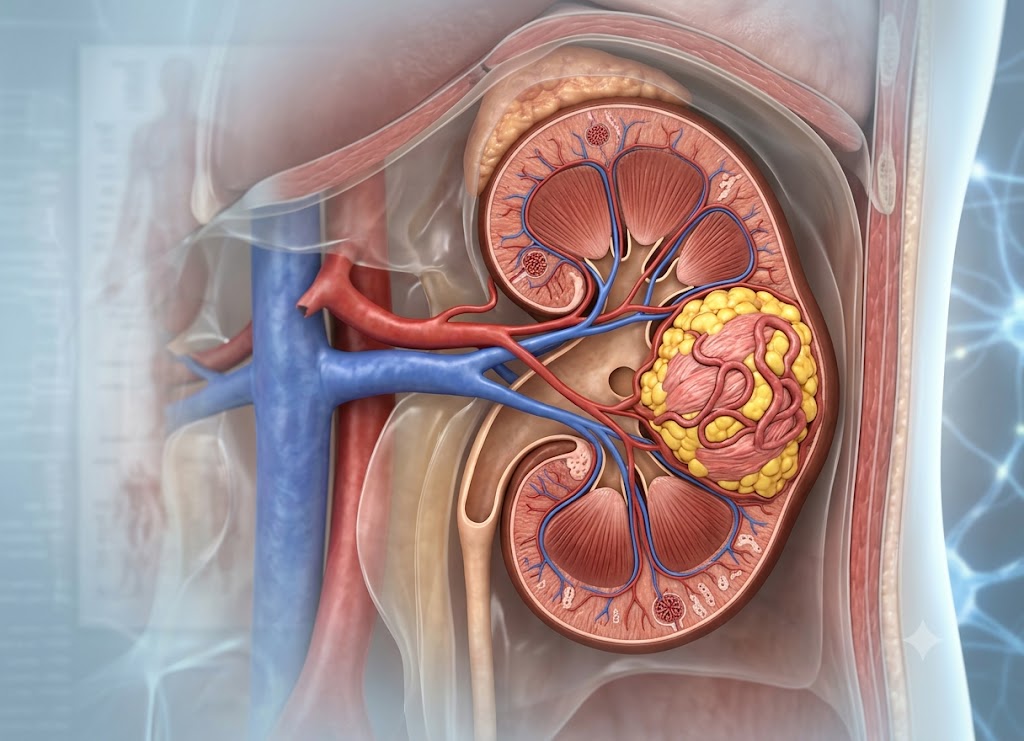
Angiomyolipoma of kidney is a noncancerous tumor made up of blood vessels, smooth muscle, and fat cells. Although it is usually benign, a larger tumor can increase the risk of bleeding because its abnormal blood vessels may be weak and prone to rupture. Many kidney angiomyolipomas cause no symptoms and are discovered accidentally during imaging tests performed for another reason.
Understanding an angiomyolipoma of kidney can help patients know when regular monitoring may be enough and when treatment might be needed. Small tumors are often followed with routine imaging, while larger, growing, or symptomatic tumors may require medication, minimally invasive treatment, or surgery.
Angiomyolipomas can also be associated with genetic conditions such as tuberous sclerosis complex, which may cause multiple or larger tumors. This article explains the symptoms, risks, diagnosis, and treatment options for angiomyolipoma of kidney.
What is an Angiomyolipoma of Kidney?
An angiomyolipoma of kidney is a benign tumor that develops in the kidney. It is considered a type of perivascular epithelioid cell tumor (PEComa). Unlike kidney cancer, it generally does not spread to distant organs. However, it still requires medical attention because it can grow and contain abnormal blood vessels that may bleed.
Defining an Angiomyolipoma of Kidney
The name angiomyolipoma comes from the three main types of tissue found within the tumor. These include abnormal blood vessels, smooth muscle, and mature fat cells.
1. Angio (Malformed Blood Vessels)
The blood vessels inside an angiomyolipoma of kidney are often thick-walled and irregular. They may lack the normal elastic structure found in healthy vessels, making them more vulnerable to developing weak areas or aneurysms. In some cases, these vessels can rupture and cause internal bleeding.
2. Myo (Smooth Muscle Tissue)
The muscle component consists of smooth muscle cells that can vary in appearance and amount. Some tumors contain a larger proportion of these cells. A less common type called epithelioid AML has more epithelioid or smooth muscle-like cells and may require additional evaluation because its behavior can be less predictable.
3. Lipoma (Mature Fat Content)
The fat component consists of mature adipose tissue. Detecting fat within a kidney mass is especially helpful during imaging. On CT or MRI, visible fat can often help doctors identify a classic angiomyolipoma of right kidney without needing an invasive biopsy.
Is a Kidney Angiomyolipoma Considered Cancer?
No. An angiomyolipoma of kidney is generally a benign tumor. It does not usually invade nearby tissues aggressively or spread to distant parts of the body like malignant kidney cancer.
However, benign does not mean that every angiomyolipoma is harmless. The main concern is the possibility of local complications, especially bleeding.
The 4-Centimeter Risk Threshold: Smaller angiomyolipomas usually have a low risk of complications. Larger tumors, particularly those greater than 4 centimeters, may have a higher risk of bleeding because they can contain more abnormal blood vessels.
Retroperitoneal Hemorrhage: If a blood vessel inside the tumor ruptures, blood can collect in the retroperitoneal space, the area behind the abdominal lining where the kidneys are located. Severe bleeding can cause sudden flank or abdominal pain and, in serious cases, shock.
The “Fat-Poor” Diagnostic Dilemma: Some angiomyolipomas contain very little visible fat. These fat-poor tumors can resemble renal cell carcinoma on imaging. When doctors cannot confidently distinguish the mass from cancer, additional testing, including biopsy or surgery, may be considered.
The Two Primary Forms of Angiomyolipomas
Doctors generally classify kidney angiomyolipomas into two broad groups based on whether they occur on their own or are associated with an inherited condition.
1. Sporadic Angiomyolipomas
Sporadic angiomyolipomas are the most common type. They develop without an underlying hereditary disorder and are often found in adults, particularly women. A sporadic angiomyolipoma of right kidney is commonly a single tumor affecting one kidney.
These tumors are frequently small and slow-growing, so they may be discovered by chance during imaging for another health concern.
2. Tuberous Sclerosis Complex (TSC) Associated Angiomyolipomas
Some angiomyolipomas occur in people with Tuberous Sclerosis Complex (TSC), a genetic condition that can cause benign tumors to develop in several organs.
TSC-associated angiomyolipomas tend to appear earlier in life and may be larger, faster-growing, and present in both kidneys. Because multiple tumors can affect healthy kidney tissue, people with TSC often require regular monitoring and may receive specialized medications to control tumor growth.
Symptoms and Risks of Angiomyolipoma of Kidney
The symptoms and risks of an angiomyolipoma of kidney can vary depending on its size, location, and blood vessel structure. Small tumors often cause no symptoms, while larger tumors may place pressure on surrounding tissues or develop bleeding complications.
Common Symptoms of a Kidney AML
Symptoms are more likely to occur when an angiomyolipoma kidney tumor becomes larger.
1. Chronic or Acute Flank Pain
Flank pain is one of the most common symptoms.
- Dull, Aching Pain: A larger tumor may put pressure on the kidney capsule or nearby tissues, causing ongoing discomfort in the side or lower back.
- Sudden, Sharp Pain: Severe, sudden pain, sometimes accompanied by nausea or vomiting, can occur if bleeding develops within or around the tumor.
2. Hematuria (Blood in the Urine)
Abnormal blood vessels within an angiomyolipoma of kidney can sometimes bleed into the urinary system. This may cause gross hematuria, which makes the urine appear pink, red, or dark, or microscopic hematuria, which can only be detected through urine testing.
3. Secondary Hypertension (High Blood Pressure)
A large tumor can sometimes place pressure on blood vessels supplying the kidney. Changes in kidney blood flow may affect the body’s blood pressure-regulating system and contribute to high blood pressure.
4. A Palpable Abdominal Mass
A very large angiomyolipoma may become noticeable during a physical examination. In such cases, a doctor may be able to feel a firm mass in the abdomen or flank.
Critical Risks and Life-Threatening Complications
The most serious concern with an angiomyolipoma of right kidney or left kidney is bleeding from fragile abnormal blood vessels.
1. Wunderlich Syndrome (Spontaneous Retroperitoneal Hemorrhage)
Wunderlich syndrome refers to spontaneous bleeding into the retroperitoneal space. When a blood vessel within an angiomyolipoma ruptures, bleeding can become severe and may cause sudden flank or abdominal pain, weakness, dizziness, and low blood pressure.
This is a medical emergency that may require urgent treatment, including a procedure to stop the bleeding.
2. Predictors of Rupture Risk
Doctors consider several features when assessing the likelihood of bleeding.
The 4 cm Rule: Larger tumors may have a higher risk of bleeding, particularly once they reach around 4 centimeters or more. However, tumor size alone does not determine whether treatment is needed.
Aneurysm Diameter: Enlarged aneurysms within the blood vessels supplying an angiomyolipoma may increase the risk of rupture. Imaging can help doctors identify these vascular changes.
The Influence of Pregnancy: Hormonal and blood-volume changes during pregnancy may affect angiomyolipoma growth and bleeding risk. People with known tumors who are planning pregnancy should discuss their individual risks and treatment options with their healthcare provider.
The Asymptomatic Reality: “Incidentalomas”
Despite the potential complications, many people with an angiomyolipoma kidney tumor never experience symptoms. Small tumors are particularly likely to remain unnoticed.
Because of this, many angiomyolipomas are considered incidentalomas, meaning they are discovered unexpectedly during an ultrasound, CT scan, or MRI performed for another reason.
Finding an angiomyolipoma before it causes symptoms gives doctors an opportunity to monitor it and determine whether treatment is necessary. Regular follow-up can help identify changes in size or appearance before complications develop.
Treatment and Management Options for Angiomyolipoma of Kidney
Treatment for an angiomyolipoma of kidney is based on factors such as tumor size, growth, symptoms, bleeding risk, kidney function, and whether the tumor is associated with TSC. The main goal is to reduce the risk of complications while preserving as much healthy kidney tissue as possible.
The Four Primary Treatment Methods for AML
Treatment options range from regular monitoring to minimally invasive procedures, medication, or surgery.
1. Active Surveillance (“Watchful Waiting”)
Active surveillance is commonly used for small angiomyolipomas that are not causing symptoms or other concerns.
This approach may include:
- Regular imaging such as ultrasound, CT, or MRI.
- Monitoring the tumor for changes in size or appearance.
- Avoiding unnecessary procedures when the tumor remains stable.
- Reviewing symptoms and risk factors during follow-up appointments.
2. Selective Arterial Embolization (SAE)
Selective arterial embolization is a minimally invasive procedure used to reduce blood flow to an angiomyolipoma.
During the procedure, an interventional radiologist guides a small catheter through a blood vessel to the arteries supplying the tumor. Tiny particles or other materials are then used to block the abnormal blood vessels.
Reducing blood flow can cause the tumor to shrink and can lower the risk of future bleeding.
3. Target Medications (mTOR Inhibitors)
People with Tuberous Sclerosis Complex (TSC) and multiple or growing angiomyolipomas may benefit from medications that target the mTOR pathway.
Drugs such as everolimus can help slow tumor growth and reduce the size of angiomyolipomas in selected patients. This can be particularly useful when multiple tumors affect both kidneys.
4. Surgical Resection (Nephrectomy)
Surgery may be considered when other treatment options are unsuitable or when there is significant concern about the diagnosis or kidney damage.
- Partial Nephrectomy: The surgeon removes the tumor while preserving as much healthy kidney tissue as possible.
- Radical Nephrectomy: The entire kidney is removed. This is generally reserved for selected situations where the kidney is severely affected or malignancy cannot be adequately excluded.
When Is Proactive Treatment Deemed Necessary?
Doctors may recommend active treatment when the potential risks of continuing surveillance become greater than the risks associated with intervention.
1. Evaluating the 4 cm Size Threshold: Elective/Preventive.
Tumors around or above 4 centimeters may receive closer evaluation because bleeding risk can increase with size. However, the decision to treat is based on the complete clinical picture rather than size alone.
2. Assessing Clinical Symptoms: Symptom-Driven.
Recurring flank pain, blood in the urine, or other symptoms may indicate that the tumor is affecting the kidney or surrounding tissues and may support the need for treatment.
3. Accounting for Special Demographics: Pre-Conception Planning.
People of childbearing age with a larger or high-risk angiomyolipoma of right kidney or left kidney should discuss pregnancy planning with their healthcare provider. Pregnancy-related changes may affect tumor growth and bleeding risk.
4. Managing Acute Vascular Rupture: Absolute Emergency.
If an angiomyolipoma causes active retroperitoneal bleeding, immediate medical treatment is necessary. Selective arterial embolization may be used to control the bleeding and stabilize the patient.
Surveillance vs. Active Treatment: Weighing the Choices
Managing a stable angiomyolipoma kidney tumor involves balancing the benefits and potential disadvantages of monitoring versus treatment.
| Management Strategy | Main Advantages | Potential Drawbacks |
|---|---|---|
| Active Surveillance | Non-invasive, avoids procedure-related risks, preserves healthy kidney tissue | Requires regular imaging, may cause anxiety, and the tumor can still grow |
| Active Intervention (Embolization / Medication) | Can reduce bleeding risk, treat symptoms, and control tumor growth | May cause treatment-related side effects, pain, fever, or localized complications |
Making an Informed Decision
The decision to monitor or treat an angiomyolipoma should be made with a healthcare provider. Tumor size, growth rate, symptoms, blood vessel characteristics, kidney function, overall health, and personal circumstances can all affect the recommended approach.
What Else Should Patients Know About Kidney Angiomyolipoma?
Living with an angiomyolipoma of kidney involves more than monitoring its size. Understanding how the tumor is diagnosed, whether it is linked to a genetic condition, and how to protect overall kidney health can help patients manage the condition more effectively.
How is a Kidney Angiomyolipoma Diagnosed?
Doctors often diagnose an angiomyolipoma kidney tumor using imaging rather than an invasive biopsy. The best test depends on the tumor’s appearance and the patient’s individual situation.
1. Ultrasound: The Initial Discovery
Angiomyolipomas are often found unexpectedly during an abdominal ultrasound. Because they commonly contain fat, they may appear unusually bright on ultrasound. However, ultrasound alone may not always provide enough information to confirm the diagnosis.
2. CT Scan: The Diagnostic Gold Standard
CT scans can provide detailed information about the structure and composition of a kidney mass. Classic angiomyolipomas often contain visible fat, which can help radiologists distinguish them from other kidney tumors.
3. MRI: The Problem-Solver
MRI can be useful when CT findings are unclear or when doctors need additional information.
- Zero Radiation: MRI does not use X-rays, making it useful for certain patients who require repeated imaging.
- Identifying “Fat-Poor” Tumors: MRI can sometimes detect very small amounts of fat that are difficult to identify on CT, helping doctors better characterize an unusual kidney mass.
The Genetic Connection: Tuberous Sclerosis Complex (TSC)
Some angiomyolipomas are associated with Tuberous Sclerosis Complex (TSC), an inherited condition caused by changes in the TSC1 or TSC2 genes.
These genes help regulate cell growth. When they are altered, benign tumors can develop in several organs, including the kidneys, brain, skin, heart, and lungs.
People with TSC may develop multiple angiomyolipomas, often affecting both kidneys. These tumors can appear earlier in life and may grow more quickly than sporadic angiomyolipomas.
- Bilateral Growth: Instead of having one isolated angiomyolipoma of right kidney, people with TSC may develop multiple tumors in both kidneys.
- Accelerated Timeline: TSC-associated tumors can develop earlier and may grow faster, increasing the need for long-term monitoring.
Angiomyolipoma vs. Kidney Cancer: Key Differences
An angiomyolipoma and Renal Cell Carcinoma (RCC) are different conditions. AML is usually benign, while RCC is a type of kidney cancer.
| Clinical Feature | Angiomyolipoma (AML) | Renal Cell Carcinoma (RCC) |
|---|---|---|
| Tumor Nature | Usually benign | Malignant |
| Metastatic Potential | Generally does not spread to distant organs | Can spread to other parts of the body |
| Primary Danger | Bleeding from abnormal blood vessels | Cancer growth and spread |
| Imaging Hallmark | Often contains visible fat | Usually lacks the characteristic fat seen in classic AML |
| Treatment Focus | Monitoring or preventing bleeding | Treating the cancer and preventing spread |
The main diagnostic challenge occurs with fat-poor angiomyolipomas. When a tumor does not contain enough visible fat, it can resemble kidney cancer on imaging. In uncertain cases, doctors may recommend additional imaging, biopsy, or surgery to establish the diagnosis.
Lifestyle Modifications and Renal Health
There is no specific diet, supplement, or natural treatment proven to shrink an angiomyolipoma of kidney. However, healthy habits can support overall kidney health.
1. Maintain Strict Blood Pressure Control
Keeping blood pressure within a healthy range can help protect kidney function. A balanced diet, regular physical activity, appropriate sodium intake, and prescribed medications can all play a role.
2. Protect the Flank from Physical Trauma
People with larger angiomyolipomas may be advised to discuss high-impact activities with their healthcare provider.
- Avoid High-Impact Contact Sports: Activities that involve a significant risk of direct blows to the abdomen, side, or lower back may require additional consideration when a tumor has a higher bleeding risk.
3. Use Common Medications with Caution
Frequent or high-dose use of nonsteroidal anti-inflammatory drugs (NSAIDs), such as ibuprofen or naproxen, can affect kidney function in some people. If you have a kidney condition, discuss regular pain medicine use with your healthcare provider.
4. Stay Hydrated and Keep Your Appointments
Adequate fluid intake supports normal kidney function unless your doctor has advised you to restrict fluids. Most importantly, attend scheduled imaging and follow-up appointments. Regular monitoring allows doctors to identify changes in the tumor and decide whether treatment is needed.
Conclusion
An angiomyolipoma of kidney is usually a benign tumor, but its potential risks depend on factors such as size, growth, symptoms, blood vessel characteristics, and whether it is associated with tuberous sclerosis complex. Many small tumors remain harmless and can be monitored with regular imaging.
Larger, growing, or symptomatic tumors may require treatment to reduce the risk of bleeding and protect kidney function. Options can include active surveillance, embolization, medication, or surgery. Working closely with a healthcare provider can help determine the safest management plan for each individual.
Frequently Asked Questions
1. What is an angiomyolipoma of kidney?
An angiomyolipoma of kidney is a usually benign tumor made up of blood vessels, smooth muscle, and fat. It develops in the kidney and is different from kidney cancer. Many are discovered accidentally during imaging performed for another reason.
2. What are the symptoms of an angiomyolipoma of kidney?
Small tumors often cause no symptoms. Larger tumors may cause flank or abdominal pain, blood in the urine, or a feeling of fullness. A ruptured tumor can cause sudden severe pain and internal bleeding, which requires urgent medical attention.
3. What causes an angiomyolipoma of kidney?
The exact cause is not always known. Some tumors develop sporadically, while others are associated with genetic conditions such as tuberous sclerosis complex. People with TSC may develop multiple angiomyolipomas in both kidneys.
4. Is an angiomyolipoma of kidney cancer?
No. Most angiomyolipomas are benign and do not spread like kidney cancer. However, they can cause complications, particularly bleeding from fragile blood vessels. Fat-poor tumors may also resemble kidney cancer on imaging and sometimes require additional testing.
5. How is an angiomyolipoma of kidney treated?
Treatment depends on tumor size, growth, symptoms, and bleeding risk. Small tumors without symptoms are often monitored with imaging. Larger or higher-risk tumors may be treated with embolization, targeted medication, or surgery when appropriate.
6. When does an angiomyolipoma of kidney need treatment?
Treatment may be considered when a tumor becomes large, grows quickly, causes symptoms, or has features associated with a higher risk of bleeding. Repeated bleeding or concerns about kidney function may also support treatment. The final decision depends on the individual’s medical situation and imaging findings.