
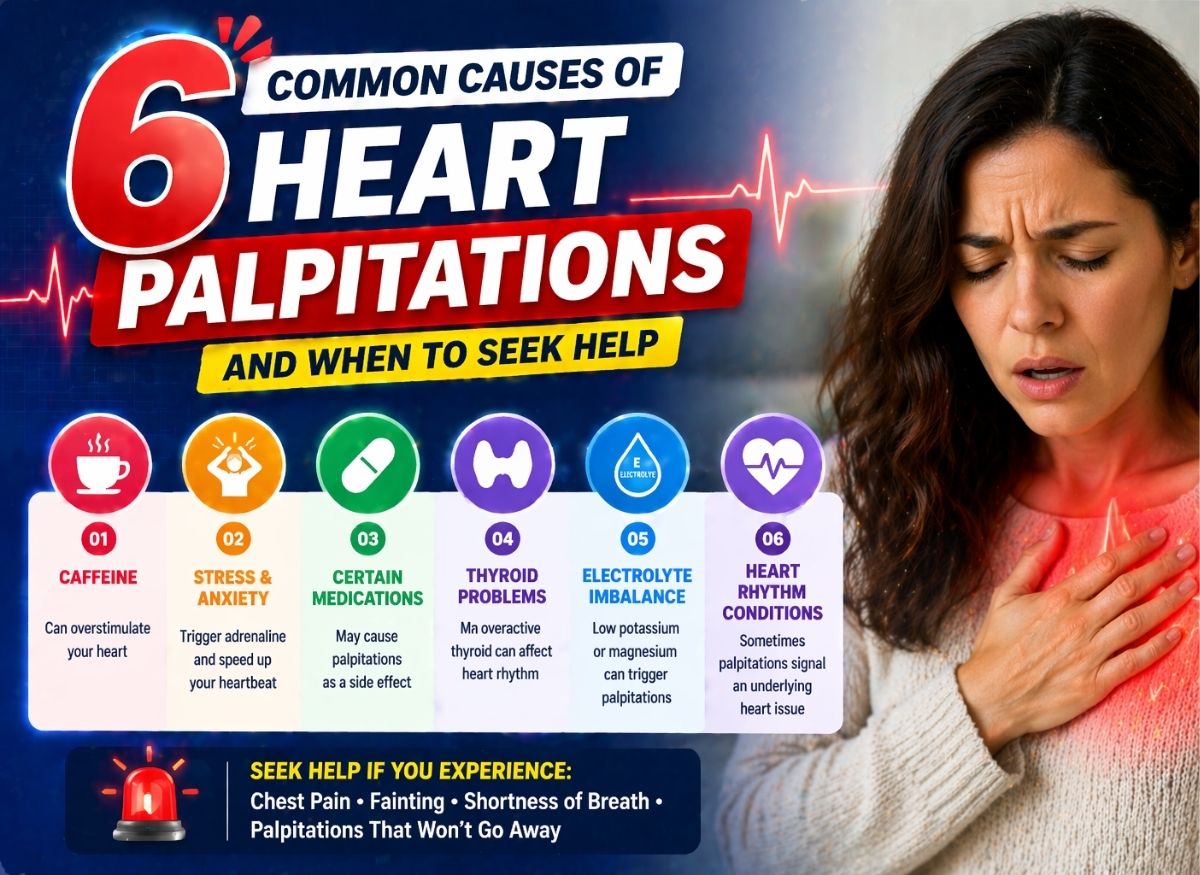
6 Common Causes of Heart Palpitations and When to Seek Help
Heart palpitations are a common experience that can make you suddenly aware of your heartbeat. You may notice a flutter, pounding, racing, or a feeling that your heart has skipped a beat. In many cases, palpitations are harmless and happen in response to everyday triggers such as stress, exercise, caffeine, or other stimulants.
However, palpitations can sometimes be connected to an underlying heart rhythm problem or another medical condition. Knowing what can cause them and recognizing warning signs can help you decide when it is appropriate to seek medical care.
This guide looks at six common causes of heart palpitations, explains how they may feel, and covers ways they are evaluated and managed.
What Are Heart Palpitations?
Heart palpitations are the sensation of being unusually aware of your heartbeat. Normally, your heart beats continuously without you noticing it. Certain situations, however, can make each beat much more noticeable.
People describe palpitations in different ways. You might feel:
- A fluttering sensation in your chest
- A pounding or forceful heartbeat
- A rapid or racing heart
- A feeling that your heart has skipped a beat
- A flip-flopping sensation
- Your heartbeat in your chest, neck, or throat
Palpitations can happen when your heart rhythm is completely normal, or they can occur because of an abnormal rhythm called an arrhythmia.
Fluttering, Racing, and Skipping Beats
A fluttering heartbeat may feel like butterflies moving inside your chest. A racing heart, on the other hand, can feel as though your heart is beating much faster than usual, even when you are resting.
Some people experience what feels like a skipped beat. In many cases, this sensation is related to a premature atrial contraction (PAC) or premature ventricular contraction (PVC). These are early heartbeats that can be followed by a brief pause. The next beat may feel stronger, creating the sensation that your heart “skipped” and then gave a noticeable thump.
Common Triggers and When They Become a Concern
Having palpitations does not automatically mean that you have heart disease. The heart responds to changes throughout the body, including emotions, hormones, activity levels, medications, and stimulants.
Stress and anxiety are particularly common triggers. During a stressful situation, the body releases adrenaline, which can increase both the speed and force of the heartbeat.
Caffeine, nicotine, alcohol, and some over-the-counter medications, including certain decongestants, can also make palpitations more noticeable.
Although occasional palpitations may be harmless, symptoms that repeatedly occur, become more intense, or happen along with chest pain, fainting, or severe breathing difficulty should be evaluated by a healthcare professional.
Atrial Flutter and Other Rhythm Problems
Not every unusual heartbeat is simply an occasional skipped beat. Atrial flutter is a type of arrhythmia in which the upper chambers of the heart beat very rapidly in a more organized pattern. It is different from atrial fibrillation, which produces a more irregular rhythm.
The causes of atrial flutter can vary and may include conditions such as high blood pressure or previous heart surgery.
Because palpitations are a symptom rather than a diagnosis, doctors may use tests such as an ECG or an ambulatory heart monitor to determine what is actually happening during an episode.
Warning Signs of Potentially Dangerous Heart Palpitations
Most palpitations are not emergencies. However, certain symptoms can indicate that the heart is struggling to maintain an effective rhythm or blood flow.
Pay particular attention when palpitations occur with other significant symptoms.
Chest Pain or Pressure
Palpitations accompanied by chest pain, pressure, squeezing, or heaviness can be a warning sign of a serious heart problem.
A very rapid or abnormal heartbeat can increase the heart’s demand for oxygen. Chest discomfort should therefore never be ignored, particularly when it is severe, new, or accompanied by other symptoms.
Severe Shortness of Breath
If your heart suddenly races or becomes irregular and you also have significant difficulty breathing, seek urgent medical attention.
Severe shortness of breath can occur when an abnormal rhythm interferes with the heart’s ability to pump blood effectively.
Fainting or Near-Fainting
Dizziness, severe lightheadedness, or fainting during an episode of palpitations is another important warning sign.
In some cases, an abnormal rhythm can temporarily reduce blood flow to the brain. Fainting associated with palpitations requires prompt medical evaluation.
When Frequent Rapid Heartbeats Need Attention
A persistently fast heart rate should not simply be dismissed, even when it does not cause pain.
Certain forms of prolonged or uncontrolled rapid heart rate can eventually affect the heart muscle. This is sometimes referred to as tachycardia-induced cardiomyopathy.
If your heart repeatedly races for no obvious reason, speak with a healthcare professional rather than trying to manage the episodes on your own.
6 Common Causes of Heart Palpitations
Heart palpitations can have many possible causes. Some are related to everyday habits or emotions, while others are connected to medical conditions.
1. Stress and Anxiety
Stress is one of the most common triggers of palpitations.
When you experience fear, anxiety, excitement, or emotional pressure, your body activates its “fight or flight” response. Adrenaline is released, causing the heart to beat faster and more forcefully.
As a result, you may notice pounding, racing, fluttering, or skipped beats.
People experiencing panic attacks may find that these sensations become especially intense, which can then increase anxiety and create a cycle of heightened awareness.
2. Caffeine, Nicotine, and Alcohol
Stimulants can make the heart beat faster or make normal heartbeats feel more noticeable.
Common examples include:
- Coffee and other caffeinated drinks
- Energy drinks
- Nicotine
- Some cold and decongestant medications
- Certain recreational or prescription substances
Alcohol can also contribute to abnormal heart rhythms in some people. Episodes of irregular rhythm following heavy alcohol consumption are sometimes referred to as “holiday heart.”
If you notice that palpitations consistently appear after consuming a particular substance, reducing or avoiding that trigger may help.
3. Strenuous Physical Activity
It is normal for your heart rate to rise during exercise because your muscles require more oxygen.
You may continue to notice your heartbeat for a short time after stopping physical activity as your heart gradually returns to its resting rate.
Occasional extra beats can also become more noticeable during recovery. However, palpitations that occur with chest pain, severe shortness of breath, fainting, or unusual dizziness during exercise should be medically evaluated.
4. Abnormal Heart Rhythms
Arrhythmias are conditions that affect the heart’s normal electrical rhythm. Some can cause noticeable palpitations.
Examples include:
Atrial fibrillation (AFib): The upper chambers of the heart beat in an irregular and often rapid pattern.
Premature atrial contractions (PACs): Early beats that begin in the upper chambers of the heart.
Premature ventricular contractions (PVCs): Early beats that originate in the lower chambers.
Atrial flutter: A rapid but more organized rhythm originating in the upper chambers.
Some arrhythmias are relatively harmless, while others require treatment. An ECG or heart monitor can help determine which rhythm is causing the symptoms.
5. Hormonal Changes
Hormonal fluctuations can influence heart rate and make palpitations more noticeable.
Some women experience palpitations during:
- Pregnancy
- Perimenopause
- Menopause
- Certain stages of the menstrual cycle
Changes in hormone levels can affect the cardiovascular and nervous systems, sometimes producing sensations of fluttering or a racing heart.
If palpitations become frequent or particularly bothersome during a period of hormonal change, discussing them with a healthcare provider can help rule out other causes.
6. Thyroid Problems
An overactive thyroid, known as hyperthyroidism, can increase the body’s metabolic activity and cause a faster heartbeat.
People with hyperthyroidism may experience:
- A rapid heartbeat
- Palpitations
- Nervousness or irritability
- Increased sweating
- Trembling
- Unexplained weight loss
- Difficulty sleeping
If your heart frequently races even when you are resting, a healthcare provider may recommend thyroid testing along with other evaluations.
Palpitations in Different Situations
The timing of your symptoms can sometimes provide useful information.
Heart Palpitations After Eating
Some people notice palpitations after meals. Large meals, alcohol, caffeine, dehydration, or certain foods may contribute.
Rather than assuming that one particular food is responsible, keep track of what you eat and drink and when symptoms occur. This can help identify personal triggers.
Palpitations at Night
Heart palpitations may seem stronger at night because there are fewer distractions. When you are lying quietly in bed, you may become much more aware of sensations that went unnoticed during the day.
Some people also notice palpitations when lying down because body position can change how the heartbeat feels in the chest.
Frequent nighttime episodes should still be discussed with a healthcare professional, particularly if they disturb your sleep or occur with breathing problems, dizziness, or chest discomfort.
How Are Heart Palpitations Diagnosed and Managed?
Because palpitations can come and go, identifying their cause sometimes requires more than a single examination.
A healthcare provider will usually ask about:
- When the palpitations occur
- How long they last
- What they feel like
- Whether they happen during activity or rest
- Medications and supplements
- Caffeine, alcohol, and nicotine use
- Other symptoms that occur at the same time
- Any personal or family history of heart problems
ECG or EKG
An electrocardiogram (ECG or EKG) records the heart’s electrical activity.
It can identify many rhythm abnormalities, but because a standard ECG captures only a short period of time, an episode may not occur while the test is being performed.
Holter and Event Monitors
When symptoms are intermittent, a wearable heart monitor may be useful.
A Holter monitor continuously records heart activity, often for 24 to 48 hours or longer depending on the device and situation.
For less frequent symptoms, an event or other ambulatory monitor may be used for a longer period so that the rhythm can be captured when symptoms occur.
Echocardiogram
An echocardiogram uses ultrasound to create images of the heart.
It can help doctors look for structural problems, such as issues involving the heart valves or heart muscle, that may contribute to palpitations.
Palpitation vs. Arrhythmia
It is important to distinguish between a palpitation and an arrhythmia.
A palpitation is a sensation the feeling that your heart is pounding, fluttering, racing, or skipping.
An arrhythmia is an abnormal heart rhythm that can be detected through testing.
You can experience strong palpitations even when your heart rhythm is normal. Conversely, some abnormal rhythms may cause few noticeable symptoms.
That is why diagnostic testing can be important when symptoms are persistent or unexplained.
Treatment and Management
Treatment depends on what is causing the palpitations.
If stress, caffeine, nicotine, alcohol, or another lifestyle factor is responsible, reducing the trigger may be enough to improve symptoms.
When an underlying condition is found, treatment focuses on addressing that condition.
Depending on the diagnosis, treatment may include:
- Medication to control heart rate or rhythm
- Treatment for thyroid disorders or anemia
- Management of underlying heart disease
- Lifestyle changes
- Treatment for sleep-related conditions
- Catheter ablation for certain arrhythmias
Some people with specific types of abnormal rhythms may be taught certain vagal maneuvers. These techniques should be used only when a healthcare professional has explained when and how they are appropriate.
How to Reduce Non-Emergency Heart Palpitations at Home
If your palpitations have been evaluated and no serious cause has been identified, several everyday habits may help reduce episodes.
Manage Stress
Because stress and anxiety can increase heart rate, relaxation techniques may be helpful.
Consider trying:
- Slow, controlled breathing
- Meditation
- Gentle yoga
- Mindfulness
- Progressive muscle relaxation
- Regular physical activity
These approaches may help calm the body’s stress response and reduce anxiety-related palpitations.
Identify Your Triggers
Keep a simple record of when palpitations occur.
Note factors such as:
- Caffeine
- Alcohol
- Nicotine
- Exercise
- Stress
- Poor sleep
- Large meals
- Medications or supplements
A symptom diary can make it easier to recognize patterns and discuss them with your healthcare provider.
Stay Hydrated
Dehydration can contribute to a faster heartbeat in some people.
Drink enough fluids throughout the day, particularly during hot weather, illness, or physical activity. If you have a medical condition that requires you to limit fluids, follow your healthcare provider’s advice instead.
Electrolytes such as potassium, magnesium, and calcium are also important for normal heart function. A balanced diet usually provides these nutrients, but supplements should not be taken routinely for palpitations without professional advice.
Pay Attention to Sleep
Poor sleep and certain sleep-related conditions can contribute to palpitations.
Maintaining a regular sleep schedule and addressing persistent sleep problems may help. If you frequently wake up gasping, snore heavily, or experience repeated nighttime breathing interruptions along with palpitations, discuss these symptoms with a healthcare professional.
Consider Body Position
Some people notice their heartbeat more strongly when lying down. Changing position may make the sensation less noticeable.
However, there is no single sleeping position that is appropriate for everyone. If palpitations repeatedly occur when you lie down, particularly if they are accompanied by shortness of breath, swelling, or chest discomfort, seek medical advice rather than relying only on a position change.
Conclusion
Heart palpitations can feel alarming, but they are often caused by temporary factors such as stress, caffeine, alcohol, exercise, or hormonal changes. They can also be associated with arrhythmias, thyroid problems, and other medical conditions.
The most important step is to pay attention to the pattern and accompanying symptoms. Palpitations that occur with chest pain, severe shortness of breath, fainting, or significant dizziness require urgent medical attention.
If your palpitations are frequent, persistent, becoming more intense, or happening without an obvious trigger, talk with a healthcare professional. An ECG, heart monitor, blood tests, or other evaluations may help identify the underlying cause and determine whether treatment is needed.
Understanding your triggers and recognizing warning signs can help you respond appropriately while keeping your overall heart health a priority.
Frequently Asked Questions About Heart Palpitations
What causes heart palpitations?
Heart palpitations can have many causes. Common triggers include stress, anxiety, caffeine, alcohol, nicotine, physical activity, dehydration, and hormonal changes.
They can also occur because of medical conditions such as arrhythmias, hyperthyroidism, anemia, or changes in blood sugar. Some medications and supplements may contribute as well.
Occasional palpitations are often harmless, but persistent or unexplained symptoms should be evaluated by a healthcare professional.
Are heart palpitations dangerous?
Most palpitations are not dangerous, especially when they occur briefly and without other concerning symptoms.
However, palpitations can sometimes be associated with an abnormal heart rhythm or another medical problem. Seek urgent medical care if they occur with chest pain, severe breathing difficulty, fainting, or significant dizziness.
People with known heart disease or other medical conditions should discuss new or changing palpitations with their healthcare provider.
When should I see a doctor for heart palpitations?
Make an appointment with a healthcare professional if palpitations happen frequently, last longer than usual, keep returning, or occur without an obvious trigger.
You should seek urgent medical attention if palpitations are accompanied by:
- Chest pain or pressure
- Severe shortness of breath
- Fainting
- Severe dizziness or lightheadedness
- A sustained, very rapid heartbeat
A healthcare provider may use an ECG, Holter monitor, event monitor, blood tests, or other testing to determine the cause.
Can stress cause heart palpitations?
Yes. Stress and anxiety are common triggers.
When you are stressed, your body releases hormones such as adrenaline. These hormones can increase your heart rate and make you more aware of your heartbeat.
Relaxation techniques such as slow breathing, meditation, yoga, and other stress-management strategies may help reduce anxiety-related episodes.
How can I stop heart palpitations?
The best approach depends on the cause.
If caffeine, alcohol, nicotine, stress, dehydration, or another identifiable trigger is responsible, reducing or avoiding that trigger may help.
If an underlying medical condition is causing the palpitations, treating that condition may be necessary. Some people may need medications or procedures for an abnormal heart rhythm.
Do not start heart medications or supplements on your own to treat palpitations. A healthcare professional can determine the safest treatment after identifying the cause.
Can heart palpitations be prevented?
They cannot always be prevented, but certain habits may reduce the frequency of episodes.
Helpful steps can include:
- Limiting caffeine and alcohol if they trigger symptoms
- Avoiding nicotine
- Staying adequately hydrated
- Getting consistent sleep
- Managing stress
- Exercising regularly
- Eating a balanced diet
- Following treatment plans for conditions such as thyroid disease or high blood pressure
Keeping track of when palpitations happen can also help identify personal triggers.
If you continue to experience frequent or unexplained palpitations, a medical evaluation is the safest way to determine what is causing them.