
7 Differences Between Bile Reflux and Acid Reflux
Many people think reflux always means the same thing, but there are different types. Acid reflux is the more familiar condition, while bile reflux can cause similar symptoms but has a different underlying cause and may require a different treatment approach. Understanding the difference can make it easier to recognize symptoms and seek the right medical care.
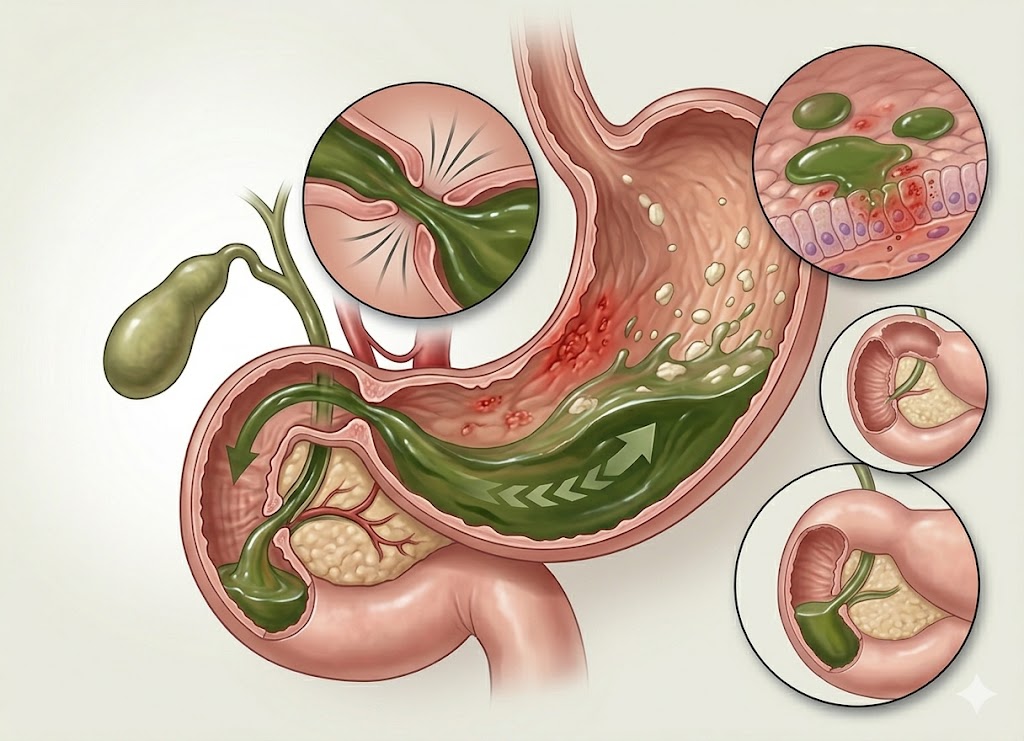
Bile reflux happens when bile, a digestive fluid made by the liver, moves backward from the small intestine into the stomach and sometimes into the esophagus. Because many of its symptoms overlap with acid reflux, it can sometimes be mistaken for GERD or other digestive problems.
Knowing how bile reflux differs from acid reflux can help you better understand your symptoms, the tests doctors may use, and the treatment options available. Below are seven important differences between these two conditions.
Defining Bile Reflux and Acid Reflux (GERD)
Bile reflux and Gastroesophageal Reflux Disease (GERD) are different digestive conditions that involve digestive fluids moving backward through the upper gastrointestinal tract. They can occur at the same time, but they involve different fluids and can affect the digestive system in different ways.
The main difference is what moves upward. Bile reflux occurs when bile, an alkaline fluid produced by the liver, travels from the small intestine back into the stomach and sometimes into the esophagus.
GERD, on the other hand, occurs when acidic stomach contents flow backward into the esophagus. Because acid and bile have different chemical properties, the way they irritate digestive tissues and respond to treatment can also differ.
What Is Bile and What Causes Bile Reflux?
Bile is a greenish-yellow digestive fluid produced by the liver and stored in the gallbladder. Its main job is to help the body digest and absorb fats in the small intestine.
Normally, the pyloric valve separates the stomach from the duodenum, the first part of the small intestine. This muscular valve helps control the movement of partially digested food from the stomach into the intestine and helps prevent intestinal contents from moving backward.
When the pyloric valve does not close properly or its normal function is disrupted, bile and other intestinal fluids can move back into the stomach. This may irritate the stomach lining and contribute to inflammation known as bile reflux gastritis.
If the lower esophageal sphincter is also weak, these digestive fluids may move from the stomach into the esophagus. This can expose the esophageal lining to a mixture of acid and bile, potentially causing further irritation and tissue damage.
What Is Stomach Acid and How Does It Cause GERD?
Stomach acid is produced by specialized cells in the stomach lining. It contains hydrochloric acid and creates a very acidic environment that helps break down proteins and protect the body from harmful microorganisms in food.
The stomach is protected from its own acid by a mucus and bicarbonate barrier. The esophagus does not have the same level of protection, so repeated exposure to stomach acid can cause irritation and inflammation.
GERD is commonly linked to problems with the lower esophageal sphincter, the muscular ring between the esophagus and stomach. This valve normally keeps stomach contents from moving upward. When it weakens or relaxes at inappropriate times, stomach contents can flow back into the esophagus.
The most familiar symptom is heartburn, which can feel like a burning sensation behind the breastbone. GERD can also cause sour regurgitation, difficulty swallowing, coughing, and other symptoms.
Long-term exposure to stomach acid may contribute to complications such as esophageal ulcers, strictures, and Barrett’s esophagus.
7 Key Differences Between Bile Reflux and Acid Reflux
Although bile reflux and acid reflux can produce similar digestive symptoms, they differ in several important ways. Looking at their causes, symptoms, triggers, complications, and response to treatment can help explain why the two conditions are not interchangeable.
1. Underlying Cause and Mechanical Failures
One major difference is the part of the digestive system involved.
Acid reflux is primarily associated with the lower esophageal sphincter, which is located at the bottom of the esophagus. When this muscle weakens or relaxes when it should remain closed, stomach contents can move upward.
Bile reflux involves the lower part of the stomach and the pyloric valve, which separates the stomach from the small intestine. If this valve does not function normally, intestinal contents, including bile, can move backward into the stomach.
Certain surgeries and changes to the digestive tract may also increase the risk of bile reflux.
2. Refluxed Substance and Chemical Composition
Another important difference is the type of fluid that moves backward.
Acid reflux involves acidic stomach contents containing hydrochloric acid. Stomach acid normally has a very low pH and plays an important role in digestion.
Bile reflux involves bile, an alkaline digestive fluid produced by the liver. Bile contains substances such as bile salts, cholesterol, and bilirubin and helps the body digest fats.
Because these fluids have different chemical properties, they can affect different parts of the digestive tract in different ways.
3. Primary Symptoms and Physical Manifestations
The symptoms of acid and bile reflux can overlap, which is one reason they can sometimes be difficult to distinguish.
Acid reflux commonly causes:
- Heartburn
- Sour-tasting fluid or food coming back into the mouth
- Difficulty swallowing
- Burning or discomfort in the chest
Bile reflux may be associated with:
- Nausea
- Upper abdominal discomfort
- A bitter taste
- Vomiting yellow or greenish fluid
- Irritation of the stomach lining
Persistent symptoms may also affect appetite and, in some cases, contribute to unintended weight loss.
4. Location and Nature of the Pain
The location of discomfort can sometimes provide useful information, although symptoms alone cannot confirm the cause.
Acid reflux often produces burning pain behind the breastbone. The sensation may move upward toward the throat and is commonly described as heartburn.
Bile reflux may cause discomfort in the upper central abdomen, known as the epigastric region. Some people describe this discomfort as a deep, burning, or gnawing sensation.
Because digestive symptoms can vary from person to person, a healthcare professional may need additional testing to determine the underlying cause.
5. Timing of Symptoms and Postural Triggers
Acid reflux is often influenced by meals and body position. Symptoms may become worse after large meals or when lying down. Certain foods and drinks, including fatty foods, caffeine, and alcohol, may trigger symptoms in some people.
Bile reflux does not always follow the same pattern. Symptoms may occur even when the stomach is empty and can include nausea or upper abdominal discomfort.
The timing of symptoms can provide clues, but it is not enough on its own to determine whether bile or acid is responsible.
6. Long-Term Health Complications
Long-term exposure to refluxed digestive fluids can cause tissue damage.
Repeated acid exposure can irritate and damage the esophageal lining. Possible complications include esophageal ulcers, narrowing of the esophagus called strictures, and Barrett’s esophagus.
Bile reflux can primarily affect the stomach lining and may contribute to chronic inflammation or bile reflux gastritis. When bile also reaches the esophagus, it may combine with stomach acid and contribute to additional irritation.
7. Response to Common Medications
The way symptoms respond to treatment can sometimes provide useful information.
Acid reflux is often treated with medications that reduce or neutralize stomach acid. These may include antacids, H2-receptor blockers, and proton pump inhibitors.
Because these medications target stomach acid, they may not fully relieve symptoms caused by bile reflux. People who continue to experience significant symptoms despite appropriate acid-suppressing treatment may need further evaluation to determine whether another cause, including bile reflux, is involved.
How Are Bile Reflux and Acid Reflux Diagnosed and Treated Differently?
Because the symptoms can be similar, doctors may need more than a description of symptoms to determine whether bile reflux, acid reflux, or another digestive disorder is responsible.
Diagnosis and treatment depend on the suspected cause, the severity of symptoms, and whether complications are present.
Diagnostic Tests: Separating Acid from Alkaline
An upper endoscopy may be used to examine the lining of the esophagus, stomach, and upper small intestine. It can help doctors identify inflammation, ulcers, or other structural changes.
However, endoscopy alone may not always determine whether symptoms are caused by acid, bile, or both.
Specialized esophageal monitoring may provide additional information. A 24-hour impedance-pH test can measure reflux episodes and determine whether they are associated with acidic or non-acidic material. The impedance portion of the test helps detect the movement of liquid or gas through the esophagus, while pH monitoring measures acidity.
In some complex cases, additional specialized testing may be considered to identify bile exposure.
Medication Strategies: Different Treatment Targets
Treatment for GERD generally focuses on reducing or neutralizing stomach acid. Depending on the situation, doctors may recommend antacids, H2-receptor blockers, or proton pump inhibitors.
Bile reflux may require a different approach because acid-suppressing medications do not directly stop bile from moving backward. Depending on the underlying cause, doctors may consider medications intended to protect the digestive lining, affect bile acids, or improve gastrointestinal movement.
Treatment should be individualized because the best approach depends on the cause and severity of the reflux.
Surgical Interventions: Reinforcing the Valve vs. Rerouting the Plumbing
Surgery may be considered when severe reflux does not improve with other treatments or when significant structural problems are present.
For severe GERD, procedures may focus on strengthening the barrier between the stomach and esophagus. One example is Nissen fundoplication, which involves wrapping part of the stomach around the lower esophagus to help prevent stomach contents from moving upward. Another option for selected patients is a LINX device, which uses a ring of magnetic beads to support the lower esophageal sphincter.
Bile reflux caused by structural problems may require a different surgical approach. In severe cases, procedures such as Roux-en-Y diversion may be considered to change the path of bile through the digestive tract and reduce its movement toward the stomach.
The decision to undergo surgery depends on the underlying problem, previous treatments, overall health, and specialist evaluation.
Co-Existence of Bile and Acid Reflux: DGER
Bile reflux and acid reflux can occur at the same time. When digestive contents containing both acid and bile move upward into the esophagus, the condition may be described as duodenogastroesophageal reflux (DGER).
This combination can be particularly difficult to identify because the symptoms may look very similar to typical GERD.
When both types of reflux are present, several concerns may arise:
- Accelerated Tissue Damage: Bile can affect the protective barrier of the esophageal lining, potentially making the tissue more vulnerable to irritation from stomach acid.
- Elevated Premalignant Risk: Long-term exposure to refluxed digestive contents can contribute to changes in the esophageal lining, including Barrett’s esophagus, which is associated with an increased risk of esophageal cancer.
- Diagnostic Blind Spots: Symptoms such as heartburn, coughing, and regurgitation can occur with both acid and bile reflux. This overlap can make it difficult to identify the exact cause without appropriate testing.
Gallbladder Removal and the Risk of Bile Reflux
Gallbladder removal, also called cholecystectomy, may be associated with changes in bile flow and digestive symptoms.
The liver continues to produce bile after the gallbladder is removed. Normally, the gallbladder stores and concentrates bile before releasing it into the small intestine when needed for digestion.
After gallbladder removal, bile flows more continuously from the liver into the digestive tract. Changes in bile flow and digestive motility may contribute to symptoms in some people.
Two factors may be relevant:
- Pyloric Valve Function: Changes in digestive flow and motility may affect how well the stomach and small intestine coordinate movement of digestive contents.
- Post-Cholecystectomy Syndrome (PCS): Some people develop ongoing digestive symptoms after gallbladder removal. These symptoms can have several possible causes, including changes in bile flow and gastrointestinal function.
Dietary Triggers: Acid vs. Bile Stimulation
Diet can influence symptoms associated with both acid and bile reflux, although the effects may differ between individuals.
| Reflux Type | Primary Dietary Triggers | Possible Mechanism |
|---|---|---|
| Acid Reflux (GERD) | Caffeine, chocolate, alcohol, peppermint, citrus fruits, tomatoes, and spicy foods | These foods and drinks may worsen symptoms in some people by affecting the lower esophageal sphincter or irritating the esophageal lining. |
| Bile Reflux | Large meals and high-fat foods such as fried foods, heavy creams, and fatty meats | Fat stimulates bile release during digestion, and large or heavy meals may worsen symptoms in people who are prone to bile reflux. |
Keeping track of foods and symptoms can help identify individual triggers.
The Role of Peptic Ulcers and H. pylori
Peptic ulcers and infections caused by Helicobacter pylori (H. pylori) can affect the stomach and upper digestive tract in several ways. They may also be considered when evaluating persistent digestive symptoms.
Physical Scarring of the Pyloric Gateway
Peptic ulcers can develop near the pyloric region. When inflammation and ulcers heal, scar tissue may form. Significant scarring can affect the normal structure and movement of the pyloric area.
If the normal function of this region becomes disrupted, the movement of digestive contents between the stomach and small intestine may also be affected.
Disrupted Gastric Motility
H. pylori infection can cause inflammation in the stomach and may affect normal digestive function. Changes in gastric emptying and motility can contribute to symptoms such as nausea, fullness, and upper abdominal discomfort.
For people with persistent symptoms, doctors may consider testing for H. pylori when clinically appropriate. If an active infection is confirmed, treatment can help eliminate the bacteria and reduce related stomach inflammation.
Conclusion
Bile reflux and acid reflux can cause similar symptoms, but they are different conditions with different underlying mechanisms. The type of digestive fluid involved, the location of the problem, possible complications, and treatment options can all vary.
If you frequently experience heartburn, upper abdominal discomfort, nausea, vomiting, difficulty swallowing, or symptoms that do not improve with standard reflux treatment, talk with a healthcare professional. Proper evaluation can help determine whether bile reflux, acid reflux, or another digestive condition is causing your symptoms and help guide appropriate treatment.
Frequently Asked Questions
1. What is bile reflux?
Bile reflux occurs when bile moves backward from the small intestine into the stomach and sometimes into the esophagus. Bile normally helps the body digest fats and moves through the digestive tract in a controlled direction. When normal digestive movement is disrupted, bile can travel backward and irritate the stomach or esophagus.
2. How is bile reflux different from acid reflux?
The main difference is the digestive fluid involved. Acid reflux occurs when acidic stomach contents move into the esophagus, while bile reflux involves bile moving backward from the small intestine into the stomach and sometimes the esophagus. The two conditions can produce similar symptoms and may also occur together.
3. Can bile reflux be diagnosed with standard reflux tests?
Not always. Tests commonly used for acid reflux may not provide a complete picture of bile reflux. Doctors may use endoscopy, specialized esophageal monitoring, or other tests depending on the symptoms and suspected cause. A more detailed evaluation may be needed when symptoms continue despite standard reflux treatment.
4. Does medication for acid reflux help bile reflux?
Acid-reducing medications can lower the amount of stomach acid but may not directly treat bile reflux. Depending on the underlying cause, other medications or treatments may be considered. A healthcare professional can determine which approach is appropriate based on the individual’s symptoms and diagnosis.
5. When should I see a doctor about bile reflux symptoms?
You should speak with a healthcare professional if your symptoms are frequent, severe, or interfere with your daily life. Symptoms such as persistent heartburn, repeated nausea, vomiting bile, difficulty swallowing, or unexplained weight loss should be evaluated. Early medical assessment can help identify the cause and reduce the risk of complications.