
5 Immune Thrombocytopenia Symptoms You Shouldn’t Ignore
Have you noticed bruises you can’t explain, nosebleeds that keep coming back, or tiny red dots on your skin? Many things can cause these signs, but sometimes they point to Immune Thrombocytopenia (ITP), a condition that lowers the number of platelets in your blood.
ITP is an autoimmune disorder. The immune system mistakenly attacks platelets, the blood cells that help your blood clot. When the count drops too low, bleeding becomes more likely. Symptoms can be mild or serious, and because they often build up slowly, they’re easy to mistake for something else.
ITP is uncommon, but it still affects thousands of people worldwide. Studies estimate that 2 to 5 adults per 100,000 are diagnosed each year, and that 9 to 26 per 100,000 are living with the condition overall. It can appear at any age, but it is most often found in children and in adults over 50. Among adults, women are affected more often.
How ITP feels depends on how low the platelet count falls. Some people only notice light bruising. Others have bleeding that needs medical care. Since platelets are so important for stopping blood loss, even small symptoms deserve attention.
In this article, we cover five ITP symptoms, why they happen, and when to talk to a doctor.
What is Immune Thrombocytopenia (ITP)?
ITP is an autoimmune disorder in which the body makes antibodies that attack its own platelets. The result is a low platelet count, called thrombocytopenia.
Why platelets matter. Platelets are tiny, disc-shaped cell fragments made in the bone marrow. Their main job is to stop bleeding. When a blood vessel is damaged, platelets rush to the spot, stick to the wall of the vessel, and clump together to form a temporary plug. That plug seals the injury and gives the clotting process a surface to build on, so a lasting clot can form. A healthy platelet count is 150,000 to 450,000 per microliter of blood, which is enough to handle everyday knocks and prevent spontaneous bleeding.
What goes wrong in ITP. The immune system is meant to fight germs, but in ITP it makes autoantibodies that attach to platelets. Immune cells called macrophages, mostly in the spleen, treat these coated platelets as abnormal and destroy them. In some people, the antibodies also interfere with the bone marrow’s ability to make new platelets, which makes the shortage worse.
Counts can fall below 100,000, and in severe cases below 20,000 or even 10,000. At these levels, clotting is badly affected and the risk of bleeding, from mild to life-threatening, goes up.
Doctors once called the condition “idiopathic,” meaning the cause was unknown. The word “immune” is now preferred because it describes what is actually happening. The exact trigger is often unclear, but ITP can follow a viral infection (especially in children) or a vaccination, or appear alongside other autoimmune diseases such as lupus or rheumatoid arthritis.
5 key Immune Thrombocytopenia Symptoms
Skin-related Signs
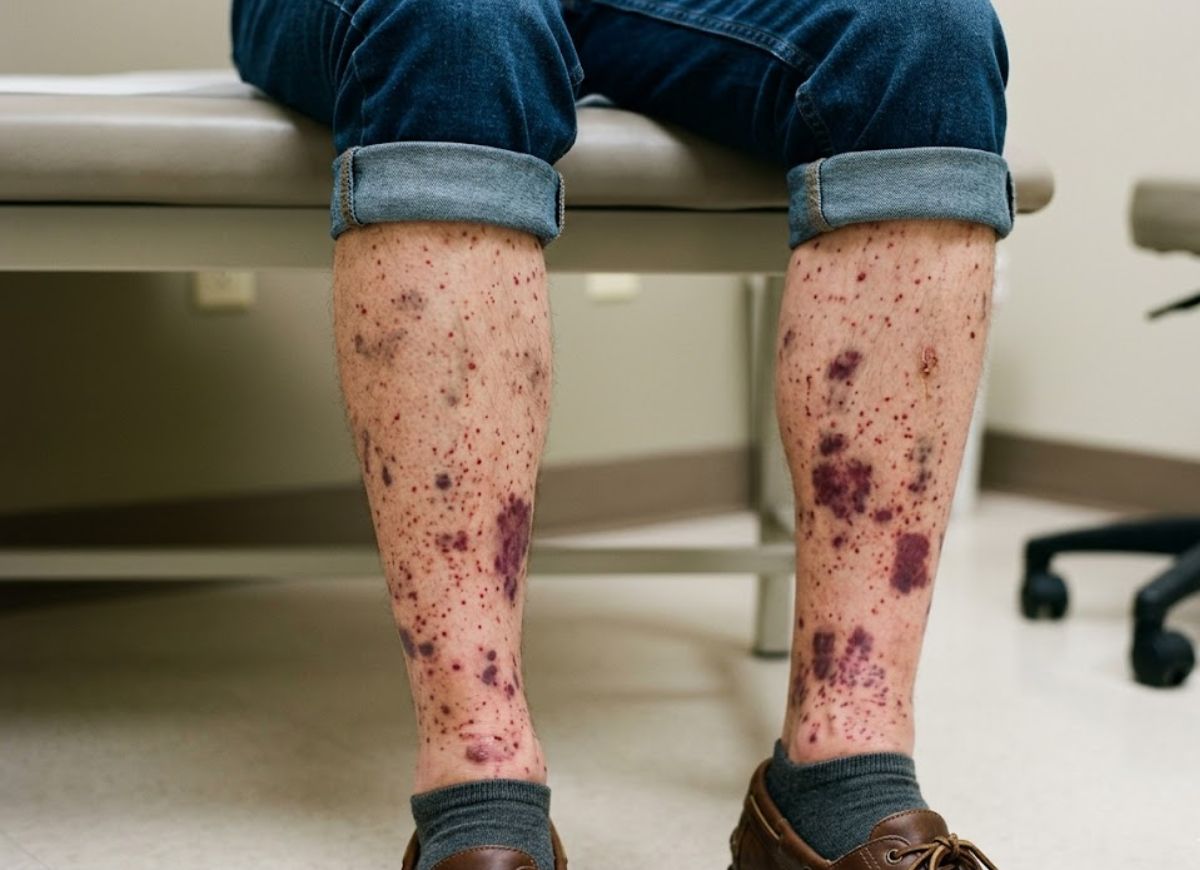
The two main skin signs of ITP are purpura (large bruises) and petechiae (pinpoint red or purple dots). Both come from bleeding into the skin when platelet levels are low.
These are often the first visible clues. Tiny injuries to the small blood vessels under the skin happen all the time without us noticing. Normally platelets plug these leaks quickly. In ITP, blood pools under the skin and shows up as discoloration. These signs are more than cosmetic. They show that clotting is not working properly.
Purpura means purple patches on the skin, inside the mouth, or on other mucous membranes. It often appears with little or no injury. You might wake up with large bruises on your arms or legs. These bruises are usually bigger than 3 millimeters and feel flat. Wet purpura, meaning blood blisters inside the mouth, is especially concerning because it signals a higher risk of serious internal bleeding, including bleeding in the brain.
Petechiae are tiny reddish-purple dots, smaller than 2 millimeters. They often appear in clusters and can look like a rash. The difference is that petechiae are non-blanching, meaning they don’t fade when you press on them. They show up most often on the lower legs and feet, where gravity puts more pressure on small vessels, but they can appear anywhere. Petechiae usually point to a very low platelet count, typically under 20,000 per microliter, and a real risk of bleeding.
Types of Bleeding
ITP commonly causes frequent or long-lasting nosebleeds, bleeding gums, and heavy bleeding from small cuts or scrapes. All of these happen because there aren’t enough platelets to form the first clot.
This kind of bleeding, from the skin and mucous membranes, is a hallmark of the disorder. The lining of the nose and mouth is rich in fragile vessels and is constantly irritated by breathing, eating, and brushing teeth. When platelets are very low, these areas can bleed on their own or with the slightest trigger, and the bleeding can be hard to stop.
- Nosebleeds: An occasional nosebleed is normal. In ITP, nosebleeds often start without any injury, can happen several times a week or even daily, and may last 15 to 20 minutes or more even with direct pressure. They can also be heavy.
- Bleeding gums: This is different from ordinary gum disease. Gums may bleed heavily after gentle brushing, or with no cause at all. Flossing can lead to oozing that goes on for a long time.
- Cuts and scrapes: A paper cut or shaving nick that would normally stop in minutes may ooze for half an hour or longer when platelets are very low. Trouble controlling even minor bleeding is a major warning sign of a platelet problem.
Blood in Urine or Stool
Blood in the urine (hematuria) or stool (melena or hematochezia) is a serious sign of internal bleeding. In someone with ITP it can mean a critically low platelet count, and it needs medical attention right away.
Unlike bruises or nosebleeds, this bleeding happens inside the body, in the urinary or digestive tract. It is more dangerous because you can’t see it right away, a lot of blood can be lost before you notice, and it may mean you are at high risk of life-threatening bleeding, including in the brain.
- Hematuria can turn urine pink, red, or cola-colored. It means bleeding somewhere in the urinary tract, which includes the kidneys, ureters, bladder, and urethra.
- Melena is black, tarry, foul-smelling stool. The dark color comes from blood being digested as it moves through the upper digestive tract, such as the stomach or small intestine. It suggests the bleeding has been going on for a while.
- Hematochezia is bright red blood in the stool. It usually comes from the lower digestive tract, such as the colon or rectum, where blood has no time to be digested.
Both need urgent evaluation to find and treat the source. Ignoring them can lead to severe anemia, shock, and other serious complications.
Menstrual Cycles
For people who menstruate, ITP can cause menorrhagia, which means unusually heavy or long periods. During a period, the blood vessels in the uterine lining break down. Platelets normally help control that bleeding. When they are low, the vessels can’t seal properly and blood loss becomes excessive.
Menorrhagia is one of the most common and disruptive ITP symptoms. Signs that a period is abnormal include:
- Soaking through a tampon or pad every hour for several hours in a row
- Needing double protection, such as a tampon and a pad together
- A period that lasts longer than seven days
- Passing blood clots larger than a quarter
- Waking at night to change protection, or bleeding so heavy that it disrupts daily life
The effects go beyond inconvenience. Ongoing heavy blood loss can quickly cause iron-deficiency anemia, which brings worse fatigue, weakness, shortness of breath, and pale skin. Heavy periods can therefore be an important clue to ITP and are a good reason to see a blood specialist.
Extreme Fatigue
Extreme fatigue is a common and often exhausting symptom of ITP. It comes from several things at once: the inflammation caused by the autoimmune disease itself, anemia from ongoing blood loss, and the emotional weight of living with a chronic condition.
It isn’t a bleeding symptom, but most people with ITP report it, and it can affect quality of life a great deal. This is not ordinary tiredness. It is a deep exhaustion that sleep and rest don’t fix, and it can get in the way of work, social life, and daily tasks.
- The immune system: When the immune system keeps attacking platelets, it releases inflammatory molecules called cytokines. These are the same molecules that rise during infections like the flu, and they can cause malaise, exhaustion, and brain fog. The body is in a constant low-level fight with itself, which uses up a lot of energy.
- Anemia: Not everyone with ITP becomes anemic, but people with ongoing minor bleeding, such as frequent nosebleeds or heavy periods, are at higher risk of iron-deficiency anemia. Iron is needed to make hemoglobin, the protein in red blood cells that carries oxygen. Without enough of it, tissues get less oxygen, causing fatigue, weakness, dizziness, and breathlessness during activity.
- Emotional strain: Worrying about platelet counts, the chance of a sudden serious bleed, treatment side effects, and lifestyle limits can lead to anxiety, low mood, and poor sleep, all of which add to fatigue.
When to Seek Medical Help?
See a doctor as soon as you notice new, unexplained, or worsening bruising or bleeding. Don’t wait, especially if symptoms appear suddenly, show up together, or are a big change from what’s normal for you.
Good reasons to book an appointment right away include:
- A sudden rash-like pattern of tiny red dots (petechiae) on your legs
- Waking up with large, dark bruises you can’t explain
- Nosebleeds lasting longer than 20 minutes
- Gums that bleed when you brush
- Blood in your urine or stool
These symptoms suggest that your platelets, the body’s first defense against bleeding, may not be working as they should. ITP is one possible cause, but other serious conditions can also lower platelets. Only a doctor can find out which one it is, and the first step is a simple complete blood count (CBC).
Early care matters. A very low platelet count raises the risk of dangerous internal bleeding, including gastrointestinal bleeding and, in the worst cases, bleeding in the brain, which is a life-threatening emergency. Seeing a doctor early starts the process that leads to a treatment plan to bring your platelets up to a safe level, control symptoms, and lower the risk of serious bleeding.
Are Symptoms Like Petechiae and Purpura Enough to See a Doctor?
Yes. Petechiae and purpura are reason enough to see a doctor. They are visible proof of bleeding under the skin and strongly suggest a low platelet count or another blood problem that needs prompt investigation.
They are not minor cosmetic issues. Ignoring them could delay the diagnosis of ITP, leukemia, or other conditions that affect the bone marrow or blood. Here is why they matter:
- Petechiae often appear when platelets fall to a critically low level, typically under 20,000 per microliter. At that point the risk of spontaneous, serious internal bleeding goes up significantly.
- Purpura, meaning large bruises without enough injury to explain them, shows that the body can’t seal even minor damage to blood vessels.
- Many possible causes. ITP is a common one, but these signs can also come from viral infections or, less often, serious cancers of the blood.
A doctor will start with a CBC, which measures platelets, red blood cells, and white blood cells and gives quick, useful answers. The real danger of low platelets isn’t the bruising itself. It is the higher risk of internal bleeding, including in the digestive tract and, most feared of all, in the brain. Getting checked when these skin signs appear lets you receive treatment that raises your platelet count and lowers the chance of a catastrophic bleed.
What Constitutes a Medical Emergency for ITP Symptoms?
A medical emergency means signs of severe, active internal bleeding, especially in the brain or digestive tract, or any external bleeding that basic first aid can’t control. These situations can lead to fast blood loss, organ damage, shock, or death. Patients and their families should know these signs, because going to the emergency department right away can save a life.
Call 911 or your local emergency number immediately if you notice:
Signs of bleeding in the brain (the most dangerous complication of ITP):
- A sudden, severe headache, often described as the worst of your life
- Sudden vision changes, such as blurring or double vision
- Confusion or a change in mental state
- Trouble speaking or understanding speech
- Unexplained nausea and vomiting
- Seizures or sudden loss of consciousness
Any of these in someone with known or suspected ITP is a code-red emergency.
Signs of severe digestive bleeding:
- Vomiting blood, or material that looks like coffee grounds (partly digested blood)
- Passing large amounts of bright red blood in the stool, or black, tarry stools
- Severe dizziness or lightheadedness, a racing heartbeat, clammy skin, or fainting
Bleeding that won’t stop:
- Any nosebleed or cut that doesn’t stop or slow down after 20 to 30 minutes of firm, steady, direct pressure. This means the platelet count is too low to form even a basic clot.
Immune Thrombocytopenia Diagnosis
The main test for ITP is the complete blood count (CBC), a routine blood test that measures the different cells in your blood, including platelets. ITP is strongly suspected when the platelet count is below 100,000 per microliter and all other blood counts are normal.
There is no single test that confirms ITP, so it is a diagnosis of exclusion. Doctors must rule out other causes of low platelets, such as viral infections (for example HIV or hepatitis C), medication side effects, liver disease, and other autoimmune conditions like lupus.
A full workup usually includes:
- Medical history and physical exam. The doctor asks about recent infections, new medicines, vaccinations, and a family history of bleeding disorders. They also look for petechiae, purpura, or an enlarged spleen, which could suggest a different diagnosis.
- Peripheral blood smear. A drop of blood is examined under a microscope. In ITP, the platelets that are present are often larger than normal.
- Other blood tests. These check for viral infections, thyroid problems, and autoimmune markers. Testing for Helicobacter pylori may also be done, since treating this bacterial infection can sometimes raise platelet counts.
- Anti-platelet antibody tests. These can sometimes support the diagnosis, but a negative result doesn’t rule out ITP.
- Bone marrow aspiration and biopsy. This may be suggested for older adults or when the diagnosis is unclear. It confirms that the marrow is making platelets normally, as expected in ITP, and rules out conditions like leukemia or aplastic anemia.
The Difference Between Acute and Chronic ITP
The main differences between acute and chronic ITP are how long they last, who they affect, and how they behave over time.
| Acute ITP | Chronic ITP | |
|---|---|---|
| Duration | Less than 6 months | More than 6 months |
| Who it affects | Mostly children | Mostly adults, especially women |
| Onset | Often sudden, commonly after a viral infection (flu, chickenpox, a cold) | Usually gradual |
| Recovery | Often clears up on its own | Spontaneous remission is rare |
| Management | Observation and injury prevention; treatment only for severe bleeding | Ongoing monitoring, sometimes long-term treatment |
In many children, acute ITP resolves by itself and platelet counts return to normal without treatment. In adults with chronic ITP, some people have long periods of remission, but the condition is generally seen as lifelong and needs a management plan that fits the person’s lifestyle and symptoms. Knowing which type someone has helps predict the course of the disease and choose the right approach.
ITP and Other Bleeding Disorders like Hemophilia
ITP and hemophilia are both bleeding disorders, but they have very different causes. The key difference is which part of the clotting process is affected.
ITP is a problem of platelet quantity. The immune system marks the body’s own platelets for destruction, mainly in the spleen, so the count drops. Platelets form the first plug at an injury, so a shortage weakens the first step of clotting. This causes petechiae, purpura, and easy bruising.
Hemophilia is a problem of clotting factor proteins. It is an inherited genetic condition in which the body can’t make enough of certain clotting factors, most commonly Factor VIII (hemophilia A) or Factor IX (hemophilia B). These factors build a strong fibrin mesh that reinforces the platelet plug. Without them, clots are weak and unstable, leading to prolonged bleeding, especially into joints and muscles.
| ITP | Hemophilia | |
|---|---|---|
| Cause | Autoimmune destruction of platelets | Inherited lack of clotting factors |
| What’s affected | Platelet count | Clotting factor proteins (VIII or IX) |
| Stage of clotting | First step (platelet plug) | Second step (fibrin reinforcement) |
| Typical signs | Petechiae, purpura, nosebleeds, bleeding gums | Prolonged bleeding, especially in joints and muscles |
Because the causes differ, the symptoms, tests, and treatments differ too.
The Common Treatment for Immune Thrombocytopenia
ITP treatment is tailored to each person. The goal is a safe platelet count that prevents serious bleeding, not necessarily a perfectly normal count. The decision depends on platelet level, how severe the bleeding is, and the patient’s lifestyle.
For many adults with mild ITP (platelets above 30,000 per microliter) and no active bleeding, watchful waiting may be enough. When treatment is needed, it usually happens in steps:
- First-line treatment: Corticosteroids such as prednisone calm the immune system and reduce platelet destruction. They work well for many people but can cause significant side effects if used for a long time.
- For a fast boost: When platelets must rise quickly, for example with severe bleeding, doctors may use intravenous immunoglobulin (IVIG) or Anti-D immunoglobulin. These temporarily distract the immune system from attacking platelets.
- Second-line treatment for chronic ITP: Thrombopoietin receptor agonists (TPO-RAs) such as romiplostim and eltrombopag tell the bone marrow to make more platelets. Immunosuppressive drugs like rituximab are another option.
- Surgery: For ITP that doesn’t respond to other treatments, a splenectomy (removal of the spleen) is a longer-term option, since the spleen is where most platelets are destroyed.
ITP treatment keeps evolving, so options can be matched to each patient’s situation.
FAQs
1. What are the early symptoms of thrombocytopenia?
Early signs include easy bruising, small red or purple spots on the skin (petechiae), frequent nosebleeds, bleeding gums, and bleeding that takes longer than usual to stop. Some people have only mild symptoms at first, and others notice nothing until platelet levels are very low.
2. What are the dangers of ITP?
The main danger is a higher risk of bleeding because of low platelets. Many cases are mild, but severe ITP can cause serious bleeding, including internal bleeding. The level of risk depends on platelet count, symptoms, age, overall health, and how well treatment works.
3. How does ITP make you feel?
It varies. Some people feel completely normal. Others have fatigue, weakness, dizziness, or anxiety about unexpected bleeding and bruising. Managing a chronic condition can also affect emotional well-being and quality of life.
4. Is thrombocytopenia a form of leukemia?
No. Thrombocytopenia simply means a low platelet count, which can be caused by immune disorders, medications, infections, or bone marrow problems. Leukemia is a cancer of the blood-forming tissues and can sometimes cause low platelets, but the two are different conditions.
5. Can ITP go away on its own?
Sometimes. It can improve without treatment, especially in children who develop temporary ITP after an infection. In adults, it is more likely to become long-term, although some people do go into remission. Treatment decisions depend on platelet levels, bleeding symptoms, and overall health.
6. What foods should I avoid with ITP?
No specific food causes ITP. Some people are advised to limit alcohol because it can affect platelet production and raise bleeding risk. Talk to your healthcare provider about supplements, herbal products, and foods that may affect blood clotting.
7. What vitamins help with ITP?
Vitamin B12, folate, vitamin C, vitamin D, and iron (when you are deficient) support normal blood cell production and general health. Vitamins don’t cure ITP, and supplements should be based on your individual needs and medical advice.
8. What organ do they remove for ITP?
The spleen, in a procedure called a splenectomy. The spleen helps remove antibody-coated platelets from the blood. It may be considered for people with persistent ITP who don’t respond well to other treatments.
Conclusion
Immune Thrombocytopenia (ITP) lowers platelet levels and can cause unusual bleeding and bruising. Symptoms may seem minor at first, but spotting the early warning signs helps you get the right evaluation and treatment sooner.
ITP can be hard to live with, but there are many treatment options that help control symptoms and reduce complications. Knowing the causes, symptoms, and treatment approaches helps you make informed decisions about your health.
If you notice unexplained bruising, frequent bleeding, or other signs of low platelets, see a doctor. Early awareness and proper management can help people with ITP stay healthier and keep a good quality of life.