
8 Early Signs of Ectopic Pregnancy Every Woman Should Know
Pregnancy is usually a time of hope and anticipation, but it can also bring moments of worry, especially when unexpected symptoms show up.
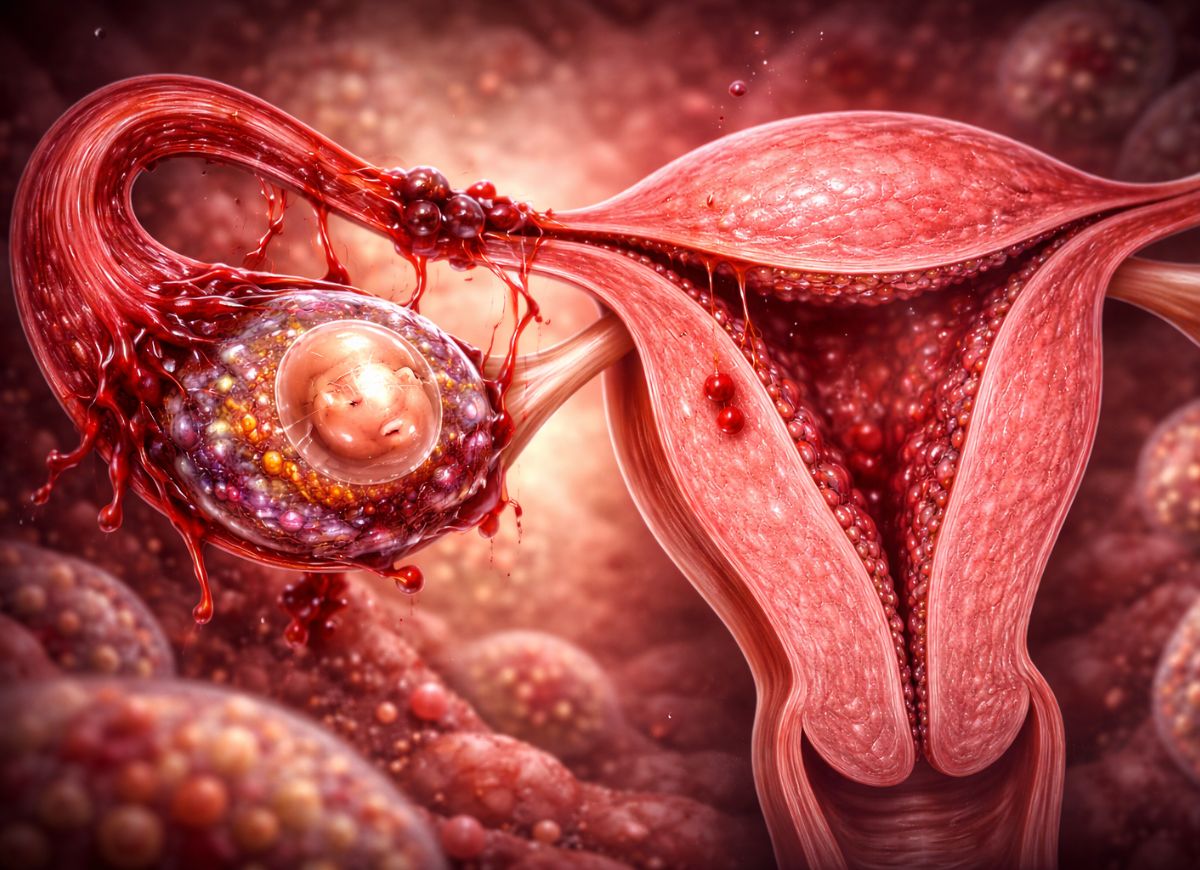
One condition that concerns many women is ectopic pregnancy, a serious complication that needs immediate attention. It happens when a fertilized egg implants outside the uterus, most often in the fallopian tube. That location cannot support normal growth, so the situation can turn dangerous if it isn’t caught early.
Ectopic pregnancy makes up only about 1% to 2% of all pregnancies, but its impact is large. It remains a leading cause of complications in the first trimester. The Centers for Disease Control and Prevention and similar organizations note that a delayed diagnosis raises the risk of internal bleeding, which can be life-threatening. That is why knowing the early symptoms matters so much.
Part of the difficulty is that early signs are confusing and easy to dismiss. Mild abdominal discomfort, light vaginal bleeding, or unusual pelvic pain can look like ordinary early pregnancy changes. Many women assume they are part of a normal process, especially in the first few weeks. With an ectopic pregnancy, however, these signals mean something is not developing as it should.
As the condition progresses, symptoms can get worse quickly. Sharp pain, dizziness, or shoulder discomfort may appear, reflecting internal irritation or bleeding. What makes it frightening is how quiet the beginning can be and how fast it can escalate.
Knowing what to watch for can make a critical difference. Spotting warning signs early leads to faster medical evaluation and lowers the risk of severe complications. This article outlines eight early symptoms of ectopic pregnancy that every woman should know, to help tell normal changes apart from signs that need urgent care.
8 Key Symptoms of Ectopic Pregnancy
One-sided Abdominal Pain
In an ectopic pregnancy, one-sided abdominal pain is usually sharp, stabbing, or persistent and centered on one side of the lower abdomen or pelvis. It happens because the fertilized egg has implanted in a fallopian tube instead of the uterus.
As the embryo grows, it stretches the narrow, delicate tube, which is not built to expand the way the uterus is. The stretching causes inflammation and strain, and that produces the localized pain.
Cramping in a healthy early pregnancy tends to be general, dull, and on and off. Ectopic pain is usually more constant, more intense, and limited to the side where the embryo has implanted. It can range from a lasting ache to sudden, sharp twinges that come and go at first but often become steadier over time.
If the tube ruptures, the pain can worsen dramatically into an overwhelming, sharp, excruciating sensation that spreads across the lower abdomen.
Ignoring this kind of one-sided pain is dangerous. It is one of the earliest and most direct signs that the pregnancy may be in the wrong place, and it needs urgent medical evaluation to prevent a rupture.
Vaginal Bleeding
Bleeding in an ectopic pregnancy often looks different from a normal period. It is commonly light spotting or bleeding that is dark brown and watery, sometimes compared to prune juice or old blood.
This happens because of fluctuating hormone levels and, in some cases, minor bleeding from the decidual cast, which is uterine lining that sheds irregularly when a pregnancy isn’t developing properly inside the uterus.
Unlike the heavy, bright red flow of a normal period, ectopic bleeding can be on and off and may start and stop without warning. Some women get what seems like a light period and conclude they aren’t pregnant, which can delay diagnosis.
Brighter red blood can occur, but it is less common than the typical dark, watery discharge. It is important to tell this abnormal bleeding apart from implantation bleeding, which is usually very light, pink or brown, and lasts only a day or two.
Ectopic bleeding can last longer and is a significant warning sign, especially with one-sided abdominal pain. Any vaginal bleeding during a confirmed or suspected pregnancy calls for immediate medical advice.
Shoulder Tip Pain
Shoulder tip pain in an ectopic pregnancy happens when internal bleeding irritates the phrenic nerve. This is called referred pain, and it is a critical sign of a possible rupture.
When a fallopian tube ruptures because of the growing embryo, blood escapes into the abdominal cavity. It can pool under the diaphragm, the large muscle between the chest and abdomen that is essential for breathing.
The phrenic nerve, which starts in the neck and controls the diaphragm, becomes irritated by the collected blood. The brain misreads where the irritation is coming from and perceives the pain in the area served by the same nerve root in the spinal cord, which includes the shoulder.
The pain is felt at the shoulder tip, where the shoulder meets the arm. It is often described as a strange, sharp, unusual pain with no obvious muscle or joint cause, and it may get worse when lying flat.
This is a major red flag for significant internal bleeding and a medical emergency. It suggests the ectopic pregnancy has likely ruptured, and you should get to a hospital immediately.
Pain During Urination or Bowel Movements
Pain when urinating or passing stool can occur when bleeding from a leaking or ruptured ectopic pregnancy presses on the bladder and bowels.
Blood that pools in the pelvic cavity can collect around the bladder and rectum. It irritates these sensitive organs and puts physical pressure on them.
Pressure on the bladder can cause a frequent urge to urinate or a sharp, burning pain when you do, which is sometimes mistaken for a urinary tract infection (UTI). Pressure on the bowel and rectum can make a bowel movement uncomfortable or painful.
This symptom often appears together with abdominal pain and vaginal bleeding. Together they suggest a significant amount of blood in the pelvis, meaning the ectopic pregnancy may be leaking or may already have ruptured.
Other conditions can cause these symptoms too, but with a possible pregnancy they should be taken very seriously. Call a healthcare provider right away.
Faint, Dizzy, or Weak
Feeling faint, dizzy, or weak is common with an ectopic pregnancy, especially one that has ruptured. These symptoms come directly from internal blood loss and the resulting drop in blood pressure.
When a tube ruptures, heavy internal bleeding (hemorrhage) occurs in the abdomen. The loss of blood from circulation leads to hypovolemia, a dangerously low volume of circulating blood.
Blood pressure then drops, reducing blood flow and oxygen to the brain. That shows up as lightheadedness, dizziness, deep weakness, or even fainting (syncope).
You might feel dizzy when you stand up quickly, or feel constantly on the verge of passing out. These are signs that the body is struggling to make up for the blood loss and may be heading into shock.
These are not minor symptoms. They point to a life-threatening emergency. Anyone with dizziness, weakness, or fainting, especially alongside abdominal pain, needs emergency care immediately.
Rectal Pressure
Rectal pressure from an ectopic pregnancy is usually described as a strong, constant urge to have a bowel movement even when there is no need. It is caused by blood pooling in the rectouterine pouch, also called the cul-de-sac of Douglas, the lowest point of the pelvic cavity, behind the uterus and in front of the rectum.
When an ectopic pregnancy ruptures or leaks, blood collects in this space and presses directly on the rectum. The pressure stimulates nerves in the rectal wall and tricks the brain into thinking the rectum is full.
The feeling can be constant and uncomfortable, and trying to pass stool brings no relief and may make the pain worse. It is an important clinical sign because it points to free fluid (blood) in the pelvis.
Combined with other symptoms like abdominal pain and dizziness, rectal pressure strongly suggests internal bleeding from a ruptured ectopic pregnancy. It needs immediate medical evaluation to confirm the diagnosis and prevent further harm from blood loss.
Shock From a Ruptured Ectopic Pregnancy
The signs of shock from a ruptured ectopic pregnancy are severe and life-threatening. They indicate massive internal blood loss and include a racing pulse (tachycardia), cool, clammy skin, a pale look, fast and shallow breathing, confusion, and fainting.
Shock, specifically hypovolemic shock, happens when the body loses a large amount of blood. Blood pressure falls sharply, and vital organs do not get enough oxygenated blood to function.
The body tries to compensate by making the heart beat faster, which produces a weak, rapid pulse. Blood is redirected from the skin to the vital organs, so the skin becomes pale, cold, and clammy.
As the brain is starved of oxygen, a person may become anxious, confused, or disoriented before losing consciousness. Together these signs mean a dire emergency.
A ruptured ectopic pregnancy is one of the leading causes of maternal death in the first trimester. If shock symptoms appear, call 911 immediately. Emergency treatment is needed to control the bleeding and restore blood volume through transfusion and surgery.
Nausea and Breast Soreness
Ordinary pregnancy symptoms such as nausea, vomiting, breast tenderness, and frequent urination often occur in an ectopic pregnancy too, which can create a dangerously false sense that everything is normal.
An ectopic pregnancy still produces the pregnancy hormone human chorionic gonadotropin (hCG), though usually at lower levels or with a slower rise than a uterine pregnancy. This hCG causes the classic early pregnancy signs.
So a woman may have morning sickness, tender and swollen breasts, and fatigue, just as in a healthy pregnancy, and a home pregnancy test will read positive. This overlap is what makes ectopic pregnancy so deceptive. The early signs can seem entirely normal and give a false sense of security.
Only when more specific and alarming symptoms appear, such as one-sided pain, abnormal bleeding, or shoulder tip pain, does the true picture become clear. Anyone with a positive pregnancy test should know that having these normal symptoms does not rule out an ectopic pregnancy.
What Is an Ectopic Pregnancy?
An ectopic pregnancy is one where a fertilized egg implants anywhere other than the lining of the uterine cavity. In a typical pregnancy, an egg is fertilized in the fallopian tube, and the embryo travels down the tube into the uterus, where it implants in the nutrient-rich wall and starts to develop.
In an ectopic pregnancy, that journey is interrupted. The embryo attaches somewhere else, most commonly inside the fallopian tube (a tubal pregnancy). In rare cases it implants on an ovary, on the cervix, or directly in the abdominal cavity.
This is not a viable pregnancy, because these locations cannot provide the environment or space the fetus needs. As the embryo grows, it stretches the structure it is attached to, such as the fallopian tube. The tube is a delicate organ that isn’t designed to expand, and its walls will eventually rupture under the pressure.
A rupture causes severe internal bleeding, which is a life-threatening emergency for the mother. The pregnancy cannot be moved to the uterus and cannot survive, so it must be ended with medication or surgery to protect the mother’s health and life.
Primary Risk Factors for An Ectopic Pregnancy
The main risk factors are conditions that damage or block the fallopian tubes, interfere with the embryo’s passage to the uterus, or change the environment in the tubes. They can be grouped by how they work, and damage to the fallopian tubes is the biggest contributor.
Tube damage and scarring. Anything that has scarred or altered the tubes raises the risk sharply.
- A woman who has had one ectopic pregnancy has a 10 to 15% chance of having another.
- Pelvic inflammatory disease (PID), an infection of the female reproductive organs often caused by sexually transmitted infections like chlamydia or gonorrhea, can leave scar tissue and adhesions in the tubes that block the egg’s passage.
- Procedures such as tubal ligation (or its reversal) and surgery for conditions like endometriosis or appendicitis can leave scar tissue that obstructs the tubes.
Fertility treatment and contraception.
- Although IVF bypasses the fallopian tubes for fertilization, an embryo transferred into the uterus can sometimes travel back into a tube and implant there.
- An IUD is highly effective at preventing pregnancy, but if a pregnancy does occur with an IUD in place, it is more likely to be ectopic. The IUD mainly prevents implantation in the uterus, not always in the tube.
Other factors.
- Women over 35 have a higher risk.
- Smoking affects fallopian tube function, including the movement of the cilia (tiny hairs) that help move the egg toward the uterus.
- Endometriosis, in which uterine-like tissue grows outside the uterus, can cause scarring and inflammation in and around the tubes.
When to Seek Medical Help?
Get immediate medical help if you have any severe symptoms of ectopic pregnancy, especially the combination of sharp one-sided abdominal pain, shoulder tip pain, and signs of shock such as fainting or extreme dizziness.
Are These Symptoms Always a Medical Emergency?
Yes. Any symptom suggesting an ectopic pregnancy should be treated as a possible emergency, though the urgency rises with the severity of the signs.
Milder symptoms like light spotting or on-and-off one-sided cramping call for an immediate call to your doctor for an urgent appointment. Severe symptoms mean a life-and-death situation.
An ectopic pregnancy becomes a critical emergency when the fallopian tube ruptures. The classic triad of a ruptured ectopic pregnancy is severe abdominal pain, vaginal bleeding, and fainting (syncope). The most definitive signs of rupture are severe, sharp, sudden abdominal pain together with symptoms of shock.
Shock symptoms include a rapid pulse, pale and clammy skin, dizziness, weakness, and fainting, and they are caused by massive internal bleeding. Shoulder tip pain is another critical sign of rupture, showing that blood is pooling under the diaphragm.
If you have these severe symptoms, don’t wait to contact a doctor. Call 911 or go to the nearest emergency room immediately. Early, milder symptoms give a crucial window for diagnosis and treatment before a rupture, but once severe symptoms appear, every second counts.
Who Should You Contact If You Experience Mild Symptoms?
If you have mild symptoms of a possible ectopic pregnancy, such as light, abnormal vaginal bleeding and persistent one-sided pelvic cramping, contact your OB-GYN or primary care doctor right away for an urgent evaluation. Don’t wait for your next scheduled appointment.
When you call, be clear and specific. Say that you are pregnant (or could be) and are worried about an ectopic pregnancy. This signals the urgency to the staff.
Your doctor will probably ask you to come in immediately for testing. The evaluation usually involves two key tests: a transvaginal ultrasound and a quantitative blood test that measures the level of human chorionic gonadotropin (hCG). The ultrasound lets the doctor see the uterus and nearby structures and check whether a gestational sac is inside the uterine cavity.
If no sac is visible in the uterus when hCG is high enough that one should be seen, an ectopic pregnancy is highly suspected. Doctors also use serial hCG tests taken 48 hours apart. In a healthy pregnancy, hCG roughly doubles every two days.
In an ectopic pregnancy, it often rises much more slowly, levels off, or even falls. Contacting your doctor promptly lets this process begin, so treatment with medication (methotrexate) or surgery can happen before a life-threatening rupture.
Ectopic Pregnancy Diagnosis
Confirming an ectopic pregnancy takes a careful, multi-step process to locate the pregnancy and assess the immediate risk. A healthcare provider usually starts with a pelvic exam to check for pain, tenderness, or a mass in the abdomen or pelvis.
The most definitive tests, however, are blood work and imaging. A quantitative blood test measures hCG, the pregnancy hormone. In a typical uterine pregnancy, hCG roughly doubles every 48 to 72 hours during the first few weeks.
In an ectopic pregnancy, the levels often rise much more slowly, plateau, or even drop, a strong sign that the pregnancy isn’t developing properly. The cornerstone of diagnosis is the transvaginal ultrasound, in which a probe placed in the vagina gives a clear view of the reproductive organs.
This detailed imaging helps doctors answer key questions:
- Is there a gestational sac inside the uterus? If the uterus is empty but hCG is high enough that a sac should be visible, an ectopic pregnancy is highly suspected.
- Is there a mass or sac outside the uterus, typically in a fallopian tube? This is a direct sign of an ectopic pregnancy.
- Is there free fluid or blood in the pelvis or abdomen? This can mean the tube has ruptured, which is a medical emergency.
Ectopic Pregnancy Treatment
Treatment depends on how stable the patient is, the size of the ectopic mass, and the hCG level in the blood. An ectopic pregnancy cannot be moved to the uterus and is not viable, so the main goal is to remove the tissue before it causes a life-threatening rupture.
There are two main approaches: medication and surgery.
Medication. For an early, unruptured ectopic pregnancy in a stable patient with relatively low hCG, medication is often the first choice. The drug methotrexate is given by injection. It stops the pregnancy cells from growing, and the body gradually absorbs the tissue over several weeks. This avoids surgery and anesthesia but requires close follow-up with blood tests to make sure hCG falls to zero.
Surgery. Laparoscopic surgery is the most common method. It is minimally invasive, using small cuts in the abdomen through which a camera and surgical tools are inserted. The surgeon may perform one of two procedures:
- Salpingostomy: an incision is made in the fallopian tube to remove the pregnancy tissue while leaving the tube in place.
- Salpingectomy: the entire fallopian tube containing the pregnancy is removed. This is often done if the tube is severely damaged or has ruptured. Although it means losing the tube, it can lower the risk of another ectopic pregnancy in that same tube.
In rare cases of severe internal bleeding or rupture, an emergency laparotomy (a larger abdominal incision) may be needed to reach the bleeding quickly, stop it, and remove the pregnancy.
An Ectopic Pregnancy vs. A Chemical Pregnancy or Miscarriage
All three involve the loss of a pregnancy, but they differ greatly in how they happen, what symptoms they cause, and the health risks they carry.
Ectopic pregnancy is defined by location. The fertilized egg implants outside the uterine cavity, most often in a fallopian tube. It is a life-threatening emergency because the growing embryo can rupture the tube and cause severe internal bleeding. Key symptoms can include sharp, one-sided abdominal pain and shoulder tip pain.
Miscarriage, or spontaneous abortion, is when a pregnancy that has implanted correctly inside the uterus ends on its own before 20 weeks. Symptoms typically include vaginal bleeding that goes from light to heavy, abdominal cramping like menstrual cramps, and passing tissue. It can be emotionally devastating, but it doesn’t usually carry the same immediate life-threatening risk as a ruptured ectopic pregnancy.
Chemical pregnancy is an even earlier loss. An egg is fertilized and may briefly implant in the uterus, producing enough hCG for a positive pregnancy test. But the embryo stops developing very early, often before an ultrasound could detect a gestational sac.
In terms of risk, an unruptured ectopic pregnancy needs immediate medical management to prevent a life-threatening rupture. A miscarriage needs medical evaluation but is not typically life-threatening unless complications like infection or severe hemorrhage occur. A chemical pregnancy poses no direct physical risk.
A chemical pregnancy happens so early that the only sign may be a late period, or a positive test followed by bleeding. Miscarriages can occur throughout the first trimester (and into the second), while ectopic pregnancies are usually diagnosed between 6 and 10 weeks of gestation.
Can You Have a Healthy Pregnancy After an Ectopic Pregnancy?
Most women who have had an ectopic pregnancy go on to have healthy pregnancies later. Still, future fertility and outcomes can be affected by the treatment received and the health of the remaining reproductive organs.
If the ectopic pregnancy was treated with methotrexate or with a salpingostomy (surgery that preserves the tube), fertility is often well maintained. If a salpingectomy (removal of the tube) was needed, a woman can still conceive naturally as long as her other fallopian tube is healthy and open.
Ovulation doesn’t have to match the side of the remaining tube. An egg from one ovary can be picked up by the tube on the opposite side. Studies show that fertility rates after a salpingectomy are very similar to those after a salpingostomy.
The main concern after an ectopic pregnancy is a higher risk of having another. The risk rises from about 1 to 2% in the general population to roughly 10 to 15% for someone who has had one. That makes proactive monitoring essential.
See a doctor as soon as you get a positive pregnancy test. This allows early blood tests to monitor hCG and an early ultrasound to be scheduled.
A transvaginal ultrasound at around 5 to 6 weeks can confirm that the new pregnancy is in the right place inside the uterus. That gives peace of mind and makes sure any problem is caught immediately.
If the first ectopic pregnancy was caused by an underlying condition such as pelvic infection (PID) or endometriosis, managing that condition can improve the chances of a healthy pregnancy in the future.
FAQs
1. Is an ectopic pregnancy a miscarriage?
No, although both involve losing a pregnancy. A miscarriage is when a pregnancy inside the uterus ends naturally, often because of developmental problems.
An ectopic pregnancy is when the fertilized egg implants outside the uterus, most commonly in the fallopian tube. That location can’t support normal growth, so the pregnancy can’t continue and needs medical treatment. Unlike many miscarriages, an ectopic pregnancy does not resolve safely on its own and must be managed to protect the person’s health.
2. How serious is a ruptured ectopic pregnancy?
A ruptured ectopic pregnancy is a life-threatening emergency. When the growing tissue makes the fallopian tube or surrounding area tear, rapid internal bleeding can follow.
Symptoms may include sharp abdominal pain, dizziness, fainting, or a drop in blood pressure. Immediate surgery is often needed to stop the bleeding. Without prompt treatment it can be fatal, which is why early diagnosis is so important.
3. How to tell if it’s miscarriage or ectopic?
It can be hard to tell them apart from symptoms alone. Both may involve vaginal bleeding and abdominal cramping. Ectopic pregnancy, however, often comes with one-sided pelvic pain, shoulder pain, or signs of internal bleeding such as dizziness.
A miscarriage may involve heavier bleeding and passing tissue from the uterus. Medical evaluation, including blood tests to monitor hormone levels and ultrasound imaging, is needed to confirm which it is.
4. Has an ectopic pregnancy ever survived?
An ectopic pregnancy cannot survive because it develops outside the uterus, where there is no environment to support a growing fetus. Rare and complex cases have been reported in the medical literature, but they are extremely uncommon and not considered viable or safe. In every case the priority is protecting the health and life of the pregnant person.
5. What did an ectopic pregnancy feel like?
Experiences vary, but many people describe pain that feels different from typical early pregnancy discomfort. It may start as mild cramping and gradually become sharp or persistent, often on one side of the abdomen.
Some also report a sense of pressure, unusual tiredness, or dizziness. In more advanced cases, shoulder pain or fainting can occur because of internal bleeding, signaling a need for urgent care.
6. When are most ectopic pregnancies discovered?
Most are diagnosed between the 6th and 10th week of pregnancy. In this window, symptoms often become more noticeable, and routine prenatal visits may reveal abnormalities. Detection during this time helps prevent rupture and allows safer treatment options.
7. How to detect ectopic pregnancy early?
Early detection depends on recognizing symptoms and getting medical care quickly. Healthcare providers use blood tests to measure pregnancy hormone levels and ultrasound scans to find where the pregnancy is located.
If hormone levels don’t rise as expected, or the pregnancy isn’t visible in the uterus, further evaluation follows. Early diagnosis lowers the risk of complications and allows less invasive treatment.
8. Can male sperm cause ectopic pregnancy?
No. Ectopic pregnancy is not caused by sperm itself. It results from factors that affect where the fertilized egg implants. Scarring, infection, or damage in the fallopian tubes can interfere with the egg’s movement toward the uterus, and hormonal and structural factors also play a role. Sperm does not determine where implantation happens.
9. How to avoid ectopic pregnancy?
Not every case can be prevented, but some steps may lower the risk. Looking after reproductive health, treating infections promptly, and cutting risk factors such as smoking can help protect the fallopian tubes.
Regular checkups and early prenatal care also help catch potential problems early. Knowing your personal health history, especially previous ectopic pregnancies or pelvic infections, can guide more careful monitoring in future pregnancies.
Conclusion
Ectopic pregnancy carries both physical risk and emotional weight. It is relatively uncommon, but its potential complications make it one of the most serious concerns in early pregnancy. What makes it especially hard is how easily early symptoms blend into what many people expect in the first weeks of pregnancy.
Mild pain, light bleeding, or unusual discomfort may not raise alarm right away, yet they can be the first signs that something is not developing normally. The fear often comes from this uncertainty, not knowing whether a symptom is harmless or a warning. As the condition progresses, the risk of rupture and internal bleeding grows, turning a subtle problem into a medical emergency.
Awareness plays a crucial role in lowering that risk. Recognizing early signs and getting timely medical care can prevent severe complications and protect overall health. No symptom should be ignored when it feels different or won’t go away.
Ectopic pregnancy can’t be prevented in every case, but early detection gives the best chance of safe management. Understanding the warning signs helps turn fear into informed action.
Staying attentive, seeking medical advice when needed, and trusting your instincts can make a real difference. In situations like this, awareness is not just helpful. It is essential for safety and peace of mind.