
15 Key Facts About Adrenal Insufficiency (Addison’s Disease)
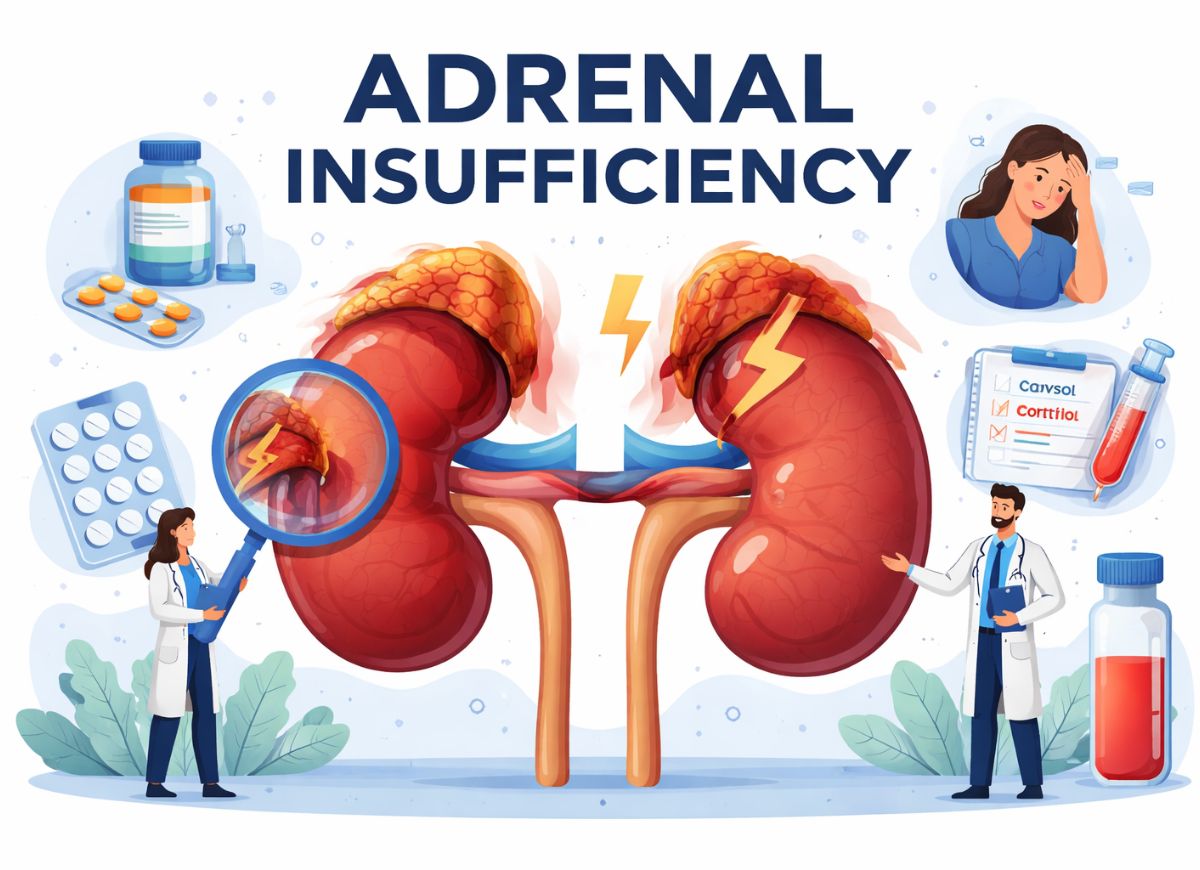
Adrenal insufficiency, commonly associated with Addison’s disease when the adrenal glands themselves are affected, is an uncommon but potentially dangerous medical condition. It occurs when the adrenal glands, which sit just above the kidneys, do not produce enough essential hormones such as cortisol and, in primary adrenal insufficiency, aldosterone. These hormones are involved in regulating blood pressure, metabolism, fluid balance, the body’s response to stress, and many other important functions.
One of the difficulties with adrenal insufficiency is that its early symptoms can be vague and may resemble those of many other health conditions. Persistent tiredness, unexplained weight loss, muscle weakness, dizziness, and low blood pressure can develop gradually and may not immediately point toward an adrenal problem. Some people may remain undiagnosed for a considerable period because symptoms can fluctuate or worsen slowly.
However, untreated adrenal insufficiency can eventually result in an adrenal crisis, a medical emergency that may involve severe dehydration, dangerously low blood pressure, confusion, and shock. The condition can affect people of different ages, although Addison’s disease is often diagnosed during adulthood and is more frequently seen in women. Autoimmune destruction of the adrenal glands is a major cause of primary adrenal insufficiency in many developed countries.
In this article, we’ll examine 15 important facts about adrenal insufficiency. From its causes and symptoms to diagnosis, treatment, emergency precautions, and dietary considerations, understanding the condition can make it easier to recognize warning signs and manage the disease effectively.
Fact 1: Primary Cause of Adrenal Insufficiency is an Autoimmune Disorder
In developed countries, autoimmune destruction of the adrenal glands is the leading cause of primary adrenal insufficiency. In this condition, the immune system mistakenly identifies the adrenal cortex as a threat and gradually damages the cells responsible for producing essential hormones.
The adrenal cortex is the outer portion of each adrenal gland. It produces cortisol and aldosterone, two hormones that are particularly important for maintaining normal physiological function. When the immune system progressively destroys this tissue, the glands eventually become unable to produce adequate amounts of these hormones.
People with autoimmune Addison’s disease may develop antibodies directed against 21-hydroxylase, an enzyme involved in the production of adrenal hormones. Immune cells also contribute to inflammation and destruction of the adrenal cortex. Because this process can occur gradually, symptoms may not become obvious until a substantial amount of adrenal tissue has already been damaged.
Autoimmune Addison’s disease may occur by itself or alongside other autoimmune disorders. Conditions such as type 1 diabetes, autoimmune thyroid disease, pernicious anemia, and vitiligo can occur more frequently in people with autoimmune adrenal insufficiency. Certain genetic variations, including specific HLA types, may also increase susceptibility.
Although autoimmune disease is now a major cause in many developed nations, tuberculosis has historically been an important cause of adrenal destruction worldwide. TB can infect the adrenal glands and damage their hormone-producing tissue. Other possible causes include fungal infections, cytomegalovirus in people with weakened immune systems, cancer that spreads to the adrenal glands, adrenal hemorrhage, certain inherited disorders, and medications that interfere with adrenal hormone production.
Fact 2: Causes of Primary and Secondary Adrenal Insufficiency Are Different
Primary and secondary adrenal insufficiency involve inadequate cortisol production, but the underlying problem occurs in different parts of the hormone-regulating system.
In primary adrenal insufficiency, the adrenal glands themselves are damaged. Autoimmune disease is a common cause, although infections, bleeding, cancer, and other destructive processes can also damage the glands. Because the adrenal glands cannot respond adequately, the pituitary gland attempts to compensate by producing more adrenocorticotropic hormone (ACTH).
Elevated ACTH is an important feature of primary adrenal insufficiency. It is also associated with the characteristic skin darkening, or hyperpigmentation, that can occur in Addison’s disease.
Secondary adrenal insufficiency begins in the pituitary gland rather than directly in the adrenal glands. The pituitary normally produces ACTH, which signals the adrenal glands to make cortisol. If the pituitary becomes damaged by conditions such as a tumor, surgery, radiation treatment, or head trauma, ACTH production may become inadequate.
Without sufficient ACTH stimulation, the adrenal glands do not produce enough cortisol even though the glands themselves may not be directly damaged. ACTH levels are therefore low or inappropriately normal. Unlike primary adrenal insufficiency, secondary adrenal insufficiency generally does not cause the characteristic hyperpigmentation seen in Addison’s disease.
Aldosterone production is also usually better preserved in secondary adrenal insufficiency because aldosterone is regulated mainly through the renin-angiotensin system and changes in blood volume and electrolytes rather than ACTH.
There is also tertiary adrenal insufficiency, which develops when the hypothalamus does not produce enough corticotropin-releasing hormone (CRH). CRH normally stimulates the pituitary to release ACTH. Long-term treatment with high doses of glucocorticoid medications can suppress this hypothalamic-pituitary-adrenal system and contribute to tertiary adrenal insufficiency.
Fact 3: Three Hormones are Deficient in Adrenal Insufficiency
In primary adrenal insufficiency, the adrenal cortex fails to produce sufficient amounts of cortisol and aldosterone. Adrenal androgen production may also decrease.
Cortisol is a glucocorticoid with numerous roles throughout the body. It helps the body respond to physical stress, supports blood glucose regulation, influences immune and inflammatory responses, assists with metabolism, and contributes to maintaining blood pressure.
When cortisol levels are too low, people may develop severe fatigue, muscle weakness, reduced appetite, weight loss, low blood sugar, and difficulty responding appropriately to illness or other physical stressors. During severe stress, inadequate cortisol can contribute to an adrenal crisis.
Aldosterone is a mineralocorticoid that helps control sodium, potassium, fluid balance, and blood pressure. It signals the kidneys to retain sodium while increasing potassium excretion.
When aldosterone is deficient, excessive sodium can be lost through the urine while potassium accumulates in the bloodstream. Sodium loss may contribute to dehydration, low blood pressure, dizziness when standing, and salt cravings. Significant potassium elevation can interfere with the heart’s electrical activity and may become dangerous.
The adrenal cortex also produces small amounts of androgens, including dehydroepiandrosterone (DHEA). The effect of reduced adrenal androgen production is generally more noticeable in women because the adrenal glands contribute more substantially to their androgen supply. Possible effects include reduced libido, dry skin, and decreased pubic or underarm hair.
Fact 4: Hyperpigmentation Is The Most Distinctive Symptom of Adrenal Insufficiency
One of the most characteristic signs of primary adrenal insufficiency is hyperpigmentation, or unusual darkening of the skin and mucous membranes. This occurs because cortisol deficiency causes the pituitary gland to produce unusually high levels of ACTH.
Normally, cortisol participates in a feedback system that keeps ACTH production under control. When the adrenal glands are damaged and cannot produce enough cortisol, the normal feedback mechanism is disrupted. The pituitary responds by releasing increasing amounts of ACTH in an attempt to stimulate the adrenal glands.
ACTH originates from a larger precursor molecule called pro-opiomelanocortin (POMC), which is also associated with melanocyte-stimulating activity. Increased production of these related molecules can stimulate melanocytes, the pigment-producing cells in the skin, resulting in increased melanin production.
The darkening may be especially noticeable on the face, neck, and hands. Areas exposed to repeated friction or pressure, such as the knuckles, elbows, knees, and skin folds, can also become darker. Existing scars may become more pigmented as well.
An especially useful clinical clue is pigmentation involving mucous membranes. Dark or bluish-black areas may appear on the gums, inside the cheeks, or around the lips.
Hyperpigmentation is associated primarily with primary adrenal insufficiency because ACTH is elevated. It is generally absent in secondary adrenal insufficiency, where ACTH production is reduced or inadequate.
Fact 5: Adrenal Insufficiency Has Non-specific Symptoms
Although hyperpigmentation can be a distinctive clue, many people with adrenal insufficiency initially experience symptoms that are much less specific. These symptoms can develop gradually over an extended period, making the condition difficult to recognize.
Persistent fatigue is one of the most common complaints. The tiredness may become severe enough to interfere with work, household activities, exercise, and everyday responsibilities. Generalized muscle weakness can occur at the same time.
Changes in appetite and weight are also common. A person may lose interest in food and experience unintended weight loss. Digestive symptoms can include nausea, vomiting, abdominal discomfort, diarrhea, or constipation.
Low aldosterone levels can contribute to sodium loss and dehydration, which may result in strong cravings for salty foods. Blood pressure can also become unusually low. Some people experience orthostatic hypotension, where blood pressure falls after standing, resulting in dizziness, lightheadedness, or fainting.
Emotional and cognitive symptoms may occur as well. These can include irritability, low mood, difficulty concentrating, and reduced motivation.
Low cortisol can also contribute to hypoglycemia, particularly in children or during periods of illness. Symptoms of low blood sugar can include sweating, shakiness, anxiety, weakness, and confusion.
Because fatigue, nausea, weakness, and weight loss occur in many different medical conditions, adrenal insufficiency may not be recognized immediately. In some people, diagnosis does not occur until symptoms become more pronounced or a stressful event triggers an adrenal crisis.
Fact 6: Addisonian Crisis or Adrenal Crisis
An adrenal crisis, sometimes called an Addisonian crisis, is a life-threatening emergency caused by an inadequate supply of cortisol during a period when the body urgently needs more of the hormone.
Healthy adrenal glands normally increase cortisol production during major physical stress, including infection, injury, surgery, or serious illness. Someone with adrenal insufficiency cannot produce this additional cortisol. If their replacement medication is not appropriately adjusted, the increased demand can overwhelm the body and cause a rapid deterioration.
An adrenal crisis may develop suddenly and produce severe symptoms. Blood pressure can fall dramatically, potentially resulting in shock. Severe abdominal, back, or leg pain may occur, along with intense weakness, vomiting, and diarrhea.
Vomiting and diarrhea can cause rapid fluid and electrolyte loss, further worsening low blood pressure and dehydration. Neurological changes may include confusion, disorientation, loss of consciousness, seizures, or coma.
Laboratory abnormalities may include low sodium, elevated potassium, and low blood glucose, particularly in primary adrenal insufficiency.
An adrenal crisis requires emergency treatment. High-dose hydrocortisone is typically administered intravenously or by injection, while IV fluids and glucose may be provided when necessary. The underlying trigger, such as an infection, must also be treated.
People diagnosed with adrenal insufficiency are commonly educated about emergency preparedness and may be prescribed injectable hydrocortisone for situations in which oral medication cannot be taken or a severe illness occurs.
Fact 7: ACTH Stimulation Test Is A Gold-standard Diagnostic Tool for Adrenal Insufficiency
Diagnosing adrenal insufficiency generally involves a combination of symptoms, blood tests, and hormone-stimulation testing.
Initial laboratory evaluation may include measurements of cortisol, ACTH, electrolytes, and blood glucose. In primary adrenal insufficiency, cortisol is typically low while ACTH is significantly elevated. Sodium may also be low, potassium may be high, and blood glucose can sometimes be reduced.
When both cortisol and ACTH are low or ACTH is inappropriately normal, a central cause involving the pituitary or hypothalamus may be considered.
An ACTH stimulation test, also known as a cosyntropin stimulation test, can help determine whether the adrenal glands are capable of producing an adequate cortisol response.
During the test, an initial blood sample is taken to establish the baseline cortisol level. Synthetic ACTH, known as cosyntropin, is then administered. Additional blood samples are collected afterward, commonly at intervals such as 30 and 60 minutes, to see how much cortisol the adrenal glands produce.
A healthy adrenal gland should respond to ACTH stimulation by increasing cortisol production. In established primary adrenal insufficiency, the damaged glands have little or no ability to respond, so cortisol levels remain inadequately low.
Once adrenal insufficiency has been confirmed, additional testing may be performed to identify its cause. In suspected autoimmune Addison’s disease, doctors may test for 21-hydroxylase antibodies. Imaging of the adrenal glands may also be considered when infection, bleeding, cancer, or another structural cause is suspected.
Fact 8: Adrenal Insufficiency Is Not a Curable Condition
Primary adrenal insufficiency is generally a lifelong condition because permanent destruction of the adrenal cortex prevents the glands from producing adequate amounts of essential hormones.
When adrenal tissue has been irreversibly damaged by autoimmune disease, infection, or another destructive process, the primary goal is not to restore the damaged tissue but to replace the hormones the body can no longer produce.
This is accomplished through hormone replacement therapy. With appropriate treatment and careful monitoring, Addison’s disease can be effectively managed, allowing many people to maintain active and fulfilling lives.
Daily medication adherence is essential. Patients need to understand their prescribed dosing schedule, recognize signs that their medication may be insufficient or excessive, and know how to adjust treatment during illness or significant physical stress according to their healthcare provider’s instructions.
People also need to understand emergency precautions. Carrying emergency hydrocortisone and knowing how to use it can be crucial when severe illness or injury prevents normal oral medication from being taken.
Regular follow-up with an endocrinologist allows treatment to be adjusted as circumstances change. Although there is generally no cure for established primary adrenal insufficiency, effective replacement therapy can control symptoms and substantially reduce the risk of serious complications.
Fact 9: Treatment for Adrenal Insufficiency Involves Lifelong Hormone Replacement Therapy
The main treatment for adrenal insufficiency is hormone replacement designed to provide the hormones the body can no longer produce adequately.
Glucocorticoid replacement is used to replace cortisol. Hydrocortisone is commonly prescribed because it closely resembles the body’s natural cortisol and has a relatively short duration of action. It is often taken in divided doses, with a larger portion taken in the morning and smaller doses later in the day.
Other glucocorticoids, including prednisone or dexamethasone, may be used in selected circumstances. The medication and dosing schedule are individualized according to the patient’s needs.
People with primary adrenal insufficiency who also have aldosterone deficiency generally require fludrocortisone, a mineralocorticoid replacement. This medication helps the body maintain sodium and fluid balance while promoting potassium excretion.
Fludrocortisone dosing may be adjusted based on symptoms, blood pressure, electrolyte measurements, and other clinical findings. Some patients may also need to maintain an adequate dietary sodium intake.
Treatment requires regular monitoring. Too little replacement can leave symptoms uncontrolled and increase the risk of adrenal crisis, while excessive glucocorticoid exposure over time can produce unwanted effects.
Education is therefore a major part of treatment. Patients need to understand their medications, sick-day instructions, emergency injection procedures, and when to seek urgent medical care.
Fact 10: Patients Must Increase Their Medication During Illness or Stress
People with adrenal insufficiency cannot automatically increase cortisol production when the body is under significant stress. Because of this, they may need to increase their glucocorticoid medication during illness or other major stressors.
In someone with normally functioning adrenal glands, cortisol production rises when the body encounters infection, fever, injury, surgery, or another significant physical challenge. This additional cortisol helps maintain blood pressure, support blood glucose, regulate inflammation, and provide the body with the resources needed to cope with stress.
A person with adrenal insufficiency cannot generate this normal increase on their own. Their regular medication dose is generally designed to replace everyday cortisol requirements rather than the much larger amount needed during severe stress.
For this reason, patients are taught stress dosing or sick-day rules. The exact instructions vary depending on the severity and type of illness and should come from the individual’s healthcare provider.
A minor illness may require little or no adjustment, while a more significant illness may require an increased glucocorticoid dose. Fever, major injury, surgery, or severe infection can require substantially more cortisol replacement.
If vomiting prevents someone from keeping oral medication down, emergency injectable hydrocortisone may be necessary. Such situations can require urgent medical attention and hospital treatment.
Knowing how and when to adjust medication is one of the most important safety skills for people living with adrenal insufficiency.
Fact 11: Adrenal Insufficiency Can Affect Life Expectancy
With appropriate treatment, careful monitoring, and good emergency preparation, many people with Addison’s disease can live long and active lives.
Modern hormone replacement has dramatically changed the outlook for people with adrenal insufficiency. The condition can generally be managed effectively when patients take their medication consistently and understand how to respond to illness and other stressors.
The greatest immediate danger is an untreated adrenal crisis. Preventing this emergency is therefore a major part of long-term care.
Important precautions include taking replacement hormones as prescribed, following sick-day instructions, carrying emergency medication, and making sure family members or close contacts know how to respond if a crisis occurs.
Wearing a medical alert bracelet or necklace can also be valuable because emergency personnel may need to know about the adrenal condition if the patient cannot communicate.
Although people with adrenal insufficiency can generally have good long-term outcomes, research has reported increased health risks in some populations. These may be related to adrenal crises and other health complications. Regular follow-up with an endocrinologist can help identify problems early and optimize treatment.
Good education, consistent medication use, and proper emergency planning are essential components of maintaining health and reducing preventable complications.
Fact 12: A Medical Alert Bracelet Is Important for Adrenal Insufficiency Patients
A medical alert bracelet or necklace can provide critical information during an emergency, particularly when a person with adrenal insufficiency is unconscious, confused, severely ill, or unable to explain their medical history.
A medical alert identifier can clearly state conditions such as “Adrenal Insufficiency,” “Addison’s Disease,” or “Steroid Dependent.” This information can alert emergency personnel that the person may require urgent corticosteroid treatment.
During a major accident, serious infection, surgery, or another stressful event, someone with adrenal insufficiency may be unable to produce the extra cortisol their body requires. If the condition is not recognized, appropriate steroid treatment could potentially be delayed.
Symptoms of an adrenal crisis can overlap with other emergencies, including severe infection, dehydration, or circulatory shock. A medical alert identifier gives healthcare professionals important information that might otherwise be unavailable.
For this reason, people with adrenal insufficiency are commonly encouraged to wear a medical alert bracelet or necklace and keep emergency medication readily accessible.
Fact 13: Addison’s Disease Is Rare
Addison’s disease, or primary adrenal insufficiency, is considered an uncommon endocrine disorder. Although it can occur in people of different ages and backgrounds, only a relatively small proportion of the population is affected.
The condition is frequently diagnosed during adulthood and is reported more often in women. Its rarity is one reason diagnosis can sometimes be delayed.
Many of the early symptoms—such as fatigue, weakness, nausea, weight loss, and dizziness—are shared by numerous other medical conditions. As a result, adrenal insufficiency may not be immediately suspected, especially when symptoms develop gradually.
Historically, tuberculosis was a major cause of Addison’s disease because TB can destroy the adrenal glands. In many developed countries, however, autoimmune adrenal destruction is now the predominant cause.
The underlying causes also vary between regions and populations. Infections, adrenal hemorrhage, cancer, inherited disorders, and medications can all contribute to adrenal insufficiency in certain circumstances.
Although Addison’s disease is rare, recognizing it is important because untreated adrenal insufficiency can become life-threatening, particularly when an adrenal crisis occurs.
Fact 14: A Famous U.S. President Was Diagnosed with Adrenal Insufficiency
Former U.S. President John F. Kennedy was diagnosed with Addison’s disease and managed the condition throughout his adult life, including during his presidency.
Kennedy had experienced significant health problems before his diagnosis, and information about his medical conditions was not widely disclosed during his political career. His diagnosis reportedly occurred in 1947.
At the time, treatment options for adrenal insufficiency were considerably different from those available today. Kennedy received corticosteroid replacement and other treatments intended to compensate for inadequate adrenal hormone production.
Despite having a chronic medical condition, he maintained an extremely demanding career and eventually became president of the United States. His case demonstrated that effective treatment could allow someone with Addison’s disease to remain active and undertake substantial physical and professional responsibilities.
Details about Kennedy’s medical history became more widely known after his death as additional medical information was released and examined. His case remains one of the most recognizable historical examples involving Addison’s disease.
Fact 15: Diet for Someone with Addison’s Disease Includes Salt
Sodium intake can be an important dietary consideration for people with primary adrenal insufficiency, particularly when aldosterone production is reduced.
Aldosterone normally helps the kidneys retain sodium and maintain appropriate fluid volume. When aldosterone is deficient, the body may lose more sodium through the urine. This can contribute to dehydration, reduced blood volume, low blood pressure, and salt cravings.
Fludrocortisone is often prescribed to replace mineralocorticoid activity, but dietary sodium may still be relevant. The appropriate amount varies between individuals, so patients should follow the guidance provided by their healthcare professional rather than making major dietary changes independently.
Sodium and fluid needs may become especially important during situations involving increased losses, such as hot weather, heavy sweating, vomiting, or diarrhea. In these circumstances, maintaining appropriate fluid and electrolyte intake can help reduce the risk of dehydration.
Regular meals can also be useful because cortisol deficiency may make some individuals more vulnerable to low blood glucose. Avoiding prolonged fasting and maintaining balanced meals may help support stable energy levels.
Adequate hydration is another important consideration. A balanced diet containing a variety of fruits, vegetables, whole grains, and other nutritious foods can support general health.
The key dietary point is that people with primary adrenal insufficiency should discuss their individual sodium, fluid, and nutritional requirements with their healthcare provider, especially if they also have conditions that require sodium restriction.
FAQs
1. What are the symptoms of severe adrenal insufficiency?
Severe adrenal insufficiency can cause profound fatigue, muscle weakness, weight loss, low blood pressure, dizziness, salt cravings, nausea, vomiting, and abdominal discomfort. Low blood sugar can also occur, particularly in certain patients. If the condition progresses to an adrenal crisis, symptoms may become suddenly severe and include confusion, dehydration, very low blood pressure, vomiting, and loss of consciousness.
2. What does an adrenal crisis feel like?
An adrenal crisis can develop rapidly and may cause extreme weakness, severe dizziness, abdominal or back pain, vomiting, diarrhea, dehydration, confusion, and dangerously low blood pressure. A person may faint or lose consciousness as circulation becomes severely compromised. An adrenal crisis is an emergency and requires immediate medical treatment.
3. Can stress cause adrenal insufficiency?
Ordinary psychological stress does not generally cause Addison’s disease. However, serious physical stress such as infection, injury, surgery, or severe illness can trigger an adrenal crisis in someone who already has adrenal insufficiency. Because their adrenal glands cannot produce enough additional cortisol, their medication may need to be increased according to their prescribed sick-day plan.
4. Can adrenal insufficiency go away?
Primary adrenal insufficiency caused by permanent adrenal gland damage is generally lifelong and requires ongoing hormone replacement. Some forms of secondary or tertiary adrenal insufficiency may improve if the underlying cause is treated or if suppression of the hormone system resolves. Whether adrenal function can recover depends on the specific cause.
5. What foods should I avoid with adrenal insufficiency?
There is no single universal list of foods that every person with adrenal insufficiency must avoid. Dietary needs vary according to the type of adrenal insufficiency and other health conditions. People with primary adrenal insufficiency may need adequate sodium, while excessive intake of highly processed foods may be undesirable for overall health. Dietary recommendations should be individualized with a healthcare professional.
6. How to naturally fix adrenal insufficiency?
There is no proven natural method that can replace the hormones lost because of established adrenal insufficiency. Lifestyle measures such as maintaining regular sleep, eating balanced meals, staying appropriately hydrated, and managing stress can support general well-being, but they do not replace prescribed hormone therapy.
People should also be cautious about supplements marketed as “adrenal support” or “natural adrenal cures.” Anyone considering supplements should discuss them with a qualified healthcare professional, particularly because some products can interact with prescribed medications.
Conclusion
Adrenal insufficiency, including Addison’s disease, is an uncommon but potentially serious condition that requires lifelong attention when the underlying adrenal damage is permanent. Understanding its causes, symptoms, diagnostic testing, treatment, and emergency precautions can make a significant difference in managing the condition safely.
Symptoms such as persistent fatigue, unexplained weight loss, muscle weakness, low blood pressure, salt cravings, digestive problems, and skin darkening can provide important clues. However, because many of these symptoms overlap with other conditions, proper medical testing is necessary for diagnosis.
Hormone replacement therapy remains the foundation of treatment. Patients also need to understand how to respond to illness or major physical stress, when emergency medication may be necessary, and why medical identification can be valuable.
If you are experiencing symptoms that could suggest adrenal insufficiency, discussing them with a healthcare professional is important. Early recognition and appropriate treatment can help prevent serious complications and allow people with adrenal insufficiency to maintain active and fulfilling lives.