
8 Common Causes of Dilated Pupils You Should Know
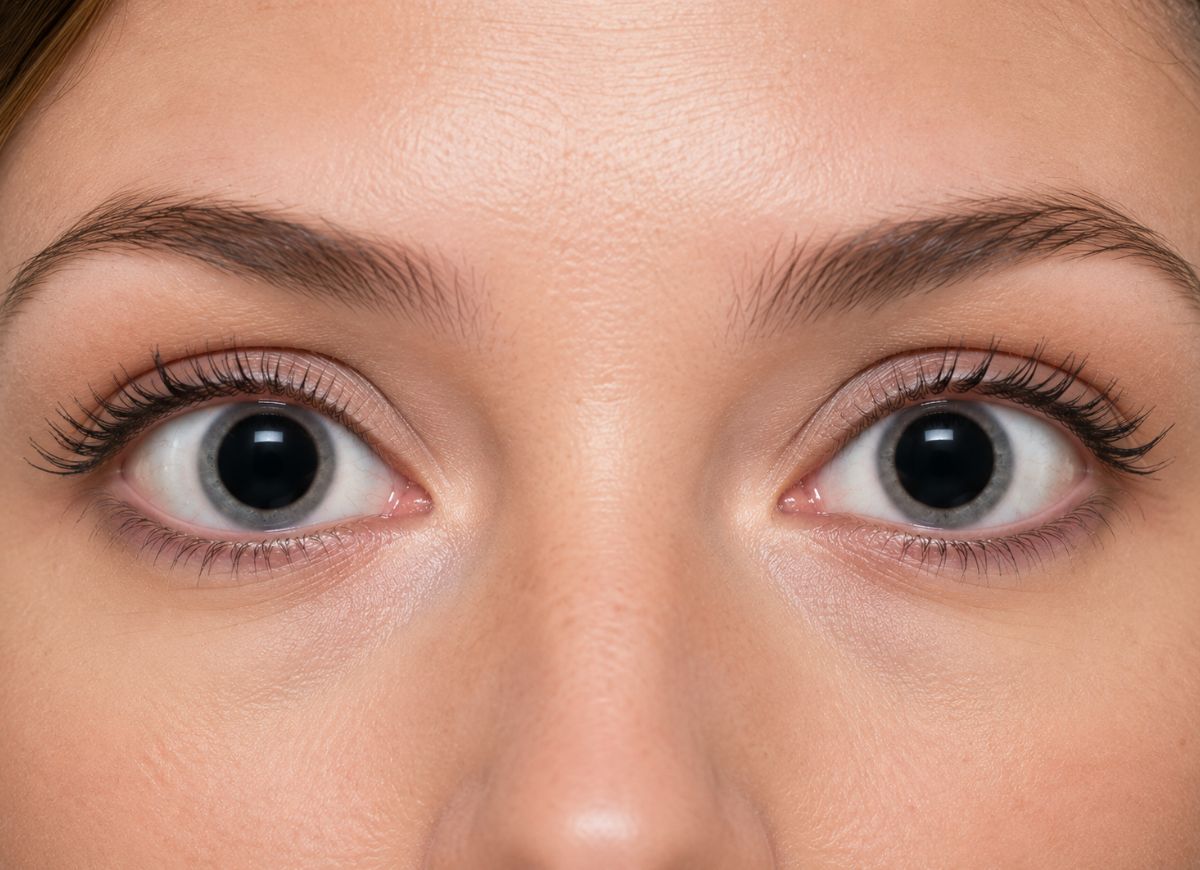
Ever caught your reflection and noticed your pupils looking bigger than usual or had someone point it out to you? Most of the time it’s nothing to worry about. But sometimes, dilated pupils are your body flagging something worth paying attention to. Pupils naturally shift in size based on light, focus, and mood, but when the change is constant, sudden, or uneven between the two eyes, it can point to something medical, neurological, or environmental.
Doctors call dilated pupils “mydriasis,” and it’s something almost everyone experiences at some point. Usually it’s harmless caused by dim rooms, a rush of emotion, or stress. But if it comes with blurry vision, headaches, or confusion, it could be a sign of something more serious. Because the eyes are wired directly into the nervous system, pupil size can be an early clue to neurological problems, drug effects, or eye injury.
What makes this tricky is that the causes span a huge range from totally normal (walking into a dark room) to genuinely urgent (a head injury or stroke). Even something as subtle as one pupil being bigger than the other can be worth flagging.
This article walks through the 8 most common causes of dilated pupils, so you can tell the difference between “this is normal” and “this needs a doctor.” Understanding your pupils isn’t just about eye health it’s about listening to what your nervous system is telling you before a small sign turns into a bigger problem.
What are Dilated Pupils (Mydriasis)?
Mydriasis simply means the pupil the black circle at the center of your eye has widened beyond what’s typical for the surrounding light.
The pupil’s job is to control how much light reaches the retina, the light-sensing layer at the back of the eye. Two small muscle groups inside the iris manage this: the sphincter pupillae, which shrinks the pupil, and the dilator pupillae, which widens it.
Together, these muscles constantly fine-tune pupil size to balance clear vision against protecting the eye from too much light. In a healthy adult, pupils typically measure 2–4mm in bright light and can stretch to 4–8mm in darkness. Anything wider than expected for the lighting conditions counts as mydriasis.
This whole process runs automatically, controlled by the autonomic nervous system split into the sympathetic and parasympathetic branches. The parasympathetic system (your “rest and digest” mode) triggers the sphincter muscle to contract, shrinking the pupil (called miosis) by releasing a chemical messenger called acetylcholine. This is what happens in bright light.
The sympathetic system your “fight or flight” response does the opposite. In low light or during strong emotion, it releases norepinephrine, which contracts the dilator muscle and widens the pupil to let in more light. This constant back-and-forth keeps your vision sharp no matter the setting. When something disrupts these nerve pathways injury, illness, or chemicals pupil size can become abnormal, which is exactly why doctors use pupil response as a quick way to check neurological health.
8 Main Causes of Dilated Pupils
These 8 causes split into two groups: five that are usually harmless and everyday, and three that signal a genuine medical emergency. The harmless group includes things like dim lighting and strong emotions, plus side effects from medication or recreational drug use. The serious group covers major neurological events brain injury, stroke, and nerve damage.
How worried you should be usually comes down to context: does it affect one eye or both, how long has it lasted, and are there any other symptoms alongside it? A sudden dilation in just one eye is the biggest red flag of all.
Low Light (Physiological Response)
This is by far the most common and completely normal cause. It’s simply your eyes adjusting to darkness. The moment you step from a bright room into a dim one, your nervous system kicks in automatically.
The sympathetic nervous system activates the dilator muscles, which sit like spokes around the iris. As they contract, they pull the iris outward, opening the pupil wider so more light can reach the retina.
More incoming light means a clearer image in low-light conditions a survival trait that’s stuck with us for good reason. The reverse happens in bright light: the parasympathetic system takes over, shrinking the pupil to keep the retina from being overwhelmed. This nonstop adjustment is simply a sign your eyes are working exactly as they should.
Emotional Responses (Attraction & Excitement)
Big emotions attraction, excitement, fear, anxiety can widen your pupils too, thanks again to the sympathetic nervous system and its fight-or-flight wiring.
When emotion spikes, your adrenal glands release hormones like adrenaline and norepinephrine. These raise your heart rate, blood pressure, and alertness and along the way, they trigger the dilator muscles in your iris.
Evolutionarily, this made sense: in a threatening moment, wider pupils meant better peripheral vision and more light intake to spot danger or find an escape route. In moments of attraction or excitement, the same dilation may subtly enhance how engaging your expression looks research suggests people are subconsciously drawn to those with larger pupils. This kind of dilation affects both eyes evenly and fades quickly once the emotional moment passes.
Medication Side Effects
Plenty of everyday medications prescription and over-the-counter can widen your pupils as a side effect, usually by interfering with the nervous system’s normal signaling.
Anticholinergic drugs are a common cause. They block acetylcholine, the chemical that normally tells the pupil to constrict so without opposition, the dilator muscle wins out. Atropine, scopolamine (common in motion-sickness remedies), and certain bladder or IBS medications fall into this category. Decongestants like pseudoephedrine and phenylephrine work differently but land on the same result, since they mimic the sympathetic nervous system.
Some antidepressants tricyclics and SSRIs can also shift neurotransmitter levels enough to cause dilation, as can some anti-nausea drugs, seizure medications, Parkinson’s treatments, and occasionally Botox if it spreads near the eye muscles. This kind of dilation is almost always harmless and fades once the medication wears off.
Ophthalmic Eye Drops
Eye doctors often dilate pupils on purpose during checkups, using drops called mydriatics, to get a clear view inside the eye the lens, retina, and optic nerve. This is essential for spotting conditions like glaucoma, macular degeneration, and diabetic eye disease.
There are two types of drops. Mydriatics (like phenylephrine) stimulate the dilator muscle directly. Cycloplegics (like cyclopentolate or atropine) go further they temporarily paralyze the constricting muscle and relax the eye’s focusing muscle too, which is especially useful for getting an accurate glasses prescription in kids.
The effects can linger for several hours, sometimes a full day, bringing noticeable light sensitivity and blurry close-up vision. Doctors typically recommend sunglasses and avoiding driving until things return to normal.
Ingestion of Certain Substances
Certain recreational drugs and toxic plants are well-documented causes of intense, longer-lasting pupil dilation. Stimulants cocaine, amphetamines, MDMA flood the brain with dopamine and norepinephrine, pushing the sympathetic nervous system into overdrive and producing widely dilated (“saucer”) eyes.
Hallucinogens like LSD, psilocybin mushrooms, and mescaline cause dilation too, mainly through their effect on serotonin receptors. Beyond drugs, certain plants like Belladonna (deadly nightshade) and Jimsonweed contain atropine and scopolamine, the same anticholinergic compounds found in some medications.
Historically, belladonna extract was even used cosmetically to widen pupils for a more striking look. Accidental exposure to these plants can cause toxicity, with dilated pupils as one of the clearest warning signs.
Traumatic Brain Injury (TBI)
When only one pupil suddenly dilates, it’s a classic warning sign of traumatic brain injury. After a serious blow to the head from a fall, accident, or impact swelling or bleeding inside the skull can build pressure fast. The oculomotor nerve (cranial nerve III), which controls pupil constriction, is especially vulnerable to this pressure.
As intracranial pressure rises, this nerve can get compressed against the skull’s bony structures, damaging the fibers that signal the pupil to constrict.
The result is a “blown pupil” dilated, fixed, and no longer responding to light. This is treated as a medical emergency, since it can signal the brain is under severe strain and potentially herniating. It’s exactly why emergency responders check pupil reflexes immediately after any head injury.
Stroke or Brain Aneurysm
A sudden single dilated pupil can also signal a stroke or a ruptured brain aneurysm. A stroke happens when blood flow to part of the brain is either blocked or a vessel bursts either way, it can damage the nerve pathways controlling the pupil.
Swelling or bleeding from a stroke can raise pressure inside the skull, compressing the oculomotor nerve the same way a TBI does. A brain aneurysm a weak bulge in an artery wall can also press directly on this nerve as it grows, often bringing a drooping eyelid and double vision along with it. If it ruptures, the resulting bleed causes a dangerous, rapid rise in pressure.
This kind of “blown pupil” often shows up with the “worst headache of your life,” nausea, vomiting, or loss of consciousness all signs that call for immediate emergency care.
Cranial Nerve Neuropathy
Damage to the third cranial nerve the oculomotor nerve is another serious cause of pupil dilation, known as oculomotor nerve palsy. When this nerve isn’t working properly, it can’t tell the pupil to constrict.
The result is a dilated pupil that reacts poorly, or not at all, to light. Causes include a growing brain tumor, an aneurysm, infections like meningitis, or microvascular damage often linked to long-term diabetes or high blood pressure.
Alongside the dilated pupil, this condition often brings a heavily drooping eyelid and an eye that can’t move properly, sometimes pointing “down and out” with double vision. Together, these symptoms are a strong signal that something neurological needs urgent attention.
Is Having One Pupil Dilated a Medical Emergency?
A sudden, new difference between your pupils called anisocoria can absolutely be an emergency, since it may point to a stroke, aneurysm, or brain injury. Not every case is dangerous, but it always deserves quick evaluation.
Anisocoria just means the pupils are different sizes. About 20% of people naturally have a small, lifelong difference (usually under 1mm) that’s completely harmless both pupils still respond normally to light, and the size gap stays constant over time.
What turns it into a warning sign is when the difference is new, larger than 1mm, and especially when the bigger pupil doesn’t react properly to light.
Watch for these symptoms alongside a newly dilated pupil any of them means it’s time for the ER:
- A sudden, severe “thunderclap” headache (classic for a ruptured aneurysm)
- A drooping eyelid or double vision on the same side as the dilated pupil
- Confusion, slurred speech, dizziness, or balance problems (possible stroke)
- Dilation after any head injury, even a minor one
- Nausea, vomiting, neck stiffness, or seizures
In the ER, doctors will run a fast neurological check pupil response, eye movement, mental alertness and usually order a CT or MRI to find the cause. Some causes of anisocoria are harmless, like eye drops accidentally getting in one eye, but any new, unexplained case should be treated as an emergency until proven otherwise.
Cause of Dilated Pupils Diagnosis
Figuring out why your pupils are dilated starts with a detailed conversation and exam. A doctor often an ophthalmologist or neurologist will ask about recent head injuries, chemical exposure, current medications, and any recreational drug use, then move into a physical and neurological exam.
A central part of this is the pupillary light reflex test: shining a light into each eye and watching how quickly and fully the pupils respond, both directly and in the other eye. A slow, uneven, or absent response gives real insight into how the optic and oculomotor nerves are functioning.
If something neurological is suspected, further testing follows. A CT scan or MRI can reveal tumors, aneurysms, bleeding, or stroke-related damage affecting the nerves that control the pupil. Blood tests may check for toxins or underlying conditions, and doctors sometimes use specific eye drops as an additional diagnostic tool.
Dilated Pupils (Mydriasis) vs. Constricted Pupils (Miosis)
Pupil size comes down to a tug-of-war between two muscles: the sphincter (which shrinks the pupil) and the dilator (which widens it). Mydriasis and miosis sit at opposite ends of that spectrum.
Mydriasis lets in more light through an enlarged pupil; miosis restricts light through a smaller one. The difference comes down to which nervous system branch is in charge sympathetic for dilation, parasympathetic for constriction.
Pupils naturally widen in dim light and narrow in bright light. Norepinephrine drives dilation; acetylcholine drives constriction. Damage to the sympathetic pathway can cause unwanted constriction, while damage to the parasympathetic pathway can cause unwanted dilation.
Mydriasis can be triggered by excitement, medications, stimulant drugs, or serious conditions like brain injury or nerve palsy. Miosis, on the other hand, is commonly linked to opioids, sedatives, certain pesticides, and conditions like Horner’s syndrome, which affects the sympathetic nerves serving the face and eye.
Specific Eye Conditions Causing Chronic Pupil Dilation
Some conditions cause pupil dilation that sticks around long-term, usually in just one eye. Adie’s tonic pupil is one well-known example a disorder affecting the nerve fibers controlling the iris and focusing muscles.
Here, the affected pupil is noticeably larger and reacts very slowly to light, though it may constrict a bit when focusing up close. It’s usually of unknown cause and most often shows up in women aged 20–40. While generally harmless, it can cause real light sensitivity and blurry vision.
Physical trauma to the eye is another major cause known as traumatic mydriasis. A hard blow can tear or damage the sphincter muscle directly, along with the nerve endings that control it.
Unlike medication-related dilation, this kind is often permanent, since muscle tissue doesn’t regenerate. It leaves the pupil fixed and unresponsive to light, causing lasting light sensitivity and glare.
How Long Do Dilated Pupils Typically Last?
How long dilation lasts depends entirely on the cause anywhere from a few minutes to permanent. Emotional dilation from a rush of adrenaline usually fades within minutes to an hour as the nervous system settles back down.
Medically induced dilation from eye drops lasts longer by design the exact duration depends on which drops were used.
Stimulants and hallucinogens can keep pupils dilated for several hours while the substance is active in the body.
When the cause is a serious medical condition stroke, brain injury, compressive tumor the dilation can be permanent, since the nerve damage doesn’t reverse. Physical trauma to the iris muscle behaves the same way. In these cases, people often manage the resulting light sensitivity with tinted lenses or other strategies.
FAQs
1. What does it mean if someone’s pupils dilate at you?
It usually reflects emotional or physiological arousal interest, attention, excitement, or attraction as the sympathetic nervous system kicks in. It can also just mean stress or surprise, so it’s a general sign of heightened alertness rather than a precise signal. Unexplained or uneven dilation deserves more attention.
2. Do dilated pupils mean you’re high?
It can be a sign of stimulant or hallucinogen use, and some medications cause it too. But dilation alone isn’t proof of anything it happens naturally with dim light, strong emotion, or stress. Context matters more than pupil size alone.
3. Can pupils be dilated without drugs?
Yes dim light, emotional arousal, concentration, fatigue, low blood sugar, and even long screen time can all cause temporary dilation. Certain medical conditions like brain injury or migraine can too.
4. When to worry about large pupils?
Worry if it’s sudden, ongoing, uneven between eyes, or paired with vision changes, headache, eye pain, drooping eyelids, or neurological symptoms. Get it checked promptly to rule out serious causes.
5. Can dehydration cause big pupils?
Severe dehydration can affect the autonomic nervous system enough to cause temporary dilation, usually alongside dry mouth, dizziness, and a fast heartbeat. Staying hydrated helps avoid these knock-on effects.
6. Do dilated pupils mean anxiety?
Yes anxiety activates the fight-or-flight response, which widens the pupils. It’s typically a normal, temporary reaction, often paired with a racing heart, fast breathing, and heightened alertness.
7. Are dilated pupils good or bad?
Neither by default. Temporary dilation from light, emotion, or focus is completely normal. It’s persistent, unexplained, or uneven dilation that may need medical attention.
8. What are the rare side effects of eye dilation?
Eye-drop dilation can cause temporary blurry vision, light sensitivity, mild headache, or stinging. Rarely, in people with glaucoma, it can spike eye pressure dangerously which is why screening beforehand matters.
9. What should I avoid with dilated eyes?
Skip driving, operating machinery, and bright sunlight until your pupils recover. Sunglasses and rest help; avoid rubbing your eyes or adding extra eye drops unless your doctor says to.
Conclusion
Pupil dilation is a normal, everyday response but when it’s sudden, persistent, or uneven, it can be your body’s way of flagging something worth checking. Ordinary dilation from light, emotion, or focus needs no action, while unexplained or asymmetrical changes are worth a medical opinion. Knowing what typically drives pupil changes stress, medication, allergies, or something more serious helps you read your body’s signals accurately, act early when needed, and protect your eye and nervous system health.