
7 Key Warning Signs of Essential Thrombocythemia
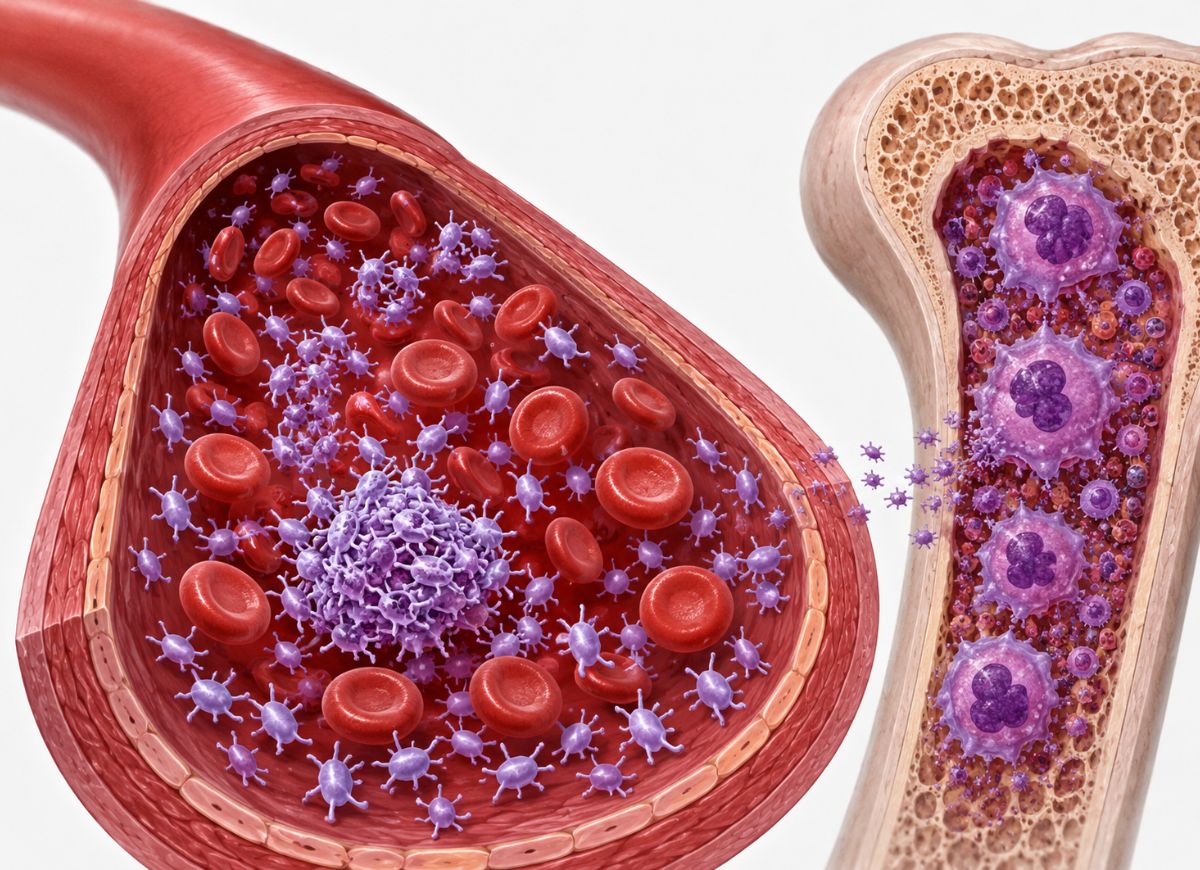
Essential thrombocythemia (ET) might not be a household name, but it starts with something surprisingly small a single type of blood cell. This rare bone marrow disorder pushes the body to churn out far more platelets than it needs. Platelets are the tiny fragments in blood responsible for clotting, and in a typical healthy adult, counts sit somewhere between 150,000 and 450,000 per microliter. With ET, that number regularly climbs past 450,000, and in some people it goes much higher still.
ET doesn’t affect many people research puts new diagnoses at roughly 0.2 to 2.5 per 100,000 people annually, with somewhere between 38 and 57 out of every 100,000 living with the condition at any given time. Because it’s so uncommon, and because it frequently causes no noticeable symptoms in its early stages, many people only learn they have it after a routine blood panel turns up unexpectedly high platelet numbers.
The real danger isn’t the number on the lab report it’s what that number can trigger. An overabundance of platelets makes the blood stickier and more likely to clot where it shouldn’t, raising the odds of stroke, heart attack, deep vein thrombosis, or a pulmonary embolism. Oddly, at very high levels, platelets can also stop working properly, which sometimes tips the scale toward bleeding instead of clotting. The result is a symptom picture that can feel contradictory.
Recurring headaches, spells of dizziness, strange visual disturbances, a burning sensation in the hands or feet, bruises that appear without explanation, frequent nosebleeds, persistent tiredness, or one leg swelling more than the other these can all point toward something going on beneath the surface. None of them are proof of ET on their own, but when they show up repeatedly or without an obvious cause, they’re worth bringing to a doctor’s attention. Here’s a closer look at seven warning signs commonly linked to essential thrombocythemia, the biology behind them, and when they warrant medical follow-up.
Headaches and Dizziness
People with ET often describe their headaches as throbbing or migraine-like, sometimes paired with visual glitches such as flickering lights or patchy blind spots. Dizziness can show up either as lightheadedness or true vertigo the unsettling sense that everything is spinning. The root cause is usually tiny disruptions in blood flow through the brain’s smallest vessels, where clusters of platelets briefly clog the narrow capillaries.
When platelet counts run high, these cells can clump together and get stuck as they try to pass through microscopic blood vessels. If that happens inside the brain, nearby tissue is briefly starved of oxygen, which can set off a chain of neurological symptoms.
Because the pain originates in the blood vessels themselves, it often behaves like a classic vascular headache sometimes with an aura, sometimes as a dull, stubborn ache that doesn’t respond to typical painkillers. The interrupted blood flow can also irritate and inflame the tissue surrounding the brain, adding to the discomfort.
Vision changes frequently ride alongside these headaches. Shimmering zigzag patterns, temporary blank spots, blurriness, or even a brief total loss of vision in one eye can occur when the tiny clots reach the vessels feeding the retina or the brain’s visual processing centers.
Balance can be affected too. When blood flow to the cerebellum or brainstem the regions that manage coordination and equilibrium gets briefly interrupted, it can produce sudden, unpredictable episodes of unsteadiness or spinning sensations that can be genuinely alarming when they strike.
Burning Pain and Redness In the Hands and Feet
A burning, throbbing pain accompanied by warmth and deep redness in the fingers or toes is the signature of erythromelalgia, a condition strongly associated with ET. It happens when microscopic platelet clots repeatedly and briefly block the smallest arteries supplying the extremities, causing localized tissue stress.
Picture a tiny clump of platelets lodging in a vessel feeding a finger or toe. The tissue past that blockage is temporarily cut off from oxygen-rich blood. That shortage produces an intense burning sensation. In response, the body widens nearby vessels to try to push blood past the obstruction which is what causes the deep red or purplish color and the sensation of heat.
These episodes tend to flare up with warmth or physical activity, since both increase blood flow to the extremities. Many people notice their symptoms are worse at night, particularly after a warm shower or while curled up in a heated bed.
One telling feature: cooling the affected hand or foot, or taking aspirin, often brings fast, dramatic relief. Aspirin works by making platelets less likely to clump together, which helps clear the microscopic blockages and restore normal circulation. That quick response to aspirin is considered a strong clue that an underlying disorder like ET may be at play.
Far from being just uncomfortable, erythromelalgia is a meaningful clinical signal of small-vessel clotting. Its appearance often prompts doctors to look for an underlying blood disorder, since it suggests the platelets aren’t just elevated in number but are unusually prone to sticking together.
Blood Clots (Thrombosis)
Among the most serious warning signs of ET is thrombosis blood clots forming in arteries or veins. Because ET floods the bloodstream with excess platelets, clots can form where they shouldn’t, cutting off blood supply to vital organs and potentially triggering a heart attack, stroke, or pulmonary embolism.
The underlying issue is thrombocytosis: too many platelets circulating at once. Platelets exist to help stop bleeding, but in excess they create conditions where clots can form spontaneously, even without an injury to respond to.
An arterial clot cuts off oxygen delivery to whatever tissue lies downstream. In the heart’s coronary arteries, that means a heart attack. In an artery feeding the brain, it causes an ischemic stroke. In a limb, it can trigger acute ischemia a true emergency that risks tissue death or amputation if not treated quickly.
Clots can also form on the venous side. Deep vein thrombosis (DVT), most often in the leg, brings pain, swelling, and redness to the affected area. The greater danger is that part of that clot can break loose, travel to the lungs, and cause a pulmonary embolism a potentially fatal blockage.
ET also raises the risk of clots forming in unusual places, including abdominal veins (which can lead to Budd-Chiari syndrome) or the venous sinuses of the brain. A clot showing up in one of these atypical spots should prompt doctors to consider an underlying disorder like ET.
Unexplained Bleeding or Bruising
It seems backwards, but ET can also cause bleeding problems. Once platelet counts climb extremely high often past one million per microliter the platelets themselves can stop functioning properly, actually undermining the blood’s ability to clot. This is known as acquired von Willebrand syndrome.
Here’s why: at very high concentrations, excess platelets can soak up von Willebrand factor, a protein that normally helps platelets stick to injury sites and to each other. With less of this “glue” freely available, clotting becomes less effective despite there being more platelets than ever.
The bleeding that results tends to show up on the skin and mucous membranes. That can look like frequent or long-lasting nosebleeds, gums that bleed easily while brushing teeth, bruises that appear from the slightest bump, or tiny red or purple spots dotting the skin. In more serious cases, bleeding can occur internally, showing up as blood in the stool or vomit.
Beyond the vWF issue, the platelets ET produces can be structurally flawed, missing components needed for proper clot formation. Even when they reach an injury site, they may fail to bind together or release the substances required to seal the wound.
When clotting symptoms like erythromelalgia show up alongside bleeding symptoms like easy bruising, it’s a strong hint that something more complex like an underlying myeloproliferative disorder is at work. That combination reflects a disease where it’s not just the quantity of platelets that’s off, but their quality too.
Enlarged Spleen (Splenomegaly)
Roughly a quarter to half of people with ET develop an enlarged spleen. The spleen’s job includes filtering blood, and when it’s faced with a constant flood of excess, often defective platelets, it works overtime and grows larger as a result.
Part of the spleen’s role is clearing out old or damaged blood cells. With ET, that filtering system gets overwhelmed by sheer volume, and the organ swells as it fills with trapped cells. In some cases, blood cell production even begins happening inside the spleen itself, a process called extramedullary hematopoiesis, which adds further to its size.
Mild spleen enlargement often causes no symptoms at all. But as it grows, it can start pressing against the stomach and surrounding organs, leading to a feeling of fullness on the upper left side of the abdomen, getting full quickly during meals, general discomfort, or occasionally sharp pain. Some people can even feel a firm mass under their left ribs.
Finding an enlarged spleen during a physical exam is an important clue supporting a diagnosis of ET. Doctors typically check by feeling along the edge of the rib cage, and imaging such as ultrasound or CT can confirm and measure exactly how much the organ has grown.
A spleen that’s significantly enlarged becomes more fragile and carries a real risk of rupture a medical emergency. It can also become overactive, a condition called hypersplenism, where it starts destroying not just platelets but red and white blood cells too, potentially leading to anemia or a weakened immune response.
Weakness and Fatigue
Deep, persistent fatigue is one of the more disruptive symptoms of ET, driven by ongoing low-grade inflammation and an overworked bone marrow. This isn’t ordinary tiredness it’s an exhaustion that doesn’t improve with rest and can seriously interfere with everyday life.
Several factors contribute. The genetic mutations behind ET, such as JAK2, switch on inflammatory signaling pathways that flood the body with cytokines immune-related proteins that can produce symptoms similar to a lingering infection.
At the same time, the bone marrow is working nonstop, mass-producing platelets around the clock. That level of constant cellular activity uses up a substantial amount of the body’s energy, contributing directly to feelings of weakness and burnout essentially, the body is running a metabolic marathon without a finish line.
This same cytokine release can bring on what doctors call “B symptoms” fatigue paired with low-grade fevers, night sweats, and unexplained weight loss. This chronic inflammatory backdrop is common across myeloproliferative disorders and is a major contributor to how unwell patients feel day to day.
Fatigue is often one of the hardest ET symptoms to manage. It can cloud concentration (sometimes described as brain fog), affect mood, and limit someone’s ability to work or stay socially engaged making it a central concern in any comprehensive treatment plan.
Vision Problems or Numbness
Sudden, temporary vision loss, numbness, or weakness can signal a transient ischemic attack (TIA), or “mini-stroke” another important warning sign of ET. These episodes happen when small platelet clots briefly interrupt blood flow to part of the brain, eyes, or spinal cord before dissolving or dislodging.
A TIA mimics stroke symptoms but resolves on its own, usually within minutes and always within 24 hours, without leaving lasting damage. Still, it’s a serious signal one that suggests a full-blown stroke could follow if the underlying clotting risk isn’t addressed. In ET, TIAs stem directly from the blood’s heightened tendency to clot.
Which symptoms appear depends on the part of the brain involved. Someone might experience sudden numbness, tingling, or weakness often on just one side of the body along with difficulty speaking, confusion, or trouble with balance and coordination.
When a small clot briefly blocks blood flow to the eye, the result can be amaurosis fugax often described as a painless curtain of darkness falling over one eye’s vision. Other possible symptoms include blurred or double vision, or flashing lights and blind spots similar to a migraine aura.
Any TIA-like symptom deserves immediate medical attention, even after it passes. It’s a red flag for a much larger stroke risk down the road. For someone with ET, a TIA usually means treatment needs to be stepped up often through starting or adjusting cytoreductive therapy to bring platelet counts down and lower the odds of a more serious clotting event.
What is Essential Thrombocythemia?
Essential thrombocythemia is a chronic disorder in which the bone marrow’s platelet-producing cells, called megakaryocytes, go into overdrive, resulting in a persistently high platelet count. It falls under the umbrella of myeloproliferative neoplasms a category of slow-growing blood cancers.
Calling it a cancer sounds alarming, and it is a serious diagnosis, but ET is generally indolent, meaning it progresses slowly. Many people manage the condition for decades with the right care.
Normally, bone marrow keeps platelet production tightly controlled, holding counts between roughly 150,000 and 450,000 per microliter. In ET, that control breaks down because of specific genetic mutations, and megakaryocytes start producing platelets in excess often well above 450,000, sometimes reaching into the millions.
It’s important to separate ET from reactive thrombocytosis, a temporary rise in platelet count triggered by something else entirely an infection, inflammation from a condition like rheumatoid arthritis, low iron levels, or recovery from surgery. ET, by contrast, originates in the bone marrow itself; the overproduction isn’t a response to anything external, it’s the disease itself.
Although typically slow-moving, ET can progress over time. In a minority of cases, it evolves into myelofibrosis, where scar tissue accumulates in the bone marrow and interferes with its ability to make blood cells, or far more rarely into acute myeloid leukemia, an aggressive blood cancer.
The day-to-day impact of ET mostly comes down to two opposing risks: clotting and, less commonly, bleeding. Treatment centers on managing platelet counts and minimizing these risks to protect long-term health and quality of life.
Underlying Genetic Causes of Essential Thrombocythemia
ET traces back to specific mutations acquired in one of three genes JAK2, CALR, or MPL found together in about 90% of patients. These mutations aren’t passed down through families; they arise spontaneously in a bone marrow stem cell during a person’s life and drive the relentless overproduction of platelets.
These three genes normally help regulate the signaling pathways that control blood cell production. When mutated, they get locked into an “always on” position, continuously telling the marrow to make more platelets.
The JAK2 V617F mutation is the most frequent, appearing in about half to two-thirds of ET cases. It keeps the JAK2 protein constantly switched on, even without the hormone that normally triggers it, leading to nonstop signals for platelet production.
CALR mutations come in second, found in roughly a fifth to a third of patients usually those who test negative for JAK2. These mutations activate the same downstream pathway through a different route involving the thrombopoietin receptor, arriving at the same result: unchecked platelet output. Notably, people with a CALR mutation tend to have higher platelet counts but a somewhat lower clotting risk than those with JAK2.
MPL mutations, seen in a small percentage of patients, affect the thrombopoietin receptor directly, locking it into an active state and continuously firing the same signaling cascade. Patients who test negative for all three mutations about one in ten are described as “triple-negative,” and researchers are still working to identify what drives the disease in this group.
Treatment Approaches for Essential Thrombocythemia
Treatment for ET is built around each patient’s individual risk of clotting or bleeding. Options range from low-dose aspirin and simple monitoring for lower-risk patients to more active platelet-lowering therapy for those at higher risk. The aim isn’t a cure it’s keeping the disease from causing serious harm.
Doctors typically begin by assessing risk based on a few key factors: age over 60, any prior history of blood clots, and whether the JAK2 mutation is present. This risk level shapes how aggressive treatment needs to be, balancing the benefits of therapy against its potential downsides. As a patient’s situation evolves, so does the treatment plan.
Treatments for Low-risk Patients
Patients under 60 with no history of clotting and platelet counts below 1.5 million typically fall into the low-risk category. For them, treatment usually means daily low-dose aspirin paired with regular monitoring rather than more aggressive medication.
Most ET patients, regardless of risk level, take a daily low-dose aspirin (commonly 81 mg). Aspirin blocks an enzyme called COX-1 inside platelets, which stops them from producing a substance that promotes clumping and vessel narrowing. By making platelets less sticky, aspirin meaningfully lowers the risk of both arterial and venous clots, along with symptoms like erythromelalgia and vascular headaches.
“Watch and wait” monitoring means regular check-ins with a hematologist and routine blood tests to track platelet counts and catch any new symptoms without immediately reaching for platelet-lowering medication.
This strategy reflects the reality that, for many low-risk patients, the odds of a major clot are relatively small, and starting stronger medications too early could introduce risks that outweigh their benefit.
Managing other cardiovascular risk factors is also central to care at this stage treating high blood pressure, high cholesterol, and diabetes, along with encouraging smoking cessation, healthy weight, and regular exercise, all of which further reduce clotting risk.
Treatments for High-risk Patients
Patients over 60, those with a history of clotting, or those with very high platelet counts (often above 1.5 million) are considered high-risk and typically need both aspirin and cytoreductive therapy medication specifically aimed at lowering platelet counts, ideally to below 400,000 per microliter.
Hydroxyurea is usually the first medication doctors reach for. It’s an oral drug that slows bone marrow cell production, including platelets, by interfering with DNA synthesis. It’s highly effective and has a strong track record of reducing clot risk, though side effects can include mouth sores, skin changes, and with long-term use a very small chance of leukemia.
Anagrelide offers another option, working more specifically on the cells that mature into platelets without affecting other blood cell types as much. It’s often used when hydroxyurea isn’t well tolerated, particularly in younger patients concerned about hydroxyurea’s long-term risks. Possible side effects include fluid retention, heart palpitations, and headaches.
Interferon alfa, including pegylated formulations, modulates the immune system and can suppress overactive bone marrow. It’s frequently favored for younger patients, those who are pregnant, or anyone wanting to avoid traditional chemotherapy drugs. It can even reduce the proportion of mutant JAK2 cells over time, though side effects flu-like symptoms, fatigue, mood changes, and occasional autoimmune issues can limit its use.
Essential Thrombocythemia Diagnosis
Diagnosing ET is a careful, multi-step process aimed at confirming that elevated platelets stem from a primary bone marrow disorder rather than something else entirely. It usually starts when a routine complete blood count shows a persistently high platelet level, typically above 450,000 per microliter.
From there, doctors often order a peripheral blood smear, examining a blood sample under a microscope. This can reveal unusually large or misshapen platelets and help rule out other immediate concerns. But the real cornerstone of diagnosis is genetic testing for the driver mutations linked to ET.
Testing usually starts with JAK2 V617F, since it’s present in the majority of cases. If that comes back negative, doctors move on to testing for CALR and MPL mutations, which account for most of the remaining diagnoses.
A bone marrow biopsy is often the final step. This procedure gives doctors a direct view of the marrow, confirming an increased number of large, mature megakaryocytes and helping rule out related conditions such as primary myelofibrosis, chronic myeloid leukemia, or myelodysplastic syndrome.
Together, this layered approach ensures the diagnosis is accurate. The core diagnostic criteria include a sustained platelet count at or above 450 x 10⁹/L, presence of a driver mutation, and exclusion of other bone marrow disorders or causes of reactive thrombocytosis.
Potential Long-term Complications
Most people with ET can expect a normal lifespan with proper care, but the disease does carry meaningful long-term risks tied to both clotting and disease progression. The most pressing danger remains thrombosis clots that can trigger a heart attack, stroke, or pulmonary embolism.
On the flip side, some patients experience major bleeding episodes if their platelets become dysfunctional despite high counts. Doctors manage both risks with tools like low-dose aspirin or cytoreductive drugs such as hydroxyurea. Beyond these vascular concerns, there’s also the possibility of the disease transforming into something more serious.
One such transformation is post-ET myelofibrosis, where the bone marrow becomes scarred and loses its ability to produce healthy blood cells leading to severe anemia, spleen enlargement, and significant fatigue.
This possibility is why ongoing, lifelong monitoring matters so much. A far rarer but more serious transformation is progression to acute myeloid leukemia, with an estimated risk of around 1-5% over a 10- to 20-year period.
Spleen enlargement can also intensify over time as the organ works harder to filter blood or even begins producing blood cells itself. And symptoms like headaches, dizziness, and the burning discomfort of erythromelalgia can linger and continue affecting quality of life if not well managed.
Essential Thrombocythemia vs. Reactive Thrombocytosis
Telling ET apart from reactive thrombocytosis is a crucial diagnostic step, since the two conditions have entirely different causes, outlooks, and treatments. ET is a primary disorder the bone marrow itself is malfunctioning due to a genetic mutation, producing excess platelets on its own. It’s a chronic condition requiring ongoing monitoring and, often, treatment to manage clotting risk.
Reactive thrombocytosis, on the other hand, is a secondary response the bone marrow is perfectly healthy but is being prompted by an outside factor to ramp up platelet production.
Common triggers include ongoing infections, widespread inflammation (as seen with rheumatoid arthritis or inflammatory bowel disease), significant tissue trauma from surgery, and most commonly iron deficiency anemia. Once the underlying cause is resolved, platelet counts usually return to normal on their own.
Clear clinical and lab differences help doctors distinguish between the two. Getting this right matters, since treating someone for ET when they actually have reactive thrombocytosis would be both unnecessary and unhelpful.
How to Manage Essential Thrombocythemia
Lifestyle changes won’t cure ET, but they play a genuinely important supporting role, particularly in lowering the risk of dangerous blood clots. Since ET already raises clotting risk on its own, addressing every other contributing factor becomes especially important.
Quitting smoking is probably the single most impactful change someone can make, since nicotine damages the lining of blood vessels and makes blood more prone to clotting. Managing other cardiovascular risk factors matters just as much keeping blood pressure, cholesterol, and blood sugar levels under control.
Each of these conditions independently raises the risk of heart attack and stroke, and that risk compounds when ET is already present. Maintaining a healthy weight through diet and regular movement also helps, since excess weight itself promotes a pro-clotting state in the body.
A diet built around fruits, vegetables, whole grains, and lean protein while limiting saturated fat, trans fat, and sodium supports healthy weight, blood pressure, and cholesterol levels all at once.
Regular movement, whether it’s brisk walking, swimming, or cycling, supports circulation, helps manage weight, and reduces stress. Staying well-hydrated, especially during exercise, also helps keep blood from becoming overly thick.
It’s worth checking with a hematologist before taking any over-the-counter medication, especially NSAIDs like ibuprofen or naproxen, which can interfere with platelet function and raise bleeding risk particularly for anyone already taking aspirin.
FAQs
1. How serious is essential thrombocythemia?
ET can be serious because it raises the chance of abnormal blood clots, and less often, unusual bleeding. Many people live for years with careful monitoring, but it’s not a condition to ignore. Treatment mainly focuses on lowering clotting risk and preventing complications like stroke, heart attack, or deep vein thrombosis.
2. What not to eat with essential thrombocythemia?
There’s no dedicated “ET diet,” but it helps to cut back on foods that raise cardiovascular risk heavily processed items, excess saturated fat, too much sodium, and sugary drinks. Avoiding smoking and keeping weight, blood pressure, and cholesterol in check are equally important, since all of these add to clotting risk.
3. Does essential thrombocythemia get worseX over time?
Sometimes, though not always. Many people stay stable for years. In a smaller number of cases, ET can progress toward myelofibrosis or, rarely, leukemia. One long-term study found a 10-year risk of about 3.9% for myelofibrosis and 2.6% for leukemia.
4. Can you fly with essential thrombocythemia?
Most people with ET can fly, but it’s worth checking with a doctor first, especially before long flights or if there’s a history of clotting. Moving around periodically, stretching the legs, staying hydrated, and avoiding long stretches of sitting still can all help lower travel-related clot risk.
5. What type of doctor treats essential thrombocythemia?
A hematologist typically manages ET. These specialists in blood disorders can confirm the diagnosis, evaluate clotting risk, track platelet levels over time, and guide treatment as needed.
Conclusion
Essential thrombocythemia often develops quietly, but its warning signs headaches, dizziness, vision changes, burning pain in the hands or feet, unexplained bruising, nosebleeds, fatigue, or swelling in one leg deserve attention rather than dismissal. For many people, the condition is very manageable, especially when caught early and monitored consistently. Regular blood work, a treatment plan matched to individual risk, and thoughtful lifestyle choices all go a long way toward reducing complications and protecting long-term health.