
HoLEP Prostate Surgery: Recovery Timeline and Side Effects
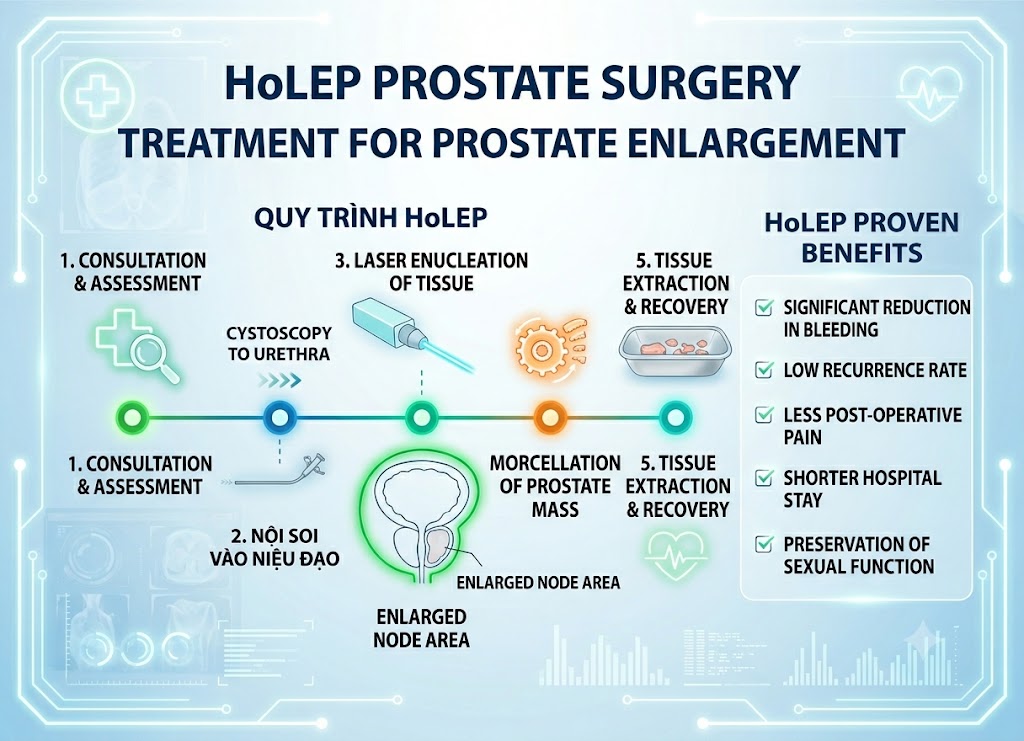
HoLEP prostate surgery is a minimally invasive treatment for urinary problems caused by benign prostatic hyperplasia (BPH), commonly known as an enlarged prostate. During the procedure, a surgeon uses a holmium laser to remove excess prostate tissue that is blocking the flow of urine. This can relieve symptoms such as a weak urine stream, frequent urination, sudden urgency, nighttime bathroom trips, and difficulty completely emptying the bladder. HoLEP can be performed on prostates of different sizes and may allow for a shorter hospital stay than some traditional surgical treatments.
Knowing what recovery may look like and understanding the possible side effects can help patients prepare for HoLEP prostate surgery. A catheter is generally placed after the procedure to drain urine and may be removed within a day or several days, depending on the patient’s recovery and hospital protocol. Temporary burning, blood in the urine, urinary urgency, frequent urination, and leakage may occur while the urinary tract heals. This guide explains the typical recovery process after HoLEP, what patients may experience during healing, and which symptoms should be discussed with a healthcare professional.
What Is HoLEP Prostate Surgery?
HoLEP prostate surgery, short for holmium laser enucleation of the prostate, is a treatment for urinary symptoms associated with an enlarged prostate. It is commonly used for men with benign prostatic hyperplasia, or BPH, when prostate enlargement narrows the urinary passage and leads to problems such as weak flow, frequent urination, urgency, nighttime urination, or incomplete bladder emptying.
During HoLEP prostate surgery, the surgeon guides a holmium laser through the urethra to separate and remove the excess prostate tissue that is pressing against the urinary channel. The separated tissue is moved into the bladder and then removed using a specialized surgical instrument. Once the obstruction is cleared, urine can flow through a wider passage, which may improve bladder emptying and urinary symptoms.
HoLEP is considered minimally invasive because the surgeon reaches the prostate through the urethra rather than making an external incision. The technique can be used for prostates of varying sizes and may lower the likelihood of needing another procedure compared with some older treatments. A catheter is generally kept in place for a short period after surgery while the urinary tract starts healing. Burning, blood in the urine, urgency, and temporary leakage can occur during this period, but these symptoms often become less noticeable as recovery progresses.
Navigating the Post-Operative Journey
Choosing holmium laser enucleation of the prostate, commonly called the HoLEP procedure, can provide long-term relief from urinary problems related to an enlarged prostate. However, understanding the recovery process is an important part of preparing for surgery. Because the prostate tissue and surrounding urinary structures need time to heal, recovery generally happens in several stages and may continue for around 6 to 12 weeks.
                    [The Phased Healing Timeline After HoLEP]
                                       │
        ┌──────────────────────────────┼──────────────────────────────┐
        ▼                              ▼                              ▼
 [Phase 1: Hospitalization]     [Phase 2: Early At-Home]       [Phase 3: Stabilization]
 - First 24–48 hours            - Weeks 1–6 post-op            - Months 2–3 and beyond
 - Urinary catheter in place    - Catheter removal adjustment  - Tissue fully heals
 - Bladder irrigation (CBI)     - Temporary leakage & urgency  - Strong, stable stream
During this recovery period, the inside of the prostate gradually heals from the inside outward. Knowing what can happen during each stage may help reduce worry and make it easier to follow your recovery instructions.
What to Expect in the First 24–48 Hours
The first day or two after HoLEP surgery for prostate obstruction focuses on monitoring your condition, controlling discomfort, and supporting the healing process.
The Role of Continuous Bladder Irrigation (CBI): After waking from the HoLEP procedure for prostate problems, you will usually have a three-way Foley catheter in place. It may be connected to a continuous bladder irrigation system that uses sterile saline to flush blood and small tissue particles from the bladder. This helps prevent clots from blocking the catheter and may reduce problems such as painful bladder spasms.
Managing Discomfort and Bladder Spasms: Pain after surgery is often mild to moderate, although the catheter and its balloon can irritate the bladder. This irritation may cause sudden urges to urinate, bladder contractions, or cramping in the pelvic area. Your medical team can provide medication to control bladder spasms and manage discomfort.
Diet and Early Movement: Once the effects of anesthesia begin to wear off, patients typically start with clear liquids and gradually return to regular foods. Staff may help you get out of bed and walk within a few hours. Early movement supports circulation, lowers the risk of blood clots, and helps maintain healthy lung function after surgery.
Meeting Discharge Criteria: Many patients leave the hospital after an overnight stay. Before discharge, the urine draining through the catheter should generally be stable and light in color, pain should be controlled with oral medication, and you should be able to move around safely.
Early At-Home Recovery (Weeks 1–6)
After leaving the hospital, recovery becomes focused on protecting the healing prostate area and allowing your urinary system to adjust to the changes created by surgery.
Initial Catheter Care at Home: Some patients return home with the catheter still in place for several days, depending on their condition and the surgeon’s instructions. During this stage of HoLEP recovery, adequate fluid intake is usually encouraged to keep urine flowing. Patients are also commonly advised to avoid heavy lifting and straining during bowel movements because increased abdominal pressure can contribute to bleeding from the healing prostate area.
Adjusting After Catheter Removal: Catheter removal can begin another important stage of recovery. Because the obstructing prostate tissue has been removed, the urinary channel is much more open. The bladder and urinary sphincter muscles may need time to adjust. Temporary urgency, frequent urination, and burning during urination are common during this period.
Managing Transient Incontinence: Temporary stress leakage or urge-related leakage can occur during HoLEP prostate surgery recovery time. Some patients may also notice blood in their urine during the first several weeks, particularly after increased physical activity.
Long-Term Stabilization (Months 2–3 and Beyond)
The later part of HoLEP recovery time is when many patients begin noticing more stable improvements and gradually return to their normal routines.
Resolution of Storage Symptoms: During the second and third months, symptoms such as urinary urgency, frequent nighttime urination, and burning may gradually decrease. As the internal surgical area heals, the bladder also adjusts to having less resistance during urination.
Achieving Full Surgical Benefits: By around three months, many patients have experienced much of the improvement expected from their HoLEP surgery. Urine flow may become stronger and bladder emptying may improve, making everyday activities more comfortable.
Safety Profile and Long-Term Success: Patients often ask how safe is HoLEP prostate surgery. HoLEP has been widely studied as a treatment for BPH and can provide durable relief from urinary obstruction. Some urinary control changes may continue for several months in certain patients, but these generally improve as healing and muscle adaptation continue.
Primary Post-Operative Urinary Side Effects
Holmium laser enucleation of the prostate changes the structure of the lower urinary tract by removing prostate tissue that was obstructing urine flow. The HoLEP procedure creates a more open channel at the bladder outlet, but the newly treated prostate area needs time to heal.
                      [Urinary Changes During HoLEP Healing]
                                          │
         ┌────────────────────────────────┼────────────────────────────────┐
         ▼                                ▼                                ▼
 [Intermittent Hematuria]        [Bladder Overactivity]           [Transient Incontinence]
 - Healing prostate surface      - Bladder remains sensitive      - Sphincter adapts
 - May increase with activity    - Causes urgency & frequency    - Leakage may be temporary
 - Fluids help maintain flow     - Improves as healing continues - Pelvic exercises may help
Although the HoLEP prostate procedure removes the physical blockage, the treated surface inside the prostate remains sensitive while it heals. During this adjustment period, patients can experience several predictable urinary changes.
Frequent Urinary Side Effects and Management
The healing process can cause several temporary changes in urination during the first weeks of HoLEP recovery.
Hematuria (Blood in the Urine): Blood in the urine is one of the most noticeable side effects after HoLEP surgery. The healing surface inside the prostate cavity can bleed intermittently. Urine may appear light pink, reddish, or tea-colored. Bleeding can sometimes increase after physical activity, straining, or during the period when internal healing tissue separates. Drinking adequate fluids can help keep urine diluted and support the flushing of small clots.
Urgency, Frequency, and Nocturia: Before HoLEP surgery for prostate obstruction, the bladder may have worked harder than normal to push urine through the narrowed passage. Even after the obstruction is removed, the bladder can remain sensitive or overactive for a while. This may lead to sudden urgency, frequent daytime urination, and nighttime bathroom trips. These symptoms often improve as the bladder adapts to the new urinary flow.
Temporary Incontinence: Temporary leakage may occur after the catheter is removed. It can appear as urge incontinence, where leakage follows a sudden strong urge, or stress incontinence, where urine leaks during coughing, sneezing, laughing, or lifting. The urinary sphincter may need time to adapt after the procedure. Pelvic floor exercises, when recommended by your healthcare provider, can help strengthen the muscles involved in urinary control.
Understanding Retrograde Ejaculation
One of the most common and generally permanent effects of HoLEP prostate surgery is retrograde ejaculation, sometimes described as a “dry orgasm.”
The Anatomical Mechanism: Normally, the bladder neck closes during ejaculation to help direct semen forward through the penis. During the HoLEP procedure steps, prostate tissue near this area is removed to create a wider urinary passage. As a result, the normal mechanism that directs semen outward may be altered. Semen can then travel backward into the bladder rather than exiting through the penis.
The Sensation and Experience: If you are researching what is HoLEP surgery and how it may affect sexual function, it is useful to understand that retrograde ejaculation does not necessarily eliminate the physical sensation of orgasm. The procedure is intended to relieve urinary obstruction, while sexual desire, erections, and orgasmic sensation may remain intact. The semen that enters the bladder is later passed out with urine.
Impact on Fertility: Because semen may no longer exit through the penis in the usual way, retrograde ejaculation can affect natural fertility. This is particularly important for patients who may want to father children in the future and should be discussed with the surgeon before treatment.
Overall Safety Profile
When comparing what to expect after HoLEP surgery with other BPH procedures, patients often want to know: how safe is HoLEP prostate surgery?
HoLEP has been studied extensively and is considered an effective surgical treatment for BPH. The holmium laser can cut and coagulate tissue at the same time, which can help control bleeding during the procedure. The technique can also be used for larger prostates and may provide durable relief from urinary obstruction.
Post-Operative Self-Care for Prostate Recovery
Recovering after holmium laser enucleation of the prostate involves protecting the healing area while gradually returning to normal activity. The HoLEP prostate surgery removes the obstructing central prostate tissue and leaves a treated internal area known as the prostatic fossa.
                     [The Four Pillars of Post-HoLEP Self-Care]
                                         │
        ┌───────────────────┬────────────┴────────────┬───────────────────┐
        ▼                   ▼                         ▼                   ▼
[Adequate Hydration]  [High-Fiber Nutrition] [Medication Control] [Strategic Rest]
- Supports urine flow - Reduces straining     - Controls discomfort - Supports healing
- Helps flush debris  - Keeps stools soft     - Manages spasms      - Conserves energy
- May reduce burning  - Helps prevent strain  - Follow instructions - Avoids overexertion
Because the treated area may need several weeks to fully recover, your daily habits can affect your HoLEP recovery time. Following your surgeon’s instructions about fluids, diet, medication, rest, and physical activity can support healing and lower the risk of complications.
Essential Self-Care Steps for Healing
A smooth HoLEP recovery depends on several practical daily habits.
Adequate Hydration: Drinking enough water can help maintain urine flow and flush small amounts of blood or tissue debris from the bladder. Many patients are advised to drink around 2 to 3 liters of fluid daily unless their healthcare provider has given different instructions because of another medical condition. Limiting bladder irritants such as caffeine, alcohol, and spicy foods may also help during the early recovery period.
High-Fiber Nutrition: Constipation and straining can place additional pressure on the healing pelvic area. Eating foods containing fiber, including whole grains, fruits, and vegetables, can help keep bowel movements easier to pass. Your healthcare provider may also recommend a stool softener for a short period after surgery.
Pain and Medication Management: Take prescribed medications according to your healthcare provider’s instructions. If you develop bladder cramping or strong urinary urgency, your doctor may prescribe medication to reduce bladder spasms.
Critical Safety Note on Blood Thinners: If you take blood-thinning medicines such as aspirin, Plavix, or Coumadin, do not restart or stop them on your own. Follow the specific instructions provided by your surgeon about when these medicines should be resumed because they can affect bleeding risk.
- Prioritizing Rest: Your body needs energy to repair the treated tissues after HoLEP surgery. Plan for additional rest during the first couple of weeks. Keep activities light, take breaks when needed, and gradually increase your routine rather than returning immediately to demanding activities.
Activity and Physical Restrictions
Your surgeon may recommend limiting strenuous activity for several weeks after the HoLEP procedure. These restrictions help protect the healing surgical area and reduce the chance of bleeding.
No Heavy Lifting: Avoid lifting heavy objects until your surgeon says it is safe. Restrictions may include groceries, luggage, laundry baskets, pets, and other heavy items. Lifting can increase abdominal and pelvic pressure and may contribute to bleeding.
No Strenuous Exercise: High-impact exercise, running, jogging, weightlifting, and other demanding workouts are generally avoided during early recovery. Activities involving significant twisting or pressure on the perineum, such as cycling, may also need to be postponed. Gentle walking is often encouraged because it supports circulation while placing less stress on the healing area.
No Sexual Activity: Your urologist may recommend avoiding sexual activity, including intercourse and masturbation, for several weeks after surgery. The exact timing depends on your recovery and your doctor’s instructions. Sexual activity can increase pelvic muscle activity and may contribute to discomfort or bleeding before the area has fully healed.
Avoid the Valsalva Maneuver: Try not to hold your breath and strain while lifting, exercising, or having a bowel movement. If you have persistent coughing or allergies, speak with your doctor so these problems can be managed during the recovery period after HoLEP surgery.
Broader Considerations and Long-Term Outcomes of HoLEP
Looking beyond the first few weeks of recovery, HoLEP (Holmium Laser Enucleation of the Prostate) offers several important considerations. These include its long-term ability to relieve urinary obstruction, the recovery process compared with older procedures, and the importance of communication between patients and their surgeons. Understanding potential long-term urinary changes and preparing properly before surgery can help patients make informed decisions about their prostate treatment.
Comparing HoLEP and TURP Recovery Profiles
When considering surgical treatments for Benign Prostatic Hyperplasia (BPH), it can be useful to understand the differences between holmium laser enucleation of the prostate (HoLEP) and the traditional Transurethral Resection of the Prostate (TURP).
The main distinction is the technique used to remove prostate tissue. The HoLEP procedure uses a holmium laser to separate enlarged prostate tissue from the surrounding capsule. The laser can also coagulate blood vessels during treatment, which helps control bleeding.
TURP, on the other hand, uses an electrically powered wire loop to remove prostate tissue in smaller sections. This approach can leave a larger treated surface that needs to heal.
                      [Surgical Tissue Modification Profiles]
                                         │
         ┌───────────────────────────────┴───────────────────────────────┐
         ▼                                                               ▼
 [HoLEP: Laser Enucleation]                                      [TURP: Wire Resection]
 - Tissue separated and vessels treated                         - Tissue removed in sections
 - Strong bleeding control                                      - Larger raw treatment surface
 - Catheter often removed early                                 - Catheter may remain longer
 - Short hospital stay is common                                - Longer monitoring may be needed
These technical differences can influence the recovery experience after a HoLEP prostate procedure:
- Blood Loss: The laser can seal blood vessels while cutting, which can reduce blood loss during surgery. TURP may have a greater risk of bleeding and clot formation in some cases.
- Catheter Duration: Many patients undergoing HoLEP recovery have their catheter removed within about 24 hours, although the exact timing depends on individual circumstances. TURP patients may need catheterization for longer.
- Hospital Stay: Because HoLEP is performed through the urinary passage and can provide effective bleeding control, many patients can leave the hospital relatively quickly. TURP may require a longer observation period depending on bleeding and other factors.
Long-Term Impact on Urinary Continence
A common question when researching what is HoLEP is how the procedure may affect long-term bladder control. In many patients, urinary continence remains good or improves after the initial recovery period.
During the early stage of what to expect after HoLEP surgery, temporary stress urinary leakage may occur. This can include small leaks when coughing, sneezing, laughing, or lifting. The bladder and urinary sphincter have to adjust after the obstruction has been removed, so temporary leakage can occur during this transition.
Long-term outcomes are generally favorable:
High Long-Term Success Rates: Most patients eventually regain good urinary control after the initial healing period. Persistent severe incontinence is uncommon, although individual results can vary based on prostate size, previous urinary problems, surgical factors, and overall health.
Sphincter Adaptation Phase: Temporary leakage may reflect the time needed for the external urinary sphincter and surrounding muscles to adapt to the newly opened urinary channel.
Managing Persistent Issues: If urinary leakage continues beyond the expected HoLEP recovery time, a healthcare provider can evaluate the cause. Treatment may include pelvic floor physical therapy, biofeedback, or, in selected cases, procedures such as a male urethral sling or artificial urinary sphincter.
The Role of Pelvic Floor Exercises (Kegels)
Targeted pelvic floor exercises, commonly called Kegels, may help improve bladder control during HoLEP prostate surgery recovery time.
These exercises strengthen the pelvic floor muscles that help control urine leakage. After prostate tissue is removed, these muscles may play an important role in maintaining urinary control while the body adjusts.
                    [Physiological Impact of Post-Op Kegels]
                                       │
        ┌──────────────────────────────┼──────────────────────────────┐
        ▼                              ▼                              ▼
[Sphincter Conditioning]     [Continence Support]          [Neuromuscular Control]
- Builds muscle endurance     - May reduce leakage          - Improves awareness
- Supports stress control    - Supports recovery           - Helps control muscles
- Helps with cough-related   - Encourages better bladder    during movement and
  leakage                      control                      daily activities
Regularly contracting and relaxing the pelvic floor muscles can improve their strength, coordination, and endurance. Some patients may benefit from learning these exercises before surgery so they understand the technique and can use it during recovery. Always follow your surgeon’s or pelvic floor therapist’s recommendations about when to begin.
Important Questions to Ask Your Surgeon
A successful outcome from HoLEP surgery for prostate obstruction begins with clear communication before treatment. Consider discussing the following questions with your urologist during your consultation.
Surgeon Experience and Technical Details
- How many HoLEP surgery procedures have you personally performed?
- What outcomes do your patients typically experience regarding urinary flow and continence?
- What method do you use to remove the enucleated prostate tissue from the bladder, and what safety precautions are followed during that step?
Recovery Milestones and Expectations
- Based on my prostate size and overall health, what is my expected HoLEP recovery time?
- When do you usually remove the catheter, and when can I return to light desk work?
- When is it generally safe for me to resume sexual activity?
- Which temporary urinary symptoms should I expect during the first month at home?
Risks and Long-Term Outcomes
- What is the likelihood that I will experience permanent retrograde ejaculation or a “dry orgasm”?
- What are the possible long-term complications, such as urethral stricture or bladder neck contracture?
- What should I do if I develop heavy bleeding or cannot urinate after returning home?
Conclusion
HoLEP prostate surgery can improve urine flow and reduce urinary symptoms caused by an enlarged prostate, but the body needs time to heal after the procedure. Many patients can return home on the same day or after an overnight stay, while catheter removal may occur within 24 hours or over the following few days depending on individual recovery and local medical practice. Temporary effects such as burning during urination, blood in the urine, urgency, frequent urination, leakage, and retrograde ejaculation are common. If you develop heavy bleeding, fever, an inability to urinate, worsening pain, large blood clots, or possible signs of infection, contact a healthcare professional promptly.
Frequently Asked Questions
1. What is HoLEP prostate surgery?
HoLEP prostate surgery means holmium laser enucleation of the prostate. It is a procedure used to remove enlarged prostate tissue that is blocking urine flow in people with benign prostatic hyperplasia. During treatment, the surgeon uses a laser to separate the excess prostate tissue, which is then removed from the bladder. The goal is to create a wider urinary passage so urine can flow more freely.
2. How long does recovery take after HoLEP prostate surgery?
Recovery after HoLEP prostate surgery differs from person to person, but many patients can resume light everyday activities within several days. Burning, urgency, frequent urination, and temporary leakage may continue for a number of weeks as the urinary tract heals. Urine flow can improve soon after catheter removal, although complete recovery may take longer. Your surgeon will determine activity restrictions according to your procedure, bleeding risk, work requirements, and overall health.
3. What side effects are common after HoLEP prostate surgery?
Common effects following HoLEP prostate surgery include mild burning while urinating, blood in the urine, urgency, frequent urination, and temporary urinary leakage. Some patients may notice pink urine or small clots during the early healing period. Retrograde ejaculation, sometimes called dry ejaculation, is also a common effect of this procedure. Most urinary symptoms gradually improve, but symptoms that persist, worsen, or become severe should be evaluated by a healthcare professional.
4. Will I need a catheter after HoLEP prostate surgery?
Yes, most patients have a catheter placed after HoLEP prostate surgery to drain urine while the urinary tract begins to recover. The catheter may also allow blood and small clots to be flushed from the bladder during the early postoperative period. It is commonly removed within 24 hours to several days, depending on the patient’s condition and the hospital’s protocol. If urination remains difficult after removal, the medical team may monitor the patient and provide additional treatment if needed.
5. When should I call a doctor after HoLEP prostate surgery?
Contact your doctor if you develop fever, chills, heavy bleeding, large blood clots, severe pain, or worsening burning during urination. You should also seek medical advice if you cannot urinate, your catheter stops draining, or you develop possible signs of infection. Some blood in the urine can be expected during healing, but heavy or persistent bleeding should be evaluated. If something about your recovery seems unusual or concerning, contacting your healthcare provider early is the safest approach.