8 Benefits of Anterior Lumbar Interbody Fusion
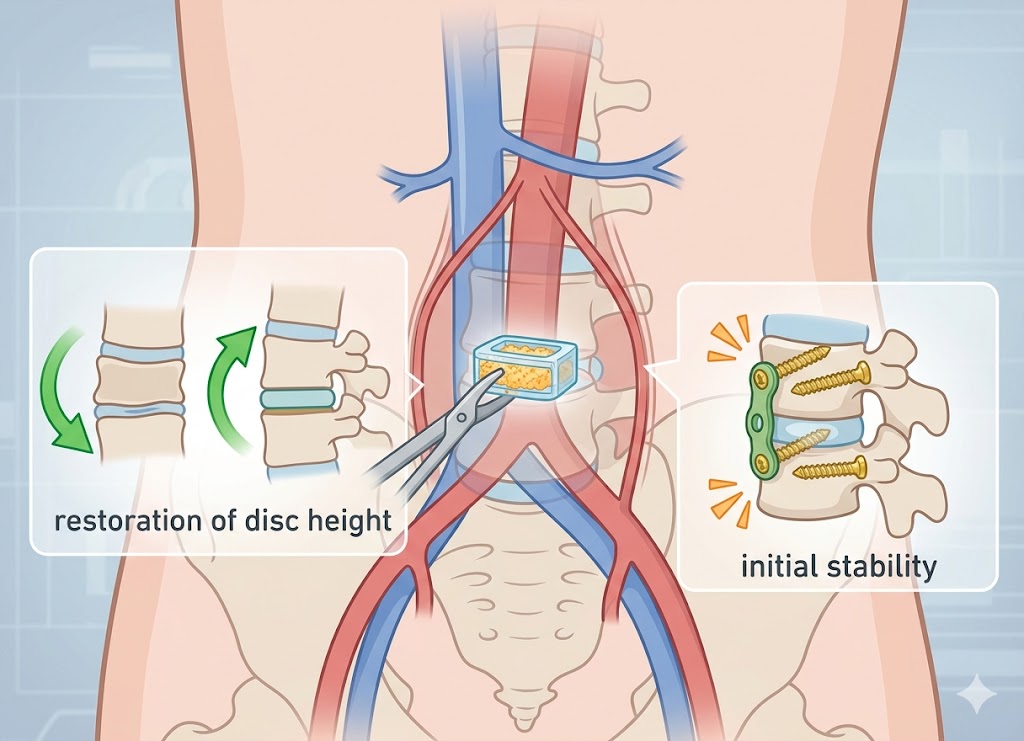
Anterior lumbar interbody fusion (ALIF) is a type of spinal surgery used to treat certain conditions affecting the lower back. During the procedure, the surgeon reaches the spine through the front of the abdomen, removes a damaged disc, and replaces it with an implant or bone graft. This helps stabilize the affected area, restore lost disc height, and reduce pressure on nearby nerves.
ALIF may be recommended for conditions such as degenerative disc disease, spinal instability, spondylolisthesis, and certain cases of chronic lower back pain. Compared with some other spinal fusion procedures, the anterior approach provides direct access to the disc while limiting disruption to the muscles at the back of the spine.
Like any major surgery, ALIF has potential risks and limitations. However, carefully selected patients may experience improvements in pain, mobility, and overall quality of life. This article explores eight potential benefits of anterior lumbar interbody fusion and explains why the procedure may be considered as part of a broader treatment plan.
What Is Anterior Lumbar Interbody Fusion (ALIF)?
Anterior lumbar interbody fusion is a specialized spinal fusion procedure designed to treat certain structural problems in the lower spine. Instead of approaching the spine from the back, surgeons reach the affected disc through an incision in the abdomen.
This anterior approach provides direct access to the intervertebral disc while avoiding many of the muscles, nerves, and bone structures located behind the spine.
During the procedure, the damaged or severely degenerated disc is removed. A structural spacer, often called a cage, is then placed in the empty disc space along with bone graft material. Over time, the neighboring vertebrae grow together and form one solid bone.
This fusion helps stabilize the spinal segment, reduces painful movement, and restores disc height. Restoring this height can also create more room for compressed nerve roots.
ALIF surgery is often performed by a coordinated surgical team. A vascular or general surgeon may help create a safe pathway through the abdomen by carefully moving the abdominal organs and major blood vessels. The spine surgeon can then access the front of the lumbar spine.
Core Components and Objectives of the Procedure
ALIF is designed to address structural instability and pain associated with damaged discs. Removing the problematic disc eliminates the damaged disc tissue and creates space for an implant.
The interbody cage serves several important purposes:
- Height Restoration: The implant restores the height of a collapsed disc space and can help increase the space available around compressed nerve roots.
- Structural Stability: It provides immediate support to the affected spinal segment.
- Graft Support: The cage holds bone graft material in position so new bone can grow between the vertebrae.
The bone graft may come from the patient’s own body, a donor, or a synthetic material. It provides a framework that supports new bone formation across the disc space.
Although the fusion itself can take several months to fully develop, the implant provides immediate structural support. In some cases, screws or plates may also be used to improve fixation during the healing process.
What Spinal Conditions Does anterior lumbar interbody fusion Treat?
Anterior lumbar interbody fusion is mainly used for lower-back conditions involving disc degeneration, instability, alignment problems, or nerve compression.
The procedure can be particularly useful when the main problem is located within the disc space or toward the front of the spinal column. It may be considered when conservative treatments such as physical therapy, injections, or medication have not provided sufficient relief.
The conditions commonly treated with ALIF include:
Degenerative Disc Disease (DDD)
Degenerative disc disease develops when spinal discs lose hydration, height, and normal structure over time. This can lead to lower back pain, instability, and sometimes nerve compression.
ALIF allows the damaged disc to be removed and the lost disc height to be restored. This may help reduce pain caused by the damaged disc and relieve pressure associated with narrowed spaces around spinal nerves.
Spondylolisthesis
Spondylolisthesis occurs when one vertebra moves forward relative to the vertebra below it. This can cause back pain, instability, and pressure on nearby nerves.
During ALIF, an appropriately sized implant can help restore stability and support the affected spinal segment. In selected cases, the procedure can also help correct the alignment of the vertebrae and provide a stable foundation for fusion.
Spinal Stenosis
Spinal stenosis occurs when the spaces available for the spinal nerves become narrowed. This can put pressure on nerves and cause symptoms such as back pain, numbness, weakness, or sciatica.
By restoring the height of a collapsed disc space, ALIF can increase the size of the neural foramina, which are the openings through which nerve roots leave the spine. This can provide indirect decompression for affected nerves.
Adult Degenerative Scoliosis
Adult degenerative scoliosis can develop when uneven disc degeneration contributes to an abnormal sideways curve of the spine.
ALIF may be included as part of a larger reconstructive treatment plan. Restoring disc height and alignment from the front can help improve the natural curves and overall balance of the spine.
How Is the anterior lumbar interbody fusion Procedure Performed?
ALIF follows a carefully planned sequence designed to remove the damaged disc, restore spinal height, and stabilize the affected segment while limiting disruption to the muscles at the back of the spine.
The patient is placed under general anesthesia and positioned on their back on a specialized operating table.
Abdominal Access and Exposure
The procedure begins with an incision in the lower abdomen. The location and size of the incision depend on the spinal level being treated, such as L4-L5 or L5-S1.
The abdominal muscles are separated along their natural tissue planes to reach the retroperitoneal space. This allows the surgical team to move the abdominal contents aside and create a pathway to the front of the spine without entering the main abdominal cavity.
Protecting the Major Vasculature
The major blood vessels located in front of the lumbar spine, including the aorta and vena cava, must be carefully protected.
The access surgeon moves and shields these vessels so the spine surgeon can safely reach the targeted disc space.
Discectomy and Endplate Preparation
The damaged intervertebral disc is removed using specialized surgical instruments. Once the disc has been removed, the surfaces of the neighboring vertebrae are carefully prepared.
The surgeon removes the appropriate cartilage from the endplates to expose healthy bone. This creates a suitable surface for the bone graft and encourages the fusion process.
Implant Insertion and Stabilization
Before inserting the final implant, the surgeon uses trial spacers to determine the appropriate size and angle.
The permanent interbody cage is then placed into the disc space with bone graft material inside or around it. The implant helps restore disc height and spinal alignment.
Depending on the patient’s anatomy and surgical plan, additional screws or a plate may be placed to improve immediate stability. Once the procedure is complete, the blood vessels and abdominal tissues are returned to their normal positions, and the incision is closed.
8 Major Benefits of ALIF Surgery
Anterior lumbar interbody fusion offers several potential advantages for patients with certain lower-back conditions. Many of these benefits are related to the anterior approach, which allows surgeons to reach the disc without working directly through the major muscle groups at the back of the spine.
The procedure can provide access to the disc space, help restore spinal alignment, and create a large surface area for fusion. However, the benefits vary from person to person and depend on the condition being treated.
Benefit 1: Reduced Risk of Direct Nerve Damage
One potential advantage of the anterior approach is that the surgeon does not need to work directly through the spinal canal to reach the disc.
Posterior fusion procedures may require the surgeon to work near the dural sac and spinal nerve roots. Manipulating these structures can create a risk of nerve irritation or injury.
With ALIF, the surgeon approaches the disc from the front. This allows the damaged disc to be removed without directly retracting the spinal nerves.
The anterior approach may also reduce disruption to the tissues behind the spine, including the area where postoperative scar tissue can sometimes develop around nerve roots.
Benefit 2: Superior Accessibility to the Disc Space
Approaching the lumbar spine from the front provides a broad view of the intervertebral disc space.
This access can make it easier for the surgeon to remove a large amount of damaged disc material and prepare the entire disc space for the implant. Posterior approaches may have a more limited working area because of the spinal nerves and surrounding bone.
The wider anterior opening also allows the use of a larger interbody cage. A larger implant can cover more of the vertebral endplate and provide a broad surface for distributing mechanical forces.
Benefit 3: Promotion of a Stronger and More Reliable Fusion
Successful spinal fusion depends on both biological bone growth and adequate mechanical stability.
ALIF allows surgeons to place a relatively large implant into the disc space. The larger surface area can provide substantial support and create a favorable environment for bone graft material.
The procedure also makes use of the natural structures at the front of the spine to help restore disc height and alignment. As the bone graft heals, new bone can gradually form across the space and connect the two vertebrae.
The fusion process takes time, often several months, but the implant provides stability while the biological healing process develops.
Benefit 4: Significantly Less Trauma to Back Muscles
One of the main features of ALIF is that the surgeon does not need to cut through or extensively retract the major muscles located along the back of the spine.
Posterior spinal procedures can involve significant manipulation of the paraspinal muscles. This can contribute to postoperative muscle pain and weakness.
Because ALIF approaches the spine from the front, these posterior muscles are largely preserved. Protecting these structures may help reduce muscle-related postoperative discomfort and support recovery of normal movement.
Benefit 5: More Powerful Correction of Spinal Alignment
Maintaining the natural inward curve of the lower spine, known as lumbar lordosis, is an important part of spinal reconstruction.
When discs collapse, this natural curve can become reduced. This may affect posture and place additional stress on the surrounding structures.
The anterior approach provides surgeons with an effective way to restore disc height and influence spinal alignment. Specialized implants can be shaped to help recreate the natural curve of the lumbar spine.
This can be particularly useful when treating certain alignment problems, including degenerative scoliosis and flatback deformities.
Benefit 6: Lower Incidence of Post-Operative Back Pain
Patients undergoing ALIF may experience less deep back muscle pain than those undergoing procedures that require extensive disruption of the posterior muscles.
The incision is located in the abdomen, so postoperative discomfort is often concentrated around the abdominal surgical site rather than deep within the back muscles.
Avoiding direct manipulation of spinal nerves may also reduce the risk of certain types of postoperative nerve-related discomfort. Reduced pain can make it easier for some patients to begin moving and participating in rehabilitation after surgery.
Benefit 7: Accelerated Initial Recovery Period
Preserving the major back muscles and providing immediate structural support may contribute to a faster early recovery for some patients.
Many patients are encouraged to get out of bed and walk soon after surgery, depending on their condition and the surgical team’s recommendations. Early movement can support circulation and reduce the risk of complications associated with prolonged inactivity.
Although the bone fusion itself still takes several months, functional recovery can begin much sooner. Patients may gradually return home, resume daily activities, and increase their level of movement as their surgeon allows.
Benefit 8: Effective Restoration of Collapsed Disc Height
Disc degeneration can cause the space between two vertebrae to become smaller. As the disc collapses, the openings where spinal nerves exit can also become narrower.
This narrowing may contribute to nerve compression and symptoms such as radiating leg pain or sciatica.
ALIF allows the surgeon to place a relatively tall implant into the collapsed disc space. Restoring the height of the space can increase the size of the neural foramina and reduce pressure on affected nerve roots.
This is known as indirect decompression because the surgeon can improve the space around the nerve without directly operating on the nerve itself.
Key Considerations and Alternatives for ALIF Surgery
Choosing the right spinal fusion technique depends on the patient’s condition, anatomy, symptoms, and treatment goals.
ALIF has several potential advantages because it reaches the spine from the front, but it is not appropriate for every patient. The benefits must be weighed against the risks associated with the abdominal approach and the individual’s specific medical circumstances.
Comparing ALIF with other fusion techniques and determining whether a patient is an appropriate candidate are important parts of the treatment process.
How Does anterior lumbar interbody fusion Compare to Posterior Approaches Like PLIF and TLIF?
The main difference between ALIF and posterior procedures such as Posterior Lumbar Interbody Fusion (PLIF) and Transforaminal Lumbar Interbody Fusion (TLIF) is the route used to reach the spine.
This difference affects how the surrounding muscles, nerves, and spinal structures are approached during surgery.
Incision and Muscle Preservation
ALIF uses an incision in the abdomen and reaches the spine through the retroperitoneal space. This approach generally avoids cutting through or extensively retracting the large paraspinal muscles.
PLIF and TLIF approach the spine from the back. These procedures require more direct work around the posterior muscles and other structures.
As a result, ALIF may cause less disruption to the back muscles in appropriately selected patients.
Neurological Risk Profile
Posterior procedures require the surgeon to work closer to the spinal canal and nerve roots when accessing the disc space.
ALIF approaches the disc from the opposite direction and does not require the surgeon to work directly through the spinal canal. This can reduce direct manipulation of the spinal nerves, although every surgical approach still carries potential neurological risks.
Hardware Volume and Mechanical Stability
The front approach provides broad access to the vertebral endplates. This allows surgeons to use larger interbody implants in many cases.
Posterior approaches have a narrower working corridor because of the spinal nerves and surrounding anatomy. The implants used through these approaches may therefore have a different size and shape.
A larger implant can provide broad contact with the vertebral endplates and accommodate more bone graft material.
Who Is an Ideal Candidate for an anterior lumbar interbody fusion Procedure?
ALIF may be particularly appropriate for patients with structural problems involving the lower lumbar spine, especially at levels such as L4-L5 and L5-S1.
Optimal Clinical Profiles
Advanced Degenerative Disc Disease: Patients with significant disc degeneration, disc height loss, and mechanical instability may benefit from the ability to remove the damaged disc and restore its height.
- Low-Grade Spondylolisthesis: Patients with certain cases of mild vertebral slippage may benefit from the stabilization and alignment correction that ALIF can provide.
- Revision of Prior Back Surgeries: For some patients who have already undergone posterior spine surgery, approaching the spine from the front may provide an alternative route that avoids previously operated and scarred tissue.
Primary Exclusions and Contraindications
ALIF is not appropriate for everyone.
Patients with severe spinal stenosis who require direct decompression of the spinal canal may need a different or additional surgical approach. Extensive previous abdominal surgery can also make the anterior route more challenging because of internal scar tissue.
Significant vascular disease involving the aorta or iliac arteries can increase the risks of accessing the spine from the front. Severe osteoporosis may also make it difficult for the vertebral bone to adequately support an interbody implant.
What Are the Potential Risks and Complications?
Although ALIF avoids extensive disruption of the back muscles, approaching the spine through the abdomen creates its own set of potential risks.
Vascular Injuries
Major blood vessels, including the aorta and inferior vena cava, are located directly in front of the lumbar spine.
These vessels must be carefully moved or protected during surgery. Although serious vascular injuries are uncommon, damage to a major blood vessel can result in significant bleeding and requires immediate treatment.
Retrograde Ejaculation
Male patients undergoing ALIF, particularly at the L5-S1 level, may face a specific risk involving the nerves responsible for ejaculation.
If these nerves are irritated or damaged during the anterior approach, retrograde ejaculation can occur. In this condition, semen moves backward into the bladder instead of exiting normally.
This complication does not necessarily affect sexual pleasure or erectile function, but it can affect fertility.
General Fusion Risks
As with other spinal fusion procedures, ALIF carries general surgical risks.
These may include infection, blood clots, implant problems, and non-union, which occurs when the vertebrae do not successfully fuse. Factors such as smoking and poorly controlled diabetes can increase the risk of impaired bone healing.
Hardware problems, including implant movement or screw loosening, can also occur and may sometimes require additional treatment.
What Is the Typical Recovery Timeline?
Recovery after ALIF varies from person to person. Because the procedure generally avoids extensive disruption of the posterior back muscles, the early recovery period may be easier for some patients than recovery from certain posterior fusion procedures.
The recovery process can be divided into several general stages.
The Hospital Phase (Days 1 to 3)
During the first few days after surgery, the medical team focuses on controlling pain, monitoring gastrointestinal function, and helping the patient begin moving safely.
Patients are often encouraged to get out of bed and walk soon after surgery. Early movement helps promote circulation and can reduce the risks associated with prolonged bed rest.
Before leaving the hospital, patients receive instructions about movement restrictions, lifting limits, wound care, and any brace that may be recommended.
The Short-Term Phase (Weeks 2 to 6)
During the first several weeks at home, walking is generally encouraged within the limits set by the surgical team.
Abdominal discomfort from the incision gradually improves. Some people with sedentary jobs may be able to return to light or modified work within a few weeks, depending on their recovery.
Driving should only resume when the patient can safely control the vehicle, react quickly when necessary, and is no longer taking medications that could impair alertness.
The Mid-Term Phase (Months 1.5 to 3)
Physical therapy may be introduced during this stage when the surgeon considers it appropriate.
A physical therapist can help patients gradually rebuild core strength, improve flexibility, and restore healthy movement patterns. Activity and lifting restrictions are generally adjusted according to the patient’s progress and imaging results.
The Long-Term Phase (Months 6 to 12)
Bone fusion continues to develop over several months and may take up to a year to become fully established.
Follow-up imaging, including X-rays or CT scans when appropriate, may be used to evaluate the progress of the fusion.
As healing progresses and the surgeon confirms adequate fusion and functional recovery, patients may gradually return to more demanding physical activities.
FAQs
What is anterior lumbar interbody fusion?
Anterior lumbar interbody fusion is a spinal fusion procedure that removes a damaged lumbar disc and joins the neighboring vertebrae using an approach from the front of the body.
Why is anterior lumbar interbody fusion performed?
ALIF may be used to treat conditions such as degenerative disc disease, spinal instability, spondylolisthesis, certain recurrent disc problems, and some cases of chronic lower back pain.
How is ALIF different from other spinal fusion surgeries?
Unlike posterior procedures that reach the spine from the back, ALIF accesses the lumbar spine from the front. This approach can reduce disruption to the major muscles located along the back of the spine.
How long does recovery take after ALIF surgery?
Recovery depends on the individual and the condition being treated. Some patients can return to light activities within several weeks, while complete recovery and bone fusion can take several months or longer.
Is anterior lumbar interbody fusion successful?
ALIF can provide significant pain relief and improve spinal stability in appropriately selected patients. The outcome depends on factors such as the underlying condition, overall health, and successful bone fusion.
Will I need physical therapy after surgery?
Physical therapy is often included in the recovery plan. It can help patients gradually rebuild strength, improve flexibility, and return to normal movement and daily activities.
What are the risks of anterior lumbar interbody fusion?
Potential complications include infection, bleeding, blood vessel injury, nerve-related problems, implant complications, and failure of the vertebrae to fuse properly.
Can anterior lumbar interbody fusion eliminate back pain completely?
Complete pain relief cannot be guaranteed. Many appropriately selected patients experience substantial improvement, but the outcome depends on the underlying cause of pain and other individual factors.
How long does the fusion process take?
Bone fusion generally takes several months. The healing process can continue for up to a year before the fusion becomes fully mature.
Who is a good candidate for ALIF?
Candidates are generally patients with specific lower-spine conditions who have not received enough relief from conservative treatments. A spine specialist can determine whether ALIF is appropriate after reviewing the patient’s symptoms, imaging, health history, and anatomy.
Conclusion
Anterior lumbar interbody fusion is an established surgical option for treating certain conditions affecting the lower back. By removing a damaged disc, restoring disc height, stabilizing the spine, and creating additional space around compressed nerves, ALIF may help reduce pain and improve function.
One of its main advantages is the ability to reach the lumbar spine without extensive disruption of the major muscles along the back. The procedure can also help restore spinal alignment and provide a large space for bone graft material during the fusion process.
However, ALIF is not suitable for every patient and carries potential risks, including complications related to the abdominal approach and major blood vessels. The expected benefits and risks depend on the underlying condition, overall health, anatomy, and recovery process.
Discussing these factors with a qualified spine specialist can help determine whether anterior lumbar interbody fusion is an appropriate treatment option.