6+ Hyperaldosteronism Symptoms That Often Get Mistaken for Something Else
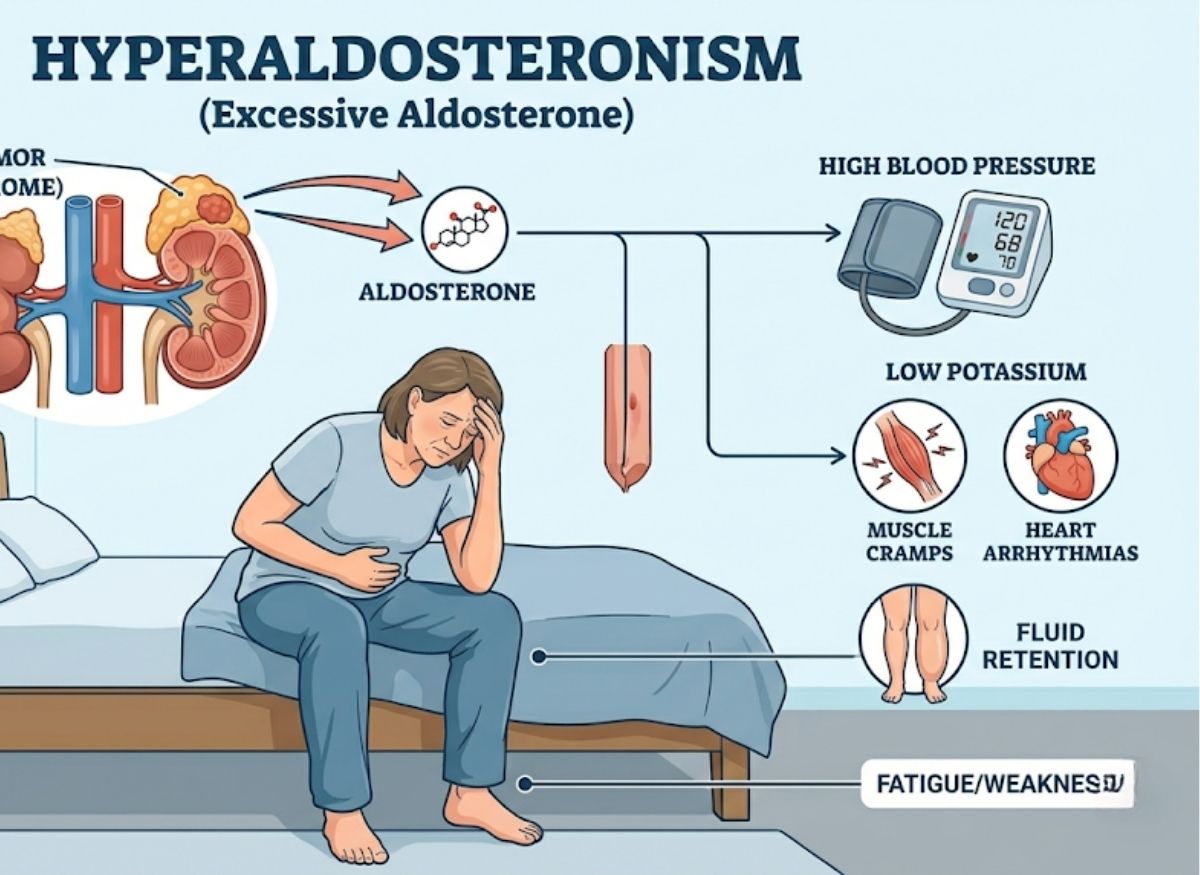
Hyperaldosteronism isn’t a condition many people have heard of, yet it may quietly affect blood pressure, energy levels, muscle function, and overall health without being recognized right away. Because its symptoms overlap so heavily with more common problems like stress, dehydration, aging, or general fatigue, many people live with the condition for years before getting an accurate diagnosis.
Some people only discover the issue after struggling with stubborn high blood pressure that doesn’t improve, even with medication. Others notice symptoms that seem unrelated at first, muscle weakness, headaches, frequent urination, unusual fatigue, without realizing they may all be connected.
Hyperaldosteronism happens when the adrenal glands produce too much aldosterone, a hormone responsible for regulating blood pressure, sodium, and potassium balance. When aldosterone rises too high, the body holds onto excess sodium and loses too much potassium, producing symptoms easy to mistake for other health issues. Since low potassium doesn’t always cause obvious warning signs early on, the condition can stay hidden for a long time.
Recognizing symptoms that may point to hyperaldosteronism matters because untreated cases raise the risk of heart disease, stroke, kidney problems, and persistent high blood pressure. The encouraging news is that once identified, most people can manage it through treatment and lifestyle adjustments. Below, we look at the symptoms of hyperaldosteronism that are commonly mistaken for something else.
What is Hyperaldosteronism?
The adrenal glands, two small, triangle-shaped organs atop the kidneys, act as a chemical control center, releasing aldosterone to manage the body’s salt and water balance. When this system malfunctions and produces excess aldosterone, it forces the kidneys to retain too much sodium while flushing out potassium, a chemical imbalance that drives up blood pressure and puts strain on the body.
Primary vs. Secondary Hyperaldosteronism
Primary hyperaldosteronism, often called Conn’s syndrome, occurs when the adrenal glands themselves are the source of the problem, typically from a small, noncancerous tumor (an adrenal adenoma) or general enlargement of the glands (hyperplasia).
Secondary hyperaldosteronism is a reactive condition. The adrenal glands are functioning normally but are being “tricked” into overproducing aldosterone by an outside factor, usually when the body senses a drop in blood pressure or blood flow, often due to narrowed kidney arteries, heart failure, or liver cirrhosis.
Think of it as the difference between a broken thermostat and a broken heater. In primary hyperaldosteronism, the “heater” (adrenal gland) is stuck on high regardless of signals. In secondary hyperaldosteronism, the “thermostat” (the body’s pressure sensors) is being fooled into thinking it needs more heat, so it keeps calling for it. Telling the two apart matters because it determines whether treatment means surgery on the adrenal glands or addressing a separate organ like the heart or kidneys.
Signs and Symptoms
The most prominent sign is resistant hypertension, high blood pressure that stays stubbornly elevated even on multiple medications. But the resulting loss of potassium (hypokalemia) creates its own set of symptoms.
Resistant Hypertension: The Primary Red Flag
If you’re taking three or more blood pressure medications, including a diuretic, and your numbers still won’t budge, hyperaldosteronism may be the cause. The excess aldosterone forces the kidneys to retain sodium and water, physically expanding blood volume. Standard drugs like ACE inhibitors often fail here because they don’t block aldosterone directly; only specific treatments like aldosterone antagonists (e.g., spironolactone) can address this volume expansion effectively.
The Ripple Effect of Low Potassium
Many of the most distressing symptoms come not from the blood pressure itself, but from potassium loss as the body hoards sodium and flushes potassium out through urine:
Muscle weakness and cramps. Without adequate potassium, muscle cells can’t function properly, leading to unexplained weakness, painful cramps, and a sense of heavy limbs that can make routine tasks like climbing stairs feel difficult.
Heart palpitations or irregular rhythm. Low potassium creates electrical instability in the heart muscle, potentially causing palpitations, skipped beats, or more serious arrhythmias like atrial fibrillation.
Numbness or tingling. In severe cases, the hormonal shift causes a change in blood chemistry (metabolic alkalosis) that affects calcium behavior, leading to pins-and-needles sensations, numbness, or tingling in the hands, feet, and around the mouth.
“Water Diabetes” and Chronic Fatigue
Chronic low potassium can damage the kidneys’ ability to concentrate urine, creating a cycle of frequent urination (especially at night) and excessive thirst. People may drink large amounts of water daily but still feel dehydrated and exhausted, because their kidneys can’t retain the fluid properly.
This exhaustion, combined with persistent, throbbing headaches from high internal pressure, creates a fatigue that sleep alone doesn’t fix. Because these symptoms initially seem unrelated to blood pressure, they’re often the clue that leads a doctor to look beyond a standard blood pressure reading toward the adrenal glands.
How Excess Aldosterone Differs From Typical High Blood Pressure
While both conditions produce a high blood pressure reading, hyperaldosteronism is fundamentally a hormonal issue, while typical (essential) hypertension is often more mechanical or lifestyle-driven.
Volume expansion vs. vessel resistance. Typical hypertension often involves stiff or narrowed blood vessels. Hyperaldosteronism-related hypertension is volume-dependent: the hormone forces the kidneys to retain large amounts of sodium and water, overfilling the circulatory system in a way that standard blood-pressure medications, which mainly relax vessels, can’t address.
Direct organ damage. Aldosterone itself is “pro-fibrotic,” meaning it encourages scar tissue formation:
- Heart: People with this condition have a higher risk of left ventricular hypertrophy (thickened heart wall) and atrial fibrillation than people with typical hypertension at the same blood pressure level
- Kidneys: Aldosterone promotes inflammation and oxidative stress in the kidneys’ filtering units, accelerating kidney disease progression
- Brain: Stroke risk is notably higher, since the hormone increases arterial stiffness throughout the body
Electrolyte disruption. In typical hypertension, potassium levels usually stay steady unless certain medications are involved. In hyperaldosteronism, low potassium is a direct, often significant result of the disease itself, producing symptoms like muscle weakness and heart flutters rarely seen in typical high blood pressure.
Can You Have Hyperaldosteronism With Normal Potassium?
Yes, and this is a commonly overlooked fact. For years, low potassium was considered a near-essential sign for diagnosis, but research shows over 60% of people with primary hyperaldosteronism have normal potassium levels. This “normokalemic” presentation is a major reason the condition is so often missed, since doctors screening only for classic low-potassium symptoms catch just the most severe cases.
In earlier or milder stages, the body compensates well: even with excess aldosterone, the kidneys may manage to keep potassium within a normal range, especially with a high-potassium diet. But normal potassium doesn’t mean the excess aldosterone isn’t still causing harm, it can still be driving up blood volume, scarring heart and kidney tissue, and stiffening arteries.
Because of this, modern guidelines from organizations like the Endocrine Society have moved away from using potassium as a screening gatekeeper. Instead, screening is recommended for anyone meeting any of these criteria, regardless of potassium level:
- Resistant hypertension requiring three or more medications
- High blood pressure developing before age 30
- An incidental adrenal growth found on a scan for another reason
- A family history of early-onset hypertension or stroke
The real diagnostic tool is the Aldosterone-to-Renin Ratio (ARR). In a healthy person, if aldosterone is high, renin (a related hormone) should also be elevated, or should drop in response to try to compensate. In primary hyperaldosteronism, aldosterone is high while renin stays suppressed, a distinct signature that potassium testing alone would miss.
How It’s Diagnosed
Diagnosis follows a three-step process: screening, confirmation, and localization.
Step 1: Screening (the ARR test). A blood test measuring the Aldosterone-to-Renin Ratio, usually done in the morning when hormone levels peak. High aldosterone with suppressed renin is the classic signal that moves a patient to further testing.
Step 2: Confirmation. Since hormone levels fluctuate with stress or salt intake, a high ARR alone isn’t enough. Doctors need to confirm the adrenal glands are producing aldosterone autonomously, regardless of the body’s signals:
- Saline suppression test: An IV infusion of salt water should normally suppress aldosterone; if levels stay high, the diagnosis is confirmed
- Oral sodium loading: A high-salt diet for three days followed by a 24-hour urine test; persistently high aldosterone in the urine confirms the diagnosis
Step 3: Localization. Once confirmed, doctors need to find the exact source:
- CT imaging looks for a tumor on one gland or enlargement of both
- Adrenal venous sampling (AVS), considered the gold standard, involves threading a catheter to measure hormone output from each adrenal gland separately, determining whether the problem is on one side (potentially curable with surgery) or both (requiring lifelong medication)
Long-Term Complications If Left Untreated
Untreated hyperaldosteronism isn’t just about high blood pressure readings, it’s an ongoing hormonal effect on vital organs, since aldosterone promotes scar tissue formation wherever it accumulates.
Cardiovascular risk. Even at the same blood pressure level as someone with typical hypertension, excess aldosterone raises the risk of atrial fibrillation (from scarring of the heart’s electrical pathways), heart failure (from thickening and stiffening of the heart’s left ventricle), and stroke or heart attack (from increased inflammation making arterial walls more prone to rupture or blockage).
Kidney decline. Excess aldosterone damages the kidneys’ delicate filtering units, potentially leading to protein leaking into the urine, a warning sign of progressive kidney damage that can eventually lead to chronic kidney disease.
Metabolic effects. Untreated primary hyperaldosteronism has also been linked to metabolic syndrome, a cluster of high blood sugar, abnormal cholesterol, and increased abdominal fat that compounds cardiovascular risk.
How It Compares to Other Hormonal Causes of High Blood Pressure
Hyperaldosteronism is one of three main endocrine causes doctors consider for hormone-related high blood pressure, alongside Cushing’s syndrome and pheochromocytoma, each involving a different part of the adrenal gland and a different hormone.
Hyperaldosteronism involves the outer layer of the adrenal gland and centers on a mineral imbalance (high sodium, low potassium). Blood pressure tends to be high and steady, without dramatic physical changes.
Cushing’s syndrome results from excess cortisol and tends to have more visible physical signs, like facial rounding, fat accumulation on the upper back, and purple stretch marks, along with significant effects on blood sugar.
Pheochromocytoma originates in a different part of the adrenal gland and involves excess adrenaline released in bursts. Rather than constant high blood pressure, it tends to cause sudden episodes of extreme pressure, pounding headaches, and heavy sweating.
Frequently Asked Questions
What is hyperaldosteronism?
A condition where the adrenal glands produce too much aldosterone, a hormone regulating blood pressure and sodium/potassium balance. Excess aldosterone causes the body to retain too much sodium while losing potassium, affecting muscles, nerves, and heart function. High blood pressure is often one of the earliest signs, though symptoms vary.
What causes it?
Depending on the type, it may result from a small, usually noncancerous growth on one adrenal gland, general overactivity of both glands without a clear tumor, or conditions affecting blood flow to the kidneys that trigger a secondary response.
Why is it often mistaken for something else?
Symptoms like fatigue, headaches, muscle cramps, and weakness closely resemble everyday complaints attributed to stress, dehydration, aging, or unrelated conditions. Since not everyone develops noticeable low-potassium symptoms, the condition can go undetected for years, especially when blood pressure seems merely “hard to control” rather than hormonally driven.
Can it be treated?
Yes, many cases are managed successfully once diagnosed. Treatment depends on the underlying cause and may include lifestyle changes, medications that block aldosterone’s effects, or surgery for cases involving an adrenal tumor. Early diagnosis can meaningfully lower the risk of long-term heart, kidney, or vascular complications.
When should I see a doctor?
If you have high blood pressure that’s difficult to control, recurring low potassium, or unexplained muscle weakness, fatigue, headaches, or frequent urination. A family history of early-onset high blood pressure or stroke is also a reason to consider evaluation. A doctor may recommend blood tests, hormone testing, or imaging if hyperaldosteronism is suspected.
The Bottom Line
Hyperaldosteronism symptoms can be surprisingly easy to overlook because many resemble common, everyday complaints, fatigue, headaches, muscle weakness, feeling run down. Because these signs often develop gradually, it’s easy to assume they’re just stress, poor sleep, dehydration, or aging. But when they occur alongside hard-to-control high blood pressure or recurring low potassium, it may be worth a closer look. The reassuring part is that hyperaldosteronism is often treatable once properly diagnosed, and identifying it early can meaningfully improve blood pressure control, energy levels, and long-term health.