
7 Warning Signs of Pancreatitis You Should Know
Pancreatitis is more common than most people think. It affects over 275,000 people in the United States each year and sends hundreds of thousands to the hospital. Even so, many people dismiss the first warning signs as simple indigestion or a minor stomach problem, and only later learn that the situation is far more serious.
The pancreas plays a vital role in digestion and blood sugar regulation, and when it becomes inflamed, the effects can spread quickly through the body. Pancreatitis can also strike suddenly. One moment you feel fine, and the next you have intense discomfort that won’t ease. Sometimes symptoms start mild, which creates a false sense of reassurance and delays proper care.
Persistent abdominal pain, nausea and unusual digestive changes are also easy to overlook. Each may seem minor alone, but together they can signal that the pancreas is under stress. Without timely attention, pancreatitis can lead to complications affecting multiple organs, making recovery longer and more complex.
Knowing the early signals gives you a clear advantage. When you understand what your body is telling you, you can act before the condition escalates. This article covers the warning signs of pancreatitis that deserve your attention, so you stay ahead of a problem many people recognize too late.
7 Warning Signs of Pancreatitis
The main signs are severe abdominal pain, abdominal tenderness and swelling, nausea and vomiting, fever with a rapid pulse, jaundice, oily and foul-smelling stools (steatorrhea), and unexplained weight loss. To understand them, it helps to see how pancreatic inflammation disrupts the organ’s normal functions and triggers a chain of symptoms affecting the whole body. Each sign is a clue to the inflammatory process and how far it has reached into the digestive and metabolic systems.
1. Severe Abdominal Pain
Severe, persistent abdominal pain is the hallmark and most common sign of acute pancreatitis. It usually begins suddenly and is often so intense that people go straight to the emergency room. It is typically felt in the upper-middle abdomen just below the breastbone, as a constant, deep, boring pain that seems to pierce through to the back.
The pain comes from what is happening inside the pancreas. Powerful digestive enzymes such as trypsin activate too early, inside the pancreas instead of the small intestine where they belong. They begin to digest the pancreatic tissue itself, causing cell injury, swelling and a strong inflammatory response. This irritates the tissues and the dense network of nerves around the pancreas, producing severe pain signals.
- Radiation to the back: A classic feature is pain that travels from the abdomen straight through to the back. The pancreas sits in the retroperitoneum, a space behind the abdominal cavity and closer to the spine, so inflammation and pain signals easily travel along nerve pathways to the back, sometimes as intensely as the abdominal pain.
- Worsening after eating: The pain almost always intensifies after meals, especially fatty ones. Food signals the pancreas to release more enzymes, and in an inflamed pancreas this worsens the self-digestion and sharply increases pain. Many people develop a fear of eating, which can lead to dehydration and malnutrition.
- Positional relief: Pain is often worse lying flat on the back. Sitting up and leaning forward, or curling into a fetal position, may bring some relief by reducing pressure from surrounding organs on the inflamed pancreas.
2. Abdominal Tenderness or Swelling
A swollen, distended and tender abdomen is a very common physical sign. When a healthcare provider gently presses the upper abdomen, it typically causes significant pain and tenderness. Together with the patient’s report of severe pain, this strongly points to inflammation inside the abdomen involving the pancreas. The swelling is not just a feeling; it is often visible.
Inflammation sets off local and body-wide reactions that directly cause swelling and tenderness:
- Inflammatory fluid buildup: Inflamed pancreatic tissue becomes leaky, letting fluid rich in inflammatory substances seep into the abdominal cavity. In severe cases a large amount collects (ascites), making the abdomen visibly swollen and tight. The fluid also irritates the peritoneum, the very sensitive lining of the abdominal cavity, adding to widespread tenderness.
- Paralytic ileus: Intense inflammation can disrupt nearby intestines and temporarily paralyze the muscles of the intestinal wall. When peristalsis (the rhythmic contractions) stops, gas and fluid get trapped, causing bloating, distension and a feeling of fullness. This also contributes to nausea and vomiting.
- Direct pancreatic swelling: The pancreas itself swells from inflammation, edema and cell damage. The enlarged organ can press on the stomach and duodenum, adding to discomfort, tenderness and a feeling of fullness even without eating. The body also guards the injured area by tensing the abdominal muscles, which increases tenderness when pressed.
3. Nausea and Vomiting
Nausea and vomiting very commonly accompany the intense pain of acute pancreatitis. For many patients the vomiting is persistent and severe and brings little relief from the pain or nausea. These signs are a direct result of the severe digestive disruption and pain signals coming from the inflamed pancreas.
The connection involves both physical and nervous system pathways, as part of the body’s complex response to injury and dysfunction:
- Digestive system shutdown: Intense inflammation can cause ileus, where the stomach and intestines slow or stop moving. Food, fluid and gas can’t pass through and back up, causing extreme fullness, bloating, nausea and eventually vomiting as the stomach tries to empty itself. The pancreas’s inability to release needed enzymes worsens the standstill.
- Pain-induced nausea: Severe pain, whatever its source, strongly triggers the brain’s vomiting center. The relentless signals from the inflamed pancreas can overwhelm the brain and activate the chemoreceptor trigger zone, causing intense nausea and vomiting.
- Chemical and toxin buildup: In severe cases, inflammatory substances and toxins enter the bloodstream and directly stimulate the vomiting center. When the pancreas, liver or kidneys are struggling, metabolic waste can also build up and add to symptoms like persistent nausea.
4. Fever and Rapid Pulse
Fever and a rapid pulse (tachycardia) are important whole-body signs. Abdominal pain is the main local symptom, but these two show the inflammation is significant enough to affect the entire body. They are part of the systemic inflammatory response syndrome (SIRS), a serious condition needing careful medical monitoring.
They are physiological responses to the intense stress, inflammation and possible infection in pancreatitis. They are not unique to it, but together with severe abdominal pain they strongly suggest the diagnosis.
- Fever as an inflammatory response: A temperature above 100.4°F (38°C) is one of the body’s main defenses against injury and infection. Damaged pancreatic cells release pro-inflammatory cytokines such as interleukin-1 and tumor necrosis factor. These travel through the blood to the hypothalamus, the brain’s thermostat, which raises body temperature. This fever is a direct response to inflammation, even without a secondary infection.
- Rapid pulse (tachycardia): A resting heart rate above 100 beats per minute reflects several stressors. Severe pain triggers the fight-or-flight response, releasing adrenaline. Dehydration from vomiting and fluid shifting out of blood vessels lowers blood volume, so the heart pumps faster to maintain blood pressure. Fever also raises metabolic rate and heart rate. In severe cases a very fast pulse can signal impending shock, a life-threatening complication.
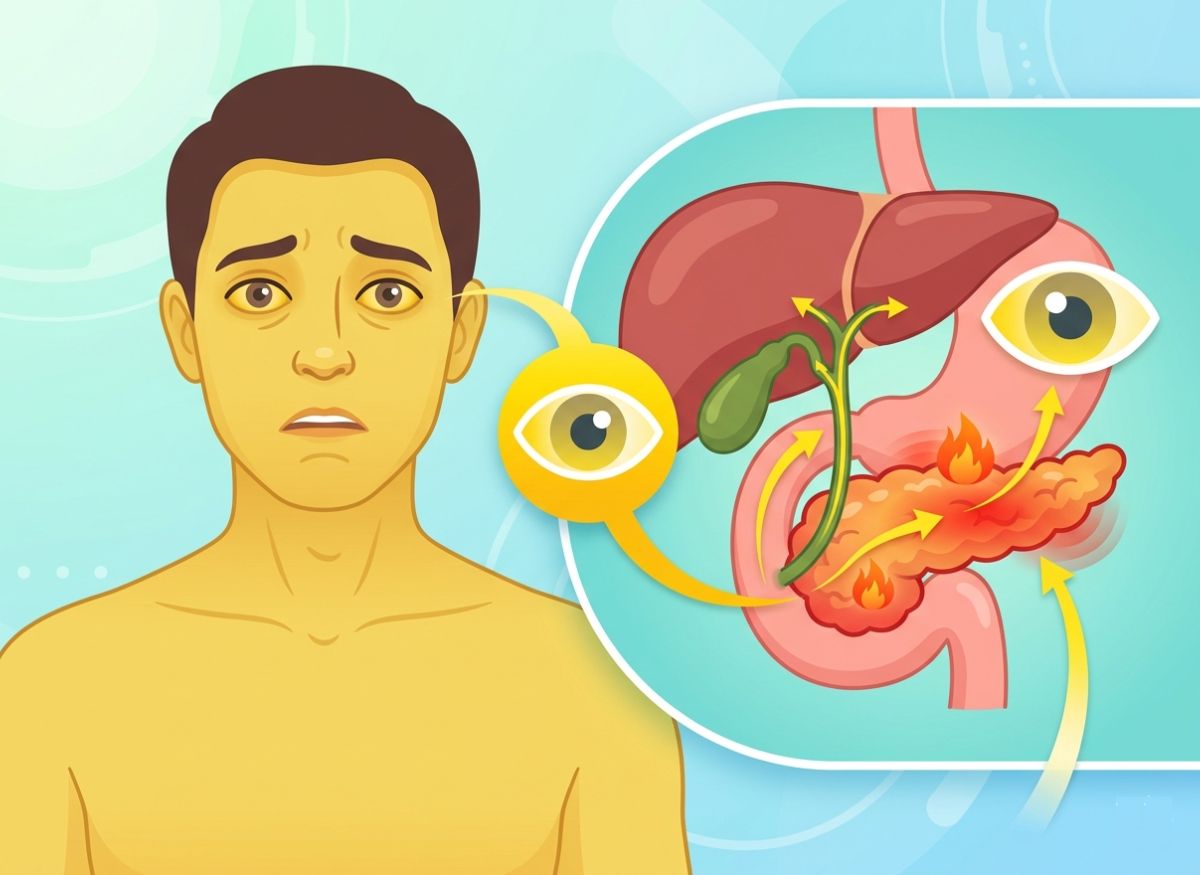
5. Jaundice (Yellowing of Skin and Eyes)
Yes, jaundice, a yellowing of the skin and whites of the eyes (sclera), can be a warning sign. It doesn’t occur in every case, but when it does it suggests a specific complication linked to where the inflammation is. Jaundice means the bile duct system is obstructed, so bile can’t flow normally from the liver to the small intestine.
This comes down to anatomy: the pancreas lies very close to the common bile duct, which explains why jaundice can be a key diagnostic clue.
- Bile duct obstruction: The head of the pancreas wraps around the lower part of the common bile duct, which carries bile from the liver and gallbladder to the small intestine. When the pancreas, especially its head, becomes inflamed and swollen, it can squeeze the duct shut and stop bile from draining.
- Bilirubin buildup: Bile contains bilirubin, a yellow pigment from old red blood cells. Normally the liver processes it, it leaves in bile, and it exits in stool, giving stool its brown color. With a blocked duct, bilirubin backs up into the liver and spills into the bloodstream. As blood levels rise, it deposits in tissues, most visibly turning the skin and eyes yellow.
- Associated symptoms: Jaundice from bile duct obstruction often brings dark urine (as the kidneys try to excrete excess bilirubin) and pale or clay-colored stools (since bilirubin isn’t reaching the intestines). Itching (pruritus) from bile salts in the skin is also common. Jaundice often points to gallstone pancreatitis, since a gallstone may be blocking the bile duct.
6. Oily, Foul-Smelling Stools (Steatorrhea)
Steatorrhea means the body isn’t digesting fat properly. It is a classic sign of pancreatic insufficiency, most often linked to chronic pancreatitis. The stools are typically pale, bulky and hard to flush, and may look greasy or show visible oil droplets floating in the toilet water. It can occasionally occur in severe acute pancreatitis, but it is far more prominent with long-term pancreatic damage.
It is a direct sign that the pancreas is failing at one of its most important digestive jobs: producing and releasing lipase, the enzyme that breaks down dietary fat.
- Enzyme deficiency: A healthy pancreas releases a mix of enzymes into the small intestine to break down fats, proteins and carbohydrates, and lipase is the key one for fat. In chronic pancreatitis, repeated inflammation causes permanent scarring and destruction of the enzyme-producing acinar cells. Once more than 90% of that capacity is lost, there isn’t enough lipase to digest the fat in a meal.
- Fat malabsorption: Without lipase, fat passes undigested and unabsorbed through the intestines. That large amount of fat in the stool makes it oily, bulky and pale. The foul odor comes from colon bacteria breaking the fat down and producing smelly gases.
- Nutritional deficiencies: Steatorrhea signals significant malabsorption. Because fat isn’t absorbed, neither are the fat-soluble vitamins A, D, E and K. Over time this can cause night blindness (vitamin A), bone disease such as osteoporosis (vitamin D), neurological problems (vitamin E) and bleeding disorders (vitamin K). It also feeds directly into the next warning sign, weight loss.
7. Unexplained Weight Loss
Yes, unexplained, unintentional weight loss is a significant warning sign, particularly of chronic pancreatitis. It is usually gradual but can become substantial over time. It isn’t caused by dieting or more exercise. It results from the body’s inability to digest and absorb nutrients, known as malabsorption.
Weight loss in chronic pancreatitis has several causes, from the physical inability to process nutrients to behavior changes driven by symptoms:
- Malabsorption of nutrients: As with steatorrhea, a damaged pancreas can’t make enough enzymes, so fats, proteins and carbohydrates are all poorly digested. The body is deprived of the calories and building blocks it needs and is effectively starving despite normal eating. This is the primary driver of weight loss.
- Pain-related food avoidance: Fear of eating is a major factor. Severe pain that worsens after meals leads people to eat smaller portions or skip food, creating a big calorie deficit that speeds weight loss.
- Increased metabolic demand: Chronic inflammation is metabolically expensive, burning a lot of calories. Combined with lower intake and poor absorption, it creates a perfect storm for rapid, progressive weight loss. The body breaks down its own fat and muscle for energy, leading to muscle wasting (cachexia) and a frail appearance.
Causes and Risk Factors for Pancreatitis
Gallstones and Alcohol Consumption
Gallstones and heavy alcohol use are by far the two most common causes, especially of acute pancreatitis. Together they account for roughly 70-80% of hospital admissions for the condition. They act through different mechanisms, but both end in premature activation of digestive enzymes inside the pancreas, causing inflammation and tissue damage.
Their roles are well established, though the precise cellular mechanisms are still being researched.
- Gallstones (gallstone pancreatitis): Gallstones are hardened deposits of digestive fluid that form in the gallbladder, and they are the leading cause of acute pancreatitis. The pancreas and gallbladder share a drainage channel, the ampulla of Vater, which empties into the small intestine. A small stone can leave the gallbladder, pass through the common bile duct and lodge at this narrow opening, blocking the flow of pancreatic juice. The resulting pressure in the duct triggers inappropriate enzyme activation inside the pancreas, which then starts digesting the organ itself.
- Alcohol consumption: Chronic heavy drinking is the second leading cause of acute pancreatitis and the number one cause of chronic pancreatitis. The exact damage is complex. Alcohol is believed to be metabolized in the pancreas into toxic byproducts that injure the acinar cells, making them more vulnerable and prone to releasing enzymes too early. Alcohol can also thicken pancreatic secretions, which are then more likely to form protein plugs that block small ducts and start inflammation. Risk rises significantly with the amount and duration of drinking.
Other Conditions to Increase Risk of Pancreatitis
Beyond these two, other medical conditions, lifestyle factors and genetic predispositions raise risk. They may cause pancreatitis on their own or lower the threshold at which gallstones or alcohol trigger an attack. Together they show how complex pancreatic health is.
- High triglycerides (hypertriglyceridemia): Extremely high blood levels of these fats can cause acute pancreatitis. Above 1,000 mg/dL, breakdown of the fats in the pancreatic capillaries is thought to release high concentrations of toxic free fatty acids that injure acinar cells and blood vessels, causing inflammation and reduced blood flow.
- Certain medications: Some prescription drugs are less common but recognized causes, including certain diuretics (e.g., furosemide, hydrochlorothiazide), antibiotics (e.g., tetracycline) and immunosuppressants (e.g., azathioprine). The mechanism is often unpredictable and not fully understood.
- Post-ERCP: Endoscopic retrograde cholangiopancreatography (ERCP) diagnoses and treats bile and pancreatic duct problems. Though therapeutic, it can irritate the pancreatic duct opening and cause post-ERCP pancreatitis in a small percentage of patients.
- Abdominal injury or trauma: Direct injury to the abdomen or pancreas, from an accident or abdominal surgery, can cause inflammation and traumatic pancreatitis.
- Genetic and hereditary factors: Certain gene mutations predispose people to pancreatitis. Hereditary pancreatitis is a rare disorder causing recurrent acute episodes, often starting in childhood and progressing to chronic pancreatitis. Mutations in genes such as PRSS1, SPINK1 and CFTR raise risk.
- Autoimmune diseases: In autoimmune pancreatitis, the immune system mistakenly attacks the pancreas. It can be associated with other autoimmune conditions like inflammatory bowel disease (Crohn’s disease and ulcerative colitis) and Sjögren’s syndrome.
- Anatomical abnormalities and blockages: Structural issues such as pancreas divisum (a common congenital problem where the pancreatic ducts don’t fuse properly), sphincter of Oddi dysfunction, or a benign or malignant tumor can impede pancreatic juice flow and cause pancreatitis.
When to Seek Medical Attention for Signs of Pancreatitis
Warning Signs of Pancreatitis a Medical Emergency
The classic signs, especially severe, unrelenting abdominal pain with vomiting and fever, are a medical emergency. Acute pancreatitis can’t be managed at home. It can progress rapidly to life-threatening complications, including systemic inflammatory response syndrome (SIRS), organ failure and pancreatic necrosis (tissue death).
Immediate hospitalization is essential for diagnosis, pain control and supportive care to prevent these outcomes. The urgency comes from the risk that local inflammation in the pancreas triggers a body-wide inflammatory cascade.
- Risk of severe complications: In about 20% of cases, acute pancreatitis becomes severe. A massive release of inflammatory cytokines causes widespread inflammation. Fluid can leak from blood vessels, causing a dangerous drop in blood pressure (shock). Fluid can also collect in the lungs, causing acute respiratory distress syndrome (ARDS), and the kidneys can shut down, causing acute kidney failure.
- Pancreatic necrosis and infection: Inflammation can become so severe that it cuts off blood supply to parts of the pancreas, killing the tissue. This necrotic tissue is highly prone to bacterial infection, which can lead to a pancreatic abscess or sepsis, a life-threatening body-wide infection. These complications need intensive care, often with surgery or drainage, and carry a high mortality rate.
- Necessity of hospital-based care: Treatment is supportive care that only a hospital can provide: aggressive intravenous (IV) fluids to fight dehydration and support organs, strong IV pain medication, and bowel rest (no food or drink) to let the pancreas calm down. Patients are closely monitored so the team can intervene quickly if things worsen.
What Should You Tell a Doctor About Your Symptoms?
To help a doctor diagnose you quickly and accurately, give a clear, detailed description of your symptoms, especially the pain and any related issues, plus your relevant medical history. Good communication speeds up the process, which typically involves blood tests (for pancreatic enzymes like amylase and lipase) and imaging such as a CT scan.
Being prepared helps the medical team. Organize your thoughts around these points:
1. Pain details
- Location: Be precise. Upper-middle abdomen, right or left side? Above all, say whether the pain radiates or “goes through” to your back.
- Onset: When exactly did it start? Was it sudden and severe, or did it build gradually?
- Quality: Is it sharp, dull, stabbing, burning, or a constant “boring” sensation?
- Intensity: Rate it from 1 to 10, with 10 the worst pain imaginable.
- What makes it better or worse: Mention anything that relieves it (like leaning forward) or worsens it (like lying flat or eating).
2. Associated symptoms
List everything else you’re experiencing: nausea, vomiting (how many times and what it looked like), fever, chills, rapid heartbeat, shortness of breath, or yellowing of the skin or eyes (jaundice).
3. Relevant medical history
This is critical for finding the cause.
- Any known history of gallstones
- Honest details about your alcohol use, including how much and how often
- History of high triglycerides, diabetes or autoimmune conditions
- Recent abdominal surgeries or procedures, especially an ERCP
- Family history of pancreatitis or pancreatic cancer
4. Current medications
Give a complete list of prescriptions, over-the-counter drugs, vitamins and supplements, as some can be linked to pancreatitis.
Pancreatitis Diagnosis
A definitive diagnosis combines clinical evaluation, blood tests and imaging to confirm pancreatic inflammation and find its cause. The doctor begins with a physical exam and medical history, focusing on symptoms like severe abdominal pain, nausea and vomiting, and on risk factors such as gallstones or alcohol use.
The most important step is blood tests measuring pancreatic enzymes. In acute pancreatitis, amylase and lipase are typically at least three times the normal upper limit. Lipase is considered more specific and reliable because it stays elevated longer.
Other blood work can check for infection, anemia, dehydration, and high calcium or triglycerides, which may be contributing. Imaging then helps confirm the diagnosis and assess the extent of damage.
- Abdominal ultrasound: Often the first imaging test and non-invasive. It is especially good at finding gallstones in the gallbladder or bile duct, a common cause of acute pancreatitis.
- Computed tomography (CT) scan: A contrast CT gives detailed cross-sectional images of the pancreas, clearly showing inflammation, swelling and complications such as fluid collections (pseudocysts) or tissue death (necrosis).
- Magnetic resonance imaging (MRI): MRI, especially magnetic resonance cholangiopancreatography (MRCP), gives highly detailed views of the pancreatic and bile ducts without radiation, making it ideal for spotting small stones or blockages.
Long-Term Complications of Pancreatitis
Many cases resolve without lasting problems, but severe or recurrent episodes can cause significant and sometimes life-threatening long-term complications, stemming from extensive inflammation, tissue damage and the body-wide effects of the disease. One common local complication is a pancreatic pseudocyst, a collection of fluid, tissue debris and pancreatic enzymes walled off by fibrous tissue.
A large pseudocyst can cause pain, block the stomach or small intestine, become infected or even rupture, causing internal bleeding. An even more severe complication is pancreatic necrosis, where part of the pancreas dies from lack of blood supply. Dead tissue is highly susceptible to infection (infected necrosis), which can lead to sepsis and organ failure with a high mortality rate.
The long-term effect on how the pancreas works can also be profound, particularly after chronic pancreatitis or severe acute pancreatitis.
- Exocrine pancreatic insufficiency (EPI): Permanent damage can destroy the enzyme-producing cells. Without those enzymes the body can’t properly digest fats and proteins, causing chronic diarrhea, oily stools (steatorrhea), malnutrition and significant weight loss.
- Diabetes mellitus: Pancreatitis can damage the insulin-producing islet cells, leading to a specific form called type 3c diabetes, which requires insulin therapy and careful blood sugar management.
- Increased cancer risk: Chronic inflammation is a known risk factor for cellular changes. People with chronic pancreatitis, especially the hereditary form, have a substantially higher lifetime risk of pancreatic cancer.
FAQs
1. How is pancreatitis pain different from gallbladder attack pain?
Pancreatitis pain is classically in the upper-central abdomen (epigastric region), just below the breastbone. Its most distinctive feature is that it often radiates directly through to the back, and it is described as constant, severe and boring or drilling. It tends to worsen after eating or drinking and may ease slightly when leaning forward or curling up. Unlike some abdominal pain, it is generally unrelenting and doesn’t come in waves.
Gallbladder attack pain is usually centered in the upper-right abdomen, just beneath the right rib cage, where the gallbladder sits.
- Location and radiation: Pancreatitis pain is central, while gallbladder pain is distinctly on the right. It often radiates to the right shoulder blade, the back or between the shoulder blades.
- Character and triggers: Gallbladder pain is often sharp, cramping or gripping and can be intensely severe. It is famously triggered by a large or fatty meal, which makes the gallbladder contract against a blockage, usually a gallstone.
- Duration: Biliary colic can be constant but often builds to a peak and lasts several hours before easing, whereas acute pancreatitis pain typically persists until medical treatment is given. The symptoms can overlap, and since a gallstone can cause pancreatitis, a medical diagnosis is essential.
2. What is the difference between acute and chronic pancreatitis?
Acute pancreatitis is a sudden, short-term inflammatory event from which the pancreas can often recover fully with proper treatment. It brings abrupt, severe, constant upper abdominal pain that frequently radiates to the back, with nausea and vomiting.
The most common causes are gallstones lodging in the bile duct or excessive alcohol, which trigger premature enzyme activation inside the pancreas, leading to self-digestion and inflammation. In most cases the inflammation settles within several days to a week with supportive care such as IV fluids, pain management and bowel rest, and the pancreas usually returns to normal structure and function.
Chronic pancreatitis is a long-lasting, progressive condition with persistent inflammation that causes irreversible scarring (fibrosis) and permanent damage.
- Onset and progression: It often develops after repeated acute episodes, particularly with long-term heavy drinking, but can also stem from genetic mutations, autoimmune disorders or blocked pancreatic ducts.
- Symptoms and damage: Pain may be constant or intermittent and can eventually lessen as the pancreas becomes more damaged. As it worsens, the pancreas loses the ability to make digestive enzymes (exocrine insufficiency) and insulin (endocrine insufficiency), causing malabsorption, oily stools (steatorrhea), weight loss and eventually diabetes.
- Outcome: Unlike acute pancreatitis, the damage is permanent, so treatment focuses on managing symptoms, pain and complications like diabetes and malnutrition rather than a cure.
3. What does the start of pancreatitis feel like?
It often begins as a deep, steady ache in the upper abdomen that won’t go away. The pain can spread to the back and feel stronger when lying flat, while sitting forward may bring slight relief. Nausea and a general sense of unease are common. It isn’t pain that fades quickly, which is often the first clue that something more serious is going on.
4. What triggers pancreatitis?
Several underlying factors can trigger it. The most common are gallstones and excessive alcohol, both of which can block or irritate the pancreatic ducts. Flare-ups can also be linked to high triglycerides, certain medications, abdominal injuries or infections.
Sometimes large, fatty meals put extra strain on the pancreas. In other cases the cause isn’t clear, which makes prevention harder. Identifying your personal triggers plays an important role in reducing the risk of future episodes.
5. What can be mistaken for pancreatitis?
Its symptoms are easily confused with other digestive or abdominal conditions, such as acid reflux, gastritis, gallbladder problems or a stomach virus. The upper abdominal pain can also resemble ulcers or, in some cases, heart-related problems.
Because the overlap is so large, you can’t rely on how it feels to identify the cause. Persistent or worsening pain, especially with nausea or fever, should never be ignored. Proper medical evaluation is the only way to know for sure.
Conclusion
Pancreatitis rarely comes with a clear warning label. It often starts with discomfort that’s easy to dismiss: a lingering ache, a wave of nausea, or a feeling that something isn’t right. Many people wait and hope it passes, only to realize later that their body was signaling something serious. That delay can change how the condition progresses and how hard recovery becomes.
Recognizing the early signs gives you an advantage many people miss. Persistent upper abdominal pain, digestive changes or unexplained fatigue should never be brushed aside, especially when they appear together or continue over time. The pancreas plays a quiet but essential role in the body, and when it is inflamed, the effects can spread well beyond digestion.
Your health often depends on how quickly you respond to subtle changes. Paying attention now can prevent a far more difficult situation later.