
6 Warning Signs of Laryngomalacia in Babies and Infants
If your newborn makes a strange squeaky or whistling sound when they breathe, feed, or cry, it can be scary. Often, this noise comes from a condition called laryngomalacia the most common reason for noisy breathing in babies. Here’s what parents should know about spotting it and when to worry.
Laryngomalacia happens when the tissue sitting just above the voice box is floppier than normal, so it caves inward with each breath. That partial blockage creates a high-pitched sound doctors call stridor. Most babies grow out of it as their airway firms up, but a smaller group struggles with feeding, breathing effort, or weight gain and needs closer care.
The condition shows up in roughly 1 out of every 2,000 to 3,000 newborns, though mild cases are easy to miss. Signs usually appear in the first few weeks of life and get louder during feeding, crying, excitement, or when the baby lies flat on their back.
Every baby is a little different some just have occasional noisy breaths, while others show clearer signs that feeding or breathing is genuinely affected. Knowing what to watch for helps parents decide when it’s worth a call to the pediatrician.
What is Laryngomalacia and What Causes This Condition in Infants?
Laryngomalacia is the most common birth-related issue affecting the larynx. It happens because the cartilage and tissue above the vocal cords are still immature, so they fold into the airway on every inhale.
What is the Medical Definition of Laryngomalacia?
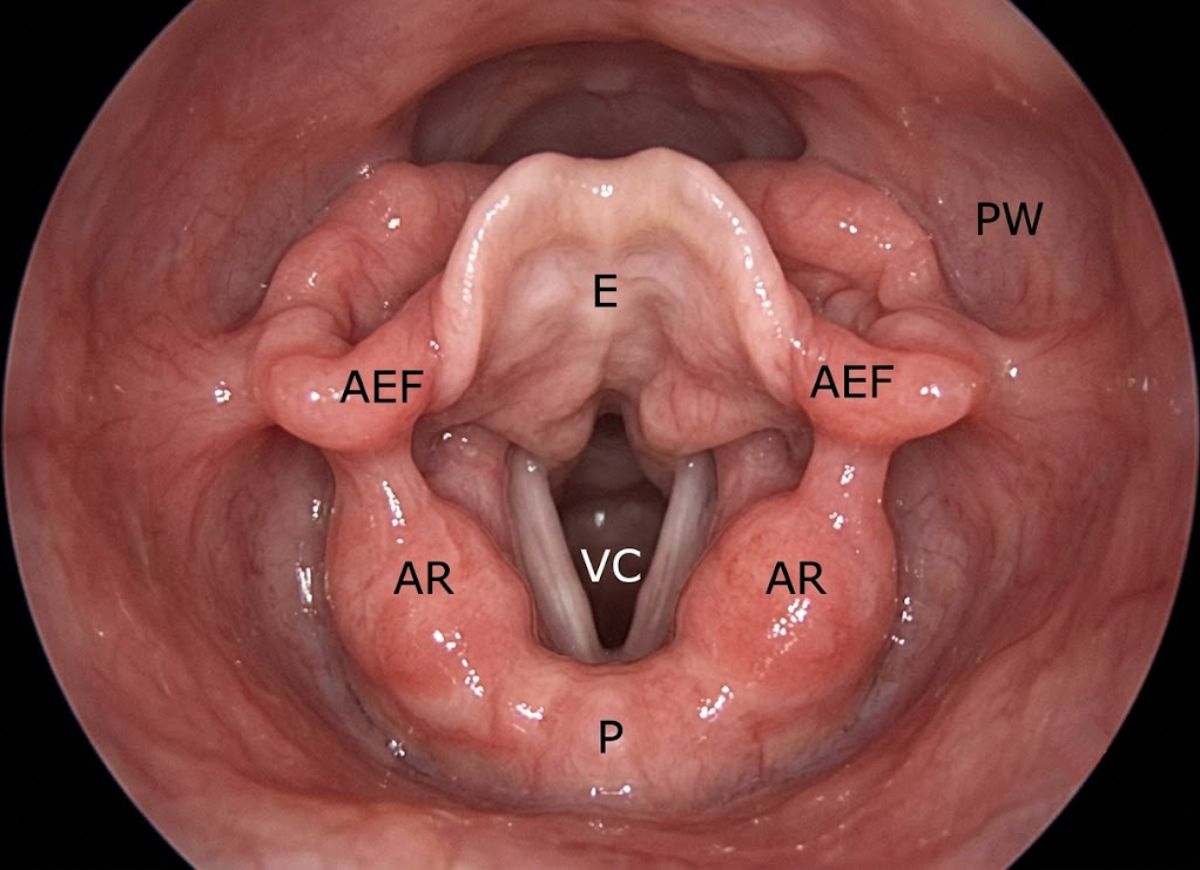
In medical terms, it’s the leading cause of congenital stridor the airway tissue above the vocal cords (the epiglottis, the arytenoid cartilages, and the folds connecting them) collapses inward each time the baby breathes in.
That collapse narrows the airway just enough that air rushes through turbulently, producing the tell-tale high-pitched sound. The word itself simply means “soft larynx” “laryngo” for larynx, “malacia” for softening.
Think of sipping a thick milkshake through a flimsy wet paper straw: the suction flattens the straw’s walls. The same thing happens in a baby’s throat inhaling creates suction that pulls the soft tissue down and inward, partly blocking the opening to the windpipe.
Different babies collapse in different spots. Some have a long, curled (“omega-shaped”) epiglottis that folds backward; others have extra-bulky tissue over the arytenoid cartilages that falls forward. Because the blockage only happens on the in-breath, the noise is almost always heard on inhale, not exhale.
What Are the Underlying Causes of Laryngomalacia?
Most experts believe the root cause is that the nerves and muscles controlling the larynx simply haven’t matured enough yet not that the cartilage itself is flawed. In an older child or adult, these muscles keep the airway rigid. In a newborn with laryngomalacia, that muscle tone isn’t quite there yet, so the tissue goes floppy during breathing.
A few things can make it worse:
- Anatomy: Some babies are simply built with airway structures more prone to collapsing a backward-tilted epiglottis, tight folds that tug the epiglottis out of place, or extra soft tissue over the cartilage.
- Reflux: There’s a strong link between laryngomalacia and GERD some studies suggest up to 80% of babies with severe laryngomalacia also have significant reflux. It can work both ways: obstructed breathing can pull stomach contents upward, and acid reaching the larynx can irritate and swell the tissue, making the collapse worse.
- Underlying neurological conditions: In a smaller number of cases, laryngomalacia is part of a broader pattern of low muscle tone linked to conditions like cerebral palsy or certain genetic syndromes.
6 Key Laryngomalacia Symptoms
Inspiratory Stridor
This is the classic symptom a high, musical, almost crowing sound heard only when the baby breathes in. It happens because the loose tissue vibrates as it’s pulled toward the airway during inhalation.
The sound tends to get louder when the baby is upset, excited, crying, or feeding, since deeper breaths pull harder on the floppy tissue. It usually quiets down when the baby is calm or asleep. Position matters too lying flat on the back tends to make it worse, since gravity lets the tissue fall back more easily, while tummy time or being held upright often helps.
Feeding Noises
Babies with laryngomalacia often grunt, snort, or gasp while feeding. Sucking, swallowing, and breathing all have to work together in perfect rhythm, and a partly blocked airway throws that timing off.
As the baby works harder to feed and breathe at once, the airway collapse can worsen, producing these extra sounds. The baby may seem congested or like they’re struggling to catch their breath between swallows a sign that the obstruction is starting to interfere with feeding, one of their most essential jobs.
Suprasternal and Sternal Retractions
Retractions are visible sinking of the skin around the chest and neck with each breath in a clear sign the baby is working harder than normal to pull in air.
To push past the blockage, the baby has to generate much stronger suction using the diaphragm and chest muscles, which pulls the softer parts of the chest wall inward. This can show up above the breastbone, over the breastbone itself, between the ribs, or just below the rib cage.
Mild retractions during crying or feeding aren’t unusual. But retractions that persist even when the baby is calm and relaxed point to more serious obstruction and should be checked by a doctor.
Cyanosis (Rarely)
Cyanosis is a bluish tint to the skin, lips, tongue, or nail beds, and it signals a real lack of oxygen. It’s rare in laryngomalacia and only shows up when the blockage is severe enough that the baby can’t get enough air.
It might appear during intense crying, feeding, or a breathing pause. Any bluish tint even brief is a medical emergency and needs an immediate trip to the ER or a call to emergency services.
Difficulty Feeding
Feeding can be genuinely tiring for a baby whose airway is partly blocked, because coordinating sucking, swallowing, and breathing becomes much harder.
You might notice the baby pulling off the breast or bottle to gasp for air, choking, gagging, or sputtering on milk, or feeds that drag on because the baby tires out before finishing. Some babies start to associate feeding with the discomfort of not being able to breathe well, leading to arching, crying, or refusing to eat often alongside louder stridor and retractions during the feed.
Poor Weight Gain (Failure to Thrive)
When a baby is working this hard just to breathe, it burns extra calories sometimes 30–40% more than a healthy baby needs. Combine that with the fact that feeding itself is harder, and the baby may simply not take in enough calories to keep up.
When calories burned outpace calories eaten, weight gain slows or stalls sometimes called “failure to thrive.” It’s a strong sign that the laryngomalacia is more than mild and needs medical follow-up.
When to Seek Medical Help?
Most babies with laryngomalacia around 90% have a mild form. They’re noisy when upset but otherwise happy, feeding well, growing on schedule, and hitting milestones. These cases are usually managed with simple home strategies (like holding the baby upright after feeds) and sometimes reflux medication, with regular pediatric checkups.
Some symptoms, though, call for urgent care either an urgent call to the doctor or a trip to the ER:
- Cyanosis any blue tinge to the lips, tongue, or skin
- Apnea pauses in breathing lasting several seconds
- Severe, persistent retractions visible pulling in of the chest or neck even when the baby is calm
- Feeding refusal or signs of dehydration fewer wet diapers, choking so badly the baby can’t eat
- Extreme lethargy or irritability a baby who seems unusually floppy, unresponsive, or impossible to console
The key isn’t stridor by itself it’s the overall picture of how well the baby is coping. If something feels wrong to you as a parent, that instinct is worth acting on.
Laryngomalacia Diagnosis
The gold-standard test is flexible fiberoptic laryngoscopy a direct look at the larynx while the baby is awake and breathing normally.
A parent or nurse holds the baby securely while the doctor gently guides a thin, flexible camera through the nostril and down to the throat. It takes less than a minute and may cause brief discomfort or gagging, but it isn’t painful.
The doctor watches the supraglottic tissue as the baby inhales; seeing that characteristic inward collapse confirms the diagnosis and rules out other causes of noisy breathing. It also helps the doctor judge how severe the collapse is and exactly which tissues are involved.
Different Types of Laryngomalacia
Doctors classify laryngomalacia by which part of the airway collapses:
- Type 1: Redundant tissue over the arytenoid cartilages, along with the aryepiglottic folds, gets pulled into the airway.
- Type 2: Short, tight aryepiglottic folds pull the epiglottis into a curled, “omega” shape that blocks the airway.
- Type 3: The epiglottis itself is weak and falls backward during inhalation, covering the airway opening.
Laryngomalacia and Other Infant Breathing Conditions like Tracheomalacia
Laryngomalacia and tracheomalacia both cause noisy breathing from soft, collapsing tissue, but in different places.
Laryngomalacia affects the larynx (voice box), the upper part of the airway, producing a high-pitched sound on inhale. Tracheomalacia affects the trachea (windpipe) further down, where weak cartilage collapses usually during exhale, coughing, or crying producing a lower, rattling sound or a barky cough.
Doctors can often tell them apart just by the sound, but imaging or direct visualization is needed to confirm which one (or both) is present, since treatment differs.
What is a Supraglottoplasty and When is This Surgery Considered?
A supraglottoplasty is a minimally invasive surgery for severe laryngomalacia, done through the mouth with a laryngoscope no external cuts needed. The surgeon trims the excess floppy tissue that’s blocking the airway, whether that’s the aryepiglottic folds, tissue over the arytenoid cartilages, or the position of the epiglottis, depending on the type involved.
This surgery is only used for the small percentage of babies with serious complications, such as:
- Severe breathing trouble cyanosis, dangerous pauses in breathing, or deep retractions
- Breathing problems bad enough to prevent adequate feeding, causing poor weight gain or missed developmental milestones
- Severe reflux that doesn’t respond to medication, or complications like pulmonary hypertension
FAQs
1. Does laryngomalacia go away on its own?
Yes, usually. As the airway tissue matures, symptoms typically fade and often resolve between 12 and 24 months. Some babies with more significant symptoms need ongoing monitoring or treatment.
2. What is the best position to feed a baby with laryngomalacia?
An upright position with good head and neck support tends to work best. Smaller, more frequent feeds with pauses can also help. Talk to a pediatric provider if feeding is a struggle.
3. Does laryngomalacia sound like congestion?
Not quite laryngomalacia produces a higher-pitched stridor sound, especially during crying, feeding, or lying flat, while congestion tends to sound more like snuffling from a blocked nose.
4. Can babies with laryngomalacia sleep on their back?
Yes back sleeping is still the recommended safe-sleep position unless a doctor says otherwise, even if breathing sounds louder in that position.
5. Do all babies with laryngomalacia have reflux?
No, but the two often occur together, and reflux can make breathing noises or feeding discomfort more noticeable.
6. Do babies with laryngomalacia choke more?
Some do have more coughing, gagging, or choking during feeds because coordinating breathing and swallowing is harder. Frequent or stressful choking is worth discussing with a pediatrician.
7. Can kids with laryngomalacia talk?
Yes it’s an airway issue, not a brain or language issue, so speech development is typically normal.
8. Does crying make laryngomalacia worse?
Crying makes the noise louder because of increased airflow, but that doesn’t necessarily mean the condition is worsening. Severe distress or color changes during crying should be checked out.
9. Does laryngomalacia affect the brain?
No it’s purely a structural airway issue, and most babies develop normally.
10. Is laryngomalacia linked to SIDS?
It isn’t considered a direct cause of SIDS. Following safe sleep guidelines remains important regardless.
Conclusion
Laryngomalacia is a common, usually mild condition that causes noisy breathing in babies. Knowing the warning signs feeding trouble, breathing changes, and slow weight gain helps parents know when it’s time to check in with a doctor. With the right monitoring, most babies with laryngomalacia grow and thrive normally.