7 Lisfranc Injury Symptoms of Midfoot Damage
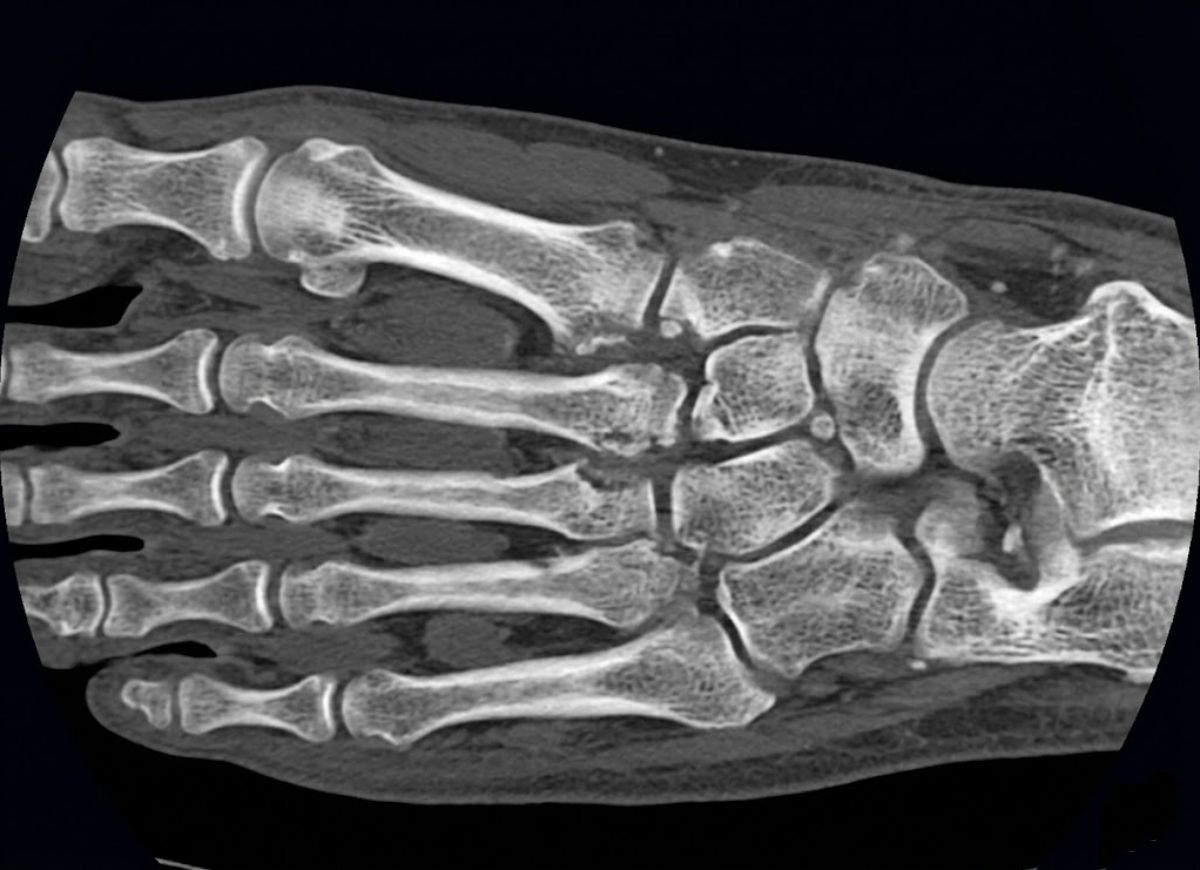
Have you ever had a foot injury that seemed minor at first but continued to cause pain, swelling, or trouble walking? A Lisfranc injury is a type of midfoot injury that can be easy to miss but may cause long-term problems if it is not recognized and treated properly. It affects the joints and ligaments connecting the bones in the middle of the foot, an area that plays an important role in balance, stability, and movement.
The midfoot helps support your body weight and allows the foot to adjust as you walk, run, and stand. When the Lisfranc joint area is injured, even everyday activities can become uncomfortable or painful. Some injuries occur after major trauma, such as a car accident or sports injury, while others happen after a simple twist, fall, or misstep. Because the symptoms can sometimes look like those of an ordinary sprain, these injuries may be overlooked during an initial evaluation.
The symptoms of a Lisfranc injury can vary depending on how serious the damage is. Common signs include pain in the middle of the foot, swelling, bruising, difficulty putting weight on the foot, and pain that becomes worse with movement. Some people may feel better when resting but develop significant pain again when they become active.
Recognizing these symptoms is important because untreated midfoot damage can affect foot function and mobility over time.
Although Lisfranc injuries are less common than many other foot injuries, they deserve careful attention because the bones and ligaments involved are essential for normal foot mechanics. Early diagnosis and appropriate treatment can support recovery and reduce the chance of lasting complications.
In this article, we will look at 7 key Lisfranc injury symptoms, what can cause this type of midfoot damage, how doctors diagnose it, treatment options, and when medical evaluation may be necessary.
7 Key Symptoms of a Lisfranc Injury
Pain and Swelling on Top of the Midfoot
Pain and swelling from a Lisfranc injury often occur on the top of the middle part of the foot. Unlike an ankle sprain, where swelling is usually concentrated around the ankle, Lisfranc injuries can cause noticeable swelling across the midfoot.
This happens because the tarsometatarsal (TMT) joint complex has been injured, leading to inflammation and fluid buildup. The pain may feel deep, aching, or sharp and often becomes more noticeable when you try to push off the foot while walking.
Bruising on the Top and Bottom of the Foot (Plantar Ecchymosis)
Bruising can occur with many different foot injuries, but bruising on the sole of the foot is an important warning sign of a Lisfranc injury. This type of bruising is called plantar ecchymosis.
It can indicate bleeding or damage involving the deeper ligaments and bones of the midfoot. When blood moves through the tissues and becomes visible on the bottom of the foot, it may suggest that the injury is more significant than a simple sprain.
Inability to Bear Weight
A significant Lisfranc injury can make it extremely painful or impossible to put weight on the affected foot.
The Lisfranc joint helps transfer force from the lower leg to the front of the foot during walking. When this structure is damaged or unstable, putting weight on the foot can cause severe pain and may place additional stress on the injured area.
Pain That Worsens with Standing or Walking
Some less obvious Lisfranc injuries still allow a person to put weight on the foot, but the pain often becomes worse with standing, walking, or pushing off with the toes.
A person may feel relatively comfortable while sitting or resting but develop increasing midfoot pain after walking for a short time. This happens because weight-bearing places stress on the injured TMT joints.
Widening of the Foot
A severe Lisfranc injury involving dislocation may change the shape of the foot. The injured foot may look wider or flatter than the other foot.
This can happen when damaged ligaments no longer hold the metatarsal bones securely in their normal positions. As the bones move apart, the normal structure of the foot can become unstable.
An Audible “Pop” or “Snap” at the Time of Injury
Some people report hearing or feeling a noticeable “pop” or “snap” when the injury occurs.
This may happen when a ligament tears or when one of the bones in the midfoot is fractured. It can be particularly noticeable during a sudden, high-force injury.
Tenderness to the Touch Over the Midfoot Region
Tenderness directly over the middle of the foot is another important sign. During an examination, a healthcare provider may press along the TMT joint area to identify the exact location of pain.
Tenderness between the base of the first and second metatarsals can provide an important clue when determining whether a Lisfranc injury may be present.
What is Plantar Ecchymosis and Why is It a Unique Sign?
Plantar ecchymosis is the medical term for bruising on the sole of the foot. It is considered an important sign of a Lisfranc injury because it may indicate damage deep within the structures of the midfoot.
The Lisfranc ligament and TMT joints are located within the deeper structures of the foot. When these tissues are injured, blood can move through surrounding tissues and eventually become visible on the bottom of the foot.
A typical ankle sprain or a simple bruise on the top of the foot usually causes discoloration closer to the area of injury. Bruising that extends to the sole can therefore provide an additional clue that the midfoot has suffered a more significant injury.
When plantar ecchymosis appears after trauma, a healthcare provider may consider a Lisfranc injury and recommend further evaluation. Weight-bearing X-rays or other imaging may be needed to determine whether the joints and bones remain properly aligned.
Pain From a Lisfranc Injury
Pain from a Lisfranc injury is not always severe at first, which is one reason these injuries can sometimes be mistaken for ordinary sprains. High-impact injuries, such as car accidents or falls from significant heights, often cause immediate and severe pain. Less forceful injuries may produce more subtle symptoms.
A low-energy Lisfranc injury can happen after twisting the foot, stumbling over a curb, or missing a step. In these situations, the initial pain may be moderate and may improve when the person rests.
However, the way the pain behaves can provide an important clue. Even when the initial discomfort is mild, pain often becomes worse when the person stands, walks, or pushes off the ball of the foot.
Someone may have little discomfort while sitting but develop sharp, localized pain in the midfoot once they put weight on it.
Other symptoms can provide additional clues. Localized tenderness over the TMT joints, swelling on the top of the foot, or bruising that develops on the sole may indicate a more significant injury, even when the original pain seemed minor.
Ignoring persistent midfoot pain after an injury can allow an unstable problem to continue and may increase the risk of long-term foot complications.
What Exactly is a Lisfranc Injury?
A Lisfranc injury affects the midfoot and involves the Lisfranc joint, also known as the tarsometatarsal (TMT) joint complex. This area connects the metatarsal bones, which extend toward the toes, with the tarsal bones located farther back in the foot.
The joint complex helps form part of the foot’s arch and plays an important role in stability and movement during walking and running.
A Lisfranc injury can involve a ligament sprain, a fracture, a dislocation, or a combination of these injuries called a fracture-dislocation.
The Lisfranc ligament is particularly important. It connects the medial cuneiform bone to the base of the second metatarsal and helps stabilize the middle of the foot.
When this ligament is severely damaged, the bones can move out of their normal alignment, causing instability in the midfoot. Because this area carries significant force during everyday movement, damage to its supporting structures can be serious.
If a Lisfranc injury is not properly treated, it may contribute to problems such as chronic instability, changes in the foot’s arch, and post-traumatic arthritis.
What Are The Common Ways a Lisfranc Injury Occurs?
Lisfranc injuries can occur through low-energy indirect trauma or high-energy direct trauma. The two mechanisms can produce different patterns of damage.
Low-Energy Indirect Trauma: This type of injury can happen when the foot is planted while the body or another force causes it to twist. It is commonly seen in sports when an athlete’s foot is fixed on the ground and another player lands on or pushes against the back of the heel.
Everyday accidents can also cause this type of injury. Missing a step, stumbling over a curb, or twisting the body while the foot remains planted can place significant stress on the midfoot.
These injuries may involve ligament damage or small fractures, which can make them more difficult to identify on an initial X-ray.
High-energy direct trauma involves a powerful force applied directly to the foot. Examples include motor vehicle accidents, falls from significant heights, and situations in which a heavy object lands on the foot.
These injuries can cause fractures, dislocations, and substantial damage to the surrounding tissues. Because the injury is often more severe, there may be visible deformity, significant swelling, or other obvious signs of damage.
Direct and Indirect Causes of Lisfranc Injuries
Direct and indirect trauma can both cause Lisfranc injuries, but the severity and pattern of damage may differ.
Direct trauma, such as a car accident or a heavy object crushing the foot, usually involves a high level of force. It can result in complex fractures and dislocations, with the bones moving significantly out of their normal alignment.
Severe direct injuries may also damage the surrounding soft tissues, including the skin, muscles, and blood vessels. In serious cases, complications such as open fractures or compartment syndrome can occur.
Indirect trauma usually involves a twisting force applied to a planted foot. It can produce anything from a relatively subtle ligament injury to a more severe fracture-dislocation.
In some cases, the bones may initially appear aligned on standard X-rays but move out of position when the foot bears weight. This can make certain indirect injuries more difficult to identify.
Because subtle Lisfranc injuries can resemble ordinary sprains, persistent pain, swelling, or difficulty bearing weight after a twisting injury should be evaluated carefully.
Lisfranc Injury Diagnosis
Diagnosing a Lisfranc injury usually involves a detailed medical history, a physical examination, and imaging tests. The goal is not only to identify the injury but also to determine whether the midfoot remains stable.
During the medical history, the healthcare provider may ask how the injury occurred. Information about twisting, direct impact, falls, or hearing a pop can provide useful clues.
During the physical examination, the injured foot may be compared with the other foot. The provider may look for swelling on the top of the foot, bruising on the sole, and tenderness over the TMT joints.
Certain physical tests may also be used to check for pain or instability. These can include moving or stressing individual metatarsal bones or asking the patient to perform movements that place pressure on the midfoot.
Imaging is important for confirming the diagnosis. Weight-bearing X-rays can be particularly useful because standing places stress on the joints and may reveal instability that is not visible when the foot is not bearing weight.
Doctors may look for widening between the first and second metatarsals, changes in joint alignment, or small bone fragments associated with ligament damage.
If X-rays do not provide enough information, a CT scan may offer a more detailed view of the bones and help identify fractures or displacement.
An MRI can provide more information about soft tissues and may be particularly useful when a ligament injury is suspected but X-rays appear normal.
Primary Treatment Options for a Lisfranc Injury
Treatment for a Lisfranc injury generally falls into two categories: non-surgical treatment and surgery. The appropriate approach depends largely on whether the TMT joint complex is stable.
Non-surgical treatment is generally used for stable injuries in which the bones remain properly aligned and the ligaments are not severely disrupted. Treatment usually involves protecting and immobilizing the foot so the injured structures can heal.
This may involve a cast or walking boot and a period of avoiding weight on the affected foot. Crutches may be needed during this stage. Once healing progresses, weight-bearing can gradually increase, often with the help of a supportive shoe or orthotic.
Physical therapy may then be used to restore movement, strength, balance, and normal foot function.
Surgery is commonly recommended when the injury is unstable, particularly when there is significant displacement, dislocation, or a severe ligament injury. The goal is to restore proper alignment and keep the bones and joints in the correct position while they heal.
One common surgical procedure is Open Reduction and Internal Fixation (ORIF). During ORIF, the surgeon repositions the affected bones and uses plates, screws, or other fixation devices to hold them in place.
In some severe injuries, a surgeon may recommend primary arthrodesis, or fusion. This involves permanently joining certain damaged joints to create a stable structure.
After surgery, the foot generally requires a period of protection and limited or no weight-bearing, followed by rehabilitation.
Is Surgery Always Necessary for a Lisfranc Injury?
Surgery is not necessary for every Lisfranc injury. The most important factor is whether the TMT joint complex remains stable.
A mild injury in which the ligaments are stretched but the bones remain properly aligned may be treated without surgery. This usually involves immobilization and avoiding weight on the foot while the injured structures heal.
However, if imaging shows instability, widening between the metatarsals, displaced fractures, or changes in joint alignment, surgery may be recommended.
Treating an unstable injury without appropriate stabilization can increase the risk of ongoing instability, changes in the foot’s arch, pain, and post-traumatic arthritis.
The specific treatment decision depends on the type and severity of the injury and should be made by an orthopedic or foot and ankle specialist.
Long-term Outlook and Recovery Process For a Lisfranc Injury
Recovery from a Lisfranc injury can vary considerably depending on the severity of the damage and the treatment used. Some people recover within several months, while more serious injuries may require many months or longer before returning to demanding activities.
The healing process also depends on factors such as whether surgery was required, how well the joints remain aligned, and how closely the rehabilitation plan is followed.
The Recovery Timeline Between Surgical and Non-surgical Treatment
Recovery tends to be different for stable injuries treated without surgery and unstable injuries that require an operation.
Non-surgical treatment for a stable injury commonly involves keeping the foot protected and avoiding weight-bearing for several weeks. Once the initial healing period is complete, weight-bearing is gradually increased.
Physical therapy can help restore range of motion, strength, balance, and normal movement. Returning to everyday activities may take several months, while high-impact sports may require additional recovery time.
Surgical treatment usually involves a longer recovery period. After procedures such as ORIF, the patient may need to avoid putting weight on the foot for several weeks before gradually transitioning to weight-bearing.
A protective boot may be used during the transition, followed by physical therapy. Some patients may require additional surgery later, depending on the hardware used and the condition of the injured joints.
Returning to high-impact activities can take many months and, in some cases, a year or longer.
Potential Long-term Complications of a Lisfranc Injury
Lisfranc injuries can lead to long-term complications even after treatment. The risk depends on the severity of the original injury, how well the joints heal, and whether the bones remain properly aligned.
One possible complication is post-traumatic arthritis. Damage to the joint surfaces can lead to pain, stiffness, and swelling months or years after the original injury.
Changes to the foot’s arch can also occur. If the supporting ligaments do not heal properly, the arch may become less stable and the foot may gradually change shape.
Chronic pain and stiffness can remain even after the injury has healed.
Another serious but less common complication is compartment syndrome. This occurs when pressure from swelling builds inside a confined area of the foot and affects blood flow to muscles and nerves. Severe pain, swelling, numbness, or other concerning symptoms require urgent medical evaluation.
Lisfranc Injury vs. A Simple Midfoot Sprain or Stress Fracture
A Lisfranc injury can resemble a simple midfoot sprain or stress fracture because all three conditions can cause pain, swelling, and difficulty bearing weight. However, they affect different structures and may require different treatments.
A simple midfoot sprain involves stretched or partially torn ligaments without significant instability or displacement of the joints.
A Lisfranc injury involves damage to the ligament and joint structures that stabilize the midfoot. In more serious cases, the bones may separate or become displaced.
Bruising on the sole of the foot, known as plantar ecchymosis, is an important clue that may point toward a Lisfranc injury.
A stress fracture is a small crack in a bone, often caused by repeated stress or overuse. It usually causes localized pain and tenderness rather than instability of the TMT joint complex.
Imaging can help distinguish between these conditions. Weight-bearing X-rays may reveal changes in joint alignment in a Lisfranc injury, while stress fractures may require additional imaging if they are not visible early in the healing process.
Can you Return to High-impact Sports After a Lisfranc Injury?
Many athletes can return to high-impact sports after a Lisfranc injury, but recovery depends on several factors. The severity of the injury is one of the most important.
A mild, stable injury treated without surgery may have a different recovery path from a severe fracture-dislocation that requires complex surgical treatment.
Successful treatment and proper alignment of the midfoot are important for restoring normal movement. Any remaining instability or changes in alignment can make activities such as running, jumping, and cutting more difficult.
Rehabilitation is also an important part of recovery. Physical therapy can help restore strength, flexibility, balance, and proprioception, which is the body’s ability to sense its position and movement.
Even after a successful recovery, there may be an increased risk of developing post-traumatic arthritis in the injured joints. Some athletes may therefore need to monitor ongoing pain or stiffness and adjust their activities if symptoms develop.
Returning to competitive sports may take many months, and some athletes may require a year or longer before reaching their previous level of activity.
FAQs
1. Are Lisfranc fractures common?
Lisfranc fractures are relatively uncommon compared with many other foot injuries. However, they are important to recognize because they affect the middle part of the foot and can interfere with stability.
They may occur after high-impact trauma, sports injuries, or twisting movements. Some are initially mistaken for simple sprains because the symptoms can look similar.
2. What does Lisfranc pain feel like?
Lisfranc pain is usually located in the middle of the foot. It may feel like deep aching, sharp pain, or tenderness.
Pain often becomes worse when standing, walking, pushing off with the foot, or putting weight on the affected area. Swelling and bruising may also develop on the top or bottom of the foot.
3. Can a Lisfranc heal on its own?
Some mild, stable Lisfranc injuries may heal with proper immobilization, protection, and medical guidance. However, not all Lisfranc injuries can heal properly without treatment.
Because joint or ligament damage may cause instability, an evaluation is important. Ignoring persistent symptoms can increase the risk of chronic pain and other foot problems.
4. What is the hardest bone to heal in your foot?
The difficulty of healing depends on the specific bone, the location of the injury, blood supply, and the severity of the damage.
The talus is often considered one of the more challenging foot bones to heal because of its blood supply. However, injuries involving the midfoot joints and ligaments can also require careful treatment and a lengthy recovery.
5. How to speed up Lisfranc recovery?
Recovery depends on the severity and type of injury. Following your healthcare provider’s instructions, avoiding weight on the foot when advised, attending physical therapy, maintaining good nutrition, and gradually increasing activity can support the healing process.
Returning to normal activity too quickly can place additional stress on the healing foot and may delay recovery.
6. Can you walk on a fractured foot after 4 weeks?
Whether you can safely walk after four weeks depends on the type of fracture, its severity, how well it is healing, and the treatment plan.
Some minor injuries may allow gradual weight-bearing earlier, while more serious fractures require a longer period of protection. A healthcare provider should determine when it is safe to begin or increase weight-bearing.
7. What shoes to wear after a Lisfranc injury?
After recovery, supportive shoes with good cushioning, stability, and a firm sole may improve comfort and reduce stress on the midfoot.
Shoes with appropriate arch support can also be helpful for some people. The best footwear depends on the stage of recovery and the recommendations of your healthcare provider.
Conclusion
A Lisfranc injury can initially seem like an ordinary foot injury, but damage to the midfoot joints and ligaments can significantly affect walking, balance, and everyday activities. Symptoms such as midfoot pain, swelling, bruising, tenderness, and difficulty bearing weight should not be ignored after an injury.
Recovery depends on the severity of the damage and whether the injury is stable or unstable. Some stable injuries may respond to immobilization and rehabilitation, while unstable injuries may require surgery and a longer recovery period.
Recognizing the warning signs early can help support timely diagnosis and appropriate treatment. If foot pain continues after an injury, becomes worse with activity, or is accompanied by significant swelling, bruising, or difficulty bearing weight, seeking medical evaluation can help protect long-term foot function and mobility.