

Adiponectin and Metabolic Health: What This Hormone Does and How to Boost It
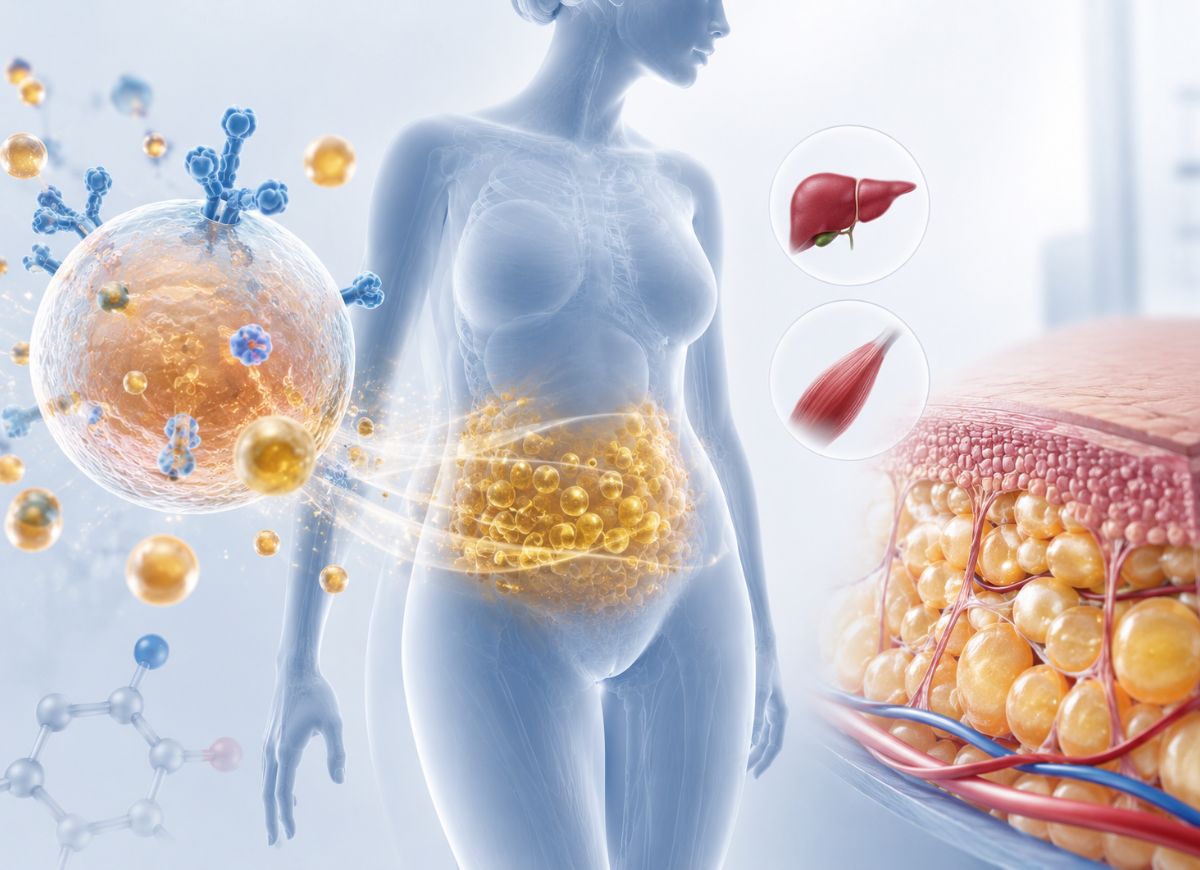
Ever wonder how the fat on your body can actually “talk” to the rest of your system and influence your metabolism, blood sugar, and long-term health? We usually think of fat as nothing more than stored energy, but it behaves more like a busy hormone-producing organ. One of the most important messengers it sends out is adiponectin, a hormone made by fat cells that helps your body use energy more effectively.
Adiponectin is central to metabolic wellbeing. It boosts insulin sensitivity, helps keep blood sugar steady, and pushes the body to break down fat for fuel. Generally speaking, people with higher adiponectin tend to have better metabolic function, while lower levels tend to show up alongside obesity, insulin resistance, type 2 diabetes, and heart disease.
What’s especially interesting is that adiponectin tends to move in the opposite direction of body fat. As visceral fat builds up, adiponectin usually drops making it tougher for the body to control blood sugar, manage inflammation, and keep fats in balance. That’s why this hormone has become such a hot topic in metabolic research and preventive medicine.
Of course, adiponectin doesn’t work alone. Diet, exercise, sleep, inflammation, genetics, and overall body composition all shape metabolic health together. This article walks through what adiponectin does, why low levels matter, and which everyday habits can help keep it in a healthy range.
What is the Function of Adiponectin in Metabolism?
At its core, adiponectin’s job is to keep glucose levels steady and help the body break down fatty acids, all of which sharpens insulin sensitivity, calms inflammation, and guards against stiffening or clogging of the arteries. Think of it as a messenger that reports the body’s energy status from fat tissue to organs like the liver, muscles, and brain.
What is Adiponectin?
Adiponectin is a hormone (an “adipokine”) made almost entirely by fat cells, and it plays a protective role against diseases like type 2 diabetes and atherosclerosis. Most hormones released by fat tissue tend to promote inflammation or disrupt metabolism adiponectin is the rare exception that’s overwhelmingly good for you.
It also circulates in surprisingly large amounts roughly a thousand times more concentrated in the blood than most other hormones which hints at how central it is to the body’s function. It’s sometimes nicknamed a “guardian” of metabolic health, since higher levels are reliably tied to a lower risk of obesity-related complications.
Adiponectin doesn’t float around as one single molecule. It comes in a few different structural forms: small low-molecular-weight (LMW) trimers, medium hexamers (MMW), and large high-molecular-weight (HMW) clusters. Of these, the HMW form is the most biologically active and has the strongest link to insulin sensitivity.
In fact, the ratio of HMW to total adiponectin gives doctors a sharper read on metabolic health than total levels alone. This discovery upended the old idea of fat as a passive storage container, showing instead that it’s an active hormone-producing organ that helps regulate the body’s entire energy balance. Keeping a healthy mix of protective adipokines like adiponectin versus harmful ones is key to preventing metabolic syndrome from progressing.
Main Roles of Adiponectin
Adiponectin’s work can be sorted into three big categories: sharpening how the body responds to insulin, calming inflammation, and directly shielding the cardiovascular system from plaque buildup.
These three jobs aren’t separate they reinforce one another, together creating conditions that protect the body from the fallout of excess calories and chronic low-grade inflammation. This combination is a big reason adiponectin gets so much attention in the prevention of common chronic diseases.
Insulin sensitivity: Adiponectin is a strong regulator of how the body handles insulin. In the liver, it dials down glucose production; in muscle, it boosts glucose uptake and use. It does this mainly by switching on AMPK, a cellular “energy sensor.” By making tissues respond better to insulin, adiponectin eases the burden on the pancreas and lowers the odds of developing type 2 diabetes.
Anti-inflammatory action: Ongoing, low-level inflammation fuels both insulin resistance and heart disease. Adiponectin fights back by blocking inflammatory messengers such as TNF-α and IL-6, and by stopping immune cells from piling up in fat tissue and artery walls a key step in both metabolic and vascular disease.
Artery protection: Atherosclerosis plaque buildup in the arteries is the root cause of most heart attacks and strokes. Adiponectin defends blood vessels by reducing the “stickiness” of artery walls for inflammatory cells, and by stopping macrophages from turning into cholesterol-packed foam cells, which form the core of arterial plaques. This is a big part of why higher adiponectin is linked to a healthier heart.
How Does the Regulation of Adiponectin Occur?
Adiponectin is regulated through an intricate loop involving hormones, metabolic state, and inflammatory signals and, strangely, its levels move in the opposite direction of total body fat.
This pattern is often called the “adiponectin paradox”: the more fat tissue you gain, the less adiponectin that very tissue ends up releasing. It communicates with cells through specific receptors that trigger pathways essential for energy metabolism.
How Does Adiponectin Signal to Cells?
Adiponectin does its work by attaching to two receptors AdipoR1 and AdipoR2 which then switch on two major energy-regulating pathways: AMPK and PPAR-α. These receptors show up throughout the body, but where they’re concentrated tells us a lot about adiponectin’s specific effects.
AdipoR1 is found mostly in skeletal muscle, while AdipoR2 dominates in the liver. This split lets adiponectin coordinate a full-body energy response, managing both glucose and fat metabolism at once.
When adiponectin binds AdipoR1 in muscle, it fires up AMPK often called the cell’s “master energy switch.” AMPK activates when cellular energy runs low (a high AMP-to-ATP ratio).
Once switched on, AMPK ramps up energy-generating processes, like pulling glucose from the blood and burning fatty acids, while putting the brakes on energy-hungry tasks like building new protein and fat. This mechanism underlies much of how adiponectin improves insulin sensitivity and helps clear fat from the bloodstream.
In the liver, adiponectin’s binding to AdipoR2 mainly triggers the PPAR-α pathway. PPAR-α works as a genetic switchboard, controlling genes tied to fat metabolism turning up fat-burning enzymes and turning down fat-storing ones.
This helps prevent triglycerides from piling up in the liver a condition known as non-alcoholic fatty liver disease (NAFLD), which is closely tied to insulin resistance.
Factors Influencing Adiponectin Levels
The biggest drivers of lower adiponectin are a rising BMI (especially visceral fat), chronically high insulin (hyperinsulinemia), ongoing inflammation, and oxidative stress. These factors tend to feed off each other, forming a cycle that worsens metabolic health.
Genetics set a baseline, but these lifestyle-related, modifiable factors are what really determine your day-to-day adiponectin levels and understanding them is the first step toward protecting this hormone’s benefits.
Body fat, especially visceral fat, is the biggest lever. As fat mass grows particularly the fat wrapped around internal organs fat cells become swollen, inflamed, and short on oxygen. These stressed cells produce less adiponectin, even though there’s more fat tissue overall that theoretically could make it.
High insulin suppresses adiponectin. When the body becomes insulin-resistant, the pancreas pumps out more insulin to compensate. That excess insulin has been shown to directly hold back adiponectin production, deepening the insulin resistance in a vicious loop.
Inflammation shuts down production. Obesity brings along chronic, low-grade inflammation, and inflamed fat tissue releases cytokines like TNF-α and IL-6 that actively suppress adiponectin’s genetic expression. Oxidative stress, which tends to accompany obesity, has a similar dampening effect.
Health Impact of Adiponectin Levels
Low adiponectin is a strong, independent warning sign for metabolic syndrome, type 2 diabetes, and cardiovascular disease while normal-to-high levels line up with better metabolic health and longevity.
Because it reflects how well fat tissue is functioning and how much systemic inflammation is present, adiponectin can flag risk long before any symptoms of disease show up.
Low Adiponectin Levels
Abnormally low adiponectin known clinically as hypoadiponectinemia signals real metabolic trouble and is a reliable marker for higher risk of insulin resistance, type 2 diabetes, and atherosclerosis. Research suggests it’s not just a byproduct of these conditions but may actually help drive them forward.
When adiponectin runs low, the body loses one of its main defenses against overeating and inactivity. It’s a sign that fat tissue has turned dysfunctional and started promoting inflammation instead of protecting against it.
Without enough adiponectin, blood sugar control suffers: the liver churns out more glucose, and muscles get worse at absorbing it. The result is higher blood sugar and more pressure on the pancreas a recipe for type 2 diabetes. Studies consistently find that people with low adiponectin face a much higher future risk of developing diabetes.
Low adiponectin also speeds up atherosclerosis in several ways by fueling inflammation in blood vessels, encouraging immune cells to stick to vessel walls, and prompting smooth muscle cells to multiply, all of which build plaque. That’s why low adiponectin tracks with higher rates of coronary artery disease, high blood pressure, and heart attacks.
Since adiponectin normally helps the liver burn fat, low levels let fat accumulate there instead which can progress from simple fatty liver to more serious conditions like NASH, fibrosis, and cirrhosis.
High Adiponectin Levels
High or normal adiponectin is protective, boosting insulin sensitivity and cutting inflammation while low levels clearly do the opposite, driving insulin resistance, inflammation, and higher disease risk. It’s one of those rare markers where “more” really does mean “better.”
Unlike hormones that need to stay within a narrow band, adiponectin seems to keep delivering benefits the higher it goes. High levels point to healthy, well-functioning fat tissue; low levels point to fat tissue that’s struggling.
People with high adiponectin usually manage blood sugar efficiently with less insulin, carry lower triglycerides, have more of the “good” HDL cholesterol, and face a lower chance of type 2 diabetes. Those with low levels, by contrast, tend toward insulin resistance, unhealthy cholesterol patterns, and metabolic syndrome.
High adiponectin also directly benefits the cardiovascular system supporting the health of the blood vessel lining, discouraging plaque formation, and lowering inflammation overall. People in the top range for adiponectin have a noticeably lower risk of heart attack and stroke compared to those at the bottom, and low levels remain a risk factor even in people who aren’t clinically obese.
In short, high adiponectin reflects fat tissue that’s storing energy efficiently without becoming inflamed, while low adiponectin points to swollen, dysfunctional fat cells pumping out harmful signals. That makes it a more useful, functional gauge of fat health than BMI alone.
The Impact of Lifestyle Changes on Adiponectin Levels
Three lifestyle strategies stand out for raising adiponectin: eating a nutrient-rich diet full of healthy fats and fiber, staying consistently active, and reaching (and holding) a healthy body weight. Together, these habits improve how fat tissue functions, quiet inflammation, and sharpen insulin sensitivity the main triggers behind higher adiponectin production.
Since there’s currently no drug that directly raises adiponectin, these lifestyle changes remain the most powerful, accessible tools available. Below are the specific dietary and exercise approaches backed by research.
The Best Dietary Strategies to Increase Adiponectin
The most effective eating patterns for boosting adiponectin lean on whole foods rich in monounsaturated fats, omega-3s, and soluble fiber, along with enough magnesium. These nutrients target the two biggest culprits behind low adiponectin inflammation and insulin resistance.
Moving away from processed carbs, added sugar, and saturated fat toward a Mediterranean-style, whole-foods diet creates conditions that encourage fat cells to produce more adiponectin.
Monounsaturated fats found in extra virgin olive oil, avocados, and nuts like almonds and macadamias are known for calming inflammation, which eases the pressure suppressing the adiponectin gene. Olive oil in particular has repeatedly been linked to higher adiponectin in human studies.
Omega-3 fatty acids from fatty fish like salmon, mackerel, and sardines, plus flaxseeds, chia seeds, and walnuts are strong anti-inflammatory agents. EPA and DHA get built directly into cell membranes and reduce inflammatory signaling, which supports adiponectin production while also benefiting the heart.
Soluble fiber found in oats, barley, legumes, apples, and psyllium husk works more indirectly. It slows digestion, steadies blood sugar, and feeds a healthier gut microbiome. That healthier gut produces short-chain fatty acids like butyrate, which lower inflammation and improve insulin sensitivity, both of which favor higher adiponectin.
Magnesium acts as a helper molecule in hundreds of reactions, including those tied to glucose metabolism and insulin signaling. Low magnesium is closely linked to insulin resistance and lower adiponectin, so getting enough from leafy greens, nuts, seeds, and whole grains matters.
Exercise to Increase Adiponectin
Regular exercise both cardio and strength training is one of the most reliable ways to raise adiponectin. It works through several channels: shedding weight (especially visceral fat), improving how muscles respond to insulin, and lowering inflammation throughout the body.
Exercise can raise adiponectin even without weight loss in some studies, but the biggest, most lasting gains tend to happen when physical activity is paired with fat loss making exercise a cornerstone habit for anyone focused on adiponectin and metabolic health.
Cardio: Activities like brisk walking, running, cycling, and swimming have been well studied for their adiponectin-boosting effects. A single workout can cause a short-term spike, but sustained training say, three to five sessions a week over several months leads to a lasting rise in baseline levels, often in proportion to how much fat is lost.
Strength training: Lifting weights or doing bodyweight exercises also raises adiponectin. Building lean muscle improves the body’s overall ability to clear glucose from the blood, which reduces insulin resistance and supports higher adiponectin. Some research even suggests resistance training is especially good at boosting the highly active HMW form.
Combined training: The strongest results usually come from mixing cardio and strength work cardio drives calorie burn and fat loss, while strength training builds muscle and improves insulin sensitivity. Together, they create the most powerful stimulus for healthier fat tissue and higher adiponectin.
Advanced Concepts and Clinical Aspects of Adiponectin
Beyond the basics, adiponectin research covers its various molecular forms, how it’s measured clinically, how it differs from other fat hormones like leptin, and the tricky phenomenon of adiponectin resistance, where tissues stop responding to it properly. These deeper concepts matter for diagnosing and managing metabolic disease.
Different Forms of Adiponectin
Adiponectin doesn’t circulate as a single molecule it exists as different-sized complexes, or multimers, each with its own level of biological activity.
These fall into three groups: LMW (a trimer, three molecules linked together), MMW (a hexamer, two trimers joined), and HMW (large complexes of 12–18 units or more, built from multiple trimers and hexamers).
Of the three, HMW adiponectin is the most powerful and clinically meaningful form. It’s the most effective at activating receptors in the liver and muscle to boost insulin sensitivity, suppress glucose production, and stimulate fat burning.
Because of this, the HMW-to-total adiponectin ratio is often seen as a more accurate marker of metabolic health than the total adiponectin count alone.
This distinction really shows up in disease. In lean, healthy people, HMW adiponectin makes up a large share of total circulating levels. But in obesity, type 2 diabetes, and metabolic syndrome, the HMW form often drops disproportionately even when total adiponectin looks only mildly reduced. That selective drop hits the body’s ability to regulate glucose and fat, fueling insulin resistance and inflammation.
How to Measure Adiponectin in a Clinical Setting
Adiponectin is measured through a simple blood test, using serum or plasma. The standard method is the ELISA test (enzyme-linked immunosorbent assay), which is highly sensitive and specific because it relies on antibodies that bind only to adiponectin.
In an ELISA test, a blood sample is applied to a plate coated with these antibodies. A second, enzyme-linked antibody then binds to whatever adiponectin was captured, producing a color change that corresponds to its concentration.
Other methods, like radioimmunoassay (RIA), exist but are less common today because they involve radioactive materials. Some specialized labs can also measure the HMW form specifically for a more detailed risk picture.
Reference ranges vary by lab, testing method, and factors like sex and ethnicity. As a general guide, healthy total adiponectin is usually considered to be above 4 μg/mL, with an optimal range often cited around 5–30 μg/mL. Levels below 4 μg/mL are linked to higher risk of obesity, insulin resistance, type 2 diabetes, heart disease, and fatty liver disease while higher levels generally point to better insulin sensitivity and lower inflammation, making this test a useful tool for tracking metabolic health over time.
Adiponectin vs. Leptin
Adiponectin and leptin are both hormones made by fat tissue, but they work in almost opposite ways. Adiponectin’s main job is boosting insulin sensitivity and fighting inflammation it’s essentially a protective hormone.
Leptin, on the other hand, is the “fullness” hormone it tells the brain’s hypothalamus that energy stores are sufficient, which curbs appetite and raises energy expenditure. The key difference lies in how each relates to body fat.
Adiponectin drops as fat mass rises. Leptin does the opposite it rises right along with fat mass, so more fat tissue means higher circulating leptin.
Adiponectin Resistance
Adiponectin resistance describes a state where tissues stop responding well to adiponectin, even when blood levels are normal or high. It’s conceptually similar to insulin resistance, where cells stop responding properly to insulin’s signals.
In adiponectin resistance, the hormone is present, but its ability to deliver benefits better insulin sensitivity, less inflammation, more fat burning is blunted.
This usually traces back to problems at the cellular level, whether in the AdipoR1/AdipoR2 receptors themselves or in the downstream signaling, especially the AMPK pathway. When that chain breaks, the machinery adiponectin is supposed to control just stays idle.
The clinical stakes are significant: someone could have “normal” adiponectin on a blood test yet still show clear signs of metabolic syndrome insulin resistance, poor cholesterol, chronic inflammation. This also explains why simply raising adiponectin levels with medication doesn’t necessarily help everyone; if the receptors aren’t working, the signal never lands.
Severe obesity, lipodystrophy, and chronic inflammation are all thought to promote adiponectin resistance, creating a cycle where metabolic health keeps declining even as the body tries to compensate. It’s a reminder that both hormone levels and how well tissues respond to them matter for metabolic health.
FAQs
1. What happens when adiponectin is high?
Higher adiponectin usually points to better insulin sensitivity, steadier blood sugar, lower inflammation, and more efficient fat metabolism. Alongside a healthy weight, balanced cholesterol, and stable glucose, it’s generally seen as a good sign.
2. What stimulates adiponectin release?
Regular physical activity, weight loss where needed, better sleep, lower inflammation, and a diet built around whole foods can all support adiponectin. Fruits, vegetables, whole grains, nuts, legumes, and healthy fats may help create the right metabolic conditions.
3. What is the role of adiponectin?
It helps regulate blood sugar, sharpen the body’s response to insulin, reduce inflammation, and put fatty acids to use for energy while also supporting heart and blood vessel health.
4. Can coffee increase adiponectin?
Some studies link regular coffee drinking to higher adiponectin, though results aren’t consistent, and coffee isn’t a treatment for low levels. Added sugar, creamers, and too much caffeine can cancel out any benefit.
5. Does adiponectin burn fat?
Not directly it isn’t a fat-burning shortcut. Instead, it helps the body use fatty acids more efficiently and improves insulin sensitivity, which can support healthier energy metabolism over time.
6. Where do I get adiponectin?
You can’t get it from food or supplements your body makes it in fat tissue. Habits like regular exercise, balanced eating, healthy weight management, and good sleep can help support healthier levels naturally.
Conclusion
Adiponectin is a striking example of how active fat tissue really is inside the body’s metabolic system. It helps regulate blood sugar, insulin sensitivity, inflammation, fat metabolism, and heart health and when levels run low, keeping metabolic balance gets harder.
The encouraging part is that everyday habits can move the needle: regular movement, nutrient-dense meals, quality sleep, stress management, and healthy weight upkeep can all support the body’s internal hormonal signals. Understanding adiponectin offers a clearer, deeper way to think about metabolism well beyond just counting calories.