
10 Telltale Symptoms of Meniere’s Disease You Shouldn’t Ignore
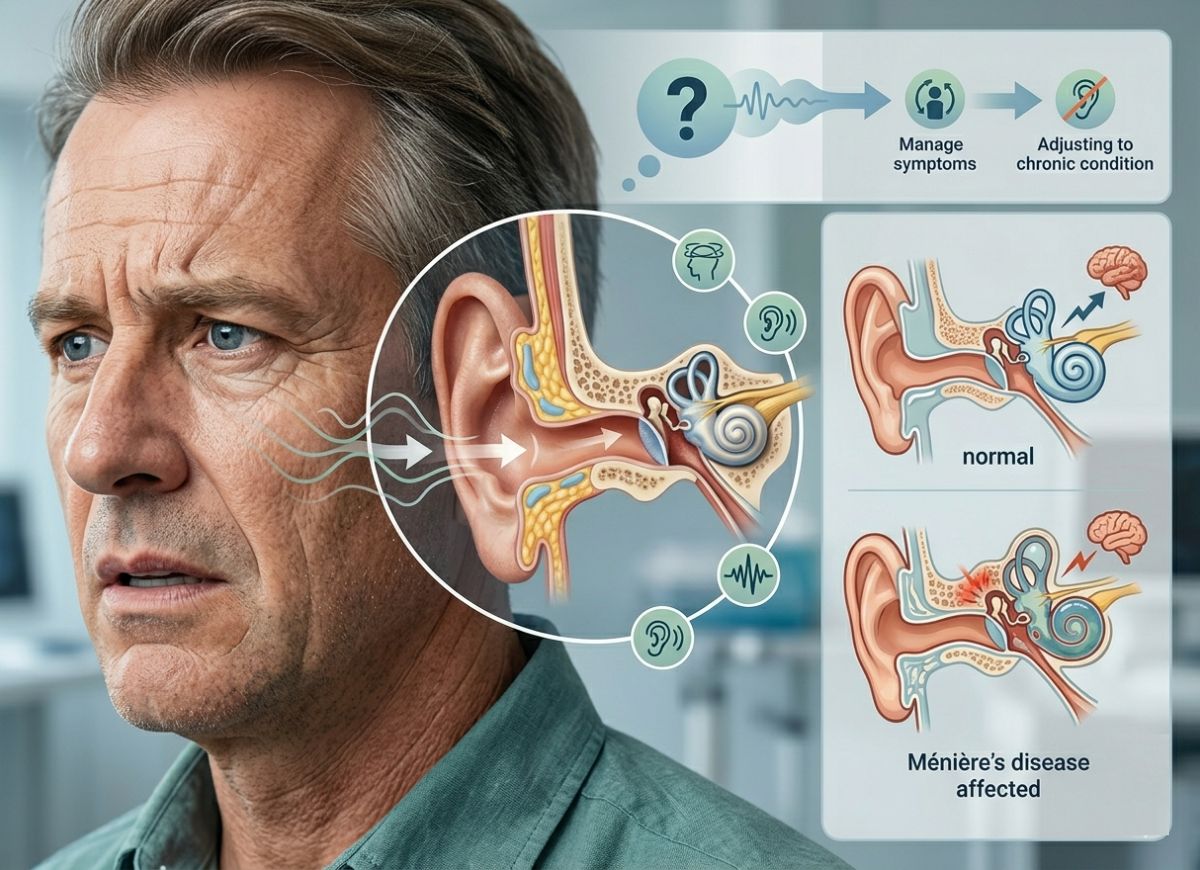
Have you ever suddenly felt dizzy for no obvious reason or felt as though the world around you was spinning? These symptoms can sometimes be associated with an inner-ear condition known as Meniere’s disease. This chronic disorder can cause episodes of vertigo, hearing loss, tinnitus, and pressure or fullness in the affected ear.
Meniere’s disease is associated with abnormal fluid buildup in the inner ear, which can interfere with the signals responsible for hearing and balance. Although the exact Meniere’s disease cause remains uncertain, factors such as genetics, viral infections, and problems with inner-ear fluid regulation have been suggested as possible contributors.
The symptoms can appear suddenly and vary considerably from one person to another. Vertigo is the most recognizable symptom, but hearing changes, ringing in the ears, ear pressure, nausea, and other problems can also occur.
In this guide, we’ll explore 10 important symptoms of Meniere’s disease, along with its possible causes, stages, diagnosis, triggers, and treatment approaches.
What Is Meniere’s Disease?
Meniere’s disease is a chronic disorder affecting the inner ear. It is associated with an abnormal buildup of endolymph, the fluid found within the inner ear, which can interfere with both balance and hearing.
The condition affects the vestibular system, which plays an important role in maintaining balance and helping the brain understand the body’s position in space. Meniere’s disease often begins in one ear, although both ears can become affected in some people.
One of the main features associated with Meniere’s disease is endolymphatic hydrops, a condition involving increased fluid and pressure within the inner ear. This pressure can interfere with the sensory cells and nerve signals that transmit hearing and balance information to the brain.
How Meniere’s Disease Affects the Inner Ear
The inner ear contains the labyrinth, a complex system responsible for hearing and balance. It includes two major components: the cochlea, which is involved in hearing, and the vestibular system, which helps control balance.
The membranous labyrinth contains a fluid called endolymph and is surrounded by another fluid known as perilymph. These fluids have different chemical compositions and normally remain separated.
One explanation for Meniere’s disease involves excessive endolymph accumulation. As the fluid increases, pressure can build within the delicate structures of the inner ear. This may interfere with sensory cells in both the cochlea and vestibular system.
If the pressure becomes excessive, the membranes may become damaged, potentially allowing the two inner-ear fluids to mix. This disruption may contribute to vertigo, hearing changes, and tinnitus.
Stages of Meniere’s Disease
Meniere’s disease is commonly described in three general stages: early, middle, and late. Symptoms can change over time, particularly in their frequency, severity, and duration.
Early Stage
During the early stage, sudden episodes of rotational vertigo may occur and can last from approximately 20 minutes to several hours. Hearing loss may fluctuate and can sometimes improve between attacks.
Tinnitus and a feeling of pressure or fullness in the ear may also appear during episodes. Some people have periods without symptoms between attacks, although the unpredictable nature of the condition can cause considerable worry.
Middle Stage
As the condition progresses, vertigo attacks may become less intense for some people, while tinnitus and hearing loss may become more noticeable and persistent.
Hearing may no longer return completely to its previous level between attacks. Some individuals may also experience periods of remission lasting several months.
Late Stage
In the later stage, severe rotational vertigo may become less frequent or disappear for extended periods. However, hearing loss can become more permanent, while balance difficulties may continue.
Some individuals may experience sudden falls without losing consciousness, sometimes referred to as drop attacks or Tumarkin’s otolithic crisis.
10 Telltale Symptoms of Meniere’s Disease
Meniere’s disease can produce a combination of hearing and balance-related symptoms. Not everyone experiences every symptom, but several characteristic symptoms may occur together.
1. Rotational Vertigo
Vertigo is one of the most recognizable and potentially disabling symptoms of Meniere’s disease.
Rather than simply feeling lightheaded, a person may feel as though they or the surrounding environment is spinning rapidly. An attack can begin suddenly and may last from around 20 minutes to several hours.
During a severe episode, standing or walking may become extremely difficult, and some people may need to lie down until the spinning sensation passes.
2. Fluctuating Hearing Loss
Hearing loss is another important feature of Meniere’s disease, particularly during its earlier stages.
It often affects one ear and may initially involve lower-frequency sounds. Voices may seem distorted or unusually unclear. Hearing can sometimes improve between attacks, but repeated episodes may eventually result in more permanent hearing loss.
3. Tinnitus
Tinnitus refers to hearing a sound when there is no corresponding external source.
With Meniere’s disease, tinnitus may sound like ringing, buzzing, hissing, or a low-pitched roaring noise. Its intensity may change and can become more noticeable around the time of a vertigo attack.
For some individuals, tinnitus eventually becomes a more persistent symptom.
4. Aural Fullness
Aural fullness is the sensation that the affected ear feels blocked, pressured, or unusually full.
Some people compare it to the pressure experienced when an airplane changes altitude. In certain cases, this sensation may occur before a vertigo episode and can act as a warning that an attack may be approaching.
5. Nausea and Vomiting
Severe vertigo can trigger nausea and vomiting.
This happens because the brain receives conflicting information from the balance system and the eyes. The mismatch between these signals can activate the body’s nausea and vomiting response during an intense episode.
6. Nystagmus
Nystagmus is an involuntary movement of the eyes that can occur during a vertigo episode.
The eyes may move rapidly and rhythmically in a jerking pattern. A healthcare professional can observe these movements during an examination, making nystagmus an important physical sign when assessing vestibular problems.
7. Drop Attacks
Drop attacks, sometimes called Tumarkin’s otolithic crisis, can cause a person to suddenly fall without warning while remaining conscious.
These episodes are believed to involve the otolith organs of the inner ear, which help the body detect gravity and linear movement. A sudden disturbance in these signals may cause the brain to incorrectly interpret the body’s position and trigger an abrupt postural response.
8. Migraine-Like Headaches
Meniere’s disease can occur alongside migraine-related symptoms.
Some individuals may experience headaches with features such as throbbing pain, sensitivity to light, sensitivity to sound, or pressure in the head. These symptoms may occur during a vertigo attack or independently of one.
9. Brain Fog
Brain fog refers to difficulty concentrating, problems with short-term memory, and a general feeling of mental sluggishness.
This sensation may become particularly noticeable during or after a vertigo attack. The effort required to process conflicting balance and sensory signals can leave a person mentally exhausted.
10. Excessive Fatigue
A severe Meniere’s attack can be physically and mentally exhausting.
Vertigo, nausea, and vomiting can leave someone extremely tired after an episode. Some individuals may need several hours of rest or sleep before they feel able to return to their normal activities.
What Are the Causes of Meniere’s Disease?
The exact cause of Meniere’s disease is still unknown. However, the condition is strongly associated with abnormal amounts or pressure of endolymph within the inner ear, commonly referred to as endolymphatic hydrops.
Researchers continue to investigate why this fluid imbalance develops. Problems involving the endolymphatic sac, which helps regulate inner-ear fluid, may play a role.
Meniere’s disease is generally considered multifactorial, meaning several factors may contribute rather than there being one single cause.
Abnormal Inner-Ear Fluid
Endolymphatic hydrops is one of the central findings associated with Meniere’s disease. Excess fluid may cause pressure and swelling within the membranous labyrinth.
Problems with fluid drainage or excessive fluid production have been proposed as possible explanations.
Viral Infections
Another theory suggests that certain viruses may contribute to the development of Meniere’s disease.
Researchers have investigated viruses such as herpes simplex virus, varicella-zoster virus, and cytomegalovirus as possible contributors. The proposed mechanism involves inflammation or damage to structures responsible for regulating inner-ear fluid.
Genetic Factors
Meniere’s disease may also have a genetic component. Some people with the condition report a family history of Meniere’s disease.
Researchers continue to study whether particular genetic variations increase susceptibility to inner-ear fluid problems.
Autoimmune Factors
Another possibility is that an abnormal immune response may affect the inner ear.
In this theory, the immune system mistakenly attacks inner-ear tissues, causing inflammation and potentially contributing to symptoms associated with Meniere’s disease.
Common Risk Factors and Triggers for Meniere’s Attacks
Although these factors do not necessarily cause Meniere’s disease itself, they may influence how frequently or severely symptoms occur in some individuals.
High Sodium Intake
High salt consumption may contribute to fluid retention. Because Meniere’s disease is associated with inner-ear fluid regulation, reducing sodium intake is often included in management plans.
Caffeine and Alcohol
Caffeine and alcohol may affect fluid balance and circulation and can act as symptom triggers for some people with Meniere’s disease.
Stress and Physical Exhaustion
Emotional stress and physical exhaustion may make attacks more likely for some individuals. Stress can influence hormonal activity and other processes that may affect the body’s response to symptoms.
Allergies
Allergic reactions can cause inflammation and changes in vascular activity. Some people with Meniere’s disease report that allergies are associated with worsening symptoms.
Weather and Pressure Changes
Changes in barometric pressure may also be reported as a trigger. Some individuals notice increased symptoms during weather changes or while flying.
Flying and scuba diving can involve pressure changes that may affect people with sensitive inner-ear systems.
These factors do not necessarily cause Meniere’s disease, but they may influence symptom frequency or severity in susceptible individuals.
Meniere’s Disease Diagnosis
Diagnosing Meniere’s disease is primarily based on symptoms and clinical criteria. Healthcare professionals may also use hearing and balance tests to evaluate inner-ear function and rule out other conditions.
Audiometry
An audiometry test measures hearing ability and can identify sensorineural hearing loss. In Meniere’s disease, hearing loss may initially fluctuate and may particularly affect lower-frequency sounds.
Balance Testing
Tests such as videonystagmography (VNG) or electronystagmography (ENG) can assess involuntary eye movements and vestibular function.
These tests may provide information about how effectively the balance system is functioning.
Other Tests
Additional assessments may include:
- Electrocochleography (ECoG): Used to evaluate electrical activity associated with the inner ear.
- Vestibular Evoked Myogenic Potentials (VEMP): Used to assess parts of the vestibular system.
- MRI: May be used to rule out other conditions that can produce similar symptoms, such as certain brain tumors or acoustic neuroma.
Meniere’s Disease vs. Vestibular Migraine and BPPV
Meniere’s disease can share symptoms with other vestibular conditions, so distinguishing between them is important when determining appropriate management.
Meniere’s Disease
Meniere’s disease is associated with episodes of vertigo along with hearing-related symptoms such as fluctuating hearing loss, tinnitus, or aural fullness.
BPPV
Benign Paroxysmal Positional Vertigo (BPPV) usually causes brief episodes of intense vertigo triggered by changes in head position.
For example, symptoms may appear when rolling over in bed, lying down, or tilting the head backward. BPPV does not typically cause hearing loss or tinnitus.
Vestibular Migraine
Vestibular migraine can cause dizziness or vertigo lasting from minutes to several days. It is often associated with a personal or medical history of migraine.
Migraine-related features can include sensitivity to light, sensitivity to sound, headache, or visual aura. Hearing loss is not generally considered a primary feature of vestibular migraine.
Can Meniere’s Disease Cause Permanent Hearing Loss?
Meniere’s disease can lead to permanent hearing loss in the affected ear.
During the early stages, hearing may fluctuate and sometimes improve between attacks. However, repeated episodes may gradually damage the sensitive structures within the cochlea.
The cochlea contains hair cells that help convert sound vibrations into signals the brain can interpret. Repeated pressure changes and inner-ear disturbances may cause progressive damage to these cells.
As the condition advances, hearing may become more consistently reduced and may eventually affect a broader range of frequencies.
For this reason, early diagnosis and appropriate management are important for addressing symptoms and protecting hearing as much as possible.
FAQs
1. What Is the Best Meniere’s Treatment?
Treatment for Meniere’s disease focuses on reducing symptoms, managing attacks, and improving quality of life.
Lifestyle changes may include reducing sodium intake and identifying personal triggers. Doctors may also prescribe medications such as diuretics or medicines intended to control vertigo and nausea.
For more severe cases, additional treatments or procedures may be considered depending on the individual’s symptoms and response to other approaches.
2. What Medicine Is Used for Meniere’s Disease?
Healthcare providers may recommend medications to help manage vertigo and nausea during attacks.
Some patients may be prescribed medicines such as meclizine or other medications for dizziness. Diuretics may be used in some treatment plans to help manage fluid-related symptoms. In selected cases, steroids or other medications may also be considered.
The appropriate medicine depends on the individual’s symptoms and medical situation, so treatment should be guided by a healthcare professional.
3. What Is the Meniere’s Disease ICD-10 Code?
The ICD-10 code commonly associated with Meniere’s disease is H81.0.
Healthcare providers and insurance systems use ICD-10 codes to classify and document medical conditions.
4. How Serious Is Meniere’s Disease?
The severity of Meniere’s disease can vary from person to person.
Vertigo attacks can interfere significantly with everyday activities, while ongoing tinnitus and hearing loss may also affect quality of life. Repeated episodes can contribute to permanent hearing changes.
Although Meniere’s disease is generally not considered life-threatening, its symptoms can be physically and emotionally challenging.
5. Does Meniere’s Disease Ever Go Away?
Meniere’s disease is considered a chronic condition and does not usually disappear permanently.
However, some people experience periods of remission in which symptoms become less frequent or disappear for a time. Treatment is generally focused on controlling symptoms, reducing attacks, and helping the individual maintain daily activities.
Conclusion
Meniere’s disease can be difficult to manage, particularly when vertigo attacks, hearing changes, and tinnitus occur unexpectedly. However, understanding the symptoms and possible triggers can make it easier to recognize changes and seek appropriate medical care.
Management may involve lifestyle adjustments, such as reducing sodium and managing stress, as well as medications or other treatments recommended by a healthcare professional.
Although there is currently no simple cure that makes Meniere’s disease disappear permanently, early diagnosis and an individualized management plan can help reduce symptoms and protect hearing where possible.
If you experience recurring vertigo, hearing loss, tinnitus, or pressure in the ear, discussing these symptoms with a healthcare professional can help determine the underlying cause and appropriate next steps.