
Lumpectomy and What to Know About Breast-Conserving Surgery
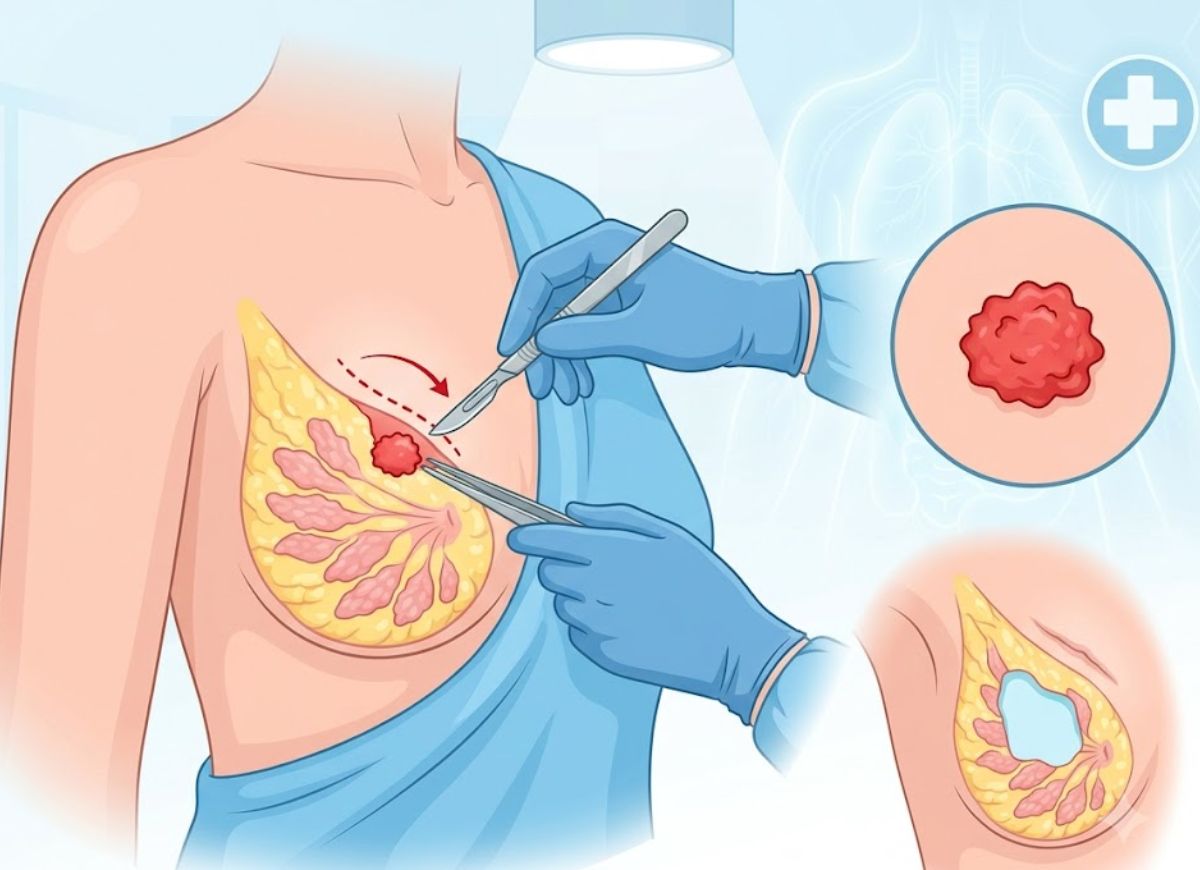
For many people diagnosed with early-stage breast cancer, a lumpectomy offers a way to treat the disease while keeping most of the breast intact. Also called breast-conserving surgery, it involves removing the tumor along with a thin rim of healthy tissue around it, rather than removing the entire breast. Radiation therapy usually follows to reduce the chance of the cancer returning in that same breast.
This choice carries more weight than many patients realize. The American Cancer Society notes that choosing breast-conserving surgery plus radiation does not reduce a woman’s long-term survival compared with mastectomy. For many early-stage cancers, keeping the breast can still be part of a fully effective treatment plan.
A lumpectomy may sound less daunting than a mastectomy, but it is still a real operation with real decisions attached the incision, anesthesia, lymph node testing, margin results, pain, scarring, the radiation schedule, and recovery time. Some patients also need chemotherapy, hormone therapy, targeted therapy, or follow-up imaging, depending on the type and stage of cancer.
This guide walks through what a lumpectomy involves why it’s done, who’s typically a good candidate, what happens during and after surgery, the possible risks, and questions worth asking your care team so you can feel more prepared and less rushed when making a decision.
What Is a Lumpectomy?
A lumpectomy is a surgery that removes a cancerous tumor along with a small margin of surrounding healthy breast tissue. It’s a primary form of breast-conserving therapy for patients whose cancer is caught early. Unlike a mastectomy, which removes the entire breast, a lumpectomy aims to take out only what needs to go.
The Exact Definition of Breast-conserving Surgery
Breast-conserving surgery sometimes called a partial mastectomy or wide local excision is designed to treat the cancer while keeping as much of the natural breast, skin, and nipple as possible.
The core idea is simple: remove the tumor plus a surrounding ring of tissue (the “margin”) to make sure no cancer cells are left behind, while doing everything possible to preserve the breast’s shape, contour, and sensation.
The surgeon typically places the incision either directly over the tumor or in a spot that heals more discreetly, such as along the areola or in the underarm fold, then carefully removes the cancerous tissue. How much tissue comes out depends on the tumor’s size and position, but precision is always the goal.
The single most important outcome of this surgery is a “clear” or “negative” margin meaning that when the pathologist examines the removed tissue under a microscope, no cancer cells are found at its outer edge. A clear margin is reassuring evidence that nothing was left behind. If cancer cells are spotted right at the edge (a “positive” margin), a second surgery is often needed to remove more tissue.
Breast-conserving surgery is almost always paired with radiation as part of a combined approach called Breast Conservation Therapy (BCT). The radiation targets any microscopic cancer cells the surgery might have missed, substantially lowering the odds of the cancer coming back locally.
Ideal Candidates for a Lumpectomy
Good candidates for a lumpectomy generally have a single tumor that’s small relative to their breast size, early-stage invasive cancer or DCIS (ductal carcinoma in situ), and a strong preference to keep their breast.
Whether someone qualifies is a decision made together with the surgical and oncology team, weighing several medical and personal factors.
First, the tumor needs to be small enough to remove with a clear margin without significantly altering the breast’s shape a small tumor in a larger breast is the classic ideal case. There’s no strict cutoff, but tumors over roughly 4–5 cm, or ones that are large relative to breast volume, often lead to poorer cosmetic results, making mastectomy the better option.
Lumpectomy works best for a single tumor, or several small tumors confined to one area of the breast (multifocal disease). If tumors show up in different quadrants of the same breast (multicentric disease), mastectomy is usually recommended instead.
The procedure is most often used for DCIS and early-stage invasive cancers (Stage I and II).
Because radiation is a standard part of the treatment, a patient also needs to be able to receive it. Radiation isn’t an option during pregnancy, for someone who’s already had radiation to the same breast or chest, or for people with certain connective tissue conditions like scleroderma or lupus that radiation can worsen.
On the other hand, mastectomy is typically advised for inflammatory breast cancer, a history of prior radiation to the breast, cancer spread throughout the breast, or a genetic mutation (such as BRCA) that raises the risk of a new cancer developing later.
Main Goals of a Lumpectomy Procedure
A lumpectomy is built around three main goals: removing the tumor completely with clear margins, checking whether the cancer has reached nearby lymph nodes, and preserving the breast’s natural shape as much as possible.
Removing every trace of cancer at the surgical site comes first. The tumor and a margin of healthy tissue are excised together, and a pathologist inks the outer surface of the specimen before examining it under a microscope. The benchmark for a clear margin is “no ink on tumor” no cancer cells touching that inked edge. Hitting this mark is essential to keeping the cancer from coming back in that spot.
For invasive cancers, it also matters whether the disease has reached the axillary (underarm) lymph nodes. This is usually checked with a sentinel lymph node biopsy (SLNB), done during the same operation. The surgeon removes the first one to three nodes that drain the breast the “sentinel” nodes and sends them for testing.
If those nodes come back clear, it’s very unlikely the cancer has spread further, and no additional nodes need to come out. This result helps determine the cancer’s stage and shapes decisions about further treatment like chemotherapy or hormone therapy.
Beyond the cancer itself, preserving how the breast looks matters too. Surgeons use techniques that minimize scarring and distortion, often placing incisions in less noticeable spots like the edge of the areola or the natural crease beneath the breast.
For larger tumors, surgeons may turn to oncoplastic techniques blending cancer surgery with plastic surgery principles to reshape the breast, fill in the area where tissue was removed, lift the breast, or adjust the opposite breast for symmetry.
What Happens During the Lumpectomy Procedure and Recovery?
The lumpectomy process unfolds in stages: preparation beforehand, the surgery itself, and then a recovery period that includes both immediate post-op care and longer-term follow-up.
Understanding each stage what’s required before surgery, what the first hours afterward look like, and what ongoing care involves helps set realistic expectations and lets patients take an active role in their own care.
How to Prepare for Lumpectomy Surgery?
Preparing for surgery means carefully following the pre-op instructions your team gives you typically fasting beforehand, adjusting certain medications, arranging a ride and support at home, and often going through a localization procedure to pinpoint the tumor precisely. These steps matter for both safety and surgical success.
Patients are usually told to stop eating and drinking after midnight the night before surgery, to lower the risk of complications from anesthesia, such as aspiration. The care team will also review current medications blood thinners and certain supplements, like aspirin, ibuprofen, warfarin, or vitamin E, often need to be paused for several days to a week beforehand to reduce bleeding risk.
If the tumor is too small to feel by hand, a localization procedure happens the morning of surgery to guide the surgeon precisely. A radiologist uses a mammogram or ultrasound to place a marker either a thin wire threaded to the tumor site, or a tiny radioactive seed placed inside it. The surgeon then follows the wire, or uses a handheld probe to detect the seed, to find and remove the tumor along with the marker.
Since lumpectomy is usually done as an outpatient procedure, patients need someone reliable to drive them home and stay with them for at least the first 24 hours. It also helps to prepare the house ahead of time: loose, front-button or zip-up tops, simple meals ready to go, and pain medication on hand. Bring ID, insurance details, and a medication list to the hospital, and leave valuables at home.
What to Expect During the Immediate Post-surgery Period?
Right after surgery, patients wake up in a recovery room under close observation, receive medication for pain and nausea, and have a sterile dressing over the incision before getting detailed instructions for care at home. This recovery-room stay usually lasts one to two hours, focused on making sure the patient is stable before discharge.
A nurse will monitor vital signs blood pressure, heart rate, breathing, oxygen levels as the anesthesia wears off. Feeling groggy, disoriented, or cold is common, and some patients feel nauseated, which medication can help manage.
Some pain and discomfort at the surgical site is expected, and the nursing staff will give pain medication, either by mouth or IV, to keep it manageable. The incision is typically covered with a sterile dressing or surgical glue, sometimes supported by a surgical bra.
A small drain is less common with a lumpectomy than with a mastectomy, but one may occasionally be placed to prevent fluid buildup (a seroma) at the surgical site. If a drain is used, the patient and caregiver are taught how to manage it at home.
Before discharge, the patient and their caregiver receive thorough instructions covering wound care, a pain-medication schedule (often alternating prescription and over-the-counter options), activity limits (like avoiding heavy lifting or strenuous arm movement for several weeks), and warning signs to watch for.
It’s important to know when to call the doctor a fever above 101°F, significant redness or swelling, foul-smelling drainage, or pain that isn’t controlled are all reasons to reach out.
Long-term Recovery and Follow-up Care
Longer-term recovery involves gradually returning to normal life over several weeks, managing side effects like swelling or numbness, and keeping up with follow-up visits, radiation or other therapies, and ongoing imaging. This follow-through matters just as much as the surgery itself for a good long-term outcome.
Most people return to work and light daily activities within one to two weeks, though this varies depending on the job and how extensive the surgery was especially if several lymph nodes were removed. Strenuous activity, heavy lifting, and high-impact exercise should generally wait four to six weeks. Swelling, bruising, tenderness, and numbness or tingling near the incision and underarm are common and usually ease over the following months, though they can sometimes linger.
The first follow-up visit typically happens one to two weeks after surgery. The surgeon checks that the incision is healing well, removes any non-dissolvable stitches, and reviews the final pathology report including margin status and lymph node results which shapes the next steps in treatment.
For nearly all patients with invasive cancer, radiation therapy comes next, usually starting three to six weeks after surgery once the breast has had time to heal. This typically means daily sessions, five days a week, for three to six weeks.
Once all active treatment surgery, radiation, and possibly chemotherapy or hormone therapy wraps up, a long-term surveillance plan kicks in. This usually includes physical exams every three to six months for the first few years, plus annual mammograms on both breasts. Staying on top of this schedule helps catch any new issues early.
Benefits and Risks of a Lumpectomy
A lumpectomy offers the major benefit of keeping the breast while matching mastectomy’s survival rates for eligible patients but it also comes with trade-offs, including the possibility of a second surgery and side effects from the radiation that typically follows. Weighing these benefits against the risks is a central part of deciding on treatment.
Primary Advantages of Choosing a Lumpectomy
The biggest advantages of a lumpectomy are breast preservation (which can meaningfully support body image and emotional well-being), a less invasive procedure with a faster recovery than mastectomy, and survival rates that match mastectomy when radiation is included. These benefits are why most women with early-stage breast cancer choose this route.
Keeping the breast is the most significant advantage. There will be a scar, and shape, size, or sensation may shift somewhat, but the breast’s overall look and feel are largely preserved. That can make a real difference to a woman’s body image, confidence, and sense of self during cancer treatment.
Lumpectomy is a shorter, less extensive operation than mastectomy, almost always done as an outpatient procedure patients go home the same day. Pain afterward tends to be milder, and recovery is quicker: most people are back to daily activities within one to two weeks, compared with the longer recovery mastectomy (especially with reconstruction) can require.
Survival outcomes are essentially equivalent between the two approaches. Decades of research, including landmark trials from the National Surgical Adjuvant Breast and Bowel Project (NSABP), have shown that lumpectomy plus radiation gives the same long-term survival as mastectomy for early-stage breast cancer. Choosing to conserve the breast isn’t a trade-off on survival it’s an equally effective way to treat the cancer.
Potential Complications or Side Effects
Possible downsides include general surgical risks like infection, bleeding, and fluid buildup (seroma); cosmetic changes such as scarring, dimpling, or asymmetry; changes in sensation; and the real possibility of needing a second surgery if the margins aren’t clear.
As with any operation, there’s a risk of bleeding, infection at the incision, or a reaction to anesthesia. A seroma a pocket of fluid where tissue was removed is also fairly common; many resolve on their own, though some need to be drained in-office.
The breast’s appearance will change to some degree. There’s a permanent scar, though surgeons try to keep it as unobtrusive as possible. Depending on how much tissue was removed and where, there may be a visible dent, dimple, or asymmetry compared with the other side. The tissue can also feel firmer due to scarring and later radiation. Nerve changes are possible too, leading to numbness, tingling, or heightened sensitivity in the breast or nipple that may be temporary or permanent.
One of the more significant risks specific to this surgery is a positive margin requiring re-excision. If the pathologist finds cancer cells right at the edge of the removed tissue, some cancer may have been left behind. This happens in roughly 20–30% of lumpectomies and calls for a second operation to remove more tissue and get clear margins understandably a stressful prospect for many patients.
Is Radiation Therapy Always Required After a Lumpectomy?
For most patients with invasive breast cancer, radiation is a standard and essential part of treatment after a lumpectomy, greatly lowering the odds of the cancer returning in that breast. Lumpectomy plus radiation Breast Conservation Therapy (BCT) is the established standard of care, and skipping radiation significantly raises the risk of local recurrence.
A lumpectomy removes the visible tumor, but a surgeon can’t see or remove every microscopic cancer cell that might remain nearby. Radiation targets the entire remaining breast, destroying those unseen cells before they can grow into a new tumor.
Extensive clinical research has shown that radiation after a lumpectomy cuts the rate of local recurrence by 50% to 70%. That combination is exactly what makes BCT’s survival outcomes match those of mastectomy. Skipping the radiation step generally leaves patients at a much higher risk of recurrence.
There are a few rare, specific situations where radiation might be skipped mainly for older patients (generally over 70) with a very small (under 2 cm), low-grade, hormone-receptor-positive tumor who will be on long-term hormone-blocking therapy. Even then, the decision requires a careful conversation with the oncology team about the small but real trade-off involved. For younger patients or those with more aggressive tumors, radiation is considered essential.
Some Advanced Considerations and Related Procedures
The Importance of Clear Margins in a Lumpectomy
Getting clear margins is arguably the most critical goal of the whole procedure it’s the clearest sign that all detectable cancer has been removed. The “margin” is the border of presumably healthy tissue taken out along with the tumor.
After surgery, a pathologist inks the outer surface of the tissue and examines slices under a microscope to see how close cancer cells come to that inked edge. If nothing touches the ink, the margin is “negative” or “clear” a strong sign nothing was left behind, and a lower risk of recurrence.
If cancer cells do reach the inked edge, the margin is “positive,” which usually means a second surgery (re-excision) is needed to remove more tissue before moving on to radiation.
It helps to know the specific margin categories. A clear/negative margin is the goal the modern standard is generally “no ink on tumor,” and it’s linked to a lower recurrence risk. A positive margin means the tumor reaches the tissue’s edge, which almost always calls for another surgery. A close margin falls in between cancer cells are near the edge but not touching it, with “close” typically defined as within a millimeter or two. Depending on the exact distance and other factors, the team might recommend re-excision, a higher radiation dose, or closer monitoring.
Oncoplastic Lumpectomy and Standard One
An oncoplastic lumpectomy adds plastic surgery techniques to the standard cancer-removal procedure to get a better cosmetic outcome while still fully removing the tumor. A standard lumpectomy focuses on one thing: clear margins.
That approach can sometimes leave a visible defect or asymmetry, particularly when a larger amount of tissue comes out relative to breast size. An oncoplastic lumpectomy serves two purposes at once the breast surgeon, often working alongside a plastic surgeon, plans the operation not just to remove the cancer but to reshape the remaining tissue for a natural-looking result.
This can involve repositioning the nipple, rearranging tissue to fill the gap left by the tumor, or performing a lift or reduction as part of the same operation. Incisions are often placed in discreet spots, like the breast fold or around the areola, to minimize visible scarring.
What is a Sentinel Lymph Node Biopsy?
A sentinel lymph node biopsy is a targeted, minimally invasive way to check whether breast cancer has spread to the underarm lymph nodes. The lymphatic system works like a drainage network, and cancer cells can travel through it from the original tumor to other parts of the body.
Sentinel nodes are the first one to three nodes that receive drainage directly from the tumor the idea being that if cancer has spread, it would show up here first. This biopsy is usually done during the same surgery as the lumpectomy.
To find these nodes, the surgeon injects a blue dye and/or a small radioactive tracer near the tumor before the operation. During surgery, a probe detects the radioactivity, or the surgeon visually identifies the dyed nodes, allowing for removal of just those specific ones. The nodes are then examined by a pathologist for cancer cells.
The results matter a great deal for staging. If the sentinel nodes are clear, there’s over a 95% chance the rest are clear too, meaning no further node surgery is needed. If they’re positive, it signals the cancer has begun spreading, and the team may recommend chemotherapy, targeted therapy, or a more extensive lymph node removal.
Before this technique existed, most patients had a full axillary lymph node dissection removing 10 to 20 or more nodes, with a significant, lasting risk of lymphedema (chronic arm swelling), nerve pain, and limited shoulder movement. Sentinel node biopsy removes far fewer nodes and dramatically lowers those risks, while still gathering the staging information needed during the same operation.
Is it Possible to Have a Lumpectomy After a Mastectomy
No it’s not possible to have a lumpectomy on a breast that’s already had a mastectomy. This question often comes from mixing up the two procedures. A mastectomy removes the entire breast ducts, lobules, fatty tissue, and often the nipple and areola.
Once that tissue is gone, there’s nothing left to perform a lumpectomy on. By definition, a lumpectomy removes only part of the breast the tumor and a margin around it while preserving the rest.
So a lumpectomy requires breast tissue to still be there. A patient can choose lumpectomy instead of mastectomy, but not after a mastectomy has already happened the two options aren’t sequential for the same breast.
FAQs
1. What stage of cancer is a lumpectomy used for?
Most often stage 0, 1, or 2. Some patients with larger tumors may become candidates after treatment shrinks the cancer first. It depends on tumor size, breast size, location, lymph node status, and overall goals.
2. What are the side effects of a lumpectomy?
Pain, swelling, bruising, tenderness, numbness, scarring, and shape changes are common. Some people also experience fluid buildup, infection, or limited arm movement, particularly if lymph nodes were removed.
3. How long does healing take after a lumpectomy?
Many people feel noticeably better within one to two weeks, though full healing can take longer especially if lymph nodes were removed or radiation follows. Fatigue, soreness, and tightness generally ease over time.
4. Is removing lymph nodes a major operation?
Removing a few nodes (sentinel lymph node biopsy) is usually a smaller procedure. Removing many nodes (axillary lymph node dissection) is more involved and carries a higher risk of swelling, stiffness, numbness, and lymphedema.
5. What shouldn’t you do after a lumpectomy?
Avoid heavy lifting, intense exercise, and strenuous arm movement until your surgeon clears you. Don’t ignore fever, worsening redness, increasing pain, drainage, or sudden swelling.
6. What’s the success rate of a lumpectomy?
For many early-stage cancers, lumpectomy plus radiation can be highly effective, with survival outcomes similar to mastectomy. Success depends on stage, tumor biology, clear margins, lymph node status, and follow-up care.
Conclusion
A lumpectomy is a valuable breast-conserving option for many people with early-stage breast cancer removing the tumor while preserving as much healthy tissue as possible, which can support both physical recovery and emotional well-being.
It’s not simply a “smaller” surgery, though. It often comes paired with radiation, margin testing, possible lymph node evaluation, and a longer follow-up schedule. Understanding what’s involved at each stage can make the whole process feel more manageable.
The right choice ultimately depends on cancer type, stage, breast size, personal preference, and medical guidance but for many patients, a lumpectomy offers an effective path forward that doesn’t require sacrificing the whole breast.