
7 Early Signs of Mumps in Children and Adults
Mumps is a contagious viral illness that mainly targets the salivary glands sitting near the ears. Although it shows up most often in kids, adults who catch it tend to face a rougher course of illness and a higher chance of complications.
The virus travels through respiratory droplets released when someone coughs or sneezes, and it can also pass through direct contact with an infected person. That’s why outbreaks tend to cluster in schools, daycare centers, and other places where people live or spend time close together. Catching the early warning signs matters it means better care, less spread to others, and a lower chance of complications like orchitis, meningitis, or hearing loss.
The illness usually starts out looking like a regular flu fever, tiredness, headache, and not wanting to eat before the telltale swelling of the salivary glands sets in, bringing pain and trouble swallowing with it. Knowing what to watch for helps parents, caregivers, and adults act quickly: getting medical care, keeping the sick person isolated, and giving the right kind of supportive care. This article walks through seven early warning signs of mumps so you can spot it early and respond the right way.
What Exactly is Mumps?
Mumps comes from a single-stranded RNA virus called Mumps rubulavirus. It belongs to the paramyxovirus family, putting it in the same broad group as the measles virus and parainfluenza viruses.
What defines a mumps infection clinically is the virus’s preference for glandular tissue. It’s best known for the puffy jawline it causes in kids, but an infection can actually spread inflammation across several organ systems well beyond the face.
Viral Etiology: Why Antibiotics Fail
Mumps is, without question, a viral illness. Since it’s built from RNA rather than bacteria, antibiotics have zero effect on it. Once the virus gets into the body, it takes over the machinery inside host cells to make copies of itself. That process sets off a strong, body-wide immune reaction, which is what produces the early symptoms a mild fever, sore muscles, and general tiredness.
It travels through airborne droplets or through contact with an infected person’s saliva. After entering through the nose or mouth, it first multiplies in the upper airway before slipping into the bloodstream a stage called viremia. That’s the point where it can reach and settle into specific glandular tissues elsewhere in the body.
Primary Targets: The Salivary Glands
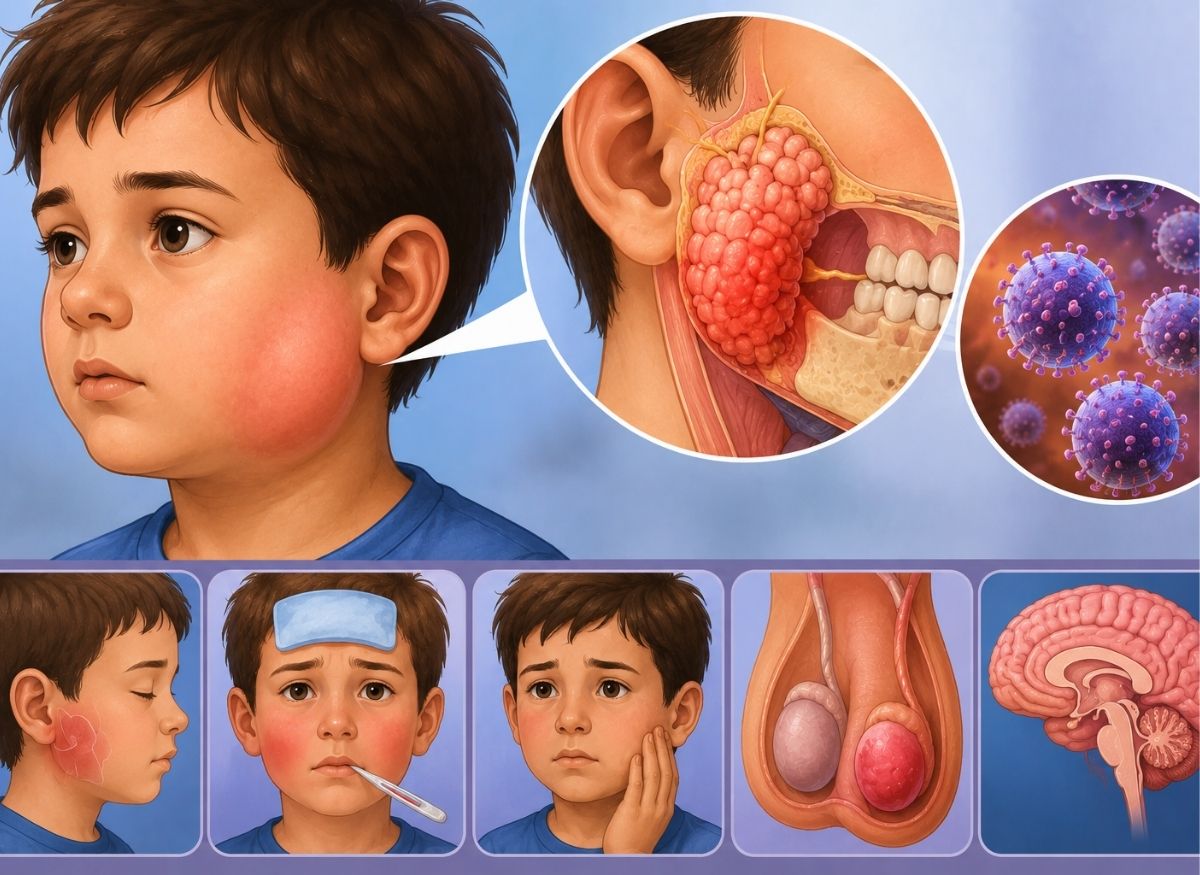
The signature feature of mumps is how it goes after the salivary glands specifically the parotid glands. These are the biggest salivary glands in the body, sitting on both sides just below and in front of the ears, draped over the jawbone.
When the virus reaches these glands, it triggers parotitis, or inflammation of the parotid glands. The swelling might show up on one side first or on both at once, giving rise to the classic “chipmunk cheeks” look. The skin stretches tight over the swollen area, the glands feel firm and sore to the touch, and chewing, talking, or drinking anything acidic becomes noticeably painful.
Systemic Complications: Other Affected Organs
Because the virus circulates through the blood during the viremia stage, it isn’t confined to the face. It can reach other glands and organs, and this is especially relevant for adults who get infected.
Reproductive glands
Mumps orchitis: In males past puberty, the virus can reach the testicles, causing painful swelling, tenderness, and a high fever. It’s uncomfortable, though permanent damage to fertility or the testicle itself is uncommon.
Mumps oophoritis: In females past puberty, the ovaries can become inflamed, causing lower abdominal pain but long-term fertility problems from this are rare.
The pancreas
If the virus travels to the abdomen, it can inflame the pancreas, producing acute pancreatitis severe pain in the upper belly along with nausea and ongoing vomiting that needs medical attention.
The central nervous system
Mumps can also trigger aseptic viral meningitis (inflammation of the membranes around the brain and spinal cord) and, less often, encephalitis (inflammation of the brain itself). Warning signs of these complications include a stiff neck, intense headaches, high fever, and confusion or unusual drowsiness. If the virus damages the nerve responsible for hearing, it can cause sudden and permanent hearing loss.
Distinguishing Mumps from Other Viral Conditions
Since several common childhood illnesses share overlapping symptoms like fever and visible physical changes, it helps to know what sets mumps apart:
German measles (rubella): Rather than swelling the salivary glands, rubella causes a light pink rash that starts on the face and spreads downward, along with swollen glands behind the ears.
Measles (rubeola): Caused by the rubeola virus, this illness brings on a deep red, blotchy rash across the body along with respiratory symptoms a hacking cough, runny nose, and tiny white spots inside the cheeks (Koplik’s spots). Mumps, by contrast, shows up mainly as facial and jaw swelling.
Early Signs of Mumps
Mumps progresses in fairly predictable stages. Since it spreads easily, understanding this timeline helps with catching it early and limiting how far it travels. After exposure, the virus stays quiet for roughly 16 to 18 days before symptoms appear first as general, body-wide inflammation, and later as localized swelling around the jaw.
The Prodromal Phase: Initial Flu-Like Symptoms
The first symptoms of mumps are vague and easy to mistake for a cold or the flu. This early stage, known as the prodromal phase, usually lasts two to three days and reflects the immune system responding to the virus before it settles into the facial glands.
Fever: A mild to moderate fever, usually between 100.4°F and 103°F (38°C to 39.4°C), is often the very first thing people notice. The rise in body temperature works to slow the virus down.
Headache and muscle aches: A dull, persistent headache paired with sore muscles throughout the body is common, driven by inflammatory chemicals (cytokines) the immune system releases while fighting the virus.
Deep fatigue and malaise: A heavy sense of exhaustion and general unwellness sets in as the body funnels its energy into fighting the infection.
Loss of appetite: Alongside the fatigue, eating tends to lose its appeal entirely.
The Hallmark Stage: Parotitis (Glandular Swelling)
The clearest and most recognizable sign of mumps is parotitis painful swelling of the parotid glands, the largest salivary glands, located just below and in front of each ear along the jawline.
How it typically unfolds:
- Days 1–3 (peak swelling): Inflammation pushes the jawline outward and lifts the earlobe up and out. Roughly 70–80% of cases involve both sides, though one side often swells a day or two before the other.
- Days 4–7 (resolution): The swelling gradually eases as internal pressure subsides, the stretched skin relaxes, and the glands shrink back to their normal size.
As the virus multiplies inside the glands, the resulting inflammation reshapes the face into the recognizable “chipmunk cheek” look. The skin over the swelling stretches and often looks shiny, though it usually doesn’t turn red.
Secondary Associated Symptoms
Once the parotid glands hit peak swelling, a handful of related symptoms tend to follow, centered on the jaw and nearby structures:
Pain when moving the jaw: Talking, chewing, and swallowing all become painful as jaw movement presses on the swollen, firm glands.
Sharp reaction to acidic foods: Foods and drinks like orange juice, lemonade, or pickles can trigger a sudden spike in pain. Acid prompts the salivary glands to release saliva, and when the ducts are blocked by swelling, that buildup causes intense discomfort.
Ear pain (otalgia): Because the parotid gland sits right next to the ear canal, the swelling can press on nearby nerves, producing a deep ache that mimics an ear infection even though the ear itself is perfectly healthy.
Differentiating Mumps from Other Childhood Viral Illnesses
Spotting the pattern flu-like symptoms followed by jaw swelling helps separate mumps from other similar-looking illnesses:
- Mumps: Targets the parotid glands near the ears, producing the classic “chipmunk” swelling.
- German measles: Caused by a togavirus; produces a pink rash and swollen glands behind the ears.
- Rubeola measles: Caused by the rubeola virus; produces a blotchy red rash, high fever, cough, and runny nose.
How Does a Person Get Mumps?
Mumps spreads efficiently between people, which is exactly why outbreaks happen. Understanding how it travels and how long it can hide before symptoms show is key to stopping it early.
Mechanisms of Transmission: How the Virus Spreads
The virus lives in an infected person’s saliva and respiratory fluids. It spreads when those fluids reach the mucous membranes mouth, nose, or eyes of someone else.
Respiratory droplets:
Coughing, sneezing, talking, or laughing releases a fine spray of infectious particles into the air, which others nearby can inhale.
Direct contact:
Actions like kissing, or simply being close enough to be splashed by droplets, offer the virus a direct route to a new host.
Contaminated surfaces:
The virus can survive on surfaces for hours, so touching something contaminated a doorknob, toy, or countertop and then touching your face can pass it along. Everyday habits that spread it include:
- Sharing cups, water bottles, or cans
- Using the same utensils during meals
- Sharing lip balm, cigarettes, or vapes
These close-contact pathways are exactly why mumps spreads so effectively in schools, daycares, dorms, and busy households.
The Incubation Period: The Silent Timeline
The time between exposure and the first symptoms the incubation period is unusually long, typically 16 to 18 days, though it can range from 12 to 25 days.
During this stretch, the virus stays completely hidden. It multiplies in the upper airway and nearby lymph nodes, then enters the bloodstream and travels to its target tissues the parotid glands, pancreas, or reproductive organs. The infected person feels totally fine the whole time, which makes contact tracing during outbreaks genuinely difficult.
The Contagious Window: Spreading it Blindly
Mumps is particularly tricky because a person becomes contagious 1 to 2 days before any jaw swelling appears, and stays contagious for about 5 days after the swelling starts.
Since people can spread it before they even know they’re sick, they often unknowingly expose others around them classmates, coworkers, family. That’s the reasoning behind public health advice to isolate for a full five days after swelling begins.
When Should You See a Doctor for Mumps?
Getting a professional evaluation as soon as mumps is suspected matters its early flu-like phase overlaps with plenty of other illnesses, so a proper diagnosis helps with both individual care and outbreak tracking.
Most mild cases clear up on their own with rest and supportive care, but the virus can occasionally spread to other organs. Knowing the difference between a normal recovery and a warning sign of something more serious tells you when it’s time to seek urgent care.
How Healthcare Professionals Confirm Mumps
A doctor will usually start with a physical exam, looking mainly for parotitis the firm, tender swelling below the ears that gives the face its distinctive shape.
They’ll also review vaccination history and check for early symptoms like fever, headache, and muscle aches. For an official diagnosis, they may run:
Buccal swab (PCR test): A swab is taken from inside the cheek near the swollen gland and tested for the virus’s genetic material. It works best within the first three days of swelling, when the virus is most detectable.
Blood test (serology): A blood sample can be checked for mumps antibodies. Finding IgM antibodies points to a recent or active infection useful for patients who come in later in the illness.
Red Flag Symptoms Requiring Immediate Medical Care
While most cases can be managed at home, certain symptoms call for urgent attention:
Nervous system warning signs:
A severe headache, stiff neck, and sensitivity to light point to viral meningitis. Extreme drowsiness, confusion, or seizures alongside a high fever suggest encephalitis a medical emergency needing immediate treatment.
Reproductive complications:
Painful, swollen testicles signal orchitis and need prompt care. Severe lower abdominal pain in females may point to oophoritis and should be evaluated right away.
Digestive distress:
Sharp upper abdominal pain with ongoing vomiting can indicate pancreatitis, which may require hospital care for fluids and pain control.
How is Mumps Managed and Prevented?
Managing mumps comes down to easing discomfort at home and following strict isolation to stop it from spreading. Since it’s caused by a virus, antibiotics won’t help, and there’s no dedicated antiviral treatment. Prevention through routine childhood vaccination remains the most reliable defense.
Demographic Divergence: Adults vs. Children
                          [AGE-BASED PROFILE COMPARISON]
                                         │
         ┌───────────────────────────────┴───────────────────────────────┐
         ▼                                                               ▼
 [PEDIATRIC CLINICAL EXPRESSION]                               [ADULT CLINICAL EXPRESSION]
 • Milder, self-limiting progression.                           • Severe, high-grade fevers and fatigue.
 • Features standard parotid jaw swelling.                     • Intense, agonizing facial nerve pain.
 • Complications are exceedingly rare.                         • Substantially higher risk of tissue migration.
 • Fast baseline recovery curve.                                • Requires strict clinical monitoring.
How severe mumps gets depends a lot on age.
In children: The illness tends to be milder and resolves on its own, with standard jaw swelling and rare complications, plus a faster recovery.
In adults: Symptoms tend to run higher-grade worse fevers, more intense facial pain, greater risk of the virus spreading to other organs, and a greater need for medical monitoring.
Potential Complications of the Mumps Virus
Once the virus enters the bloodstream, it can reach beyond the salivary glands:
Reproductive inflammation: Up to 30% of unvaccinated males past puberty who catch mumps develop orchitis painful testicular swelling with high fever. In females, the virus can cause oophoritis (ovarian inflammation) or mastitis (breast tissue inflammation). Permanent fertility problems from either are uncommon.
Nervous system strain: The virus can cross into the brain’s protective barrier, triggering meningitis or encephalitis, both of which need emergency care.
Sudden hearing loss: If the virus damages the inner ear’s nerve pathways, it can cause sudden, permanent hearing loss in one or both ears.
Pancreatitis: Inflammation of the pancreas can bring on severe abdominal pain, nausea, and vomiting.
Evidence-Based At-Home Support and Symptom Management
Home care for mumps focuses on relieving pain, controlling fever, and staying hydrated while the body fights off the virus.
[The Supportive Home Care Pathway]

Isolate the Patient (5 Days) ──► Apply Thermal Compresses ──► Serve Non-Acidic Soft Foods & Hydrate
Manage pain and fever carefully: Ibuprofen or acetaminophen can ease fever and jaw or ear pain. Never give aspirin to children or teens it’s linked to Reye’s syndrome, a rare but dangerous condition affecting the brain and liver.
Use compresses: Wrapped ice packs or warm washcloths applied to the swollen jaw for about 15 minutes at a time can ease discomfort.
Adjust food texture: Soft foods like broth, yogurt, applesauce, or mashed potatoes reduce the pain of chewing.
Stay hydrated the right way: Water, broth, and non-citrus diluted juices are good choices. Avoid acidic drinks like orange or grapefruit juice, since acid triggers the swollen glands to produce saliva and spikes the pain.
Isolate fully: Keep the sick person away from others for at least five days after the swelling starts, to stop the virus from spreading further.
Primary Prevention: The MMR Vaccine Strategy
The most effective way to prevent mumps and its complications is the MMR (Measles, Mumps, Rubella) vaccine. It uses weakened, live versions of the viruses to train the immune system without causing real illness. It’s given in two doses:
- First dose: Between 12 and 15 months of age
- Second dose: Between 4 and 6 years of age, usually before starting school
CDC data shows how effective each dose level is:
| MMR Doses | Effectiveness Against Mumps | If Breakthrough Infection Occurs |
|---|---|---|
| One dose | About 78% effective | Moderate symptoms, standard risk |
| Two doses (full series) | About 88% effective | Much milder illness, rare complications |
Conclusion
Mumps usually clears up on its own, but catching the early signs matters it eases discomfort, limits how far it spreads, and lowers the odds of complications. Watching for swollen glands, fever, headache, tiredness, and loss of appetite means catching it early enough to get proper care. Kids typically bounce back fully with rest and fluids, while adults often need closer monitoring because of their higher complication risk.
The MMR vaccine remains the single most effective way to prevent mumps, and it has dramatically cut down how often and how severely the illness shows up worldwide. Recognizing early symptoms, isolating promptly, and providing good supportive care all add up to better outcomes and a healthier community.
FAQ
What is mumps and how does it spread?
Mumps is a viral infection that mainly affects the salivary glands. It spreads through respiratory droplets from coughing, sneezing, or talking, and through contact with contaminated surfaces. People are most contagious just before and after the swelling starts, which is why vaccination remains the best defense.
What are the early symptoms of mumps?
Symptoms usually appear 16–18 days after exposure, starting with fever, headache, muscle aches, fatigue, reduced appetite, and pain while chewing or swallowing. The characteristic swelling near the parotid glands typically follows a few days later.
How is mumps diagnosed?
Doctors typically rely on clinical symptoms and medical history, along with lab tests like PCR or serology when confirmation is needed. Tender, swollen salivary glands combined with fever are the main clues they look for.
How is mumps treated?
There’s no antiviral cure for mumps treatment focuses on rest, hydration, pain relief, and compresses to reduce swelling. Isolation during the contagious period is essential, and severe complications may call for additional medical care.
Can mumps cause complications?
Yes, particularly in adults. Possible complications include orchitis, oophoritis, meningitis, encephalitis, pancreatitis, and hearing loss. Vaccination and early care significantly lower these risks.
How can mumps be prevented?
The MMR vaccine, given in childhood, is the most reliable prevention. Avoiding close contact with infected people, practicing good hand hygiene, and covering coughs also help. Unvaccinated adults, especially those traveling to higher-risk areas, should consider getting vaccinated.
Want this as a downloadable Word or Markdown file?