
2 Critical Causes of ALS Doctors Want You to Know
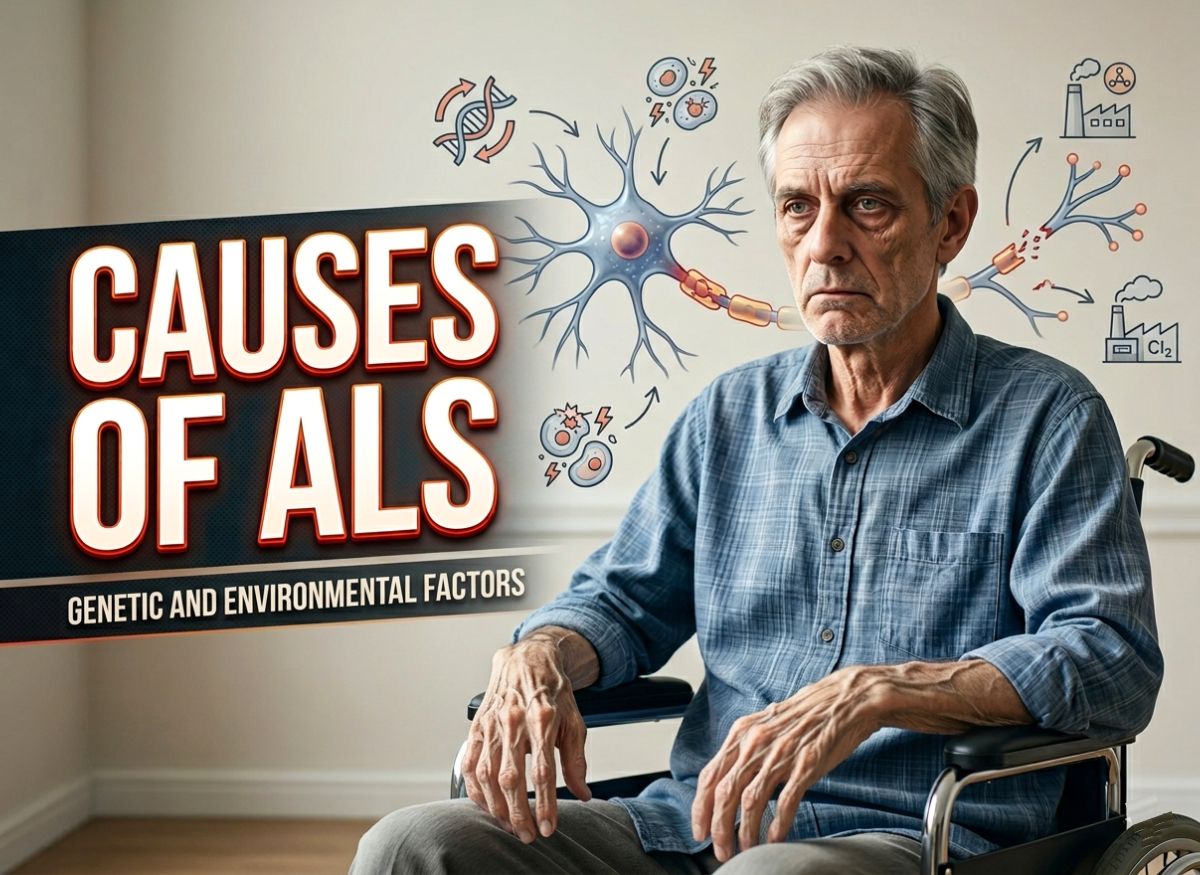
ALS rarely comes with simple answers. For many people, the condition may begin quietly before eventually leading to a diagnosis that changes nearly every part of life. Around the world, hundreds of thousands of people are living with Amyotrophic Lateral Sclerosis (ALS), while roughly 2 out of every 100,000 people are newly diagnosed each year. Although those numbers may seem relatively small, the effect of ALS can be enormous for patients, families, and everyday life.
One of the most difficult parts of ALS is that researchers still do not completely understand why it develops. After receiving a diagnosis, many patients and their loved ones naturally ask the same question: what caused this? Looking for an explanation can become an important part of coping with an uncertain condition.
Doctors and researchers have spent decades investigating ALS. Although many questions remain unanswered, scientists have identified several genetic and environmental factors that may contribute to its development. Understanding these factors can provide useful insight into risk, ongoing research, and the complicated processes involved in ALS. The two major causes discussed in this article do not explain every case, but they can help clarify what researchers currently understand about how the condition may develop.
Primary Causes of ALS
The primary causes of Amyotrophic Lateral Sclerosis (ALS) are generally grouped into two categories: familial ALS, which is linked to inherited gene mutations, and sporadic ALS, which is thought to develop through a combination of genetic susceptibility and environmental influences. For most people diagnosed with ALS, however, doctors cannot identify one specific cause.
Instead, ALS is considered a multifactorial disease. This means that several internal and external factors may work together to contribute to the progressive damage of motor neurons. This model also helps explain why ALS can develop in people who have no known family history of the disease.
Current research suggests that only a relatively small portion of ALS cases are caused by a single genetic factor. In many other cases, an underlying genetic susceptibility may combine with environmental exposures or other triggers. Exactly which factors interact, and how they start the disease process, remain important areas of research.
Two Main Types of ALS Based on Cause
The two main types of ALS based on their cause are sporadic ALS (sALS), which accounts for approximately 90-95% of cases and generally occurs without a known family history, and familial ALS (fALS), which represents about 5-10% of cases and is associated with inherited genetic mutations. This distinction is useful when doctors and researchers investigate the possible origins of ALS, although newer research shows that the difference between the two categories is not always completely straightforward.
- Sporadic ALS (sALS): This is the most common form of ALS. “Sporadic” means that there is no obvious family pattern or known inherited cause. Most people with ALS fall into this category. In these cases, the exact cause remains unknown, but researchers believe that a combination of subtle genetic factors and environmental or lifestyle exposures may contribute. Clinically, sporadic and familial ALS can look very similar; the main distinction is the lack of a known family history.
- Familial ALS (fALS): This form is associated with inherited genetic mutations and may appear across several generations of a family. When a parent carries a mutation responsible for familial ALS, each child typically has a 50% chance of inheriting it under an autosomal dominant inheritance pattern. More than 40 genes have been linked to familial ALS. However, inheriting a mutation does not always mean that a person will develop the disease because some mutations have incomplete penetrance. This indicates that additional genetic or environmental factors may influence whether and when ALS develops.
The Interaction of Genetic and Environmental Factors with Causes of ALS
Researchers believe that genetic and environmental factors may work together in many cases of sporadic ALS. Under this multifactorial model, a person’s genetic makeup may create a certain level of susceptibility, while environmental or lifestyle exposures could contribute to the development of the disease.
This idea, often described as the gene-environment interaction hypothesis, may help explain why ALS can occur in people who have no obvious inherited cause.
The theory suggests that relatively few people are destined to develop ALS based on genetics alone. Instead, some people may carry genetic variations that slightly increase their vulnerability. Several ideas help illustrate how these factors could interact:
- The Loaded Gun Analogy: One way researchers describe genetic susceptibility is with a loaded gun and trigger analogy. The genetic predisposition represents the loaded gun, while an environmental exposure could act as the trigger. Possible triggers that have been investigated include toxins, viral infections, and significant physical trauma. The analogy is meant to show how genetic vulnerability and external factors could potentially work together.
- Threshold Model: Another explanation is the threshold model. A person may inherit several genetic variations that individually have little effect but collectively increase susceptibility. Over time, different environmental exposures may add to this vulnerability. If the combined effects eventually reach a certain threshold, the disease process could begin. This may help explain why ALS often develops later in life after many years of accumulated influences.
- Explaining Sporadic Cases: This multifactorial theory may also explain why the same exposure does not affect everyone in the same way. One person could encounter a potential environmental risk and remain healthy, while another person with a different genetic background could develop ALS. Researchers continue studying which genetic and environmental combinations may contribute to this difference.
Genetic Factors to Be One of Causes of ALS
Known genetic factors associated with Amyotrophic Lateral Sclerosis (ALS) include mutations in genes such as C9orf72, SOD1, TARDBP, and FUS. These genes are especially important in familial ALS, while some genetic variants may also influence risk in certain cases of sporadic ALS. Since the discovery of the ALS-associated SOD1 gene in 1993, researchers have identified more than 40 genes connected with the disease.
These discoveries have shown that ALS is biologically complex rather than being caused by one single mechanism. In familial ALS, certain gene mutations can directly contribute to disease development. However, carrying one of these mutations does not always guarantee that ALS will occur. This is known as incomplete penetrance and suggests that other genetic and environmental factors may influence when or whether the disease appears.
Studying these genes has also helped researchers understand biological processes involved in ALS, including protein accumulation, RNA processing, and cellular waste management. These discoveries may eventually support the development of more targeted treatments.
Common Gene Mutations Linked to Familial ALS
The most frequently discussed genes associated with familial ALS include C9orf72, SOD1, TARDBP, and FUS. Among these, C9orf72 is an especially common genetic cause in people of European ancestry. Together, these four genes account for a substantial portion of familial ALS cases, although many other genes have also been identified.
- C9orf72 (Chromosome 9 Open Reading Frame 72): This gene was identified as an important ALS-related gene in 2011. Mutations in C9orf72 are also associated with familial frontotemporal dementia (FTD), and some people can develop features of both conditions. The mutation involves an unusually large expansion of a six-nucleotide sequence known as GGGGCC. Researchers believe this expansion may contribute to disease through several mechanisms, including reduced normal protein function, harmful RNA molecules, and abnormal proteins that accumulate inside cells. It represents a significant proportion of familial ALS cases in European populations.
- SOD1 (Superoxide Dismutase 1): SOD1 was the first gene identified as being associated with familial ALS. It provides instructions for producing an enzyme involved in protecting cells from harmful superoxide molecules. Certain mutations may cause the resulting protein to behave abnormally, leading to protein aggregation, oxidative stress, and problems with mitochondria. SOD1 mutations represent a notable portion of familial ALS cases and have become an important focus of gene-targeted treatment research.
- TARDBP and FUS: These genes produce proteins involved in RNA processing. When certain mutations occur, the proteins can move from their normal location inside the nucleus into the cell’s cytoplasm, where they may form abnormal aggregates. This can interfere with RNA processing and protein production and may contribute to motor neuron damage. Abnormal TDP-43 accumulation is also a common pathological feature observed in ALS, including many sporadic cases, making this pathway an important area of research.
Can Genetic Factors Also Play a Role in Sporadic ALS?
Genetic factors can also contribute to sporadic ALS (sALS). Some people who have no known family history may carry mutations associated with familial ALS, while others may carry genetic variants that increase susceptibility without directly causing the disease.
Modern genetic testing has shown that a portion of people diagnosed with sporadic ALS carry high-impact mutations in genes commonly associated with familial ALS, including C9orf72 and SOD1. This can occur for different reasons, including incomplete penetrance or, in some situations, a mutation that is not reflected in the known family history.
Beyond these high-impact mutations, researchers are also studying combinations of smaller genetic risk factors that may contribute to susceptibility.
- Genetic Susceptibility (Risk Variants): Most people with sporadic ALS do not have one powerful mutation that directly explains the disease. Instead, researchers believe that some individuals may carry multiple common genetic variants, each contributing a small amount of risk. Together, these variants may increase susceptibility and potentially make the nervous system more vulnerable to environmental influences. The ATXN2 gene, for example, has been studied as a genetic factor that may influence ALS risk.
- Bridging Familial and Sporadic ALS: These findings have made the traditional separation between familial and sporadic ALS less straightforward. ALS may exist along a spectrum, ranging from cases strongly driven by a single genetic mutation to cases involving multiple genetic and non-genetic factors. This is why researchers continue studying the genetics of both familial and sporadic ALS.
Environmental Factors to Be One of Causes of ALS
Environmental factors that have been investigated in connection with ALS include exposure to certain toxins, heavy metals, pesticides, cigarette smoking, and military service. While genetic causes are better understood in familial ALS, researchers are still working to determine which environmental exposures may contribute to sporadic disease.
Much of the evidence comes from epidemiological research comparing groups with different exposure histories. These studies can identify associations, but an association does not necessarily prove that an exposure directly causes ALS. The long period that may occur between exposure and the appearance of symptoms also makes these relationships difficult to study.
Even with these challenges, several environmental and lifestyle factors have emerged as possible contributors and continue to receive scientific attention.
Specific Environmental Exposures to Be ALS Cause
Potential environmental exposures associated with ALS include occupational contact with substances such as lead and pesticides, cigarette smoking, and possible exposure to cyanobacterial toxins such as BMAA. The strength of evidence varies between these factors, and researchers continue to investigate their possible roles.
Rather than suggesting that one exposure alone causes ALS, researchers generally consider the possibility that repeated or cumulative exposures may interact with other risk factors.
Heavy Metals and Chemicals
Research has investigated whether exposure to certain heavy metals and agricultural chemicals may be associated with a higher risk of ALS.
- Lead: Several studies have reported an association between long-term lead exposure and ALS. Occupational exposure can occur in settings such as welding or soldering. Because lead can affect the nervous system and promote oxidative stress, researchers have investigated whether it could contribute to processes involved in motor neuron damage.
- Pesticides and Herbicides: Some studies have found higher ALS rates among people working in agriculture, leading researchers to examine possible links with pesticides and herbicides. Chemicals such as organochlorines and pyrethroids have been investigated as potential contributors, although the exact relationship remains an area of research.
Cigarette Smoking
Cigarette smoking has been investigated as a potential lifestyle risk factor for ALS. Several large studies have reported higher ALS risk among current or former smokers compared with people who have never smoked. Researchers have proposed several possible explanations, including oxidative stress and exposure to neurotoxic chemicals found in tobacco smoke. However, the biological mechanisms connecting smoking with ALS remain an area of study.
Cyanobacterial Toxin (BMAA)
Beta-methylamino-L-alanine (BMAA) is a neurotoxin produced by certain cyanobacteria, sometimes referred to as blue-green algae. Researchers have investigated its possible connection with ALS and related neurological conditions.
Interest in BMAA increased after researchers observed unusual clusters of an ALS-like disease in Guam and investigated possible exposure through cycad seeds and flying foxes that had accumulated BMAA. Some researchers have also reported finding BMAA in brain tissue from ALS patients in other regions. However, its role in causing ALS remains controversial and has not been definitively established.
The Evidence Linking Military Service to An Increased Risk of ALS
Military service has been repeatedly associated with an increased risk of ALS in epidemiological studies. Research has reported that military veterans may have a higher risk of developing the disease than the general population, although the specific reason for this association remains uncertain.
The U.S. Department of Veterans Affairs (VA) designated ALS as a presumptive service-connected disease in 2008. This policy allows qualifying veterans with ALS to receive certain disability and health benefits without having to establish that a particular exposure during service directly caused their disease.
Researchers have proposed several possible explanations for the association between military service and ALS:
- Exposure to Environmental Toxins: Veterans may encounter various environmental hazards during training or deployment. These can include substances such as lead, pesticides, herbicides, and other potentially hazardous materials. Researchers have investigated whether combinations of these exposures could contribute to ALS risk.
- Intense Physical Exertion and Trauma: Military service can involve substantial physical activity, injuries, and repeated trauma. Researchers have studied whether these experiences may contribute to ALS risk, particularly when combined with other factors.
- Other Service-Related Factors: Scientists have also investigated other aspects of military service, including infections, multiple exposures occurring over a relatively short period, and other deployment-related experiences. Current research has not established one specific military-related cause, so multiple factors may need to be considered.
Advanced Theories and Diagnostic Methods Related to Causes of ALS
Genetic Testing
Genetic testing can be an important part of evaluating ALS, particularly when there is a family history or symptoms begin at a younger age. The process often starts with genetic counseling, where a specialist explains the possible benefits, limitations, and implications of testing for the patient and family.
If testing is chosen, a blood or saliva sample can be analyzed for mutations in genes associated with ALS, including C9orf72, SOD1, TARDBP, and FUS. Finding a disease-associated mutation can provide information about the genetic basis of ALS and may also have implications for relatives.
Genetic testing may also be useful for some people with sporadic ALS because it can identify mutations even when there is no known family history. Genetic findings may also influence access to certain gene-specific research studies and clinical trials.
- Predictive Testing: People without symptoms who have a known familial ALS mutation may choose predictive genetic testing to determine whether they carry the mutation. Because the results can have significant emotional and family implications, genetic counseling is important.
- Therapeutic Development: Identifying specific genetic mutations helps researchers develop treatments aimed at particular disease mechanisms. One example is the development of antisense oligonucleotide therapies designed to reduce the production of harmful proteins associated with certain mutations.
- Differential Diagnosis: Genetic information can sometimes help doctors distinguish ALS from other inherited motor neuron disorders or neurological conditions that may produce similar symptoms.
Oxidative Stress
Oxidative stress is another theory researchers have investigated in ALS. It refers to an imbalance between reactive oxygen species, sometimes called free radicals, and the body’s ability to neutralize them.
Motor neurons require a large amount of energy and may be particularly vulnerable to cellular stress. When reactive oxygen species accumulate, they can damage proteins, fats, and DNA. This damage can interfere with cellular functions, including mitochondrial energy production, and may contribute to motor neuron death.
Mutations in SOD1 are particularly relevant to this theory because the gene is involved in an enzyme that helps manage oxidative stress. Environmental exposures such as certain heavy metals and pesticides have also been studied for their potential effects on oxidative stress.
- Mitochondrial Dysfunction: Mitochondria help produce energy for cells and are also involved in the generation of reactive oxygen species. In ALS, mitochondrial problems may contribute to a cycle of cellular stress and reduced energy production.
- Environmental Links: Some environmental toxins can increase oxidative stress in the body. Researchers have investigated whether this additional cellular burden could contribute to ALS in people who are already genetically susceptible.
- Therapeutic Challenges: Although oxidative stress is an important area of ALS research, antioxidant treatments have not consistently produced significant benefits in clinical trials. This suggests that simply reducing oxidative stress may not be enough to prevent or slow the complex processes involved in ALS.
ALS and Other Medical Conditions
Viral Infections vs. The Onset of ALS
Researchers have studied the possible connection between viral infections and ALS for many years, but no definitive causal relationship has been established. Some viruses can affect the nervous system and motor neurons, which has led scientists to investigate whether certain infections could contribute to ALS.
Poliovirus is one example because it can cause neurological problems involving motor neurons. Other viruses, including enteroviruses and human endogenous retroviruses (HERVs), have also been investigated.
One theory suggests that an infection could initiate inflammation or cellular damage that continues even after the virus itself is no longer present. However, studies have produced inconsistent findings, and detecting viral material in patients does not necessarily prove that the virus caused the disease.
- Inflammatory Cascade: A viral infection could potentially trigger inflammation within the nervous system, creating conditions that contribute to long-term motor neuron damage.
- Genetic Predisposition: Researchers have proposed that a viral exposure might only contribute to ALS in someone who already has an underlying genetic susceptibility.
- Lack of Conclusive Evidence: Despite extensive investigation, no single virus has been consistently shown to cause ALS. Viral involvement, if it exists, is currently considered one possible part of a much more complicated disease process.
ALS vs. Multiple Sclerosis (MS)
Although Amyotrophic Lateral Sclerosis (ALS) and Multiple Sclerosis (MS) can both cause serious neurological disability, they involve very different disease mechanisms. ALS primarily involves the progressive loss of motor neurons, while MS is an autoimmune condition in which the immune system attacks myelin and other parts of the central nervous system.
ALS is generally more common with increasing age and often begins later in adulthood. Known genetic mutations and certain environmental associations, including military service, have been studied as possible risk factors. MS, on the other hand, commonly begins at a younger age and is more frequently diagnosed in women.
MS has also been linked to environmental and immune-related factors, including Epstein-Barr virus (EBV) infection, vitamin D status, and geographic location. These differences help doctors distinguish between the two conditions and guide their respective approaches to treatment and research.
- Genetic Basis: Both conditions have genetic influences, but the genes involved are different. MS has strong associations with variations in the HLA gene complex, while ALS involves genes connected with processes such as RNA processing and protein regulation.
- Disease Mechanism: ALS primarily involves progressive neurodegeneration and motor neuron loss. MS is driven by immune activity that can cause inflammation and damage to myelin, interfering with communication between the brain, spinal cord, and body.
- Treatment Approach: Treatments for MS generally focus on modifying immune activity and reducing disease attacks. ALS treatments focus on slowing disease progression, managing symptoms, and addressing specific biological mechanisms involved in motor neuron degeneration.
FAQs
1. What triggers ALS to start?
Most cases of ALS do not have one identifiable trigger. Researchers believe that a combination of genetic susceptibility and environmental factors may contribute to its development. Some people have inherited mutations that increase their risk, while others may have a combination of genetic variations and possible environmental exposures. Because many people develop ALS without an obvious risk factor, researchers continue working to understand exactly how the disease begins.
2. What is the age of onset for ALS?
ALS can occur at different ages, but it most commonly develops during adulthood and is more frequently diagnosed later in life. The condition can also appear earlier, particularly in some genetic forms. Age is considered an important risk factor, although ALS can develop in people without a known family history.
3. Who is most prone to ALS?
Some groups have been associated with a higher risk of ALS. Men have historically shown a somewhat higher risk, particularly at younger ages. People with a family history of ALS or certain genetic mutations may also have increased risk. Researchers have additionally investigated environmental exposures, military service, and other possible factors. However, many people diagnosed with ALS have no clearly identifiable risk factors.
4. Is there any way to prevent ALS?
There is currently no proven method that can completely prevent ALS. Maintaining overall health and limiting unnecessary exposure to harmful substances may support general well-being, but these measures cannot guarantee that ALS will be prevented. Because the causes of many cases remain uncertain, researchers continue searching for ways to reduce risk and prevent disease.
5. How to test for ALS at home?
There is no reliable home test that can diagnose ALS. A proper diagnosis requires evaluation by a medical professional, usually involving a neurological examination and specialized tests such as electromyography (EMG). Persistent muscle weakness, coordination difficulties, or speech changes should be evaluated by a healthcare professional rather than through self-testing.
6. What foods to prevent ALS?
There is no specific food that has been proven to prevent ALS. A balanced diet containing a variety of nutritious foods can support overall health, including foods such as leafy greens, berries, nuts, fish, and whole grains. However, these foods should not be considered a guaranteed way to prevent ALS.
Conclusion
Understanding the causes of ALS means looking for answers to a condition that can often seem unpredictable. Although researchers still have much to learn, the genetic and environmental factors discussed in this article provide a clearer picture of the processes that may contribute to ALS.
The available evidence suggests that ALS is rarely the result of one simple cause. Instead, genetic susceptibility, environmental exposures, and other biological processes may interact in different ways from person to person. This complexity can make the condition difficult to understand, but it also gives researchers important directions for future studies and treatments.
Awareness remains valuable. Learning about ALS can help people better understand the condition, recognize changes that deserve medical attention, and support continued research. Knowledge cannot change a diagnosis, but it can provide a more informed perspective when facing an uncertain disease.