12 Diphtheria Symptoms You Must Recognize
Diphtheria may seem like a disease from the past, but it still poses a real threat in many parts of the world. With widespread immunization, it’s become far less common in places with strong vaccination programs, but in areas with low vaccination rates, it remains a serious and potentially deadly condition. Caused by the bacterium Corynebacterium diphtheriae, it primarily affects the respiratory system but can also impact the skin, heart, and nerves.
One of the challenges is that symptoms can appear gradually, often starting with something as simple as a sore throat or mild fever, easily confused with other respiratory infections. That’s why recognizing the distinct symptoms early matters so much. The hallmark symptom is a thick, grayish coating that forms in the throat or nose, which can cause breathing difficulties and lead to severe complications. As the infection spreads, it releases toxins that can affect the heart, nerves, and kidneys, making it more dangerous than it might first appear.
Diphtheria can affect anyone, but it’s particularly harmful to those who haven’t been vaccinated. Left untreated, the toxin the bacteria produce can damage vital organs and lead to respiratory failure, which is why early detection and treatment are essential. Below are the 12 symptoms of diphtheria you should recognize, so you can act before the disease progresses.
The 12 Primary Symptoms
1. Sore throat. Often the very first symptom, initially mild like a common cold but typically worsening rapidly over one to two days, becoming severe enough to make speaking or swallowing difficult. The throat and tonsils appear red and swollen as bacteria multiply on the mucous membranes and begin producing the diphtheria toxin, damaging local tissue.
2. Mild fever and chills. Typically a low-grade fever around 100.4°F (38°C), sometimes higher, with chills as the body tries to fight the infection. Unlike the high, spiking fevers of some other bacterial infections, this relatively mild fever can give a false sense of security, masking how serious the illness really is.
3. Fatigue and malaise. A profound sense of fatigue, weakness, and general unwellness marks diphtheria’s onset. It’s more than ordinary tiredness, a deep exhaustion from the immune response and the early effects of circulating toxin. This systemic feeling of being unwell is often disproportionate to how mild the other early symptoms seem, and it’s a significant warning sign.
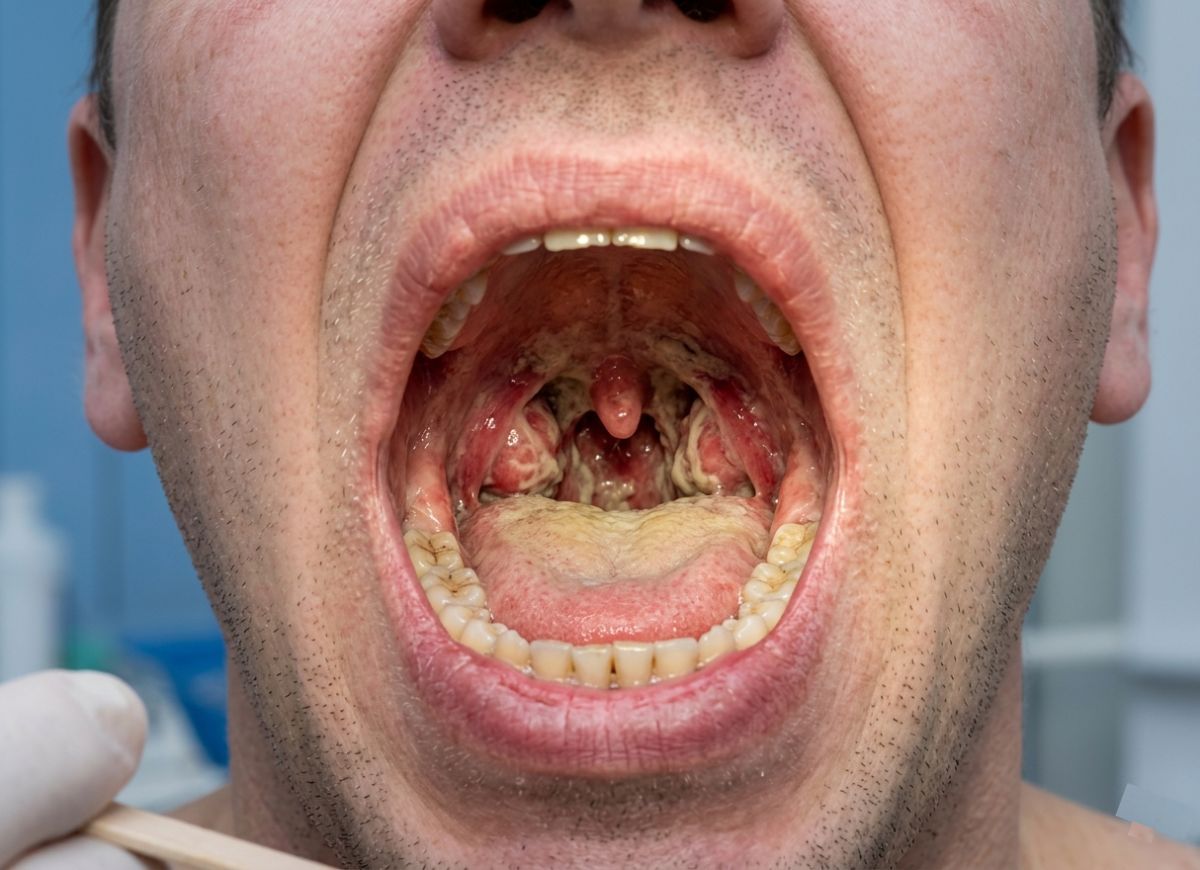
4. A thick, gray pseudomembrane. This is the most characteristic and dangerous sign. The toxin causes localized cell death, forming a dense, leathery, gray-to-black sheet covering the tonsils, throat, larynx, and even the nasal passages. It’s made of dead cells, fibrin, white blood cells, and bacteria, and adheres tightly to the tissue beneath, scraping it away causes bleeding. As it grows, it can obstruct the airway, leading to suffocation, a primary cause of death in severe cases.
5. Difficulty swallowing (dysphagia). The thick membrane combined with severe swelling and inflammation makes swallowing extremely painful, sometimes described as feeling like a lump in the throat. This can lead to dehydration and malnutrition, further weakening the body’s ability to fight the infection, and pain can become so intense that even swallowing saliva is a challenge.
6. Hoarse voice and a croup-like cough. When infection and the membrane extend down to the larynx (voice box), it interferes with the vocal cords, causing hoarseness, and the inflammation and obstruction can produce a distinctive, harsh, barking cough. This indicates laryngeal diphtheria, a particularly dangerous form because of the high risk of complete airway obstruction in this narrow part of the airway.
7. Swollen neck glands (“bull neck”). A classic, ominous sign of severe, toxic diphtheria. The toxin causes massive, tender swelling of the lymph nodes in the neck and surrounding tissue, giving the neck a distinctly swollen appearance. This sign indicates a very high level of toxin in the body and is strongly associated with a poor outlook, often preceding severe systemic complications and airway compromise from external compression.
8. Difficulty breathing or rapid breathing. Severe breathing difficulty is one of the most immediately life-threatening symptoms of advanced diphtheria, caused either by the pseudomembrane physically obstructing the airway or by pieces of it breaking off and being inhaled deeper into the lungs. The body compensates by breathing faster, and stridor, a high-pitched, wheezing sound on inhalation, is a common sign of significant airway obstruction and impending respiratory arrest.
9. Bluish skin color (cyanosis). A visible sign of dangerously low blood oxygen. When the airway is severely obstructed, blood can’t be adequately oxygenated in the lungs, and the darker, deoxygenated blood gives the skin, lips, and nail beds a bluish or purplish tint. This is a late-stage sign of respiratory failure and a critical warning that suffocation is imminent, requiring immediate intervention.
10. Painful, ulcer-like sores (in cutaneous diphtheria). Skin infection typically begins at the site of a pre-existing break in the skin, such as a cut, scrape, or insect bite. The area becomes red, swollen, and tender, eventually developing into one or more pustules or shallow ulcers with clearly defined, “punched-out” borders. These are often painful and can be chronic, lasting weeks or months untreated, most commonly on the legs, feet, and hands.
11. Gray membrane formation on skin ulcers. Similar to the throat, a gray or yellowish-gray membrane made of dead tissue, bacteria, and inflammatory cells can form over the surface of a skin ulcer and adhere to its base. While less thick or extensive than the throat pseudomembrane, its presence is a key diagnostic clue for cutaneous diphtheria, with surrounding skin often inflamed and swollen.
12. Chronic, contagious skin sores. A defining feature of cutaneous diphtheria is that the ulcers are chronic and slow to heal. Without antibiotic treatment, they can persist a long time, and throughout this period, the lesions are teeming with bacteria and highly contagious through direct contact. Someone with cutaneous diphtheria can easily pass the bacteria to an unvaccinated or susceptible person, who may then develop the more dangerous respiratory form, which is why identifying and treating skin lesions matters for both individual and public health.
What Is Diphtheria?
Diphtheria is an acute infectious disease caused by specific strains of Corynebacterium diphtheriae capable of producing a potent toxin. It’s the toxin, not simply the bacteria’s presence, that causes the disease’s severe, life-threatening effects. The bacteria typically colonize the upper respiratory tract, multiply, and release toxin, causing local tissue death and the hallmark pseudomembrane. The toxin can then enter the bloodstream and spread throughout the body, causing systemic complications.
C. diphtheriae itself is a club-shaped bacterium, but critically, not all strains cause diphtheria. The ability to produce the toxin comes from a specific virus (a bacteriophage) that integrates its genetic material into the bacterium’s DNA. Only these toxin-producing (toxigenic) strains cause the severe, classic form of the disease; non-toxigenic strains can cause milder throat infections or skin lesions without the life-threatening complications.
The toxin itself is incredibly potent, inhibiting protein synthesis within human cells and causing rapid cell death. In the throat, it kills the epithelial cells of the mucous membranes, triggering the inflammatory response that forms the pseudomembrane. If absorbed into the bloodstream, it has a particular affinity for certain tissues, causing serious, often irreversible complications:
- Myocarditis (heart muscle inflammation), which can lead to heart failure and arrhythmias
- Peripheral neuropathy, causing paralysis, often starting at the palate and later affecting the limbs and breathing muscles
- Acute tubular necrosis in the kidneys, leading to kidney failure
The infection begins when a susceptible person is exposed to toxigenic bacteria, which attach to and multiply on the respiratory tract’s mucosal surfaces. As they grow, they secrete the toxin, destroying local tissue and forming the characteristic membrane, which can obstruct the airway. Absorption of the toxin into the bloodstream then causes the potentially fatal damage to distant organs, making diphtheria a classic toxin-mediated disease.
How Diphtheria Spreads
Respiratory droplets are the most common route. When an infected person coughs, sneezes, or talks, they expel microscopic droplets containing the bacteria into the air, and if someone nearby inhales them, the bacteria can colonize their respiratory tract. This is most effective in close-quarter settings like households, schools, and institutions. The incubation period after exposure is typically short, two to five days.
Direct contact with secretions from an infected person is another route, whether nasal or throat discharge, or more commonly, contact with the open, weeping sores of cutaneous diphtheria. Bacteria in the ulcer can transfer easily to someone’s hands and then to their mouth, nose, or a skin break, establishing a new infection. This route is especially significant in tropical regions and areas with inadequate sanitation.
Contaminated surfaces are a less common route. The bacteria can survive briefly on dry surfaces, so it’s possible, though rare, to become infected by touching recently contaminated objects like used tissues, drinking glasses, utensils, or toys, and then touching your mouth, nose, or eyes.
Asymptomatic carriers, people harboring the bacteria in their nose and throat without symptoms, can unknowingly transmit it to others, making disease control more challenging. This high contagiousness, combined with the possibility of silent carriers, makes diphtheria a significant public health threat in communities with low vaccination coverage, and outbreaks are typically seen in crowded living conditions.
How Diphtheria Is Diagnosed
Diagnosis combines physical examination with specific lab tests, since early symptoms can overlap with other respiratory illnesses. A doctor will examine the throat, tonsils, and neck closely. The most telling clinical sign is the pseudomembrane, a thick, gray, leathery coating over the back of the throat, tonsils, or nasal passages. If diphtheria is suspected based on this membrane along with a sore throat, low-grade fever, and “bull neck” swelling, diagnostic testing proceeds without delay.
The primary test is a bacterial culture, taking a swab sample from the throat membrane or a skin lesion and sending it to a lab to grow and identify Corynebacterium diphtheriae. Because the danger comes from the toxin, not just the bacteria, further testing determines whether the strain is toxigenic:
- The Elek test places a strip of filter paper soaked in diphtheria antitoxin onto a culture plate. If the bacteria produce toxin, a visible line forms where toxin and antitoxin meet, confirming a toxigenic strain.
- PCR testing detects the gene responsible for toxin production directly from a patient sample, faster and more sensitive than traditional culture.
Because lab confirmation takes time, antitoxin treatment is often started based on strong clinical suspicion alone, since delaying treatment while waiting for results can let the toxin cause irreversible damage to the heart, nerves, and kidneys.
Diphtheria vs. Strep Throat
Both are bacterial infections causing severe sore throat, but they’re caused by different organisms with distinct, critical differences.
Appearance of the throat. Diphtheria produces a pseudomembrane, a thick, gray or blackish sheet that adheres tightly to the throat and tonsils and bleeds if scraped. Strep throat, caused by Streptococcus pyogenes, typically shows bright red, inflamed tonsils covered in white spots or streaks of pus, sometimes with tiny red spots on the roof of the mouth.
Systemic symptoms. Diphtheria’s toxin can cause systemic effects not seen in typical strep throat, most alarmingly severe neck swelling (“bull neck”) from massively enlarged lymph nodes, which can obstruct the airway. Strep throat causes swollen lymph nodes too, but not to this extreme.
Onset pattern. Strep throat is often accompanied by a sudden high fever, headache, and body aches, but usually not a cough. Diphtheria typically starts more gradually with a low-grade fever, and respiratory diphtheria can involve a brassy, croup-like cough and breathing difficulty if the membrane obstructs the airway.
Underlying danger. Diphtheria’s toxin-producing bacteria cause life-threatening complications directly through toxin spreading via the bloodstream. Strep throat can lead to complications like rheumatic fever or kidney disease, but doesn’t produce a toxin causing the same kind of acute, systemic organ damage.
Treatment
Treatment is time-sensitive and two-pronged: neutralize the circulating toxin and eliminate the bacteria causing the infection.
Diphtheria antitoxin (DAT) is the first and most critical step. It’s not an antibiotic, it’s a preparation of antibodies that target and neutralize the toxin still circulating in the blood before it binds to cells, preventing further damage to the heart, nervous system, and kidneys. Because its effectiveness depends on early administration, doctors typically give DAT based on strong clinical suspicion, often before lab confirmation, since the risk of waiting is far greater than the risk of giving it.
Antibiotics are the second essential component. They have no effect on toxin already produced, but they kill the bacteria, stopping further toxin production and halting disease progression at its source. Eliminating the bacteria also makes the patient non-contagious, typically within 48 hours of starting treatment, which is vital for preventing spread to family, healthcare workers, and the wider community.
Patients also need close monitoring and supportive care in a hospital setting, which may include bed rest, respiratory support if the pseudomembrane obstructs the airway, and cardiac monitoring to watch for myocarditis, a common and dangerous complication.
Prevention
Vaccination is by far the most effective tool for preventing diphtheria, and the dramatic decline of this once-common, deadly disease in many parts of the world is a direct result of widespread childhood immunization.
Diphtheria vaccines use a toxoid, a chemically inactivated form of the toxin that’s harmless and can’t cause disease but triggers the immune system to produce protective antibodies. If a vaccinated person is later exposed to the actual bacteria, those antibodies neutralize the toxin before it can cause damage, which is why vaccination prevents the disease’s severe, life-threatening aspects even if a person still carries the bacteria.
The vaccines are typically given combined with vaccines for other diseases, with formulation depending on age:
- DTaP (Diphtheria, Tetanus, and acellular Pertussis) is given to infants and young children in five doses: at 2, 4, and 6 months, between 15-18 months, and again between 4-6 years
- Tdap (Tetanus, Diphtheria, and acellular Pertussis) is a booster recommended for preteens (around 11-12), pregnant women during each pregnancy, and any adult who hasn’t previously received it, boosting immunity against pertussis (whooping cough) as well
- Td (Tetanus and Diphtheria) boosters are recommended every 10 years for adults after their Tdap booster, since immunity can wane over time, leaving adults vulnerable without ongoing protection
Frequently Asked Questions
What is C. diphtheriae? The bacterium that causes diphtheria. It produces toxins that severely damage the respiratory system, causing swelling, breathing difficulty, and the formation of a thick, grayish throat membrane. The toxins can also spread through the body, damaging the heart, kidneys, and nerves.
How is diphtheria defined? A serious bacterial infection caused by Corynebacterium diphtheriae, primarily affecting the throat and nasal passages but able to spread elsewhere. Symptoms include sore throat, fever, neck swelling, and a thick, gray throat membrane. The bacteria’s toxins damage tissue and can cause life-threatening complications like heart failure, kidney damage, and nerve impairment.
What kills diphtheria? Treatment combines diphtheria antitoxin, which neutralizes the bacterial toxin, with antibiotics to kill the bacteria. Prompt administration significantly reduces illness severity and prevents complications, and early intervention is essential since untreated diphtheria can be fatal. DTaP vaccination remains the most effective prevention.
Can you fully recover? Yes, many people fully recover, especially with early treatment. Recovery depends on how quickly treatment starts, symptom severity, and overall health. Diphtheria can cause long-term complications like nerve damage, heart issues, or kidney problems, but with prompt treatment many people recover without lasting effects.
What can be mistaken for diphtheria? Strep throat, tonsillitis, mononucleosis, and viral pharyngitis all share common symptoms like sore throat, fever, and swelling. The hallmark of diphtheria, the grayish throat membrane, sets it apart, so seeking medical attention for severe or non-improving symptoms is important for early diagnosis.
How long is it contagious? As long as symptoms persist, up to about two weeks after infection begins, though once appropriate antibiotic treatment starts, people are usually no longer contagious after 48 hours. Isolating anyone with diphtheria until they complete at least 48 hours of antibiotics is essential for preventing spread.
Is diphtheria the same as tuberculosis? No, they’re distinct diseases caused by different bacteria: Corynebacterium diphtheriae for diphtheria, Mycobacterium tuberculosis for TB. Both can affect the respiratory system, but symptoms, causes, and treatments differ. Diphtheria often presents with a grayish throat membrane, while TB typically causes a persistent cough, night sweats, and weight loss.
How fatal is diphtheria? Without proper treatment, it can be fatal, potentially causing respiratory failure, heart failure, and nerve damage. Historically a leading cause of death in children, cases have dropped dramatically with widespread vaccination, though it remains a serious risk in areas with low vaccination coverage. Early diagnosis and treatment are critical for preventing life-threatening complications.
Where did diphtheria originate? It’s been known for centuries and was first described in Europe, becoming widespread in the 19th century, particularly in areas with poor sanitation. Today it’s rare in countries with high vaccination rates but still occurs where vaccine access is limited.
The Bottom Line
Diphtheria is a serious bacterial infection requiring prompt attention and treatment to prevent severe complications. Recognizing symptoms early, like the characteristic throat membrane and fever, is crucial for timely intervention. While it can be fatal without treatment, vaccination has significantly reduced its incidence worldwide. Understanding the importance of vaccination and staying informed about potential risks can help protect you and your loved ones from this potentially deadly illness. If you or someone you know is showing symptoms of diphtheria, seeking medical help immediately can make all the difference in preventing long-term damage and ensuring a full recovery.