
5 Common Symptoms of Raynaud’s Syndrome You Should Never Overlook
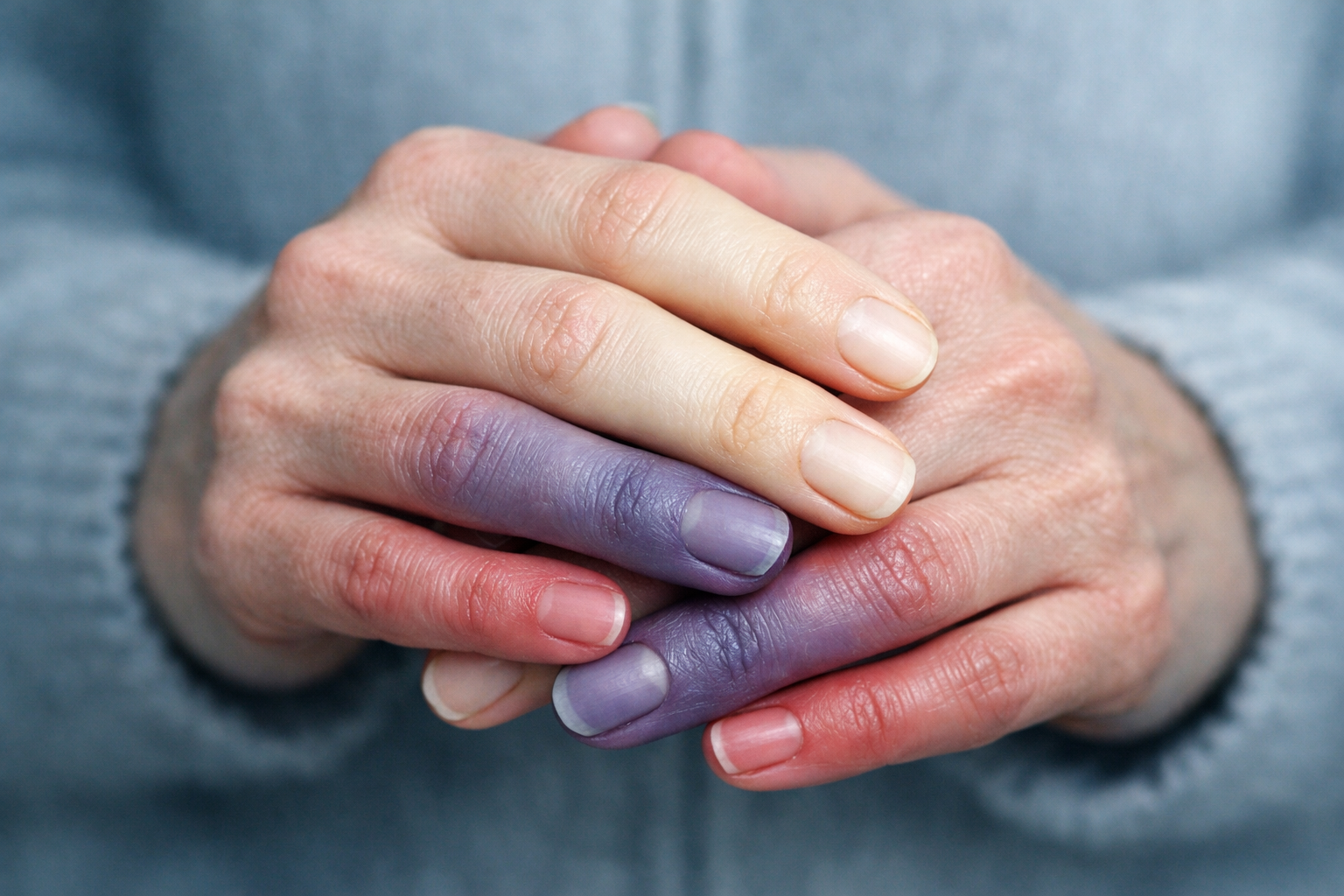
Raynaud’s Syndrome is a condition that is often mistaken for having naturally cold hands or feet. It affects the small blood vessels, especially those in the fingers and toes, causing them to narrow suddenly in response to triggers such as cold temperatures or emotional stress.
When these blood vessels constrict, blood flow to the affected areas decreases. This can result in numbness, tingling, pain, and noticeable changes in skin color. In some people, the episodes are mild, while others may experience more frequent or severe symptoms.
One of the most recognizable signs of Raynaud’s is when the fingers or toes turn white or blue after exposure to cold. However, the condition can involve several other symptoms that may be easier to overlook.
Paying attention to repeated episodes of numbness, tingling, unusual color changes, or pain after cold or stressful situations can help you recognize Raynaud’s early. Understanding these symptoms can also help you know when it may be appropriate to seek medical advice.
By learning about the five most common symptoms of Raynaud’s Syndrome, you can better understand what is happening during an attack and take steps to manage potential triggers.
What is Raynaud’s Syndrome?
Raynaud’s syndrome is a condition involving temporary spasms of the small blood vessels that supply the extremities. These episodes most commonly affect the fingers and toes and are usually triggered by cold temperatures or emotional stress.
During an attack, the small arteries supplying the skin become unusually narrow. This vasospasm reduces blood flow to the affected area and can produce a combination of color changes, coldness, numbness, tingling, and pain.
Although the fingers and toes are the most frequently affected areas, Raynaud’s can also involve other parts of the body, including the nose, ears, lips, and nipples.
The basic mechanism is similar regardless of the affected area. Blood vessels become overly sensitive to certain triggers and constrict more than they normally would, temporarily reducing circulation.
The fingers and toes are the classic locations. An episode may affect several digits but does not necessarily involve every finger or toe equally. In some people, one hand may be affected more than the other. The thumbs are also often less affected than the other fingers.
When an attack occurs, the affected digits may become cold and numb while their color changes. The skin can first appear pale or white and may later become bluish before returning to its normal color.
Raynaud’s can also affect the ears, nose, and lips. These areas may become pale, cold, or bluish when exposed to cold temperatures, especially cold wind or sudden temperature changes.
Also, Raynaud’s of the nipple is a recognized form of vasospasm that can occur, particularly during breastfeeding. It may cause significant pain during or after breastfeeding, and the nipple can become white before changing to blue or red.
Because this presentation can resemble other breastfeeding-related problems, recognizing the possibility of Raynaud’s can be important when symptoms repeatedly occur.
Regardless of where it develops, Raynaud’s involves excessive contraction of small blood vessels. This temporary narrowing reduces circulation and produces the characteristic symptoms associated with the condition.
Is Raynaud’s Syndrome a Serious Condition?
For many people with Primary Raynaud’s, the condition is manageable and does not usually cause permanent tissue damage. However, Secondary Raynaud’s can be associated with an underlying autoimmune, connective tissue, or vascular condition and may require more careful medical evaluation.
Primary Raynaud’s, also called Raynaud’s disease, occurs without another identifiable underlying disorder. It is generally more common and often begins during adolescence or young adulthood. Symptoms may be uncomfortable but are usually less severe.
In most cases, Primary Raynaud’s does not lead to complications such as ulcers or tissue death. The condition can still interfere with daily activities and quality of life, especially when attacks happen frequently.
Secondary Raynaud’s, also known as Raynaud’s phenomenon, develops as a result of another condition, medication, or external factor. It may be linked to connective tissue diseases such as scleroderma, lupus, rheumatoid arthritis, or Sjögren’s syndrome.
Other possible associations include certain arterial disorders, nerve compression conditions, medications, and repeated exposure to vibrating tools.
Secondary Raynaud’s can be more severe and may first appear later in adulthood. Episodes may cause greater pain and, in serious cases, reduced blood flow can contribute to digital ulcers or, rarely, tissue damage.
For this reason, people experiencing new, severe, or worsening Raynaud’s symptoms should discuss them with a healthcare professional. Medical evaluation can help determine whether the symptoms are primary or related to another underlying condition.
5 Key Symptoms of Raynaud’s Syndrome
Characteristic Color Changes of a Raynaud’s Attack
One of the most recognizable features of Raynaud’s is a temporary change in the color of the affected skin. A classic attack may progress from white to blue and then red as circulation decreases and later returns.
The complete three-stage color pattern does not occur in every person or during every episode. The changes are caused by different stages of blood-vessel constriction and restoration of circulation.
In phase 1 – white (pallor), the small arteries suddenly narrow because of vasospasm. As blood flow to the skin decreases, the affected fingers or toes may become pale, white, or waxy in appearance.
The area may feel particularly cold and numb, and there can sometimes be a noticeable boundary between the affected skin and the surrounding normal skin.
In phase 2 – blue (cyanosis), the affected tissue may develop a bluish color if the reduced blood supply continues. The small amount of blood remaining in the area becomes less oxygenated, which can give the skin a blue or purple appearance.
The affected area may continue to feel cold and numb during this stage. Some people do not experience the blue phase, or it may last only briefly.
In phase 3 – red (rubor), blood flow returns as the blood vessels relax and open again. The sudden return of warm, oxygen-rich blood can cause the skin to become red or flushed.
This stage may produce tingling, throbbing, burning, or stinging sensations. Some people may also notice temporary swelling as circulation returns. The attack generally resolves as normal blood flow and sensation are restored.
Numbness or A ‘pins and needles’ Sensation
Numbness and a “pins and needles” feeling are common during Raynaud’s attacks. The affected fingers or toes may feel as though they have fallen asleep, with reduced sensation followed by tingling as circulation begins to return.
This sensation, medically referred to as paresthesia, is related to the temporary reduction in blood flow to the nerves and tissues.
During the white phase, numbness can be significant enough that a person has difficulty feeling touch or controlling the affected fingers normally. The digits may feel stiff, cold, or unusually disconnected.
As circulation begins to return, numbness may gradually change into tingling. This prickling sensation often indicates that normal blood flow and nerve function are returning.
The tingling may occur before or alongside the throbbing discomfort that sometimes develops during the red phase of an attack. Coldness, numbness, and altered sensation can make the hands feel awkward and make everyday tasks more difficult.
Pain or Throbbing
Pain and throbbing can occur during Raynaud’s attacks, particularly when circulation returns to the affected area. Some people describe the sensation as burning, stinging, aching, or intense pins and needles.
The severity of discomfort varies from person to person. Some individuals experience only mild irritation, while others may have considerable pain during the rewarming phase.
During the early stages of an attack, reduced blood flow can cause numbness. Once circulation returns, the nerves and tissues may respond with increased sensations, which can produce the throbbing or burning feeling.
More prolonged or severe episodes may be associated with greater discomfort. However, the intensity of symptoms can vary between individual attacks.
Swelling In the Fingers and Toes
Temporary swelling can occur in the fingers and toes as circulation returns following a Raynaud’s attack. It is usually most noticeable during the rewarming stage.
The affected digits may feel tight, full, or puffy. Some people describe their fingers as feeling swollen enough that rings or other items seem tighter than usual.
This temporary swelling can occur as blood flow returns to the small vessels following a period of constriction. As circulation stabilizes, the swelling generally decreases.
For people with Primary Raynaud’s, temporary swelling during an attack is usually not a sign of permanent tissue damage. However, persistent swelling, significant pain, or skin changes should be discussed with a healthcare professional, particularly when Secondary Raynaud’s is suspected.
Impairing Fine Motor Skills
Raynaud’s can temporarily interfere with fine motor skills because coldness, numbness, stiffness, and reduced sensation make it harder to control the fingers.
During an attack, a person may struggle with tasks that normally require very little effort. The reduced sensation can make it difficult to judge pressure or feel small objects properly.
For example, buttoning clothing may become difficult because the fingers cannot easily sense the button or opening. Similar problems can occur when typing, writing, using a phone, turning a key, or handling coins and other small objects.
Cold and stiff fingers can also reduce flexibility and coordination. The combination of reduced sensation and stiffness may make ordinary activities slower and more frustrating.
For people whose jobs depend heavily on precise hand movements, these temporary episodes can have a noticeable impact on work and daily life.
What are the Common Triggers for Raynaud’s Syndrome?
Exposure to Cold Temperatures
Cold exposure is one of the most common triggers of Raynaud’s attacks. When the body becomes cold, blood vessels naturally constrict to conserve heat. In people with Raynaud’s, this response can be much stronger than normal.
The small blood vessels supplying the fingers and toes may narrow significantly, reducing circulation and producing the characteristic symptoms.
A trigger does not always require freezing temperatures. Some people may experience an attack after entering an air-conditioned room, reaching into a refrigerator, holding a cold drink, washing their hands with cool water, or spending time outside on a chilly or windy day.
Symptoms can begin relatively quickly after exposure. The fingers or toes may become cold, numb, pale, or bluish.
Because cold is such a common trigger, keeping the hands, feet, and overall body warm can help reduce attacks. Wearing gloves, warm socks, dressing in layers, and avoiding direct contact with very cold objects are common strategies.
Emotional Stress or Anxiety
Emotional stress and anxiety can also trigger Raynaud’s symptoms. Stress activates the sympathetic nervous system, which can cause the body to release hormones such as adrenaline.
These hormones can temporarily narrow peripheral blood vessels as part of the body’s normal fight-or-flight response. In someone with Raynaud’s, this reaction may be strong enough to trigger an attack.
Stressful situations can include public speaking, examinations, arguments, difficult conversations, sudden fear, or intense excitement.
The resulting episode may look similar to one caused by cold exposure, with the fingers or toes becoming pale or blue and developing numbness, tingling, or discomfort.
Learning ways to manage stress may help some people reduce the frequency of emotionally triggered episodes. Techniques such as controlled breathing, relaxation exercises, meditation, and other stress-management approaches may be useful as part of an overall management plan.
Different Types of Raynaud’s
Raynaud’s is generally divided into two main types: Primary and Secondary. The distinction is based largely on whether another medical condition is responsible for the symptoms.
Primary Raynaud’s, also called Raynaud’s disease, occurs on its own without an identifiable underlying disease. It is the more common form and often begins during adolescence or early adulthood.
Symptoms can still be uncomfortable, but Primary Raynaud’s usually does not cause significant permanent tissue damage. Some people also have a family history of the condition.
Secondary Raynaud’s, also known as Raynaud’s phenomenon, develops because of another underlying condition, medication, injury, or environmental factor. It can be more severe than the primary form.
Connective tissue diseases such as scleroderma, lupus, and rheumatoid arthritis are among the conditions associated with Secondary Raynaud’s.
Other possible causes or associations include arterial disease, nerve compression such as carpal tunnel syndrome, repeated vibration exposure, smoking, certain medications, and some injuries.
Secondary Raynaud’s may develop later in life and can carry a greater risk of complications, particularly when blood flow is severely restricted for prolonged periods.
Raynaud’s Syndrome Diagnosis
Diagnosing Raynaud’s syndrome begins with a detailed medical history and discussion of the symptoms. A healthcare professional may ask when the attacks occur, what triggers them, how long they last, and whether the fingers or toes change color.
The doctor may also ask about numbness, tingling, pain, skin changes, family history, medications, and other symptoms that could point toward an underlying disease.
A physical examination can help assess circulation and look for signs that may suggest Secondary Raynaud’s.
One useful test is nailfold capillaroscopy. During this non-invasive examination, the tiny blood vessels near the base of the fingernail are viewed under magnification. Abnormal capillary patterns can sometimes suggest an underlying connective tissue disease.
Blood tests may also be performed when Secondary Raynaud’s is suspected. Tests such as antinuclear antibody (ANA) testing can help identify signs associated with autoimmune diseases, while other laboratory tests may be used to look for inflammation or other underlying conditions.
Complication of Raynaud’s Syndrome
Most people with Primary Raynaud’s do not develop serious complications. However, severe Secondary Raynaud’s can sometimes lead to problems when blood flow to the fingers or toes becomes significantly restricted.
One possible complication is a digital ulcer. These are painful sores that can develop on the fingertips or toes when circulation is severely impaired. They may take longer to heal and can become infected.
In rare and severe cases, prolonged loss of blood flow can result in tissue death, known as gangrene. This is a medical emergency and requires prompt treatment.
Some people with Secondary Raynaud’s, particularly those with connective tissue diseases such as scleroderma, may also develop changes in the skin of the fingers. The skin can become tight, hard, or shiny, which may restrict movement.
The risk of these complications is much greater in severe Secondary Raynaud’s than in uncomplicated Primary Raynaud’s.
Raynaud’s and Other Circulatory Conditions like Acrocyanosis
Raynaud’s syndrome can sometimes be confused with other circulation-related conditions, including Acrocyanosis. However, the pattern of symptoms can help distinguish between them.
Raynaud’s typically causes temporary attacks that are triggered by cold or emotional stress. During an episode, the fingers or toes may change color and become white, blue, and then red as circulation decreases and returns.
These attacks may also cause numbness, tingling, burning, throbbing, or pain. The symptoms usually improve once the trigger is removed and the affected area warms.
Acrocyanosis is different because the bluish discoloration is generally more persistent and often affects both hands or feet symmetrically. It is usually painless, although the affected skin may feel cold or damp.
The blue color associated with Acrocyanosis may become more noticeable in cold conditions, but it does not usually follow the same temporary white-blue-red sequence seen with Raynaud’s.
Because several circulation disorders can produce similar symptoms, persistent or unusual color changes should be evaluated by a healthcare professional.
FAQs
1. What foods should you avoid with Raynaud’s syndrome?
There is no specific diet that universally prevents Raynaud’s attacks. However, some people may find that certain substances can affect their symptoms.
Caffeine may contribute to blood-vessel constriction in some individuals, so people who notice a connection between caffeine and their symptoms may choose to reduce coffee, energy drinks, or other highly caffeinated products.
It is also helpful to maintain a balanced diet that supports overall cardiovascular health. Excessive alcohol consumption and heavily processed foods may be worth limiting, particularly when other health conditions are present.
If you notice that a specific food or drink consistently triggers symptoms, discuss the pattern with your healthcare provider rather than eliminating large groups of foods unnecessarily.
2. What is the root cause of Raynaud’s disease?
The exact cause of Primary Raynaud’s is often unknown. It occurs because the small blood vessels in the fingers and toes respond excessively to triggers such as cold or emotional stress.
Secondary Raynaud’s has an identifiable underlying cause in many cases. It may be associated with autoimmune or connective tissue diseases such as lupus or scleroderma, certain medications, smoking, occupational vibration exposure, or other vascular problems.
A family history may also increase the likelihood of developing Raynaud’s, although genetics are only one part of the picture.
3. How to fix Raynaud’s syndrome?
There is currently no single cure that eliminates Raynaud’s for everyone, but symptoms can often be managed.
Avoiding known triggers is an important first step. Keeping the hands and feet warm, dressing appropriately in cold weather, and managing stress may help reduce attacks.
For people with frequent or severe symptoms, a healthcare professional may recommend medications that help relax blood vessels, such as certain calcium channel blockers or other vasodilating medicines.
Severe cases associated with significant tissue damage may require specialized treatment. Regular exercise and healthy lifestyle habits may also support overall circulation and cardiovascular health.
4. At what age does Raynaud’s start?
Primary Raynaud’s often begins during adolescence or early adulthood, although it can develop at other ages.
Secondary Raynaud’s can appear later, particularly when it is associated with an underlying autoimmune, connective tissue, vascular, or medication-related condition.
New Raynaud’s symptoms that begin later in adulthood, especially when they are severe or accompanied by other symptoms, should be evaluated by a healthcare professional.
5. What is the life expectancy of someone with Raynaud’s disease?
Primary Raynaud’s by itself generally does not reduce life expectancy. Most people with uncomplicated Primary Raynaud’s have a normal lifespan.
When Raynaud’s is secondary to another disease, the underlying condition is more important when considering overall health risks. Conditions such as scleroderma or lupus can affect multiple organs, so appropriate diagnosis and treatment are important.
The outlook therefore depends largely on the underlying cause and its severity rather than Raynaud’s symptoms alone.
6. How to test for Raynaud’s disease at home?
There is no reliable home test that can definitively diagnose Raynaud’s syndrome. However, you can monitor what happens during suspected attacks.
Pay attention to whether your fingers or toes become unusually cold, white, blue, or red after exposure to cold or emotional stress. You can also record how long the episodes last and whether numbness, tingling, pain, or swelling occurs.
Taking notes or photographs of visible color changes may provide useful information for your healthcare provider. A professional evaluation may include a physical examination, blood tests, or nailfold capillaroscopy when appropriate.
7. What are the red flags for Raynaud’s syndrome?
Warning signs that deserve medical attention include frequent or prolonged attacks, severe pain, persistent numbness, or symptoms that continue after the triggering situation has ended.
The development of sores or ulcers on the fingers or toes is particularly important because it can indicate significantly reduced blood flow.
Raynaud’s symptoms accompanied by other signs of an autoimmune or connective tissue disorder, such as joint problems, skin thickening, or unusual rashes, may also warrant further evaluation.
New or rapidly worsening symptoms should be discussed with a healthcare professional.
8. Does Raynaud’s affect the brain?
Raynaud’s primarily affects blood vessels in the extremities, especially the fingers and toes. It does not normally directly affect the brain.
However, Secondary Raynaud’s can occur as part of diseases that affect multiple organs and blood vessels. In such situations, complications related to the underlying disease may involve other parts of the body.
Symptoms such as sudden confusion, severe weakness, difficulty speaking, or other neurological changes require urgent medical evaluation rather than being assumed to be caused by Raynaud’s.
9. What type of doctor to see for Raynaud’s?
A primary care doctor can be a good starting point if you suspect you have Raynaud’s. They can review your symptoms, perform an initial examination, and determine whether additional testing is needed.
If an underlying autoimmune or connective tissue condition is suspected, a rheumatologist may be involved. A vascular specialist may be appropriate when there are concerns about blood circulation or significant vascular complications.
The appropriate specialist depends on the symptoms, test results, and suspected underlying cause.
Conclusion
Raynaud’s syndrome can sometimes seem like nothing more than cold hands or feet, but repeated episodes of color changes, numbness, tingling, pain, or swelling should not automatically be ignored.
Recognizing these symptoms can help you identify possible Raynaud’s and understand what may be triggering the attacks. For many people with Primary Raynaud’s, symptoms can be managed by avoiding triggers and keeping the affected areas warm.
However, severe, new, or worsening symptoms may indicate Secondary Raynaud’s or another underlying condition. Persistent pain, ulcers, tissue changes, or other unusual symptoms should be evaluated by a healthcare professional.
With the right diagnosis and management, many people can reduce the impact of Raynaud’s attacks and continue with their normal daily activities.