
The 5 Stages of Grief Everyone Should Know
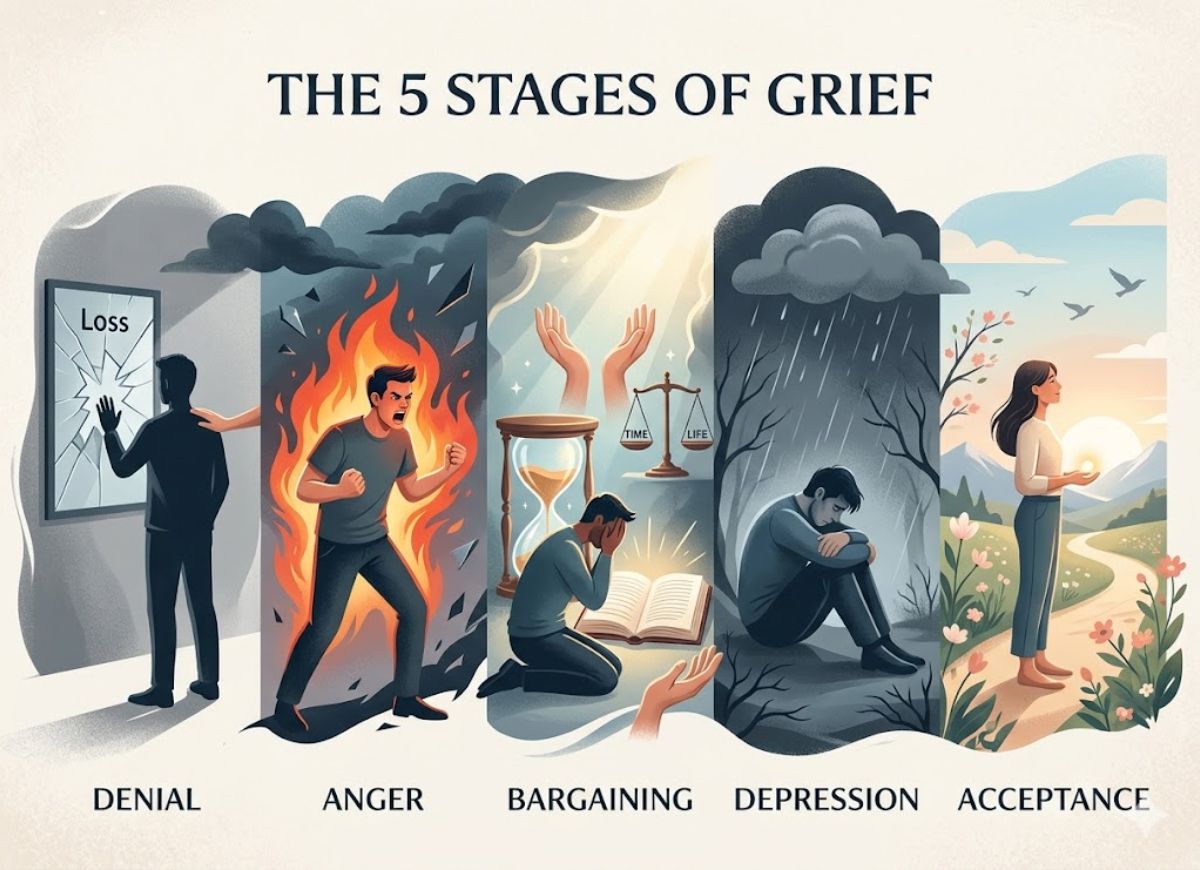
Grief is one of the most universal experiences in life, yet everyone experiences it in a deeply personal way. It may follow the death of someone close, the end of a relationship, or another major change that alters everyday life. The emotions can feel confusing and overwhelming, making it difficult to understand what is happening internally. The five stages of grief provide a well-known framework that can help people understand some of the emotional reactions that may occur after a significant loss.
Although these stages can provide a useful way to understand grief, they do not happen in the same order or manner for everyone. A person may move between stages, skip a stage, or experience several emotions at the same time. Understanding this can provide reassurance and remind people that there is no single pattern that everyone must follow.
Grief affects countless people each year, but social expectations can sometimes make it difficult to speak openly about loss. Some people feel pressured to recover quickly or hide their emotions. Learning about denial, anger, bargaining, depression, and acceptance can help individuals recognize their feelings and develop healthier ways of dealing with them.
In this article, we’ll explore the five stages of grief, what each stage may feel like, and how these emotions can appear in everyday life. Understanding the stages can help you approach your own grief or support another person with patience and empathy. The purpose is not to rush the healing process, but to acknowledge emotions and gradually adjust to life after a major loss.
What Are the 5 Stages of Grief in the Kübler-Ross Model?
The 5 stages of grief in the Kübler-Ross model are denial, anger, bargaining, depression, and acceptance. Together, they provide a framework for understanding some of the emotional responses that can accompany loss. The model is useful for describing common experiences, but it is not meant to suggest that everyone must move through these stages in a fixed or predictable order.
Denial Stage
The denial stage can act as an initial psychological defense against the overwhelming reality of loss. Shock, numbness, and disbelief may make the situation feel unreal. Rather than processing the entire emotional impact immediately, the mind may gradually absorb what has happened at a pace that feels more manageable.
A person may think, “This cannot be happening,” “There must be a mistake,” or simply feel emotionally disconnected. This reaction is generally not a deliberate refusal to accept reality. Instead, it can be an instinctive response that temporarily protects a person from an unbearable amount of emotional pain.
Denial can look different from person to person. Someone who has recently lost a spouse, for example, may still set the table for two or instinctively expect their loved one to return home at the usual time. These behaviors can reflect how deeply the person was integrated into everyday routines.
Some people experience almost no emotion immediately after a loss. This emotional numbness can temporarily protect them from experiencing an intense wave of grief all at once. It may feel like the mind has gone into a state of psychological shock.
Denial can also appear as intellectual acceptance without an immediate emotional response. Someone may calmly discuss funeral arrangements or explain what happened while still feeling emotionally detached. The reality of the loss may take time to fully register. This gradual process can give the individual space to absorb their changed circumstances.
Anger Stage
The anger stage occurs when some of the pain of loss begins to surface through frustration, resentment, or rage. As the initial shock starts to fade, the unfairness of what happened may become more noticeable. Anger can feel more active and powerful than the numbness that often comes earlier.
Feeling angry does not mean someone is a bad person. It can be a natural response to deep pain, helplessness, and the sudden absence of something or someone important.
A grieving person may even feel angry toward the person who died. They might feel abandoned or resent the person for not taking better care of themselves. These thoughts can later lead to guilt, but they can still occur as part of the grieving experience.
Anger may also be directed toward doctors, nurses, or medical professionals who are believed not to have done enough. Family members and friends may also become targets of frustration because of something they said, failed to say, did, or failed to do.
People may also question their spiritual beliefs. Some may feel angry at God or another higher power for allowing the loss to happen. Questions such as “Why me?” or “Why them?” can reflect the deeper emotional and spiritual struggle associated with grief.
Anger toward oneself can also appear and may overlap with bargaining. A person may repeatedly think about mistakes, things left unsaid, or actions they wish they had taken differently. Beneath this anger is often the pain of the loss, and acknowledging those feelings can be an important part of processing grief.
Bargaining Stage
The bargaining stage is often associated with “what if” and “if only” thoughts. A grieving person may mentally negotiate with God, the universe, or themselves in an attempt to reverse the loss or change what happened. These thoughts often reflect a strong desire to regain control over a situation that feels completely beyond control.
People may repeatedly replay events in their minds and imagine different outcomes. They may search for a moment when something could have been changed, hoping to find an alternative explanation or outcome.
Bargaining can take many forms. Someone may make promises to God or the universe, such as promising to change their life if only their loved one could return. These thoughts often come from helplessness and the desperate wish that an irreversible event could somehow be undone.
Past actions may also become a source of guilt. A grieving person might think, “If only I had taken him to the doctor sooner,” or “What if I had stopped her from driving that night?” These thoughts can create the impression that a different decision might have prevented the loss.
The mind may create entire alternative versions of the past in which a different choice leads to a different outcome. This does not necessarily mean the person believes these imagined scenarios are real. Instead, it can represent an emotional search for control and relief from pain. Bargaining may provide a temporary break from the harsh reality of the loss before deeper sadness becomes more prominent.
Depression Stage
The depression stage in the Kübler-Ross model refers to profound sadness, emptiness, and despair that can occur as the reality of a loss becomes more fully understood. It does not necessarily mean clinical depression. Instead, it describes the deep emotional pain that may accompany significant loss.
After denial, anger, and bargaining begin to lessen, a grieving person may become more inwardly focused. They may experience intense sadness, hopelessness, social withdrawal, fatigue, or a feeling of moving through life in a fog.
This stage can include different forms of sadness. Reactionary depression may relate to the practical consequences of the loss. For example, someone may struggle emotionally with financial difficulties after the death of a spouse or with the responsibility of managing a household alone.
Preparatory depression can involve mourning the person as well as the future that was expected to exist with them. This can be a quieter and more private form of grief, during which a person needs time and space to understand how life has changed.
Grief can also affect the body. Changes in sleep, appetite, energy levels, and physical comfort may occur. Some people may sleep too much, struggle to sleep, lose their appetite, or experience general physical aches. Allowing these emotions to be acknowledged rather than harshly judged can make the grieving process easier to navigate.
Acceptance Stage
Acceptance does not mean becoming happy about the loss or forgetting the person who died. Instead, it involves recognizing that the loss has permanently changed life and gradually learning how to live with that reality.
A person may begin creating a new routine and finding ways to participate in life again. This does not mean sadness disappears completely. Instead, the individual may begin experiencing more moments of peace and may find that difficult days are no longer constant.
Acceptance can involve creating a new normal. This may include developing different routines, starting new traditions, managing responsibilities independently, discovering new interests, or developing a different social life.
As acceptance develops, a person may regain energy for relationships, personal goals, hobbies, or ordinary moments of happiness. Enjoying life again does not mean that the person has forgotten their loved one or that their grief was not meaningful.
Acceptance means the loss becomes part of the person’s life story rather than remaining an overwhelming force every day. Memories can still bring sadness, but they may also bring affection, gratitude, and nostalgia. Over time, a person may find a renewed sense of purpose while continuing to carry the memory of what was lost.
Is the Grieving Process Linear Through the Five Stages?
No, the grieving process is not linear through the five stages. One of the most common misunderstandings about the Kübler-Ross model is the idea that everyone must move neatly from denial to anger, bargaining, depression, and finally acceptance.
Grief is much more complicated and unpredictable. A person may experience several emotions at the same time, return to a previous emotional state, or never experience some of the stages at all. The model is better understood as a description of possible emotional experiences rather than a strict sequence.
Common Myths About the Grief Cycle?
Myth 1: You Must Go Through All Five Stages:
Grief is different for every person. Some individuals may experience several of the stages, while others may experience only one or two. Some may experience emotions that do not fit neatly into the five-stage framework. There is no required checklist that every grieving person must complete.
Myth 2: The Stages Occur in a Neat, Sequential Order:
Grief is rarely a straight line. A person may experience acceptance and later feel intense anger, or experience a sudden wave of disbelief months after the loss. These emotional changes do not necessarily mean that the person has failed or gone backward.
The stages may overlap, happen at the same time, or return repeatedly. Anniversaries, memories, familiar places, and unexpected reminders can bring earlier emotions back to the surface.
Myth 3: There is a Right Way and a Wrong Way to Grieve:
There is no single correct way to grieve. Some people cry openly, while others become quiet or emotionally withdrawn. A person who does not cry is not necessarily less affected by the loss.
Personality, culture, relationships, support systems, and the circumstances surrounding the loss can all influence how grief appears. What matters is allowing yourself to experience the process in a way that fits your own circumstances.
Myth 4: Acceptance Means You Are “Over It”:
Acceptance does not mean that grief has completely disappeared. It means that the person has begun incorporating the loss into their life and finding ways to continue living.
Sadness may still return on birthdays, anniversaries, holidays, or other meaningful occasions. Acceptance is not about eliminating grief but learning how to live alongside it.
These misconceptions can create unnecessary pressure. When people believe they are grieving incorrectly, they may experience additional guilt or isolation. Understanding that grief is individual can encourage greater patience and compassion.
How to Navigate The Non-linear Nature of Grief?
Navigating the non-linear nature of grief means allowing emotions to appear without demanding that they follow a specific schedule. Since grief can change from one day to the next, it is important to release the expectation that healing must happen in a predictable order.
Rather than forcing yourself through specific stages, focus on creating an environment where you can process emotions safely. This can include supportive relationships, professional guidance, healthy routines, and personal ways of expressing feelings.
Treat yourself with the same kindness you would give someone you care about. There is no universal timetable for grief. If anger or sadness returns after a period of calm, remind yourself that changing emotions can be part of the process rather than evidence that you are failing.
Grief can involve emotions that seem contradictory. Someone may feel relief and sadness at the same time, or gratitude mixed with anger. Instead of judging these feelings, allow yourself to recognize them. Journaling, talking with someone you trust, or using creative activities can provide useful ways to express difficult emotions.
Your support needs may also change. At first, you may need practical assistance with everyday responsibilities. Later, you may simply need someone who can listen. Tell friends and family what kind of support would be helpful. Professional counseling or grief support groups can also provide a safe environment for discussing difficult emotions.
Most importantly, avoid comparing your grief with someone else’s. Even when two people experience similar losses, their relationships and circumstances are different. Give yourself permission to follow your own timeline and develop personal rituals or meaningful ways to remember what you have lost.
What Are Some Alternative Perspectives and Extensions to the Stages of Grief?
Alternative approaches to grief include frameworks that focus on active tasks rather than emotional stages, ideas about finding meaning after loss, and concepts that recognize how different types of loss can influence the grieving experience.
These perspectives provide a broader understanding of grief. They recognize that mourning is not a universal formula and that each person’s experience is shaped by their relationships, circumstances, culture, and available support.
The “Sixth Stage of Grief” Proposed by David Kessler
The “sixth stage of grief” proposed by grief expert David Kessler is Finding Meaning. Kessler, who co-authored “On Grief and Grieving” with Elisabeth Kübler-Ross, later developed the idea of finding meaning after experiencing the death of his son.
Finding meaning is not about deciding that the loss was good or that it happened for a particular reason. Instead, it focuses on discovering ways to create a meaningful life after experiencing profound loss.
For some people, this may involve honoring a loved one by creating a charity, scholarship, or foundation in their name. Others may find meaning by supporting people who are going through similar experiences.
A loss can also influence personal values. Someone may decide to spend more time with family, live more authentically, strengthen important relationships, or pursue goals that have become more meaningful.
Meaning can also be found through smaller personal actions. Mentoring someone, sharing a loved one’s story, helping another grieving person, or carrying forward qualities admired in the person who died can all become meaningful ways of remembering them.
5 Stages of Grief vs. Worden’s Four Tasks of Mourning
The Kübler-Ross model focuses on emotional experiences, while William Worden’s Four Tasks of Mourning focuses more on actions involved in adapting to loss. The two frameworks therefore approach grief from different perspectives.
The Kübler-Ross model is descriptive and experiential. It identifies emotional states such as denial, anger, bargaining, depression, and acceptance. Its value is in helping people recognize and understand difficult emotions, although it can sometimes be misunderstood as a rigid sequence.
Worden’s model is more action-oriented. Its four tasks are: 1) Accept the reality of the loss, 2) Process the pain of grief, 3) Adjust to a world without the deceased, and 4) Find an enduring connection with the deceased while beginning a new life.
The main difference is the focus on agency. The five stages describe emotions that may happen to a person, while Worden’s tasks focus on what a person can actively work through while adapting to loss.
Grief Differing Across Different Types of Loss
Grief can vary significantly depending on what was lost and how society responds to that loss. The concept of disenfranchised grief describes losses that are not openly acknowledged, socially recognized, or publicly mourned.
When a loss receives little recognition, the grieving person may not receive the support, rituals, or validation that commonly accompany other types of loss. This can lead to isolation, shame, and uncertainty about whether their feelings are legitimate.
The death of a spouse, parent, or child is generally recognized openly. Funerals, memorial services, workplace bereavement policies, and support from friends can provide social acknowledgment.
Disenfranchised grief can occur after losses that others may minimize or overlook. Examples can include the death of a pet, loss of employment, the end of a friendship, losing a home, or changes in physical abilities. It can also involve losses that carry social stigma, including death by suicide, overdose, or abortion.
When people do not feel permitted to mourn, they may hide their emotions or question whether they have a right to grieve. This lack of validation can make the experience more isolating and difficult to process.
How to Cope Mechanisms For Grief
Coping with grief often requires attention to both emotional and physical well-being. Healthy coping strategies are not designed to erase the pain of loss. Instead, they can help a person carry that pain while gradually rebuilding everyday life.
One helpful approach is seeking support. Professional grief counseling or therapy can provide a private setting where difficult emotions can be explored with a trained professional. Support groups, whether online or in person, can also connect grieving individuals with people who understand similar experiences.
Personal self-care and creative activities can also help create stability. These practices provide healthy outlets for difficult emotions while helping restore a sense of routine.
Self-care is particularly important because grief can be physically exhausting. Try to maintain regular sleep, eat nourishing meals, and include gentle physical activity such as walking when possible. Supporting basic physical needs can help the body cope with ongoing stress.
Creative expression can provide another way to process feelings when speaking feels difficult. Journaling can create a private space for thoughts, while activities such as painting, music, or gardening may provide emotional release and a sense of focus.
Creating personal rituals can also help maintain a connection with someone who has died. This might include lighting a candle on their birthday, making a memory box, visiting a meaningful location, or starting a tradition in their honor. Such practices can provide a tangible way to remember the person while continuing to adapt to life after the loss.
FAQs
1. What shouldn’t you do while grieving?
While grieving, try not to completely suppress your emotions or isolate yourself from everyone around you. Pretending everything is fine or forcing yourself to recover quickly can add unnecessary pressure.
It can also be helpful to avoid making major decisions impulsively while emotions are particularly intense. Comparing your grief with another person’s experience can also create unnecessary guilt because every loss is different.
Instead, allow yourself to experience your emotions, reach out to trusted people, and take care of your basic physical and emotional needs.
2. What are the 3 C’s of grief?
The “3 C’s” of grief are Control, Compassion, and Connection. Control means recognizing which parts of the grieving experience you can influence and accepting the parts you cannot change.
Compassion means treating yourself gently and recognizing your emotions without judging them. Connection refers to maintaining relationships with friends, family, support groups, or other people who can provide understanding and encouragement.
3. Which stage of grief is the hardest?
There is no single stage that is hardest for everyone. Denial, anger, bargaining, depression, and acceptance can each bring different challenges.
Some people may find the depression stage particularly difficult because it can involve deep sadness, emptiness, withdrawal, fatigue, and changes in everyday functioning. Support from trusted people and professional help can be valuable when grief becomes difficult to manage.
4. What is the most painful grief?
Grief can become especially painful after sudden or unexpected losses, including the death of someone close, miscarriage, or the end of an important relationship. Feelings of guilt, regret, trauma, or unresolved issues may make the experience even more difficult.
Grief can also affect the body. Some people experience headaches, chest tightness, stomach problems, fatigue, or other physical symptoms alongside emotional pain.
5. What triggers grief?
Grief can be triggered by major losses such as death or divorce, but smaller reminders can also bring strong emotions back. Moving to a new place, losing a job, anniversaries, photographs, songs, familiar smells, or meaningful locations can all act as reminders.
Sometimes a trigger appears unexpectedly and causes a temporary wave of sadness. This does not necessarily mean that the person has returned to the beginning of the grieving process.
6. What organ does grief weaken?
Prolonged emotional stress can affect the body, including the cardiovascular and immune systems. Ongoing stress can influence cortisol levels and may contribute to physical symptoms such as fatigue, palpitations, or chest discomfort.
This connection between emotional and physical well-being is one reason why self-care and appropriate support are important during prolonged periods of grief.
7. Does grief ever end?
Grief does not always disappear completely, but it can change over time. The early period may feel overwhelming, while later the person may gradually learn to live with the loss, maintain memories, and experience happiness again.
Some people continue to experience occasional waves of grief years later, especially around meaningful dates or reminders. Healing is personal and does not follow a fixed timeline.
8. What not to say to someone grieving?
Avoid statements that minimize someone’s loss, such as “It’s time to move on,” “Everything happens for a reason,” or “At least…”. These comments can make a grieving person feel that their emotions are being dismissed.
Instead, offer your presence and listen without judgment. Simple statements such as “I’m here for you” can communicate support without placing pressure on the person to feel differently.
9. Where does grief hide in the body?
Grief can produce physical sensations in different parts of the body. Some people experience chest tightness, heaviness, shoulder or neck tension, headaches, digestive problems, or general fatigue.
These physical experiences demonstrate the close connection between emotional stress and physical well-being. Gentle exercise, breathing exercises, and other calming practices may help ease some physical tension.
10. Is grief worse in the morning?
Some people experience grief more strongly in the morning. After waking, the quietness of the early hours may make the reality of the loss feel especially noticeable. Normal morning changes in stress hormones may also influence emotional sensitivity.
A gentle morning routine, journaling, breathing exercises, or spending time with a supportive person may make these difficult periods easier to manage.
Conclusion
Grief is a deeply personal experience that can affect both emotional and physical well-being. Understanding the five stages of grief can provide a useful framework for recognizing emotions, but these stages should not be treated as a fixed sequence that everyone must follow.
The 3 C’s of grief — control, compassion, and connection — can also provide helpful ways to approach the grieving process. Avoiding harmful coping habits, allowing emotions to be expressed, and seeking support from trusted people or professionals can make it easier to navigate a difficult loss.
Grief may not completely disappear, but it can change with time. People can gradually learn to live with their loss, preserve meaningful memories, and regain a sense of balance and purpose. Patience, self-compassion, support, and healthy coping strategies can help individuals move forward while continuing to honor what they have lost.