
10 Things to Know About Biliary Atresia and Newborn Jaundice
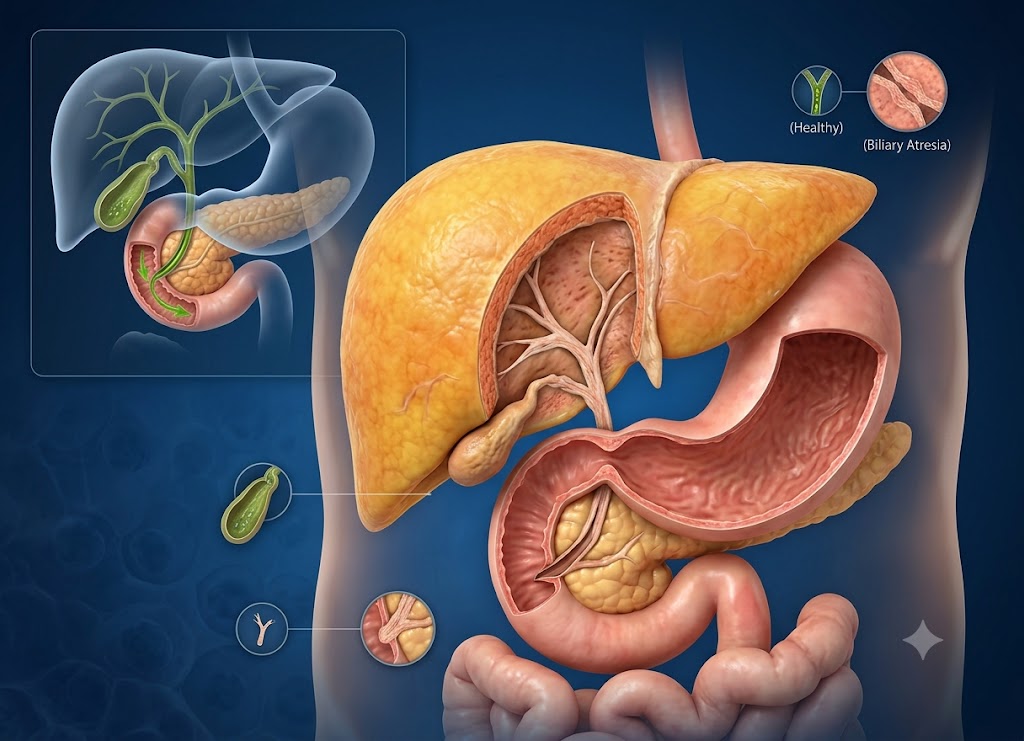
Biliary atresia is a rare but serious liver condition that affects newborns when the bile ducts become blocked, damaged, or fail to develop properly. These small tubes carry bile from the liver to the intestine, where it helps digest fats and remove waste.
When bile cannot flow normally, it can build up in the liver, leading to inflammation and progressive liver damage. Without early treatment, the condition can cause severe liver disease and may eventually require a liver transplant.
One of the earliest signs of biliary atresia is jaundice that lasts longer than expected. This causes yellowing of the skin and eyes because of elevated bilirubin levels. Although jaundice is common in newborns and often improves on its own, jaundice that continues beyond the first few weeks should be evaluated.
Other warning signs include pale or gray stools, dark urine, poor weight gain, and an enlarged abdomen. Here are 10 important things to know about biliary atresia and newborn jaundice, including its symptoms, possible causes, diagnosis, treatment, and the importance of early care.
What is Biliary Atresia and Its Link to Newborn Jaundice?
Biliary atresia is a rare and potentially life-threatening liver disease in babies. It causes inflammation, scarring, and progressive blockage of the bile ducts shortly after birth.
When bile becomes trapped inside the liver, it can contribute to ongoing liver injury and scarring. Without treatment, the condition can progress to severe liver disease and liver failure during early childhood.
What Defines Biliary Atresia?
Biliary atresia involves progressive damage and blockage of the bile ducts. These ducts normally provide a drainage pathway that carries bile from the liver toward the gallbladder and small intestine.
The exact cause is not known, but researchers believe several factors may contribute to the development of the condition:
- Perinatal Viral Infections: Certain viral infections around the time of birth may trigger inflammation and damage in the bile ducts.
- Immune System Malfunctions: An abnormal immune response may cause the body’s immune cells to attack the cells lining the bile ducts.
- Genetic Predispositions: Certain genetic or developmental differences may affect how the bile ducts form before birth.
- Environmental Toxins: Some environmental exposures have been investigated as possible contributors to bile duct damage.
Regardless of the initial trigger, the disease can progress through several stages.
1. Ductal Inflammation: Initial Tissue Injury
The process begins with inflammation in the walls of the extrahepatic bile ducts, which are the drainage tubes located outside the liver.
2. Fibrosis & Sclerosis: Scar Tissue Formation
Ongoing inflammation can activate cells that produce collagen. Over time, healthy bile duct tissue may be replaced by scar tissue, causing the ducts to become narrower and harder.
3. Atresia: Complete Blockage
As scarring progresses, the bile ducts can become completely blocked. This prevents bile from flowing normally from the liver into the intestine.
4. Biliary Cirrhosis: Secondary Liver Damage
When bile remains trapped in the liver, it can cause further irritation and damage to liver cells. Continued injury can lead to extensive scarring, cirrhosis, and eventually liver failure if the condition is not treated.
The Critical Difference: Physiological Jaundice vs. Biliary Atresia
Jaundice, which causes yellowing of the skin and whites of the eyes, is very common in newborns. However, biliary atresia causes a more concerning form of jaundice that requires prompt evaluation.
Doctors generally look at three important factors when distinguishing normal newborn jaundice from biliary atresia: timing, persistence, and the type of bilirubin present in the blood.
1. Physiological Jaundice (The Benign Developmental Delay)
Physiological jaundice occurs because a newborn’s liver is still developing and may not yet process bilirubin efficiently. As older red blood cells naturally break down, they release unconjugated, or indirect, bilirubin.
This type of jaundice commonly appears during the first few days of life, reaches its highest level around the first week, and usually improves within one to two weeks as the baby’s liver becomes more mature.
2. Biliary Atresia Jaundice (The Mechanical Obstruction)
With biliary atresia, the liver can still process bilirubin into conjugated, or direct, bilirubin. The problem occurs because blocked or damaged bile ducts prevent bile from leaving the liver and reaching the intestine.
As bile drainage becomes obstructed, conjugated bilirubin can build up in the bloodstream, causing persistent jaundice and other signs of cholestasis.
Core Laboratory & Diagnostic Comparison
| Clinical Feature | Physiological Jaundice | Biliary Atresia Jaundice |
|---|---|---|
| Primary Blood Marker | Mainly elevated unconjugated bilirubin | Elevated conjugated bilirubin |
| Critical Lab Threshold | Direct bilirubin is usually normal | Direct bilirubin may be more than 20% of total bilirubin or above 1.0 mg/dL |
| Onset Profile | Usually begins within the first 48 to 72 hours | May become more noticeable after the first two weeks |
| Persistence | Usually improves within one to two weeks | Persists or becomes more pronounced |
| Organ Health Impact | Usually resolves without liver damage | Can cause ongoing liver injury if untreated |
Early Physical Warning Signs Beyond Jaundice
Because babies with biliary atresia may initially appear healthy, it is important to watch for other signs that can indicate a bile drainage problem.
1. Acholic (Pale, Clay-Colored) Stools
Normal baby stools are often yellow, golden, or green because bile pigments reach the intestine. With biliary atresia, blocked bile ducts prevent these pigments from reaching the digestive tract.
As a result, stools may become pale yellow, ivory, gray, clay-colored, or nearly white. Infant stool color cards can help parents identify unusual stool colors.
2. Dark, Tea-Colored Urine
Newborn urine is normally clear or pale yellow. When conjugated bilirubin builds up in the bloodstream, the kidneys can remove some of it through the urine. This can make the urine appear dark amber, brown, or tea-colored.
🛑 The 14-Day Diagnostic Deadline
Jaundice that continues beyond the expected newborn period should not simply be assumed to be normal. If a baby remains visibly jaundiced after 14 days, medical evaluation is important.
A fractionated bilirubin blood test can measure direct and indirect bilirubin levels and help determine whether the jaundice may be related to cholestasis.
10 Warning Signs of Biliary Atresia in a Jaundiced Newborn
When jaundice continues in a newborn, recognizing additional warning signs can help identify biliary atresia as early as possible. Because the condition can cause progressive liver damage, timely medical assessment is important.
The Primary Red Flags: Stool and Urine Anomalies
Two of the most important warning signs are changes in stool and urine color. Both can occur because bile is not flowing normally from the liver into the intestine.
1. Pale, Chalky-White Stools (Acholic Stools)
Healthy newborn stools are commonly mustard yellow, golden, or green. With biliary atresia, blocked bile ducts prevent bile pigments from reaching the intestine. The stool may therefore become pale, gray, clay-colored, ivory, or chalky white.
2. Dark, Tea-Colored Urine
When conjugated bilirubin accumulates in the blood, some of it can pass through the kidneys. This may cause the baby’s urine to appear dark amber, brown, tea-colored, or cola-colored.
8 Secondary Physical Symptoms to Monitor
As the condition progresses, additional symptoms may develop because of ongoing liver dysfunction and bile buildup.
3. Persistent Jaundice
Normal newborn jaundice usually improves within the first couple of weeks. With biliary atresia, the yellowing of the skin and eyes can persist and become more noticeable after two to three weeks.
4. Poor Weight Gain (Failure to Thrive)
Bile helps the body digest fats and absorb fat-soluble vitamins such as vitamins A, D, E, and K. When bile cannot reach the intestine normally, nutrient absorption can be affected. This may contribute to poor weight gain or weight loss.
5. Swollen, Firm Abdomen (Hepatomegaly)
Bile buildup and ongoing liver inflammation can cause the liver to become enlarged. The baby’s abdomen may appear swollen, and the liver area may feel firmer than normal. The spleen can also become enlarged as the disease progresses.
6. Systemic Itching (Pruritus)
Bile-related substances that accumulate in the bloodstream can contribute to itching. A baby may appear unusually restless, rub their face against bedding, or repeatedly move and scratch their arms and legs.
7. Visible Abdominal Veins
Advanced liver scarring can contribute to portal hypertension, which increases pressure in the blood vessels around the liver. This may cause veins on the baby’s abdomen to become more noticeable.
8. Excessive Irritability and Fussiness
A baby with biliary atresia may become unusually fussy or difficult to comfort. Discomfort, liver enlargement, and the effects of ongoing illness can all contribute to irritability.
9. Poor Feeding and Lethargy
As liver problems and nutritional deficiencies become more serious, a baby may feed poorly, have a weaker suck, or become unusually sleepy and less active.
10. Shrill, High-Pitched Cry
A high-pitched cry is not specific to biliary atresia, but it can sometimes occur when a newborn is experiencing significant discomfort or illness. It should be evaluated alongside other symptoms.
🛑 The 14-Day Fractionated Bilirubin Directive
If a baby remains visibly jaundiced beyond 14 days, parents should contact a healthcare professional for evaluation rather than assuming the jaundice is harmless.
A fractionated bilirubin test can determine the direct and indirect bilirubin levels. An elevated direct bilirubin level may require further testing to identify the cause of cholestasis.
Immediate Actions to Take if Biliary Atresia is Suspected
If a newborn has persistent jaundice, pale stools, dark urine, or other concerning symptoms, contact a pediatrician promptly for an evaluation. Early assessment is important because biliary atresia can cause progressive liver damage.
Parents can help by collecting useful information before the appointment. This may allow the healthcare team to understand the symptoms more quickly and decide which tests are needed. A fractionated bilirubin blood test is commonly used to evaluate cholestasis.
Is it necessary to see a doctor immediately for these symptoms?
Yes. A newborn with persistent jaundice, especially when it occurs with pale or clay-colored stools, should be evaluated by a doctor promptly. Early diagnosis is important because the success of the Kasai procedure can be influenced by the baby’s age when surgery is performed.
The Kasai procedure, also called hepatoportoenterostomy, removes the damaged extrahepatic bile ducts and creates a new pathway for bile to drain into the intestine. Earlier treatment generally offers a better chance of restoring bile flow and delaying the need for liver transplantation.
What information should you prepare for the pediatrician’s appointment?
When biliary atresia is suspected, parents can prepare several types of information to help the pediatrician assess the baby’s condition.
A useful preparation checklist includes:
Photos of Stool Color: Take clear, well-lit photos of the baby’s stools. If possible, collect examples from different days, particularly when the color changes. An infant stool color card can also help with comparison.
Feeding and Weight Records: Record how often the baby feeds, whether they receive breast milk or formula, and any feeding difficulties. Bring weight records from birth and later checkups to show the baby’s growth pattern.
Symptom Diary: Write down when jaundice first appeared and whether it has improved or become worse. Also record changes in stool and urine color, abdominal swelling, irritability, or other symptoms.
Urine Observations: Note whether the baby’s urine consistently appears darker than normal. Describe the color to the doctor and mention whether it remains dark despite adequate feeding and hydration.
List of Questions: Write down questions before the appointment. This can make it easier to remember important concerns and understand the recommended next steps.
Medical Pathway for Diagnosing and Treating Biliary Atresia
The medical evaluation for biliary atresia is structured and time-sensitive. Because liver damage can progress quickly, doctors work to confirm the diagnosis, assess the extent of disease, and determine whether surgery is needed.
The Diagnostic Escalation Pathway
Diagnosing biliary atresia usually involves several tests, beginning with blood work and imaging and progressing to more specialized procedures when necessary.
- Fractionated Bilirubin Panel: This blood test measures direct and indirect bilirubin. An elevated direct bilirubin level indicates cholestasis and may lead to additional testing.
- Abdominal Ultrasound: Ultrasound helps doctors examine the liver, gallbladder, and surrounding biliary structures. Some babies with biliary atresia have an unusually small or abnormal gallbladder.
- HIDA Scan (Hepatobiliary Iminodiacetic Acid): This imaging test tracks the movement of a radioactive tracer through the liver and biliary system. Lack of tracer movement into the intestine may suggest an obstruction.
- Percutaneous Liver Biopsy: A small liver tissue sample can be examined for changes associated with biliary atresia, including bile duct proliferation and fibrosis.
- Intraoperative Cholangiogram: This procedure is performed during surgery and uses contrast dye to examine the bile ducts. It can provide direct confirmation of the structural blockage.
Surgical Intervention: The Kasai Procedure
The main surgical treatment for biliary atresia is the Kasai Procedure, also known as a hepatoportoenterostomy. It is important to understand that the Kasai procedure is not a permanent cure. Instead, it aims to restore bile drainage and delay or avoid the immediate need for a liver transplant.
The Surgical Mechanism
- Excision: The surgeon removes the blocked and scarred remnants of the extrahepatic bile ducts.
- Exposing the Porta Hepatis: The surgeon exposes the porta hepatis, the area where the bile ducts normally leave the liver. Small microscopic bile channels may still be present in this area.
- Roux-en-Y Anastomosis: A section of the small intestine is connected directly to the porta hepatis. This creates a new pathway through which bile can drain from the liver into the intestine.
Differential Diagnosis: Biliary Atresia vs. Neonatal Cholestasis
Biliary atresia is an important cause of neonatal cholestasis, but several other conditions can produce similar symptoms, including jaundice and elevated direct bilirubin.
Unlike biliary atresia, some of these conditions do not involve a mechanical blockage of the extrahepatic bile ducts. Correct diagnosis is therefore essential before surgical treatment is considered.
| Condition | Underlying Pathology | Primary Diagnostic Method | Key Histological / Clinical Difference |
|---|---|---|---|
| Biliary Atresia | Progressive scarring and blockage of the extrahepatic bile ducts | Liver biopsy and intraoperative cholangiogram | Bile duct proliferation, bile plugs, and fibrosis |
| Neonatal Hepatitis | Non-obstructive inflammation of liver cells | Viral testing and liver biopsy | Extrahepatic bile ducts remain open; cellular changes may include giant-cell transformation |
| Alpha-1 Antitrypsin Deficiency (AATD) | Genetic condition causing abnormal AAT protein accumulation in liver cells | Blood AAT testing and genetic testing | Low circulating AAT levels and characteristic protein deposits in liver cells |
| Alagille Syndrome | Genetic disorder affecting multiple organ systems | Genetic testing for JAG1 or NOTCH2 mutations | Reduced numbers of intrahepatic bile ducts |
Long-Term Prognosis & Lifelong Management
The long-term outlook for a child with biliary atresia depends on several factors, including how early the Kasai procedure is performed and how well the child responds to treatment and follow-up care.
⏱️ The 60-to-90 Day Surgical Window
Earlier Kasai surgery is generally associated with better outcomes. The chances of restoring adequate bile flow tend to be higher when the procedure is performed during the first months of life. Delayed treatment can reduce the likelihood of successful bile drainage because liver damage and scarring continue to progress.
The Reality of Transplantation
Even when the Kasai procedure successfully restores bile flow, some children continue to experience progressive liver damage.
- Some children will eventually require a liver transplant if the Kasai procedure does not provide lasting bile drainage or if liver disease progresses.
- Others may live for many years with their native liver but still require ongoing monitoring for complications related to cirrhosis and portal hypertension.
Lifelong Care Protocol
Children who continue living with their native liver after Kasai surgery often need specialized long-term care.
- Aggressive Nutritional Intervention: Poor bile flow can affect the absorption of dietary fats and fat-soluble vitamins. Some children may need specialized nutrition, including formulas containing Medium-Chain Triglycerides (MCTs) and supplements of vitamins A, D, E, and K.
- Choleretic Medication Therapy: Ursodeoxycholic acid, also known as Ursodiol, may be prescribed to support bile flow in appropriate patients.
- Rigorous Clinical Surveillance: Regular appointments with a pediatric hepatologist may include blood tests, abdominal imaging, and other examinations to monitor liver function, cholangitis, portal hypertension, and related complications.
Conclusion
Biliary atresia is rare, but recognizing its warning signs early can make an important difference in a baby’s care. Persistent jaundice, particularly when combined with pale stools, dark urine, poor feeding, or slow weight gain, should be evaluated by a healthcare professional promptly.
The Kasai procedure is the primary surgical treatment and generally works best when performed early. It may restore bile flow and delay further liver damage, although some children eventually need a liver transplant. Early diagnosis, timely treatment, and specialized follow-up can help improve outcomes and support a child’s long-term health.
Frequently Asked Questions
1. What is biliary atresia?
Biliary atresia is a rare condition in newborns in which the bile ducts become damaged or blocked. This prevents bile from flowing normally into the intestine, causing bile to build up in the liver and leading to inflammation and scarring.
2. How is biliary atresia different from normal newborn jaundice?
Normal newborn jaundice is common and usually improves as the baby’s liver matures. Biliary atresia causes persistent or worsening jaundice because bile cannot drain properly. Pale stools and dark urine are important warning signs.
3. What are the symptoms of biliary atresia?
Common signs include persistent jaundice, dark urine, pale or gray stools, poor weight gain, irritability, and an enlarged liver or abdomen. Some babies may initially appear healthy before symptoms become more noticeable.
4. What causes biliary atresia?
The exact cause is unknown. Researchers believe genetic factors, immune responses, infections, and possible environmental influences may play a role. It is not considered something caused by a parent’s actions during pregnancy.
5. How is biliary atresia diagnosed?
Doctors may use blood tests, ultrasound, HIDA scans, liver biopsy, and specialized surgical imaging to diagnose biliary atresia. Early testing is important because treatment is more effective when started promptly.
6. How is biliary atresia treated?
The main treatment is the Kasai procedure, which creates a new pathway for bile to drain from the liver into the intestine. Some children may later require a liver transplant if liver damage continues or the Kasai procedure is unsuccessful.