
7 Canker Sore Symptoms That Help You Identify a Mouth Ulcer
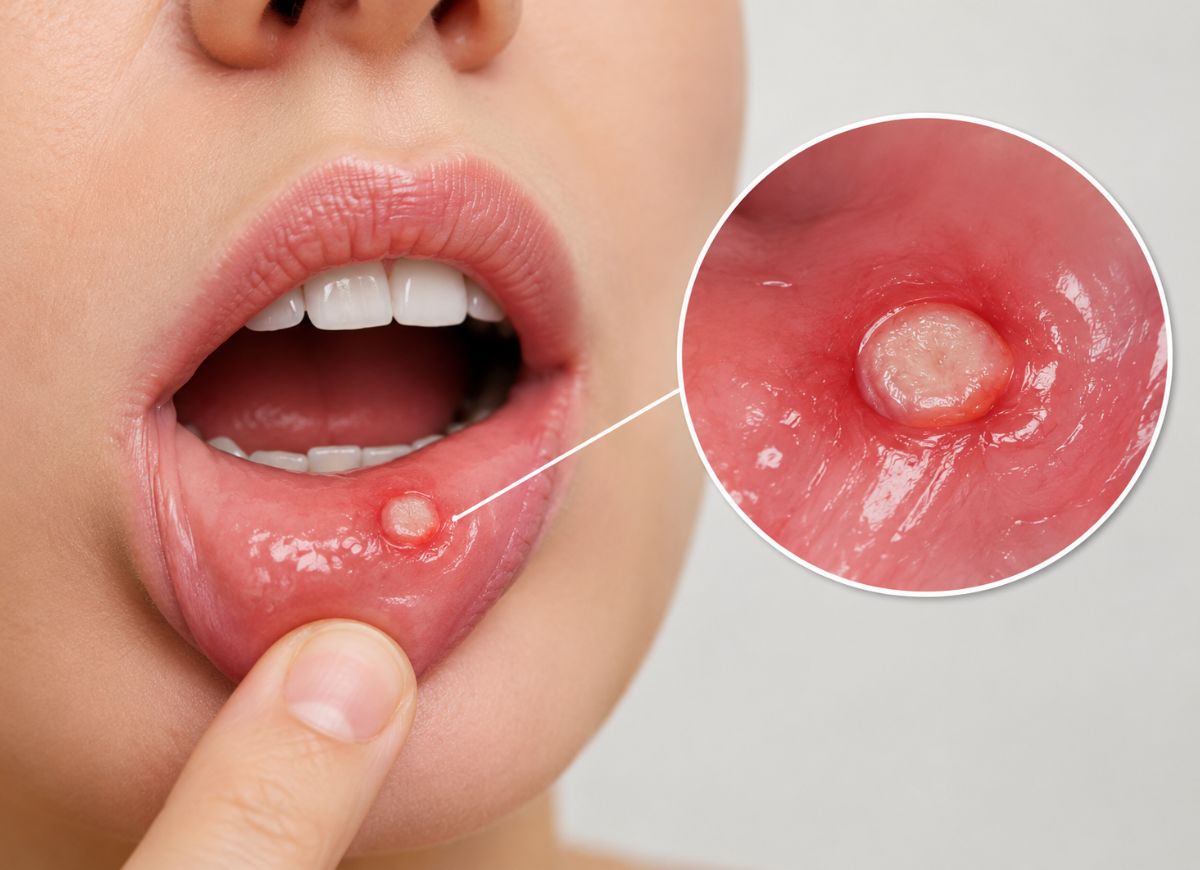
A canker sore may look small, but it can make the whole mouth feel impossible to ignore. One tiny ulcer on the inside of the lip, cheek, tongue, or gumline can turn eating into a careful negotiation. Orange juice burns. Spicy food feels sharper than usual. Even brushing your teeth or talking for a while can irritate that sore spot until it feels much bigger than it looks.
That’s what makes canker sores, also called aphthous ulcers, so frustrating. They’re usually not contagious, and many clear on their own, but the pain can feel surprisingly intense. A small white or yellow center with a red border may seem harmless at first, yet it can sting every time the mouth moves. For some people, the sore follows stress, accidental cheek biting, dental irritation, hormonal shifts, certain foods, or poor sleep. For others, it seems to appear for no clear reason at all.
Canker sores are also more common than most people realize, affecting an estimated 20% to 25% of the population, making them one of the most frequent oral lesions in everyday life. They often begin in childhood or adolescence and tend to recur in people prone to them.
The tricky part is that not every painful spot in the mouth is a typical canker sore. Some heal within one to two weeks with no issue; others are larger, unusually painful, slow to heal, or linked to symptoms elsewhere that deserve attention. Below, we’ll look at seven signs that identify a typical canker sore, plus how to tell it apart from other conditions.
What Defines a Canker Sore?
A canker sore is a small, shallow, non-contagious lesion that develops on the soft, movable tissues inside the mouth, like the inner cheeks, lips, tongue, or the base of the gums.
What It Typically Looks Like
A classic canker sore is round or oval, with a white, gray, or yellowish center and a sharply defined, bright red border. The center is covered by a “pseudomembrane,” not pus, but a layer of fibrin, dead tissue cells, and bacteria, ranging from stark white to creamy yellow. This is the eroded part of the tissue, exposing the sensitive layers beneath.
The red ring surrounding it, called an erythematous halo, comes from small blood vessels dilating as the immune system responds to the ulceration. The border between the red ring and the pale center is usually crisp and well-defined, making the sore stand out clearly against normal pink mouth tissue. A typical minor canker sore is small, generally under one centimeter across. As it heals over 7 to 14 days, the red halo fades and the white center shrinks as new tissue grows in from the edges.
Where They Typically Appear
Canker sores almost always form on soft, non-keratinized tissue, the movable surfaces not directly involved in chewing or attached to bone. Common spots include the inside of the cheeks, the inside of the lips, under the tongue, the floor of the mouth, the base of the gums (not the hard tissue directly around the teeth), and the soft palate at the back of the roof of the mouth.
This location is an important diagnostic clue separating canker sores from cold sores, which are caused by the herpes simplex virus and typically appear on tougher, keratinized tissue, like the outer lips, the hard palate, and gums attached to bone. A sore inside the soft part of your cheek is very likely a canker sore; a blister on your outer lip or the roof of your mouth is more likely a cold sore.
The 7 Key Signs
1. A tingling sensation before the sore appears. A distinct tingling, burning, or prickling feeling in one specific spot, usually 24 to 48 hours before the ulcer becomes visible, is the earliest warning sign. This is caused by inflammation starting in the tissue before the ulcer fully forms, and it’s very localized, pinpointing exactly where the sore will show up. For people who get recurrent canker sores, recognizing this early sign can allow for starting relief measures before the sore even appears.
2. A round or oval shape. The sore itself is a shallow depression or crater in the tissue, not a raised bump or blister, and its shape is typically symmetrical with smooth, regular edges.
3. A white or yellow center with a red halo. This color contrast is one of the most telling visual signs: a whitish-yellow center from the fibrin coating, surrounded by a vivid red ring from localized inflammation, making the sore easy to spot against normal pink mouth tissue.
4. Small size. Most canker sores are minor, measuring under 1 centimeter across, often in the 2-5 millimeter range.
5. Location inside the mouth. They appear on the soft, movable parts, the inner cheeks and lips, under the tongue, or the soft palate, never on the hard palate or the gums directly next to the teeth.
6. Sharp, disproportionate pain. The pain is typically sharp and localized, worst in the first few days when nerve endings are most exposed. Even light contact from the tongue or food can trigger a stinging sensation. Acidic foods (citrus, tomatoes, vinegar), spicy foods, salty or abrasive snacks, and very hot foods or drinks can all intensify the pain. It generally starts easing after four to seven days as new tissue grows over the area.
7. Appearing alone or in groups. Canker sores can show up as a single ulcer or in small clusters of two to six. Multiple sores tend to mean more overall discomfort and can make eating and speaking harder. A rarer variant, the herpetiform aphthous ulcer, despite the name, isn’t related to the herpes virus. It involves dozens to up to 100 tiny, pinpoint-sized ulcers that can merge into one larger, irregular, and very painful sore.
Common Causes and Triggers
Minor mouth injuries. Everyday trauma, like accidentally biting your cheek, brushing too aggressively, irritation from braces or ill-fitting dentures, or eating hard, sharp-edged foods like chips or crusty bread, can create small breaks in the mouth’s lining that develop into a canker sore.
Diet and nutritional deficiencies. Certain foods can directly trigger outbreaks in sensitive people, including citrus fruits, pineapple, tomatoes, spicy foods, chocolate, coffee, nuts, strawberries, and cheese. Separately, deficiencies in vitamin B12, folate, iron, or zinc are strongly linked to recurrent canker sores, since these nutrients support cell turnover and tissue repair, and their absence makes the oral lining more fragile and prone to ulceration.
Managing Canker Sores at Home
Most minor canker sores heal on their own within one to two weeks, and home care focuses on relieving pain, supporting healing, and preventing infection.
Over-the-counter options:
- Topical anesthetics (gels or liquids with benzocaine or lidocaine) numb the area temporarily, often for 20-60 minutes, useful before meals
- Protective pastes or patches form a barrier over the sore, shielding it from friction with the tongue, teeth, and food
- Antimicrobial mouth rinses, particularly those with hydrogen peroxide or carbamide peroxide, reduce bacteria and help prevent secondary infection
Home remedies:
- A saltwater rinse (half a teaspoon of salt in a cup of warm water, swished for 30 seconds) cleanses the area and can offer temporary relief
- A baking soda rinse or paste neutralizes mouth acids that irritate the sore
- Milk of magnesia, dabbed directly on the ulcer, can soothe pain and provide a protective coating
- Avoiding spicy, salty, and acidic foods while the sore is present prevents further irritation
Types of Canker Sores
Minor aphthous ulcers are by far the most common, making up over 80% of cases. They’re small, under a centimeter, with a red border and white or yellow center, and heal within one to two weeks without scarring.
Major aphthous ulcers are less common but more severe: larger than a centimeter, deeper, with irregular borders. They can be extremely painful, take up to six weeks to heal, and often leave scars.
Herpetiform aphthous ulcers are the rarest type, despite the name having nothing to do with herpes. They appear as clusters of 10 to 100 tiny, pinpoint sores that can merge into one large, irregular ulcer. They’re typically very painful but heal in one to two weeks without scarring, and are more common in adults, particularly older women.
Canker Sore vs. Cold Sore
These are fundamentally different conditions, and telling them apart matters for treatment.
Cause: Canker sores aren’t contagious and have no single known cause, though triggers include stress, mouth injury, food sensitivities, and nutritional deficiencies. Cold sores are caused by the herpes simplex virus type 1 (HSV-1) and are highly contagious through direct contact like kissing or sharing utensils.
Location: Canker sores form on soft tissue inside the mouth, inner cheeks, lips, under the tongue, or the soft palate. Cold sores almost always appear outside the mouth, on or around the lips, under the nose, or on the chin.
Appearance: A canker sore starts as a small reddish bump that opens into a shallow ulcer with a white or yellow center and red border. A cold sore starts as a cluster of small, fluid-filled blisters that eventually burst, crust over, and scab.
Warning signs: Canker sores are often preceded by localized tingling or burning inside the mouth. Cold sores are typically preceded by more pronounced itching, tingling, or burning on the skin where blisters will form.
Could Frequent Canker Sores Signal Something Else?
Most canker sores are benign and tied to local triggers like stress or minor trauma. But frequent, severe, or non-healing sores, a condition called recurrent aphthous stomatitis, can occasionally point to an underlying condition, especially if lifestyle changes and over-the-counter treatments aren’t helping.
Celiac disease. Recurrent canker sores are a known symptom of this autoimmune condition, sometimes appearing before digestive symptoms become obvious.
Inflammatory bowel disease (Crohn’s disease and ulcerative colitis). These conditions can cause inflammation anywhere along the digestive tract, including the mouth, leading to large, persistent, painful ulcers.
Behçet’s disease. This rare, chronic inflammatory disorder causing blood vessel inflammation throughout the body often includes recurrent, painful mouth sores similar to major aphthous ulcers as a hallmark symptom.
Immune-related conditions. Conditions like HIV/AIDS, lupus, or other autoimmune disorders can increase susceptibility to canker sores. Deficiencies in vitamin B12, zinc, folate, and iron can also impair immune function and tissue repair, leading to more frequent outbreaks.
Preventing Recurring Canker Sores
Identify and avoid dietary triggers. Acidic, spicy, or abrasive foods can irritate delicate mouth tissue. A food diary can help pinpoint specific triggers.
Address nutritional gaps. A diet lacking iron, folate, zinc, or vitamin B12 can increase susceptibility. Eating a balanced diet, and discussing supplementation with a doctor if a deficiency is suspected, can help.
Practice gentle oral hygiene. Use a soft-bristled toothbrush and brush gently. Some people find that toothpaste or mouthwash containing sodium lauryl sulfate (SLS) triggers sores, so switching to an SLS-free product may help.
Protect against physical irritation. If you wear braces, dentures, or other appliances, orthodontic wax can cover sharp edges. Chewing food more slowly and consciously can reduce accidental cheek biting.
Manage stress and sleep. Stress is a well-documented trigger, since it can suppress immune function. Regular exercise, meditation, or other stress-reducing activities, along with adequate sleep, can help keep outbreaks less frequent.
Frequently Asked Questions
How long do canker sores last?
Most minor ones heal within 1 to 2 weeks, with the worst pain in the first few days. Larger ulcers can take longer and may leave the mouth tender for weeks. A sore that doesn’t improve after 2 weeks, keeps recurring, grows larger, bleeds, or comes with fever or swollen lymph nodes should be checked.
Why does salt help canker sores?
Salt can help dry out the ulcer’s surface and reduce surrounding bacteria, offering some temporary relief through a gentle rinse. It won’t cure the sore instantly, and rubbing dry salt directly on it can irritate the tissue further and increase pain.
What makes canker sores worse?
Touching or rubbing the sore, spicy or acidic foods, salty snacks, hard or crusty foods, alcohol, and very hot drinks can all increase discomfort. Biting the cheek, aggressive brushing, hard-bristled toothbrushes, and irritation from dental appliances can also slow healing. Stress, poor sleep, and nutrient deficiencies can make sores more likely for some people.
How can I tell a canker sore from an STD-related sore?
A typical canker sore appears inside the mouth on soft tissue, round or oval, with a white, yellow, or gray center and red edge, and isn’t contagious. An STD-related sore may look different, with blisters, wart-like bumps, swelling, fever, rash, or swollen glands, and may appear on the lips, genitals, or elsewhere. Appearance alone isn’t always definitive; if a sore appears after sexual contact, keeps recurring, lasts over 2 weeks, or comes with other symptoms, testing and medical advice are the safest next step.
What vitamin deficiency is linked to canker sores?
Frequent canker sores can be linked to low vitamin B12, folate, iron, or zinc in some people, though not every case involves a deficiency. Mouth injury, stress, allergies, hormonal shifts, and certain foods can also play a role. If sores happen often or come with fatigue, pale skin, dizziness, or other health changes, blood tests may be worth discussing with a doctor.
What are the stages of a canker sore?
It typically starts with a tingling or burning sensation, then a small red bump forms, which opens into a shallow ulcer with a pale center and red border, usually the most painful stage. Over several days, the sore becomes progressively less sensitive as new tissue forms, with most minor sores healing within 1 to 2 weeks.
Are canker sores a form of HPV?
No. Canker sores are non-contagious mouth ulcers unrelated to HPV. HPV-related oral lesions look different, more like small growths or wart-like bumps rather than a typical round, painful ulcer. A sore that doesn’t heal, changes shape, bleeds, or appears after possible exposure should be evaluated regardless.
Can I kiss someone with a mouth ulcer?
If it’s a true canker sore, it isn’t contagious, so kissing won’t spread it, though it may be uncomfortable if the sore is easily irritated. Caution matters because not every mouth ulcer is a canker sore; cold sores and some infections can spread through close contact. If the sore is on the lip, looks like a blister, appears in clusters, or comes with fever, it’s safer to avoid kissing until it heals or is checked.
The Bottom Line
Canker sores are small, but their discomfort can feel much bigger than their size. A tender white or yellow ulcer with a red border, a burning sensation, and pain while eating or brushing can make everyday routines frustrating. Most minor canker sores heal within 1 to 2 weeks and aren’t contagious, but repeated, unusually large, slow-healing, or extremely painful ulcers deserve closer attention. Understanding the typical signs helps separate an ordinary canker sore from something that needs medical or dental evaluation, especially if a sore lasts longer than expected, keeps returning, or comes with fever, swelling, or bleeding.