

Eye Lens Replacement Surgery: Types of IOLs, Benefits, Risks, and Recovery
Clear vision is something many people take for granted until everyday tasks become harder. Reading, driving at night, recognizing faces, or seeing fine details can become challenging when the eye’s natural lens becomes cloudy or loses its ability to focus properly. Eye lens replacement surgery is a modern procedure that removes the natural lens and replaces it with an artificial intraocular lens (IOL) to improve vision.
The natural lens is responsible for focusing incoming light onto the retina so the brain can form clear images. Conditions such as cataracts, age-related lens changes, and certain refractive errors can interfere with this process. During lens replacement surgery, the natural lens is removed and replaced with an IOL selected according to the patient’s eye measurements, visual needs, lifestyle, and overall eye health.
Lens replacement procedures are among the most frequently performed eye surgeries worldwide. Improvements in lens technology have also created several IOL choices. Depending on the patient’s needs, lenses may be designed to provide distance vision, improve near vision, correct astigmatism, or offer a broader range of focus.
Although eye lens replacement surgery is generally considered safe, it is important to understand what the procedure involves before deciding to have it. Patients commonly want to know which IOL may suit them, what benefits they can expect, what complications are possible, how long recovery takes, and how their vision may change afterward.
Selecting an IOL is an individual decision influenced by daily activities, existing eye conditions, and long-term vision goals. This article explains eye lens replacement surgery, the main types of IOLs, their benefits and risks, the recovery process, and important factors to consider before undergoing this type of vision correction.
What is Eye Lens Replacement?
Eye lens replacement is a surgical procedure in which an ophthalmologist removes the natural crystalline lens from the eye and replaces it with a permanent artificial intraocular lens (IOL). The goal is to restore or improve focusing ability and visual clarity. It is most commonly performed to treat cataracts, although it can also be used as refractive lens exchange to correct significant focusing errors and reduce dependence on glasses or contact lenses.
What is an Intraocular Lens (IOL)?
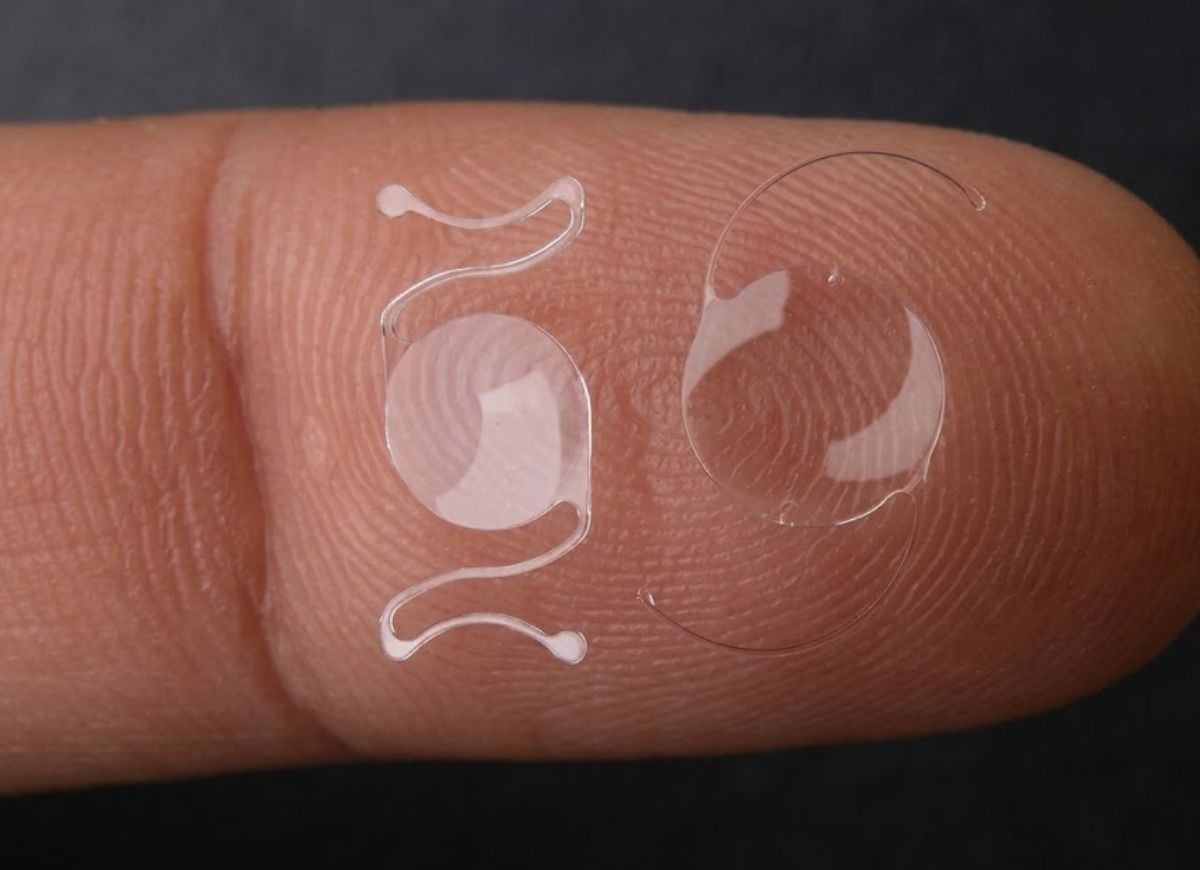
An Intraocular Lens, commonly called an IOL, is a small artificial lens made from eye-compatible materials such as acrylic or silicone. It is implanted inside the eye to take over the focusing function of the natural crystalline lens.
IOLs are designed to remain inside the eye permanently and generally do not require routine maintenance or replacement. Their main purpose is to bend incoming light so that it is properly focused onto the retina, creating a clearer image. Most modern IOLs are flexible and foldable, allowing the surgeon to insert them through a very small incision, often measuring only a few millimeters.
After insertion, the folded lens opens inside the eye and is positioned within the capsular bag, which originally surrounded the natural lens. The materials used in modern IOLs are designed to be well tolerated by the eye. Before surgery, detailed measurements of the eye, including its length and corneal curvature, are used to calculate the appropriate lens power for the patient.
What Conditions Eye Lens Replacement Corrects?
Eye lens replacement is primarily used to address cataracts and significant refractive problems, including presbyopia, high myopia, and high hyperopia. Different IOL technologies allow surgeons to address these vision problems while replacing the eye’s natural lens.
Cataracts are the most common reason for eye lens replacement surgery. A cataract develops when the natural lens becomes cloudy. As it progresses, it can cause blurry vision, increased sensitivity to glare, faded colors, and difficulty seeing clearly at night.
As the natural lens becomes less transparent, it scatters incoming light instead of focusing it efficiently onto the retina. Surgery to remove the cloudy lens and replace it with a clear IOL is the established treatment for cataracts. The procedure can restore clarity while also providing an opportunity to correct existing refractive errors.
Presbyopia is the gradual loss of the eye’s ability to focus on nearby objects. It commonly becomes noticeable during the 40s because the natural lens becomes less flexible with age. This can make reading, using a phone, or performing other close-up activities more difficult and may lead to the use of reading glasses.
Eye lens replacement, often called Refractive Lens Exchange (RLE) when performed primarily for vision correction, can address presbyopia with advanced IOL technologies such as multifocal and Extended Depth of Focus (EDOF) lenses. These lenses are designed to provide useful vision across more than one distance and may reduce dependence on reading glasses.
For people with very strong prescriptions for nearsightedness or farsightedness, laser procedures such as LASIK may not always be suitable. Factors such as corneal thickness and the degree of refractive error can affect candidacy.
In such situations, RLE may provide another option. Replacing the natural lens with an appropriately powered IOL can correct significant levels of myopia or hyperopia. This may provide clearer vision for people who have limited alternatives to strong glasses or contact lenses.
Different Types of IOLs
There are four major categories of IOLs based on their optical design and focusing characteristics: monofocal, multifocal, toric, and Extended Depth of Focus (EDOF) lenses. Each is designed to address different visual needs and lifestyle preferences.
Choosing an IOL is an important decision that should be made with an ophthalmologist. The selected lens affects the distances at which a person sees most clearly and whether glasses may still be needed after surgery.
Understanding how these lens categories work can help patients have a more informed discussion with their eye specialist about which option may fit their visual goals.
How are Intraocular Lenses Categorized?
IOLs are generally divided into four main categories according to their optical design and intended visual function: Monofocal IOLs provide focus at one main distance, Multifocal IOLs provide multiple focal points, Toric IOLs are designed to correct astigmatism, and Extended Depth of Focus (EDOF) IOLs provide an extended range of focus. This classification helps surgeons match lens technology with a patient’s visual requirements.
Monofocal IOLs are the standard and most widely used type. They are designed around one primary focal distance, most commonly distance vision for activities such as driving or watching television.
People who choose a distance-focused monofocal lens will generally still need glasses for close-up activities such as reading and may need them for intermediate tasks such as computer work. Monofocal lenses are known for providing reliable vision at their selected focal distance and generally have a lower likelihood of optical effects such as glare and halos.
Multifocal IOLs contain multiple optical zones that direct light from different distances toward the retina. This design gives the brain information from near, intermediate, and distance focal points and can provide functional vision across several distances.
The main purpose of multifocal IOLs is to reduce dependence on glasses for everyday activities. However, the optical design can cause some patients to notice glare, halos, or other visual effects, particularly around lights at night.
Toric IOLs are specifically designed for people with significant astigmatism, which occurs when the cornea has an irregular shape. A standard IOL does not correct corneal astigmatism, so vision may remain blurred without additional correction.
Toric lenses have different optical powers across different meridians, similar to toric contact lenses or glasses designed for astigmatism. During surgery, the ophthalmologist positions the lens at a specific angle to address the astigmatism. Toric technology can also be incorporated into monofocal, multifocal, and EDOF lens designs.
Extended Depth of Focus (EDOF) IOLs represent a newer approach to presbyopia correction. Instead of creating several separate focal points, these lenses are designed to extend the range over which vision remains useful.
EDOF lenses are generally intended to provide strong distance and intermediate vision while also offering functional near vision. Some patients may experience fewer halos and glare effects than with certain multifocal lenses, although visual experiences vary between individuals. They can be particularly appealing to people who want good computer-distance vision and a broader range of focus.
Monofocal vs. Multifocal IOLs
Monofocal IOLs are designed to provide clear vision at one primary distance, usually distance vision, which means glasses are commonly needed for reading and some intermediate activities. Multifocal IOLs use multiple focal zones to provide useful vision at near, intermediate, and far distances, with the aim of reducing dependence on glasses.
The biggest difference between the two lies in their optical design and the resulting balance between visual range, glasses use, and possible visual side effects.
Regarding focal points and visual range, a monofocal IOL provides one main point of focus. When it is selected for distance vision, the patient may see clearly while driving but still need reading glasses for a phone, book, or menu.
Multifocal IOLs, on the other hand, are designed with multiple focal points. Their optical structure distributes incoming light to provide information for different distances. The brain then adapts to this new visual input and can use the image appropriate for the task, potentially allowing useful vision at several distances without glasses.
When it comes to glasses dependency, monofocal lenses generally require glasses for activities outside the selected focal distance. For example, someone with a distance-focused monofocal IOL will commonly need reading glasses for close work.
Multifocal IOLs are designed with the goal of providing greater spectacle independence. Many patients are able to perform a wide range of everyday activities without glasses, although results can vary depending on the individual and the specific lens used.
There can also be differences in visual side effects. The optical design of multifocal lenses may result in glare, halos, or starbursts around lights, particularly in low-light conditions. These effects can become less noticeable over time as the brain adapts, but some people may continue to notice them.
Monofocal lenses concentrate light toward one primary focal point and generally provide strong contrast and image quality at that distance, with a lower likelihood of some optical disturbances. The decision therefore involves balancing the wider range of vision offered by multifocal technology with the visual quality and predictability of a monofocal lens at one main distance.
What Does the IOL Implantation Procedure Involve?
IOL implantation is a carefully planned outpatient procedure that generally involves three main phases: pre-operative testing and planning, removal of the natural lens and insertion of the IOL, and post-operative recovery. Surgery on one eye is often completed relatively quickly, with the exact time depending on the patient and surgical circumstances.
Understanding each stage can make the lens replacement process easier to prepare for and helps patients know what to expect from their first consultation through recovery.
Key Stages of Lens Replacement Surgery
The main stages include the initial eye examination and measurements, the surgical procedure itself, and the recovery period involving medications and follow-up visits. Each phase plays an important role in achieving a safe procedure and an appropriate visual result.
Stage 1: Pre-Operative Consultation and Measurements
The first stage involves a detailed eye examination to evaluate the health of the eye and determine whether lens replacement is appropriate. Specialized diagnostic equipment is used to measure factors such as the eye’s axial length and the curvature of the cornea.
These measurements are used with calculation formulas to determine the appropriate IOL power. During this consultation, the surgeon will also discuss the patient’s daily activities, hobbies, work requirements, and visual expectations. This information can help guide the choice between monofocal, toric, multifocal, or EDOF technology.
Stage 2: The Day of Surgery:
On the day of surgery, the eye is prepared with dilating and anesthetic drops to keep the procedure comfortable. Some patients may also receive medication to help them relax.
The ophthalmologist makes a very small incision in the cornea. A technique called phacoemulsification uses an ultrasonic instrument to break the natural lens into small pieces, which are then removed from the eye.
The new folded IOL is inserted through the small incision. Once inside, it unfolds and is positioned within the capsular bag where the natural lens previously sat. In many cases, the incision seals naturally without the need for stitches.
Stage 3: Immediate Post-Operative Care and Recovery:
After surgery, the patient usually rests briefly before going home with someone who can provide transportation. A protective eye shield may be recommended, especially while sleeping.
Vision can be hazy or blurry immediately after surgery but often starts improving during the first day or two. Prescribed eye drops, including medications to reduce inflammation and prevent infection, are used according to the surgeon’s instructions.
Follow-up visits are arranged to check healing, eye pressure, inflammation, and visual progress. The timing varies, but appointments may occur shortly after surgery and again during the following weeks.
Is Eye Lens Replacement Surgery Painful?
Eye lens replacement surgery is generally performed with local anesthesia and is usually not painful. Numbing eye drops are commonly used to reduce sensation in the eye throughout the procedure.
The eye is carefully anesthetized before surgery begins. Depending on the surgical approach and patient needs, an ophthalmologist may also use other forms of local anesthesia or medication to improve comfort.
Many patients remain awake during the procedure but see lights, colors, or movement rather than the details of the surgery. A person may notice pressure, touch, or mild sensations around the eye, but sharp pain is not expected.
After the procedure, some temporary irritation is possible as the anesthesia wears off. Patients may notice a gritty feeling, light sensitivity, mild aching, or watery eyes. These symptoms generally improve during healing and can usually be managed with prescribed eye drops and, when appropriate, simple pain relief.
Benefits and Risks of Intraocular Lenses
The major benefits of IOL surgery include improving vision, providing long-term correction, and potentially reducing dependence on glasses or contact lenses. However, as with any surgical procedure, complications are possible. These range from temporary symptoms such as dry eye and glare to uncommon but serious problems such as infection, retinal detachment, or lens displacement.
Understanding both the potential advantages and risks is an important part of deciding whether eye lens replacement is appropriate.
Primary Advantages of Choosing IOLs
The main advantages of IOL implantation include long-lasting vision correction, reduced dependence on corrective eyewear, and the fact that a cataract cannot develop again in the treated natural lens because it has been removed.
An IOL is designed to remain stable inside the eye and does not require the routine replacement of eyeglass or contact lens prescriptions due to changes in the artificial lens itself. Once the eye has healed, the implanted lens generally provides a long-term optical correction.
Reducing the need for glasses or contacts is another major benefit, especially with advanced IOL options. Multifocal, EDOF, and toric lenses can address different combinations of refractive problems, including myopia, hyperopia, astigmatism, and presbyopia.
Depending on the lens selected and the patient’s individual visual outcome, this may make activities such as reading, using a phone, working at a computer, or driving easier without corrective eyewear.
Because the natural lens is removed during cataract surgery, a cataract cannot later develop in that same natural lens. This provides a permanent solution to the original cataract problem, although other age-related eye conditions can still develop.
Many patients also notice improved visual clarity after cataract surgery. Colors may appear brighter and contrast may improve when the cloudy lens had previously reduced the quality of vision. Better clarity can make everyday activities, hobbies, work, and social activities more enjoyable.
The Potential Complications or Side Sffects
Possible complications following IOL surgery range from common and temporary symptoms, such as dry eyes, glare, and halos, to uncommon but serious problems including infection, retinal detachment, persistent inflammation, and movement of the implanted lens. Although modern lens surgery has a strong safety record, no surgical procedure is completely risk-free.
Mild side effects are often temporary and improve as the eye heals. Dry eye symptoms such as irritation, grittiness, or excessive watering can occur after surgery. This may be related to temporary changes in the corneal nerves and is often managed with lubricating eye drops.
Glare, halos, and starbursts, particularly around nighttime lights, can occur more often with some multifocal and EDOF lenses because of their optical designs. Many patients notice improvement as the visual system adapts to the new lens, although some may continue to experience these effects.
Posterior Capsular Opacification (PCO), sometimes called a “secondary cataract,” can occur when the capsule behind the implanted lens becomes cloudy. It is not actually a new cataract. If it causes blurred vision, it can generally be treated with a quick laser procedure called YAG capsulotomy.
Rare but serious complications are uncommon but can potentially threaten vision. Modern surgical protocols are designed to reduce these risks.
Infection (Endophthalmitis) is a serious infection inside the eye that can occur after surgery, although it is rare. Sterile surgical techniques and prescribed medications are important for reducing the risk.
Retinal detachment is another uncommon complication. The risk can be higher in people with high levels of myopia. A retinal detachment requires urgent medical attention and may need surgery to protect vision.
IOL Dislocation or Malposition occurs when the implanted lens moves away from its intended position. Trauma or weakness of the supporting capsule can contribute to this problem. In some cases, another procedure may be needed to reposition or replace the lens.
Cystoid Macular Edema (CME) involves swelling in the macula, the central part of the retina responsible for detailed vision. It may cause blurry or distorted central vision and is often treated with anti-inflammatory medication.
Advanced Considerations for Choosing an IOL
Selecting an IOL involves more than simply choosing a lens that improves vision. Lifestyle, visual priorities, financial considerations, alternative procedures, and expectations about post-operative vision can all influence the decision.
Because these factors are closely connected, patients should discuss their goals and concerns in detail with their ophthalmologist. The aim is to select a lens whose capabilities fit the person’s visual requirements, eye health, and long-term expectations.
How to Determine The Best IOL For your Lifestyle
Choosing the most suitable IOL is a personal decision based on how a person uses their eyes throughout the day. During the consultation, the surgeon may ask about work, hobbies, reading habits, computer use, driving, and other activities.
For example, someone who spends many hours reading or working on a computer may place a high value on near and intermediate vision. A multifocal or EDOF lens may provide a broader range of focus and potentially reduce the need for reading glasses.
On the other hand, someone whose work or lifestyle depends heavily on sharp distance vision, such as a professional driver, may prioritize excellent distance clarity and minimal visual disturbances. A monofocal lens focused for distance may be considered, although reading glasses would generally still be needed.
Other lifestyle choices matter as well. A golfer or hiker may prioritize clear distance vision, while a musician, artist, or crafter may need strong intermediate or near vision. Patients should clearly explain these priorities to their surgeon before choosing an IOL.
Premium lenses designed to provide a wider range of vision can involve trade-offs. Multifocal lenses, for example, may increase the chance of halos or glare around lights. Some people may consider this an acceptable trade-off for greater freedom from glasses, while others may prefer the optical quality of a monofocal lens.
Another possible strategy is monovision, in which one eye is focused primarily for distance and the other is focused for near or intermediate vision. The brain can learn to use the appropriate eye depending on the task, potentially reducing dependence on glasses. Whether this approach is suitable varies from person to person.
What Factors Influence the Cost of Eye Lens Replacement?
The cost of eye lens replacement depends on several factors, including the IOL selected, the technology used during surgery, the surgeon’s fees, and the facility where the procedure is performed.
Standard cataract surgery with a basic monofocal IOL is often considered medically necessary and may be covered by Medicare or private insurance, depending on the patient’s plan and location. Basic lenses generally provide one primary focal distance, meaning glasses may still be needed for reading and intermediate activities.
Patients who choose advanced IOLs for a wider range of vision or astigmatism correction may have additional out-of-pocket expenses because these features may be considered elective depending on the healthcare system and insurance plan.
Premium Intraocular Lens Technology is one of the biggest factors affecting cost. Toric lenses for astigmatism, multifocal lenses for multiple distances, and EDOF lenses for an extended range of focus can cost more than standard monofocal lenses.
The surgical technology can also affect the final price. Femtosecond Laser-Assisted Cataract Surgery (FLACS), for example, may have additional costs compared with traditional manual phacoemulsification. Surgeon experience and the facility used for the operation can also influence the total fee.
The procedure may take place in a hospital outpatient department or ambulatory surgery center, and facility charges can vary. Patients may also need to account for diagnostic testing, follow-up visits, prescription eye drops, and other post-operative care. Some clinics offer bundled pricing or financing options for procedures involving premium lenses.
Refractive Lens Exchange (RLE) with IOLs compare to LASIK
Refractive Lens Exchange (RLE) and LASIK are both used to reduce dependence on glasses or contact lenses, but they correct vision in very different ways.
LASIK reshapes the cornea, the transparent front surface of the eye, to correct refractive errors such as myopia, hyperopia, and astigmatism. RLE, by contrast, removes the natural crystalline lens and replaces it with an artificial IOL. The surgical process is similar to modern cataract surgery, but RLE is performed primarily for refractive correction rather than because the natural lens has become cloudy.
The choice between the procedures depends on factors such as age, eye health, refractive error, corneal characteristics, and whether presbyopia has developed.
LASIK is commonly considered for younger adults whose natural lenses remain clear and flexible. RLE may be considered more often in older adults who have developed presbyopia or who have refractive errors that make corneal laser surgery less suitable.
LASIK changes the shape of the cornea but does not stop the natural aging of the eye’s lens. Therefore, people who undergo LASIK can still develop presbyopia and may eventually develop cataracts.
RLE replaces the natural lens, meaning a cataract cannot later develop in that removed lens. It may also allow the use of multifocal, EDOF, or toric IOL technology to address several refractive issues.
LASIK is effective for correcting myopia, hyperopia, and astigmatism, but it does not directly restore the natural lens’s ability to focus at near distances. Monovision LASIK can sometimes be used to reduce dependence on reading glasses. RLE with an appropriate IOL may address myopia, hyperopia, astigmatism, and presbyopia together, depending on the lens selected and the individual’s eye characteristics.
What to Expect During the Recovery Period After IOL Surgery
Recovery after IOL surgery is usually manageable, but following the surgeon’s instructions carefully is important for proper healing and the best possible visual outcome.
Immediately after surgery, vision may appear blurry, hazy, or slightly distorted. Mild irritation, scratchiness, sensitivity to light, or a foreign-body sensation can also occur. A protective eye shield may be recommended, especially during sleep, to prevent accidental rubbing or pressure. Resting during the first day is generally advised.
Many patients notice clearer vision within the first day or several days, although the exact recovery time varies. During follow-up appointments, the surgeon checks healing and monitors the eye for inflammation, pressure changes, or other complications.
At first week, eye drops and activity restrictions. The recovery process usually includes antibiotic and anti-inflammatory eye drops. These medications should be used exactly as prescribed.
During the first week, patients may be asked to avoid strenuous exercise, heavy lifting, excessive bending, and activities that could expose the eye to dirt or injury. Care should also be taken to prevent soap, water, and other irritants from getting directly into the eye.
At weeks two to four, visual Stabilization: During the second through fourth weeks, many patients can gradually return to more normal activities once their surgeon gives clearance. Vision often continues to sharpen and stabilize during this period.
Some patients may still notice glare, halos, or starbursts, especially at night. These symptoms may be more noticeable with multifocal IOLs. The surgeon may gradually reduce the frequency of prescribed eye drops as healing progresses.
One month and beyond, final Outcome and Adaptation: A follow-up visit is commonly performed around the one-month point to assess healing and visual acuity. If a small remaining refractive error is present, glasses may sometimes be prescribed for specific activities.
For people with multifocal or EDOF lenses, neural adaptation can continue for several months. During this adjustment period, the brain becomes increasingly accustomed to the new visual information and learns to process the different focal ranges and any minor visual effects.
FAQs
1. How much does it cost to have an eye lens replaced?
The price of eye lens replacement varies according to several factors, including the type of IOL, geographic location, surgeon’s fees, surgical facility, and additional services included in the treatment.
Basic monofocal lenses are generally less expensive, while premium lenses designed to correct astigmatism or provide vision across multiple distances can cost more. Insurance coverage also depends on the medical reason for surgery and the specific insurance plan.
2. How long do eye lens replacements last?
Modern IOLs are designed to remain in the eye permanently and generally do not wear out. Unlike the natural lens, the artificial lens does not normally need routine replacement.
However, other eye conditions can develop with age, and some patients may need additional treatment for issues unrelated to the IOL itself.
3. What are the disadvantages of lens replacement?
Although lens replacement can significantly improve vision, it has potential disadvantages. Some people experience dry eyes, glare, halos, temporary blurriness, or an adjustment period after receiving a new IOL.
There are also surgical risks, including infection, inflammation, retinal problems, or lens displacement. Serious complications are uncommon, but patients should discuss their individual risk factors with an ophthalmologist.
4. Is eye lens replacement worth it?
Eye lens replacement can provide major visual benefits for many people, particularly those with cataracts or certain refractive problems. It may improve clarity and reduce the need for glasses or contact lenses.
Whether it is appropriate depends on individual eye health, lifestyle, visual expectations, and treatment goals. A comprehensive examination and discussion with an eye specialist can help determine whether the procedure fits the patient’s needs.
5. Which country has the best eye lens replacement?
Advanced lens replacement and cataract surgery are available in many countries, including the United States, Germany, Japan, Singapore, and South Korea. However, treatment quality depends on more than the country itself.
The surgeon’s experience, clinic standards, technology, lens options, pre-operative assessment, and post-operative care are all important factors when evaluating treatment.
6. How painful is lens replacement surgery?
Most patients experience little or no pain during lens replacement surgery because local anesthetic medication is used to numb the eye. Some people may notice pressure or mild sensations during the procedure.
After surgery, temporary irritation, light sensitivity, watering, or a scratchy feeling can occur. These symptoms usually improve as the eye heals and can be managed according to the surgeon’s instructions.
Conclusion
Eye lens replacement surgery is an established vision correction procedure that can help improve clarity and quality of life for many patients. By removing the natural lens and replacing it with an artificial intraocular lens, the procedure can treat cataracts and certain refractive problems while offering different IOL options based on individual visual needs.
Although the procedure is generally considered safe, patients should understand the potential benefits, limitations, risks, costs, and recovery requirements before proceeding. Selecting an appropriate IOL and having realistic expectations are important parts of achieving a satisfactory visual outcome.
Every patient has different eye health, lifestyle needs, and vision goals. A comprehensive examination and discussion with an experienced ophthalmologist can help determine whether eye lens replacement is appropriate and which treatment approach may best match the patient’s long-term needs.