
How to Confirm a Chemical Miscarriage and What to Do Next
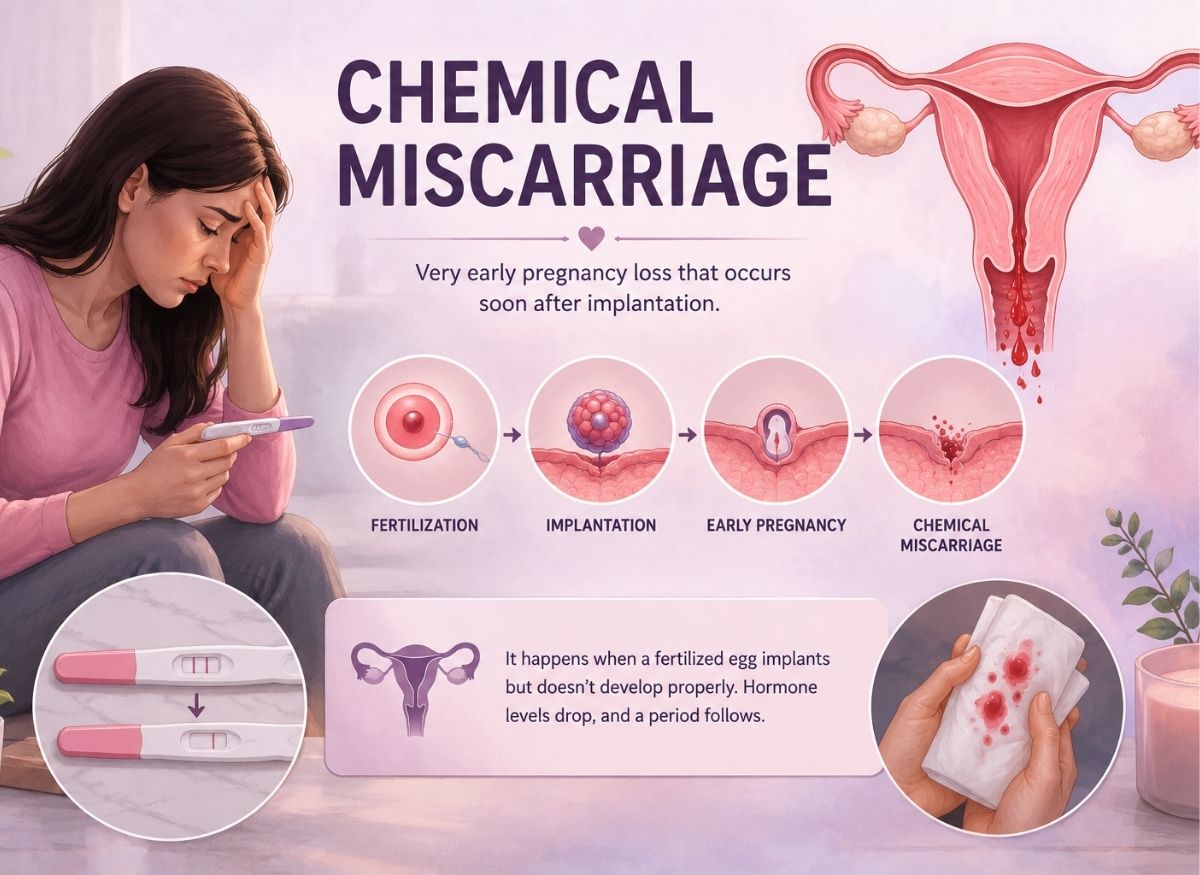
A chemical miscarriage is a very early type of pregnancy loss one that happens before the fifth week of pregnancy, often before anything would even show up on an ultrasound. It occurs when a fertilized egg implants but then stops developing. Because the timing is so early, many women mistake it for a late or unusually heavy period. Typical clues include mild cramping, light-to-moderate bleeding, and a pregnancy test that starts positive and turns negative within days.
These losses are far more common than most people realize, and reassuringly, they rarely have any lasting impact on future fertility. Confirming one properly requires more than just watching for symptoms it usually means repeat pregnancy tests, blood work to track hCG levels, and a conversation with your doctor. Below, we’ll walk through how a chemical miscarriage is confirmed, what the experience typically looks like, and what steps come next both medically and emotionally.
What is A Chemical Miscarriage?
Losing a pregnancy in its very first days can leave you confused, disoriented, and searching for answers. In medical terms, this earliest possible form of pregnancy loss happening right after implantation is what’s known as a chemical miscarriage.
Defining the Loss: What is a Chemical Pregnancy?
If you’ve found yourself asking “what is a chemical pregnancy” or “what is a biochemical pregnancy,” here’s the short answer: it’s a pregnancy loss that happens almost immediately after the embryo implants generally before week five. Doctors call it “chemical” because the only evidence it ever existed comes from a lab or urine test measuring hCG (human chorionic gonadotropin). It’s simply too early for an ultrasound to pick up a gestational sac or embryo.
Here’s what’s happening biologically: once a fertilized egg attaches to the uterine wall, your body starts releasing hCG, which is why a home test turns positive. But sometimes usually because of a chromosomal issue in the embryo growth halts almost immediately. hCG stops climbing, starts falling, and the uterus sheds its lining, ending the pregnancy.
The word “chemical” exists purely to separate this from a “clinical” miscarriage, where an ultrasound has already confirmed a sac or heartbeat. Because it happens so fast, someone who isn’t actively testing for pregnancy might never even notice they’d simply chalk it up to a late or heavier-than-usual period. Still, even though the medical label sounds clinical, the emotional weight of this kind of loss is completely real.
Recognizing the Signs of an Early Miscarriage
Because the symptoms overlap so heavily with a delayed period, many women struggle to tell the two apart. Here’s what to watch for:
- A late period arriving several days to a week later than expected
- Heavier-than-usual bleeding often starting suddenly
- More intense cramping sharper or more localized than a typical period
- A fading positive test a pregnancy test that gets lighter day by day until it’s negative
The physical signs also shift depending on how many weeks along the pregnancy was:
- Around 4 weeks: Nearly indistinguishable from a heavy period dark red blood, normal-looking clots, and tissue too small to see.
- Around 5 weeks: Slightly larger, jelly-like clots, sometimes with small flecks of grey or white tissue.
- Around 6 weeks: Heavier flow and stronger, more rhythmic cramping; you may notice a tiny fluid-filled sac along with clots and lining tissue.
- Around 7 weeks: More defined tissue masses, heavier clotting, and more intense cramping as the uterus works to empty itself.
Miscarriage Versus Period: Identifying the Differences
Without an early positive test, it can be genuinely hard to tell a chemical miscarriage apart from a regular cycle. The biggest giveaway is sequence: a normal period follows your usual pattern, while a biochemical loss follows a faint positive test, then arrives late, heavier, and longer than usual often paired with pregnancy symptoms like breast tenderness or nausea suddenly disappearing.
It’s also worth distinguishing this from a missed miscarriage, which is different altogether. In a chemical miscarriage, the body reacts almost immediately with bleeding. In a missed miscarriage, the embryo stops developing but the body doesn’t “catch up” right away there’s often no bleeding or cramping at all. Instead, pregnancy symptoms just quietly fade, and the loss is usually only discovered at a routine ultrasound.
The Common Signs and Symptoms of a Chemical Miscarriage
The physical experience of an early loss varies quite a bit from person to person. For some, it feels exactly like a normal period; for others, it’s noticeably more intense.
A Positive Test That Turns Negative
This is usually the most disorienting sign. A home test detects hCG in urine once implantation happens, hCG rises and the test turns positive. In a chemical miscarriage, development stops, hCG production shuts down, and as the hormone clears your system, the test slowly reverts to negative. This “fading positive” pattern is one of the clearest signs of a biochemical loss.
Bleeding and Tissue Changes
What this looks like depends heavily on timing:
- At 4 weeks: Essentially a heavy period dark blood, normal clots, no visible tissue.
- At 5 weeks: Possibly heavier bleeding with larger clots and small bits of pale tissue mixed in.
Mild Cramping
Cramping is common and usually feels like standard period pain caused by the uterus contracting to release its lining. Over-the-counter pain relief is typically enough; this shouldn’t reach the intensity seen in losses further along.
Making the Distinction From a Period
If you never tested early, the clearest signs pointing to a miscarriage rather than a normal cycle are: unusual timing, heavier or longer flow than normal, and pregnancy symptoms (like nausea or breast tenderness) vanishing abruptly.
Medical Tests Used to Confirm a Chemical Miscarriage
Since there’s nothing to see on a scan this early, doctors rely entirely on hormone tracking to confirm what happened.
The Gold Standard: Quantitative Serial Beta-hCG Blood Tests
A home urine test only tells you yes or no. A quantitative blood test tells you the exact hCG concentration in your blood. To actually confirm a loss, your provider won’t rely on one draw they’ll run a serial protocol:
- Two draws, 48–72 hours apart.
- Reading the trend: In a healthy early pregnancy, hCG roughly doubles every two days. If it’s plateaued or dropping instead, that’s strong evidence of a loss.
Supporting Evidence: Sensitive Urine Tracking
                  [THE HOME URINE TEST DISSOLVE]
                                 │
       ┌─────────────────────────┴─────────────────────────┐
       ▼                                                   ▼
 [THE FAINT INITIAL LINE]                           [THE DISAPPEARING ACT]
• Implantation triggers an initial bump in hCG.    • Embryo halts growth; hCG production stops.
• Test registers a faint, exciting positive line.   • Line becomes progressively lighter daily.
• Levels remain too low to darken over time.       • Test fades to a solid, definitive negative.
Sensitive urine tests, taken daily, often reveal the pattern before blood work confirms it a faint positive that gets progressively lighter until it disappears entirely. This “vanishing line” mirrors the falling hormone levels behind the physical bleeding.
Why an Ultrasound Cannot Confirm a Chemical Loss
A common source of confusion: why won’t a doctor just scan you? The answer comes down to scale. Ultrasounds can’t detect anything until hCG crosses what’s called the discriminatory zone roughly 1,500–2,000 mIU/mL. In a chemical pregnancy,
 [HCG Level Structural Milestones]

0 to 100 mIU/mL ────────► Chemical Pregnancy Range (Invisible on Scan)
                                │
                                ▼
1,500+ mIU/mL   ────────► Ultrasound Discriminatory Zone (Gestational Sac Appears)
hCG often never exceeds 100 mIU/mL, sometimes staying under 25. There’s simply nothing structural to see yet an ultrasound would just show a normal, empty uterus with a slightly thickened lining, identical to what’s seen right before a regular period. That’s why doctors skip it for this type of loss.
Navigating the Next Steps and Future Conception
Most chemical miscarriages are caused by random chromosomal errors during fertilization nothing anyone did or didn’t do.
                    [POST-LOSS REPRODUCTIVE PATHWAY]
                                    │
         ┌──────────────────────────┴──────────────────────────┐
         ▼                                                     ▼
  [PHYSICAL RESET]                                      [CLINICAL TIMING]
 • HCG drops rapidly back to zero.                     • Many physicians suggest waiting 1 full cycle.
 • Ovaries typically resume ovulation within 2 weeks.  • Ensures the uterine lining is perfectly rebuilt.
 • Possible to conceive almost immediately.            • Simplifies dating calculations for your next pregnancy.
Because the loss happens so early, hCG returns to baseline quickly, and ovulation typically resumes within about two weeks. Biologically, you could conceive again almost right away. That said, many doctors still suggest waiting for one full natural cycle first mainly for practical reasons, like giving your uterine lining time to fully reset and making it easier to date your next pregnancy accurately.
Is a Chemical Miscarriage Considered a “Real” Miscarriage?
Yes unequivocally. “Chemical” is simply a clinical label describing how and when the loss was detected (via hormone testing rather than ultrasound), not a judgment on how real or significant it was. A pregnancy started, implantation happened, and then it ended that is a genuine miscarriage, full stop.
The Medical Reality
Organizations like ACOG classify a chemical pregnancy as the earliest recognized form of spontaneous pregnancy loss. Pregnancy doesn’t begin once it’s visible on a screen it begins the moment implantation occurs and hCG starts being produced.
The Emotional Reality: Disenfranchised Grief
Even though the physical symptoms can look just like a period, the emotional experience is often nothing like one. The instant a test turns positive, plans and hopes start forming due dates get calculated, futures get imagined. When that line fades days later, the emotional drop can be significant.
Because the loss is so early, it’s often met with what’s called disenfranchised grief grief that isn’t openly recognized or supported. Comments like “at least you know you can get pregnant” or “it was so early, it wasn’t really a baby” while usually well-meaning can leave someone feeling isolated or like their sadness isn’t valid. It is. Grief doesn’t need to be proportional to gestational age.
Recovery from a Chemical Miscarriage: What Are the Next Steps for Your Physical and Emotional Well-Being?
Recovery involves two separate tracks: your body, and your emotions and they don’t always move at the same pace.
Physical Boundaries: Managing the Bleeding and Reset
- Bleeding: This is your body shedding the uterine lining. Around 4 weeks, it typically lasts 3–7 days and resembles a normal period. A bit later (around 5 weeks), it may be heavier, brighter, and include small clots.
- Cramping: Mild-to-moderate cramping is normal as the uterus contracts. A heating pad and over-the-counter pain relief (ibuprofen or acetaminophen) usually help.
- Hormonal reset: hCG drops back to zero quickly, ovulation can resume within about two weeks, and a normal period usually returns within 4–6 weeks.
Seek medical attention right away if you notice:
- Soaking through more than 2 pads an hour for two hours straight
- Passing clots larger than a golf ball
- Sudden, severe one-sided abdominal pain or shoulder pain
- Dizziness, fainting, or confusion
- Fever, chills, or foul-smelling discharge
                 [CRITICAL MEDICAL WARNING FLAGS]
                                    │
         ┌──────────────────────────┼──────────────────────────┐
         ▼                          ▼                          ▼
 [HEAVY HEMORRHAGE FLOW]         [SEVERE ECTOPIC PAIN]         [INFECTION INDICATORS]
• Soaking >2 maximum pads per   • Sharp, severe abdominal or  • Developing a sudden fever,
  hour for 2 straight hours.      one-sided shoulder pain.      chills, or foul discharge.
• Passing clots larger than     • Dizziness, confusion, or    • Signals retained tissue or
  the size of a golf ball.        unexplained fainting.         bacterial contamination.
Emotional Well-Being: Healing from Disenfranchised Grief
The physical side often resolves quickly the emotional side rarely does on the same timeline. It’s common to encounter dismissive comments from others, even well-meaning ones. Your grief over that lost future is valid regardless of how far along the pregnancy was.
[The Multi-Tiered Emotional Support Network]

      ┌────────────────────────────────────────────────────────┐
      │               PRACTICE SELF-COMPASSION                 │
      │   Prioritize physical rest, eat nourishing meals,      │
      │   and remove pressure to feel "normal" right away.     │
      └───────────────────────────┬────────────────────────────┘
                                  ▼
      ┌────────────────────────────────────────────────────────┐
      │               LEAN ON SUPPORT SYSTEMS                  │
      │   Share your thoughts openly with trusted friends or   │
      │   join reproductive loss groups (online or in-person). │
      └───────────────────────────┬────────────────────────────┘
                                  ▼
      ┌────────────────────────────────────────────────────────┐
      │                SEEK PROFESSIONAL CARE                  │
      │   Partner with a dedicated grief counselor or therapy  │
      │   specialist trained in early pregnancy loss.          │
      └────────────────────────────────────────────────────────┘
When to Try Again
Medically, there’s often no need to wait your body resets fast, and conceiving again soon after a single loss is associated with high success rates. The main reason doctors suggest waiting one cycle is practical: it gives you a clear last-period date for more accurate dating next time.
Emotionally, though, give yourself whatever time you actually need. Rushing before you’ve processed the loss can add unnecessary anxiety to your next pregnancy. Talk openly with your partner about where you both stand before trying again.
Supporting Each Other Through Shared Grief
- Name the loss for your partner too they’re grieving a lost future as well.
- Expect different grieving styles one partner may want to talk it through, the other may withdraw or stay busy. Neither is wrong.
- Reconnect outside of it a walk, a shared meal, a movie night can help rebuild a sense of normalcy.
When Should You See a Fertility Specialist After an Early Miscarriage?
A single early loss is common and rarely a red flag for long-term fertility. A pattern of losses is different that’s when specialized testing becomes valuable.
Isolated Loss vs. Recurrent Loss
- One loss: Statistically common, usually a random genetic error, and your odds of a healthy pregnancy next time remain above 80%. Most doctors recommend simply trying again.
- Recurrent Pregnancy Loss (RPL): ASRM defines this as two or more losses. Many specialists now begin investigating after just two, rather than waiting for three.
 [WHEN TO SEE A FERTILITY SPECIALIST]
                                     │
         ┌───────────────────────────┴───────────────────────────┐
         ▼                                                       ▼
 [AN ISOLATED FIRST EVENT]                               [RECURRENT PATTERNS]
 • A single chemical miscarriage.                        • Two or more consecutive early losses.
 • Statistically common; usually a random genetic error.• Officially termed Recurrent Pregnancy Loss (RPL).
 • Likelihood of next success remains above 80%.         • Warrants an advanced diagnostic workup.
 • Specialists advise trying again without intervention.  • Earlier evaluation if the individual is over 35.
When to See a Specialist Sooner
- Age 35+: Egg quality and quantity decline with age, raising the chance of chromosomal errors two losses at this age is a reasonable trigger for a consult.
- Underlying conditions: Autoimmune disorders (like lupus), unmanaged thyroid disease, uncontrolled diabetes, or known uterine abnormalities (fibroids, septum) warrant earlier evaluation.
What a Specialist Workup Involves
| Category | Test | Purpose |
|---|---|---|
| Hormonal & clotting | Blood panels | Checks progesterone, thyroid function, and clotting disorders |
| Anatomy | Saline sonogram or HSG | Looks for polyps, fibroids, or a septum inside the uterus |
| Genetics | Parental karyotyping | Rules out chromosomal translocations in either partner |
Remember: a chemical pregnancy still means fertilization and implantation worked your body clearly knows how to start a pregnancy. If a specialist finds something treatable, most causes respond well to targeted treatment, minor procedures, or medication.
Some Related Considerations and Deeper Insights Into Early Pregnancy Loss and Chemical Miscarriage
What Causes a Chemical Miscarriage?
- Chromosomal errors (50–70% of cases): A random mix-up during fertilization like an extra chromosome that stops development early. This is a one-off event, not a sign of a recurring problem.
- Uterine or structural issues: Things like a septate uterus, large fibroids, or scar tissue can interfere with implantation or blood flow.
- Hormonal imbalances: Low progesterone, unmanaged thyroid disease, or uncontrolled blood sugar can make it hard for a pregnancy to hold.
- Autoimmune or clotting disorders: Less common, but can disrupt the blood supply an embryo needs early on.
The Critical Turning Point: Isolated vs. Recurrent Loss
                    [WHEN TO SEE A FERTILITY SPECIALIST]
                                     │
         ┌───────────────────────────┴───────────────────────────┐
         ▼                                                       ▼
 [AN ISOLATED FIRST EVENT]                               [RECURRENT PATTERNS]
 • A single chemical miscarriage.                        • Two or more consecutive early losses.
 • Statistically common; usually a random genetic error.• Officially termed Recurrent Pregnancy Loss (RPL).
 • Likelihood of next success remains above 80%.         • Warrants an advanced diagnostic workup.
 • Specialists advise trying again without intervention.  • Earlier evaluation if the individual is over 35.
Both start the same way a positive test after a missed period but they are medically very different.
- Chemical miscarriage: The egg implants inside the uterus, where the loss resolves naturally, similar to a heavy period. Not a medical emergency.
- Ectopic pregnancy: The egg implants outside the uterus usually in a fallopian tube. This is a medical emergency, since the tube can rupture and cause dangerous internal bleeding. Watch for sharp, one-sided pain, shoulder pain, dizziness, or fainting these need immediate care.
[The Proactive Reproductive Path]

Track Early Cycle Patterns ──► Consult an RE Specialist (If Over 35 or After 2 Losses)
                                       │
                                       ▼
Perform Targeted Diagnostic Workup ──► Build a Specialized Care Plan for Future Success
Chemical vs. Clinical Pregnancy
| Chemical Pregnancy | Clinical Pregnancy | |
|---|---|---|
| Confirmed by | hCG blood/urine test only | Ultrasound visualization |
| Ultrasound findings | Empty uterus, no visible structures | Gestational sac, yolk sac, or heartbeat visible |
| hCG levels | Usually under 100 mIU/mL | Crosses 1,500–2,000+ mIU/mL |
| Loss timing | Before ~5 weeks | After structures are confirmed on scan |
Every clinical pregnancy technically starts as a chemical one the difference is simply whether development continues past the point where it becomes visible on ultrasound, usually around week 5–6.
Conclusion
A chemical miscarriage can be a confusing and emotional experience, but understanding what’s actually happening hormonally and physically can bring some clarity. Blood tests and hCG monitoring confirm the loss and rule out anything more serious, while emotional support and open conversations with your provider help you through recovery.
Most people recover physically within days to a few weeks, and future pregnancies are usually unaffected. Knowing the signs, how confirmation works, and what follow-up care looks like can make this difficult experience easier to navigate both physically and emotionally.
FAQ
What is a chemical miscarriage?
A chemical miscarriage is an extremely early pregnancy loss, generally before five weeks, often before anything would show on an ultrasound. It happens when a fertilized egg implants but stops developing. Typical signs include light bleeding, mild cramping, and a pregnancy test that turns from positive to negative.
How is a chemical miscarriage confirmed?
Confirmation usually relies on blood tests tracking hCG over time, along with repeat urine testing and sometimes an ultrasound to rule out anything else. A steady decline in hCG across serial tests is the clearest confirmation symptoms alone aren’t enough for a diagnosis.
What should I do if I suspect a chemical miscarriage?
Contact your healthcare provider as soon as you suspect it. They can order blood work or a follow-up scan to confirm what’s happening and rule out complications. Avoid guessing on your own professional monitoring keeps you safe and gives you clear answers.
Can chemical miscarriages affect future pregnancies?
Usually not. Most people go on to have healthy pregnancies afterward without any special treatment. If losses happen repeatedly, though, it’s worth having that pattern evaluated, since it may point to something treatable.
How can I manage the emotional impact of a chemical miscarriage?
Even a physically brief loss can carry real emotional weight. Leaning on friends, family, or a counselor can help. Support groups and open conversations with your provider can also make it easier to process the grief alongside the physical recovery.
When should I seek medical attention after a chemical miscarriage?
Get medical care right away if you experience heavy bleeding, severe pain, fever, foul-smelling discharge, or any other signs of infection. These can point to complications like retained tissue, and prompt follow-up keeps recovery on track.