5 Colon Polyps Symptoms You Should Never Ignore
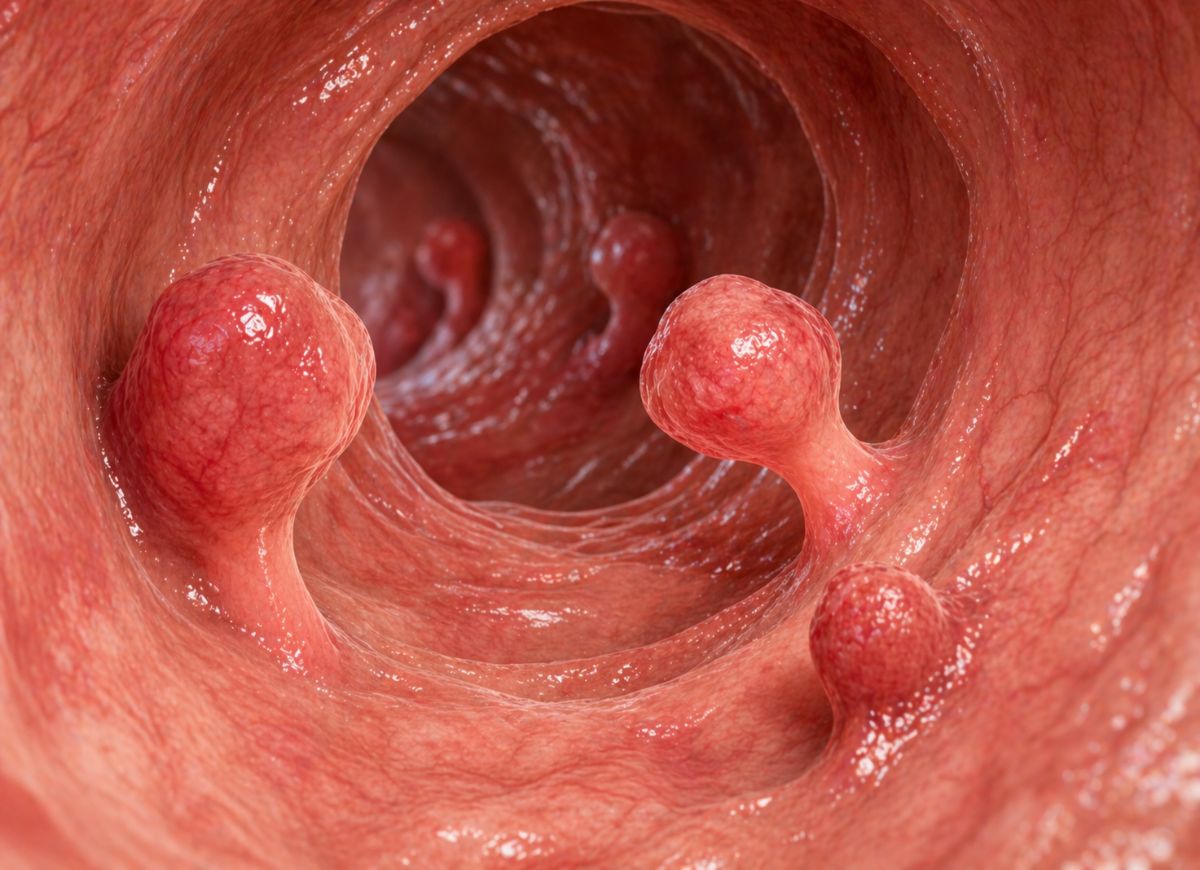
Your colon may not get much attention until something feels unusual. Colon polyps are growths that develop on the inner lining of the colon or rectum, and many people have them without experiencing any obvious symptoms.
Although many polyps are harmless, some can gradually develop into colorectal cancer. This is why recognizing possible warning signs and getting checked when something seems unusual can be important for protecting your health.
Some colon polyps cause no symptoms at all, while others may produce noticeable changes. Rectal bleeding, changes in bowel habits, unexplained anemia, abdominal discomfort, and changes in stool appearance can all signal that something needs to be evaluated.
In this article, we’ll look at five colon polyp symptoms that should not be ignored. We’ll explain what each symptom may mean and why speaking with a healthcare professional is important when these changes persist.
If you have noticed unusual bowel symptoms or simply want to be more aware of your colon health, knowing what to watch for is a useful first step.
5 Key Symptoms of Colon Polyps
Rectal Bleeding
Rectal bleeding is one of the most noticeable warning signs associated with colon polyps and colorectal cancer. It can occur when a polyp becomes irritated or damaged as stool passes through the colon.
Because polyps can contain delicate blood vessels, friction from passing stool may cause them to bleed. The amount of blood may be small and may only appear occasionally, which can make the symptom easy to dismiss.
The color of the blood can sometimes provide clues about where the bleeding is occurring. Bright red blood on toilet paper, in the toilet, or on the surface of the stool is generally associated with bleeding closer to the rectum or lower colon. Darker red or maroon blood mixed with stool may indicate bleeding farther up the colon.
However, the appearance of blood cannot reliably identify its cause.
Hemorrhoids are another common reason for rectal bleeding, particularly bright red blood after wiping. Because hemorrhoids and colon polyps can produce similar symptoms, it is important not to assume that bleeding is simply caused by hemorrhoids without an appropriate evaluation.
Any unexplained rectal bleeding should be discussed with a healthcare professional. A doctor may recommend an examination or tests such as a colonoscopy to determine where the bleeding is coming from and whether a polyp or another condition is responsible.
Early evaluation can help identify potentially precancerous growths before they progress further.
Changes in Bowel Habits
A noticeable and persistent change in your usual bowel habits can sometimes be associated with a colon polyp, particularly when a larger growth affects the normal movement of stool.
Changes may include constipation, diarrhea, or alternating between the two. A new bowel pattern that continues for more than a week without an obvious explanation, such as a temporary illness or dietary change, deserves medical attention.
A larger polyp can sometimes protrude into the open passage of the colon and partially interfere with the movement of stool. This may contribute to constipation, difficulty passing stool, straining, or a feeling that the bowel has not completely emptied.
Some polyps can also produce mucus or fluid, which may irritate the colon and contribute to looser or more frequent stools.
In certain cases, a person may experience both constipation and diarrhea. Liquid stool may pass around a partial blockage while more solid stool has greater difficulty moving through the narrowed area.
Changes in stool consistency can also be important. For example, someone who normally has well-formed stools may suddenly develop consistently loose or watery bowel movements.
These changes do not necessarily mean that a polyp is present. Conditions such as irritable bowel syndrome, inflammatory bowel disease, infections, and other digestive problems can cause similar symptoms.
Still, persistent changes should be evaluated so that more serious causes can be ruled out. A healthcare professional may recommend further testing, including a colonoscopy, when appropriate.
Abdominal Pain or Cramping
Persistent abdominal pain or cramping can sometimes occur when a colon polyp becomes large enough to interfere with the normal passage of stool.
This symptom is less common than rectal bleeding or changes in bowel habits, but ongoing or unexplained abdominal discomfort should still be taken seriously.
The discomfort may feel like cramping or a dull ache, often in the lower abdomen. It may come and go or remain present for longer periods.
One possible explanation is that a larger polyp creates a partial obstruction. The colon normally moves waste forward through coordinated muscle contractions called peristalsis. If something partially blocks the passage, the muscles may contract more forcefully as they try to move stool through the narrowed area. This can lead to cramping or discomfort.
Occasional stomach pain is common and may result from gas, indigestion, or dietary changes. However, pain that continues for several days or weeks, keeps returning, or occurs alongside other symptoms deserves medical evaluation.
Pay particular attention if abdominal pain occurs together with bloating, changes in bowel habits, rectal bleeding, or unexplained weight loss.
In rare cases, a very large polyp may contribute to a complete bowel obstruction. Severe abdominal pain accompanied by vomiting and an inability to pass stool or gas requires urgent medical attention.
Unexplained Iron Deficiency Anemia
Unexplained iron deficiency anemia can sometimes be a sign of slow, hidden bleeding from a colon polyp or colorectal tumor.
Unlike obvious rectal bleeding, this type of blood loss may be too small to see. A polyp may bleed intermittently over a long period, gradually reducing the body’s iron stores.
Iron is necessary for producing hemoglobin, the protein in red blood cells that carries oxygen throughout the body. When iron levels become too low, the body may not produce enough healthy red blood cells, resulting in iron deficiency anemia.
Symptoms can develop gradually and may include:
- Persistent tiredness
- Weakness
- Pale skin
- Dizziness or lightheadedness
- Shortness of breath with activity
- Cold hands and feet
Because these symptoms are often nonspecific, people may mistake them for stress, poor sleep, aging, or simply being run down.
Iron deficiency anemia without an obvious explanation deserves further investigation. This is especially important in adult men and postmenopausal women, who do not normally lose iron through menstruation.
A healthcare provider may recommend gastrointestinal testing, including a colonoscopy and, in some cases, an upper endoscopy, to determine whether hidden bleeding is responsible.
Taking iron supplements may correct the anemia temporarily, but it does not address the reason for the blood loss. Finding and treating the underlying cause is essential.
Changes in Stool Color or Shape
Changes in the appearance of your stool can sometimes provide clues about bleeding or a narrowing in the colon.
One concerning change is black, tarry stool, commonly known as melena. Black stool can indicate that blood has been altered by digestion as it travels through the gastrointestinal tract. Although ulcers and other conditions can also cause this appearance, black, tarry stools require prompt medical evaluation.
Another change worth noticing is a persistent difference in stool shape or thickness. If normally formed stools suddenly become consistently narrow or pencil-like, it may indicate that something is narrowing the passage through the colon.
A larger polyp can sometimes grow into the colon’s open space and partially restrict the movement of stool. The stool may then become thinner as it passes through the narrowed area.
An occasional change in stool shape is not necessarily a sign of a serious problem. However, persistent narrow stools, particularly when combined with constipation, incomplete bowel movements, cramping, or other symptoms, should be evaluated.
A colonoscopy may be used to examine the colon directly and determine whether a polyp, growth, or another condition is responsible.
What Exactly Are Colon Polyps?
Colon polyps are abnormal growths that develop on the inner lining of the colon or rectum. They can vary considerably in size and appearance, ranging from small, flat growths to larger growths attached to the colon wall by a stalk.
Polyps become more common with age. Many are benign, meaning they are not cancerous. However, certain types can gradually develop into colorectal cancer.
This is why finding and removing potentially precancerous polyps is an important part of colorectal cancer prevention.
Polyps generally develop when cells in the colon lining begin growing and dividing abnormally. Genetic changes can contribute to this process, and the progression usually occurs over an extended period.
Because this process can take years, screening provides an opportunity to identify and remove certain polyps before they become cancerous.
Are All Colon Polyps Cancerous?
No. Colon polyps are not all cancerous, and many never become cancer.
Polyps can be divided into different types based on their appearance and cellular characteristics. Some, including many hyperplastic and inflammatory polyps, generally have a low risk of becoming cancerous.
Adenomatous polyps, or adenomas, are more important from a cancer-prevention standpoint because they are considered precancerous. They can develop into colorectal cancer over time.
Adenomas may have different growth patterns, including tubular, villous, and tubulovillous types. Their cancer risk can vary depending on characteristics such as their size and microscopic appearance.
Because it is not always possible to determine a polyp’s exact type simply by looking at it during a colonoscopy, doctors generally remove polyps that are found and send them to a laboratory for examination.
A pathologist can then determine whether the growth is benign, precancerous, or cancerous and help guide appropriate follow-up.
How Quickly Do Colon Polyps Grow?
Colon polyps generally develop and grow slowly. For some adenomatous polyps, the progression from an early growth to colorectal cancer can take many years, often estimated at around 5 to 10 years or longer.
This gradual process creates an important opportunity for screening and treatment.
A polyp may begin as a small area of abnormal cell growth. Over time, additional genetic changes can cause it to become larger and develop more abnormal cells. In some cases, it may eventually progress to invasive cancer.
However, the growth rate is not identical for every polyp. Factors such as the type of polyp, its genetic characteristics, size, and a person’s individual risk factors can influence its behavior.
Certain inherited conditions, such as familial adenomatous polyposis (FAP), can cause polyps to develop in much greater numbers and at a younger age.
For people at average risk, screening is an important way to find polyps before they have an opportunity to become more advanced.
When polyps are discovered and removed, follow-up colonoscopies may be recommended at intervals based on factors such as the number, size, and pathology of the polyps.
When Should You Seek Medical Help?
You should speak with a healthcare professional when you notice persistent or unexplained changes in your bowel habits or other symptoms associated with colon polyps.
Rectal bleeding, ongoing changes in bowel habits, persistent abdominal pain, unexplained fatigue, or symptoms associated with iron deficiency anemia are all reasons to seek medical advice.
The goal is not to diagnose yourself. Instead, a healthcare professional can evaluate your symptoms and determine whether additional testing is needed.
Colon polyps and early colorectal cancer may cause no symptoms at all, which is why screening remains important even when you feel healthy.
If symptoms do appear, prompt evaluation can help identify their cause and allow potentially precancerous polyps to be treated before they progress.
Is a Single Symptom Enough to Warrant a Doctor’s Visit?
Yes. You do not need to experience several symptoms before speaking with a doctor.
Rectal bleeding, for example, should be evaluated even if you think hemorrhoids are responsible. Although hemorrhoids are common, other causes of bleeding need to be ruled out.
Likewise, a new and persistent change in bowel habits can justify a medical evaluation, particularly when it lasts more than a week without an obvious explanation.
Persistent abdominal pain or unexplained symptoms of iron deficiency anemia can also warrant medical attention on their own.
The most important factor is whether the symptom persists, returns repeatedly, or becomes worse.
A single unusual bowel movement may not indicate a serious problem, but ongoing or recurring changes should not simply be ignored.
What Can You Expect During a Doctor’s Visit?
A visit for possible colon polyp symptoms usually begins with a discussion of your symptoms and medical history.
Your doctor may ask:
- When the symptoms started
- How frequently they occur
- Whether they are becoming worse
- What the stool looks like
- Whether there is blood and what color it is
- Whether your bowel habits have changed
- Whether you have experienced unexplained weight loss or fatigue
Your personal and family medical history will also be important. Tell your doctor about any history of colon polyps, colorectal cancer, inflammatory bowel disease, or other relevant conditions.
A physical examination may follow. This can include checking your vital signs and examining your abdomen for tenderness or unusual masses. Depending on your symptoms, a digital rectal examination may also be performed.
If your symptoms or risk factors suggest a possible problem in the colon, your doctor may recommend additional testing or refer you to a gastroenterologist.
A colonoscopy allows the physician to examine the entire colon using a thin, flexible tube equipped with a camera. If a polyp is found, it can often be removed during the same procedure.
The Difference Between Benign and Malignant Polyps
Benign polyps are non-cancerous growths that have not developed the ability to invade surrounding tissues or spread to other parts of the body.
Malignant polyps contain cancerous cells that can invade nearby tissue and potentially spread through the blood or lymphatic system.
Hyperplastic and inflammatory polyps generally have a low risk of becoming cancerous. Adenomas, however, are considered precancerous because some can eventually develop into adenocarcinoma, the most common type of colorectal cancer.
Removing adenomatous polyps during colonoscopy can help prevent them from progressing.
If a polyp contains cancerous cells, additional treatment may be necessary depending on how deeply the cancer has invaded and whether there are signs that it has spread.
Pathology testing after removal is therefore important because it provides information about the type of polyp and whether cancerous or precancerous changes are present.
How Does a Colonoscopy Find and Remove Polyps?
Colonoscopy is an important procedure for detecting and preventing colorectal cancer because it can both identify and remove polyps.
Before the procedure, the colon must be thoroughly cleaned. Patients typically follow specific dietary instructions and take a bowel-cleansing medication to remove stool from the colon.
During the procedure, sedation is generally provided for comfort. A gastroenterologist then carefully guides a flexible colonoscope through the rectum and colon.
The scope contains a light and camera that allow the physician to examine the colon lining for abnormalities.
If a polyp is found, the doctor can often remove it during the same procedure. Small polyps may be removed using biopsy forceps or a small snare. Larger growths may require specialized removal techniques.
The tissue is then sent to a pathology laboratory for examination. The results help determine whether the polyp is benign, precancerous, or malignant.
Removing adenomatous polyps before they become cancerous is one of the key ways colonoscopy can help prevent colorectal cancer.
How to Help Prevent Colon Polyps
Genetics can influence a person’s risk of developing colon polyps, but lifestyle and dietary habits may also play a role.
Eating a diet that includes plenty of fiber from fruits, vegetables, and whole grains can support digestive and colon health.
On the other hand, diets high in red meat and processed meats, such as bacon and sausage, have been associated with an increased risk of colorectal polyps and cancer. Limiting these foods may therefore be beneficial.
Maintaining a healthy weight is also important. Excess body weight, particularly abdominal fat, has been associated with an increased risk of colorectal disease.
Regular physical activity can support overall health and may help reduce colorectal cancer risk. Aiming for about 150 minutes of moderate physical activity each week is a commonly recommended goal for adults.
Smoking is another important risk factor to address. Avoiding tobacco and limiting alcohol consumption can also support overall colon health.
Nutrition, exercise, weight management, and regular screening can all form part of a broader approach to reducing colorectal health risks.
Colonoscopy vs. Sigmoidoscopy: What’s the Difference?
Both colonoscopy and flexible sigmoidoscopy allow doctors to examine the inside of the large intestine, but they do not examine the same amount of the colon.
A colonoscopy examines the entire colon, including the rectum, sigmoid colon, descending colon, transverse colon, ascending colon, and cecum.
A flexible sigmoidoscopy examines only the lower portion of the colon, primarily the rectum and sigmoid colon.
Because a colonoscopy examines the entire large intestine, it can detect polyps throughout the colon. A sigmoidoscopy can miss growths located farther up in the colon.
The preparation is also different. Colonoscopy generally requires a complete bowel preparation, while sigmoidoscopy may require less extensive preparation.
Sedation is commonly used during colonoscopy, whereas flexible sigmoidoscopy can often be performed without sedation.
If a polyp is discovered during a sigmoidoscopy, a follow-up colonoscopy may be recommended to examine the rest of the colon.
FAQs
1. Should I Be Concerned About Polyps in the Colon?
Colon polyps are common, particularly as people get older. Many are benign and never cause symptoms, but certain types, especially adenomas, can become colorectal cancer over time.
The risk can be higher when polyps are larger or when several polyps are present.
People with a personal or family history of colorectal cancer may also have a higher risk. Screening recommendations can vary depending on age and individual risk factors, so it is important to discuss your situation with a healthcare professional.
Finding and removing potentially precancerous polyps during colonoscopy can help reduce the risk of colorectal cancer.
2. Can You Reduce Colon Polyps Naturally?
There is no proven natural method that can reliably shrink or eliminate an existing colon polyp.
However, healthy lifestyle choices may help lower the risk of developing polyps. Eating more fiber-rich foods, fruits, vegetables, and whole grains can support colon health.
It may also be helpful to limit red and processed meats, avoid excessive alcohol consumption, exercise regularly, and maintain a healthy weight.
If a polyp has already been found, lifestyle changes should not replace medical treatment. Polyps generally need to be removed or monitored according to a healthcare professional’s recommendations.
3. Can Colon Polyps Go Away?
Colon polyps generally do not disappear on their own.
Once a polyp has been identified, a doctor may recommend removing it, usually during a colonoscopy. Removing certain polyps can prevent them from growing larger or developing into cancer.
Even after polyps have been removed, follow-up screening may still be necessary because new polyps can develop later.
Your recommended screening schedule will depend on factors such as the number, size, and type of polyps that were found.
4. What Do Bowel Polyps Feel Like?
Most colon polyps do not cause any noticeable sensation.
Many are discovered during routine screening rather than because of symptoms. Larger polyps may sometimes cause rectal bleeding, changes in bowel habits, abdominal discomfort, or other digestive symptoms.
In rare cases, a large polyp can interfere with the movement of stool and contribute to cramping or obstruction.
Because polyps often produce no symptoms, regular screening is an important way to detect them early.
5. What Foods Trigger Polyps?
Dietary patterns can influence the risk of developing colon polyps.
Eating large amounts of red meat and processed meats, including bacon, hot dogs, and sausages, has been associated with a higher risk of colorectal polyps and cancer.
In contrast, diets rich in fiber, fruits, vegetables, and whole grains are generally considered supportive of colon health.
Limiting highly processed foods and excessive alcohol while maintaining a balanced diet may also help support overall health.
6. What Vitamins Get Rid of Colon Polyps?
No vitamin or supplement has been proven to eliminate existing colon polyps.
Some nutrients, including calcium and vitamin D, have been studied for their possible role in supporting colon health and reducing colorectal disease risk. Antioxidant nutrients such as vitamins A, C, and E also play important roles in overall nutrition.
However, supplements should not be viewed as a replacement for screening or polyp removal.
If you have a known polyp or are at increased risk of colorectal cancer, discuss supplements and dietary changes with your healthcare provider.
7. How Long Does It Take Colon Polyps to Become Cancerous?
The timeline can vary depending on the type, size, and characteristics of the polyp.
For some adenomatous polyps, progression to colorectal cancer may take approximately 5 to 10 years or longer. However, not every polyp becomes cancerous.
Some polyps may remain benign, while others can progress more quickly.
This is one reason screening and removal are so important. Identifying and removing a potentially precancerous polyp can prevent it from progressing further.
8. Can Stress Cause Colon Polyps?
Stress itself is not considered a direct cause of colon polyps.
However, long-term stress can contribute to behaviors that may negatively affect health, including poor dietary choices, reduced physical activity, smoking, or excessive alcohol consumption.
Stress can also worsen certain digestive symptoms and conditions.
Managing stress through regular physical activity, adequate rest, relaxation techniques, and healthy lifestyle habits can support overall well-being, although these measures do not replace colorectal cancer screening.
9. Why Are Female Colonoscopies Harder?
Colonoscopies can sometimes be more technically challenging in women because of anatomical differences.
Factors such as the position of the uterus, abdominal anatomy, previous abdominal or pelvic surgery, and other individual differences can affect how easily the colonoscope moves through the bowel.
However, colonoscopy remains a standard and effective procedure for women.
Doctors and gastroenterologists are trained to work with these anatomical differences and use appropriate techniques to complete the examination safely.
If you have concerns about the procedure, discuss them with your healthcare provider before your colonoscopy.
Conclusion
Colon polyps do not always cause noticeable symptoms, but recognizing potential warning signs can help you take action when something changes.
Rectal bleeding, persistent changes in bowel habits, abdominal pain, unexplained iron deficiency anemia, and unusual changes in stool color or shape should not simply be dismissed, especially when they persist or occur repeatedly.
Although many polyps are benign, some can gradually become colorectal cancer. Regular screening can help identify and remove potentially precancerous growths before they progress.
Maintaining a balanced diet, staying physically active, avoiding tobacco, limiting excessive alcohol consumption, and following recommended screening schedules can all support better colon health.
If you notice unusual or persistent bowel symptoms, speak with a healthcare professional. Getting the cause checked early can make it easier to identify and address potential problems before they become more serious.