
ECMO Meaning: 7 Things to Know About This Life-Support Treatment
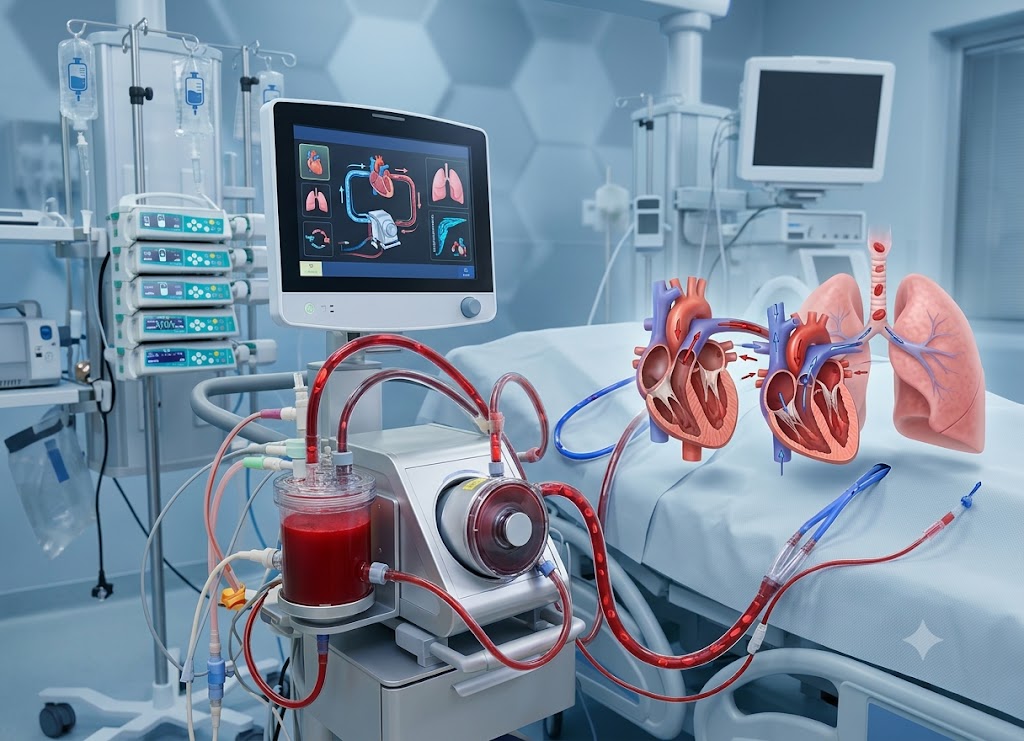
ECMO stands for extracorporeal membrane oxygenation. The word “extracorporeal” means outside the body, while “membrane oxygenation” refers to adding oxygen to the blood through a specialized machine.
ECMO is an advanced form of life support used when the heart, lungs, or both are too severely affected to work well on their own. It does not treat the underlying disease directly. Instead, it gives the body time to rest and recover while doctors continue treating the cause of the illness.
Understanding ECMO is important because it is generally used in serious, life-threatening situations. Blood is taken from the body through large tubes, passed through a machine that adds oxygen and removes carbon dioxide, and then returned to the body. Depending on the type of ECMO, the treatment may mainly support the lungs or provide support for both the heart and lungs.
What Is the Meaning of ECMO (Extracorporeal Membrane Oxygenation)?
ECMO is a form of extracorporeal life support that temporarily assists the heart, lungs, or both. It uses an external circuit to oxygenate the patient’s blood and remove carbon dioxide.
Unlike the heart-lung bypass machines commonly used for a few hours during surgery, ECMO can provide support for much longer periods, including days or weeks and, in selected circumstances, longer. This can give the patient’s organs time to recover or provide a bridge to another treatment, such as transplantation.
The main purpose of ECMO is to maintain oxygen delivery and circulation while doctors address the underlying illness. It is a highly specialized therapy used for carefully selected patients with severe heart or lung failure.
Deconstructing the Terminology and Clinical Definition
If you are wondering “what does ECMO mean in medical terms?”, the acronym stands for Extracorporeal Membrane Oxygenation.
The treatment can be understood by breaking the name into three parts:
Extracorporeal (“Outside the Body”)
This means that blood is temporarily removed from the body’s circulation and directed through an external circuit made of tubing and specialized equipment.
Membrane
The membrane refers to the oxygenator, a device that performs gas exchange outside the body. It acts in a similar way to the lungs by allowing carbon dioxide to leave the blood and oxygen to enter it.
Oxygenation
During this stage, oxygen is added to the blood while carbon dioxide is removed. The treated blood is then returned to the patient’s circulation.
Mechanical Function of the ECMO Machine
The ECMO machine maintains the external blood circuit and supports gas exchange.
Large tubes called cannulas are placed into major blood vessels. A pump moves blood from the body through the circuit and into the membrane oxygenator. After oxygen is added and carbon dioxide is removed, the blood returns to the patient.
There are two primary configurations:
- Veno-Venous (VV) ECMO: Blood is removed from a vein and returned to a vein. It mainly provides respiratory support for severe lung failure.
- Veno-Arterial (VA) ECMO: Blood is removed from a vein and returned to an artery. It can provide support for both circulation and gas exchange when the heart and lungs are severely compromised.
The Highest Level of Advanced Life Support
ECMO is not a cure for the underlying illness. Instead, it acts as temporary support while the medical team works to treat the condition responsible for the organ failure.
For example, in severe respiratory failure, ECMO can take over some of the work of oxygenating the blood and removing carbon dioxide. This may allow the lungs to receive less mechanical stress while they recover.
Because ECMO requires invasive procedures and carries serious risks, including bleeding, blood clots, infection, and stroke, it is reserved for patients with severe illness who may benefit from this level of support.
Circuit Mechanics of the ECMO Machine
The ECMO circuit works as an external blood-flow and gas-exchange system.
First, cannulas are inserted into large blood vessels. A mechanical pump moves blood out of the body and into the oxygenator.
Inside the oxygenator, blood passes alongside a gas mixture through specialized membranes. Carbon dioxide moves out of the blood, while oxygen moves into it.
The oxygen-rich blood then passes through the circuit and is returned to the patient. Depending on the ECMO configuration, the system can provide primarily respiratory support or both cardiovascular and respiratory support.
Structural Configurations: VV vs. VA ECMO
The type of ECMO used depends on which organs require the most support.
Veno-Venous (VV) ECMO (Respiratory Support Only)
VV ECMO is mainly used when the lungs are failing but the heart can still pump blood effectively.
Blood is drained from a large vein and returned to another venous location after oxygenation and carbon dioxide removal. The patient’s own heart then pumps the treated blood throughout the body.
VV ECMO may be considered in severe respiratory conditions, including certain cases of acute respiratory distress syndrome (ARDS).
Veno-Arterial (VA) ECMO (Cardiopulmonary Support)
VA ECMO can support both circulation and gas exchange.
Blood is drained from a large vein, processed through the ECMO circuit, and returned to an artery. This allows the system to help circulate oxygen-rich blood when the heart is unable to provide sufficient blood flow.
VA ECMO may be considered for conditions such as severe cardiogenic shock or selected cases of cardiac arrest.
Clinical Indications and Strategic Deployment
ECMO is generally considered when a patient has a severe, potentially reversible heart or lung problem that has not responded adequately to conventional treatment.
Possible situations include:
- Severe respiratory failure or ARDS
- Certain cases of severe pneumonia or sepsis-related lung failure
- Severe cardiogenic shock
- Selected cases of cardiac arrest
- As a bridge to heart or lung transplantation
- As temporary support while another long-term treatment is arranged
The decision to use ECMO depends on the patient’s overall condition, the underlying disease, potential for recovery, and the risks associated with treatment.
Severe Respiratory Manifestations
In severe ARDS or other forms of critical lung failure, the lungs may be unable to provide adequate oxygen or remove enough carbon dioxide despite mechanical ventilation.
In selected patients, VV ECMO can perform much of the required gas exchange outside the body. This can allow clinicians to use less aggressive ventilator settings while continuing to treat the underlying lung problem.
It may also be considered as a bridge for some patients awaiting lung transplantation.
Severe Cardiac Manifestations
When the heart cannot pump enough blood to meet the body’s needs, VA ECMO may help restore circulation and oxygen delivery.
- Cardiogenic Shock: Severe damage to the heart, such as from a major heart attack or myocarditis, can prevent adequate blood circulation. VA ECMO may provide temporary circulatory support.
- Extracorporeal CPR (E-CPR): In selected cardiac-arrest situations, VA ECMO may be started when conventional CPR is unsuccessful and the patient meets specific criteria.
- Bridge to Other Treatment: ECMO may sometimes be used temporarily while doctors determine whether the heart can recover or whether another intervention, such as a ventricular assist device or transplant, is needed.
The Potential Risks and Benefits of ECMO Treatment
The major benefit of ECMO is that it can temporarily support oxygen delivery and circulation when the heart or lungs are failing.
However, ECMO is also associated with significant risks. Possible complications include bleeding, blood clots, infection, stroke, problems related to the cannulas, and mechanical complications involving the circuit.
Outcomes vary considerably depending on the patient’s underlying illness, age, overall health, and reason for requiring ECMO. Survival cannot be predicted from ECMO use alone.
Clinical Risk-Benefit Analysis: The Last-Resort Balance
ECMO involves a complex balance between potential benefits and serious risks.
The circuit exposes blood to artificial surfaces and usually requires medication to reduce clotting. At the same time, critically ill patients may already have a high risk of bleeding, infection, and organ complications.
The medical team therefore considers factors such as:
- The underlying cause of organ failure
- Whether the condition may be reversible
- The patient’s overall health
- Potential for meaningful recovery
- Risk of bleeding and clotting
- Whether transplantation or another long-term treatment is possible
Therapeutic Benefits: The Principle of Organ Rest
The primary purpose of ECMO is to maintain adequate oxygenation and circulation while giving the affected organs time to recover or allowing other treatments to take effect.
Mitigating Ventilator-Induced Lung Injury (VILI)
In severe respiratory failure, mechanical ventilation may require high levels of support. Excessive pressure or volume can contribute to additional lung injury.
VV ECMO can take over some of the gas-exchange workload. This may allow doctors to use more protective ventilator settings and reduce stress on severely injured lungs.
Reducing Cardiovascular Strain
In severe cardiogenic shock, the heart may require strong medications to maintain blood pressure and circulation.
VA ECMO can provide mechanical circulatory support, potentially reducing some of the workload placed on the failing heart while doctors treat the underlying problem.
If the heart does not recover sufficiently, ECMO may serve as a bridge to another treatment, such as a ventricular assist device or transplantation.
Complications and Inherent Risks of the Circuit
Because ECMO involves large blood vessels, external tubing, artificial surfaces, and powerful medications, complications can occur.
Hemorrhage (Major Bleeding)
Bleeding is a major concern during ECMO treatment.
Blood comes into contact with artificial surfaces in the circuit, increasing the risk of clot formation. To reduce this risk, patients may receive anticoagulant medications.
However, anticoagulation can increase the chance of serious bleeding. Bleeding may occur around cannula sites or in internal organs and, in severe cases, can affect the brain.
Thrombosis (Blood Clots)
Blood clots can develop despite anticoagulant treatment.
Clots may form within parts of the ECMO circuit and interfere with its function. In some cases, clots can enter the bloodstream and cause serious complications, including stroke or reduced blood flow to an organ or limb.
Cannula-Associated Infections
ECMO cannulas remain in large blood vessels for an extended period. Because they provide a pathway into the bloodstream, they can increase the risk of infection.
Critically ill patients may be especially vulnerable to severe infections, making careful monitoring and infection prevention essential.
Mechanical Component Failures
Although ECMO equipment is closely monitored, mechanical problems can occur.
Possible issues include pump malfunction, damage to tubing, or air entering the circuit. ECMO teams continuously monitor the equipment and patient so that problems can be addressed as quickly as possible.
What Else Should You Know About the ECMO Patient Journey?
An ECMO patient’s treatment involves much more than the machine itself. It requires intensive monitoring, specialized healthcare professionals, treatment of the underlying illness, and rehabilitation after critical illness.
Comparing Advanced Cardiopulmonary Support Modalities
ECMO is one of several technologies used to support patients with severe heart or lung problems. Mechanical ventilation and traditional cardiopulmonary bypass serve different purposes.
Mechanical Ventilation vs. ECMO
A mechanical ventilator moves air into and out of the lungs and supports breathing. It still depends on the lungs to perform gas exchange.
ECMO, in contrast, circulates blood outside the body and performs gas exchange through an oxygenator. This means it can provide a greater level of respiratory support when the lungs are unable to exchange oxygen and carbon dioxide adequately.
Heart-Lung Bypass vs. ECMO
A cardiopulmonary bypass machine is generally designed for short-term use during heart surgery.
ECMO is designed to provide longer-term extracorporeal support in critically ill patients. It can be used for days or weeks, depending on the patient’s condition and treatment goals.
The Multidisciplinary Care Team Structure
Because ECMO is highly complex, patients require a specialized multidisciplinary team.
The team may include:
- ECMO Specialists: These trained healthcare professionals monitor the circuit and patient continuously and make adjustments according to the treatment plan.
- Perfusionists: They manage the extracorporeal circuit and help ensure that the equipment is functioning properly.
- Critical Care Physicians: Intensivists oversee the patient’s overall ICU treatment, including medications, fluids, nutrition, and management of the underlying illness.
- Cardiothoracic or Vascular Surgeons: These specialists may perform procedures required to place or remove the ECMO cannulas.
- Other Healthcare Professionals: Pharmacists, dietitians, physical therapists, occupational therapists, respiratory therapists, and other specialists may contribute to the patient’s care and recovery.
Post-ECMO Rehabilitation and Post-Intensive Care Syndrome (PICS)
Coming off ECMO and leaving intensive care does not necessarily mean recovery is complete.
Patients who have experienced severe critical illness may develop Post-Intensive Care Syndrome (PICS), which can involve physical, cognitive, and psychological difficulties.
Physical Recovery
Long periods of critical illness and limited movement can lead to significant muscle weakness.
Physical therapists may help patients gradually rebuild strength and relearn activities such as sitting, standing, walking, and other daily movements.
Occupational therapists can help patients regain independence with everyday tasks, while speech-language professionals may assist with swallowing or communication difficulties when needed.
Cognitive and Psychological Challenges
- Cognitive Function: Some survivors experience problems with memory, concentration, attention, or problem-solving after critical illness.
- Psychological Impact: A prolonged ICU stay and severe illness can also affect emotional well-being. Some survivors may experience anxiety, depression, or symptoms associated with post-traumatic stress.
Recovery can take time and may require continued medical, physical, and psychological support.
Evolving Outcomes and the COVID-19 Paradigm
During the COVID-19 pandemic, ECMO became an important rescue therapy for selected patients with severe respiratory failure caused by COVID-19-related ARDS.
When conventional ventilation could no longer provide adequate oxygenation, VV ECMO was used in some patients to provide additional respiratory support.
Outcomes varied depending on factors such as age, existing health conditions, severity of illness, timing of ECMO initiation, and the experience of the treating medical center.
The experience during the pandemic also highlighted the importance of specialized ECMO teams, appropriate patient selection, and treatment at experienced centers.
Conclusion
ECMO is an advanced form of life support that can temporarily assist the heart, lungs, or both when they are unable to function adequately. It may be used for severe respiratory failure, cardiogenic shock, selected cardiac-arrest situations, and other critical conditions when standard treatments are not sufficient.
Although ECMO can provide lifesaving support, it also carries serious risks, including bleeding, infection, blood clots, stroke, and complications related to the cannulas and equipment.
Patients receiving ECMO require continuous monitoring in an intensive care setting. Families can ask the medical team about the reason ECMO is being used, treatment goals, possible complications, expected duration, recovery prospects, and what options may come next.
Frequently Asked Questions
1. What Does ECMO Mean?
ECMO stands for extracorporeal membrane oxygenation. It is a form of life support that moves blood outside the body, adds oxygen, removes carbon dioxide, and then returns the blood to circulation.
ECMO can temporarily support patients when their lungs, heart, or both are unable to function adequately.
2. When Is ECMO Used?
ECMO may be considered when severe heart or lung failure does not improve with conventional treatments.
Depending on the situation, it may be used for severe respiratory failure, certain heart conditions, cardiogenic shock, selected cardiac-arrest cases, or as a bridge to recovery, surgery, or transplantation.
The decision depends on the patient’s individual condition and the potential benefits and risks.
3. How Does ECMO Work?
ECMO uses large tubes called cannulas to remove blood from the body.
The blood travels through an external circuit where carbon dioxide is removed and oxygen is added. The treated blood is then returned to the body.
This process can reduce the workload on the lungs, heart, or both while the medical team treats the underlying condition.
4. What Are the Main Types of ECMO?
The two main types are VV ECMO and VA ECMO.
VV ECMO, or veno-venous ECMO, mainly supports the lungs by adding oxygen to the blood and removing carbon dioxide.
VA ECMO, or veno-arterial ECMO, can support both circulation and gas exchange by returning oxygen-rich blood to an artery.
The medical team selects the appropriate type based on the patient’s condition.
5. What Are the Risks of ECMO?
ECMO carries significant risks because it involves large blood vessels, an external blood circuit, and medications that reduce clotting.
Possible complications include bleeding, infection, blood clots, stroke, circulation problems, organ injury, and equipment-related complications.
For this reason, ECMO patients require continuous observation and care from a specialized intensive care team.