

5 Common Signs That Heart Murmur Needs Medical Attention
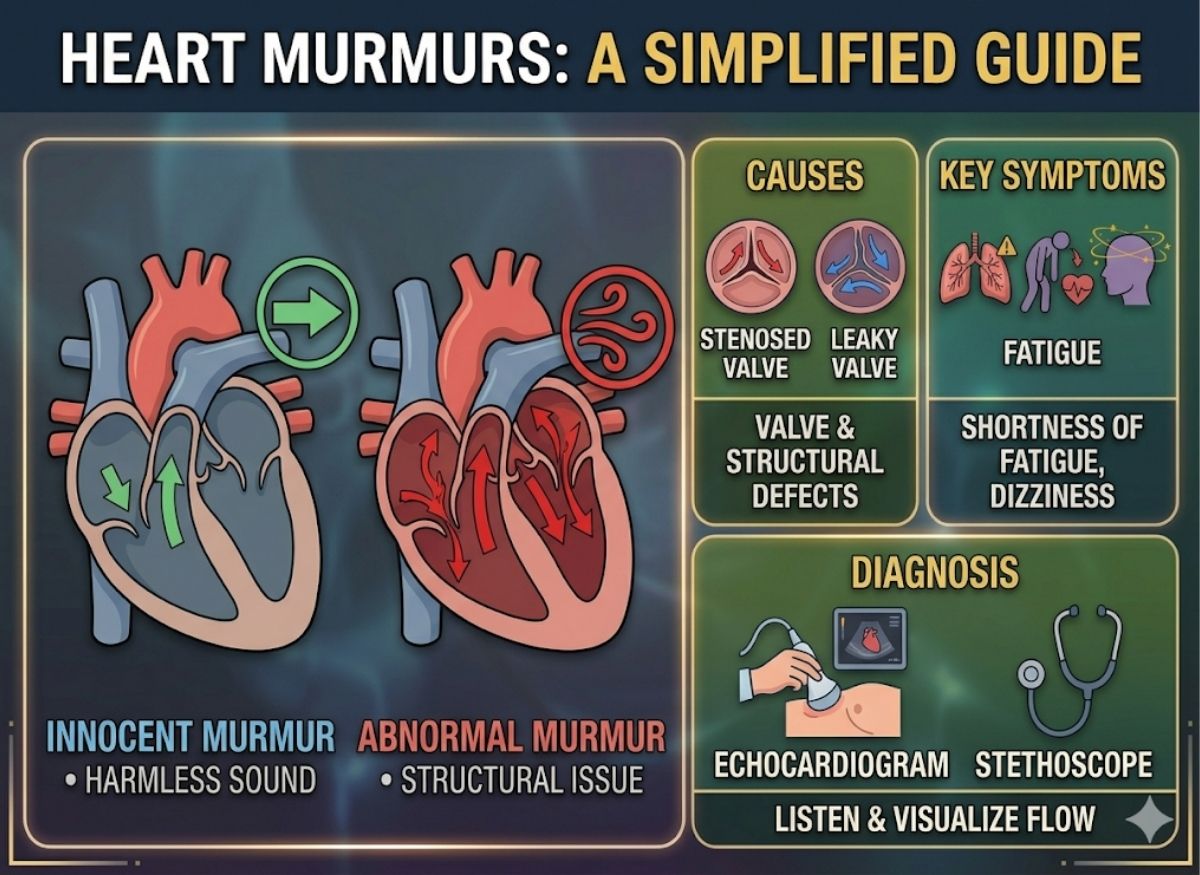
A heart murmur is an unusual sound heard during a heartbeat. It may sound like a whoosh, swish, or hum and is usually detected with a stethoscope during a routine physical examination. Many heart murmurs are harmless and do not point to a serious health problem. However, some may be associated with underlying conditions, including heart valve abnormalities or structural problems that need medical evaluation.
Many people with a heart murmur live normal, healthy lives without complications. Still, knowing which symptoms may indicate a more serious issue can help you understand when additional evaluation is necessary.
Heart murmurs can range from completely harmless to signs of an underlying heart condition. Symptoms such as shortness of breath, chest discomfort, dizziness, or fainting may indicate that the heart is having difficulty pumping blood efficiently. These warning signs should not be ignored.
In this article, we’ll discuss five important symptoms that may occur with a concerning heart murmur, explain the difference between innocent and abnormal murmurs, and review how doctors evaluate and diagnose them.
What Is a Heart Murmur?
A heart murmur is an unusual sound produced by turbulent blood flow through or around the heart. Doctors typically detect it with a stethoscope during a physical examination. It is different from the normal “lub-dub” sounds created when the heart valves close.
A heart murmur is not a disease by itself. Instead, it is a clinical finding that may or may not indicate an underlying heart problem.
Are All Heart Murmurs a Sign of a Serious Problem?
No. Heart murmurs are generally classified as either innocent or abnormal (pathological).
An innocent heart murmur is not caused by a structural abnormality of the heart and usually does not pose a health risk. These murmurs are particularly common in children and adolescents because their smaller hearts and faster circulation can naturally produce sounds that are easier to hear with a stethoscope.
Innocent murmurs can also occur in adults when the heart is pumping more blood than usual. This may happen during pregnancy, fever, strenuous exercise, hyperthyroidism, or anemia. In these situations, faster blood flow can temporarily create a murmur even though the heart itself is structurally normal.
Distinguishing Innocent and Abnormal Murmurs
The main difference between innocent and abnormal murmurs is their underlying cause.
An innocent, sometimes called functional, murmur occurs when blood moves rapidly through a structurally normal heart. The valves, chambers, and heart walls are normal, and the sound itself is not associated with long-term heart complications. Doctors can often recognize these murmurs by their timing and by the absence of other signs of heart disease.
An abnormal or pathological murmur, on the other hand, can result from a structural problem. For example, a heart valve may be narrowed or may not close properly, disrupting the normal flow of blood. These murmurs may occur along with symptoms such as palpitations, fatigue, or shortness of breath.
A medical evaluation, which may include an echocardiogram, can help determine whether a murmur is harmless or related to an underlying heart condition.
What Causes the Sound of a Heart Murmur?
A heart murmur occurs when blood flow becomes turbulent rather than moving smoothly through the heart. When something changes the normal path or speed of blood, vibrations can develop and produce the sound heard through a stethoscope.
These changes may result from temporary physiological conditions or from structural problems affecting the heart.
High-Flow States and Innocent Murmurs
Conditions such as fever, anemia, and pregnancy can cause the heart to pump blood more quickly or in greater amounts to meet the body’s needs.
Even when the heart’s chambers and valves are normal, this increased blood flow can become turbulent enough to produce an audible murmur. These are often called functional murmurs because they are related to how the heart is functioning at that particular time rather than to a permanent structural problem.
Once the underlying high-flow condition improves, the murmur may become less noticeable or disappear.
Valve Stenosis and Increased Blood-Flow Speed
Valve stenosis is an important cause of abnormal heart murmurs. It occurs when a heart valve becomes narrowed, stiff, or calcified and cannot open fully.
Because blood has to pass through a smaller opening, its speed increases and turbulence develops. Aortic stenosis and mitral stenosis are examples of valve narrowing that may require medical monitoring.
Valve Regurgitation and Structural Defects
Valve regurgitation, also called valve insufficiency, occurs when a heart valve does not close properly. As a result, some blood flows backward instead of continuing forward through the heart.
This abnormal backward flow can create turbulence and produce a characteristic heart murmur.
Congenital structural abnormalities can also cause murmurs. For example, a hole between the heart’s chambers may allow blood to move abnormally from one chamber to another. Conditions such as an atrial septal defect (ASD) or ventricular septal defect (VSD) can produce this type of abnormal blood flow.
5 Key Warning Signs of a Concerning Heart Murmur
When a heart murmur is discovered, doctors need to determine whether it is harmless or connected to an underlying heart problem. The sound itself is caused by turbulent blood flow, but certain symptoms may suggest that the murmur is associated with a significant structural or functional issue.
The following five warning signs deserve medical attention.
1. Shortness of Breath (Dyspnea)
Shortness of breath can be a concerning symptom because it may indicate that the heart is not pumping blood effectively.
When certain heart conditions or diseased valves interfere with normal circulation, pressure can build up in the lungs. This may lead to breathing difficulties during physical activity or even while resting.
Some people may experience difficulty breathing when lying flat or may wake during the night feeling short of breath. These symptoms can occur when heart problems interfere with normal circulation and fluid balance.
2. Chest Pain or Tightness (Angina)
Chest pain or pressure occurring with a heart murmur can be an important warning sign.
In conditions such as severe aortic stenosis, the heart has to work harder to push blood through a narrowed valve. Over time, this can place additional strain on the heart muscle and increase its oxygen requirements.
If the heart muscle does not receive enough oxygen for its needs, chest pressure or discomfort may develop. This type of symptom should be medically evaluated rather than ignored.
3. Dizziness, Fainting (Syncope), or Lightheadedness
Dizziness or fainting may occur when a heart condition prevents enough blood from reaching the brain.
This can happen with severe valve disease, particularly when a narrowed valve limits how much blood the heart can pump. During physical activity, the body’s demand for blood increases, but a severely narrowed valve may prevent the heart from increasing its output sufficiently.
As a result, blood pressure may fall and a person may become lightheaded or temporarily lose consciousness.
4. Swelling in the Legs, Ankles, or Abdomen
Swelling in the legs, ankles, or abdomen can sometimes indicate that the heart is not circulating blood effectively.
When the right side of the heart is affected, blood may back up in the veins instead of moving efficiently through the lungs. This increased pressure can cause fluid to collect in surrounding tissues.
Swelling may be especially noticeable around the feet and ankles. In some cases, fluid can also build up in the abdomen.
5. Bluish Skin or Lips (Cyanosis)
A bluish color of the skin, lips, tongue, or nail beds can indicate that the blood contains less oxygen than normal.
Cyanosis may occur with certain serious congenital heart conditions in which blood bypasses the lungs instead of receiving adequate oxygen. Because this can indicate a significant circulation or oxygenation problem, new or severe cyanosis requires prompt medical attention.
What Is the Difference Between an Innocent and an Abnormal Murmur?
The main difference is whether the murmur occurs in an otherwise healthy heart or is caused by an underlying structural problem.
An innocent, or functional, murmur occurs when blood flows through a structurally normal heart. These murmurs are particularly common in children and may become less noticeable as the child grows or when a temporary trigger such as fever resolves.
They generally do not indicate heart disease and usually do not require treatment.
Sound Characteristics and Grading
Doctors assess murmurs according to factors such as their timing, intensity, and quality.
An innocent murmur is often relatively soft and may have a musical or vibratory quality, such as a Still’s murmur. These murmurs are commonly graded 1 or 2 on a six-point scale.
Abnormal murmurs may be louder and can have a harsh or blowing quality. In some cases, a doctor may feel a vibration through the chest called a thrill, which can indicate significant turbulent blood flow.
Clinical Implications and Structural Causes
An abnormal murmur may be associated with a structural problem such as valve stenosis, valve regurgitation, or a congenital defect in the heart.
Unlike an innocent murmur, an abnormal murmur may require further testing to determine its cause and severity. An echocardiogram is often used to examine the heart’s structure and function.
Symptoms such as fatigue, shortness of breath, dizziness, or other circulation-related problems may provide additional clues about whether the heart is functioning properly.
Diagnostic Tests Used to Evaluate a Heart Murmur
After detecting a heart murmur, doctors use different tests to determine whether it is harmless or related to an underlying heart condition.
The evaluation generally begins with a physical examination. The doctor listens carefully to the murmur and considers factors such as its intensity, timing, and whether it occurs during heart contraction or relaxation.
The Echocardiogram
An echocardiogram is one of the most important tests used to evaluate a heart murmur.
This non-invasive test uses ultrasound waves to produce moving images of the heart. It allows doctors to examine the heart walls, chambers, and valves and assess how well they are functioning.
A Doppler echocardiogram can also show the direction and speed of blood flow. This can help doctors identify abnormal flow associated with narrowed or leaking valves.
ECG and Chest X-Ray
An electrocardiogram (ECG or EKG) records the heart’s electrical activity. Although it does not directly detect a murmur, it can provide information about how an underlying heart problem may be affecting the heart.
A chest X-ray can provide additional information about the heart and lungs. It may show whether the heart appears enlarged or whether there are signs of fluid buildup in the lungs.
Cardiac Catheterization
In more complicated cases, particularly when an invasive procedure or surgery is being considered, cardiac catheterization may be performed.
During this procedure, a thin, flexible tube is guided through a blood vessel toward the heart. Doctors can use it to measure pressure inside the heart and examine the coronary arteries.
This information can provide a detailed assessment of the heart’s internal circulation and help guide further treatment.
Are Heart Murmurs in Children Different From Those in Adults?
The meaning of a heart murmur can vary depending on a person’s age.
In children, many murmurs are innocent and occur because blood moves rapidly through a developing heart. In adults, a newly detected murmur may be more likely to be associated with an acquired heart or valve condition, although not every adult murmur is serious.
Heart Murmurs in Newborns and Children
Innocent murmurs are very common during childhood. They may occur because children have smaller hearts, faster heart rates, and thinner chest walls, which can make normal blood-flow sounds easier to hear.
Many of these murmurs disappear as children grow and generally do not require treatment.
However, an abnormal murmur in a child may be associated with a congenital heart defect that was present from birth. Examples include atrial septal defects and ventricular septal defects, in which an opening between heart chambers allows abnormal blood flow.
Heart Murmurs in Adults and Older People
A newly detected murmur in an adult may be associated with an acquired heart condition. One possible cause is age-related valve calcification, which can lead to aortic stenosis.
Other causes may include valve damage associated with infections such as endocarditis or changes following a heart attack that affect the muscles supporting the heart valves.
Pregnancy can also temporarily produce a murmur because blood volume increases and the heart pumps more blood.
Comparing Pediatric and Adult Causes
The evaluation of a heart murmur in children often focuses on determining whether a congenital or developmental issue is present. In adults, doctors may focus more on acquired valve disease and other structural changes.
An infant with a murmur may simply require monitoring, while an adult with an abnormal murmur may need additional testing to determine whether valve repair or replacement could eventually be necessary.
How Does a Heart Murmur Compare With Other Abnormal Heart Sounds?
A heart murmur is one of several sounds a doctor may hear while listening to the heart.
Murmurs are generally prolonged whooshing or swishing sounds caused by turbulent blood flow. Other sounds, such as clicks and gallops, have different characteristics and may indicate different changes within the heart.
Clicks: Mechanical Valve Sounds
Clicks are short, sharp sounds that may occur during specific points of the cardiac cycle.
A midsystolic click is commonly associated with mitral valve prolapse. It occurs when the valve leaflets move backward into the left atrium during contraction.
Ejection clicks can also occur shortly after the first heart sound and may be associated with certain valve abnormalities, including a thickened or bicuspid aortic valve.
Gallops: Heart Filling Sounds
Gallops are additional heart sounds that can create a three- or four-beat rhythm.
An S3 gallop occurs during the early phase of ventricular filling. In some children and athletes it can occur without indicating disease, while in older adults it may be associated with increased fluid volume or heart failure.
An S4 gallop occurs late in the filling phase, just before the heart contracts. It can occur when the ventricle is stiff and has difficulty accepting blood. It may be associated with conditions such as chronic high blood pressure or severe aortic stenosis.
Recognizing the differences between murmurs, clicks, and gallops can help doctors determine whether an abnormal sound is related to blood-flow turbulence, valve movement, or the way the heart chambers fill.
Conclusion
Many heart murmurs are harmless and do not require treatment. However, certain symptoms may suggest that a murmur is associated with an underlying heart problem.
Warning signs such as shortness of breath, chest discomfort, dizziness, fainting, swelling, or unusual fatigue may indicate that the heart is working harder than it should or is not pumping blood efficiently.
Because some symptoms can develop gradually, they may be easy to overlook or blame on other causes. Paying attention to persistent or changing symptoms can help encourage timely medical evaluation.
If you have been diagnosed with a heart murmur or develop new or persistent symptoms, speak with a healthcare professional. A physical examination and appropriate tests can help determine whether the murmur is harmless or related to an underlying heart condition.
Depending on the cause, management may include monitoring, medication, lifestyle changes, or procedures to address a heart valve or structural problem. Regular checkups and appropriate follow-up can help identify changes early and support long-term heart health.
Frequently Asked Questions (FAQ) About Heart Murmur
What is a heart murmur?
A heart murmur is an unusual sound heard during a heartbeat, often described as a whooshing, swishing, or blowing noise. A doctor usually detects it with a stethoscope. The sound results from turbulent blood flow through or near the heart.
Not every murmur is dangerous. Many are innocent and occur in people who have no structural heart problems. Others may be associated with valve abnormalities or congenital heart defects, making medical evaluation important.
What causes a heart murmur?
Heart murmurs can have harmless or more serious causes.
Innocent murmurs may occur temporarily during conditions such as fever, anemia, pregnancy, or increased physical activity. More concerning murmurs can result from narrowed or leaking heart valves, congenital heart defects, infections, or damage to heart tissue.
Determining the underlying cause helps doctors decide whether treatment is necessary.
What are the warning signs of a serious heart murmur?
Possible warning signs include shortness of breath, chest pain or discomfort, dizziness, fainting, swelling in the legs or ankles, and unexplained fatigue.
Some people may also notice a rapid or irregular heartbeat. These symptoms can indicate that the heart is not pumping blood efficiently and should be medically evaluated.
How is a heart murmur diagnosed?
Diagnosis usually begins with a physical examination. A doctor listens to the heart with a stethoscope and evaluates the murmur’s timing and characteristics.
If further evaluation is needed, an echocardiogram can provide detailed images of the heart’s structure and function. Other tests, including an ECG or chest X-ray, may also be used depending on the situation.
Can a heart murmur be treated?
Treatment depends on what is causing the murmur and how serious the underlying condition is.
Innocent murmurs generally do not require treatment and may disappear over time. If an underlying heart condition is responsible, treatment may include medication, monitoring, or procedures. In more serious cases, surgery may be needed to repair or replace a damaged heart valve.
When should I see a doctor for a heart murmur?
You should seek medical evaluation if a heart murmur occurs with symptoms such as chest pain, shortness of breath, fainting, dizziness, or unexplained fatigue.
Even without symptoms, a newly detected murmur should be assessed to determine whether an underlying condition is present. People with known heart conditions may also need regular checkups to monitor their condition.
Early evaluation can help identify potentially serious problems and determine whether treatment or continued monitoring is appropriate.