How Long Does COVID Last? Understanding Symptoms, Recovery, and Long-Term Effects
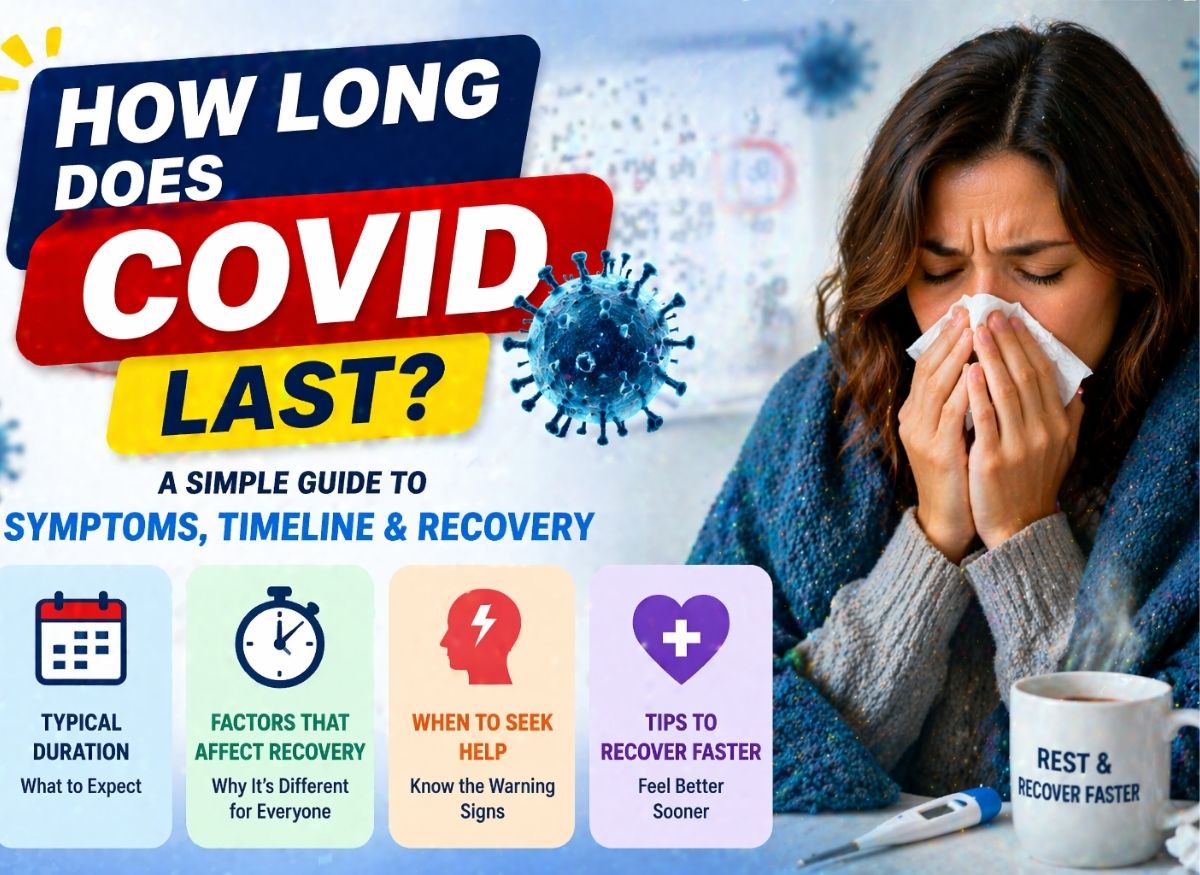
“How long will this last?” is one of the first questions people ask after a positive test or the onset of symptoms. Many people recover in a few days to two weeks, but others deal with symptoms for much longer. Age, overall health, vaccination status, and the severity of the infection all affect the timeline.
Knowing what to expect helps you plan your recovery and recognize when to see a doctor. Some people have mild fatigue, cough, and fever that clear up quickly, while others develop persistent symptoms known as long COVID. This article covers the typical timeline, what influences recovery, and what to do if symptoms don’t fade as expected.
The Acute Phase: What Is the Typical Timeline?
COVID is better understood as a biological arc than a single event. Its length depends on viral load, immune memory, and the variant involved. By 2026 the pandemic is far more manageable, but the virus works the same way: it replicates silently, then either resolves cleanly or leaves an inflammatory tail. For most people the acute illness lasts roughly ten days, though the answer depends on when you start counting.
The Silent Start: The Incubation Period
The incubation period is the window between exposure and the first symptoms, when the virus is in your body but hasn’t yet triggered your immune response. It has shortened over time. Early in the pandemic it took nearly a week, but with current subvariants most people get sick within 2 to 3 days.
This matters for contagion. The virus peaks in the upper respiratory tract about 24 to 48 hours before the first cough or fever, so you are often most contagious the day before you know you’re sick. This “stealth transmission” is the main reason the virus is hard to contain without proactive testing.
The Acute Phase: How Many Days Does COVID Last?
Once symptoms begin, a mild to moderate case typically lasts 7 to 14 days. It starts with a scratchy throat and fatigue, then moves to a peak where the immune response can cause high fever and muscle aches. Around day 5 to 7, and certainly by day 10, viral load usually drops and tissue repair begins. If fever or shortness of breath worsens after day 7, that can signal an immune overreaction rather than ongoing viral replication, and you should seek medical advice.
How Long Will You Test Positive?
Feeling better and testing positive can happen at the same time. Rapid antigen tests may stay positive for about 10 days, and sensitive PCR tests can pick up viral fragments for weeks or even months. A positive test doesn’t necessarily mean you’re still infectious. For people with healthy immune systems, contagiousness generally ends about 10 days after symptoms began, provided the fever has resolved. Clinicians increasingly rely on that 10-day mark plus 24 hours fever-free without medication, rather than on the test line.
The Contagion Window: Am I Still Contagious After 7 Days?
Possibly. Transmission risk is highest in the first five days, but roughly 20 to 30 percent of people still shed live, culturable virus at the one-week mark, and some continue up to day 10. Ongoing heavy coughing or fever means you’re still putting virus into the air. That’s why guidelines often recommend masking for a full 10 days even if you feel better. People who are immunocompromised may remain contagious for weeks.
Rebound
Recovery isn’t always a clean line. Some people, particularly after antiviral treatment, test negative and feel better, then see symptoms and positive tests return a few days later. This lengthens the total illness and calls for renewed isolation (see the rebound section below).
Long COVID: When Symptoms Don’t Go Away
For roughly 10 percent of cases, COVID lasts months or even years. When symptoms such as brain fog, extreme exhaustion, and heart palpitations continue beyond 4 to 12 weeks, it’s no longer considered an acute infection. It’s called Post-COVID Condition, or long COVID. The virus itself is usually gone by this point. What remains is the damage and immune dysregulation it left behind, and research points to persistent inflammation in the brain and blood vessels.
Two hallmarks stand out:
- Brain fog: a persistent cognitive haze that affects memory, focus, and thinking speed.
- Post-exertional malaise (PEM): a severe “crash” after even modest physical or mental effort.
Recovery is non-linear, with good days followed by setbacks. Unlike an acute illness, where you expect to improve daily, long COVID recovery is measured in small increments and can take years.
Managing COVID: From Acute Illness to Long-Term Care
How long COVID lasts is often influenced by how well you adapt your behavior to what your body needs. In the first ten days the priority is supporting your immune system. If symptoms linger, the focus shifts to stabilizing your body and managing energy.
Managing the Acute Phase
- Rest and hydration: Rest isn’t optional. It keeps your body from diverting resources away from the immune response.
- Over-the-counter medication: Acetaminophen and NSAIDs ease fever and body aches, though they don’t shorten the illness.
- Monitoring: Watch for a “second-week dip,” when breathing problems can suddenly worsen. A pulse oximeter to check blood oxygen is now standard practice.
Knowing When It’s Safe to Leave Isolation
Clinicians generally consider you to be past the contagious stage once you’ve been fever-free for 24 hours without medication and your symptoms are clearly improving. Because many people still shed small amounts of virus through day 10, the safest approach is to wear a high-quality mask in public until day 10 has passed or you get a negative rapid test. This protects others from the tail end of the contagious period.
Managing Long COVID: Pacing
Long COVID calls for dropping the “push through it” mindset. The main tool is pacing: staying within your “energy envelope” to avoid the push-crash cycle that stalls recovery. That means breaking chores into small pieces, scheduling rest before fatigue hits, and tracking heart rate and mental load. Many people now use wearables that track stress or “body battery” to guide this.
Validation matters too. Long COVID is real, and taking it seriously lets people get specialized help for conditions such as autonomic dysfunction (including POTS) and vascular inflammation. A multidisciplinary team might address brain fog through cognitive rehabilitation and cardiovascular symptoms through increased fluids and electrolytes. The goal is to stabilize the body so it can gradually return to its pre-infection baseline.
Therapies Used to Manage Long COVID
Because long COVID affects multiple body systems, the 2026 clinical standard is a multidisciplinary approach that aims at restoring function rather than eliminating a virus. Professional guidance helps patients avoid overexertion.
Physical therapy. Unlike traditional rehab, which pushes the body to rebuild strength, therapists specializing in long COVID prioritize stability over intensity. Because of PEM, they use gentle movement, often in a reclined or seated position for people with a racing heart (POTS), to improve circulation and prevent deconditioning without triggering a crash.
Occupational therapy. OTs are the main strategists for daily life. They teach pacing for tasks like showering, cooking, and working, and may recommend tools such as shower chairs. They also help with cognitive pacing for screen time and social interaction.
Cognitive rehabilitation and speech-language pathology. SLPs and neuropsychologists pinpoint where thinking breaks down, whether memory, attention, or executive function, and build workarounds such as apps, alarms, and planners. They also work on word-finding and processing speed to support a return to work and social life.
Respiratory therapy. Even when the lungs look normal on imaging, many patients develop dysfunctional breathing. Respiratory therapists teach diaphragmatic breathing and other techniques to replace shallow, rapid chest breathing, easing the sensation of “air hunger” and lingering breathlessness.
Key Differences and Related Scenarios
COVID-19 vs. Influenza
Influenza is a sprinter, with a 1 to 2 day incubation, a sudden high fever, and resolution within about a week. COVID-19 is more of a middle-distance runner. Its incubation is often longer, and the acute phase frequently stretches into a second week. The bigger gap is long-term: post-viral fatigue can follow a bad flu, but the chronic, multi-organ dysfunction, brain fog, and cardiovascular problems seen in long COVID are far more characteristic of SARS-CoV-2.
COVID Rebound
Rebound typically happens after a course of antivirals like Paxlovid. The patient tests negative and feels better, then symptoms and positive tests return 2 to 8 days later. If that happens, the contagious period effectively restarts, and a new five-day isolation is advised. Rebound is not a sign that the medication failed. One explanation is that the five-day course suppressed the virus so effectively that the immune system hadn’t finished the job when treatment ended. Rebound illness is usually milder, but it can push the total duration past 20 days.
Variants: Delta vs. Omicron
Your variant affects both how soon you get sick and how long you stay sick. Delta was known for deep-lung infections, leading to longer recoveries, more hospitalizations, and tougher physical rehabilitation. The Omicron subvariants dominant in 2026 tend to stay in the upper respiratory tract, with an incubation of about 3 days and a faster acute recovery for vaccinated people. But a milder acute phase doesn’t guarantee a lower risk of long COVID. Even “mild” Omicron infections can lead to brain fog and persistent fatigue, so the first ten days don’t necessarily predict the next ten months.
Conclusion
For most people, COVID symptoms improve within one to two weeks, though recovery can take longer depending on individual health and the severity of the illness. Some people continue to have fatigue, shortness of breath, or other symptoms for weeks or months.
If your symptoms persist or worsen, seek medical advice, as it could signal complications or long COVID. Rest, good care, and staying informed all support recovery, and understanding what influences healing helps you take the right next steps.
Frequently Asked Questions
How long does COVID last in most people?
Symptoms typically last 5 to 14 days. Mild cases often improve within a week, and moderate ones may take up to two weeks. The timeline depends on your immune system, overall health, and any underlying conditions, and some people feel tired or weak even after the main symptoms fade.
When is COVID no longer contagious?
Most people stop being contagious about 5 to 10 days after symptoms begin, particularly if symptoms are improving and they’ve been fever-free for at least 24 hours without medication. People with severe illness or weakened immune systems may stay contagious longer. Follow public health guidelines and isolate appropriately.
What is long COVID, and how long does it last?
Long COVID means symptoms that continue for weeks or months after the initial infection has cleared, including fatigue, brain fog, shortness of breath, and joint pain. It can last several months or longer and can affect daily life significantly. Research into its causes and treatments is ongoing.
Does vaccination affect how long COVID lasts?
Yes. Vaccinated people tend to have milder symptoms and recover faster, and vaccination lowers the risk of severe illness and long COVID. Breakthrough infections can still happen, but recovery is generally quicker.
What factors affect how long COVID lasts?
Age, underlying conditions, immune strength, and the severity of the infection all play a part. People with chronic conditions such as diabetes, heart disease, or lung disease may take longer to recover. Nutrition, hydration, and rest also matter.
When should I see a doctor?
See a doctor if symptoms worsen or haven’t improved after a couple of weeks. Warning signs include difficulty breathing, chest pain, confusion, and a persistent high fever. These may indicate complications, and early care can help prevent serious outcomes.