7 Nearsightedness Symptoms You Shouldn’t Ignore
Vision is something many of us rarely think about until we notice a change. Nearsightedness, also called myopia, is a common eye condition in which nearby objects are usually clear, while things farther away look blurry. Because the changes can happen slowly over months or years, many people may not recognize the early signs. Identifying these symptoms early is important because untreated or progressing myopia can interfere with everyday activities, school, work, and safety.
Nearsightedness affects a large number of people around the world. Research indicates that roughly 30% of the global population is affected by myopia, and the numbers continue to increase, particularly among children and young adults. The condition is also more common in urban environments and among people who spend long periods reading, studying, using screens, or doing other close-up activities.
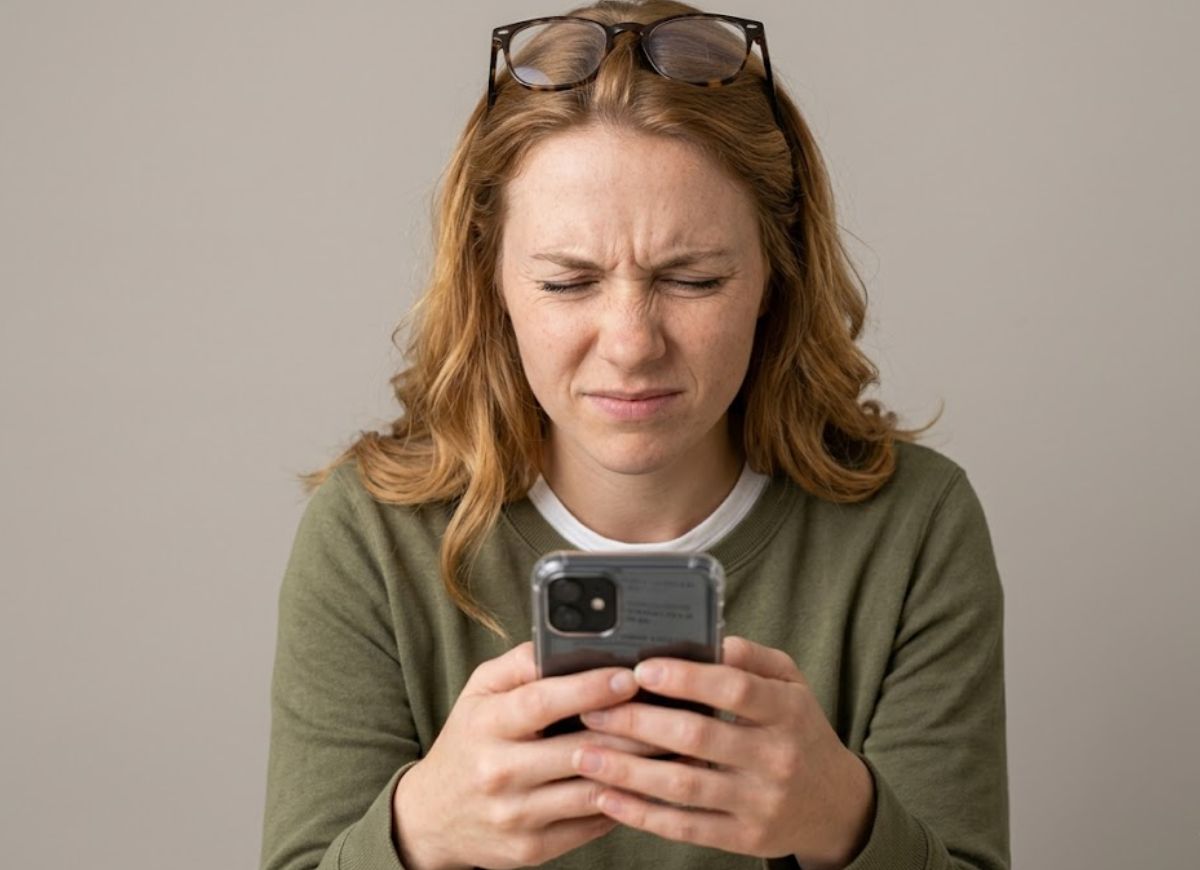
Early warning signs can include squinting to see distant objects, struggling to read road signs, or having difficulty seeing presentations and movie screens clearly. Headaches, tired eyes, and holding books or electronic devices unusually close can also be clues. Children may show indirect signs such as difficulty seeing the classroom board, avoiding outdoor games, or struggling with schoolwork.
In this article, we will discuss 7 nearsightedness symptoms you shouldn’t ignore. Recognizing these changes can encourage you to schedule an eye examination, get the right vision correction, and monitor any progression. Paying attention to changes in your eyesight is an important part of maintaining comfortable and safe vision.
7 Key Symptoms of Nearsightedness
Blurry Distance Vision
The most common and recognizable symptom of myopia is blurred distance vision. People with nearsightedness can generally see nearby objects clearly, but objects farther away may look fuzzy, unclear, or out of focus. This happens because light entering the eye focuses in front of the retina rather than directly on it.
This creates a noticeable difference between near and distance vision. Someone with myopia may read a book or use a phone comfortably but struggle to read a road sign, see a presentation screen, or recognize someone standing far away.
The problem can become noticeable in many everyday situations. For example, a student may have trouble reading the whiteboard from the back of a classroom. While driving, road signs, traffic signals, and license plates may remain unclear until the person gets closer. This can create an important safety concern.
Distance blur can also affect recreational activities. Watching a movie at a theater, attending a sporting event, or looking at scenery may become frustrating because distant details are no longer sharp. The amount of blur usually depends on the degree of myopia. Mild myopia may only affect very distant objects, while stronger myopia can make objects blurry at much shorter distances.
Frequent Headaches
Frequent headaches can occur when a person repeatedly strains to see clearly. Although the headache itself is not the refractive error, it can develop as the visual system works harder to compensate for unclear vision.
The muscles involved in focusing can become tired after prolonged visual effort. Headaches related to uncorrected myopia may feel dull or aching and can occur around the forehead or temples. They may become more noticeable after activities that require clear distance vision, such as driving, watching a movie, or sitting through a lecture.
Constant squinting and visual effort can contribute to this discomfort. If headaches repeatedly occur along with blurry distance vision, an eye examination may help determine whether an uncorrected vision problem is involved.
Persistent Eye Strain (Asthenopia)
Eye strain, medically known as asthenopia, can include several uncomfortable sensations around the eyes. A person may experience soreness, burning, itching, heaviness, or general discomfort.
The eyes may feel tired or overworked, especially after spending a long time trying to see clearly. This fatigue can also make it harder to concentrate on visual tasks.
Pervasive Feeling of Fatigue In the Eyes
Some people notice that their eyes feel unusually tired much earlier in the day. They may feel a strong need to close their eyes or take frequent breaks to get some relief.
These symptoms can occur when the visual system is working harder than usual. Persistent eye fatigue, especially when combined with blurry distance vision or headaches, can be a reason to schedule a professional eye examination.
Squinting, Blinking or Rubbing the Eyes Excessively
Changes in visual behavior can be especially noticeable in children who may not realize that their vision has become blurry. Frequent squinting, blinking, or rubbing the eyes can sometimes indicate difficulty seeing clearly.
Squinting is a common way of temporarily improving visual sharpness. By narrowing the opening through which light enters the eye, it can reduce some scattered light and make a blurry image appear temporarily clearer.
Frequent blinking or rubbing may also happen because the eyes feel tired or uncomfortable. Although these behaviors can have other causes, repeated occurrence alongside difficulty seeing distant objects should not be ignored.
Reducing the Distance to Objects of Interest
Children with developing myopia often move closer to whatever they are trying to see. They may sit unusually close to the television or computer, hold books or tablets near their face, or lean forward at school to see the board.
A child may also begin avoiding activities that depend on clear distance vision, such as soccer or baseball, because seeing the ball or other players becomes difficult. Excessive blinking or rubbing may occur at the same time because of visual fatigue.
These changes can be useful warning signs for parents and teachers. If a child repeatedly moves closer to screens or classroom materials, an eye examination can help identify whether myopia or another vision problem is responsible.
Difficulty Seeing Clearly at Night or In Dimly Lit Environments
Some people with myopia notice that seeing becomes more difficult in low-light conditions. This can sometimes be referred to as night myopia. Darkness changes the way the eye’s optical system works, which can make existing focusing problems more noticeable.
In bright environments, the pupil becomes smaller. This limits some peripheral light rays and can improve the sharpness of the image. In darker surroundings, the pupil becomes larger to allow more light into the eye.
A larger pupil can allow more unfocused peripheral light to enter, which may make blurry vision more noticeable in someone with myopia.
Nighttime driving can be particularly challenging. Uncorrected or under-corrected myopia may make road signs, vehicles, pedestrians, and other objects harder to see. Headlights and streetlights may also appear surrounded by glare, halos, or starburst-like patterns.
Reduced contrast can make it harder to recognize edges and shapes in dark surroundings. Difficulty seeing after sunset may therefore be another reason to have your prescription and overall eye health checked.
What is Nearsightedness?
Nearsightedness, or myopia, is a common refractive error in which light entering the eye focuses in front of the retina instead of directly on it. This results in clear near vision but blurred distance vision.
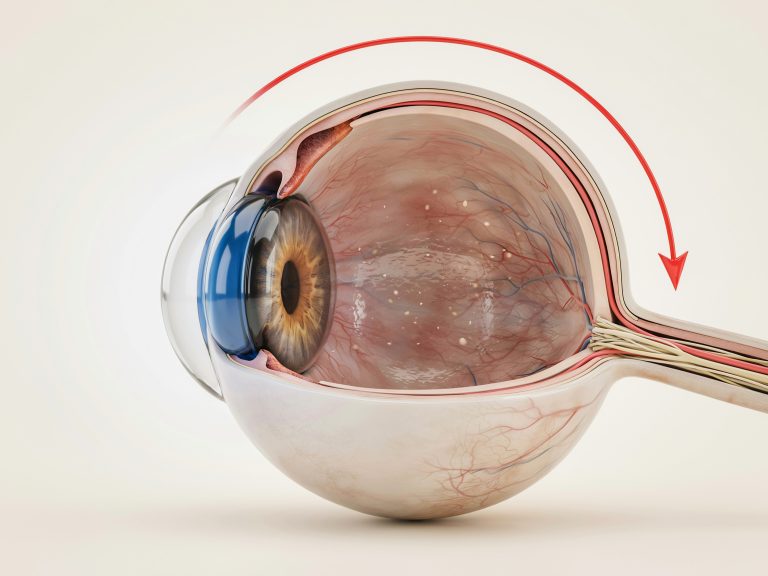
Myopia can develop for different structural reasons. In axial myopia, the eyeball grows too long from front to back. In refractive myopia, the cornea or lens bends light too strongly. Both situations cause light to focus in front of the retina.
In a normally functioning eye, light rays from distant objects pass through the cornea and lens and are focused directly on the retina, which is the light-sensitive tissue at the back of the eye. This produces a sharp image.
With myopia, the focusing point falls in front of the retina. By the time the light reaches the retina, the rays are already spreading apart again, producing a blurred image.
Axial myopia is commonly associated with an eye that is longer than normal. Even if the cornea and lens have typical focusing power, the increased length of the eye places the retina behind the normal focal point.
Refractive myopia occurs when the eye’s overall length is relatively normal but the cornea or lens bends light too strongly. In either situation, the problem comes from a mismatch between the eye’s focusing power and its physical length.
Nearby objects can still appear clear because their light rays enter the eye differently. Their naturally diverging rays can compensate for the eye’s excessive focusing power and allow the image to reach the retina more accurately.
Different Types or Levels of Nearsightedness
Myopia can vary in severity and can also differ according to its underlying characteristics. Simple or low-to-moderate myopia commonly develops during childhood or adolescence and may stabilize during early adulthood. It is primarily a focusing problem and is usually corrected with glasses or contact lenses.
High myopia is generally defined as a prescription of -6.00 diopters or stronger. It is often associated with greater elongation of the eyeball and carries a higher long-term risk of certain eye conditions.
People with high myopia have an increased risk of complications such as retinal detachment, myopic maculopathy, glaucoma, and cataracts. Excessive elongation of the eyeball can stretch and thin tissues at the back of the eye.
Degenerative or pathological myopia is a less common and more severe form. It involves progressive structural changes in the back of the eye, particularly the retina and sclera, and can potentially lead to significant or permanent vision loss.
Myopia can also be described according to its prescription strength. Low myopia is commonly considered up to about -3.00 D, moderate myopia from around -3.00 to -6.00 D, and high myopia at -6.00 D or greater.
The Main Causes of Nearsightedness
Myopia develops through a combination of genetic and environmental influences. There is no single cause that explains every case. Genetics, eye growth, close-up activities, and time spent outdoors can all contribute to a person’s risk.
Family history is an important factor. Children with one or both parents who have myopia have a greater chance of developing the condition. Researchers have also identified many genetic factors associated with refractive error and eye growth.
Environmental factors also appear to influence myopia, especially during childhood. Spending long periods doing close-up activities such as reading, studying, or using smartphones and computers has been associated with an increased risk of developing myopia.
The exact relationship between near work and myopia is still being studied, but prolonged close-up activity may influence how the eye develops.
Outdoor time appears to have a protective relationship with childhood myopia. Studies have found that children who spend more time outdoors tend to have a lower risk of developing myopia. Researchers believe that exposure to bright outdoor light may influence retinal signaling and eye growth.
Nearsightedness Diagnosis
A comprehensive eye examination by an optometrist or ophthalmologist is needed to properly diagnose myopia. A basic vision screening can identify possible problems, but a full examination can determine the exact refractive error and evaluate overall eye health.
One of the main tests is a visual acuity examination. During this test, you read letters or symbols from a standardized eye chart at a specific distance. Results may be recorded as measurements such as 20/20 or 20/40.
A refraction test is then used to determine the lens power needed to correct the vision. The eye care professional may use a phoropter containing different lenses and ask which options make the image appear clearer.
This testing can identify myopia and other refractive errors, including astigmatism and hyperopia. The results are used to determine an appropriate prescription.
A complete eye examination may also include an evaluation of the cornea, lens, retina, and optic nerve. Depending on the person’s age, symptoms, and degree of myopia, the eye doctor may look for other eye conditions associated with significant myopia.
How to Manage Nearsightedness
The most common ways to manage myopia are glasses, contact lenses, and, for suitable adults, refractive surgery. These treatments correct the focusing problem so that light reaches the retina more accurately.
The appropriate option depends on factors such as age, prescription strength, lifestyle, eye health, and personal preference. For children, additional approaches may be considered to help slow the progression of myopia.
Eyeglasses are the simplest and most widely used form of myopia correction. They use concave lenses that are thinner in the center and thicker toward the edges. These lenses spread incoming light slightly before it enters the eye, helping move the focal point onto the retina.
Contact lenses provide another option and can offer a wider field of view than glasses. They sit directly on the cornea and are designed to correct the refractive error. Different types include daily, weekly, monthly, and rigid gas-permeable lenses. Proper cleaning and handling are essential because poor contact lens hygiene can increase the risk of eye infections.
For some adults whose prescription has remained stable, refractive surgery may be an option. LASIK is one of the best-known procedures and uses a laser to reshape the cornea. PRK and SMILE are other procedures that use different surgical techniques to correct refractive errors.
Myopia (Nearsightedness) vs. Hyperopia (Farsightedness)
Myopia and hyperopia are both refractive errors, but they cause opposite focusing problems.
With myopia, light focuses in front of the retina. This makes distant objects blurry while nearby objects are usually clearer. It commonly occurs because the eyeball is too long or because the cornea and lens provide too much focusing power.
With hyperopia, the eye is often shorter than normal or does not have enough focusing power. Light would theoretically focus behind the retina. Near objects are usually more difficult to see clearly, although stronger hyperopia can affect distance vision as well.
The main difference is the location of the focal point. Myopia places the focal point in front of the retina, while hyperopia places it behind the retina.
Different lenses are used to correct these conditions. Concave lenses are generally used for myopia, while convex lenses are used for hyperopia.
Accommodation, or the eye’s ability to change the shape of its lens, can sometimes help compensate for mild hyperopia. There is no similar natural mechanism that can shift a myopic focal point backward onto the retina, which is why distance blur is usually noticeable.
Can Nearsightedness Get Worse Over Time?
Yes, myopia can become stronger over time, particularly during childhood and adolescence. This is called progressive myopia. During growth, the eyeball may continue to lengthen, increasing the distance between the lens and retina.
As the eye becomes longer, the amount of myopia can increase, which may require stronger glasses or contact lens prescriptions. Progression often slows or stabilizes by the late teens or early twenties, although some people continue to experience changes during adulthood.
Family history can increase the likelihood of both developing myopia and experiencing progression. Children with myopic parents are more likely to develop the condition.
Lifestyle can also play a role. Large amounts of near work, including reading, studying, and using digital devices, have been associated with myopia. Spending time outdoors appears to have a protective effect, particularly for children.
Higher levels of myopia are associated with an increased lifetime risk of certain eye diseases, including retinal detachment, glaucoma, cataracts, and myopic maculopathy. For this reason, monitoring progressive myopia is an important part of long-term eye care.
Is it Possible to Have Both Nearsightedness and Astigmatism?
Yes, it is possible and fairly common to have both myopia and astigmatism. They are different refractive errors, but they can occur in the same eye.
Myopia causes light to focus in front of the retina and mainly produces blurry distance vision. It is generally considered a spherical refractive error.
Astigmatism occurs when the cornea or lens has an uneven curvature. Instead of being evenly rounded, the surface has different curvatures in different directions. This can cause light to focus at more than one location rather than at a single point.
A person with both conditions, sometimes called myopic astigmatism, may experience both distance blur and visual distortion. For example, a distant road sign may look generally blurry because of myopia, while the letters may also appear stretched, shadowed, or distorted because of astigmatism.
Correction for both conditions requires a prescription that accounts for each refractive error. The prescription may include a spherical measurement for myopia, a cylinder measurement for astigmatism, and an axis measurement showing the direction of the astigmatism.
A simple way to understand the difference is to imagine a projector. Myopia is like the projector being positioned at the wrong distance from the screen, making the image blurry. Astigmatism is like having an uneven projector lens that distorts the image in a particular direction. Both problems can exist at the same time.
FAQs
1. What does being nearsighted feel like?
Being nearsighted usually means that objects in the distance look blurry while nearby objects remain relatively clear. You may have trouble reading signs across the road, seeing a movie screen, or recognizing faces from a distance.
Trying to compensate for unclear vision can also cause squinting, eye strain, headaches, or tired eyes. Some people may notice discomfort or difficulty concentrating when looking at distant objects for long periods.
Because myopia can develop gradually, a person may not realize their eyesight has changed until everyday activities become noticeably harder.
2. Do nearsighted people need glasses?
Many people with myopia benefit from glasses or contact lenses because these options improve distance vision. Proper correction can make activities such as driving, sports, school, and work more comfortable and safer.
Some adults may also be candidates for refractive surgery, including LASIK or PRK. The most appropriate option depends on the person’s prescription, age, eye health, and advice from an eye care professional.
3. Can you fix nearsightedness naturally?
There is currently no proven natural method that completely reverses established myopia. However, certain habits may help reduce the risk of developing myopia or slow its progression, particularly in children.
Spending more time outdoors and taking regular breaks during prolonged close-up activities can support healthier visual habits. These measures do not replace appropriate vision correction or professional eye care.
4. What worsens nearsightedness?
Myopia can progress during childhood and adolescence, and prolonged near work may be associated with progression. Activities such as extended reading, studying, and screen use may contribute, especially when combined with limited outdoor time.
Genetics also play an important role. Children with a family history of myopia have a higher likelihood of developing the condition.
5. At what age does myopia stop?
Myopia commonly progresses during childhood and adolescence and often becomes more stable during the late teenage years or early twenties. However, progression can continue into adulthood for some people.
Regular eye examinations are useful for monitoring changes and keeping glasses or contact lens prescriptions up to date.
6. Do people with myopia have higher IQ?
There is no established evidence that myopia directly causes or indicates a higher IQ. Some research has found an association between myopia, extensive near work, and educational attainment, but this does not mean that myopia is caused by intelligence.
The development of myopia is influenced primarily by genetic, environmental, and eye-growth factors.
7. Why is myopia so common now?
Myopia has become increasingly common around the world, particularly among children and young adults. Changes in lifestyle, including more close-up work, increased screen use, less outdoor activity, and urban living, are associated with the rising prevalence.
Genetic factors also contribute to a person’s risk. Researchers continue to study how these influences interact during childhood eye development.
8. What improves nearsightedness?
Myopia itself cannot generally be reversed through natural methods, but clear vision can be restored with appropriate glasses or contact lenses. Regular eye examinations, healthy visual habits, breaks during prolonged near work, and spending time outdoors can also support eye health.
For some adults, refractive surgery may provide a longer-term way to correct distance vision. Any treatment decision should be discussed with a qualified eye care professional.
Conclusion
Nearsightedness is a widespread refractive error that can cause blurry distance vision, squinting, headaches, and eye fatigue when it is not properly corrected. Because symptoms can develop gradually, recognizing early changes and scheduling regular eye examinations can help identify myopia before it interferes significantly with daily activities.
Glasses, contact lenses, lifestyle habits, and appropriate myopia-management strategies can help people maintain clearer and more comfortable vision. While established myopia cannot usually be reversed naturally, early detection and professional care can help manage the condition and monitor changes over time.